Today, ready-made software often fails to meet the specific needs of individual hospitals. That’s why custom hospital software has become one of the major trends in 2025 — hospitals are now looking for tech partners with strong expertise, flexibility, and compliance with international healthcare standards.
This article introduces the Top 5 custom hospital software development companies in 2025, selected based on their technical capability, healthcare experience, real-world projects, and compliance with global standards.
Company | Founded | Headquarters | Staff size | Key services |
TMA Solutions | 1997 | Vietnam | 4,000 engineers | Custom hospital software, healthcare AI, EHR systems, pharmacy automation, and telehealth solutions |
ScienceSoft | 1989 | USA | 700+ | Custom medical software, hospital data analytics, and clinic management systems. |
KMS Technology | 2009 | Vietnam – USA | 1.600+ | Consulting, developing, and testing custom healthcare software. |
Orient Software | 2005 | Vietnam | 400+ | HealthTech, Data & AI solutions, and mobile healthcare applications. |
Athenahealth | 1997 | USA | 5.000+ | Patient record management, insurance billing, and remote healthcare solutions. |
1. TMA Solutions
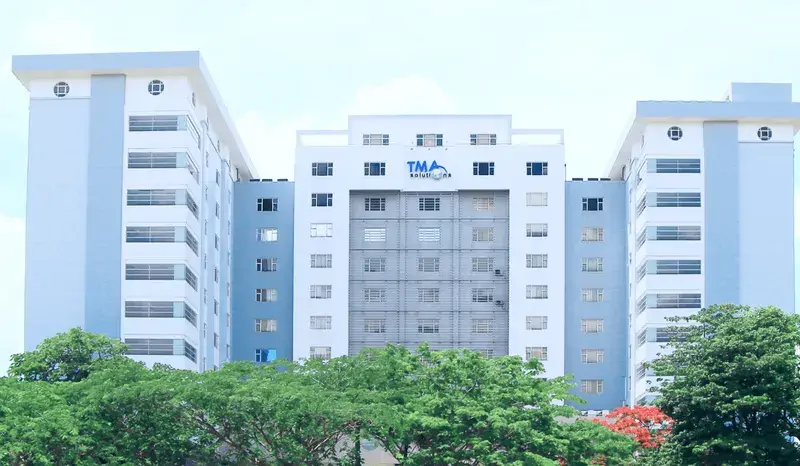
With more than 28 years of experience in information technology and a team of 4,000 software engineers, TMA Solutions has been one of Vietnam’s leading custom hospital software development companies for clients in the USA, Australia, Sweden, Ireland, and Vietnam.
Unlike vendors that only provide ready-made software, TMA works closely with hospitals throughout the entire process. Its flexible cooperation models (Dedicated Team, Offshore Delivery Center) allow hospitals to scale quickly without large infrastructure investments.
Experience & Expertise:
- With 15 years of experience in healthcare and medical software, TMA has served over 40 global clients, including hospitals, nursing homes, and pharmaceutical companies.
- The HealthTech Center, with over 700 specialized engineers, focuses on medical data, artificial intelligence, automation, and remote healthcare applications.
- All operations comply with CMMI Level 5, ISO 9001, and ISO 27001 standards, ensuring the highest levels of quality and data security in healthcare solutions.
Key Software Solutions
- Electronic Health Records (EHR): Manage complete patient histories, including medical visits, prescriptions, lab results, and imaging — following FHIR and HL7 standards.
- Pharmacy Automation: Integrates intelligent medication management systems with AI-powered dosage reminders and drug interaction monitoring.
- Telehealth & Remote Care: Enables video consultations and patient monitoring through connected sensors for heart rate, SPO2, and blood pressure tracking.
- Health Data Analytics: Collects and processes millions of medical records to predict disease trends and support clinical research.
- AI & Smart Recognition in Healthcare: Applies AI to analyze ECGs, detect arrhythmias, assess sleep quality, and enable early detection of stroke or sleep apnea.
Technologies & Certifications
TMA applies advanced technologies such as AI/ML, Cloud Computing, IoT, OCR, Big Data, and RPA, while strictly complying with international standards:
- HIPAA (USA): Protects patient data security.
- GDPR (Europe): Ensures data privacy and user rights.
- HL7, FHIR, DICOM: Support seamless healthcare data interoperability.
Awards & Global Recognition
- Ranked among Vietnam’s Top 10 ICT Companies by VINASA for multiple consecutive years.
- Long-term technology partner of global corporations such as NEC, FNZ, IOOF, TechnologyOne, and Webstercare.
- Honored as a “Trusted Partner in HealthTech” by clients across Australia and North America.
Key Projects:
- Automate Pharmacy Operations with Cloud-based Solution: TMA built a cloud-based medication management system for 2,000+ pharmacies in Australia. The solution automates the entire workflow - from prescription processing to dispensing and monitoring - helping reduce staff workload and enhance patient safety through real-time alerts, and scales easily for future growth
- Boost Healthcare Operations productivity with DevOps & Cloud Solutions: By implementing AWS Cloud and CI/CD, TMA helped a healthcare company in the EU serve 400,000+ users daily with 24/7 system stability. The solution improves performance, balances system load, and enhances the mobile user experience.
- Optimizing Data with Azure: Dynamic Integration, Legacy Migration, and Advanced Visualization: TMA integrated scattered healthcare data using Azure Data Lake, migrated legacy systems, and created Power BI dashboards for better visibility. This modernization enables fast data access and valuable real-time insights for decision-making.
- Apply OCR in Healthcare Solutions to Automate Data Collection: Using OCR technology, TMA automated data extraction from over 30 types of medical devices, prescriptions, and test results. The solution minimizes manual errors, speeds up data processing, and allows doctors to access patient information instantly.
>> Learn more at: TMA Solutions | Leading Software Outsourcing in Vietnam
2. ScienceSoft
Founded in 1989, ScienceSoft stands among the most experienced software development companies in the United States, specializing in solutions for hospitals, clinics, and health insurance providers.
Team size: With a workforce of 700+ engineers, ScienceSoft focuses on custom EHR systems, medical imaging software, and online patient platforms.
Certifications: The company holds ISO 13485, ISO 9001, and ISO 27001 certifications in healthcare and fully complies with HIPAA, GDPR, and MDR standards.
Key services:
- Custom medical software and patient management systems.
- Digital transformation consulting for major hospitals in Europe and North America.
3. KMS Technology
KMS Technology is a Vietnamese software company headquartered in Ho Chi Minh City, with additional offices in Atlanta (USA) and Mexico.
Team size: The company has a global workforce of over 1,500 employees (as of 2023–2025).
Certification: ISO 27001 – ensuring high standards of information security.
Key services:
- Custom software development for enterprises worldwide.
- Software testing services to ensure product quality and reliability.
- Technology consulting and product development for digital transformation.

4. Orient Software
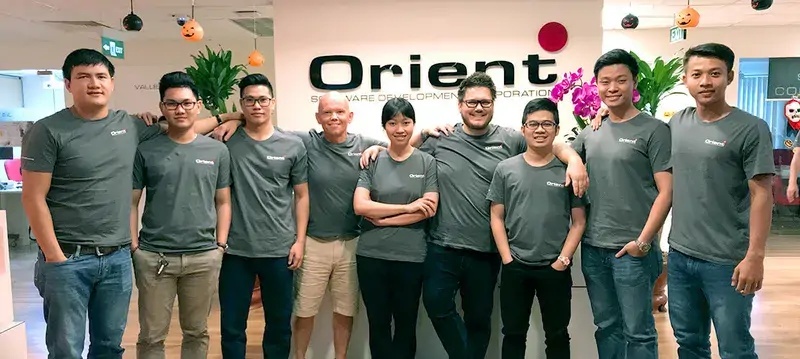
Founded in 2005, Orient Software is a Vietnamese company specializing in custom software solutions and artificial intelligence applications.
Team size: Over 350 IT experts with diverse technical backgrounds.
Certifications: ISO 9001:2015 and ISO/IEC 27001:2013, ensuring quality management and data security.
Key services:
- Web & Mobile App development.
- AI and Machine Learning solutions.
- Software testing and quality assurance (QA).
5. Athenahealth
Athenahealth is a cloud-based healthcare technology company providing electronic health record (EHR) and medical billing solutions.
Team size: More than 6,500 employees worldwide, Athenahealth supports thousands of hospitals and clinics across the United States.
Certifications: HITRUST CSF Certified and fully HIPAA compliant, ensuring data security and patient privacy.
Key services:
- Electronic Health Record (EHR) management.
- Revenue cycle and billing management.
- Patient engagement and communication tools.

6. How to choose the right custom hospital software development company
Implementing a custom healthcare software project requires a balanced combination of medical expertise, data management, legal compliance, and technical execution. Choosing the right development partner determines up to 70% of the project’s success. Below are the five key criteria hospital leaders should carefully evaluate before signing a partnership agreement.
1 – Define the hospital’s needs and specific requirements
Before choosing a technology partner, hospitals should clearly identify their goals and core technical requirements. A detailed Request for Proposal helps both sides align on project scope and avoid misunderstandings during implementation.
Recommended steps:
- Identify current challenges: Fragmented data, lack of integration, manual processes, or high management costs.
- Set clear goals: Improve operational efficiency, reduce data entry time, increase diagnostic accuracy, or optimize overall expenses.
- Prioritize key modules: Electronic Health Records (EHR), pharmacy management, telehealth, or patient data analytics.
- Choose a suitable deployment model: On-premise or cloud-based.
Example: A central hospital may prioritize an EHR and PACS-DICOM imaging system, while a private clinic might focus on an appointment and billing platform integrated with insurance payments.

2 – Industry experience and real project portfolio
Not every software company fully understands the complexity of medical data, laboratory workflows, or patient data security. That’s why it’s essential to evaluate a partner’s industry experience and project portfolio before making a decision.
Evaluation criteria:
- Years of experience in healthcare: Prefer companies with at least 5 years in developing healthcare software and proven projects with hospitals or pharmaceutical firms.
- Project portfolio: Review whether they have successfully built EHR, Telehealth, Clinical Research Tools, or Health Data Analytics systems.
- Key clients: Partnerships with international customers from the USA, Australia, Japan, or Sweden show strong capability and compliance with global standards.
Example: TMA Solutions, a custom hospital software development company, has successfully delivered Health Data Analytics and Telehealth systems for organizations in the USA, Ireland, and Vietnam, proving its expertise in big data processing and patient data standardization.

3 – Knowledge of regulations and compliance standards
Healthcare software must not only deliver reliable performance but also fully comply with international data security and healthcare standards. This aspect is often overlooked in Vietnam-based projects but is mandatory when integrating with global healthcare systems.
Key standards to note:
Standard | Main Purpose | Application in Healthcare Software |
HIPAA (USA) | Protects personal health information | Required when handling or storing U.S. patient data |
GDPR (Europe) | Regulates data privacy and personal data protection | Mandatory for hospitals working with EU patients or partners |
HL7 / FHIR | Standard for medical data exchange | Ensures interoperability between EHR, Telehealth, LIS, and RIS systems |
ISO 27001 | Information security management system | Guarantees safe storage, transmission, and backup of patient data |
ISO 13485 | Quality management system for medical devices | Applies to medical device and healthcare support software |
Tip: When working with a vendor, always request proof of their certifications, such as ISO scan copies, audit reports, or verification from international partners.
4 – Technology, architecture, and system scalability
A reliable healthcare software company should have modern technologies and a flexible system architecture that allows future integration and expansion.
Key factors to consider:
- Core technologies: The company should demonstrate strong expertise in AI/ML, Big Data, IoT, RPA, Cloud Computing, and Blockchain.
- Integration capability: Their solutions must be compatible with existing hospital systems such as HIS, EMR/EHR, and third-party medical software.
- Flexible architecture: A microservices-based design and open APIs enable smooth integration and easy scaling as the hospital expands.
- Data analytics features: Support doctors and hospital managers make data-driven decisions in real time.
Example: A modern EHR solution should be able to integrate with IoT devices for heart rate and blood pressure monitoring and display real-time data for remote supervision, a capability successfully implemented by custom hospital software development companies like TMA Solutions, ScienceSoft, and Athenahealth in their international healthcare projects.

5 – Post-deployment service and long-term support
Many healthcare software projects fail not because of poor development, but due to insufficient post-launch support. A reliable company must commit to ongoing maintenance, training, and regular upgrades to keep the system stable and compliant with new regulations.
Key points to check:
- 24/7 technical support: Ensure quick issue resolution for mission-critical hospital systems.
- Regular maintenance policy: Includes security patches, performance optimization, and feature updates.
- Staff training: Provide user and admin training for hospital personnel on data management and real-life scenarios.
- Service Level Agreement (SLA): Clearly defines response times, issue resolution deadlines, and vendor responsibilities.
Example: Companies like TMA Solutions and KMS Technology offer a Dedicated Team model, where engineers work closely with clients throughout the entire project lifecycle — reducing downtime and ensuring continuous service operation.
Choosing the right custom hospital software development partner directly impacts hospital management, operational efficiency, and patient experience. A true partner does more than just write code, they understand the healthcare domain, accompany hospitals in digital transformation, and ensure data security.
If your hospital is seeking a partner with strong medical expertise, technology capability, international certifications, and proven project experience, companies like TMA Solutions, ScienceSoft, and Athenahealth are highly recommended choices for 2025.\
7. Future trends in custom hospital software development
In the past, most healthcare facilities chose off-the-shelf software to save costs. Today, however, the custom hospital software model is becoming the preferred choice thanks to its ability to support specialized workflows, enable data interoperability, and ensure higher security.
According to Precedence Research (2024), the global hospital information system market is projected to reach USD 185.25 billion in 2025 and grow fourfold to USD 778.83 billion by 2034, with a CAGR of 17.3%. Meanwhile, the Hospital Management Solutions market reached USD 6.43 billion in 2024 and is expected to expand at a CAGR of 17.7% by 2033 (Straits Research, 2024).
In developed countries, more than 70% of acute care hospitals in the U.S. have integrated AI-driven predictive modules into their Electronic Health Record (EHR) systems.
In Vietnam, many central hospitals and private healthcare groups have also begun implementing hospital management systems, EHR platforms, and telehealth applications developed by domestic technology companies, marking a clear shift from “off-the-shelf” solutions to “custom-built” software tailored to real operational needs.
Here are five key trends shaping the future of the custom hospital software industry:
- Artificial Intelligence & Machine Learning (AI/ML) – The nervous system of modern hospitals: AI/ML has evolved from a support tool into the core intelligence of healthcare software. It automates medical image analysis, predicts disease risks, and optimizes treatment workflows. These innovations reduce medical errors and help doctors make faster, more accurate decisions.
- Internet of Medical Things (IoMT) – Real-time data connection: Modern hospital software is now designed to collect data from devices like SPO₂, blood pressure, and glucose monitors via Bluetooth, Wi-Fi, or LoRaWAN. The data is synchronized to EHR systems, allowing doctors to monitor chronic patients and take early action when abnormalities occur.
- Telehealth – Expanding access to care: Telehealth enables remote consultations and video-based appointments, easing hospital workloads and improving access to healthcare in remote areas. Custom software now ensures seamless integration among doctors, patients, and insurance systems.
- Blockchain – Enhancing security and transparency: Blockchain adds an extra layer of data protection and transparency in medical record storage, drug traceability, and automated billing. It also ensures compliance with HIPAA, GDPR, and other global healthcare data standards.
- Data Interoperability – Connecting systems across borders: Modern hospital software increasingly follows standards such as HL7, FHIR, and DICOM, enabling healthcare data to be shared across systems and countries. This is the foundation for smart hospitals, where all patient and operational data are unified for better decision-making.

8. 2 frequently asked questions about custom hospital software development company
1 - How much do healthcare software development services cost?
The cost of developing healthcare software varies widely. There’s no single fixed price. It depends on the complexity, number of features, and compliance requirements of each project.
Software Type | Level / Scale | Estimated Cost (USD) |
Electronic Health Record (EHR) | Ready-made solution (Small clinic) | ~ $400,000 |
Custom development (Medium scale) | $500,000 – $700,000 | |
Telemedicine | MVP (Minimum Viable Product) | $60,000 – $120,000 |
Full-featured system | $200,000 – $450,000 | |
Clinic Management | Implementation (Small clinic) | $40,000 – $55,000 |
Implementation (Large facility) | $90,000 – $200,000 |
2 - What to ask a medical software development firm before hiring?
Here are the 5 key questions you should ask a medical software development provider before hiring them:
- What is your experience with healthcare regulations and compliance?: Ask about the company’s familiarity with specific standards relevant to you, such as HIPAA, GDPR, MDR, or FDA, and how they ensure the software will meet these requirements).
- How do you handle data protection and patient privacy?: Inquire about their security practices, such as data encryption, secure authentication. Also, check whether they have incident response and data recovery plans in case of system failures or breaches.
- Can you demonstrate an understanding of clinical workflows?: The software must fit seamlessly into the daily routines of doctors, nurses, and administrators. Ask for examples of how they've tailored UX/UI for healthcare settings.
- What is your approach to interoperability and integration?: Ask how the new software will connect and exchange data with your existing systems, such as EHRs, and their experience with standards like HL7 or FHIR.
- How do you manage the product lifecycle and post-launch support?: Find out about their long-term plan for maintenance, bug fixes, regulatory updates, performance monitoring, and what level of user support they provide after the project is live.
Choosing the right custom hospital software development company helps hospitals optimize workflows, improve operational efficiency, and ensure medical data security. With over 29 years of experience and a team of 4,000 engineers, TMA Solutions is a trusted global partner in developing custom healthcare software.
>> Explore TMA’s solutions at https://www.tmasolutions.com or contact the team through official channels for a detailed consultation.
Contact information:
TMA SOLUTIONS - The leading custom hospital software development company Email: sales@tmasolutions.com Website: https://www.tmasolutions.com/ Linkedin: TMA Solutions TMA Tower address: Street #10, Quality Tech Solution Complex (QTSC), Trung My Tay Ward, Ho Chi Minh City. |


.webp_2026-10-01-18-27-07-971.webp)
.webp_2026-10-01-18-17-11-290.webp)
.webp_2026-10-01-18-08-26-854.webp)
.webp_2026-10-01-17-47-32-240.webp)