Ready-made telehealth platforms often cannot match the unique workflows of each hospital, clinic or health startup. For this reason, many organizations choose to build custom telehealth software, but it is not easy to find the right development partner. This article explains how to choose a provider and introduces 10 custom telehealth software development companies worth considering in 2026.
1. How to choose a telehealth software provider
A telehealth platform handles sensitive health data and must run reliably during online visits. For this reason, you should assess providers against the four criteria below before you sign a contract.
1 - Real experience with telehealth projects
Telehealth is not just video calls. It also includes appointment booking, e-prescribing, payments and remote patient monitoring. A provider with similar project experience will understand clinical workflows and reduce the need for rework.
Questions to ask:
How many telehealth projects has the provider delivered?
Do they have case studies in your specialty or your market?
Does the team include experts who understand clinical workflows?
2 - Regulatory compliance and security
Patient data must meet rules such as HIPAA in the US or GDPR in Europe. A single security mistake can lead to heavy fines and a loss of patient trust.
Questions to ask:
Will the provider sign a Business Associate Agreement (BAA) under HIPAA?
Which certifications do they hold, such as ISO 27001 or ISO 13485?
How is data encrypted and how is access controlled?
3 - Integration capability
A telehealth platform needs to connect with electronic medical and health records (EMR/EHR), medical devices and payment systems. With poor integration, doctors have to switch between many tools and can easily enter wrong data.
Questions to ask:
Does the provider have experience with the HL7 and FHIR standards?
Which EMR/EHR systems have they integrated with?
Can the platform connect to wearables and home measuring devices?
4 - Cost, engagement model and long-term support
Development costs vary widely between regions and outsourcing models. Besides the initial cost, you need to plan for maintenance, upgrades and updates when regulations change.
Questions to ask:
Does the provider offer a fixed price, time and materials, or a dedicated team model?
Do they provide maintenance after handover?
Will you own the source code and intellectual property?
2. Top 10 custom telehealth software providers
Based on the four criteria above, here are 10 companies with experience in custom telehealth software development.
2.1. TMA Solutions
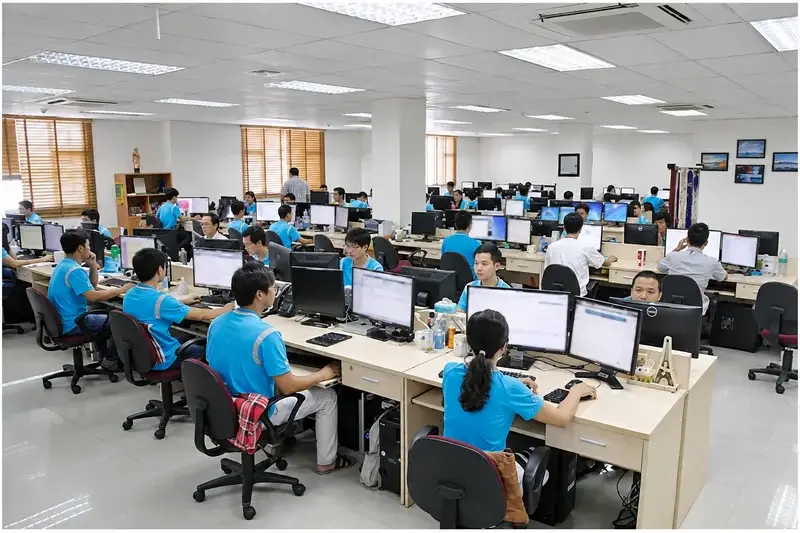
TMA Solutions was established in 1997 and has its headquarters in Ho Chi Minh City, with 4,000 engineers and clients in 30 countries. In healthcare, TMA has 15+ years of experience and a team of 700 engineers, serving clients in Australia, the US, Europe and Vietnam.
Core telehealth capabilities:
Multi-party video consultations
Remote health monitoring
Medical device and IoT integration
Online appointment booking
Health data analysis with AI
Compliance and standards: HIPAA, GDPR, CPPA, HL7, FHIR
Best for: Hospitals, virtual care providers and healthtech companies that need a Vietnam-based, end-to-end development partner.
Certifications: CMMI Level 5, ISO/IEC 27001
Notable case: TMA built a next-generation virtual care platform for a remote primary care provider in the US. The platform supports multi-party video conferences between patients and doctors, connects to the EHR through FHIR and HL7, and complies with HIPAA, GDPR and CPPA. As a result, the client reduced in-person visits for routine consultations and cut the administrative workload of medical staff.
If you are looking for a partner to build your own telehealth platform, contact the TMA Healthtech team for advice.
2.2. ScienceSoft
ScienceSoft is a software development company based in the Dallas area, Texas (US), and has operated since 1989. The company entered healthcare in 2005 and has developed telemedicine solutions since 2015, serving hospitals, life science companies and healthtech businesses.
Core telehealth capabilities:
Secure video calls
Doctor–patient messaging
Appointment booking
E-prescribing
Remote patient monitoring
Compliance and standards: HIPAA, HITECH, GDPR, HL7, FHIR
Best for: Large hospitals and health systems in the US that need deep EHR integration.
Certifications: ISO 13485, ISO 27001, ISO 9001
2.3. Binariks
Binariks has built digital health solutions since 2016, with more than 200 experts and offices in the US, Poland, Estonia, Ukraine, Cyprus and the UK. The company serves healthcare organizations, digital health companies and life science businesses.
Core telehealth capabilities:
Telehealth video infrastructure
Patient portals
Remote patient monitoring
EHR/EMR integration
Specialty-specific platforms
Compliance and standards: HIPAA, GDPR, HL7, FHIR R4
Best for: Digital health companies that need a telehealth platform for a specialty such as cardiology, oncology or mental health.
Certifications: ISO 9001, ISO 27001, ISO 13485

2.4. Appinventiv
Appinventiv was founded in 2015 and has its headquarters in Noida (India), with more than 1,600 experts and offices in the US, the UK, the UAE, Australia and Canada. The company has more than 11 years of experience in healthtech projects and serves hospitals, physician groups, healthtech companies and insurers.
Core telehealth capabilities:
Low-latency video consultations
Remote patient monitoring with wearables
Interfaces for patients, doctors and administrators
E-prescribing
EHR/EMR integration
Compliance and standards: HIPAA, HITECH, GDPR, HL7, PHIPA (Canada)
Best for: Businesses that need a mobile telemedicine app with a moderate budget and a large team.
Certifications: ISO 27001, ISO 9001, CMMI Level 3
2.5. Topflight
Topflight (Topflight Apps) is an app development company based in Irvine, California (US). The company focuses on telehealth for clinics and startups in 14 specialties, such as dermatology, psychiatry and cardiology.
Core telehealth capabilities:
Video visits
Secure messaging
Appointment booking and e-prescribing
Remote patient monitoring
EHR integration with Epic, Oracle Health and athenahealth
Compliance and standards: HIPAA, HL7, FHIR, SMART on FHIR
Best for: Startups and clinics in the US that need a specialty telehealth app or want to move from a white-label solution to a custom one.
Certifications: The website does not list security certifications; the company was named on the Inc. 5000 list in 2022.
2.6. N-iX
N-iX is a software development company with more than 24 years of experience, more than 2,400 experts, and offices in the US and the UK, plus development centers in Europe, Latin America and Asia-Pacific. In healthcare, the company works on clinical research, medical device manufacturing and health apps.
Core telehealth capabilities:
Secure video and audio consultations
Online visits, e-prescribing and appointment booking
Remote patient monitoring
Chronic disease management
Telecare platforms for caregivers
Compliance and standards: HIPAA, GDPR, HL7, FHIR
Best for: Large enterprises that need a large development team and strict security.
Certifications: ISO 27001:2022, ISO/IEC 27701, ISO 9001, PCI DSS, SOC 2 Type 2

2.7. AltexSoft
AltexSoft was founded in 2007 in Kharkiv (Ukraine) and now has teams working in more than 15 countries. The company is well known for travel technology, and it also develops mobile health apps, health tracking software and EHR systems for clients in the US and Europe.
Core telehealth capabilities:
Symptom checker apps
Consultations through chat and video
mHealth apps for health tracking
Data science to support diagnosis
Compliance and standards: Not stated on the company’s healthcare page.
Best for: Startups that need to build a mobile telehealth MVP and want extra advice on data.
Certifications: Not listed publicly.

2.8. LeewayHertz
LeewayHertz is an AI and enterprise software development company that was acquired by The Hackett Group (US) in 2024. The company provides telemedicine software development services for clinics, hospitals and health startups.
Core telehealth capabilities:
Ready-to-deploy telemedicine apps
AI for telemedicine
Medical IoT software
Doctor–patient engagement apps
Compliance and standards: HIPAA
Best for: Organizations that want to add generative AI to their telehealth platform.
Certifications: Not listed publicly.
2.9. Glorium Technologies
Glorium Technologies is a full-cycle software development company that has operated since 2010 and has delivered more than 150 products. The company has a strong focus on healthcare and life sciences, serving everyone from small clinics to large health networks.
Core telehealth capabilities:
Video visits and secure messaging
Patient portals
E-prescribing
Remote patient monitoring
Billing and practice management
Compliance and standards: HIPAA, GDPR, HITRUST, HL7, FHIR
Best for: Medical device makers, MedTech startups and clinics that need a telehealth solution with billing.
Certifications: ISO 9001, ISO 13485, ISO 27001
2.10. Dev Technosys
Dev Technosys is an app development company with more than 16 years of experience, more than 200 experts and more than 2,300 completed projects. The company has offices in India and the US and serves clients in more than 71 countries.
Core telehealth capabilities:
Video and audio consultations
Online appointment booking
Secure doctor–patient messaging
E-prescribing
Remote patient monitoring with wearables
Compliance and standards: HIPAA, GDPR, HL7, FHIR, PIPEDA, PHIPA
Best for: Small and medium-sized businesses that need a telemedicine app at a low cost with fast delivery.
Certifications: The company says it follows ISO 27001, ISO 13485 and SOC 2 practices.

3. FAQs about custom telehealth software
3.1. How much does it cost to build a telehealth platform?
There is no fixed price, because the cost depends on the feature scope, the number of platforms, the level of integration and the location of the development team. A basic app with video calls and booking costs much less than a platform with remote monitoring, EHR integration, payments and AI. A common approach is to start with an MVP and then expand it based on real needs.
3.2. Is custom telehealth software HIPAA compliant?
Custom telehealth software can be HIPAA compliant if it is designed correctly from the start. This includes data encryption, access control, audit logs, HIPAA-eligible cloud infrastructure and a signed BAA with the provider. However, HIPAA compliance is a shared responsibility of the healthcare organization and the developer, not just a feature of the software.
3.3. How long does it take to develop a telehealth app?
Development time depends on the feature scope and the number of systems to integrate. An MVP with video calls, booking and messaging is usually much faster to build than a full platform with EHR, medical device and insurance billing integration. The steps that usually take the most time are workflow analysis, integration and security testing.
3.4. Should you buy a ready-made telehealth platform or build a custom one?
A ready-made platform is a good choice if you need a fast launch and have a simple care workflow. In contrast, a custom platform suits you when you have unique workflows, need deep integration with existing systems or want to own the product as a business. Some organizations start with a ready-made solution and then move to a custom one as they grow.
| Criteria | Buy a ready-made platform | Build a custom platform |
| --- | --- | --- |
| Time to launch | Fast | Longer |
| Initial cost | Low, monthly fees | Higher |
| Customization | Limited | Fits your own workflows |
| System integration | Depends on the vendor | Under your control |
| Ownership | No source code ownership | Full ownership |
When you choose a custom telehealth software provider, you should look at real experience, regulatory compliance, integration capability and a suitable engagement model. Each company on this list has its own strengths, so you should compare them with your organization's specific needs before you decide.
If you want to discuss your idea for a telehealth platform, contact TMA Solutions to define the right scope and roadmap together.
Contact information:
TMA SOLUTIONS - The leading custom telehealth software company in Vietnam Email: sales@tmasolutions.com Website: https://www.tmasolutions.com/ Linkedin: TMA Solutions TMA Tower address: Street #10, Quality Tech Solution Complex (QTSC), Trung My Tay Ward, Ho Chi Minh City. |