Home
Search
Found 797 results for “ “ keyword
icon
Predictive Maintenance for Manufacturing: How TMA Builds Scalable IoT and AI Solutions Unplanned downtime is no longer just a maintenance issue. For North American manufacturers, it affects throughput, labor planning, warranty exposure, energy waste, and customer delivery commitments. Capgemini’s smart factory research estimates that scaled smart factory initiatives could add up to $1.5 trillion in value globally, with efficiency and output gains coming from connected operations, analytics, and automation. For CTOs, CIOs, plant leaders, and sourcing managers, predictive maintenance matters because it turns machine health data into earlier decisions: inspect, adjust, repair, or replace before failure disrupts production. Predictive maintenance is the use of sensor data, industrial IoT connectivity, analytics, and machine learning to estimate equipment condition and failure risk. Unlike preventive maintenance, which relies on fixed schedules, predictive maintenance uses real operating signals such as vibration, temperature, current, pressure, flow, cycle count, error codes, acoustic data, and operating context. Why Smart Factories Need Predictive Maintenance Smart manufacturing depends on reliable, visible, and continuously measured production assets. When equipment data remains trapped in PLCs, standalone HMIs, spreadsheets, or manual logs, maintenance teams react late. Because of this visibility gap, the first architectural goal is not “AI.” It is trustworthy machine data. A practical predictive maintenance program should answer four operational questions: Which assets are showing abnormal behavior? What failure modes are likely? How urgent is the intervention? What maintenance action should be triggered in CMMS, MES, ERP, or technician workflows? TMA Solutions is positioned for this kind of engineering program as a technology and innovation partner with 29 years of experience, 4,000 engineers, clients from 30 countries, 10+ technology and solution centers, and a quality foundation that includes CMMI, Agile, RUP, ISO 9001, and ISO 27001. That matters because predictive maintenance is not a dashboard-only project. It requires embedded software, connectivity, cloud engineering, AI/ML, testing, cybersecurity, and long-term operations discipline. How IoT Enables Machine Health Monitoring IoT is the data backbone of predictive maintenance. TMA’s IoT capabilities include remote control and real-time monitoring, machinery automation, automatic alarming, IoT development, IoT testing, firmware-over-the-air and software-over-the-air testing, and support for protocols and platforms such as MQTT, CoAP, LWM2M, AMQP, Modbus, CAN, LoRa/LoRaWAN, AWS IoT, Azure IoT Hub, and Google Cloud IoT. Sensor Data Collection and Edge Processing The capability is real-time condition monitoring. The technical constraint is that factory environments often have legacy machines, intermittent connectivity, noisy sensor signals, and latency-sensitive control boundaries. The mitigation strategy is an edge-first ingestion layer. A typical architecture includes: Sensors and machine interfaces: vibration, current, temperature, pressure, PLC data, CNC logs, Modbus/CAN gateways. Edge gateway: protocol translation, buffering, filtering, timestamp normalization, local rules, and secure forwarding. Stream ingestion: MQTT/HTTPS, message broker, device registry, schema validation, and dead-letter queues. Time-series storage: raw telemetry, derived features, equipment metadata, maintenance history, and event labels. AI/ML layer: anomaly detection, remaining useful life estimation, failure classification, and risk scoring. Operations layer: dashboards, alerts, CMMS work orders, MES context, ERP parts planning, and technician feedback. The business outcome is faster fault detection without forcing every plant to replace existing equipment. TMA’s IoT platform references equipment management, real-time device control, responsive dashboards, rule settings, multiple alarm channels, and risk forecasting, which are directly relevant to this architecture. Real-Time Dashboards and Alerts Dashboards should not merely display charts. They should separate signal from noise. Operators need asset health, downtime counts, OEE trends, active alerts, rule thresholds, maintenance history, and recommended actions. Maintenance managers need priority, root-cause evidence, parts availability, and technician workload. Because too many alerts create fatigue, a scalable alerting model should combine: Static thresholds for safety-critical parameters. Dynamic thresholds based on machine, shift, material, and process context. Anomaly scores for unknown failure patterns. Alert suppression, escalation rules, and acknowledgement workflows. Feedback loops from technicians to improve future model labels. AI Models for Failure Prediction AI in predictive maintenance is valuable only when model design matches the data reality. TMA’s AI/ML capabilities include supervised and unsupervised machine learning, predictive analysis with ARIMA, SARIMA, Prophet, LSTMs, and transformer-based forecasting, plus edge AI frameworks such as TensorRT, OpenVINO, ONNX, TensorFlow Lite, and PyTorch Mobile. The capability is failure prediction. The technical constraint is that many factories have limited labeled failure data. A motor may fail rarely, sensors may be added midstream, and historical work orders may use inconsistent fault codes. The mitigation strategy is to layer models by data maturity: Rule-based monitoring for known operating limits. Unsupervised anomaly detection where labels are scarce. Supervised classification where historical failures are available. Forecasting for degradation trends such as rising vibration or energy draw. Remaining useful life models for high-value assets with sufficient history. Human-in-the-loop validation from maintenance engineers. This approach avoids the common mistake of overfitting a “black box” model to poor-quality data. It also supports explainability: the system can show which signal changed, when it deviated, and which prior pattern it resembles. From Pilot to Factory-Wide Deployment A successful pilot proves technical feasibility. A production rollout proves repeatability, governance, security, and maintainability. A practical delivery pipeline looks like this: Asset and failure-mode assessment: prioritize machines by downtime cost, safety impact, spare-part lead time, and data availability. Data readiness audit: inspect sensors, PLC access, network topology, sampling frequency, historian quality, and maintenance records. Architecture design: define edge gateways, ingestion protocols, cloud or hybrid deployment, time-series storage, API integration, and security controls. Pilot instrumentation: connect selected machines, validate signal quality, configure thresholds, and build initial dashboards. Model development: engineer features, train baseline models, validate false positives and false negatives, and document assumptions. CMMS/MES integration: convert high-confidence events into maintenance actions, work orders, or production alerts. DevOps and MLOps setup: automate testing, deployment, monitoring, rollback, model retraining, and data drift detection. Security hardening: segment OT/IT networks, secure device identities, encrypt telemetry, manage access, and monitor events. Plant rollout: scale by line, asset class, and site with reusable templates. Continuous improvement: use technician feedback and actual repair outcomes to refine rules, labels, and models. TMA’s data engineering capabilities include real-time data collection and analysis, data integration, streaming technologies, observability, dashboards, AI-driven forecasting, on-premises and multi-cloud support, and large-scale ingestion patterns. Its DevOps services include CI/CD, infrastructure as code, cloud infrastructure management, monitoring, logging, and 24/7 continuous monitoring practices. Together, these capabilities help move predictive maintenance from isolated proof-of-concept to managed enterprise system. Security, Governance, and OT Risk Predictive maintenance connects production assets to analytics platforms, so security must be designed from the start. NIST SP 800-82 Rev. 3 emphasizes that OT systems have unique performance, reliability, and safety requirements and provides guidance for securing industrial control systems, PLCs, SCADA, and related environments. NIST CSF 2.0 also frames cybersecurity around governance, risk management, protection, detection, response, and recovery. For manufacturing IoT, security-by-design should include: Network segmentation between OT, edge, cloud, and enterprise IT. Device identity, certificate rotation, and secure provisioning. Least-privilege access for operators, engineers, vendors, and APIs. Encrypted telemetry in transit and protected data at rest. Secure firmware and software update processes. Audit logs for model changes, rule changes, and maintenance triggers. Incident response workflows aligned with plant safety procedures. TMA’s ISO 27001 foundation supports information security governance, but manufacturing buyers should still define project-specific security requirements, regulatory scope, and OT risk ownership during discovery. Predictive Maintenance Use Cases by Industry Predictive maintenance is most valuable where failure is expensive, inspection is difficult, or asset behavior changes under different operating conditions. Automotive and discrete manufacturing: robots, conveyors, presses, CNC machines, test benches, and paint-shop equipment. Electronics manufacturing: SMT lines, reflow ovens, pick-and-place machines, cleanroom equipment, and vision inspection systems. Food and beverage: pumps, compressors, chillers, mixers, packaging lines, and temperature-controlled storage. Energy and utilities: turbines, transformers, pumps, meters, substations, and remote field equipment. Logistics and warehousing: conveyors, automated storage systems, forklifts, sorters, and dock equipment. Water and environmental systems: treatment equipment, flow meters, pumps, tanks, and remote monitoring devices. TMA’s IoT solution references include water treatment management, electricity consumption management, remote monitoring, machine optimization, asset tracking, and predictive maintenance categories such as risk-based, predetermined, condition-based, corrective, and preventive maintenance. Generic ODC vs. Engineering Partnership Model Evaluation Area Generic Low-Cost ODC Engineering Partnership Model with TMA Primary focus Staff augmentation and low hourly cost Business outcome, architecture, delivery maturity Predictive maintenance scope Dashboard or isolated app Edge, IoT, data, AI/ML, DevOps, testing, integration Data quality handling Often assumed to be available Audited through sensor, schema, label, and process review CI/CD and operations Inconsistent or team-dependent Supported by DevOps, monitoring, logging, and IaC capability Security posture Added late in delivery Designed around OT/IT risk, access control, and governance Scaling model More people added reactively Reusable architecture, templates, automation, and delivery governance Long-term maintainability Risk of code ownership ambiguity Structured ownership across platform, model, data, and support layers Lessons Learned from the Field The biggest predictive maintenance failures usually start before model training. Generic low-cost ODCs may build fast screens but leave unresolved issues in data contracts, refactoring, CI/CD, test automation, and ownership. The result is technical debt: fragile ingestion jobs, unclear alert rules, models that cannot be retrained, and dashboards no one trusts. A mature engineering partner treats predictive maintenance as a living production system. Code needs versioning. Pipelines need automated tests. Device payloads need schemas. Models need monitoring. Security needs threat modeling. Maintenance teams need a feedback loop. Because TMA combines IoT, AI/ML, big data, cloud, DevOps, and quality processes, it can support the full operating model rather than only one visible layer of the solution. Build Manufacturing IoT Solutions With TMA TMA predictive maintenance solutions help manufacturers move from reactive maintenance to connected, data-driven operations. The differentiator is not only cost efficiency. It is the ability to combine engineering scale, process maturity, IoT implementation, AI model development, real-time data platforms, cloud-native delivery, and long-term support. For enterprise buyers in North America, the right question is not “Can a vendor build a dashboard?” It is “Can this partner design, secure, scale, and maintain a predictive maintenance platform across real factory constraints?” TMA Solutions is built for that level of engagement. FAQ What is predictive maintenance in manufacturing? Predictive maintenance uses sensor data, machine history, analytics, and AI models to detect abnormal equipment behavior and predict failure risk before downtime occurs. What data is needed for predictive maintenance? Common data includes vibration, temperature, current, pressure, flow, PLC events, machine cycles, alarms, maintenance logs, work orders, and operating context. Should predictive maintenance run at the edge or in the cloud? Use both. Edge processing handles latency, filtering, buffering, and local rules. Cloud platforms support fleet analytics, model training, dashboards, and enterprise integration. How should enterprises evaluate an outsourcing partner? Assess IoT, AI/ML, data engineering, DevOps, testing, security practices, delivery scale, governance maturity, and ability to support rollout beyond the pilot. How long does a predictive maintenance pilot take? Timing depends on machine access, sensor readiness, data quality, and integration scope. A focused pilot should validate data reliability, model feasibility, and workflow adoption before scaling. Conclusion Predictive maintenance is a practical path to smarter, more resilient manufacturing. The technical challenge is connecting machines, data, models, workflows, and security into one maintainable system. TMA Solutions helps enterprise manufacturers do that through engineering scale, mature delivery processes, and cross-domain capability in IoT, AI/ML, data platforms, cloud, and DevOps. To explore a predictive maintenance roadmap, IoT modernization assessment, or factory-wide rollout model, engage TMA Solutions to evaluate your assets, data readiness, and deployment architecture....

icon
Predictive Maintenance in HVAC Systems Conclusion: Predictive Maintenance is the Future of HVAC Management Predictive maintenance is no longer a luxury; it's becoming a necessity in HVAC system management. As buildings grow smarter and energy regulations tighten, facility operators can no longer afford the inefficiencies of reactive or overly scheduled preventive maintenance. AI and IoT bring a paradigm shift: turning real-time data into actionable insights and replacing guesswork with precision. From real-time monitoring and anomaly detection to automated scheduling and energy optimization, predictive maintenance enhances reliability, extends equipment life, and minimizes both downtime and operational costs. Beyond operational gains, it also supports larger organizational goals, such as sustainability, safety, and compliance. The evolution of HVAC maintenance is underway. As sensor technology becomes more accessible, edge AI matures, and machine learning algorithms become increasingly accurate, the predictive approach will soon become industry standard. Organizations that adopt early will not only enjoy technical and financial advantages but will also lead the way toward smarter, more resilient infrastructure in the age of Industry 4.0. TMA’s solutions Predictive Maintenance: In 2024, a leading Vietnamese manufacturing company specializing in plastic valves and pipes faced a persistent challenge in maintaining consistent product quality across its production lines. Despite automation, defective items occasionally passed through undetected, leading to wasted materials, increased downtime, and potential risks to their brand reputation. The impact was immediate and measurable. Product pass rates rose to 99%, greatly enhancing consistency and client confidence. The automation of fault detection not only reduced the need for manual inspection but also enabled the factory to scale production without increasing labor costs. Predictive Maintenance Introduction: A New Era of HVAC Maintenance HVAC systems are the backbone of comfort and safety in industrial facilities, office buildings, hospitals, and smart homes. However, unexpected failures in HVAC systems can lead to massive energy waste, unsafe environments, and unplanned downtime. Traditional maintenance approaches like preventive or corrective maintenance are either reactive or too rigid to accommodate real-world variability. Enter predictive maintenance, a forward-looking strategy that uses AI and IoT to detect anomalies, anticipate failures, and optimize maintenance schedules. Predictive maintenance is more than a buzzword; it's a critical enabler of energy efficiency, operational uptime, and sustainability in modern infrastructure. According to MDPI, leveraging AI in HVAC systems can cut energy consumption by up to 40% and significantly extend asset lifespan. Real-World Impact and Business Value Reduced Downtime and Repair Costs With predictive signals, maintenance teams can address issues before they cause failure, reducing emergency repairs by over 50%. Energy Efficiency and Sustainability Buildings using AI-driven HVAC systems saw energy consumption drop by up to 15–40%, depending on size and configuration. Operational Cost Savings By eliminating unnecessary inspections and extending component lifespan, predictive maintenance significantly lowers the total cost of ownership (TCO). Workforce Efficiency Smart scheduling and automated diagnostics reduce technician load, filling the skill gap in the HVAC workforce. The Rise of AI and IoT in HVAC Predictive Maintenance Thanks to the maturity of machine learning algorithms, high-frequency sensor data, and cloud/edge computing, predictive maintenance has become increasingly feasible and scalable. Here's how AI and IoT empower HVAC systems: Real-Time Monitoring HVAC components (e.g., compressors, chillers, filters, fans) are equipped with sensors that monitor: Temperature Vibration Humidity Pressure Power usage This data is transmitted via IoT protocols (like MQTT) to a centralized system for analysis (5). Anomaly Detection and Pattern Recognition AI models—such as LSTM, CNN, and random forest—learn the "normal" behavior of HVAC systems. When behavior deviates from the norm, the system flags early warnings. For example: A gradual increase in fan vibration could indicate bearing wear A drop in airflow might signal filter clogging Temperature fluctuation may suggest refrigerant leakage Failure Prediction and Maintenance Scheduling By predicting the Remaining Useful Life (RUL) of components, facilities can: Avoid over-maintenance Prevent catastrophic failures Schedule interventions just in time Energy Optimization HVAC systems account for approximately 40–50% of total energy use in commercial buildings, depending on climate, building type, and occupancy patterns. A major reason for this high consumption is the inefficiency that arises when HVAC components operate outside their optimal parameters, such as improper refrigerant pressure or faulty actuators affecting temperature regulation....
icon
Introduction Warehouses today rely heavily on automated equipment such as conveyors, forklifts, robotic arms, sorting systems, and IoT-enabled sensors. As operational demands increase - faster order fulfillment, 24/7 uptime, and growing SKU complexity - equipment failures can cause major disruptions. Traditional maintenance approaches (reactive or scheduled) are no longer sufficient. Predictive Maintenance (PdM) powered by Artificial Intelligence is emerging as a transformative solution. By analyzing real-time machine https://www.tmasolutions.com/technologies/big-data-and-analytics data , AI predicts when equipment is likely to fail, allowing maintenance teams to act before downtime occurs. Conclusion Predictive Maintenance empowered by AI, Edge AI, and machine learning solutions is no longer optional-it is the cornerstone of modern Smart Warehouse solutions and AI logistics automation. Companies that adopt these technologies today gain significant competitive advantage in uptime, cost control, and scalability. TMA Solutions stands ready as your trusted partner to design, develop, and deploy enterprise-grade predictive maintenance and smart warehouse systems tailored to your operation. Architecture for AI-Driven Predictive Maintenance Sensors → Edge AI → IoT Gateway → Data Lake → Machine Learning Solutions → Dashboard → AI-powered automation in CMMS/WMS AI-Based Predictive Maintenance Architecture Key Technologies TMA Uses Edge AI platforms (NVIDIA Jetson, AWS IoT Greengrass) IoT platforms (Azure IoT Hub, AWS IoT Core) Time-series databases & MLOps Seamless integration with SAP ERP, Salesforce, and major Warehouse Management Systems TMA’s Relevant Service Portfolio TMA Solutions offers comprehensive Smart Warehouse solutions and AI logistics automation services, including: Custom predictive maintenance platforms with Edge AI and machine learning solutions AI Demand forecasting in logistics and shipment tracking enhancements Full Warehouse Management System integration and AI-powered automation End-to-end IoT in warehouse deployment and digital transformation in logistics Real-World Applications in Warehouses Conveyor Belt Systems: 95% reduction in unplanned stoppages. AGVs & Forklifts: Battery health and brake performance monitoring. Robotic Pickers: Joint torque and actuator health prediction. Smart Warehouse solutions: Full visibility via digital twin and AI logistics automation. TMA Solutions: Implemented an end-to-end Smart Warehouse solutions platform combining Edge AI, IoT, and machine learning solutions for a major logistics provider operating 12 automated fulfillment centers. The system monitors over 800 conveyors, 250 AGVs, and 1,200 robotic arms using Edge AI gateways and cloud-based predictive maintenance models. Key outcomes: 48% reduction in unplanned downtime 35% lower maintenance costs Automatic work-order creation via AI-powered automation integrated with the client’s Warehouse Management System Real-time AI Demand forecasting in logistics using equipment health data to optimize shift planning and last mile delivery performance How AI Works in Predictive Maintenance AI models analyze vast and continuous data streams from warehouse equipment to detect abnormalities or predict failure points. Data Collection & Processing IoT and Edge AI capture real-time metrics: vibration, temperature, motor current, acoustic signals. Edge AI performs on-device FFT and anomaly detection to reduce latency and bandwidth usage. Contextual data from Warehouse Management System , production history, and maintenance logs. Machine Learning Models Machine learning solutions including anomaly detection (Isolation Forest, LOF), time-series forecasting (LSTM, Transformers), and RUL estimation. AI Agents solutions for Enterprise can autonomously trigger maintenance tickets or notify technicians. Predictive Alerts & Explainability Real-time alerts with XAI (Explainable AI): "Bearing failure predicted in 12 days due to 5x vibration harmonic increase." Integration with CMMS for AI-powered automation of work-order creation. Why Warehouses Need Predictive Maintenance Warehouse operations rely on continuous throughput and tight schedules. Equipment failure affects: Reduced Operational Downtime: AI-driven predictions help schedule repairs during low-activity windows. Extended Equipment Lifespan & optimized ROI/CAPEX. Lower Maintenance Costs and AI-powered automation of work orders. Improved Safety and higher inventory throughput - critical for e-commerce warehouses. Supports AI Demand forecasting in https://www.tmasolutions.com/industries/logistics-and-transportation logistics and last mile delivery efficiency by ensuring equipment availability. Benefits of Predictive Maintenance What Is Predictive Maintenance? Predictive Maintenance (PdM) is a maintenance strategy that uses data, machine learning solutions , and sensor analytics to detect early signs of equipment degradation. Reactive maintenance: Fix something after it breaks. Preventive maintenance: Service equipment periodically, regardless of its real condition. Predictive maintenance: Uses actual machine health to predict failures with high accuracy. Maintenance Strategies in Warehouses Key characteristics: Powered by IoT sensors (temperature, vibration, humidity, current, acoustic signals…). Utilizes Condition-Based Monitoring (CBM) as a foundation. Uses AI models to detect anomalies and forecast Remaining Useful Life (RUL) . Integrated seamlessly with Warehouse Management System (WMS) and Smart Warehouse solutions. Predictive Maintenance in Warehouses: Using AI to Reduce Downtime and Equipment Failure...
icon
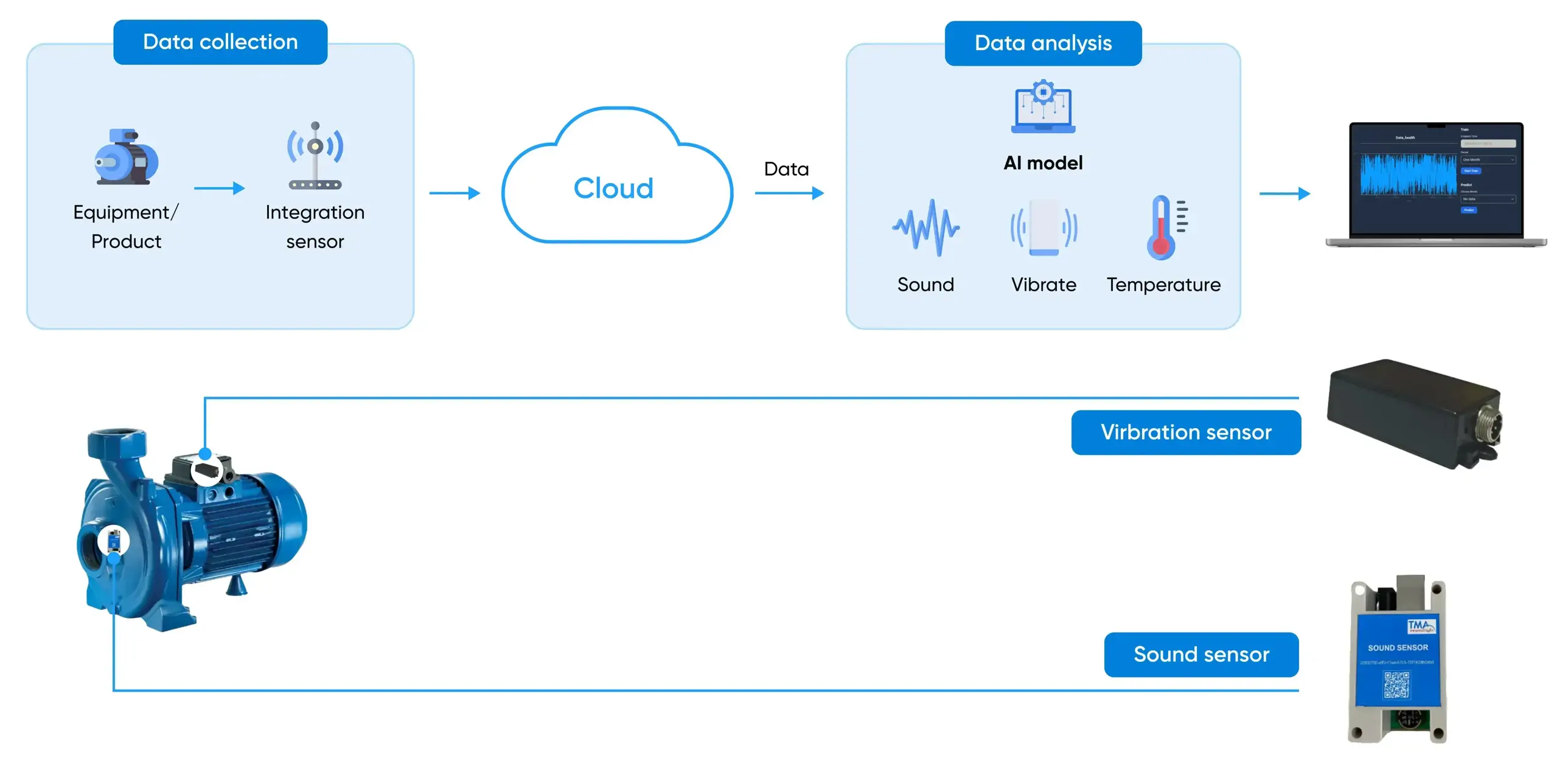
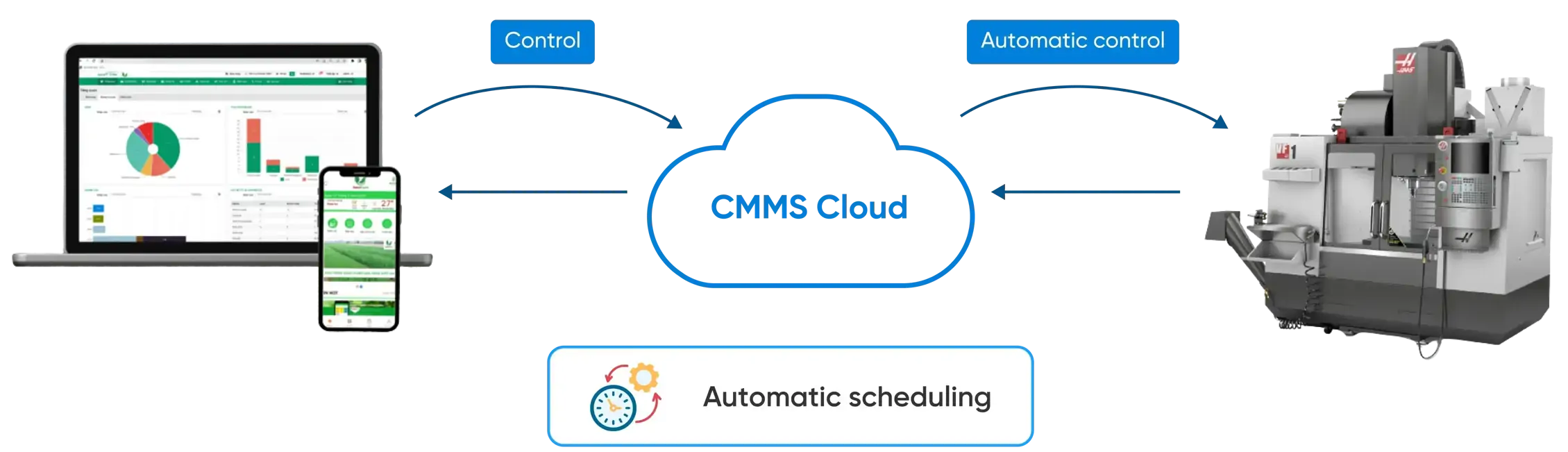
Introduction: The Critical Role of Maintenance Strategy In modern manufacturing, equipment is the heart of production. How a company chooses to maintain that equipment is one of the most critical decisions impacting its bottom line, operational efficiency, and long-term competitiveness. For decades, Preventive Maintenance (PM)—a time-based, scheduled approach—has been the industry standard. However, the rise of Industry 4.0 has ushered in a more intelligent, data-driven strategy: Predictive Maintenance (PdM). While both aim to prevent failures, their methods, costs, and benefits differ significantly. Preventive maintenance operates on a fixed schedule, while predictive maintenance is based on the actual condition of the asset (3). This article provides a clear cost-benefit analysis of these two dominant strategies to help manufacturers make an informed decision that aligns with their operational goals and budget. The Traditional Approach: Preventive Maintenance (PM Preventive maintenance is a proactive strategy built on routine, scheduled inspections and servicing of equipment to lessen the likelihood of it failing. Tasks are performed based on a predetermined calendar (e.g., every three months) or usage metrics (e.g., every 1,000 hours of operation). The Benefits: Simplicity and Predictability : PM schedules are easy to create and manage, providing a clear, predictable budget for maintenance activities. Reduced Failures: Compared to a purely reactive ("run-to-failure") model, a consistent PM schedule undoubtedly prevents many common equipment breakdowns. The Costs and Drawbacks: The primary drawback of PM is its potential for inefficiency. Maintenance is performed whether it is needed or not, which can lead to: Unnecessary Costs: Replacing parts that are still in good condition and spending labor hours on equipment that is functioning perfectly is a significant operational expense (4). Risk of Human Error: Every time a machine is taken offline for maintenance, there is a risk of incorrect reassembly or induced faults. Inability to Prevent All Failures: PM cannot predict unexpected failures that occur between scheduled service intervals, leaving factories vulnerable to unplanned downtime. The Data-Driven Future: Predictive Maintenance (PdM) Predictive maintenance represents a paradigm shift from a time-based to a condition-based approach. It leverages technologies like the Internet of Things (IoT) sensors and Artificial Intelligence (AI) to continuously monitor the real-time health of equipment. By analyzing data streams—such as vibration, temperature, and pressure—AI models can detect subtle anomalies and predict a potential failure long before it occurs. The Benefits: The ROI of a well-implemented PdM program is substantial and multifaceted. Drastic Reduction in Downtime: By identifying issues early, maintenance can be scheduled at the most convenient time, minimizing disruption. Successful PdM programs can improve asset availability by 5 to 15 percent. Significant Cost Savings: PdM eliminates unnecessary maintenance tasks and extends the lifespan of components. This approach can reduce overall maintenance costs by 18 to 25 percent and provides an estimated 8% to 12% savings over a preventive-only program. Optimized Resource Allocation: Technicians are dispatched only when needed, and spare parts are ordered just-in-time, reducing inventory costs and improving labor efficiency. The Costs and Implementation: The primary barrier to PdM adoption is the initial investment. Upfront Technology Costs: Requires investment in sensors, data acquisition systems, and an analytics platform. Need for New Skillsets: Transitioning to PdM requires a shift towards a data-driven culture and may necessitate training staff in data analysis and new technologies. Head-to-Head: A Cost-Benefit Comparison Feature Preventive Maintenance Predictive Maintenance (PdM) Approach Time-based ( Scheduled) Condition-based (Real-time data) Initial Investment Low High Ongoing Costs Moderate to High (due to unnecessary labor and parts) Low (optimized, only as-needed maintenance) Downtime Reduction Moderate High (reduces asset downtime by up to 20%) Resource Efficiency Low (can be wasteful) High (optimized labor and inventory) Return on Investment (ROI) Good Excellent (up to 10x ROI is common) While PM is less expensive to start, PdM delivers far greater long-term value by transforming maintenance from a cost center into a strategic driver of operational excellence. How TMA Solutions Enables the Shift to Predictive Maintenance Understanding that the leap from PM to PdM can be challenging, TMA Solutions offers a practical and scalable pathway with its Computerized Maintenance Management System (CMMS). Our platform acts as the digital backbone for a modern maintenance strategy. TMA’s CMMS helps manufacturers: Integrate Real-Time Data: The system connects seamlessly with IoT sensors on your equipment to gather live operational data. Leverage AI-Powered Insights: Built-in AI models analyze this data to detect anomalies and generate predictive alerts about potential failures. Automate Workflows: When a potential issue is detected, the CMMS automatically creates and assigns a work order, ensuring that interventions are timely and efficient. By using TMA’s CMMS, companies can start their PdM journey in a structured way, beginning with critical assets and scaling across the factory floor to achieve a smarter, more resilient operation. You may find some useful information about this solution https://www.smart-manufacturing.vn/en/computerized-maintenance-management-system here . Figure 1: TMA’s CMMS platform with AI-driven predictive alerts. Another solution which is related to Predictive Maintenance, is Sound-based Fault Detection System, a AI-powered solution developed by TMA for a plastic manufacturing company in Vietnam. The goal was to create a sound detection system for the production of plastic water pipe valves to eliminate defective products and improve quality. You can read more detail information about this solution https://www.smart-manufacturing.vn/en/sound-based-fault-detection-system here . The key features of the solution: Warning System: The system uses sound analysis to detect differences between defective and standard products. When a fault is found, it displays a warning on a mini-screen, allowing the operator to remove the product. Data Collection: It collects sound data from both good and faulty pipes. This data is used to evaluate product quality and improve the accuracy of the AI model over time. Maintenance Planning: Based on the data collected, the system supports planning maintenance for equipment on the production line before problems occur. Figure 2: Sound-based Fault Detection System Conclusion: An Investment in Future-Readiness The choice between preventive and predictive maintenance is a strategic one. While preventive maintenance offers a baseline of stability, it is inherently limited by its one-size-fits-all approach. Predictive maintenance, powered by data and AI, offers a tailored, efficient, and far more effective strategy for the modern factory. The transition to PdM is more than just a maintenance upgrade; it’s a foundational step towards building truly predictive operations (5). By investing in predictive technologies, manufacturers are not just cutting costs—they are building a more resilient, agile, and competitive future. Predictive vs. Preventive Maintenance: A Cost-Benefit Analysis for Modern Factories...
icon
Quantum-Age Cryptographic Vulnerabilities and Mitigations As more of our lives shift into the digital space, securing data has never been more critical. Everything from personal chats to corporate secrets relies on encryption to keep information private. But there's a new kind of computing on the horizon—quantum computing—that threatens to break the encryption systems we currently trust. To prepare, researchers are developing a new generation of defenses known as quantum-safe cryptography. A Quick Primer on Today’s Encryption At the heart of modern data security lies cryptography, which is the practice of encoding information so that only authorized parties can read it. There are two main flavors: Symmetric encryption uses a single key for both locking and unlocking data. It’s fast and often used for encrypting large amounts of data (like with the AES standard). Asymmetric encryption, on the other hand, relies on a pair of keys—one public, one private. Systems like RSA and elliptic curve cryptography (ECC) fall into this category and are commonly used for secure websites, authentication, and digital signatures. These encryption methods rely on certain mathematical puzzles that are incredibly difficult for conventional computers to solve. For example, factoring a very large number (used in RSA) or solving an elliptic curve problem (used in ECC) could take thousands of years. Differences between Symmetric and Assymetric Encryption The Takeaway Quantum computing promises to revolutionize many areas, from drug discovery to logistics. But it also poses a very real threat to digital security as we know it. Quantum-safe cryptography is about getting ahead of that threat—preparing now so we don’t have to panic later. It’s not just about keeping data safe in the future. It’s also about protecting what’s being sent and stored right now—before quantum computers arrive on the scene. Practical Case Studies Long-Term Confidentiality at Risk – "Harvest Now, Decrypt Later" A lot of sensitive data being encrypted today—like government files, medical records, or trade secrets—is meant to stay secret for decades. But attackers don’t need to crack it now. They just steal it, store it, and wait. This “grab it now, unlock it later” approach is especially dangerous because quantum computers could soon break common encryption methods like RSA and ECC. Imagine a competitor quietly collecting encrypted blueprints from a tech company’s servers. They might not be able to read them today, but in ten years, when quantum decryption tools exist, they’ll have full access. That’s why using quantum-safe cryptography now is so important. It protects today’s data from tomorrow’s breakthroughs. Waiting to update encryption means you’re handing future attackers a time bomb they can unlock as soon as they’re able. VoIP Recorded Calls Can Come Back to Haunt You Voice and video calls over the internet—like executive meetings, defense briefings, or diplomatic discussions—usually rely on protocols like SRTP (Secure Real-Time Transport Protocol) with key exchanges handled by DTLS or TLS. These rely on encryption methods like RSA or elliptic curve Diffie-Hellman to keep the call private. The problem? Both can be broken by a strong enough quantum computer using Shor’s algorithm. If someone records a call’s encrypted packets today, they can’t do anything with it—yet. But once quantum tech matures, those recorded sessions can be decrypted and replayed in full. That includes tone, details, even background noises—everything. VoIP traffic often isn’t stored by the people making the call, but attackers don’t follow that rule. They can capture it from routers, compromised networks, or even upstream service providers. And unlike emails or files, which many companies are now encrypting with stronger methods, VoIP security often gets overlooked. Switching to quantum-safe key exchange—like using lattice-based methods such as Kyber—makes it much harder for future quantum tools to break in. Even if someone captures the data, they won't be able to unlock it later. In short, if the conversation matters, it needs future-proof protection. Liboqs: The Pioneer Toolkit to Start Your Quantum-safe Journey Liboqs is an open-source C library for quantum-safe cryptographic algorithms. Liboqs is like a toolkit built in the C programming language that helps programmers get ready for a time when super‑powerful quantum computers could break today’s secret codes. It gathers a bunch of new, safer methods for sharing secret keys and making digital signatures — think of them as stronger locks and unique stamps that quantum computers can’t easily break. The library offers these tools behind a simple, shared interface, so developers can plug‑and‑play different options without rewriting everything. It also includes built‑in tests and speed checks, so you can compare how fast and reliable each method is. Although it isn’t meant for important, real‑world systems yet, it shows how you could add quantum‑proof encryption into things like secure web connections (TLS) or digital identities. In short, Liboqs is a hands‑on playground for building and testing what the next generation of online security might look like when quantum computers arrive. You can find Liboqs at: https://github.com/open-quantum-safe/liboqs Liboqs Github How Quantum Computers Break the Current Cryptography by Exploiting It’s Vulnerabilities Quantum computers operate very differently from the devices we use today. Instead of bits, which represent either a 0 or a 1, quantum machines use qubits, which can be both 0 and 1 at once. This feature, called superposition, along with entanglement (a way for qubits to be connected), allows quantum computers to tackle certain tasks much faster than classical ones. One particularly powerful quantum algorithm, Shor’s Algorithm, can factor large numbers in a fraction of the time it would take a regular computer. That spells trouble for systems like RSA and ECC, which rely on factoring or similar problems for their security. Illustration of Shor's Algorithm Why We Need New Cryptography Even though practical, large-scale quantum computers aren’t yet widely available, the clock is ticking. Data encrypted today could be stolen and stored—then cracked once quantum machines become powerful enough. This looming possibility has prompted governments and experts to begin preparing now. That’s where quantum-safe, or post-quantum cryptography, comes in. It’s about designing encryption methods that can stand up to both classical and quantum attacks. Mitigation Effort in Securing Cryptography in the Quantum Era Quantum-safe, or post-quantum cryptography, is all about building encryption systems that can survive the coming power of quantum computers. Unlike current encryption (like RSA or ECC), which relies on number-factoring or elliptic curves, quantum-safe methods are based on entirely different kinds of problems—ones that quantum computers struggle with just as much as classical ones do. Let’s look more closely at two of the leading families: lattice-based and code-based cryptography. Lattice-Based Cryptography: A Maze Too Complex to Escape Imagine a 3D grid—like a lattice of tiny dots stretching across space. In lattice-based cryptography, we use these grids in many dimensions (not just 3D, but hundreds or even thousands). The math behind this is like solving complex puzzles on these grids, which becomes nearly impossible when the dimensions go high. Illustration of Lattice-based Cryptography A key problem here is called the "Learning With Errors" (LWE) problem. A Simple Analogy: Imagine someone gives you a bunch of equations like this: 2x + 3y ≈ 14 4x + y ≈ 11 But there's a twist—they’ve added a tiny bit of noise (error) to each answer, so the equations are almost, but not exactly, correct. Your job? Figure out what x and y are. Sounds doable in two dimensions. But now imagine doing that with 500 variables and thousands of equations, each slightly distorted. That's what LWE is like—and neither regular computers nor quantum computers are good at solving that kind of problem at a large scale. Code-Based Cryptography: Making Messages Tough to Decode Now, picture someone sending you a message, but to make sure you get it even if a few letters are smudged or lost, they add in some extra data to help you reconstruct the original. That’s the idea behind error-correcting codes—used everywhere from Wi-Fi to satellite communication. Code-based cryptography flips this concept around and uses it to secure data instead. The Core Problem: In this system, an attacker sees a scrambled version of a message that's been encoded with added “noise” and must figure out the original message without knowing the structure of the code used to encode it. That’s known as the syndrome decoding problem. It turns out this problem is also very hard, even for quantum computers. An Easy-to-Grasp Example: Say I send you this word: H3LL0 You might guess I meant "HELLO." Humans are great at correcting small mistakes. Error-correcting codes help machines do the same. But now, imagine trying to reverse-engineer the exact encoding rules I used, just by looking at the distorted words, without ever seeing the original system. That’s far more difficult—and that’s what makes it secure. ...
icon
Real-Time Clinical Data Collection: Transforming Healthcare Laboratories with AI and Connected Devices Healthcare laboratories are becoming data-driven and speed is now as important as accuracy. Clinical laboratories process millions of diagnostic tests every day, generating the data that guides disease diagnosis, treatment planning, chronic disease management, and public health decisions. As healthcare systems become increasingly connected, laboratory data is no longer expected to remain within laboratory information systems (LIS). Instead, clinicians, hospitals, telehealth platforms, and AI applications all depend on timely access to accurate laboratory information. Yet many laboratories still rely on fragmented workflows where test results are manually transferred between analyzers, spreadsheets, Laboratory Information Systems (LIS), Hospital Information Systems (HIS), and Electronic Health Records (EHRs). These disconnected processes delay clinical decisions, increase administrative workloads, and create opportunities for transcription errors. Real-time clinical data collection addresses this challenge by automatically capturing laboratory information directly from connected medical devices and synchronizing it across healthcare systems. Combined with AI, healthcare interoperability standards, and advanced analytics, laboratories can significantly improve operational efficiency while creating trusted data foundations for intelligent healthcare. This article explores why real-time laboratory data collection has become a strategic priority, the technologies enabling connected laboratories, practical implementation considerations, and how TMA Solutions helps healthcare organizations build intelligent laboratory platforms through AI, device integration, and healthcare software development. Why Real-Time Clinical Data Collection Has Become a Strategic Priority Healthcare organizations have spent the past decade digitizing patient records, modernizing Electronic Health Records (EHRs), and investing in AI-powered healthcare solutions. Today, the conversation is shifting from simply collecting healthcare data to ensuring that data is available instantly, accurately, and securely across the entire care journey. This evolution is particularly important in clinical laboratories, where every diagnostic result directly influences patient care. A delayed laboratory result can postpone treatment decisions, extend hospital stays, or reduce the effectiveness of emergency interventions. As healthcare systems become increasingly connected, laboratory information has evolved from an operational asset into a strategic clinical resource. The growing importance of real-time healthcare data is reflected across the industry. According to Grand View Research, the global Laboratory Information Management System (LIMS) market continues to expand as healthcare organizations invest in laboratory automation, interoperability, and digital transformation. At the same time, McKinsey identifies healthcare data interoperability and AI-ready data infrastructure as essential foundations for scaling AI across hospitals and healthcare networks. Healthcare leaders are also recognizing that laboratory automation extends far beyond replacing manual tasks. Modern laboratories generate data from chemistry analyzers, hematology systems, immunoassay analyzers, molecular diagnostics, pathology equipment, and point-of-care testing devices. Without seamless integration between these instruments and downstream healthcare platforms, valuable clinical information remains fragmented across disconnected systems. This challenge becomes even greater as laboratories adopt AI-powered diagnostics and predictive analytics. Artificial Intelligence can only generate reliable clinical insights when it has access to timely, standardized, and high-quality data. Delayed or inconsistent laboratory information limits the value of even the most advanced AI models. As a result, healthcare organizations are increasingly investing in real-time clinical data collection—not simply to automate laboratories, but to create connected healthcare ecosystems where diagnostic information flows automatically between medical devices, laboratory systems, Electronic Health Records (EHRs), and clinical decision support applications. For healthcare executives, the strategic question is no longer: "How can we automate laboratory data entry?" Instead, it has become: "How can we build a connected laboratory where clinical data moves securely and intelligently across the entire healthcare ecosystem?" What Is Real-Time Clinical Data Collection Real-time clinical data collection is the process of automatically capturing, transmitting, and synchronizing clinical information as soon as it is generated by laboratory instruments, medical devices, or healthcare applications. Instead of relying on manual transcription or delayed batch uploads, data flows directly into Laboratory Information Systems (LIS), Electronic Health Records (EHRs), Hospital Information Systems (HIS), and other connected platforms. This approach enables healthcare professionals to access up-to-date clinical information whenever and wherever it is needed. More importantly, it establishes a reliable foundation for laboratory automation, healthcare interoperability, AI-powered analytics, and clinical decision support. As healthcare organizations continue expanding digital transformation initiatives, real-time data collection is becoming an essential capability rather than an optional enhancement. Traditional Laboratory Workflow vs. Connected Laboratory Many healthcare laboratories still operate in environments where laboratory analyzers, information systems, and clinical applications function independently. Although individual systems may be digital, the flow of information between them often depends on manual intervention. A typical workflow may involve laboratory technicians exporting results from diagnostic equipment, validating them manually, and entering or transferring the information into a Laboratory Information System before clinicians can review the results through an Electronic Health Record. While this process has supported laboratories for years, it introduces unnecessary delays, duplicate work, and opportunities for human error. From Traditional Laboratory to Connected Healthcare Ecosystem A connected laboratory follows a fundamentally different model. Medical devices, analyzers, Laboratory Information Systems (LIS), Electronic Health Records (EHRs), and healthcare applications communicate continuously through secure integration. As soon as a test result is generated, it becomes immediately available to authorized users and downstream systems without additional manual processing. This shift allows laboratory data to move seamlessly across the healthcare ecosystem, improving both operational efficiency and the speed of clinical decision-making. The Technologies Behind Real-Time Clinical Data Collection Building a connected laboratory requires more than simply connecting medical devices. It involves integrating multiple technologies that work together to ensure laboratory information is captured accurately, shared securely, and delivered to the right users at the right time. Connected Medical Devices: Enable laboratory analyzers and diagnostic equipment to automatically transmit test results to healthcare systems, reducing manual data entry and improving data availability. Laboratory Information Systems (LIS): Serve as the central platform for managing laboratory workflows, including sample tracking, result validation, quality control, and reporting. Healthcare Interoperability: Standards such as HL7 and FHIR allow laboratory data to be exchanged seamlessly between LIS, EHR, HIS, telehealth platforms, and other healthcare applications. AI & Health Data Analytics: Transform laboratory data into actionable insights, helping healthcare organizations identify trends, improve operational efficiency, and support clinical decision-making. Cloud & Edge Computing: Provide the infrastructure needed to process, store, and access laboratory data securely while supporting scalability across multiple healthcare facilities. How TMA Helps Healthcare Organizations Build Connected Laboratories Building a connected laboratory requires expertise across multiple domains, including medical device integration, healthcare interoperability, healthcare software development, cloud platforms, and AI-powered analytics. For many healthcare organizations, the challenge is not collecting more data, but ensuring that laboratory information can move seamlessly across devices, applications, and care teams. About TMA With more than 16 years of healthcare software development experience, TMA Solutions helps healthcare providers, medical technology companies, and healthcare organizations design and implement connected laboratory ecosystems. TMA's healthcare expertise spans Device Integration, Electronic Health Records (EHR), AI & Health Data Analytics, Remote Health Monitoring, Telehealth, and Healthcare Interoperability solutions. TMA’s areas of expertise of healthcare industry By connecting laboratory analyzers, medical devices, Laboratory Information Systems (LIS), Hospital Information Systems (HIS), and Electronic Health Records (EHR), TMA enables healthcare organizations to automate clinical data collection, improve data accuracy, and create trusted data foundations for future AI initiatives. TMA Capabilities Supporting Connected Laboratories Device Integration TMA integrates medical devices and laboratory instruments with healthcare applications, enabling automatic data exchange across multiple systems and communication protocols. Electronic Health Records (EHR) TMA develops interoperable healthcare platforms that synchronize clinical information across EHRs, Hospital Information Systems, and other healthcare applications. AI & Health Data Analytics By combining laboratory data with advanced analytics and AI technologies, healthcare organizations can gain deeper operational insights and support more informed clinical decision-making. Remote Health Monitoring TMA's Remote Health Monitoring solutions extend healthcare beyond traditional clinical environments by connecting laboratory information with continuous patient monitoring platforms. Advanced remote monitoring capabilities of mCare platform developed by TMA Conclusion Real-time clinical data collection is becoming a critical foundation for modern healthcare laboratories. As testing volumes increase and healthcare ecosystems become more connected, organizations need faster, more accurate, and interoperable ways to capture and manage clinical information. Moving beyond manual workflows not only improves laboratory efficiency but also enables clinicians to access timely insights that support better patient care. The greatest value comes when laboratory data flows seamlessly across devices, Laboratory Information Systems (LIS), Electronic Health Records (EHR), and healthcare applications. Combined with AI, analytics, and interoperability standards, real-time data collection helps healthcare organizations build a trusted data foundation for smarter operations, faster decision-making, and future AI initiatives. With extensive experience in healthcare software development, medical device integration, healthcare interoperability, and AI-powered healthcare solutions, TMA Solutions helps healthcare organizations build connected laboratory ecosystems that transform clinical data into actionable insights. By integrating laboratory systems, medical devices, and healthcare platforms, TMA enables providers to accelerate digital transformation while delivering more efficient and data-driven healthcare services. Looking to modernize laboratory workflows or build a connected healthcare platform? Explore TMA's Healthcare solutions to learn how our experts can support your next healthcare innovation initiative....
icon
Real-Time Data Processing Tools Compared Conclusion Real-time data processing is critical for industries requiring instant insights, from finance to IoT. Apache Kafka excels in high-throughput data ingestion, Apache Flink offers unmatched low-latency processing, Apache Spark Streaming suits complex analytics, Apache Storm provides flexibility for real-time tasks, and Azure Stream Analytics simplifies cloud-native deployments. Selecting the right tool depends on your latency needs, scalability requirements, team expertise, and infrastructure preferences. For expert guidance on implementing these tools, contact TMA Solutions at https://www.tmasolutions.com/contact https://www.tmasolutions.com/contact . Why Choose TMA? TMA Solutions is one of the TOP Vietnam software distributors has 20+ years of experience delivering enterprise-grade technology solutions. Our strengths in https://www.tmasolutions.com/technologies/big-data-and-analytics big data, cloud , and industry-specific consulting make us a trusted partner for digital transformation projects. The following case studies are examples of our successful projects in real-time data management: Optimizing Inventory in Real-time Through Azure Data Integration and Forecasting: Consolidate sales, inventory, and market data, applying machine learning for demand forecasts. Real-Time Visualization: Enable dynamic, real-time data visualization and scalable system deployment to handle growing data requirements. Warehouse Management with Centralized Inventory and Real-time Monitoring Centralized Inventory Management: Implement a robust system that offers a unified view of inventory across all locations, improving accuracy and control. Automated Order Fulfillment: Streamline processes for picking, packing, and shipping, significantly enhancing delivery speed and client satisfaction. Enhanced Reporting Features: Develop comprehensive reporting tools that provide valuable insights for effective decision-making and operational improvements. Real-Time Monitoring Capabilities: Integrate real-time stock tracking to ensure optimal inventory levels and reduce the risk of stockouts. Real-time Warehouse Monitoring Trending in Real-Time Data Processing Real-Time Machine Learning Combining Real-Time Data Processing with https://www.tmasolutions.com/technologies/ai-ml-and-data-sciences Machine Learning enables instant analysis, prediction, and response. These powerful applications like: Fraud Detection: Spotting anomalies and alerting to them in seconds. Personalization: Adjusting recommendations based on real-time user behavior. It boosts accuracy, user experience, and efficiency in finance, e-commerce, manufacturing, logistics, and automated control. Edge Computing and IoT The rise of IoT drives Edge Computing, processing data on devices to: Minimize latency for near-instant responses. Save bandwidth in low-connectivity areas. Ensure availability during network disruptions. Key uses include smart manufacturing, transportation, security, and healthcare. Serverless Streaming This approach enables running streaming data pipelines without the need to manage servers, offering: Automatic scaling based on data traffic Lower costs through pay-per-use pricing Faster development by allowing teams to focus on processing logic rather than infrastructure Examples include AWS Lambda with Kinesis, Google Cloud Dataflow, and Azure Stream Analytics. Introduction Real-time https://www.tmasolutions.com/technologies/big-data-and-analytics data processing provides instant insights from streaming data, critical for applications such as financial trading, fraud detection, IoT monitoring, and personalization. This guide compares five key tools—Apache Kafka, Apache Flink, Apache Spark Streaming, Apache Storm, and Azure Stream Analytics—evaluating their architecture, performance, scalability, usability, and use cases to assist technical teams in selecting the optimal solution. A Flow of Real-Time Data Processing Challenges in Real-Time Data Processing Building a real-time data processing system presents several key technical hurdles, such as: Managing high-speed, large-volume data requires scalable architectures like Kafka and Flink. Ensuring low latency (<100ms) demands optimized pipelines and fast protocols. Handling imperfect data (missing, noise) needs cleaning and validation techniques. Complex analytics like anomaly detection demand highly efficient processing engines. State management across events increases system complexity, solvable with tools like Flink. Excessive costs for infrastructure and expertise can be mitigated with cloud services like Azure Stream Analytics. Comparison of Real-Time Data Processing Tools The following table provides a comparative summary of the discussed real-time data processing tools: Comparison of Real-Time Data Processing Tools When Is It Needed? Real-time data processing is not just a technological trend, but also an essential need in many industries. Here are some typical scenarios: Fraud Detection in Banking and Finance Identifying unusual activity: The system immediately flags transactions that deviate from a client's typical spending patterns and login behavior. Instant alerts and verification: Alerts are sent instantly to the client for verification, allowing for quick action. Preventing potential fraud: By temporarily holding suspicious transactions, the system can prevent financial losses due to fraud. Personalizing Client Experience in E-commerce Track user behavior in real-time: This includes actions like viewing products, time spent on pages, and recent searches. Provide immediate, relevant suggestions: Based on a client's recent activity (e.g., viewing wireless headphones), the system instantly updates their homepage with personalized recommendations. These might include discounted items from favorite brands, highly-rated products in the same category, or related accessories. Boost conversion rates and enhance client experience: By analyzing and responding to user behavior in real-time, the system can increase sales and make clients feel "understood". Monitoring and Control in IoT (Internet of Things) Prevent serious breakdowns: By detecting anomalies like excessive hydraulic pressure and high mold temperature and immediately acting (reducing speed, alerting maintenance), the system prevents equipment failure. Avoid prolonged production line shutdowns: Timely intervention based on real-time data helps maintain continuous operation. Optimize manufacturing efficiency: Proactive issue resolution ensures smoother production and better overall efficiency. What Is a Real-Time Data Processing Tool A real-time data processing tool ingests and analyzes continuous data streams with minimal latency (milliseconds to seconds), enabling immediate reactions in critical applications like fraud detection or live recommendations. Tools Generally Fall Into: Ingestion: Tools like Apache Kafka collect and distribute data. Processing: Tools such as Apache Flink and Apache Spark filter, aggregate, and apply models to data. Hybrid: Azure Stream Analytics exemplifies hybrid tools, combining both ingestion and processing capabilities on managed platforms. Key Features Include: Low Latency: Processes data in near real-time, often within milliseconds. Scalability: Handles increasing data volumes through distributed architectures. Fault Tolerance: Ensures reliability through replication or checkpointing. Flexibility: Supports diverse data sources (e.g., IoT devices, logs, social media) and processing models (e.g., event-time, windowed computations). A Real-Time Data Processing Architecture ...
icon
Real-Time Payments (RTP) & Open Banking: Technical Architecture and Why Vietnam Is a Strong Engineering Hub Architecting the Future: The Technical Blueprint for RTP and Open Banking Success in this new ecosystem hinges on a deep understanding of the underlying technologies. While RTP provides the velocity of transactions, Open Banking provides the data-rich context that unlocks true innovation - including digital lending / cash-flow management, buy now pay later (BNPL) system, international remittance, wealth management software, robot advisor development, and https://www.tmasolutions.com/technologies/ai-ml-and-data-sciences AI-powered financial advisory tools. Real-Time Payments: The Central Nervous System of Modern Commerce RTP networks are the new standard for payment rails, facilitating 24/7/365, instant clearing and settlement. The global value of real-time payment transactions is projected to surge from $27.8 trillion in 2024 to an astonishing $87.3 trillion by 2028 (Statista, 2024). This explosive growth underscores the urgency for architectural modernization. Key pillars include: ISO 20022 as the Lingua Franca: The adoption of the ISO 20022 messaging standard is non-negotiable. Its data-rich format is the key that unlocks automated reconciliation and enhanced fraud detection. By 2025, it is expected that ISO 20022 will be the universal standard for high-value payment systems in all reserve currency zones, supporting over 80% of transaction volumes globally (McKinsey & Company, 2022). Modernized Core Infrastructure: Legacy core banking systems are the primary bottleneck. A successful RTP implementation requires either a core transformation or the deployment of a modern payment hub with seamless core banking integration and API integration for wealth management platforms. For instance, TMA Solutions recently partnered with a leading Australian payments company to develop a comprehensive BNPL system, enabling customers to pay in four equal monthly installments. This project involved building administrator and merchant web portals, mobile and web applications, and APIs for seamless merchant integration, resulting in faster transaction processing and enhanced user adoption across retail channels. Liquidity Management and Irrevocability: RTP transactions are final and irrevocable. This necessitates sophisticated, real-time liquidity monitoring and cash flow management system for fintech to ensure settlement obligations can be met at any second of the day. International clearing and settlement systems, post-trade processing in capital markets are increasingly migrating to real-time rails powered by ISO 20022. TMA Solutions exemplified this in a collaboration with a global capital markets firm, modernizing post-trade operations to achieve full regulatory compliance, automate reconciliation processes, and enable real-time settlement-reducing operational costs by up to 30% while scaling to handle high-volume transactions. Open Banking: From Data Silos to Collaborative Platforms Open Banking mandates a shift from a closed model to an open, API-driven platform. The number of Open Banking users worldwide is forecast to grow to over 132.2 million, a more than five-fold increase from 2020, demonstrating massive user adoption (Statista, 2021). This requires a fundamental rethinking of how banks manage data, security, and third-party relationships - enabling mobile payment solutions, digital banking services, Web3 fintech platform, and even blockchain financial solutions such as letter of guarantee using blockchain. An API-First Security Framework: The architecture must be built around a robust API gateway and Agentic API AI. Protocols like OAuth 2.0, OpenID Connect (OIDC), and Financial-grade API (FAPI) are the bedrock of trust, ensuring granular, consent-based access to customer data. TMA Solutions' expertise in this area shines through its development of secure API layers for digital banking platforms, supporting features like account aggregation and personalized financial insights while maintaining compliance with global standards. Consent Lifecycle Management: A critical architectural component is the Consent Management Platform. This system must provide a seamless user experience for granting, reviewing, and revoking consent, while creating an immutable audit trail for regulatory compliance. Scalable, Resilient Infrastructure: Exposing core banking functions via APIs introduces new performance challenges. The underlying infrastructure must be built on modern principles, such as microservices and containerization (e.g., Docker, Kubernetes), and AI-powered automation to ensure high availability and elastic scalability. As part of its Open Banking services, TMA Solutions has delivered end-to-end digital bank solutions for clients in Australia and Europe, incorporating real-time transaction processing, international remittance modules, and AI-driven fraud detection-empowering faster, safer financial services with 99.9% uptime. SCA & Explicit Consent in Open Banking The era of batch processing and siloed financial data is over. Two powerful, synergistic forces - Real-Time Payments (RTP) and Open Banking - are fundamentally reshaping the global financial landscape. This is not merely an incremental upgrade; it is a paradigm shift demanding a new architectural vision. For financial institutions and FinTech innovators, the challenge is no longer about whether to adapt, but how to build the robust, secure, and scalable infrastructure required to compete and win - from core banking integration, digital payment solutions, mobile banking, e-wallets, and digital wallet development to advanced fintech development services and payment gateway integration for fintech apps. This analysis provides a strategic overview of the core architectural components and makes a compelling business case for leveraging Vietnam's world-class engineering talent as the engine for this transformation. Converged RTP & Open Banking Ecosystem Conclusion The convergence of Real-Time Payments and Open Banking is no longer a future trend - it is the present reality of https://www.tmasolutions.com/industries/finance global finance . By 2028, real-time transaction volumes will exceed $87 trillion, and over 132 million consumers will actively use Open Banking services. Financial institutions that fail to modernize their payment rails, expose secure APIs, and adopt ISO 20022-native, https://www.tmasolutions.com/technologies/cloud cloud-ready architectures will simply be left behind. With a dedicated FinTech Center of more than 600 specialized engineers, 27+ years of delivering mission-critical financial systems for banks, payment providers, and capital markets firms worldwide, and a track record that includes end-to-end BNPL platforms, digital banking services, core banking integration, Web3 fintech platforms, international remittance systems, robo-advisor solutions, and real-time post-trade processing modernization, TMA Solutions is uniquely positioned to turn architectural vision into production-grade reality - faster, more securely, and more cost-effectively than anyone else. Take the next step today. Contact TMA Solutions and let our FinTech architects show you how to lead - not follow - in the new financial ecosystem. TMA Solutions: Your Strategic Execution Partner in FinTech Transformation In the new financial ecosystem, your competitive advantage will be determined by the quality and agility of your technology. Visionary architecture is essential, but flawless execution is what delivers results. At https://www.tmasolutions.com TMA Solutions , we bridge the gap between strategy and execution. With over 27 years of experience in delivering complex software solutions for global clients, we combine deep architectural expertise with the power of our world-class engineering centers in Vietnam. Our FinTech Center specializes in end-to-end fintech development services, from core banking integration, payment gateway integration, digital banking services, eWallet development for multi-currency and multilingual use, to cutting-edge Web3 fintech platforms and NFT marketplace development for fintech. We also provide specialized services in real-time payment orchestration, Open Banking API ecosystems, and AI-enhanced compliance tools, drawing from proven implementations like our BNPL payment system for Australian merchants and post-trade modernization for capital markets leaders. We don't just write code; we build secure, scalable, and resilient financial systems that drive business outcomes-such as reducing processing times by 90% in logistics-integrated payment flows or automating document processing with Azure AI for fraud prevention. The Strategic Imperative: Why Vietnam is the Premier Engineering Hub for FinTech Architecting these complex systems is only half the battle. Executing the vision requires a deep reservoir of world-class engineering talent. Increasingly, global technology leaders are finding this combination in Vietnam. Vietnam has firmly established itself as a leading global technology hub, particularly in financial software outsourcing and fintech development services, ranking as the second-largest software outsourcing destination in Southeast Asia (Forbes, 2023). A Critical Mass of Specialized Talent: Vietnam's focused investment in STEM education has created a vast and growing pool of IT professionals. The country has a young, tech-savvy population, with over 57,000 students graduating with IT-related degrees each year, providing a sustainable pipeline of talent (Vietnamnet, 2023). Many of these graduates contribute to TMA Solutions' dedicated FinTech Center, comprising over 600 engineers specializing in digital payment solutions, core banking integration, blockchain financial solutions, AI-powered financial advisory tools, and robo advisor development. High-Impact Economics & Velocity: The economic advantage of partnering with Vietnamese engineering teams is undeniable. The strategic value, however, extends beyond cost savings. It enables companies to build larger, more dedicated teams, accelerating development velocity-a critical advantage in the fast-moving FinTech space. For example, TMA's scalable teams have accelerated time-to-market for clients' RTP and Open Banking initiatives by 40%, as seen in their delivery of Web3-enabled payment gateways and NFT marketplace integrations for fintech platforms. A Culture of Engineering Excellence: The Vietnamese engineering culture is characterized by a rigorous work ethic and a commitment to quality. This, combined with a stable political environment and strong government support for the digital economy, creates a low-risk, high-reward environment for mission-critical technology development. TMA Solutions leverages this to offer comprehensive services like fintech R&D using blockchain and Web3, digital lending, automated trading, and capital market solutions, trusted by leading firms in Australia, Europe, and Asia....