Introduction: A New Era of HVAC Maintenance
HVAC systems are the backbone of comfort and safety in industrial facilities, office buildings, hospitals, and smart homes. However, unexpected failures in HVAC systems can lead to massive energy waste, unsafe environments, and unplanned downtime. Traditional maintenance approaches like preventive or corrective maintenance are either reactive or too rigid to accommodate real-world variability.
Enter predictive maintenance, a forward-looking strategy that uses AI and IoT to detect anomalies, anticipate failures, and optimize maintenance schedules. Predictive maintenance is more than a buzzword; it's a critical enabler of energy efficiency, operational uptime, and sustainability in modern infrastructure.
According to MDPI, leveraging AI in HVAC systems can cut energy consumption by up to 40% and significantly extend asset lifespan.
The Rise of AI and IoT in HVAC Predictive Maintenance
Thanks to the maturity of machine learning algorithms, high-frequency sensor data, and cloud/edge computing, predictive maintenance has become increasingly feasible and scalable. Here's how AI and IoT empower HVAC systems:
Real-Time Monitoring
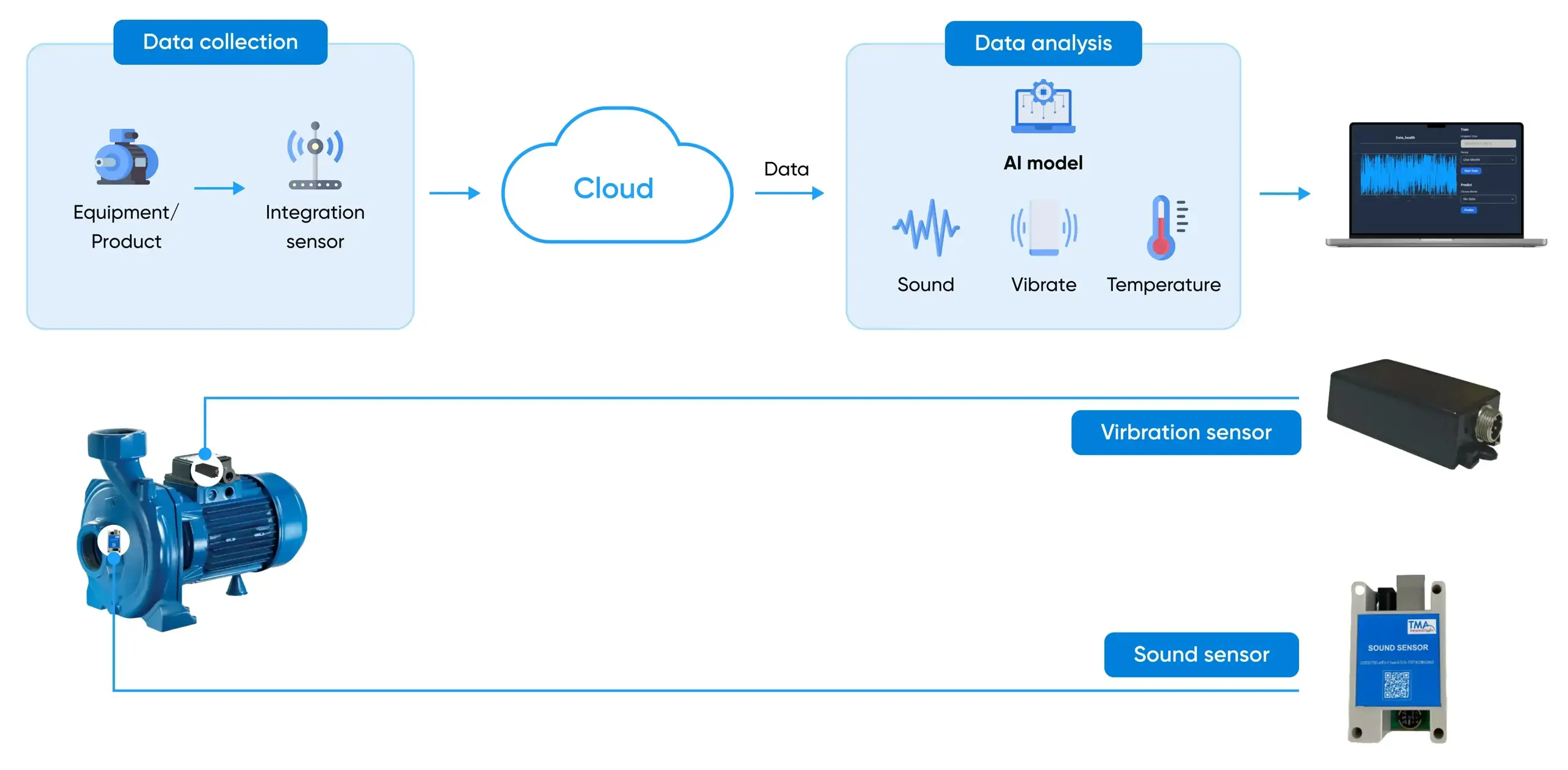
HVAC components (e.g., compressors, chillers, filters, fans) are equipped with sensors that monitor:
Temperature
Vibration
Humidity
Pressure
Power usage
This data is transmitted via IoT protocols (like MQTT) to a centralized system for analysis (5).
Anomaly Detection and Pattern Recognition
AI models—such as LSTM, CNN, and random forest—learn the "normal" behavior of HVAC systems. When behavior deviates from the norm, the system flags early warnings. For example:
A gradual increase in fan vibration could indicate bearing wear
A drop in airflow might signal filter clogging
Temperature fluctuation may suggest refrigerant leakage
Failure Prediction and Maintenance Scheduling
By predicting the Remaining Useful Life (RUL) of components, facilities can:
Avoid over-maintenance
Prevent catastrophic failures
Schedule interventions just in time
Energy Optimization
HVAC systems account for approximately 40–50% of total energy use in commercial buildings, depending on climate, building type, and occupancy patterns. A major reason for this high consumption is the inefficiency that arises when HVAC components operate outside their optimal parameters, such as improper refrigerant pressure or faulty actuators affecting temperature regulation.
Real-World Impact and Business Value
Reduced Downtime and Repair Costs
With predictive signals, maintenance teams can address issues before they cause failure, reducing emergency repairs by over 50%.
Energy Efficiency and Sustainability
Buildings using AI-driven HVAC systems saw energy consumption drop by up to 15–40%, depending on size and configuration.
Operational Cost Savings
By eliminating unnecessary inspections and extending component lifespan, predictive maintenance significantly lowers the total cost of ownership (TCO).
Workforce Efficiency
Smart scheduling and automated diagnostics reduce technician load, filling the skill gap in the HVAC workforce.
TMA’s solutions
Predictive Maintenance: In 2024, a leading Vietnamese manufacturing company specializing in plastic valves and pipes faced a persistent challenge in maintaining consistent product quality across its production lines. Despite automation, defective items occasionally passed through undetected, leading to wasted materials, increased downtime, and potential risks to their brand reputation. The impact was immediate and measurable. Product pass rates rose to 99%, greatly enhancing consistency and client confidence. The automation of fault detection not only reduced the need for manual inspection but also enabled the factory to scale production without increasing labor costs.
Conclusion: Predictive Maintenance is the Future of HVAC Management
Predictive maintenance is no longer a luxury; it's becoming a necessity in HVAC system management. As buildings grow smarter and energy regulations tighten, facility operators can no longer afford the inefficiencies of reactive or overly scheduled preventive maintenance. AI and IoT bring a paradigm shift: turning real-time data into actionable insights and replacing guesswork with precision.
From real-time monitoring and anomaly detection to automated scheduling and energy optimization, predictive maintenance enhances reliability, extends equipment life, and minimizes both downtime and operational costs. Beyond operational gains, it also supports larger organizational goals, such as sustainability, safety, and compliance.
The evolution of HVAC maintenance is underway. As sensor technology becomes more accessible, edge AI matures, and machine learning algorithms become increasingly accurate, the predictive approach will soon become industry standard. Organizations that adopt early will not only enjoy technical and financial advantages but will also lead the way toward smarter, more resilient infrastructure in the age of Industry 4.0.


.webp_2026-10-01-18-27-07-971.webp)
.webp_2026-10-01-18-17-11-290.webp)