Introduction: The Critical Role of Maintenance Strategy
In modern manufacturing, equipment is the heart of production. How a company chooses to maintain that equipment is one of the most critical decisions impacting its bottom line, operational efficiency, and long-term competitiveness. For decades, Preventive Maintenance (PM)—a time-based, scheduled approach—has been the industry standard. However, the rise of Industry 4.0 has ushered in a more intelligent, data-driven strategy: Predictive Maintenance (PdM).
While both aim to prevent failures, their methods, costs, and benefits differ significantly. Preventive maintenance operates on a fixed schedule, while predictive maintenance is based on the actual condition of the asset (3). This article provides a clear cost-benefit analysis of these two dominant strategies to help manufacturers make an informed decision that aligns with their operational goals and budget.
The Traditional Approach: Preventive Maintenance (PM
Preventive maintenance is a proactive strategy built on routine, scheduled inspections and servicing of equipment to lessen the likelihood of it failing. Tasks are performed based on a predetermined calendar (e.g., every three months) or usage metrics (e.g., every 1,000 hours of operation).
The Benefits:
- Simplicity and Predictability: PM schedules are easy to create and manage, providing a clear, predictable budget for maintenance activities.
- Reduced Failures: Compared to a purely reactive ("run-to-failure") model, a consistent PM schedule undoubtedly prevents many common equipment breakdowns.
The Costs and Drawbacks: The primary drawback of PM is its potential for inefficiency. Maintenance is performed whether it is needed or not, which can lead to:
- Unnecessary Costs: Replacing parts that are still in good condition and spending labor hours on equipment that is functioning perfectly is a significant operational expense (4).
- Risk of Human Error: Every time a machine is taken offline for maintenance, there is a risk of incorrect reassembly or induced faults.
- Inability to Prevent All Failures: PM cannot predict unexpected failures that occur between scheduled service intervals, leaving factories vulnerable to unplanned downtime.
The Data-Driven Future: Predictive Maintenance (PdM)
Predictive maintenance represents a paradigm shift from a time-based to a condition-based approach. It leverages technologies like the Internet of Things (IoT) sensors and Artificial Intelligence (AI) to continuously monitor the real-time health of equipment. By analyzing data streams—such as vibration, temperature, and pressure—AI models can detect subtle anomalies and predict a potential failure long before it occurs.
The Benefits: The ROI of a well-implemented PdM program is substantial and multifaceted.
- Drastic Reduction in Downtime: By identifying issues early, maintenance can be scheduled at the most convenient time, minimizing disruption. Successful PdM programs can improve asset availability by 5 to 15 percent.
- Significant Cost Savings: PdM eliminates unnecessary maintenance tasks and extends the lifespan of components. This approach can reduce overall maintenance costs by 18 to 25 percent and provides an estimated 8% to 12% savings over a preventive-only program.
- Optimized Resource Allocation: Technicians are dispatched only when needed, and spare parts are ordered just-in-time, reducing inventory costs and improving labor efficiency.
The Costs and Implementation: The primary barrier to PdM adoption is the initial investment.
- Upfront Technology Costs: Requires investment in sensors, data acquisition systems, and an analytics platform.
- Need for New Skillsets: Transitioning to PdM requires a shift towards a data-driven culture and may necessitate training staff in data analysis and new technologies.
Head-to-Head: A Cost-Benefit Comparison
| Feature | Preventive Maintenance | Predictive Maintenance (PdM) |
| Approach | Time-based ( Scheduled) | Condition-based (Real-time data) |
| Initial Investment | Low | High |
| Ongoing Costs | Moderate to High (due to unnecessary labor and parts) | Low (optimized, only as-needed maintenance) |
| Downtime Reduction | Moderate | High (reduces asset downtime by up to 20%) |
| Resource Efficiency | Low (can be wasteful) | High (optimized labor and inventory) |
| Return on Investment (ROI) | Good | Excellent (up to 10x ROI is common) |
While PM is less expensive to start, PdM delivers far greater long-term value by transforming maintenance from a cost center into a strategic driver of operational excellence.
How TMA Solutions Enables the Shift to Predictive Maintenance
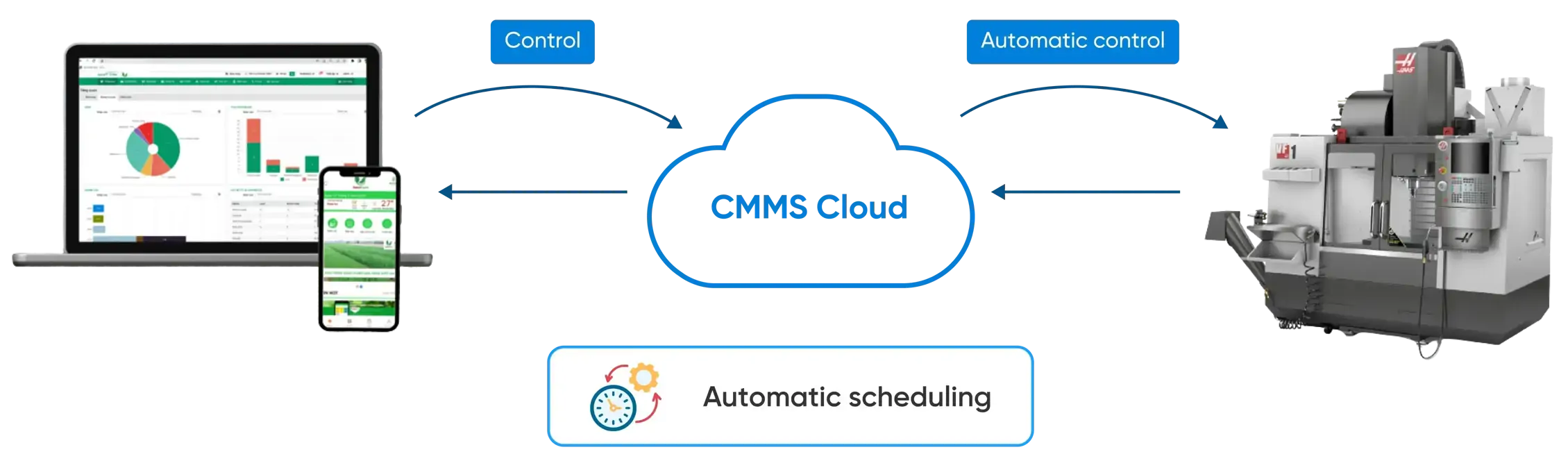
Understanding that the leap from PM to PdM can be challenging, TMA Solutions offers a practical and scalable pathway with its Computerized Maintenance Management System (CMMS). Our platform acts as the digital backbone for a modern maintenance strategy.
TMA’s CMMS helps manufacturers:
- Integrate Real-Time Data: The system connects seamlessly with IoT sensors on your equipment to gather live operational data.
- Leverage AI-Powered Insights: Built-in AI models analyze this data to detect anomalies and generate predictive alerts about potential failures.
- Automate Workflows: When a potential issue is detected, the CMMS automatically creates and assigns a work order, ensuring that interventions are timely and efficient.
By using TMA’s CMMS, companies can start their PdM journey in a structured way, beginning with critical assets and scaling across the factory floor to achieve a smarter, more resilient operation. You may find some useful information about this solution here.
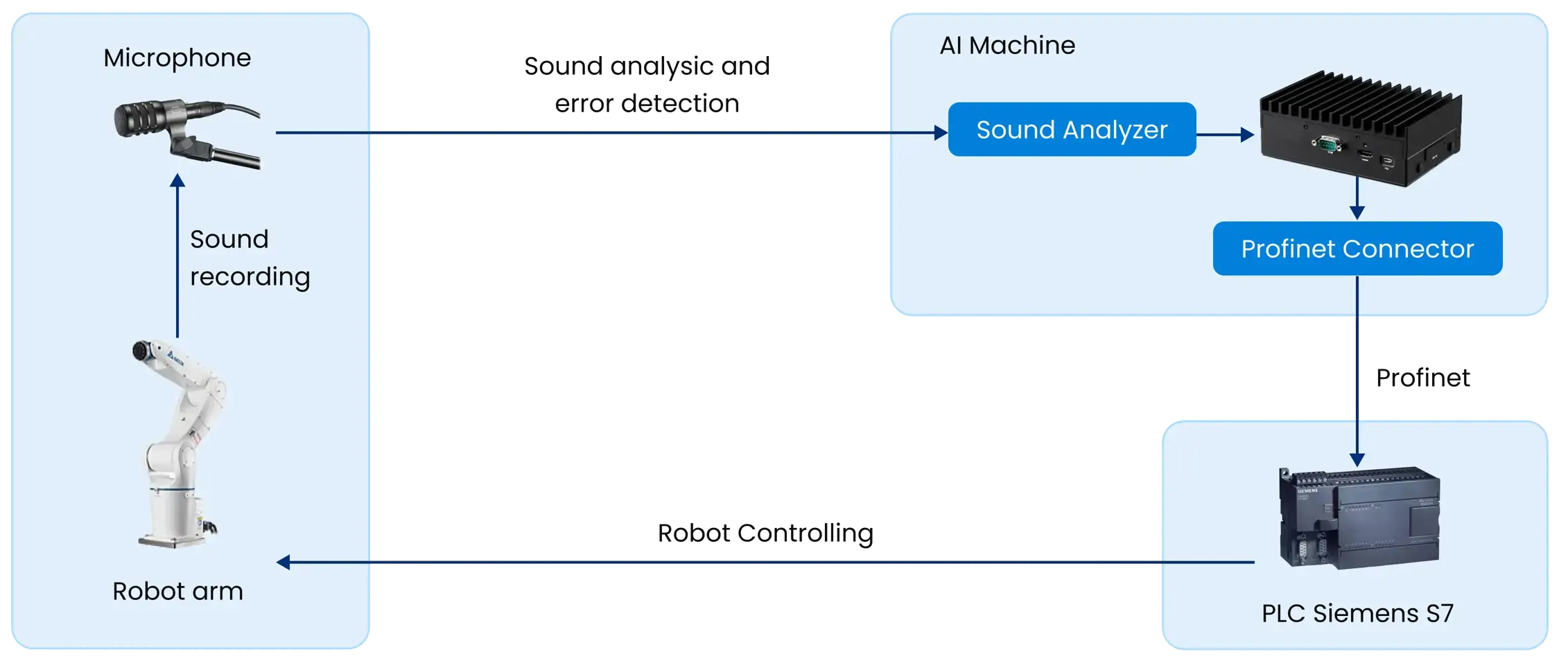
Another solution which is related to Predictive Maintenance, is Sound-based Fault Detection System, a AI-powered solution developed by TMA for a plastic manufacturing company in Vietnam. The goal was to create a sound detection system for the production of plastic water pipe valves to eliminate defective products and improve quality. You can read more detail information about this solution here.
The key features of the solution:
Warning System: The system uses sound analysis to detect differences between defective and standard products. When a fault is found, it displays a warning on a mini-screen, allowing the operator to remove the product.
Data Collection: It collects sound data from both good and faulty pipes. This data is used to evaluate product quality and improve the accuracy of the AI model over time.
Maintenance Planning: Based on the data collected, the system supports planning maintenance for equipment on the production line before problems occur.
Conclusion: An Investment in Future-Readiness
The choice between preventive and predictive maintenance is a strategic one. While preventive maintenance offers a baseline of stability, it is inherently limited by its one-size-fits-all approach. Predictive maintenance, powered by data and AI, offers a tailored, efficient, and far more effective strategy for the modern factory.
The transition to PdM is more than just a maintenance upgrade; it’s a foundational step towards building truly predictive operations (5). By investing in predictive technologies, manufacturers are not just cutting costs—they are building a more resilient, agile, and competitive future.


.webp_2026-10-01-18-27-07-971.webp)
.webp_2026-10-01-18-17-11-290.webp)
.webp_2026-10-01-18-08-26-854.webp)
.webp_2026-10-01-17-47-32-240.webp)