Healthcare organizations are accelerating investments in Artificial Intelligence (AI), cloud technologies, and digital health platforms to improve care delivery and operational efficiency. However, many critical healthcare workflows still depend on unstructured clinical documents, making it difficult to access, share, and leverage information across enterprise systems.
Medical OCR is helping healthcare providers overcome this challenge by combining Optical Character Recognition (OCR) with AI-powered document understanding to transform medical documents into structured, actionable data. Beyond reducing manual data entry, modern Medical OCR supports interoperability, strengthens data quality, and lays the foundation for scalable Healthcare AI initiatives.
In this article, we'll explore why intelligent clinical document processing has become a strategic priority, how AI is redefining Medical OCR, the business value it delivers across the healthcare ecosystem, and best practices for implementing Medical OCR solutions that integrate seamlessly with existing healthcare systems.
Why Intelligent Healthcare Document Processing Has Become a Strategic Priority
Healthcare is entering a new phase of digital transformation, where the competitive advantage is no longer determined by who adopts AI first, but by who can build a reliable foundation of healthcare data for AI to operate effectively.
This shift was evident at HIMSS26, one of the world's largest healthcare technology conferences, where discussions moved beyond AI experimentation toward a more practical question: How can healthcare organizations make fragmented clinical data usable for real-world AI applications? According to HIMSS, interoperability alone is no longer enough. Healthcare providers now recognize that exchanging data does not automatically make it meaningful or actionable. The real challenge is transforming fragmented and unstructured clinical information into trusted, structured data that AI systems and healthcare professionals can use with confidence.
The challenge is particularly significant because a large proportion of healthcare information still originates from unstructured sources. Physician notes, pathology reports, laboratory results, referral letters, insurance claims, discharge summaries, and historical patient records often exist as scanned PDFs, handwritten documents, or reports generated by different healthcare systems. Although these documents contain critical clinical insights, much of their value remains inaccessible to analytics platforms, Electronic Health Records (EHRs), and AI applications until someone manually reviews and enters the information.
Research from McKinsey reinforces this perspective. While AI continues to unlock new opportunities across healthcare, organizations consistently identify data quality, governance, interoperability, and digitization as the biggest barriers to scaling AI successfully. In other words, even the most advanced AI models cannot deliver meaningful business outcomes if the underlying clinical information is fragmented, inconsistent, or difficult to access.
According to Grand View Research, the global Intelligent Document Processing market is projected to grow at a CAGR of more than 30% through the next decade as organizations increasingly automate document intensive workflows. Healthcare is expected to remain one of the fastest growing industries due to rising regulatory requirements, workforce shortages, and growing volumes of clinical data.
This explains why healthcare leaders are increasingly shifting their focus from simply digitizing documents to building intelligent document processing capabilities. The objective is no longer to archive clinical documents electronically, but to transform them into structured, searchable, and interoperable healthcare data that can support clinical decision-making, workflow automation, regulatory compliance, and enterprise AI initiatives.
From Document Digitization to Intelligent Healthcare Data
For many years, healthcare organizations focused on digitizing paper records to reduce physical storage and improve accessibility. While this transition was an essential step toward digital healthcare, storing documents electronically does not automatically make the information inside them usable.
A scanned laboratory report, for example, may be easy to archive, but clinicians still cannot search individual test values, analytics platforms cannot analyze the data automatically, and AI systems cannot reliably interpret the document without additional processing.
The industry's focus has therefore shifted from document digitization to document intelligence.
Rather than asking "How can we scan more documents?", healthcare leaders are asking:
- How can clinical information become immediately available across departments? Faster access to structured information helps clinicians make informed decisions without waiting for manual data entry or document verification.
- How can healthcare organizations improve data quality before information reaches enterprise systems? Validating and standardizing information at the point of capture reduces downstream errors and strengthens the reliability of EHRs, analytics platforms, and AI applications.
- How can hospitals integrate information from multiple sources? Clinical documents originate from laboratories, imaging centers, insurance providers, external clinics, and connected medical devices. Converting these documents into structured data simplifies interoperability across complex healthcare ecosystems.
- How can document processing support future AI initiatives? Intelligent document processing creates the structured, high-quality datasets required for predictive analytics, clinical decision support, AI Agents, and other advanced Healthcare AI applications.
These questions are driving healthcare organizations toward a new generation of document processing technologies, where the objective is not simply to recognize text, but to understand, validate, and connect clinical information.
Medical OCR has emerged as one of the key technologies enabling this transformation.
What Is Medical OCR and How Is It Different from Traditional OCR?
For years, OCR technology has helped organizations reduce paper-based workflows by converting printed documents into machine-readable text. In healthcare, this capability enabled hospitals and clinics to digitize patient records, archive historical documents, and reduce manual filing.
However, digitization alone is no longer enough. Today's healthcare environment requires clinical information to move seamlessly between Electronic Health Records (EHRs), Hospital Information Systems (HIS), Laboratory Information Systems (LIS), insurance platforms, pharmacy systems, and AI-powered applications. Simply converting a document into editable text does not provide the context, structure, or data quality needed for these systems to exchange and interpret information accurately.
Medical OCR addresses this limitation by combining traditional OCR with Artificial Intelligence technologies such as Computer Vision, Natural Language Processing (NLP), and Intelligent Document Processing (IDP). Rather than recognizing characters alone, Medical OCR identifies document types, understands medical terminology, extracts relevant clinical data, validates key information, and prepares structured outputs that can be integrated directly into healthcare applications.
In other words, Medical OCR transforms documents from static records into trusted sources of clinical data that support automation, interoperability, and Healthcare AI.
Traditional OCR vs. Medical OCR vs. Intelligent Document Processing
Although OCR, Medical OCR, and Intelligent Document Processing (IDP) are often discussed together, they represent different stages in the evolution of document automation. Understanding these differences helps healthcare organizations choose technologies that align with both their immediate operational needs and long-term digital transformation strategies.
Capability | Traditional OCR | Medical OCR | Intelligent Document Processing (IDP) |
Primary purpose | Convert printed text into editable text | Extract structured clinical information | Automate the complete document lifecycle |
Best suited for | Standard printed documents | Healthcare documents | Enterprise document workflows |
Recognize handwritten clinical notes | Limited | ✓ | ✓ |
Understand medical terminology | ✗ | ✓ | ✓ |
Extract patient and clinical entities | ✗ | ✓ | ✓ |
Classify healthcare document types | ✗ | ✓ | ✓ |
Validate extracted information | ✗ | ✓ | ✓ |
Integrate with EHR, HIS, LIS, EMR | Limited | ✓ | ✓ |
Support workflow automation | ✗ | Partial | ✓ |
Continuously improve using AI | ✗ | Limited | ✓ |
Traditional OCR remains valuable for digitizing printed documents. However, healthcare organizations increasingly require technologies capable of understanding clinical context rather than simply recognizing characters.
Medical OCR fills this gap by transforming unstructured healthcare documents into structured clinical data, while Intelligent Document Processing extends this capability by orchestrating complete document workflows, applying business rules, integrating with enterprise platforms, and continuously improving through AI.
For many healthcare organizations, Medical OCR serves as the foundation upon which broader Intelligent Document Processing initiatives are built.
The Role of AI in Modern Medical OCR
Artificial Intelligence is the key differentiator that transforms OCR from a text recognition tool into an intelligent healthcare solution.

Instead of relying solely on predefined templates, modern Medical OCR solutions can adapt to diverse document layouts and continuously improve as they process new document types. This flexibility is particularly valuable in healthcare, where documents originate from hospitals, laboratories, insurers, pharmacies, medical device manufacturers, and external care providers using different formats and standards.
Several AI technologies work together throughout this process:
- Computer Vision: Analyzes document layouts, identifies tables, handwritten notes, signatures, stamps, and images, enabling the system to understand the visual structure of healthcare documents rather than simply recognizing text.
- Natural Language Processing (NLP): Interprets medical terminology, abbreviations, diagnoses, medications, and physician narratives, allowing clinical information to be extracted with greater context and accuracy.
- Machine Learning Models: Improves document classification and data extraction by learning from corrections and new document variations, reducing manual configuration over time.
- Intelligent Validation Engines: Compares extracted information against predefined business rules or healthcare standards, helping organizations detect missing values, inconsistent patient information, or abnormal data before integration.
By combining these technologies, Medical OCR enables healthcare organizations to automate document-intensive processes while improving data quality, interoperability, and operational efficiency.
As healthcare organizations continue expanding AI initiatives, the focus is shifting from simply extracting text to creating trusted healthcare data that can flow across enterprise systems. This evolution explains why Medical OCR is increasingly viewed as a strategic investment rather than a standalone automation tool.
The next step is understanding where these capabilities create measurable business value across hospitals, laboratories, insurers, telehealth providers, and other healthcare organizations.
How TMA Helps Healthcare Organizations Build AI-Powered Medical Document Processing Solutions
Healthcare organizations often discover that implementing Medical OCR is not simply about selecting an OCR engine. Success depends on how well the solution understands clinical documents, integrates with existing healthcare systems, protects sensitive patient data, and supports future AI initiatives.
With more than 16 years of healthcare software development experience and a dedicated team of over 700 healthcare engineers, TMA Solutions helps healthcare providers, medical technology companies, and digital health organizations accelerate clinical document automation and digital transformation. Our healthcare expertise spans Remote Health Monitoring, Medical Device Integration, Healthcare Data Analytics, Pharmacy Automation, and AI-powered healthcare solutions for customers across countries in the world.
Rather than delivering a standalone OCR product, TMA develops end-to-end solutions that fit seamlessly into existing healthcare workflows while providing a scalable foundation for long-term digital transformation.
AI-Powered Medical OCR for Clinical Data Extraction
Healthcare organizations process thousands of documents every day—from patient registration forms and prescriptions to laboratory reports, discharge summaries, and medical device outputs. Much of this information still requires manual transcription before it can be stored in Electronic Health Records (EHRs) or Hospital Information Systems (HIS).
TMA's AI-powered Medical OCR solution automatically extracts clinical information from a wide range of healthcare documents and more than 30 medical devices, converting fragmented data into structured electronic records. The solution combines OCR, Computer Vision, and AI to recognize printed and handwritten information while allowing organizations to configure custom extraction templates for different document formats.
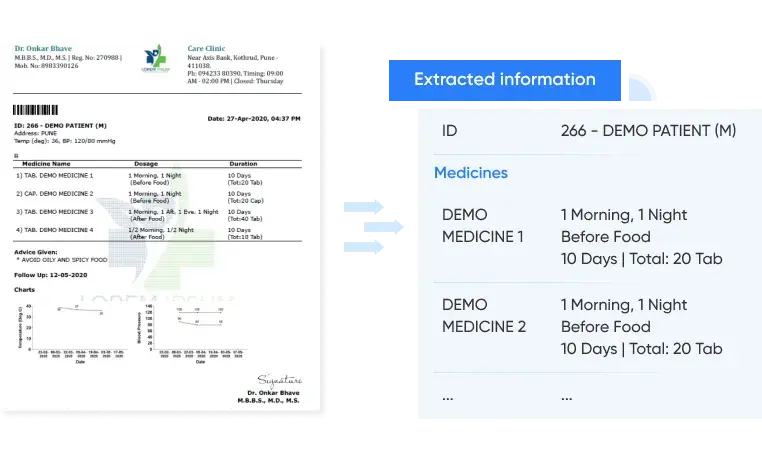
Explore how TMA applies AI and OCR technologies across healthcare: Case Study: Automating Healthcare Data Collection with OCR
TMA's End-to-End Healthcare Platform Capabilities
Medical OCR delivers the greatest value when integrated into a broader healthcare ecosystem. Leveraging more than 16 years of healthcare software development experience, TMA builds end-to-end healthcare platforms that combine Medical OCR with AI & Health Data Analytics, Remote Health Monitoring, Medical Device Integration, Electronic Health Records (EHR), Telehealth, Pharmacy Automation, and other digital health solutions. This integrated approach enables healthcare organizations to transform fragmented clinical data into connected, intelligent healthcare systems that support better patient care and long-term digital transformation.
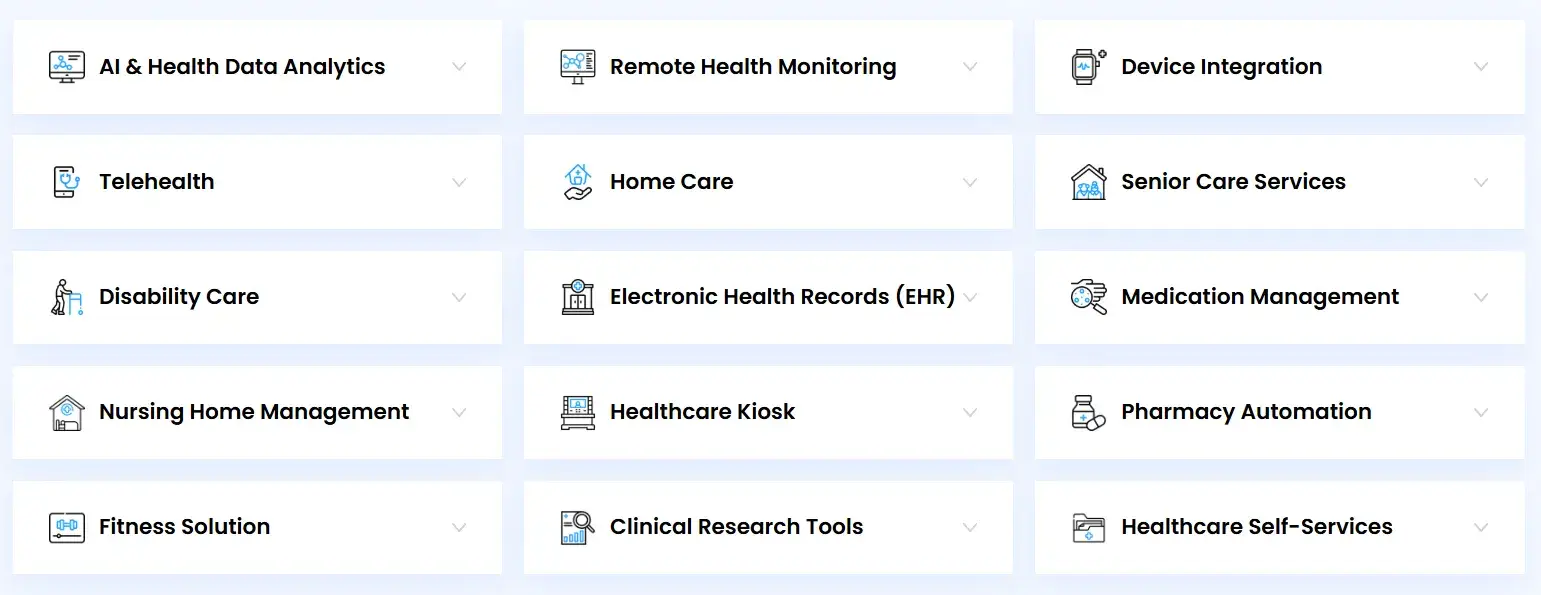
- AI & Health Data Analytics
Healthcare organizations generate massive volumes of clinical and operational data every day. TMA's AI & Health Data Analytics solutions help transform this information into meaningful insights through predictive analytics, health trend analysis, and AI-driven decision support, enabling providers to make faster and more informed decisions.
- Remote Health Monitoring
Designed for continuous patient care, TMA's Remote Health Monitoring platform connects wearable devices, medical equipment, and healthcare professionals through a single ecosystem. Real-time monitoring, automated alerts, and remote consultations help clinicians respond earlier while improving patient engagement outside traditional healthcare facilities.
- Device Integration
Modern healthcare environments rely on a wide range of medical devices that often use different communication protocols. TMA enables seamless integration between medical equipment and healthcare platforms, allowing organizations to collect, synchronize, and manage clinical data more efficiently.
- Telehealth
Virtual healthcare has become an essential part of modern care delivery. TMA develops secure telehealth solutions that support video consultations, appointment scheduling, remote patient communication, and digital care management, helping providers extend healthcare services beyond hospital walls.
- Home Care
Delivering quality healthcare at home requires continuous communication between patients, caregivers, and clinicians. TMA's Home Care solutions provide digital tools that support remote monitoring, care coordination, and personalized health management for patients receiving treatment outside clinical settings.
- Senior Care Services
As populations continue to age, healthcare providers need smarter ways to monitor elderly patients while maintaining their independence. TMA's Senior Care solutions combine connected technologies, emergency alerts, and caregiver support to improve safety, wellbeing, and long-term care management.
- Disability Care
Accessible healthcare goes beyond medical treatment. TMA develops digital solutions that help healthcare organizations deliver more personalized services for people with disabilities, improving accessibility, communication, and long-term care coordination.
- Electronic Health Records (EHR)
Centralized patient information is essential for efficient clinical workflows. TMA builds healthcare solutions that integrate with Electronic Health Records (EHR), Hospital Information Systems (HIS), and other healthcare platforms, enabling secure information sharing across departments and care teams.
- Medication Management
Managing medications accurately is critical to patient safety. TMA's Medication Management solutions help healthcare organizations streamline prescribing, administration, and medication tracking while supporting safer and more efficient clinical workflows.
- Nursing Home Management
Long-term care facilities face increasing demands for operational efficiency and quality resident care. TMA provides Nursing Home Management solutions that simplify resident management, care planning, caregiver coordination, and daily operational activities within nursing homes.
- Healthcare Kiosk
Self-service technologies are reshaping the patient experience. TMA's Healthcare Kiosk solutions enable faster registration, health assessments, telehealth access, and digital check-in services, reducing waiting times while improving operational efficiency.
- Pharmacy Automation
Pharmacy operations involve multiple manual processes that can impact efficiency and accuracy. TMA's Pharmacy Automation solutions streamline dispensing workflows, inventory management, prescription processing, and medication administration to support safer pharmaceutical services.
- Fitness Solution
Preventive healthcare begins with healthier lifestyles. TMA develops digital fitness solutions that integrate wearable technologies, activity tracking, and wellness management to help organizations promote healthier living and long-term wellbeing.
- Clinical Research Tools
Clinical research requires reliable tools for managing large volumes of study data throughout the research lifecycle. TMA provides software solutions that support data collection, research management, collaboration, and regulatory compliance for healthcare and life sciences organizations.
- Healthcare Self-Services
Patients increasingly expect convenient access to healthcare services through digital channels. TMA's Healthcare Self-Service solutions enable online registration, appointment management, health information access, and other self-service capabilities that improve both patient experience and administrative efficiency.
Conclusion
As healthcare organizations continue investing in AI, digital transformation, and data-driven care, the ability to transform unstructured clinical documents into trusted, interoperable data is becoming a strategic advantage. Medical OCR is no longer just a document digitization tool, it serves as a critical foundation for improving operational efficiency, strengthening data quality, enabling interoperability, and supporting next-generation Healthcare AI applications.
However, technology alone is not enough. Successful implementation requires deep healthcare expertise, seamless integration with existing clinical systems, and a clear understanding of healthcare workflows. Organizations need solutions that not only automate document processing but also fit into a broader digital healthcare strategy.
With more than 16 years of experience in healthcare software development, TMA Solutions helps healthcare providers, medical technology companies, and digital health organizations build intelligent healthcare platforms that combine AI, healthcare interoperability, data analytics, medical device integration, and clinical workflow automation. Whether modernizing legacy systems or developing new digital health solutions, TMA delivers scalable technologies that help organizations improve patient care while preparing for the future of AI-driven healthcare.
Looking to modernize clinical document processing or accelerate your healthcare digital transformation? Explore TMA's Healthcare solutions or contact our experts to discuss how we can support your next healthcare innovation project.


.webp_2026-10-01-18-27-07-971.webp)
.webp_2026-10-01-18-17-11-290.webp)
.webp_2026-10-01-18-08-26-854.webp)
.webp_2026-10-01-17-47-32-240.webp)