Introduction
In the modern hyper-competitive hiring landscape, talent acquisition teams face an acute operational paradox: managing an overwhelming volume of job applications while simultaneously struggling to identify highly specialized talent. Traditional recruitment workflows relying on manual resume screening and simple keyword filters are failing to keep up with the speed and complexity of today's job market.
The integration of AI-powered candidate matching systems is reshaping how enterprises discover, evaluate, and hire talent. By combining Natural Language Processing (NLP), intelligent document processing, and customizable scoring algorithms, modern recruitment platforms evaluate candidate profiles in seconds, matching top-tier talent to open positions with data-driven precision.
Traditional Recruiting vs. AI-Powered Candidate Matching
Legacy hiring processes differ fundamentally from modern AI-driven recruitment frameworks:
Strategic Dimension | Traditional Recruiting (Keyword ATS) | AI-Powered Candidate Matching | Operational & Business Value |
Search & Screening Mechanism | Exact keyword/string matching; rigid boolean filters. | Contextual Natural Language Processing (NLP) & AI Document Intelligence. | Identifies qualified talent even if exact job-title keywords are missing. |
Data Extraction | Manual data entry from unstructured CVs into ATS databases. | Automated AI/OCR parsing for education, experience, skills, and languages. | Converts complex PDF/scanned CVs into structured, machine-readable formats. |
Screening Speed & Capacity | Slow manual review; recruiter fatigue over large applicant volumes. | Sub-second scoring and instant candidate prioritization across thousands of CVs. | Cuts initial screening timelines from weeks to minutes. |
Evaluation Consistency | High risk of recruiter bias, human error, and inconsistent criteria. | Configurable matching scores based on standardized organizational priorities. | Promotes objective, transparent, and repeatable hiring decisions. |
Key Business & Operational Benefits
Integrating AI candidate matching into enterprise talent acquisition pipelines yields tangible returns across multiple operational metrics:
- Drastic Reduction in Time-to-Hire: By automating resume parsing and initial candidate scoring, HR teams can rank top applicants instantly, accelerating the entire hiring lifecycle.
- Significant Reduction in Administrative Overhead: Automating repetitive CV data entry saves thousands of operational hours annually, allowing recruiters to shift focus from paperwork to high-value candidate engagement.
- Consistent & Standardized Evaluation: Configurable matching scores evaluate candidates against exact business priorities (technical competencies, languages, certifications, and experience), eliminating subjective evaluation bottlenecks.
- Enhanced Pipeline Visibility: Centralized recruitment analytics provide real-time dashboards to track matching score distributions, candidate pipelines, and recruitment bottlenecks.
How TMA Solutions Powers AI Recruitment
Building scalable, enterprise-grade talent acquisition tools requires robust AI engineering, secure data handling, and seamless integration with existing Applicant Tracking Systems (ATS). As a leading AI development company, TMA Solutions delivers custom talent acquisition technology through its proprietary AI platform:
Featured Solution: Job Agent - AI Platform for Talent Acquisition
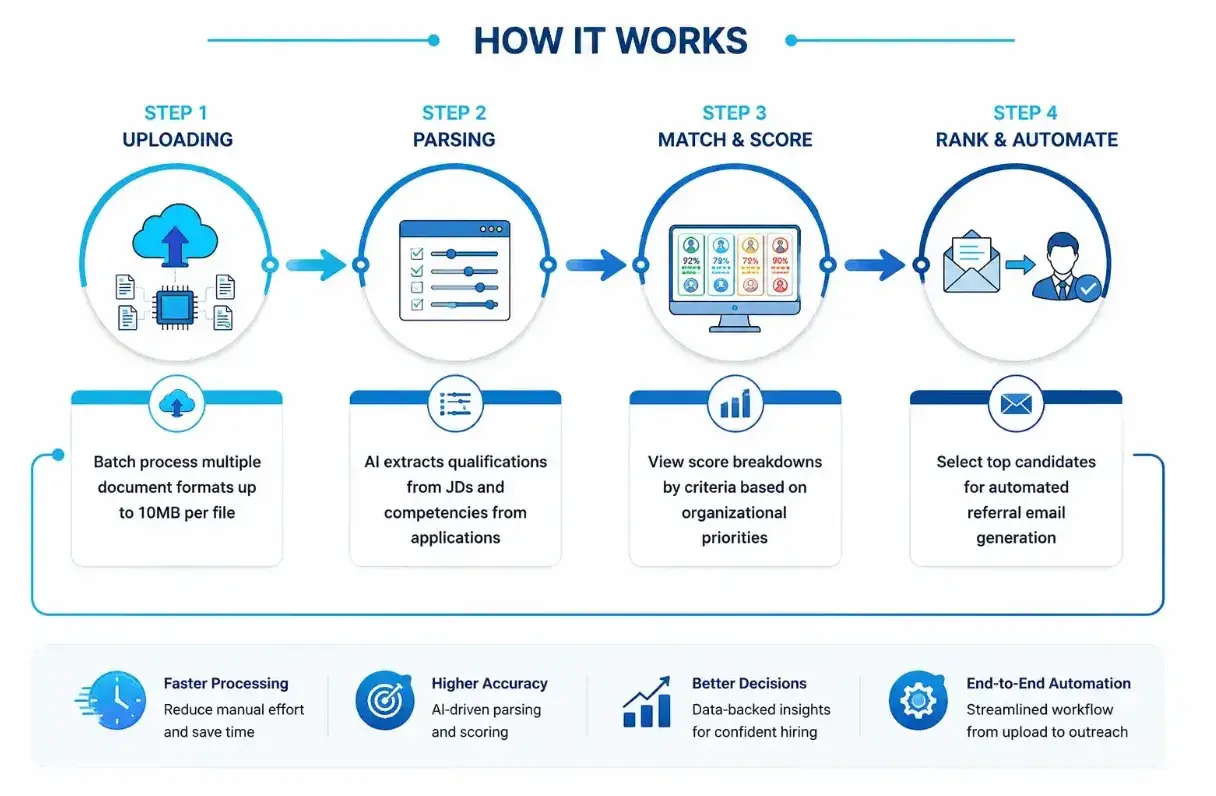
- The Operational Challenge: Enterprise hiring teams and recruitment agencies manage weekly intakes of over 1,000 resumes. Relying heavily on manual screening causes severe delays in candidate referrals, high risk of human errors, and inconsistent candidate evaluation criteria.
- TMA's AI Engineering Solution: Drawing on its AI agent development capabilities, TMA created Job Agent—an AI-powered platform for candidate screening and matching. Equipped with advanced AI/OCR document intelligence, the system automatically extracts candidate qualifications from unstructured CVs and evaluates them against customizable criteria (skills, education, location, and experience) to generate configurable Match Scores.
- Tangible Business Impact:
- Automates CV data entry and candidate shortlisting, cutting processing timelines by up to 70%.
- Eliminates manual data errors and standardizes hiring criteria across teams.
- Accelerates candidate handoffs to hiring managers with transparent, data-driven score breakdowns.
Conclusion
AI-powered candidate matching is transforming recruitment from a slow, manual administrative process into an agile, data-driven talent strategy. By moving beyond rigid keyword filtering to intelligent semantic matching and AI agents, enterprises can accelerate hiring velocity, lower operational costs, and consistently secure top talent. Upgrading your enterprise talent acquisition architecture does not require replacing your legacy HR software. Through modular AI integration and custom API engineering, intelligent matching engines can be integrated seamlessly into existing ATS environments.