Home
Search
Found 797 results for “ “ keyword
icon
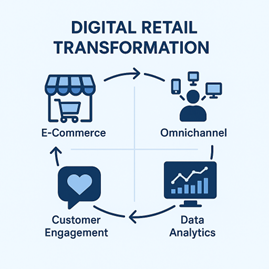
Transforming Retail with Modern Data Architecture Learn More Want to explore how your organization can benefit from a similar transformation? Contact TMA Solutions: https://www.tmasolutions.com/contact https://www.tmasolutions.com/contact In today’s fast-paced retail environment, data has become the lifeblood of operational efficiency and client engagement. From tracking sales across omnichannel platforms to predicting client behavior with machine learning, modern retailers must harness massive volumes of data to stay competitive. Yet, many organizations still rely on legacy, on-premise data warehouses that are no longer capable of supporting real-time analytics, agile decision-making, or scalable growth. As retail data continues to grow in both volume and complexity, the shift toward cloud-native data warehouses is no longer a luxury—it’s a necessity. Cloud platforms offer the flexibility, performance, and advanced analytics capabilities that retailers need to unify data silos, gain end-to-end visibility, and drive smarter business strategies. To illustrate this transformation in action, we examine a recent project led by TMA Solutions for a leading Southeast Asian retail chain. Facing outdated infrastructure and rising data demands, the client turned to TMA to modernize their data architecture. What followed was a seamless migration to a cloud-based data warehouse that delivered measurable improvements in speed, cost efficiency, and business intelligence. Let’s explore how the TMA team approached this challenge—and the results that followed. TMA's Approach Assessment & Planning TMA's consultants performed an end-to-end audit of the client's data architecture, identifying bottlenecks, integration gaps, and areas of optimization. A cloud readiness assessment was conducted to determine the feasibility of migration. Cloud Platform Selection The team recommended AWS Redshift [5] due to its compatibility with the client’s ecosystem, strong security features, and scalability. Snowflake and Azure Synapse were also benchmarked as alternatives. ETL Modernization Legacy ETL processes were rebuilt using Apache Airflow and dbt (data build tool), enhancing data pipeline efficiency and transparency. Data Governance A master data management (MDM) strategy was implemented to ensure data integrity, security, and compliance. https://www.tmasolutions.com/technologies/big-data-and-analytics Dynamic Reports & Dashboard TMA deployed Power BI dashboards tailored for retail operations: sales trends, inventory turnover, client segmentation, and store performance. TMA’s Migration Approach Workflow Implementation Timeline Phase 1 (Month 1-2): Discovery & assessment, stakeholder alignment, infrastructure setup Phase 2 (Month 3-4): Migration of core datasets, ETL development, sandbox testing Phase 3 (Month 5-6): UAT, full-scale deployment, user training, monitoring & handover Total project duration: 6 months Case Study: Retail Data Warehouse Migration​ Executive Summary Retail organizations increasingly rely on data to make real-time decisions, optimize operations, and personalize client experiences. However, legacy data warehouse systems often struggle to handle the exponential growth of data. In this case study, we explore how TMA Solutions supported a leading retail chain in migrating from an on-premise data warehouse to a modern cloud-based architecture. The result was enhanced scalability, improved analytics capabilities, and reduced operational costs. Retail Data Growth Client Overview The client is a multinational retail company with over 100 locations across Southeast Asia. With a wide variety of sales channels—in-store, mobile, and e-commerce—they were generating massive volumes of transactional, behavioral, and inventory data. The existing on-premise data warehouse was built over a decade ago and was unable to support the growing demand for real-time analytics. Business Challenges Data Silos: Inconsistent data formats across systems (POS, CRM, online orders) hindered unified reporting. Latency Issues: Reports took hours or even days to generate, making real-time decisions impossible. High Maintenance Cost: Managing and scaling on-premise infrastructure required significant manpower and capital expenditure. Limited Advanced Analytics: Legacy architecture could not support modern AI/ML-based forecasting and analytics tools. Business Challenges According to Gartner (2024) [1], 70% of organizations that do not modernize their data infrastructure will struggle to remain competitive. Migration Goals Migrate to a scalable, cloud-native data warehouse solution Build a unified data model to standardize and consolidate information across channels Enable real-time data access and visualization Reduce operational costs while improving analytics agility Migration Approach Diagram Why Choose TMA for Your Data Migration? TMA Solutions is one of the TOP https://www.tmasolutions.com/ Vietnam software distributors has 20+ years of experience delivering enterprise-grade technology solutions. Our strengths in big data, cloud, and industry-specific consulting make us a trusted partner for digital transformation projects. Related Services Big Data & Analytics: https://www.tmasolutions.com/technologies/big-data-and-analytics https://www.tmasolutions.com/technologies/big-data-and-analytics Cloud Migration Services: https://www.tmasolutions.com/technologies/cloud https://www.tmasolutions.com/technologies/cloud Retail Solutions: https://www.tmasolutions.com/industries/ecommerce-and-retail https://www.tmasolutions.com/industries/ecommerce-and-retail Outcomes & Measurable Impact 85% Faster Report Generation: Daily sales reports now run in 3 minutes versus previous 45+ minutes 30% Cost Reduction: No need to maintain physical servers or outdated hardware 100+ Stores Unified: Single view of client and product data across all channels AI-Ready Infrastructure: Enabled integration with ML tools for churn prediction and inventory forecasting Real-Time Dashboards: Instant insights into regional store performance and client behaviors Digital Retail Transformation Industry Impact TMA’s work in retail data modernization reflects a broader trend across the industry. As organizations embrace cloud-native architectures, the ability to analyze data in real-time becomes a competitive necessity. The lessons from this case are applicable to retail businesses worldwide that seek to unify their data and gain agility. ...
icon
Transforming Sales and Customer Management with CRM AI Agent by TMA Solutions Conclusion The CRM AI Agent by TMA Solutions is a virtual assistant for businesses looking to enhance their CRM and sales processes. By automating time-consuming tasks, improving lead management, and providing real-time insights, the CRM AI Agent empowers sales teams to be more efficient, effective, and focused on what truly matters: building strong customer relationships and closing deals faster. As AI continues to redefine how businesses operate, adopting AI-driven CRM solutions will be key to staying competitive in the future. Why Choose CRM AI Agent? Comprehensive Solution: Unlike traditional CRMs, the CRM AI Agent provides end-to-end automation, from lead creation to follow-up and quote generation. Ease of Integration: The agent integrates smoothly with popular CRM and ERP systems, ensuring that businesses don’t need to overhaul their existing tech stack. Scalability: Whether you’re a small business or a large enterprise, the CRM AI Agent can scale to meet your needs, providing both flexibility and efficiency as your business grows. TMA CRM AI Agent: Revolutionizing Sales and Customer Management TMA CRM AI Agent Workflow The CRM AI Agent is an advanced tool developed by TMA Solutions to automate and optimize CRM processes, allowing sales teams to focus on closing deals rather than on time-consuming administrative tasks. Key Features: Automated Lead Creation: Automatically creates and updates lead records in the CRM. Lead Scoring: The AI analyzes customer data and engagement levels to score leads based on potential. Segmentation: Leads are automatically segmented based on behavior and level of interest. Smart Follow-ups and Reminders: Automatically sends follow-up reminders to sales reps, ensuring no lead is forgotten. Automated Quotation Generation: Integrates with ERP systems to generate pricing quotes instantly. Real-Time Sales Analytics: Provides insights into sales pipeline, lead performance, and overall sales effectiveness. How CRM AI Agent Drives Sales Efficiency Time-Saving Automation: With the CRM AI Agent, manual data entry and repetitive tasks are eliminated. Sales teams can now focus on high-value activities, such as closing deals and nurturing customer relationships. Improved Lead Management: The AI-powered lead scoring system ensures that sales reps focus on the most promising leads, increasing the chances of conversion. Enhanced Customer Engagement: By automating follow-ups and personalizing communication, the AI enhances the customer experience and strengthens relationships. Actionable Insights for Sales Strategy: The AI provides detailed analytics on lead performance and sales activities, helping managers make informed decisions and optimize their strategies. How to Implement CRM AI Agent: A Step-by-Step Guide Step 1: Integration with Existing CRM Systems CRM AI Agent seamlessly integrates with popular CRM platforms like Salesforce, HubSpot, and Microsoft Dynamics, ensuring easy adoption without disrupting current operations. Integration with ERP systems ensures that pricing and inventory data can be automatically used for generating quotes. Step 2: Customization for Business Needs Tailor the CRM AI Agent to suit your business’s specific sales processes, including lead classification, follow-up reminders, and reporting formats. Step 3: Onboarding Your Sales Team Provide training to your sales team to ensure they understand how to leverage the AI agent effectively. This includes using the lead scoring system, automating follow-ups, and interpreting the insights provided by the AI. Step 4: Continuous Monitoring and Optimization After implementation, continuously track the CRM AI Agent’s performance and gather feedback from your sales team to refine its functionality and improve its efficiency. The Growing Demand for AI in CRM Systems The landscape of sales and customer management is changing rapidly, driven by advancements in AI technology. Businesses are increasingly adopting AI-powered CRM solutions to streamline operations, automate repetitive tasks, and gain actionable insights. This shift towards AI is not just a trend, it’s becoming a necessity. According to a report by Market.us, the global market for AI in CRM systems is expected to grow from $4.1 billion in 2023 to $48.4 billion by 2033, with a compound annual growth rate (CAGR) of 28%. This growth is driven by the need for smarter solutions that allow sales teams to focus on high-value activities, such as engaging with customers and closing deals, rather than on manual, time-consuming tasks. Key Challenges in Traditional CRM Systems Despite the effectiveness of traditional CRM systems, they often suffer from inefficiencies that hinder sales performance. Sales teams spend valuable time on tasks like data entry, lead tracking, and follow-ups, which ultimately detracts from relationship-building efforts. Manual Data Entry: Sales teams spend significant time entering and updating customer information, which takes them away from relationship-building. This inefficiency has become a bottleneck, especially as businesses scale. Lead Management Inefficiencies: Identifying and prioritizing high-value leads manually can lead to missed opportunities and inconsistent follow-ups, negatively impacting conversion rates. Delayed Response Times: Without automation, follow-up actions may be delayed, potentially causing businesses to lose prospects to more agile competitors. Lack of Real-Time Insights: Many CRM systems fail to provide actionable data, leaving sales teams without the necessary insights to make timely, informed decisions. As businesses look to solve these challenges, the adoption of AI-powered CRM systems has surged. This shift is part of a broader trend in which companies seek solutions that automate repetitive tasks and offer real-time insights into their sales pipelines. The demand for AI-powered CRM tools is further reflected in the broader CRM market. According to Fortune Business Insights, the global CRM market, valued at $112.9 billion in 2025, is expected to reach $262.7 billion by 2032, growing at a CAGR of 12.8%. The adoption of AI in CRM systems is playing a key role in this growth, as businesses seek smarter ways to manage customer relationships and sales processes. CRM AI Agent by TMA Solutions is at the forefront of this transformation, offering a comprehensive solution that enhances sales performance, customer engagement, and overall productivity. In today's competitive business environment, traditional CRM systems often rely on time-consuming, repetitive tasks that detract from building strong customer relationships. TMA Solutions' CRM AI Agent automates these processes, helping businesses streamline sales workflows, improve lead management, and enhance customer engagement for better overall productivity....
icon
Unifying Intelligence and Scalability: Inside TMA’s Data Solution Center Why TMA? TMA’s advantage lies in our unified platform approach, cross-industry expertise, and ability to balance performance, flexibility, and intelligence. Our commitment to enterprise data platforms (EDP) and https://www.tmasolutions.com/case-studies/centralized-data-platform-for-dynamic-segmentation-and-personalized-marketing client data platforms (CDP) ensures your analytics infrastructure is ready for tomorrow’s needs. Integrate data in minutes. Visualize in real time. Make decisions backed by AI. If you’re looking to build a modern, intelligent, and scalable data solution, TMA is ready to partner with you. From Ingestion to Intelligence: What’s Inside the Platform The platform architecture includes several core modules: Data Ingestion & Integration: High-speed pipelines using Apache Kafka, Nifi, and Google Dataflow enable real-time input from RDBMS, IoT, media, and log files. Processing & Analytics: Spark and Trino power the engine for ETL, real-time analytics, and predictive data analytics. Unified metadata, governance, and role-based access ensure secure workflows. AI-Driven Services: MLflow and Dragon LLM provide modeling, forecasting, and augmented analytics. Custom models can be deployed and served through APIs. Visualization & Reporting: Users can build dynamic dashboards, run descriptive analytics, or embed BI tools like Power BI, Looker, and QuickSight. Data Governance: Tools like Unity Catalog ensure data & AI governance , lineage tracking, and secure access control TMA Data Solutions Use Cases across Industries With proven implementations in over 150 projects, the TMA Data Platform adapts to various domains: https://www.tmasolutions.com/case-studies/centralized-data-platform-for-dynamic-segmentation-and-personalized-marketing Retail & E-commerce : Real-time dashboards, product recommendations, and client behavior analytics. Companies using smart warehouse technologies have reduced inventory carrying costs by 20-30% (Source: Deloitte) https://www.tmasolutions.com/case-studies/enhance-credit-risk-analysis-with-aiml-technologies Finance : Risk scoring models, fraud detection via streaming data, and regulatory reports https://www.tmasolutions.com/case-studies/apply-ocr-in-healthcare-solutions-to-automate-data-collection Healthcare : AI-based diagnosis support and patient trend analysis. 35% faster response time to critical situations enabled by early alert systems (Source: American Journal of Managed Care) https://www.tmasolutions.com/case-studies/ai-sound-based-fault-detection-system-in-manufacturing Manufacturing : Predictive maintenance and sensor data processing at scale. 30% faster response times to equipment issues due to automated alerts and real-time visibility. (Source: McKinsey & Company) Each solution is tailored via customizable components and a drag-and-drop interface , making it easier for enterprises to move fast without building everything from scratch. Overview In the digital economy, data is both an asset and a challenge. Enterprises today are tasked with collecting, storing, and interpreting massive volumes of information in real-time, all while ensuring agility, governance, and business value. The https://www.tmasolutions.com/technologies/ai-ml-and-data-sciences TMA Data Solution Center offers a comprehensive, scalable, and AI-augmented platform that meets these demands, empowering organizations to evolve from data-rich to insight-driven. Cloud-Native, Scalable, and AI-Powered Built for the cloud era, the platform enables seamless migration of data warehouses from on-premise to Cloud, with support for AWS, Azure, Google Cloud, and hybrid deployments. Through horizontal scaling and a no-vendor-lock-in BI framework, businesses maintain full flexibility and cost control. Inside the platform, businesses can leverage: Low-code data ingestion and transformation pipelines Automatic lakehouse optimization Real-time data collecting and processing tools AI components like vector embedding and intelligent chatbots This combination accelerates insight generation while lowering time-to-value. Why Modern Enterprises Need More Than Just Storage As enterprises grow, so does data complexity. It’s no longer enough to store data; businesses need to analyze high-volume structured and unstructured data, often in real time. Whether it's supporting predictive decision-making or enabling smart client experiences, the foundation lies in a robust, flexible, cloud-native data infrastructure. TMA’s platform answers this by supporting both batch processing and streaming analytics, ensuring businesses can act immediately, not retrospectively. ...
icon
Vietnam AI Solutions for Ecommerce, Retail & Distribution: Driving Efficiency and Growth Through Intelligent Digital Transformation The retail and e-commerce landscape is undergoing a massive shift. As businesses strive to meet rapidly evolving consumer demands, adopting an ai first enterprise approach has become essential to remaining competitive. Today, companies are leveraging https://www.tmasolutions.ai/solutions/ai-for-ecommerce-retails-distribution Vietnam AI solutions for ecommerce retails and distribution to optimize complex operations, streamline workflows, and unlock deep insights into consumer behavior. As a leading AI development company, TMA Solutions is at the forefront of providing next-generation enterprise AI company solutions that empower businesses across the globe to transform their traditional operations into intelligent ecosystems. Why Retail AI Trends Matter for Modern Enterprises? In a highly connected marketplace, traditional retail and inventory management methods are no longer sufficient to cope with fluctuating market dynamics. Modern retail AI trends highlight the critical role of data-driven intelligence in keeping businesses agile. Several key operational challenges can be addressed by integrating an advanced AI solution for ecommerce. Inventory & warehouse optimization: Eliminating supply chain bottlenecks, preventing stockouts, and reducing overstock situations through predictive forecasting. Customer analytics: Understanding shopper patterns, predicting buying behavior, and delivering tailored experiences across all channels. Omnichannel operations: Ensuring a seamless, unified shopping experience whether the customer is browsing online, via a mobile app, or in a physical storefront. Data fragmentation: Overcoming the challenge of disconnected information systems across various retail networks. The Core Pillars of a Connected Retail AI Ecosystem A comprehensive AI first software development strategy seamlessly unifies multi-channel data, enabling back-end logistics to work in perfect harmony with front-end customer touchpoints. This intelligent ecosystem consists of several interconnected capabilities: Warehouse management system solution: Automating sorting, tracking, and storage workflows to enhance picking accuracy and overall supply chain speed. Corporate document intelligence: Transforming unstructured paperwork into actionable business data securely and efficiently. Document processing solutions: Utilizing advanced algorithms to automatically process invoices, receipts, and logistics documents without human error. Automated document processing: Reducing manual labor costs and data entry times by up to 80%, allowing teams to focus on strategic growth. Beyond Basic Automation: Corporate Document Intelligence Modern digital transformation requires more than basic data capture. Businesses handle millions of data points daily through legal contracts, customs forms, and retail invoices. By leveraging an AI document extraction solution, enterprises can achieve true corporate document intelligence. These highly sophisticated Document Processing solutions utilize Natural Language Processing (NLP) and computer vision to read, extract, and categorize information, boosting operational efficiency across the entire retail and distribution pipeline. Real-World Experience TMA Solutions has extensive experience developing cutting-edge AI and retail software solutions that support business transformation and multi-channel operations across diverse sectors. Call Center Agents Assistant Solution An AI-powered assistant that empowers customer service agents with real-time, contextually aware suggestions during live interactions by leveraging a powerful large language model (LLM) trained on retail customer data. Call Center Agents Assistant Solution System Real-time web interface: Displaying customer queries and tailored response suggestions dynamically. Transcripts storage and retrieval: Engineering a secure archiving system to search and analyze historical customer interactions. Advanced speech analytics: Leveraging Speech-to-Text, Sentiment Analysis, and NER for continuous conversation insights. Visual Search Platform for Online Retailers A robust AI tool tailored for online retailers, enabling users to find products instantly by uploading images. Utilizing advanced computer vision algorithms, it provides highly accurate results based on visual elements like color, shape, and patterns, thereby boosting engagement and driving sales. Visual Search System Effortless product search : Delivering precise image recognition capabilities that eliminate text-based queries. Duplication detection & classification: Automatically managing catalog items and listings to improve inventory searchability. Seamless catalog integration: Unifying smoothly with retail databases via high-performance vector databases like Elasticsearch. Cloud-Based Pet Products Marketplace An intelligent, multi-tenant e-commerce ecosystem developed for an emerging retail startup in Australia, designed to maintain high-speed performance during extreme seasonal traffic spikes. Cloud-Based Pet Products Marketplace Ecosystem Unified system integration: Connecting secure payment gateways, CRM platforms, and logistics networks into a single system. Scalable cloud infrastructure: Engineering a resilient network with dynamic load balancing and auto-scaling capabilities. AI-driven personalization: Enhancing the shopper journey through an interactive AI shopping assistant for recommendations. Looking Ahead The future of retail, e-commerce, and distribution lies in deeply integrated, intelligent, and autonomous operations. Embracing ai first software development will allow organizations to accurately forecast market demand shifts, personalize consumer touchpoints in real time, and implement dynamic warehouse management system solutions before operational bottlenecks even occur. Conclusion While standalone software tools solve isolated problems, long-term commercial success requires a cohesive, company-wide AI strategy. By combining advanced customer analytics, intelligent omnichannel operations, and powerful Automated Document Processing, TMA Solutions helps global businesses create hyper-efficient operations that drastically improve both backend productivity and frontend customer satisfaction. Contact https://www.tmasolutions.com/industries/ecommerce-and-retail TMA today to discuss how our AI technology expertise can support your next digital health or retail innovation initiative....
icon
Top 5+ Vietnam Customer Data Platform Solutions in 2026...
icon
Vietnam Education Technology Solutions for Modern Workforce Development Vietnam's digital economy is expanding faster than its enterprise workforce can keep pace. The result is a widening skills gap that traditional classroom-based and paper-driven training programmes cannot close at scale. Vietnam education technology solutions are shifting how large organisations approach workforce development, moving from episodic training events toward always-on learning infrastructure that integrates with HR systems, supports hybrid teams, and measures competency development with precision. What Are Vietnam Education Technology Solutions? Vietnam education technology solutions are software platforms and learning infrastructure systems designed to help enterprises plan, deliver, track, and measure workforce training at scale. They replace fragmented, manual training processes with integrated digital environments that support instructor-led sessions, self-paced learning, competency assessments, and HR-linked development tracking across distributed or hybrid teams. Unlike consumer-facing e-learning applications, enterprise education technology solutions are engineered for operational requirements: multi-department rollout, role-based learning paths, compliance tracking, integration with existing HR and payroll systems, and analytics that connect training completion to business performance outcomes. Why Workforce Development Is Becoming a Strategic Priority in Vietnam Vietnam's economy has grown at an average of 6 to 7 per cent annually over the past decade, driven significantly by the expansion of manufacturing, financial services, technology, and retail sectors. This pace of growth has created a demand for skilled workers that the existing talent pipeline has not been able to satisfy. Many Vietnamese enterprises report that workforce skills have become a major barrier to adopting new technologies and scaling operations. The pressure is compounded by the speed of technology adoption. Automation, AI-assisted workflows, and cloud-based operational systems are being deployed across Vietnamese enterprises at a pace that outstrips internal capability-building. Organisations that cannot train and upskill their workforce continuously are finding that technology investments underperform because the people operating them lack the competencies to use them effectively. For enterprises, this is no longer an HR issue. It is a strategic risk that directly affects revenue, operational efficiency, and competitive positioning. The Growing Skills Gap Across Vietnamese Enterprises The skills gap in Vietnam is not evenly distributed. It is most acute in three areas that directly affect enterprise performance. Digital and Technology Competencies The transition to digital workflows, data-driven decision-making, and AI-assisted operations requires employees at every level to develop new technical competencies. Historical data from ManpowerGroup’s Talent Shortage Survey highlighted that 77 percent of employers globally faced severe difficulties filling roles due to skill deficits, with technology competencies being the most elusive. Moving into the current enterprise landscape, Vietnamese employers continue to face these exact structural barriers, particularly within manufacturing, logistics, and financial services sectors undergoing aggressive software transformation. Management and Leadership Capability As organisations flatten their structures and expand into new markets, the demand for capable mid-level managers and team leaders has grown significantly. This layer of leadership is often the weakest in Vietnamese enterprises because it has historically been underdeveloped through structured training. The consequence is operational inconsistency across locations, departments, and shifts. Compliance and Regulatory Knowledge Sectors including banking, insurance, healthcare, and food manufacturing operate under increasingly detailed regulatory frameworks. Ensuring that thousands of employees across multiple locations maintain current compliance knowledge requires systematic, trackable training infrastructure. Spreadsheet-based training records and annual classroom sessions are no longer sufficient to meet audit requirements or to demonstrate compliance to international partners. Why Traditional Corporate Training Models No Longer Scale The dominant model for corporate training in Vietnamese enterprises has been the instructor-led classroom session, supplemented by printed materials and annual refresher programmes. This model has three structural limitations that make it unsuitable for the current environment. It Cannot Reach Distributed and Hybrid Workforces Vietnamese enterprises increasingly operate across multiple provinces and locations, with significant portions of their workforce working remotely, on production floors, or rotating across sites. A training programme that depends on gathering people in a single location at a scheduled time excludes a significant proportion of the workforce and creates compliance gaps that accumulate over time. It Produces No Measurable Data Traditional training generates attendance records, not learning outcomes. Organisations that rely on sign-in sheets and course completion certificates cannot answer the questions that operational leadership actually needs answered: which employees have closed which competency gaps, which training content drives the strongest performance improvement, and where the workforce is most underprepared for upcoming technology or process changes. It Cannot Keep Pace With the Rate of Change According to Deloitte’s Global Human Capital Trends, the vast majority of executives consider continuous learning critical, yet few organizations feel adequately prepared to meet this need. Product lines, operating procedures, regulatory requirements, and technology platforms change faster than annual training cycles can accommodate. Enterprises that cannot update learning content quickly and distribute it to the entire workforce simultaneously are permanently operating with a training lag that compounds with every operational change. How Vietnam Education Technology Solutions Improve Enterprise Learning Enterprise education technology platforms address each of these structural limitations by moving learning out of the event model and into an always-on operational infrastructure. Centralized Learning Management for Distributed Teams A modern enterprise learning management tool provides a single environment where training content, assessments, learning paths, and completion records are managed centrally and accessible to employees regardless of location or device. Training rollout that would previously require weeks of scheduling, travel, and venue coordination can be deployed to thousands of employees simultaneously. Role-based learning paths ensure that each employee receives the training relevant to their function, level, and development stage, rather than a single generic programme designed for the broadest possible audience. Integration With HR and Performance Systems Enterprise education technology becomes most valuable when it connects to the systems that manage headcount, performance, and organisational structure. When learning records integrate with HR platforms, development plans can be linked to performance reviews, compliance training can be automatically assigned based on role changes, and training completion can be tracked alongside other workforce KPIs. This integration is the difference between a training catalogue and a workforce development infrastructure. Measurable Competency Development Modern corporate training software solutions track not just completion but comprehension, application, and retention over time. Assessment data, quiz results, practical simulation outcomes, and knowledge check trends can be aggregated at team, department, and organisation level, giving learning and development leaders the evidence base they need to demonstrate training impact and prioritise future investment. TMA Solutions designs and implements enterprise learning platforms tailored to the needs of Vietnamese organizations. Our solutions combine robust enterprise learning management tools with AI-powered features to support personalized learning paths, compliance tracking, and seamless HR integration. This includes AI coaching and role-play simulation systems that help employees in sales, customer service, and other key roles develop practical skills faster. What Businesses Should Expect From Modern Enterprise Learning Management Tools When evaluating enterprise learning management tools for workforce development, organisations should assess capability across five dimensions. Deployment Flexibility for Vietnamese Enterprise Environments Vietnam's enterprise landscape includes organisations with significant on-premises IT infrastructure, strict data residency requirements, and varying levels of cloud adoption. An enterprise learning management tool must support deployment models that fit the organisation's existing environment, whether cloud-hosted, on-premises, or hybrid, without requiring a complete infrastructure overhaul before training can begin. Support for Multiple Learning Modalities Effective workforce development does not happen through a single channel. Enterprise platforms should support instructor-led training sessions delivered online or in-person, self-paced digital modules, video-based learning, practical assessments, and simulated role-play scenarios. The ability to mix modalities within a single learning path allows organisations to match content format to learning objectives rather than being constrained by platform limitations. HR and Payroll System Integration For enterprise learning to function as workforce infrastructure rather than a standalone training tool, it must integrate with the systems that manage employee records, roles, and performance. Organisations should expect native integration capability or open API access that allows connection to existing HR platforms without requiring custom development for every data exchange. Scalability Without Proportional Cost Increases Training infrastructure that costs more to operate with every new employee or training programme is not enterprise-grade. Platforms should support growth in headcount, content volume, and geographic reach without requiring proportional increases in licensing costs, administrative overhead, or IT resources. Frequently Asked Questions What makes an education technology solution suitable for enterprise use in Vietnam? Enterprise-grade education technology solutions for the Vietnamese market must support large-scale simultaneous deployment, integration with local HR and payroll systems, compliance with Vietnamese data regulations, and the ability to deliver training in Vietnamese and English across distributed teams. They should also accommodate the hybrid learning environments common in manufacturing, retail, and services sectors, where portions of the workforce operate without consistent desk-based computer access. How does enterprise learning management software differ from standard e-learning platforms? Standard e-learning platforms are designed for individual learners accessing courses on demand. Enterprise learning management tools are designed for organisational deployment: they manage role-based learning paths, track compliance across thousands of employees, integrate with HR data, and report on learning outcomes at team and department level. The distinction is between a tool for personal development and infrastructure for workforce capability management. How long does it typically take to deploy a corporate training software solution across a large Vietnamese enterprise? Deployment timelines vary significantly based on the number of employees, the complexity of existing HR integrations, the volume of content to be migrated or created, and whether on-premises or cloud deployment is required. For organisations starting with a defined scope, initial deployment covering core modules and a pilot user group can typically be completed within six to twelve weeks. Full enterprise rollout across all departments and locations is planned and executed in phases to minimise operational disruption. Conclusion Treating workforce development as a critical IT infrastructure component allows modern organizations to build sustainable operational advantages. TMA Solutions combines 29 years of enterprise software engineering expertise with a deep track record of large-scale technology deployments to deliver highly secure https://www.tmainnovation.com/smart-education Vietnam education technology solutions . We provide the robust integration architectures, on-premises data residency options, and scalable core frameworks necessary to eliminate training inefficiencies and secure concrete business returns. ...

icon
Vietnam Enterprise E-Learning Solutions and the Shift to AI Learning Conclusion The future of enterprise learning is not defined by how much content employees complete, but by how effectively organizations develop measurable skills and workforce capability. TMA Solutions designs and implements Vietnam enterprise e-learning solutions that combine robust enterprise learning management tools with AI-powered personalization, coaching simulations, and analytics. With over 29 years of experience and a strong track record in enterprise deployments, TMA helps organizations reduce turnover, accelerate skill development, and achieve measurable returns on their training investment. Smart Corporate Training Platform - Redefining Personalized Learning for the Modern Enterprise A personalized learning platform for enterprise is not differentiated by the size of its course library or the sophistication of its user interface. It is differentiated by its ability to connect learning activity to the organizational context in which that activity takes place. The characteristics that distinguish enterprise-grade personalized learning from generic e-learning platforms include skills framework management that connects learning paths to defined role competencies, assessment architecture that reveals actual knowledge gaps rather than just testing completion, content authoring tools that allow internal subject-matter experts to create and update learning materials without technical dependencies, integration with HR and performance management systems so that learning data and performance data are visible in the same place, and reporting that supports both operational oversight and regulatory compliance. Smart Corporate Training Platform is designed as a personalized learning platform for enterprise organizations that require this level of integration. The platform enables role-based learning paths, AI-assisted content recommendations, and both instructor-led and self-paced training experiences. For large organizations operating across multiple business units or locations, it provides centralized content governance with localized delivery, allowing teams to tailor training programs while sharing resources, reporting, and analytics across the enterprise. Key Features Enterprises Need From Next-Generation E-Learning Solutions As enterprises in Vietnam evaluate their learning technology investments, the following capabilities define the difference between a content platform and a workforce development infrastructure. Role-Linked Learning Architecture Learning paths that map directly to role competency frameworks, update automatically when employees change roles, and assign required compliance training based on department and function rather than requiring manual administration. Multi-Format Content Support Modern learners access content across devices and contexts. Enterprise platforms must support video, audio, interactive assessment, simulation, and document formats, with mobile-optimized delivery for employees who cannot access desktop environments during their working day. Real-Time Progress Visibility for Managers Team leaders need visibility into where their people are in their development plans, which training requirements are overdue, and where performance gaps align with learning gaps. This visibility should be available in real time, not in a monthly report. Adaptive Assessment and Knowledge Reinforcement Assessment that goes beyond post-course quizzes to include spaced repetition, scenario-based application testing, and performance-linked knowledge checks that keep critical competencies current over time rather than testing them once and assuming retention. Integration-Ready Architecture The value of a learning platform multiplies when its data is connected to the systems that manage people, performance, and operations. API-based integration with HR, payroll, and performance management systems should be standard rather than a premium add-on. Enterprises operating in Vietnam are discovering that the problem with their learning programs is not content volume. It is relevance. Static course libraries and mandatory completion workflows are producing completion rates but not competency. As Gen Z becomes the majority of the workforce in finance, retail, and technology sectors, the demand for personalized and adaptive learning experiences is reshaping Vietnam enterprise e-learning solutions. This article examines why traditional platforms are losing ground and what the shift to AI-driven personalized learning means for Vietnamese enterprises investing in workforce capability. Why Traditional Vietnam Enterprise E-Learning Solutions Struggle to Engage Modern Employees The traditional enterprise e-learning model was designed primarily for compliance rather than capability building. It assumes all employees in the same role need identical content delivered at the same pace. While this approach works for regulatory audits, it falls short when the objective is to develop skills that genuinely improve job performance. Completion Without Comprehension Most enterprise learning management systems track engagement through time spent on platforms and module completion rates. However, these metrics do not reveal whether employees actually retain knowledge or can apply it in real work situations. The result is a workforce that meets annual training targets but shows little meaningful improvement in actual competency. The Gen Z Engagement Gap Most legacy enterprise learning systems measure success through superficial data streams: platform login duration and course completion rates. However, these metrics fail to capture real-time knowledge retention. Cognitive science indicates that without structured reinforcement, learners discard up to 70% of new information within 24 hours. This creates a severe gap between training metrics and actual workforce capability. According to LinkedIn’s Workplace Learning data, Gen Z professionals are highly motivated to learn and rank development opportunities as their number one driver for career progression. Despite this motivation, rigid and non-adaptive training systems fail to translate their drive into measurable operational performance. High Turnover as a Training Infrastructure Problem Employee turnover remains a persistent challenge across many retail, banking, and technology organizations, increasing the cost of onboarding and workforce development initiatives. While compensation and career progression play major roles, ineffective training is also a critical factor. When employees perceive training as irrelevant, it fails to support retention or development. For large Vietnamese enterprises and multinationals that invest heavily in onboarding and upskilling, high turnover creates a major efficiency problem: training investments are repeatedly lost, preventing the organization from building cumulative workforce capability. The Shift Toward Personalized Learning in Vietnamese Enterprises The response to these structural limitations is a shift from standardized course delivery toward personalized learning architecture, in which each employee's learning path is shaped by their role, their existing competencies, their demonstrated knowledge gaps, and their preferred pace of learning. This is not a new concept in consumer education. Platforms like Duolingo and Khan Academy have demonstrated for years that adaptive learning systems can sustain engagement and accelerate skill acquisition by constantly adjusting content difficulty and delivery format based on individual performance. The challenge has been translating these principles into enterprise environments, where learning must connect to job roles, compliance requirements, performance data, and organizational structure. Vietnamese enterprises are now beginning to make this transition. The pressure comes from two directions simultaneously. From above, senior leadership is demanding evidence that training investment is producing measurable workforce capability. From below, a younger workforce is actively comparing the quality of learning experiences at work against the quality of learning experiences available outside work, and finding the former wanting. Social and Collaborative Learning Integration Personalized does not mean isolated. Modern enterprise e-learning platforms integrate social learning components including peer discussion threads, cohort-based programs, mentoring connections, and team-level challenges that allow employees to learn alongside colleagues facing similar challenges. This is particularly important for the transfer of tacit knowledge that cannot be fully captured in a formal course, including how to handle difficult customer interactions, how to navigate organizational processes, and how to apply technical skills in context. How AI Improves Enterprise E-Learning Experiences at Scale Personalization at the scale of a large enterprise requires automation. Manually curating individual learning paths for thousands of employees is not operationally viable. This is where AI becomes a structural enabler rather than a product feature. Adaptive Content Sequencing AI-driven learning systems analyze each learner's performance data continuously and adjust content sequencing in response. If a learner demonstrates strong comprehension of a foundational concept, the system advances them faster. If a learner consistently underperforms on a specific topic, the system provides additional reinforcement before progressing. This creates a learning experience that maintains appropriate challenge levels throughout, which is the primary driver of sustained engagement. AI-Powered Practice and Simulation For roles that require interpersonal skills, including sales, customer service, and recruitment, the most important form of practice is realistic conversation simulation. AI-driven role-play systems can simulate customer objections, difficult conversations, and scenario variations at any volume, providing employees with practice repetitions that would otherwise require a trainer or a live customer to deliver. TMA Solutions delivers AI-powered coaching, role-play simulation, and enterprise learning platforms that support role-based learning paths, AI-assisted recommendations, multi-format content delivery, and seamless integration with existing HR systems. Together, these capabilities help organizations move from completion-focused training to measurable competency development. Learning Analytics That Connect to Business Outcomes The highest-value application of AI in enterprise learning is not content delivery. It is connecting learning data to operational performance data to answer the question that senior leadership actually cares about: which training investments are producing measurable improvements in the metrics that matter? When a personalized learning platform for enterprise can correlate individual training completion and assessment scores with sales conversion rates, customer satisfaction scores, or quality control metrics, it becomes possible to make evidence-based decisions about where to invest in workforce development rather than relying on completion rates and trainer feedback as proxies for impact. ...
icon
Vietnam Fintech Application Development Services: From Financial Workflows to Digital Products...