22/05/2025
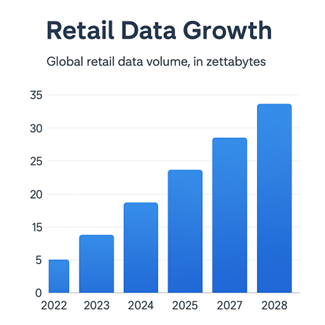
In today’s fast-paced retail environment, data has become the lifeblood of operational efficiency and client engagement. From tracking sales across omnichannel platforms to predicting client behavior with machine learning, modern retailers must harness massive volumes of data to stay competitive. Yet, many organizations still rely on legacy, on-premise data warehouses that are no longer capable of supporting real-time analytics, agile decision-making, or scalable growth.
As retail data continues to grow in both volume and complexity, the shift toward cloud-native data warehouses is no longer a luxury—it’s a necessity. Cloud platforms offer the flexibility, performance, and advanced analytics capabilities that retailers need to unify data silos, gain end-to-end visibility, and drive smarter business strategies.
To illustrate this transformation in action, we examine a recent project led by TMA Solutions for a leading Southeast Asian retail chain. Facing outdated infrastructure and rising data demands, the client turned to TMA to modernize their data architecture. What followed was a seamless migration to a cloud-based data warehouse that delivered measurable improvements in speed, cost efficiency, and business intelligence.
Let’s explore how the TMA team approached this challenge—and the results that followed.
Case Study: Retail Data Warehouse Migration
Executive Summary
Retail organizations increasingly rely on data to make real-time decisions, optimize operations, and personalize client experiences. However, legacy data warehouse systems often struggle to handle the exponential growth of data. In this case study, we explore how TMA Solutions supported a leading retail chain in migrating from an on-premise data warehouse to a modern cloud-based architecture. The result was enhanced scalability, improved analytics capabilities, and reduced operational costs.
Client Overview
The client is a multinational retail company with over 100 locations across Southeast Asia. With a wide variety of sales channels—in-store, mobile, and e-commerce—they were generating massive volumes of transactional, behavioral, and inventory data. The existing on-premise data warehouse was built over a decade ago and was unable to support the growing demand for real-time analytics.
Business Challenges
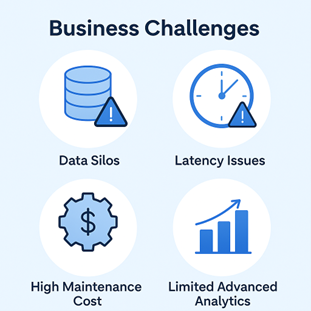
- Data Silos: Inconsistent data formats across systems (POS, CRM, online orders) hindered unified reporting.
- Latency Issues: Reports took hours or even days to generate, making real-time decisions impossible.
- High Maintenance Cost: Managing and scaling on-premise infrastructure required significant manpower and capital expenditure.
- Limited Advanced Analytics: Legacy architecture could not support modern AI/ML-based forecasting and analytics tools.
According to Gartner (2024) [1], 70% of organizations that do not modernize their data infrastructure will struggle to remain competitive.
Migration Goals
- Migrate to a scalable, cloud-native data warehouse solution
- Build a unified data model to standardize and consolidate information across channels
- Enable real-time data access and visualization
- Reduce operational costs while improving analytics agility
TMA's Approach
Assessment & Planning
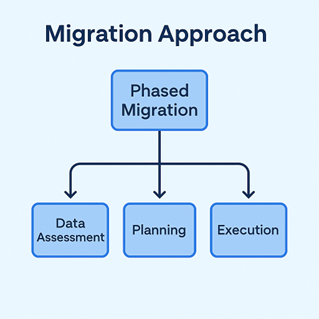
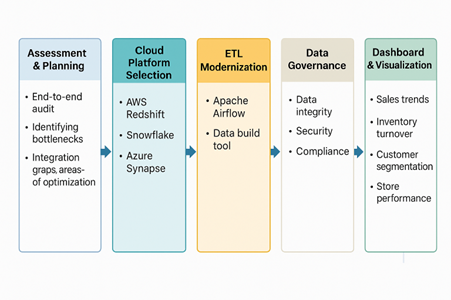
TMA's consultants performed an end-to-end audit of the client's data architecture, identifying bottlenecks, integration gaps, and areas of optimization. A cloud readiness assessment was conducted to determine the feasibility of migration.
Cloud Platform Selection
The team recommended AWS Redshift [5] due to its compatibility with the client’s ecosystem, strong security features, and scalability. Snowflake and Azure Synapse were also benchmarked as alternatives.
ETL Modernization
Legacy ETL processes were rebuilt using Apache Airflow and dbt (data build tool), enhancing data pipeline efficiency and transparency.
Data Governance
A master data management (MDM) strategy was implemented to ensure data integrity, security, and compliance.
TMA deployed Power BI dashboards tailored for retail operations: sales trends, inventory turnover, client segmentation, and store performance.
Implementation Timeline
- Phase 1 (Month 1-2): Discovery & assessment, stakeholder alignment, infrastructure setup
- Phase 2 (Month 3-4): Migration of core datasets, ETL development, sandbox testing
- Phase 3 (Month 5-6): UAT, full-scale deployment, user training, monitoring & handover
Total project duration: 6 months
Outcomes & Measurable Impact
- 85% Faster Report Generation: Daily sales reports now run in 3 minutes versus previous 45+ minutes
- 30% Cost Reduction: No need to maintain physical servers or outdated hardware
- 100+ Stores Unified: Single view of client and product data across all channels
- AI-Ready Infrastructure: Enabled integration with ML tools for churn prediction and inventory forecasting
- Real-Time Dashboards: Instant insights into regional store performance and client behaviors
Industry Impact
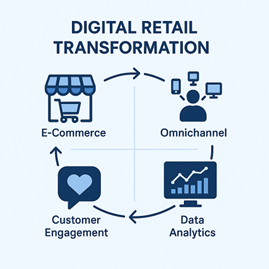
TMA’s work in retail data modernization reflects a broader trend across the industry. As organizations embrace cloud-native architectures, the ability to analyze data in real-time becomes a competitive necessity. The lessons from this case are applicable to retail businesses worldwide that seek to unify their data and gain agility.
Why Choose TMA for Your Data Migration?
TMA Solutions is one of the TOP Vietnam software distributors has 20+ years of experience delivering enterprise-grade technology solutions. Our strengths in big data, cloud, and industry-specific consulting make us a trusted partner for digital transformation projects.
Related Services
- Big Data & Analytics: https://www.tmasolutions.com/technologies/big-data-and-analytics
- Cloud Migration Services: https://www.tmasolutions.com/technologies/cloud
- Retail Solutions: https://www.tmasolutions.com/industries/ecommerce-and-retail
Learn More
Want to explore how your organization can benefit from a similar transformation?
Contact TMA Solutions: https://www.tmasolutions.com/contact

Table Of Content
Case Study: Retail Data Warehouse Migration
Executive Summary
Client Overview
Business Challenges
Migration Goals
TMA's Approach
Assessment & Planning
Cloud Platform Selection
ETL Modernization
Data Governance
Dynamic Reports & Dashboard
Implementation Timeline
Outcomes & Measurable Impact
Industry Impact
Why Choose TMA for Your Data Migration?
Related Services
Learn More
Start your project today!
Contact UsStart your project today!
Contact Us

.webp_2026-11-10-10-05-43-223.webp)
.webp_2026-11-09-17-47-26-954.webp)
.webp_2026-11-09-17-00-55-331.webp)
.webp_2026-11-09-16-48-35-330.webp)