Vietnam's digital economy is expanding faster than its enterprise workforce can keep pace. The result is a widening skills gap that traditional classroom-based and paper-driven training programmes cannot close at scale. Vietnam education technology solutions are shifting how large organisations approach workforce development, moving from episodic training events toward always-on learning infrastructure that integrates with HR systems, supports hybrid teams, and measures competency development with precision.
What Are Vietnam Education Technology Solutions?
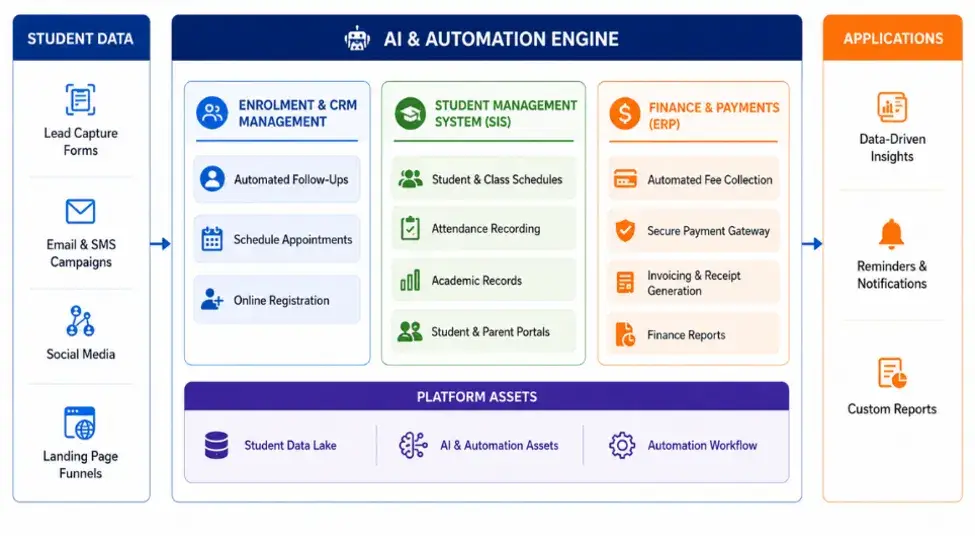
Vietnam education technology solutions are software platforms and learning infrastructure systems designed to help enterprises plan, deliver, track, and measure workforce training at scale. They replace fragmented, manual training processes with integrated digital environments that support instructor-led sessions, self-paced learning, competency assessments, and HR-linked development tracking across distributed or hybrid teams.
Unlike consumer-facing e-learning applications, enterprise education technology solutions are engineered for operational requirements: multi-department rollout, role-based learning paths, compliance tracking, integration with existing HR and payroll systems, and analytics that connect training completion to business performance outcomes.
Why Workforce Development Is Becoming a Strategic Priority in Vietnam
Vietnam's economy has grown at an average of 6 to 7 per cent annually over the past decade, driven significantly by the expansion of manufacturing, financial services, technology, and retail sectors. This pace of growth has created a demand for skilled workers that the existing talent pipeline has not been able to satisfy. Many Vietnamese enterprises report that workforce skills have become a major barrier to adopting new technologies and scaling operations.
The pressure is compounded by the speed of technology adoption. Automation, AI-assisted workflows, and cloud-based operational systems are being deployed across Vietnamese enterprises at a pace that outstrips internal capability-building. Organisations that cannot train and upskill their workforce continuously are finding that technology investments underperform because the people operating them lack the competencies to use them effectively.
For enterprises, this is no longer an HR issue. It is a strategic risk that directly affects revenue, operational efficiency, and competitive positioning.
The Growing Skills Gap Across Vietnamese Enterprises
The skills gap in Vietnam is not evenly distributed. It is most acute in three areas that directly affect enterprise performance.
Digital and Technology Competencies
The transition to digital workflows, data-driven decision-making, and AI-assisted operations requires employees at every level to develop new technical competencies. Historical data from ManpowerGroup’s Talent Shortage Survey highlighted that 77 percent of employers globally faced severe difficulties filling roles due to skill deficits, with technology competencies being the most elusive. Moving into the current enterprise landscape, Vietnamese employers continue to face these exact structural barriers, particularly within manufacturing, logistics, and financial services sectors undergoing aggressive software transformation.
Management and Leadership Capability
As organisations flatten their structures and expand into new markets, the demand for capable mid-level managers and team leaders has grown significantly. This layer of leadership is often the weakest in Vietnamese enterprises because it has historically been underdeveloped through structured training. The consequence is operational inconsistency across locations, departments, and shifts.
Compliance and Regulatory Knowledge
Sectors including banking, insurance, healthcare, and food manufacturing operate under increasingly detailed regulatory frameworks. Ensuring that thousands of employees across multiple locations maintain current compliance knowledge requires systematic, trackable training infrastructure. Spreadsheet-based training records and annual classroom sessions are no longer sufficient to meet audit requirements or to demonstrate compliance to international partners.
Why Traditional Corporate Training Models No Longer Scale
The dominant model for corporate training in Vietnamese enterprises has been the instructor-led classroom session, supplemented by printed materials and annual refresher programmes. This model has three structural limitations that make it unsuitable for the current environment.
It Cannot Reach Distributed and Hybrid Workforces
Vietnamese enterprises increasingly operate across multiple provinces and locations, with significant portions of their workforce working remotely, on production floors, or rotating across sites. A training programme that depends on gathering people in a single location at a scheduled time excludes a significant proportion of the workforce and creates compliance gaps that accumulate over time.
It Produces No Measurable Data
Traditional training generates attendance records, not learning outcomes. Organisations that rely on sign-in sheets and course completion certificates cannot answer the questions that operational leadership actually needs answered: which employees have closed which competency gaps, which training content drives the strongest performance improvement, and where the workforce is most underprepared for upcoming technology or process changes.
It Cannot Keep Pace With the Rate of Change
According to Deloitte’s Global Human Capital Trends, the vast majority of executives consider continuous learning critical, yet few organizations feel adequately prepared to meet this need.
Product lines, operating procedures, regulatory requirements, and technology platforms change faster than annual training cycles can accommodate. Enterprises that cannot update learning content quickly and distribute it to the entire workforce simultaneously are permanently operating with a training lag that compounds with every operational change.
How Vietnam Education Technology Solutions Improve Enterprise Learning
Enterprise education technology platforms address each of these structural limitations by moving learning out of the event model and into an always-on operational infrastructure.
Centralized Learning Management for Distributed Teams
A modern enterprise learning management tool provides a single environment where training content, assessments, learning paths, and completion records are managed centrally and accessible to employees regardless of location or device. Training rollout that would previously require weeks of scheduling, travel, and venue coordination can be deployed to thousands of employees simultaneously.
Role-based learning paths ensure that each employee receives the training relevant to their function, level, and development stage, rather than a single generic programme designed for the broadest possible audience.
Integration With HR and Performance Systems
Enterprise education technology becomes most valuable when it connects to the systems that manage headcount, performance, and organisational structure. When learning records integrate with HR platforms, development plans can be linked to performance reviews, compliance training can be automatically assigned based on role changes, and training completion can be tracked alongside other workforce KPIs.
This integration is the difference between a training catalogue and a workforce development infrastructure.
Measurable Competency Development
Modern corporate training software solutions track not just completion but comprehension, application, and retention over time. Assessment data, quiz results, practical simulation outcomes, and knowledge check trends can be aggregated at team, department, and organisation level, giving learning and development leaders the evidence base they need to demonstrate training impact and prioritise future investment.
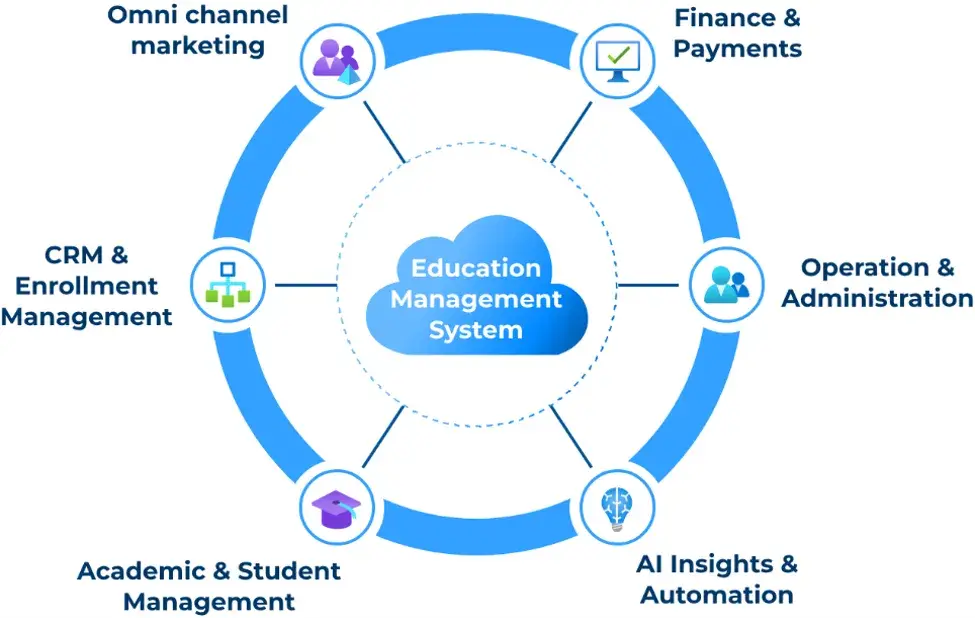
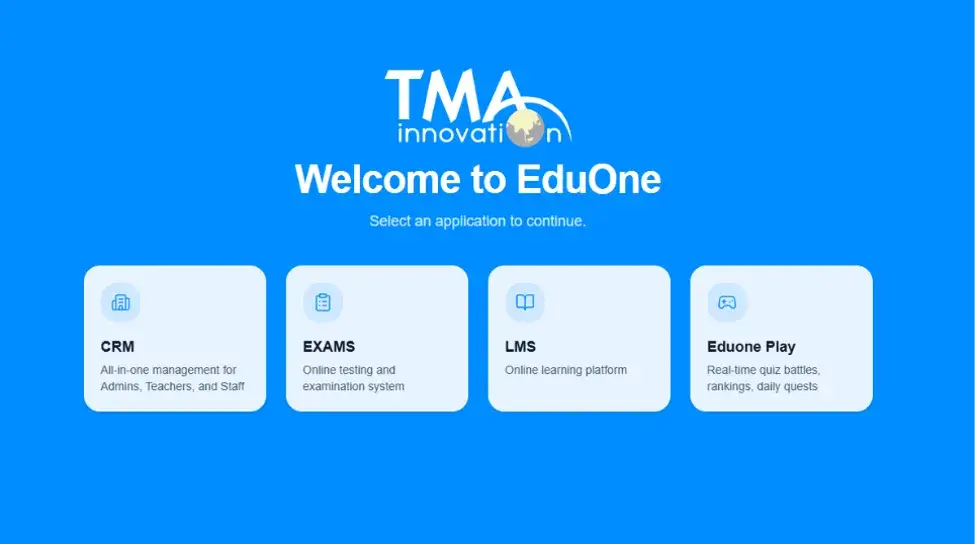
TMA Solutions designs and implements enterprise learning platforms tailored to the needs of Vietnamese organizations. Our solutions combine robust enterprise learning management tools with AI-powered features to support personalized learning paths, compliance tracking, and seamless HR integration. This includes AI coaching and role-play simulation systems that help employees in sales, customer service, and other key roles develop practical skills faster.
What Businesses Should Expect From Modern Enterprise Learning Management Tools
When evaluating enterprise learning management tools for workforce development, organisations should assess capability across five dimensions.
Deployment Flexibility for Vietnamese Enterprise Environments
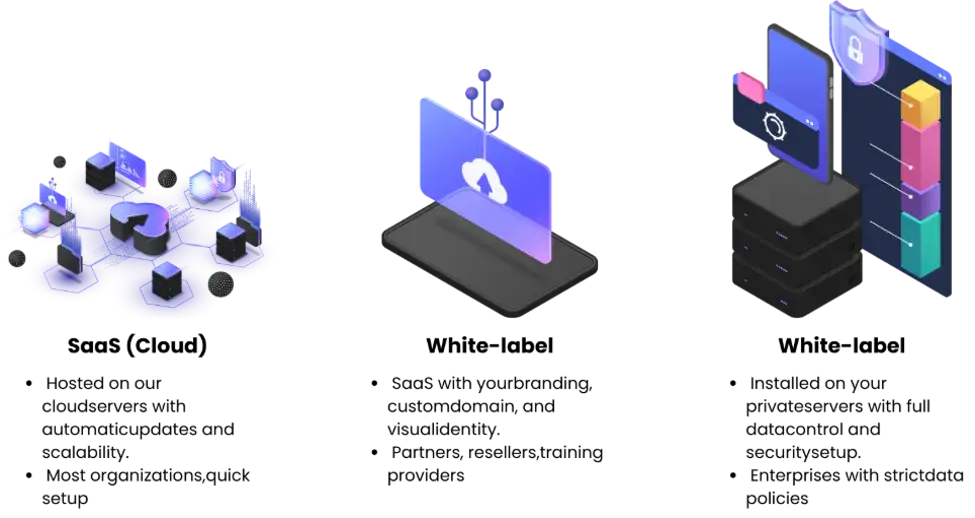
Vietnam's enterprise landscape includes organisations with significant on-premises IT infrastructure, strict data residency requirements, and varying levels of cloud adoption. An enterprise learning management tool must support deployment models that fit the organisation's existing environment, whether cloud-hosted, on-premises, or hybrid, without requiring a complete infrastructure overhaul before training can begin.
Support for Multiple Learning Modalities
Effective workforce development does not happen through a single channel. Enterprise platforms should support instructor-led training sessions delivered online or in-person, self-paced digital modules, video-based learning, practical assessments, and simulated role-play scenarios. The ability to mix modalities within a single learning path allows organisations to match content format to learning objectives rather than being constrained by platform limitations.
HR and Payroll System Integration
For enterprise learning to function as workforce infrastructure rather than a standalone training tool, it must integrate with the systems that manage employee records, roles, and performance. Organisations should expect native integration capability or open API access that allows connection to existing HR platforms without requiring custom development for every data exchange.
Scalability Without Proportional Cost Increases
Training infrastructure that costs more to operate with every new employee or training programme is not enterprise-grade. Platforms should support growth in headcount, content volume, and geographic reach without requiring proportional increases in licensing costs, administrative overhead, or IT resources.
Frequently Asked Questions
What makes an education technology solution suitable for enterprise use in Vietnam?
Enterprise-grade education technology solutions for the Vietnamese market must support large-scale simultaneous deployment, integration with local HR and payroll systems, compliance with Vietnamese data regulations, and the ability to deliver training in Vietnamese and English across distributed teams. They should also accommodate the hybrid learning environments common in manufacturing, retail, and services sectors, where portions of the workforce operate without consistent desk-based computer access.
How does enterprise learning management software differ from standard e-learning platforms?
Standard e-learning platforms are designed for individual learners accessing courses on demand. Enterprise learning management tools are designed for organisational deployment: they manage role-based learning paths, track compliance across thousands of employees, integrate with HR data, and report on learning outcomes at team and department level. The distinction is between a tool for personal development and infrastructure for workforce capability management.
How long does it typically take to deploy a corporate training software solution across a large Vietnamese enterprise?
Deployment timelines vary significantly based on the number of employees, the complexity of existing HR integrations, the volume of content to be migrated or created, and whether on-premises or cloud deployment is required. For organisations starting with a defined scope, initial deployment covering core modules and a pilot user group can typically be completed within six to twelve weeks. Full enterprise rollout across all departments and locations is planned and executed in phases to minimise operational disruption.
Conclusion
Treating workforce development as a critical IT infrastructure component allows modern organizations to build sustainable operational advantages. TMA Solutions combines 29 years of enterprise software engineering expertise with a deep track record of large-scale technology deployments to deliver highly secure Vietnam education technology solutions. We provide the robust integration architectures, on-premises data residency options, and scalable core frameworks necessary to eliminate training inefficiencies and secure concrete business returns.