The global population is aging rapidly, increasing the demand for technologies that enable older adults to live independently while receiving continuous healthcare support. According to the World Health Organization (WHO), one in six people worldwide will be aged 60 years or older by 2030. This demographic shift means the share of the population aged 60 and over will increase from 1 billion in 2020 to 1.4 billion by 2030, placing growing pressure on healthcare systems and long-term care providers.
At the same time, advances in wearable technologies, IoT, and artificial intelligence are transforming how elderly health is monitored. By integrating wearable devices with digital health platforms, healthcare organizations can track vital signs in real time, detect abnormalities earlier, and deliver more proactive and personalized care. As a result, wearable integration for real-time elderly health tracking is becoming an essential capability for hospitals, homecare providers, and digital health companies.
What Is Wearable Integration in Healthcare?
Wearable integration refers to connecting smart devices and medical sensors with digital health platforms to continuously collect, transmit, and analyze patient health data. Notably, 57% of India respondents in 2024 consumer surveys report owning smart wearables, outpacing Mainland China (53%) and the UK (52%).
How Wearable Technologies Support Elderly Care
Modern wearables provide healthcare professionals with continuous visibility into an individual's health status outside traditional clinical settings. Interest in these technologies is also increasing among older adults.
Springer’s recent study found that 74.4% of participants aged 60–99 expressed interest in wearable monitoring systems, while 93.9% considered safety their primary benefit. Beyond supporting healthy aging and chronic disease management, wearable technologies can enhance independence, facilitate remote care, and improve emergency response for elderly individuals.
Common Types of Wearable Devices
Various wearable technologies are being used to support elderly health monitoring, including:
- Smartwatches and fitness trackers.
- Smart rings
- ECG patches.
- Blood pressure monitors.
- Pulse oximeters.
- Continuous glucose monitoring devices.
- Fall detection wearables.
Key Health Parameters Being Monitored
These devices continuously collect physiological data that help healthcare providers assess patient conditions, such as:
- Heart rate and heart rhythm.
- Blood pressure.
- Blood oxygen saturation.
- Blood glucose levels.
- Sleep quality.
- Physical activity and mobility.
Creating Connected Healthcare Experiences
Wearable integration allows healthcare providers to extend care beyond hospitals and clinics.
Supporting Continuous Care
By connecting wearables with digital platforms, healthcare organizations can:
- Monitor patients remotely.
- Improve care coordination.
- Deliver personalized treatment plans.
- Enable proactive interventions.
Strengthening Patient Engagement
Continuous feedback empowers older adults to participate more actively in managing their own health and wellness.
Why Real-Time Health Tracking Matters for Older Adults
The growing prevalence of chronic diseases and age-related conditions is increasing the need for continuous health monitoring among older adults. According to the National Council on Aging (NCOA), nearly 95% of adults aged 60 and older have at least one chronic condition, while almost 80% live with two or more. These trends are driving demand for technologies that enable earlier interventions and support healthy aging.
By providing continuous access to physiological and activity data, wearable technologies are helping healthcare providers deliver more proactive and personalized care.
Supporting Independent Living
Real-time health tracking enables older adults to maintain independence while remaining connected to healthcare professionals and caregivers.
Benefits for Elderly Individuals
Continuous monitoring technologies support healthier aging and improve quality of life in several ways, including:
- Aging safely at home.
- Reducing unnecessary hospital visits.
- Supporting medication adherence.
- Encouraging healthier lifestyles.
Providing Peace of Mind for Caregivers
Wearable devices also strengthen support networks by allowing family members and caregivers to monitor health conditions remotely. These capabilities help:
- Receive alerts during emergencies.
- Monitor health trends remotely.
- Improve care coordination.
- Respond more quickly to critical events.
Detecting Health Risks Earlier
Continuous access to health data allows clinicians to identify subtle changes in patient conditions before severe complications arise.
Supporting Preventive Healthcare
Real-time monitoring provides actionable insights that enable healthcare providers to:
- Detecting abnormalities earlier
- Monitor chronic disease progression
- Prioritize high-risk patients
- Deliver timely interventions
Improving Clinical Outcomes
Wearable technologies are also playing an important role in promoting physical activity and preventing functional decline. Research published in the Journal of Medical Internet Research found that activity trackers can effectively encourage physical activity among older adults, particularly first-time users, helping support long-term health and independence.
Technologies Enabling Wearable Integration
The success of wearable health tracking depends on several underlying technologies that enable real-time connectivity and intelligent decision-making.
Internet of Medical Things (IoMT)
Wearables are part of the broader Internet of Medical Things ecosystem, which connects medical devices and healthcare platforms.
IoMT Capabilities
Connected healthcare environments support continuous monitoring and information sharing. Typical capabilities include:
- Real-time Monitoring & Alerts: The seamless exchange of data alerts both patients and providers to irregular vital signs or impending critical situations.
- Remote Patient Care: Providers can monitor patient health trends remotely, reducing the need for in-person consultations and hospital readmissions.
- Device interoperability: Seamless integration between devices and platforms enables unified access to patient data.
- Continuous communication between systems: Real-time data exchange keeps healthcare systems updated and supports coordinated care.
Enabling Smart Healthcare Systems
IoMT technologies help healthcare providers deliver more personalized and data-driven care. By integrating wearable devices with digital platforms, healthcare organizations can:
- Improve care coordination
- Reduce information silos
- Support remote patient monitoring
- Enable personalized care delivery
Artificial Intelligence and Data Analytics
Artificial intelligence enhances the value of wearable data by transforming raw information into actionable insights.
AI Applications in Elderly Health Monitoring
AI technologies can enhance elderly care through various applications:
- Predictive analytics: AI correlates lifestyle metrics, like sleep stages, physical activity, and stress, with health outcomes to anticipate illness or decline.
- Early warning systems: Machine learning continuously evaluates baseline biometrics to flag sudden deviations, such as irregular heart rates or breathing abnormalities.
- Personalized care recommendations: Wearables act as automated personal trainers, using data synthesis to adjust your recovery and fitness plans dynamically.
- Risk stratification: AI identifies high-risk individuals and prioritizes interventions based on health status and predicted outcomes.
Supporting Data-Driven Decision-Making
By analyzing health trends over time, AI helps healthcare professionals make more informed decisions and improve patient outcomes. AI enables healthcare providers to:
- Identify health risks earlier
- Monitor disease progression
- Improve treatment planning
- Optimize resource allocation
Common Applications of Wearable Health Tracking
Wearable integration supports a growing range of healthcare applications for aging populations. By enabling continuous data collection and real-time monitoring, these technologies help healthcare providers deliver more proactive and personalized care.
Chronic Disease Management
Many older adults live with chronic conditions that require ongoing monitoring and long-term management. Wearable devices provide clinicians with continuous visibility into patient health and facilitate earlier interventions.
Conditions Commonly Monitored
Wearable technologies are increasingly being used to support the management of several chronic diseases. Common applications include:
- Cardiovascular Monitoring: Devices track metrics like heart rate variability (HRV) and can detect arrhythmias (e.g., AFib using ECG sensors), helping users and doctors manage hypertension and prevent cardiac events.
- Diabetes Management: Continuous Glucose Monitors (CGMs) worn on the body constantly measure glucose levels, alerting users to dangerous spikes or drops without the need for frequent finger pricks.
- Neurological & Respiratory: Specialty wearables aid in seizure detection, monitoring Parkinson's disease progression, and managing asthma through continuous respiratory tracking.
Improving Long-Term Care
Continuous monitoring enables healthcare providers to identify changes in patient conditions and optimize treatment plans. These capabilities help organizations:
- Track disease progression.
- Detecting complications earlier.
- Reduce hospital readmissions.
- Improve treatment adherence.
Fall Detection and Emergency Response
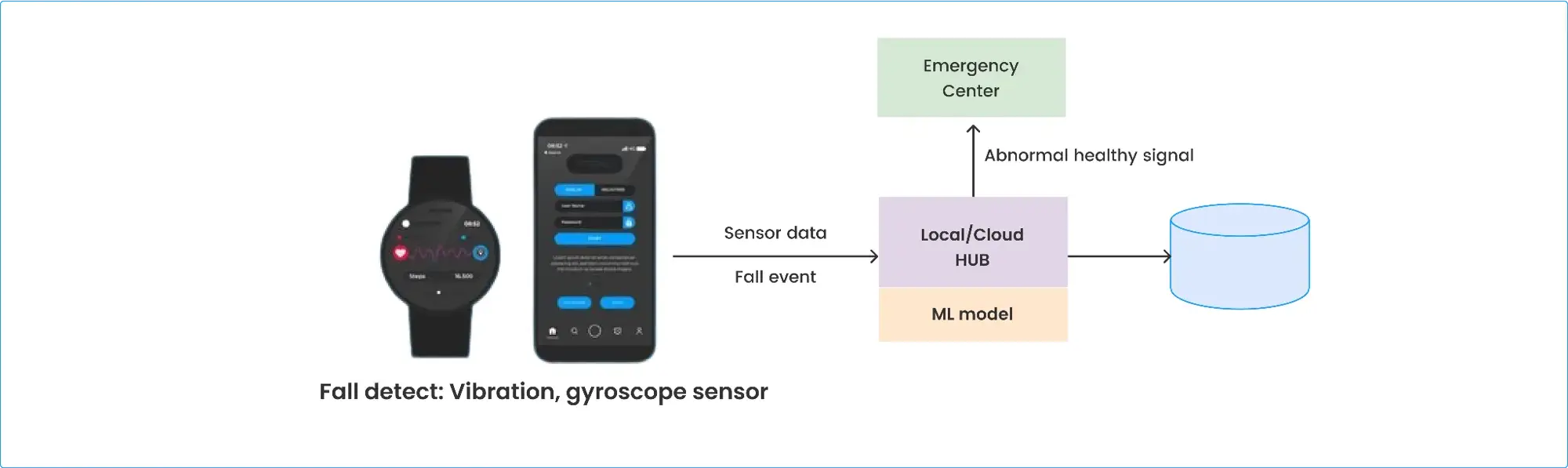
Falls are among the leading causes of injury and hospitalization among older adults, making early detection and rapid response essential components of elderly care. In line with this need, TMA Solutions leverages AI, wearable devices, and hybrid sensing technologies to support fall detection for elderly care. By continuously analyzing health signals and sensor data, these solutions help improve accuracy, reduce false alarms, and provide timely alerts to caregivers and family members during emergencies.
Enhancing Elderly Safety
Modern wearables incorporate motion sensors and AI algorithms that support emergency response capabilities. These technologies can:
- Detects falls automatically.
- Trigger emergency alerts.
- Notify caregivers and family members.
- Support rapid interventions.
Supporting Aging in Place
By improving safety and enabling continuous supervision, wearable technologies allow seniors to live independently while remaining connected to caregivers and healthcare providers. These capabilities contribute to:
- Greater independence.
- Better quality of life.
- Reduced caregiver burden.
- Enhanced peace of mind.
According to the U.S. Centers for Disease Control and Prevention (CDC), approximately one in four adults aged 65 and older experiences a fall each year, making fall prevention a major public health priority.
Challenges in Wearable Integration for Elderly Health Tracking
Despite their growing adoption, wearable technologies present several technical and operational challenges that healthcare organizations must address. Integrating wearables for elderly health tracking faces major hurdles, including low digital literacy, poor device usability, high costs, and physical discomfort.
A national survey in Canada found that only 11.9% of older adults used wearable devices, highlighting persistent barriers related to digital literacy, interoperability, accessibility, and user acceptance.
Device Interoperability and Data Integration
Healthcare data often originates from multiple devices, applications, and clinical systems. Without interoperability, valuable information can remain fragmented across disconnected platforms.
Common Technical Challenges
Organizations implementing wearable solutions may encounter several obstacles, including:
- Complex Interfaces: Tiny screens and confusing, multi-step menus increase the learning burden, often resulting in device abandonment.
- Lack of Standardization: The absence of a governing body for consumer health wearables makes it challenging to validate the data for medical-grade use.
- False Alarms: Inaccurate readings and false fall-detection alarms undermine the user's and caregiver's trust in the technology.
- Physical Discomfort: Many commercially available devices are bulky, heavy, or lack breathability for extended wear on older, sensitive skin.
Building Connected Healthcare Ecosystems
Successful wearable integration requires robust architectures that support seamless information exchange. Healthcare organizations should prioritize:
- Cloud-based architectures
- Interoperable platforms
- Electronic health record integration
- Standardized data exchange frameworks
Patient Adoption and Digital Literacy
Technology adoption among older adults can vary considerably. Successful implementation depends not only on the devices themselves but also on patients' ability and willingness to use them consistently.
Barriers to Adoption
Several factors may affect wearable adoption among elderly populations. Common challenges include:
- Limited digital literacy: Lack of technical skills may hinder effective device usage.
- Difficulty using smartphones: Mobile applications can be challenging for some elderly users.
- Internet connectivity issues: Poor connectivity may interrupt continuous health monitoring.
- Device reliability concerns: Performance issues can reduce confidence in wearable technologies.
Improving Accessibility
Healthcare providers can encourage broader adoption by focusing on user-centered experiences and support mechanisms. Effective approaches include:
- User-friendly interfaces
- Patient education
- Caregiver involvement
- Personalized support
Privacy and Cybersecurity
Protecting sensitive health information is critical to maintaining trust in connected healthcare systems.
Organizations deploying wearable technologies should implement robust security mechanisms to safeguard patient data. These include:
- Data Privacy Concerns: Families and elderly patients worry about sensitive personal health data being exposed or hacked, requiring robust encryption.
- Threat to Autonomy: Highly individualized, persuasive behavioral feedback (e.g., automated nudges to walk more) may interfere with the user's personal autonomy and self-determination.
Enabling Connected Elderly Care with TMA Solutions
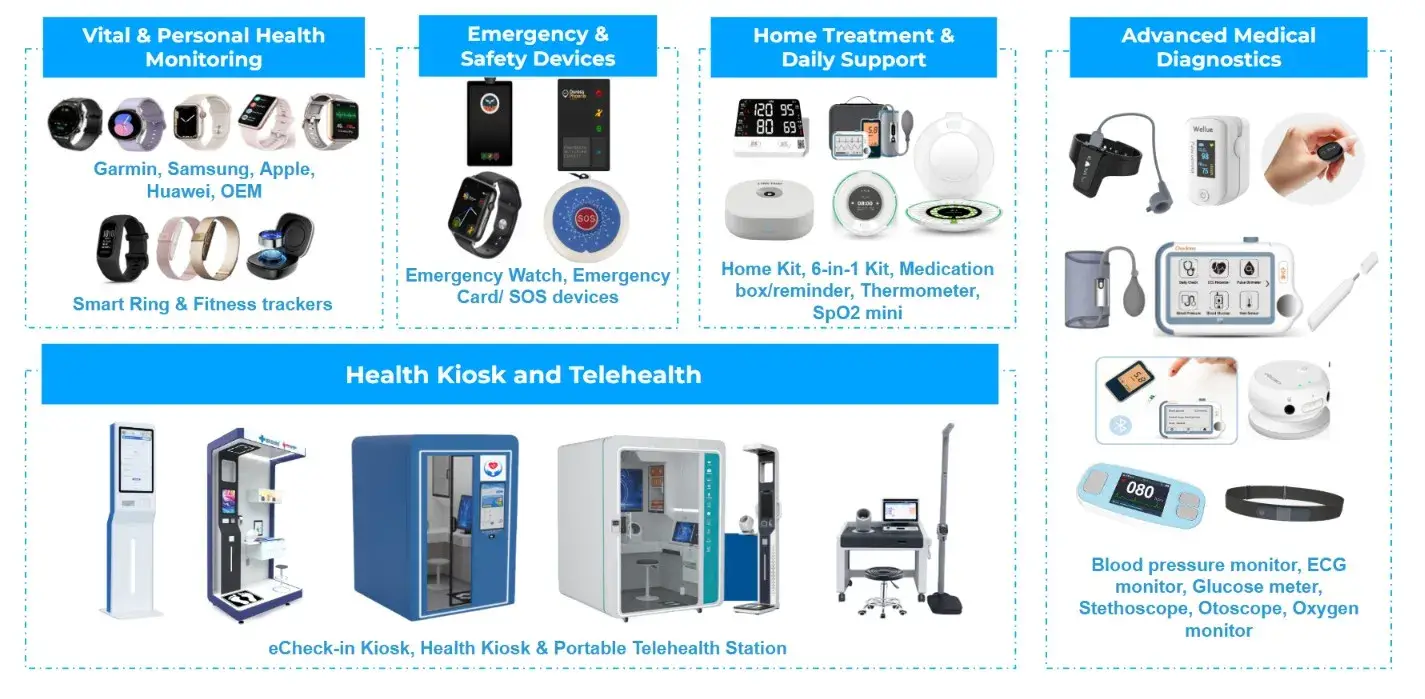
As wearable technologies become increasingly important in elderly care, TMA Solutions has enhanced its mCare platform to support interoperability with over 50 wearable and medical devices. These include smartwatches, ECG monitors, homecare devices, emergency SOS systems, and remote diagnostic equipment, enabling healthcare organizations to track health conditions in real time and provide more proactive, patient-centered care.
Intelligent Healthcare Solutions
By integrating connected devices and data-driven technologies, TMA Solutions enables healthcare organizations to develop smarter and more personalized care experiences.
Healthcare Capabilities Relevant to Wearable Integration
TMA Solutions supports a broad range of digital health initiatives that complement wearable technologies. These capabilities include:
- Remote patient monitoring platforms
- Chronic disease management solutions
- Telehealth and virtual care applications
- AI-powered healthcare analytics
- IoT-enabled medical device integration
Supporting Homecare and Long-Term Care
These technologies enable healthcare organizations to extend care beyond hospitals and improve support for aging populations. Key benefits include:
- Deliver continuous care outside hospitals
- Improve elderly health monitoring
- Enhance patient engagement
- Enable proactive interventions
Enhancing Elderly Care Management
Continuous access to health information allows providers to deliver more proactive and coordinated care. Through mCare, healthcare organizations can:
- Improve chronic disease management.
- Support independent living.
- Reduce unnecessary hospital visits.
- Enhance patient experiences.
Conclusion
Wearable integration for real-time elderly health tracking is transforming how healthcare organizations support aging populations. By combining wearable devices with AI, IoT, and digital health platforms, providers can deliver more proactive, personalized, and continuous care while enabling older adults to maintain independence and quality of life.
As healthcare systems continue to shift toward preventive and home-based care models, wearable technologies will play an increasingly important role in supporting healthy aging and improving long-term outcomes. Solutions such as mCare from TMA Solutions demonstrate how connected technologies can help healthcare organizations build smarter, more patient-centric healthcare ecosystems and better meet the evolving needs of elderly populations.