Building a high-accuracy model is just the beginning. The real challenge is operationalizing and scaling AI in production. Most AI projects fail not because of algorithms, but due to infrastructure gaps, data inconsistency, and poor operational governance. Without a scalable architecture and MLOps foundation, even the best models degrade quickly — driving enterprises to shift from model-building to system-level AI engineering.
Why Scaling AI is a Different Problem from Building AI
In most enterprise AI initiatives today, success is often misunderstood as “building a high-accuracy model.” In reality, model accuracy is only the beginning of the journey. The real difficulty appears when organizations attempt to operationalize and scale AI systems in production environments.
Research across enterprise deployments consistently shows that a large percentage of machine learning projects fail not because of algorithms, but because of infrastructure gaps, data inconsistency, and missing operational governance. According to industry analysis, many AI systems struggle when moving from pilot to production due to lack of automation, monitoring, and lifecycle management.
Modern AI systems must operate under real-world constraints: millions of requests per day, constantly changing data distributions, strict latency requirements, and evolving business logic. Without a scalable architecture and MLOps foundation, even the best models degrade rapidly once deployed.
This is why enterprises are increasingly shifting from “model-building thinking” to system-level AI engineering, where AI is treated as a continuously running production system rather than a one-time project.
The Real Problem: The AI Production Gap
The gap between prototype and production is often referred to as the AI production gap, and it is one of the main reasons AI projects fail at scale.
In controlled environments, data is clean, balanced, and static. In production, however, data becomes noisy, incomplete, and continuously evolving. This introduces a set of systemic challenges:
One major issue is training-serving skew, where the features used in training differ from those used in production inference. This leads to unpredictable model behavior even when offline metrics are high.
Another issue is lack of reproducibility. Without proper versioning of data, features, and models, organizations cannot reliably reproduce results or debug failures.
A third challenge is operational visibility. Many AI systems fail silently because there is no monitoring for drift, latency degradation, or performance decay over time.
Industry case studies from enterprise MLOps implementations (including cloud platforms like AWS and Databricks-based systems) show that organizations that do not implement end-to-end lifecycle automation often face unstable deployments, manual retraining cycles, and high operational cost overhead.
Scalable AI Architecture: How Production AI Systems Are Built
A production-grade AI system is not a single pipeline but a multi-layered architecture designed for continuous flow of data, learning, and inference.
Data Foundation Layer: Where AI Actually Begins
At the core of any scalable AI system is the data infrastructure layer. This layer is responsible for collecting, validating, and processing data from multiple sources such as transactional databases, IoT devices, user interactions, and external APIs.
Modern architectures increasingly rely on data lakes and streaming systems to support both batch and real-time ingestion. However, what differentiates production-grade systems is not storage, but data governance and consistency enforcement.
Recent industry analysis highlights that weak data governance is one of the main reasons AI systems fail at scale, because inconsistent definitions and missing ownership create long-term instability in downstream models .
Feature Store Layer: The Backbone of Real-Time AI
One of the most critical components in scalable AI architecture is the feature store, which ensures consistency between training and production environments.
Feature stores serve as a centralized system where features are defined, stored, and served in both offline and real-time modes. This eliminates duplication across teams and ensures that the same feature logic is used everywhere.
Real-world systems such as Wix and other large-scale platforms demonstrate that feature stores must support millisecond level latency and high throughput serving, especially for use cases like recommendation systems and fraud detection .
Without feature stores, organizations often end up rebuilding feature pipelines multiple times across teams, leading to inconsistency and operational inefficiency.
Model Training and Experimentation Layer
The model training layer is where machine learning pipelines are orchestrated at scale. In modern systems, this layer is fully automated using distributed compute frameworks and workflow orchestration tools.
A key principle in enterprise AI systems is experiment tracking and reproducibility. Every model run must be logged, versioned, and traceable. This includes datasets, hyperparameters, training code, and evaluation metrics.
Industry MLOps architectures (such as Databricks-based implementations) emphasize the importance of registry based model promotion, where only validated models are promoted into production environments through controlled pipelines .
Model Serving Layer: Where AI Meets the Real World
Once trained, models must be deployed as scalable services capable of handling real-time requests.
Modern AI serving architectures are built using microservices, container orchestration (often Kubernetes-based), and API-driven inference systems. The key requirement here is not just accuracy but predictable latency and system reliability.
Advanced production systems often include:
- Canary deployments
- Shadow testing
- A/B testing of models
- Multi-version model routing
These mechanisms ensure that new models can be safely introduced without disrupting existing production traffic.
Monitoring and Feedback Loop: Preventing Silent AI Failure
One of the most critical lessons from enterprise AI deployments is that models degrade silently if not actively monitored.
Production systems therefore require continuous monitoring of:
- Data drift (changes in input distribution)
- Concept drift (changes in relationship between input and output)
- Latency and throughput
- Business KPIs (conversion rate, fraud detection accuracy, etc.)
Modern MLOps platforms implement automated monitoring and retraining loops that trigger alerts or retraining workflows when performance drops below defined thresholds .
This transforms AI from a static model into a self-adaptive system.
MLOps: Turning AI into an Engineering Discipline
MLOps is the operational foundation that enables AI systems to scale reliably.
It is not just a set of tools, but a structured methodology that integrates machine learning with DevOps and data engineering practices.
Continuous Integration for Machine Learning
In production AI systems, every change—whether in code, data pipeline, or feature logic must be automatically validated.
This ensures that models are always tested against real-world constraints before deployment.
Continuous Delivery and Safe Deployment
Unlike traditional software, AI models cannot be deployed blindly. Even small changes in data distribution can significantly impact performance.
Therefore, production systems use:
- Canary releases
- Gradual rollout strategies
- Shadow inference comparisons
These mechanisms reduce risk and ensure stability during updates.
Continuous Training: The AI Lifecycle Loop
Continuous training is what differentiates static ML systems from enterprise-grade AI platforms.
In real-world systems, models are retrained based on:
- New incoming data
- Performance degradation signals
- Business rule changes
This ensures that AI systems remain relevant over time rather than becoming outdated.
Operational Best Practices for Enterprise AI Systems
Scaling AI requires more than architecture it requires disciplined operations.
A key principle emerging from modern AI engineering practices is that data quality is more important than model complexity. Many enterprises achieve better results by improving data pipelines rather than changing algorithms.
Another critical factor is observability-first design, where AI systems are built with monitoring and traceability embedded from the beginning rather than added later.
Security and governance also play a central role, especially in regulated industries such as healthcare and finance, where AI decisions must be auditable and compliant.
Real-World Enterprise AI Systems and Lessons from Industry
Across industries, successful AI scaling follows a similar pattern: strong infrastructure, automated MLOps, and continuous monitoring.
For example, enterprise deployments using cloud MLOps platforms such as AWS SageMaker demonstrate that integrating model monitoring, drift detection, and automated retraining significantly improves stability and reduces operational incidents .
Similarly, large-scale AI deployments in logistics and retail show that when MLOps is properly implemented, organizations achieve measurable improvements in latency, accuracy, and revenue efficiency through continuous optimization cycles .
How TMA Solutions Helps Enterprises Scale AI Systems in Production
In real enterprise environments, building AI systems is not enough. Organizations need partners who can bridge the gap between data science, software engineering, and production-grade system design.
This is where TMA Solutions plays a critical role.
End-to-End AI Engineering Capability
TMA Solutions provides full-stack AI engineering services, including:
- Design of scalable AI architecture
- MLOps pipeline implementation
- Model deployment and API serving systems
- Cloud-native AI infrastructure design
Unlike pure AI vendors, TMA integrates AI into enterprise software systems, ensuring real-world operational readiness.
Industry-Focused AI Solutions
TMA has experience delivering AI systems across multiple domains:
- Healthcare: AI is applied to support data interoperability, remote monitoring systems, and clinical analytics platforms. These systems often require high reliability and strict compliance with healthcare standards.
- Logistics and supply chain: AI is used for demand forecasting, route optimization, and inventory intelligence systems, enabling real-time operational decision-making.
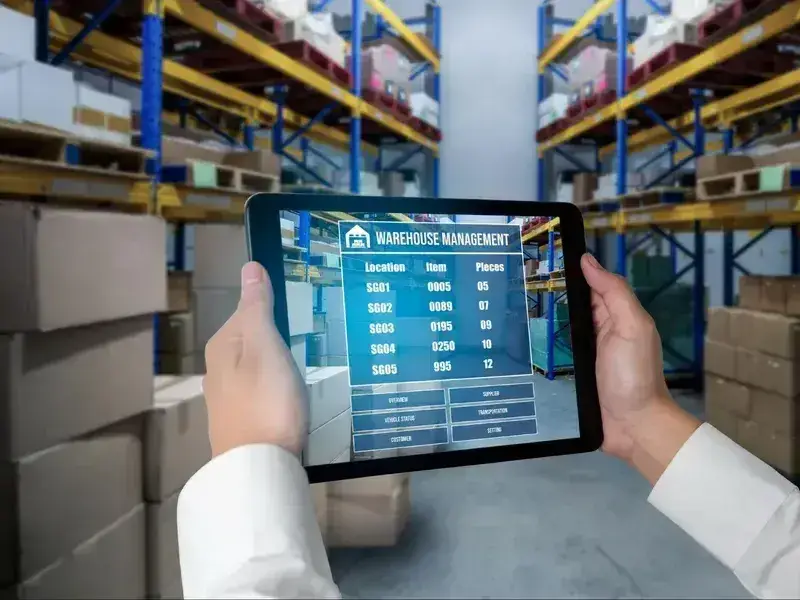
Find out more about TMA project at Warehouse Management System (WMS) AI Agent
- Enterprise software systems: AI is integrated into analytics platforms, recommendation engines, and automation workflows that support business optimization at scale.
Why Global Enterprises Work with Vietnam AI Engineering Teams
Vietnam has become a strategic hub for AI and software outsourcing due to its combination of technical talent, cost efficiency, and strong engineering culture.
Companies like TMA Solutions provide a unique advantage: the ability to combine enterprise rade software engineering with modern AI system design, which is essential for scaling production AI systems.
Conclusion: Building AI Systems That Actually Scale
Scaling AI in production is fundamentally a systems engineering challenge.
It requires a combination of:
- Robust architecture design
- Mature MLOps practices
- Strong data governance
- Continuous monitoring and retraining
- Enterprise-level operational discipline
Organizations that treat AI as a continuously evolving system—not a one-time model—are the ones that achieve long-term success.
With deep expertise in enterprise software and AI engineering, TMA Solutions enables global companies to move beyond experimentation and build production-grade AI systems that are scalable, reliable, and business-impact driven.