How Edge AI is Transforming Enterprise Operations with Low-Latency Intelligence, Secure Data Processing, and Scalable AI Solutions
Executive Summary
Artificial Intelligence has become a cornerstone of enterprise digital transformation, enabling organizations to automate processes, extract insights from massive datasets, and make data-driven decisions faster than ever before. However, traditional cloud-centric AI architectures are increasingly challenged by applications that require immediate responses, continuous operation, and stringent data privacy.
As organizations deploy billions of connected devices from industrial sensors and autonomous robots to medical equipment and intelligent cameras, sending every piece of data to the cloud for analysis becomes impractical. Network latency, bandwidth limitations, cybersecurity concerns, and regulatory requirements all introduce bottlenecks that can compromise system performance and business outcomes.
Edge AI addresses these challenges by bringing AI computation closer to where data is generated. Instead of transmitting raw data to centralized servers, AI models perform inference directly on edge devices, enabling real-time decision making with minimal latency while reducing bandwidth consumption and enhancing data privacy.
According to industry analysts, Edge AI is becoming a foundational technology for Industry 4.0, smart healthcare, intelligent transportation, and smart city initiatives. Enterprises adopting Edge AI can improve operational efficiency, reduce infrastructure costs, strengthen cybersecurity, and unlock new business opportunities powered by real-time intelligence.
Why Edge AI Matters in 2026
Artificial intelligence has evolved from a centralized cloud service into a distributed computing model that extends intelligence to the network edge. This shift is driven by the explosive growth of connected devices and the increasing demand for instantaneous decision-making.
Industry estimates suggest that by 2030, tens of billions of IoT devices will be generating continuous streams of data across manufacturing plants, hospitals, retail stores, transportation networks, and smart cities. Processing all of this information in centralized cloud environments would create significant challenges related to latency, network bandwidth, operational costs, and data governance.
Edge AI enables organizations to overcome these limitations by performing AI inference locally, allowing intelligent systems to respond in milliseconds without relying on constant cloud connectivity.
This capability is particularly valuable for mission-critical scenarios where delays of even a few hundred milliseconds can impact safety, productivity, or customer experience.
For example:
- A manufacturing robot must detect product defects instantly to prevent defective items from moving further along the production line.
- An autonomous vehicle cannot wait for cloud processing to recognize pedestrians or avoid obstacles.
- A medical monitoring device must detect abnormal vital signs immediately to trigger life-saving interventions.
- An intelligent surveillance system needs to identify unauthorized access in real time to enable rapid response.
In each of these scenarios, local AI inference is not simply a performance optimization—it is a business necessity.
What Is Edge AI?
Edge AI refers to the deployment of artificial intelligence models on devices or local computing infrastructure located near the source of data generation. Rather than transmitting raw data to remote cloud servers, Edge AI processes information locally, enabling faster, more efficient, and more secure decision-making.
An Edge AI ecosystem typically consists of:
- IoT sensors and connected devices collecting operational data
- Edge computing hardware performing AI inference
- Machine learning or deep learning models optimized for local execution
- Cloud infrastructure used for centralized management, analytics, and model retraining
This architecture allows enterprises to balance the speed of local intelligence with the scalability of cloud computing.
For example, an AI-powered camera installed in a factory can inspect thousands of products every hour, identify defects using computer vision models running on an embedded GPU, and only send summarized inspection results to the cloud. This approach significantly reduces network traffic while enabling immediate quality control decisions.
Similarly, a wearable healthcare device can continuously analyze patient data on-device and generate alerts without requiring a stable internet connection, ensuring reliable monitoring in remote or resource-constrained environments.
Edge AI vs Cloud AI vs Hybrid AI
One of the most common misconceptions is that Edge AI replaces cloud computing. In reality, most enterprise deployments rely on a hybrid architecture that combines the strengths of both approaches.
Capability | Edge AI | Cloud AI | Hybrid AI |
AI Inference | Local devices | Remote cloud | Both |
Response Time | Milliseconds | Seconds | Optimized |
Internet Dependency | Low | High | Moderate |
Privacy | Excellent | Moderate | High |
Scalability | Limited by hardware | Virtually unlimited | High |
Model Training | Limited | Excellent | Cloud |
Real-Time Decisions | Excellent | Moderate | Excellent |
Cost Efficiency | Lower bandwidth costs | Higher data transfer | Balanced |
Cloud AI remains essential for training large language models, managing enterprise data lakes, and performing large-scale analytics. Edge AI excels at real-time inference and localized decision-making. A hybrid architecture combines these strengths, enabling enterprises to deploy intelligent systems that are both responsive and scalable.
How Edge AI Works: Enterprise Architecture
A successful Edge AI implementation requires more than deploying AI models on local devices. It involves a coordinated architecture that integrates edge computing, IoT, cloud infrastructure, and enterprise applications.
1. Data Acquisition
Operational data is generated from diverse sources, including:
- Industrial sensors
- Smart cameras
- Medical devices
- Autonomous robots
- Mobile applications
- Connected vehicles
- Wearable devices
- PLCs and SCADA systems
These devices continuously collect structured and unstructured data such as images, video streams, temperature readings, vibration signals, audio recordings, and telemetry.
2. Edge Processing
Instead of transmitting all collected data to the cloud, edge devices perform initial processing tasks, including:
- Noise reduction
- Data filtering
- Signal normalization
- Feature extraction
- Image preprocessing
This reduces unnecessary data transmission and improves the efficiency of downstream AI models.
3. AI Inference
Optimized machine learning models execute directly on edge hardware to perform tasks such as:
- Object detection
- Image classification
- Defect detection
- Speech recognition
- Predictive maintenance
- Anomaly detection
- Pose estimation
- Optical Character Recognition (OCR)
These models are typically compressed using techniques such as quantization or pruning to run efficiently on resource-constrained devices.
4. Decision Engine
Business rules evaluate AI outputs and trigger automated actions. Depending on the use case, this may include:
- Stopping a production line
- Rejecting defective products
- Dispatching maintenance personnel
- Triggering emergency alerts
- Adjusting machine parameters
- Controlling autonomous robots
- Activating security protocols
Because these decisions occur locally, organizations achieve near-instantaneous response times.
5. Cloud Synchronization
While inference occurs at the edge, cloud platforms continue to play a vital role by:
- Storing historical data
- Retraining AI models
- Managing device fleets
- Monitoring system performance
- Performing enterprise analytics
- Distributing model updates
This hybrid approach allows organizations to continuously improve AI accuracy while maintaining operational efficiency.
Why Enterprises Are Investing in Edge AI
Organizations across industries are accelerating Edge AI adoption because it delivers measurable business value beyond faster processing.
- Reduced Operational Costs: Processing data locally minimizes cloud bandwidth consumption and storage requirements, lowering infrastructure costs while improving system efficiency.
- Enhanced Cybersecurity and Compliance: By keeping sensitive information on local devices whenever possible, enterprises reduce the risk of exposing confidential operational or customer data during transmission. This is particularly valuable in highly regulated industries such as healthcare, finance, and critical infrastructure.
- Improved Reliability: Edge AI systems continue operating even when cloud connectivity is unavailable, ensuring uninterrupted business operations in factories, offshore facilities, transportation networks, and remote locations.
- Better Customer Experiences: Real-time AI enables organizations to deliver faster, more personalized, and context-aware services, whether through intelligent retail experiences, autonomous vehicles, or smart healthcare devices.
- Sustainability: Reducing unnecessary data transmission decreases network energy consumption and optimizes the use of computing resources, contributing to more sustainable digital operations.
Enterprise Applications of Edge AI Across Industries
The true value of Edge AI lies in its ability to solve real-world operational challenges where speed, reliability, and data privacy are mission-critical. Unlike cloud-only AI solutions, Edge AI enables intelligent decision-making directly where data is generated, allowing enterprises to automate processes, improve operational efficiency, and reduce infrastructure costs.
At TMA Solutions, Edge AI technologies are applied across multiple industries, combining artificial intelligence, computer vision, IoT, embedded systems, and cloud platforms to deliver scalable enterprise solutions.
Manufacturing: Driving Industry 4.0 with Intelligent Edge Computing
Manufacturing environments generate enormous volumes of operational data every second, from industrial cameras and robotic systems to programmable logic controllers (PLCs), vibration sensors, and machine telemetry. Processing this data exclusively in the cloud often introduces latency that can slow production, increase bandwidth costs, and delay critical decisions.
Edge AI addresses these challenges by performing AI inference directly on production equipment or nearby edge gateways, enabling manufacturers to detect issues and respond instantly.
AI-powered Visual Inspection
Quality inspection remains one of the most resource-intensive processes in manufacturing. Manual inspection is susceptible to human error, while centralized image processing may not meet the speed requirements of modern production lines.
Using high-resolution industrial cameras combined with deep learning models running on NVIDIA Jetson or other embedded edge platforms, manufacturers can inspect every product in real time without interrupting production.
Typical inspection capabilities include:
- Surface scratch detection
- Crack identification
- Missing component verification
- Product dimension measurement
- Packaging inspection
- Label and barcode verification
- Assembly validation
Instead of transferring thousands of images to the cloud, AI models analyze each frame locally and immediately reject defective products or notify operators of abnormalities.
How TMA Solutions Helps
TMA develops AI-powered computer vision solutions that automate quality inspection using optimized deep learning models deployed on edge devices. These solutions integrate seamlessly with existing production lines, enabling manufacturers to improve inspection accuracy, reduce operational costs, and maintain consistent product quality.
Predictive Maintenance for Industrial Equipment
Unexpected equipment failures can halt production, increase maintenance costs, and reduce overall equipment effectiveness (OEE). Traditional preventive maintenance strategies rely on fixed schedules, which often result in unnecessary servicing or missed early warning signs.
Edge AI enables predictive maintenance by continuously analyzing sensor data, including vibration, temperature, pressure, acoustic signals, and motor current directly at the edge.
Machine learning models identify subtle anomalies that indicate potential failures before they become critical, allowing maintenance teams to intervene proactively.
Business benefits include:
- Reduced unplanned downtime
- Extended equipment lifespan
- Lower maintenance costs
- Increased asset utilization
- Improved production efficiency
TMA combines IoT platforms, AI analytics, and cloud monitoring to build predictive maintenance solutions tailored to manufacturing, energy, and industrial sectors.
Discover TMA's IoT Solutions: TMA Competencies | IoT Platform
Healthcare: Delivering Intelligent Care Beyond Hospital Walls
Healthcare providers are increasingly adopting AI to improve clinical decision-making, optimize workflows, and expand access to care. However, transmitting sensitive patient data to the cloud introduces privacy concerns and may not meet the real-time requirements of critical care applications.
Edge AI enables medical devices and healthcare systems to process data locally, ensuring faster response times while maintaining compliance with data privacy regulations.
Remote Patient Monitoring
Wearable devices and medical sensors continuously collect physiological data such as:
- Heart rate
- Blood pressure
- Blood oxygen saturation (SpO₂)
- Electrocardiogram (ECG)
- Respiratory rate
- Body temperature
Rather than transmitting every reading to the cloud, Edge AI models analyze patient data directly on local devices, identifying abnormal conditions and triggering alerts within seconds.
This architecture enables reliable healthcare services in hospitals, elderly care facilities, and remote communities with limited internet connectivity.
AI-assisted Medical Imaging
Edge AI also enhances diagnostic workflows by assisting clinicians in analyzing medical images locally. AI models deployed on imaging devices can support the detection of abnormalities in X-rays, CT scans, MRI images, and ultrasound examinations, reducing diagnostic turnaround times while ensuring patient data remains within the hospital's secure environment.
How TMA Solutions Helps
With more than 16 years of experience in healthcare software development and over 700 engineers dedicated to the healthcare sector, TMA delivers AI-powered healthcare solutions that support remote patient monitoring, medical imaging, hospital information systems, and digital health platforms.
Explore TMA Healthcare Software Development: TMA Solutions | Healthcare software solutions
Intelligent Video Analytics: Transforming Public Safety with Smart Camera (T-Cam)
Traditional surveillance systems continuously stream video to centralized servers for processing, consuming significant network bandwidth and delaying incident detection.
To overcome these limitations, TMA developed smart camera, an Edge AI-powered intelligent video analytics platform built in collaboration with ADLINK Technology.
Powered by NVIDIA Jetson edge devices, smart camera performs AI inference locally, enabling real-time detection without relying on cloud connectivity.
Key Capabilities
T-Cam supports a wide range of computer vision applications, including:
- Intrusion detection
- Face recognition
- License plate recognition
- Vehicle classification
- Crowd monitoring
- People counting
- Smoke and fire detection
- PPE compliance monitoring
- Object abandonment detection
- Dangerous object detection
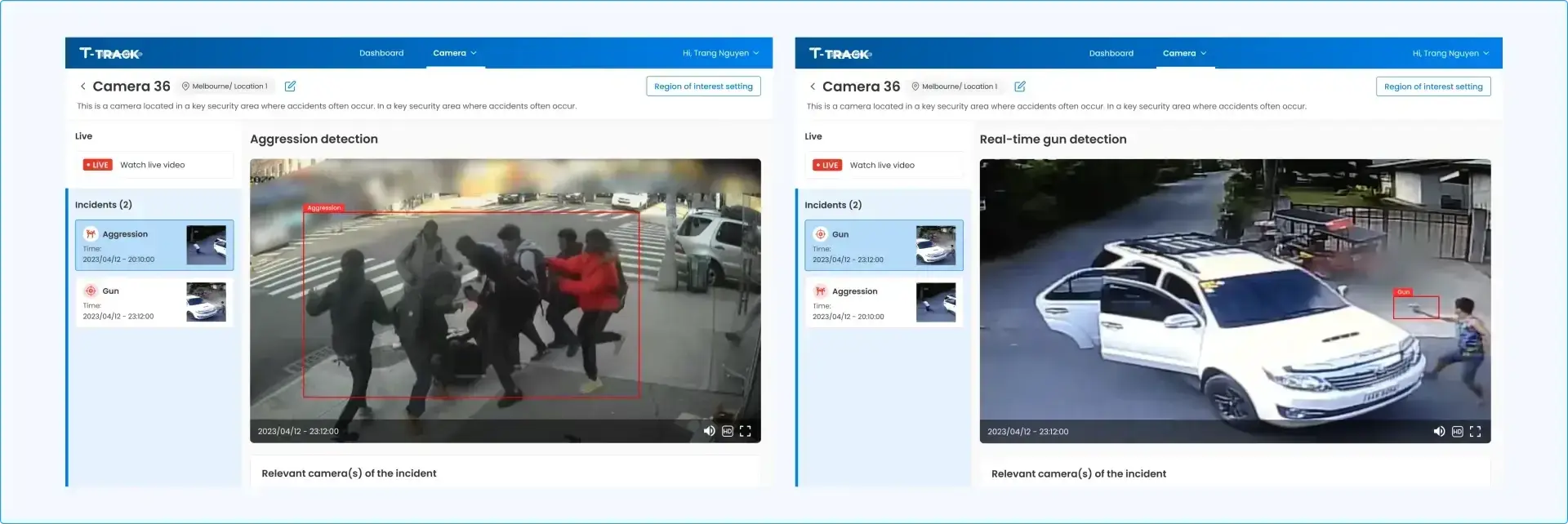
By processing video locally, organizations can significantly reduce bandwidth usage while responding to security incidents in real time.
Deployment Scenarios
T-Cam has broad applicability across industries, including:
- Smart factories
- Airports
- Logistics hubs
- Office buildings
- University campuses
- Smart cities
- Transportation infrastructure
Learn more about T-Cam and Edge AI solutions: Case Study: Public safety monitoring with smart camera
Logistics: Building Smarter Supply Chains
Global supply chains require continuous visibility into assets, inventory, and transportation operations. However, logistics environments often involve distributed facilities where reliable network connectivity cannot always be guaranteed.
Edge AI enables intelligent logistics by processing operational data directly within warehouses, distribution centers, and vehicles.
Applications include:
- Intelligent warehouse automation
- Package classification
- Inventory management
- Fleet monitoring
- Cold chain monitoring
- Driver behavior analysis
- Autonomous mobile robots (AMRs)
By combining Edge AI with IoT technologies, logistics providers can improve operational efficiency while reducing network dependency.
Why TMA Solutions Is a Trusted Edge AI Partner
Building enterprise-grade Edge AI solutions requires more than AI models. Organizations need a technology partner capable of integrating AI into complex operational environments while ensuring scalability, security, and long-term maintainability.
With more than 10 years of AI software development excellence, TMA Solutions has helped clients in more than 20 countries accelerate digital transformation through advanced AI technologies.
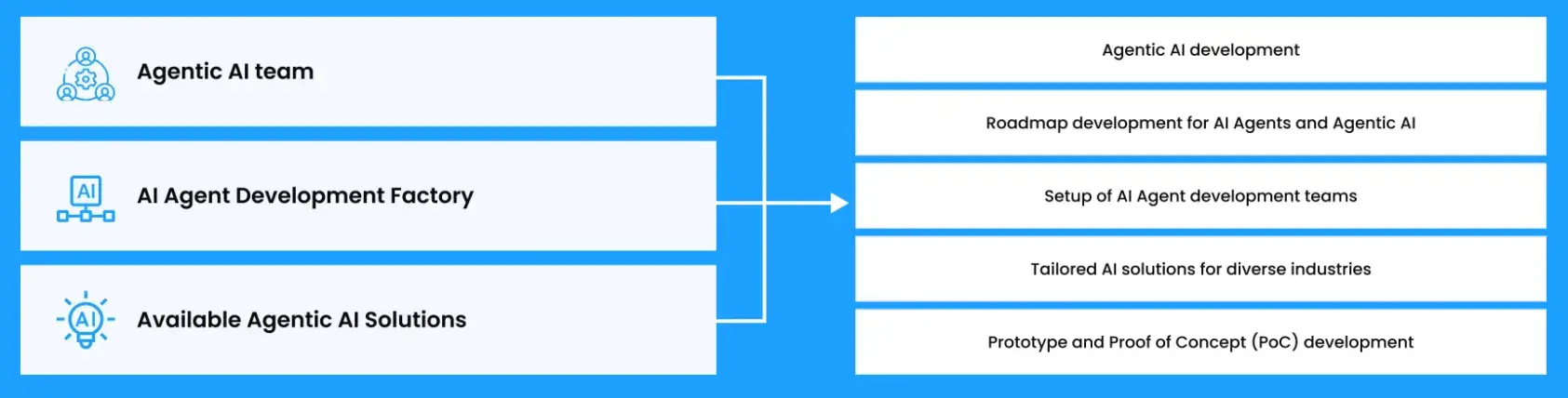
Our multidisciplinary teams combine expertise in:
- Artificial Intelligence & Machine Learning
- Computer Vision
- Embedded Software Development
- Internet of Things (IoT)
- Cloud-native Development
- MLOps & AI Lifecycle Management
- Enterprise System Integration
From AI strategy and solution architecture to deployment and ongoing optimization, TMA delivers end-to-end Edge AI services that help organizations move from pilot projects to production-ready intelligent systems.
Frequently Asked Questions
- What is Edge AI?
Edge AI is the deployment of artificial intelligence models directly on devices or local systems where data is generated, enabling real-time processing without relying entirely on cloud infrastructure.
- What industries benefit most from Edge AI?
Industries such as manufacturing, healthcare, logistics, retail, energy, and smart cities benefit most due to their need for real-time decision-making and distributed operations.
- What is the difference between Edge AI and Cloud AI?
Edge AI processes data locally for real-time responses, while Cloud AI relies on centralized servers for large-scale computation and model training. Most enterprises use a hybrid approach combining both.
- Why is Edge AI important for enterprises?
Edge AI reduces latency, improves privacy, lowers bandwidth costs, and enables real-time decision-making, making it essential for mission-critical applications.
- How does TMA Solutions support Edge AI development?
TMA provides end-to-end Edge AI services including consulting, architecture design, AI model development, embedded systems, IoT integration, and long-term AI system maintenance.


.webp_2026-10-01-18-27-07-971.webp)
.webp_2026-10-01-18-17-11-290.webp)
.webp_2026-10-01-18-08-26-854.webp)
.webp_2026-10-01-17-47-32-240.webp)