For decades, the Internet of Things (IoT) has connected machines, sensors, and systems on the factory floor, gathering vast oceans of data. But data alone doesn't create value. The revolution begins when intelligence is applied. This is the power of AIoT—the fusion of Artificial Intelligence (AI) and IoT—a combination that is moving manufacturing from simple data collection to intelligent, autonomous action.
While IoT provides the digital "nervous system" to connect assets, AI acts as the "brain" to analyze, predict, and optimize operations in real-time (2). This synergy is unlocking unprecedented levels of efficiency, with industry leaders like Gartner noting that over 80% of enterprise IoT projects will incorporate AI by 2022 (5). For manufacturers, this isn't just a trend; it's a fundamental shift toward the smart, resilient, and autonomous factory of the future.
Beyond Data: The Core Pillars of AIoT
AIoT transforms raw data streams into actionable insights across three critical pillars
- Optimized Production Lines: AI algorithms analyze real-time data from IoT sensors to identify bottlenecks, automate quality control, and adjust machine parameters on the fly. This leads to higher throughput, reduced waste, and more consistent product quality.
- Enhanced Supply Chain Visibility: AIoT doesn't stop at the factory door. It provides intelligent tracking of assets and materials across the entire supply chain, using AI to predict logistical disruptions and optimize inventory levels.
- Predictive Maintenance (PdM): This is arguably the most significant impact of AIoT. Instead of reacting to breakdowns or adhering to rigid maintenance schedules, AIoT allows manufacturers to predict equipment failure before it happens, minimizing costly unplanned downtime.
From Theory to Factory Floor: TMA’s AIoT Solutions in Action
Harnessing the power of AIoT requires deep expertise in both data science and domain-specific engineering. This is where a dedicated technology partner transforms potential into profit.
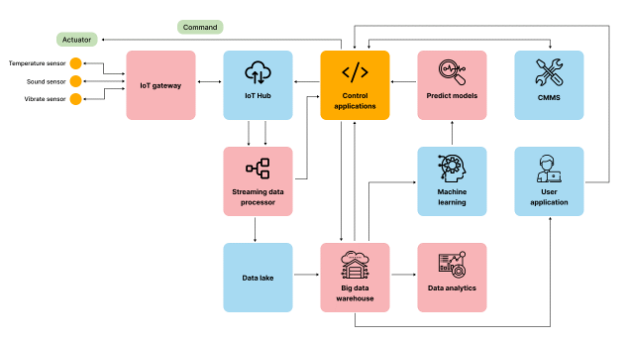
A prime example is TMA's Predictive Maintenance solution, developed for a global appliance manufacturer.
- The Challenge: There is a need to move from reactive to predictive maintenance to reduce operational costs and downtime for their machinery.
- The AIoT Solution: TMA deployed a system using IoT sensors (like sound, vibration, and temperature) to continuously monitor equipment health. This data was fed into custom-built AI models.
- The Result: The AI models successfully learned the "normal" operating signature of each machine and could accurately forecast failures in real-time. This allowed the client to schedule maintenance proactively, drastically cutting unexpected downtime and extending the lifespan of critical assets.
This real-world application highlights the core value of AIoT: it provides a clear, data-driven path to solving multi-million dollar problems.
Unifying Operations: The sCMMS Platform
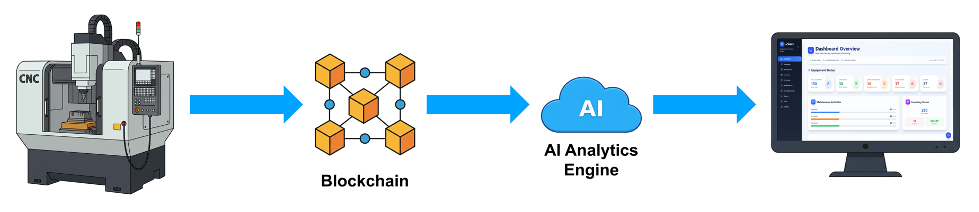
To fully leverage AIoT, manufacturers need a central hub to manage these new capabilities. TMA's Smart Computerized Maintenance Management System (sCMMS) provides this unified platform. It integrates IoT data, AI-driven insights, and maintenance workflows into a single dashboard.
Instead of just logging repairs, the sCMMS uses AI to:
- Automate work order creation based on AIoT alerts.
- Provide an AI Assistant to help technicians diagnose problems.
- Manage inventory intelligently, ensuring the right spare parts are ready for a predicted failure.
This solution is a practical example of how TMA’s Smart Factory capabilities bridge the gap between raw data and tangible business outcomes.
AIoT for a Safer, More Secure Facility
AIoT's impact extends beyond machine efficiency to include personnel safety - a top priority for any manufacturer. Traditional camera systems (CCTV) are passive; they only show what happened after an incident.
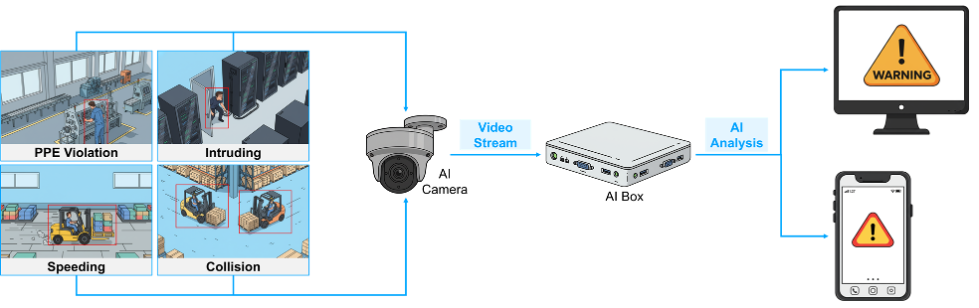
TMA's Video Management System (VMS) turns these cameras into active, intelligent guardians. By applying AI analytics to live video feeds (an "AI + IoT" solution), the system can:
- Detect PPE Violations: Automatically identify if a worker is not wearing a required helmet or safety vest in a designated zone.
- Prevent Collisions: Send real-time alerts if forklifts or personnel are on a collision course.
- Secure Restricted Areas: Instantly detect and flag unauthorized intrusion.
This proactive approach to safety prevents accidents, ensures compliance, and creates a more secure working environment.
The Future of Manufacturing is Now
The AIoT revolution is not a distant vision; it is happening on factory floors today. By combining the connectivity of IoT with the intelligence of AI, manufacturers can finally unlock the full potential of their data. From predicting machine failures with TMA's Predictive Maintenance solutions to ensuring worker safety with intelligent VMS, the path to a more efficient, autonomous, and resilient operation is clear.
The question for manufacturers is no longer if they should adopt AIoT, but how quickly they can partner with experts to implement it.


.webp_2026-10-01-18-27-07-971.webp)
.webp_2026-10-01-18-17-11-290.webp)
.webp_2026-10-01-18-08-26-854.webp)
.webp_2026-10-01-17-47-32-240.webp)