Legacy modernization is no longer just about moving databases to the cloud, but building a flexible, AI-ready data foundation without a full system replacement. As legacy environments bottleneck digital transformation for mid-to-large enterprises, an experienced data analytics solution development company like TMA Solutions helps bridge this gap - leveraging platforms like the TMA Data Platform to accelerate integration, scalability, and analytics across hybrid environments.
Why Legacy Data Systems Cannot Support Modern AI Workloads
Legacy data systems can continue supporting core business operations, but they often become restrictive when enterprises need real-time analytics, machine learning, generative AI, or data-intensive applications. The limitation is not only technical, but architectural - data is often fragmented, siloed, and difficult to operationalize at scale.
Data remains trapped in disconnected systems
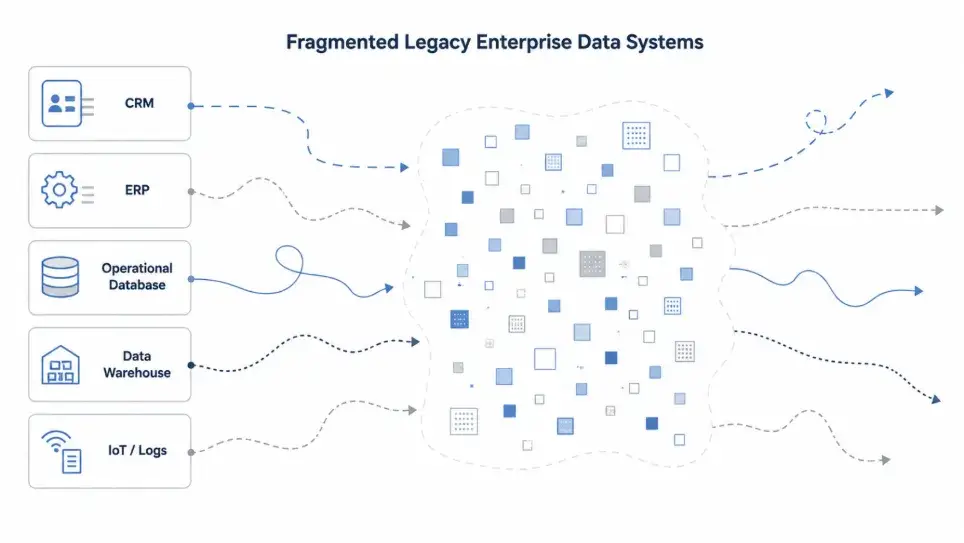
Large enterprises rarely operate with a single data source. Customer data may sit in CRM systems, transactions in operational databases, historical data in warehouses, while logs and sensor data are stored separately.
Traditional architectures connect these systems through point-to-point integrations and batch processing. While this approach worked in the past, it creates fragmentation that limits enterprise-wide visibility.
From a technology trend perspective, modern AI systems require unified, governed, and continuously accessible data. This is why enterprises are shifting toward integrated data architectures that prioritize interoperability and reusable data pipelines rather than isolated reporting systems.
 Batch-oriented architectures limit real-time use cases
Many legacy environments are built around scheduled ETL processes and periodic reporting cycles. This model is sufficient for static reporting but insufficient for modern use cases such as:
- Fraud detection and risk mitigation in financial services.
- Predictive maintenance for smart manufacturing.
- Real-time personalization and AI-driven decision engines.
As industries move toward real-time decision-making, enterprises need architectures that support both batch and streaming data processing. This shift is one of the key drivers behind modern data platform initiatives across industries.
The Hidden Cost of Maintaining Traditional Enterprise Data Infrastructure
The cost of legacy infrastructure is not only financial. CIOs must also consider operational complexity, integration overhead, talent dependency, and delayed innovation cycles.
Rising maintenance and integration complexity
Over time, enterprises accumulate multiple layers of integrations between systems. Each new application adds additional data pipelines, transformation logic, and security configurations.
This leads to a growing technical debt where even small changes require coordination across multiple systems. In many enterprises, data teams spend more time maintaining pipelines than enabling new analytics or AI initiatives.
From an engineering perspective, this is where external partners often support enterprises - helping stabilize, refactor, or redesign integration layers so internal teams can focus on business value rather than infrastructure maintenance.
Limited scalability and slower innovation
Legacy systems are typically designed for predictable workloads, not dynamic scaling. However, modern enterprises face fluctuating data volumes driven by digital channels, IoT, and AI workloads.
Cloud-native approaches address this limitation by decoupling storage, compute, and processing layers, allowing systems to scale independently based on demand. This is particularly important for AI workloads, which require flexible compute resources for training and inference.
For CIOs, the key question is no longer “How do we maintain this system?” but “How do we enable continuous innovation on top of our data foundation?”
What Modern Customized Data Platform Development Looks Like
Modern customized data platform development is not about adopting a single technology stack. It is about designing an architecture that aligns with enterprise constraints, industry requirements, and future scalability needs.
Dimension | Legacy Data Architecture | Modern Customized Data Platform |
System Integration | Point-to-point, fragmented silos | Unified data layer & reusable pipelines |
Processing Model | Batch ETL & scheduled reporting | Hybrid batch & real-time streaming |
Scalability | Coupled compute & storage | Cloud-native, decoupled infrastructure |
Data Use Cases | Static descriptive reporting | Predictive analytics, ML, & Generative AI |
Modernization Approach | High-risk “Big Bang” replacement | Phased, incremental modernization |
 Modernize without replacing everything at once
In most enterprises, full system replacement is neither practical nor necessary. Instead, modernization typically follows a phased approach:
- Retain stable legacy systems that still support core operations
- Integrate existing systems into a unified data layer
- Gradually migrate selected workloads to cloud environments
- Replatform or refactor systems where scalability is limited
- Introduce new capabilities for analytics and AI on top of existing data
This incremental approach reduces risk and allows enterprises to modernize while maintaining business continuity. From a CIO perspective, modernization is not a one-time project - it is a long-term transformation journey.
Build an integrated data foundation
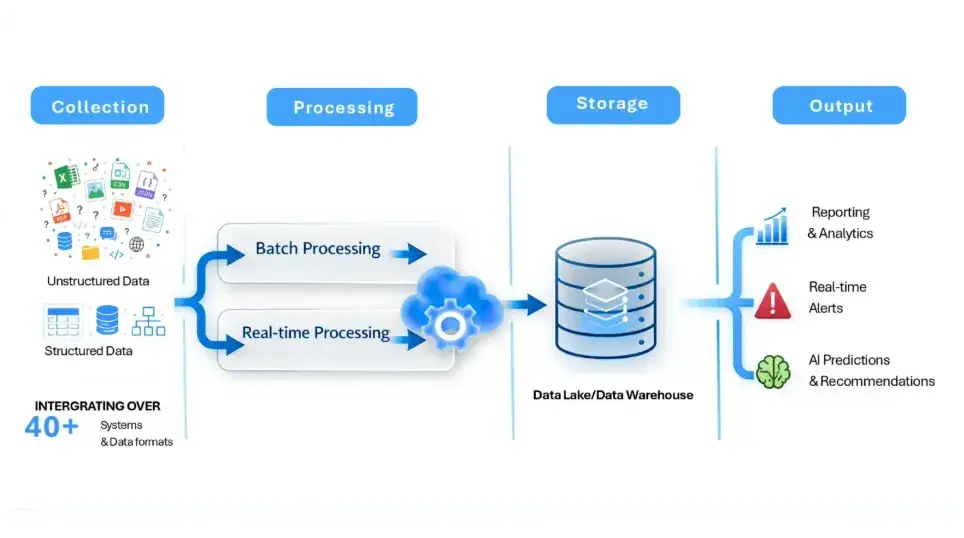
A modern data platform should connect the full data lifecycle rather than treating each stage separately. This includes:
- Data Ingestion: Capturing data from enterprise systems, applications, and external sources.
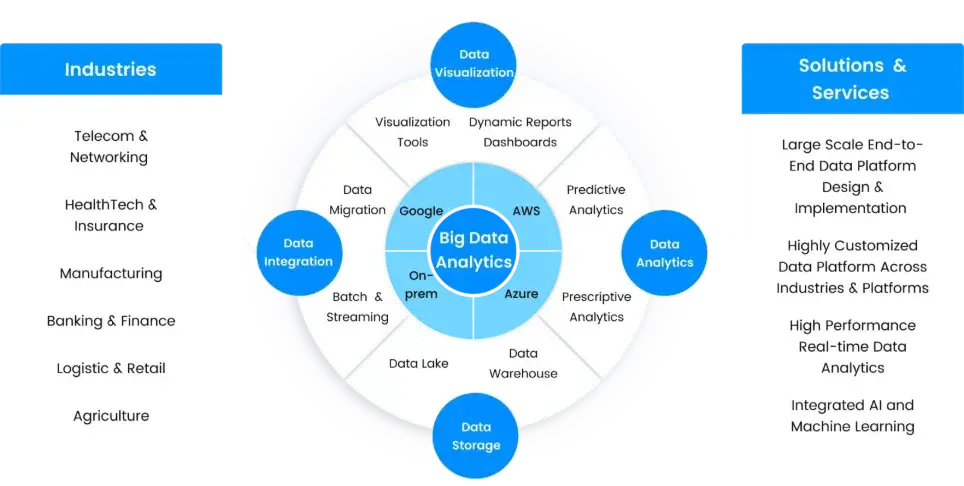
- Storage & Processing: Combining data lakes, warehouses, or hybrid architectures for batch and real-time workloads.
- Analytics & AI Enablement: Driving business intelligence and supporting predictive/generative AI models.
- Governance & Security: Implementing access control, data lineage, and compliance frameworks.
The goal is not to build another isolated system, but to create a reusable data foundation that can support multiple business domains.
Engineering perspective from enterprise projects
In real-world enterprise projects, such as those delivered by TMA across manufacturing, healthcare, and logistics, modernization often involves integrating legacy systems with cloud-based data pipelines, enabling centralized analytics, and improving data accessibility for business users.
In several cases, the TMA Data Platform is used as a baseline architecture to standardize ingestion, processing, and analytics layers across hybrid environments, helping enterprises reduce fragmentation and accelerate AI adoption.
How Cloud-Native Data Platforms Improve Analytics and Scalability
Cloud-native data platforms are reshaping how enterprises manage and use data. The shift is not only technological but also organizational, enabling faster experimentation and more data-driven decision-making.
Multi-cloud and hybrid deployment flexibility
Most enterprises today operate in hybrid environments. Some workloads remain on-premise due to regulatory or operational constraints, while others move to public cloud platforms.
A modern data architecture must support this reality. Hybrid and multi-cloud strategies allow enterprises to modernize gradually without disrupting existing systems.
Real-time analytics and AI readiness
AI adoption is one of the strongest drivers of data modernization today. However, AI systems require more than just data - they require timely, high-quality, and well-governed data pipelines.
Modern architectures support both real-time and batch processing, enabling use cases such as predictive analytics, anomaly detection, and intelligent automation. Enterprises are moving from descriptive analytics (“what happened”) to predictive and prescriptive analytics (“what will happen and what should we do”).
Governance, security, and observability
As data becomes more distributed and accessible, governance becomes a critical requirement. Enterprises must ensure:
- Data Lineage & Traceability: Understanding data origin and transformation steps.
- Access Control: Enforcing role-based security policies across systems.
- Data Quality: Maintaining consistency, accuracy, and reliability.
- Regulatory Compliance: Adhering to industry standards (e.g., GDPR, HIPAA).
Without strong governance, data platforms can quickly become unmanageable, especially in large-scale enterprise environments.
What Enterprises Should Evaluate Before Modernizing Data Architecture
For CIOs, data modernization is a strategic decision that impacts long-term competitiveness.
Business priorities and modernization scope
Enterprises should start by identifying business outcomes such as:
- Improving operational efficiency and decision speed.
- Enabling real-time decision-making and automated workflows.
- Supporting enterprise AI and analytics initiatives.
- Reducing legacy maintenance costs and technical debt.
- Improving data accessibility across business units.
Data architecture and integration requirements
Key evaluation areas include:
- Existing data sources and system dependencies.
- Real-time vs. batch processing needs.
- Cloud readiness, regulatory constraints, and security models.
- AI and advanced analytics use cases.
This assessment helps determine the right architectural approach - whether data warehouse, data lake, or hybrid lakehouse models.
Engineering capability and execution readiness
Technology selection alone is not enough. Successful modernization depends heavily on engineering capability - especially in integrating legacy systems with modern cloud environments.
This is where experienced engineering partners play a role, supporting enterprises in designing, implementing, and operating complex data systems while ensuring continuity of business operations.
Conclusion
Customized data platform development is becoming a key enabler for enterprise modernization, especially as AI and real-time analytics reshape industry expectations. Instead of replacing legacy systems entirely, enterprises are moving toward hybrid, scalable, and governed data architectures.
Partnering with a recognized data analytics solution development company like TMA Solutions enables organizations to bridge the gap between legacy infrastructure and modern AI workloads. For CIOs, the focus is clear: building a resilient data foundation that evolves with business needs, accelerates AI adoption, and sustains long-term digital transformation.