Enterprises face mounting pressure to process growing volumes of invoices, contracts, purchase orders, and financial statements, while managing rising costs and staff burnout from manual data entry. Automated document processing solutions are emerging as the answer, combining OCR with AI to read, understand, and act on enterprise documents at scale.
TMA Solutions addresses this challenge with a portfolio of document intelligence tools, including T-DocAgent - which automates the entire document processing lifecycle, from understanding and extraction to end-to-end business workflow execution.
A Multi-Agent Architecture for Document Intelligence
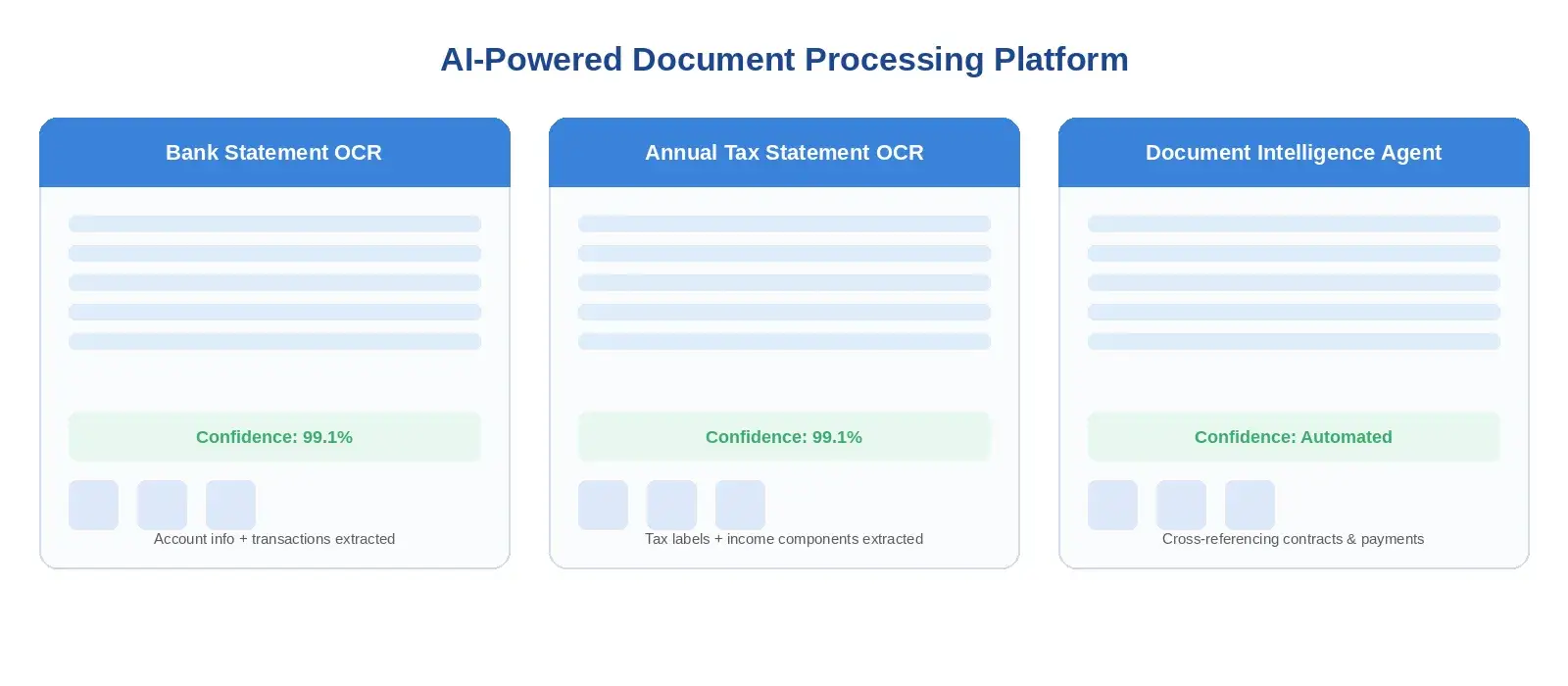
Within TMA's document processing portfolio, T-DocAgent illustrates how a multi-agent architecture brings this to life — built around three cooperating agents, each handling a distinct stage of the document lifecycle:
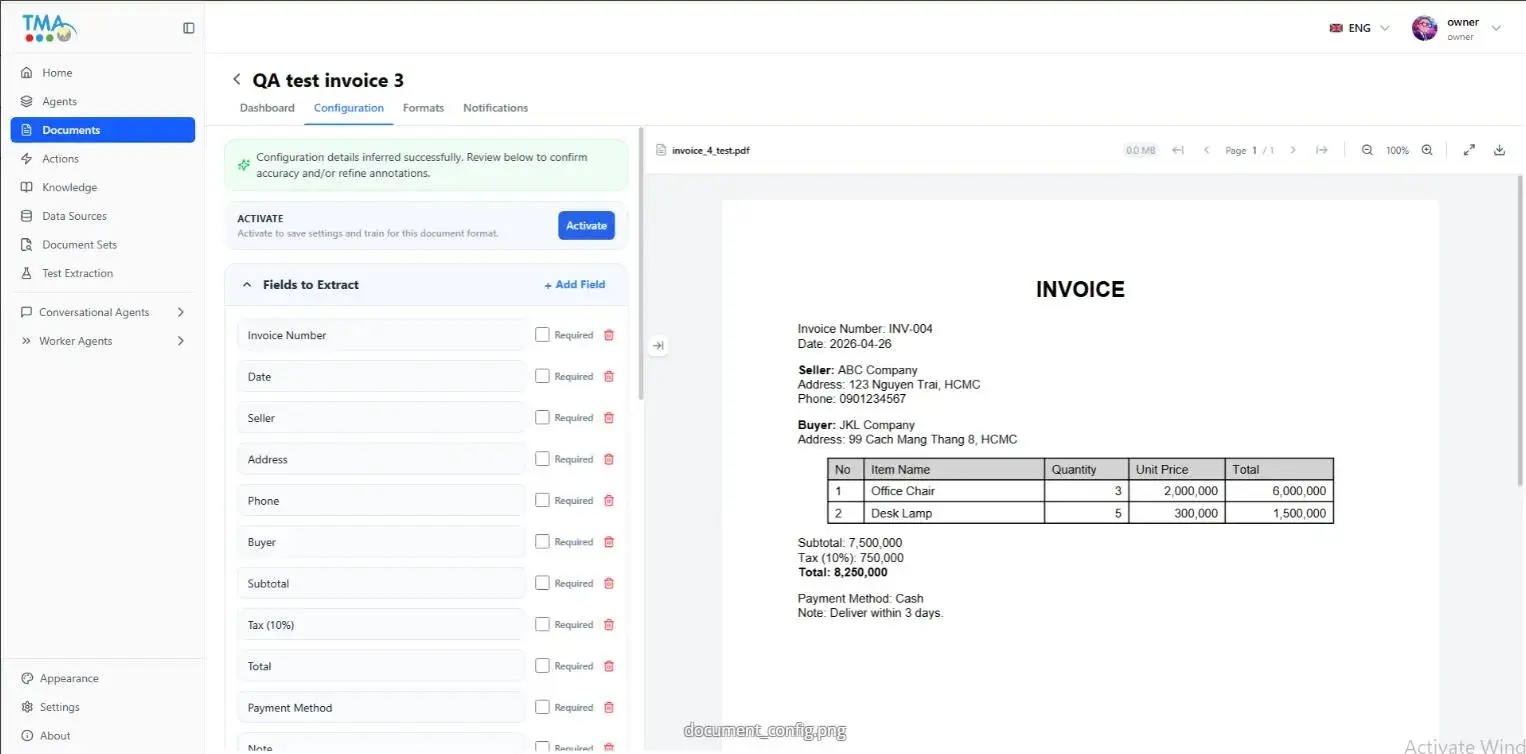
- Document Understanding Agent: teach the system your document types once — invoices, contracts, and more — and it learns to read them automatically.
- Multimodal Extraction Agent: extracts high-accuracy structured data from complex layouts, including nested tables, multi-format invoices, and low-quality scans.
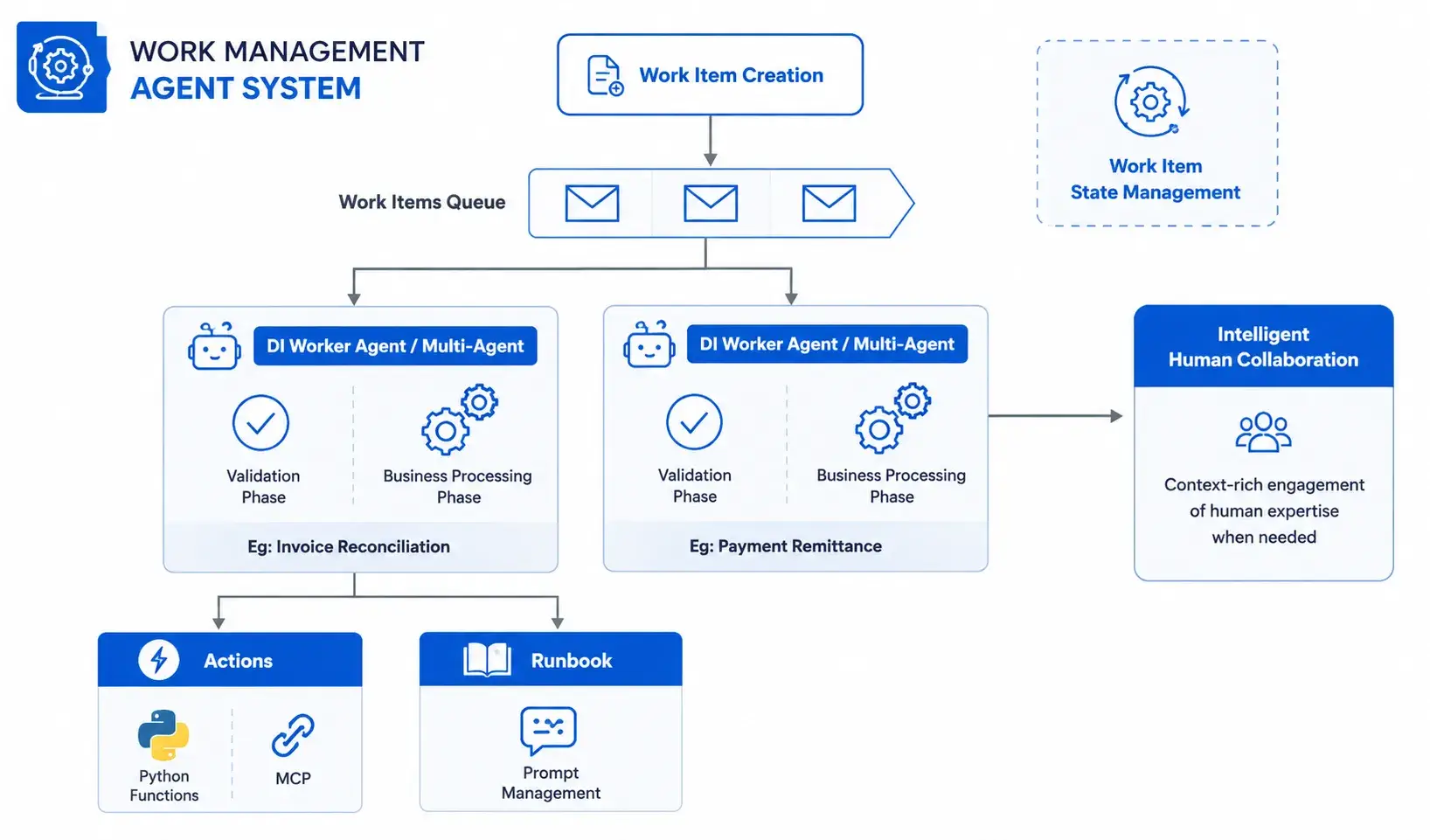
- Work Management Agent System: goes beyond extraction to automate the workflow - validating, cross-matching, and integrating data into enterprise systems for end-to-end process execution.
Documents flow in as PDFs, images, or ERP records; are processed through OCR, vision-language models, and NLP; and flow out as structured data, dashboards, reports, and actionable suggestions.
Key Capabilities
T-DocAgent packages its multi-agent architecture into concrete, user-facing capabilities that business teams can operate without engineering support:
- Visual Annotations: highlight key fields directly on documents to enable faster review and validation of extracted data.
- Schema Generation & Field Mapping: automatically infer document schemas and map fields to structure data consistently across document types.
- Multimodal Extraction: extract and unify data from text, images, and complex layouts into structured output.
- Business Logic Handling: apply configurable business rules to ensure extracted data aligns with operational requirements.
- Workflow Orchestration: coordinate multi-step document processing workflows across agents and systems.
- Human-in-the-Loop (HITL): route low-confidence or failed validations to human reviewers, then learn from the correction.
- Real-time Monitoring: track processing status, training activity, and system performance with instant visibility.
Case Studies
T-DocAgent's Multimodal Extraction and Work Management agents are already deployed in production across multiple TMA case studies, spanning financial document extraction, tax processing, and end-to-end procure-to-pay automation.
Bank Statement OCR
Deployed for a financial services client, this solution extracts account details and full transaction ledgers from cash management statements with confidence scores above 99%, eliminating manual re-keying from PDF or scanned statements.
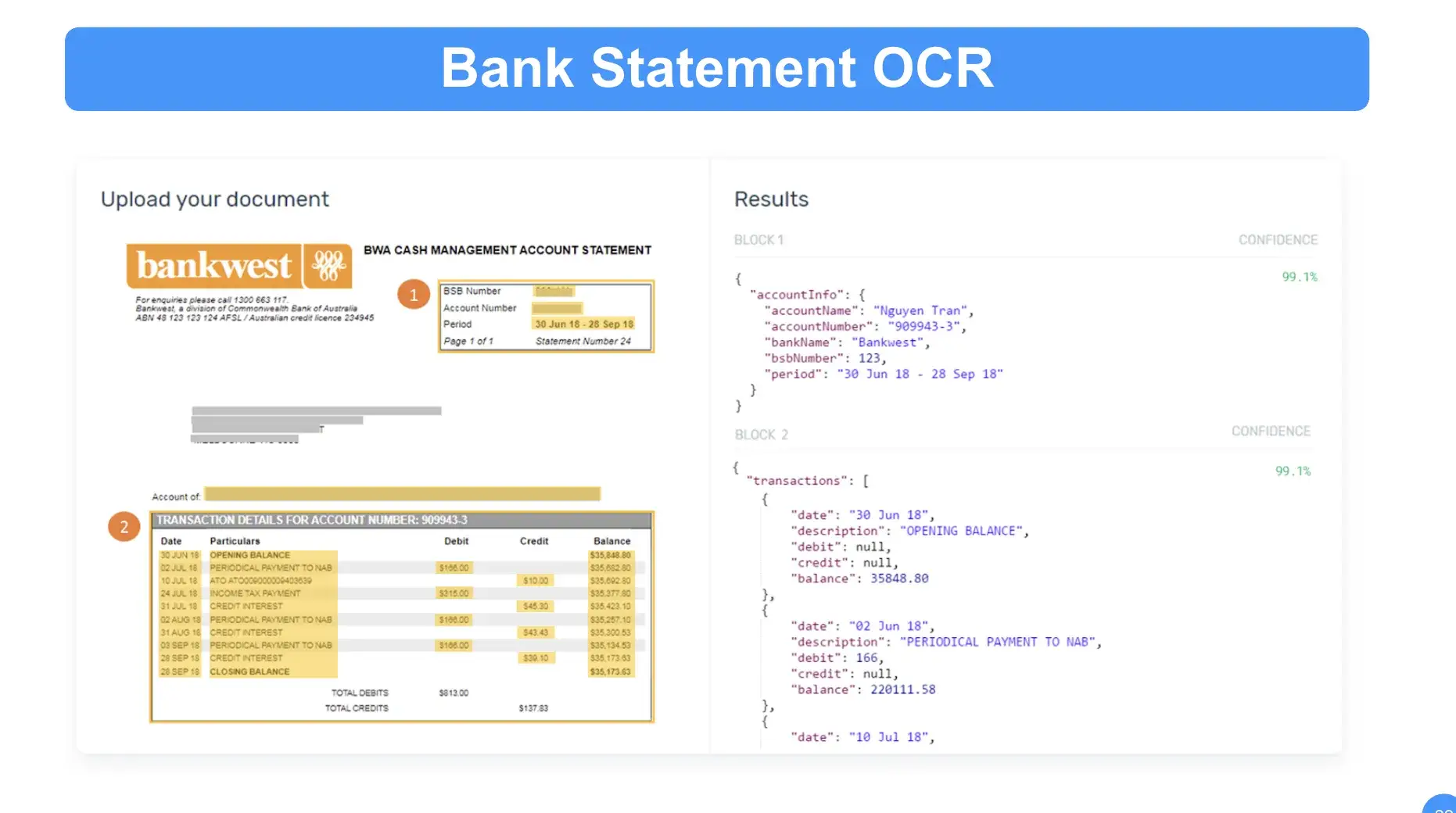
Bank statement OCR results panel showing structured account and transaction data with confidence scores
Annual Tax Statement OCR
Deployed for tax reporting workflows, this solution reads tax return labels and income components directly from supplementary tax statements, automatically flagging complex, lower-confidence sections for human review rather than risking a silent error.
Supplier Invoice & Payment Verification
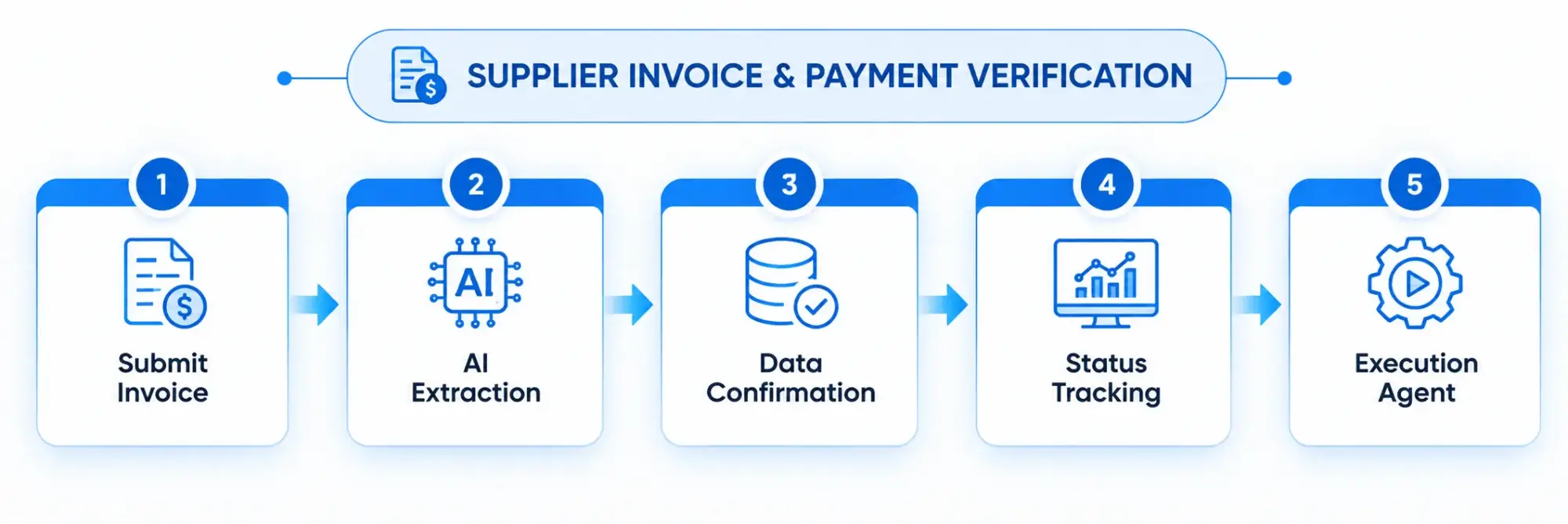
In a live B2B Commerce deployment, T-DocAgent extracts and reconciles supplier invoices against purchase orders and goods receipts, automating three-way matching and routing payment approvals - delivering faster order handling, a significant reduction in manual intervention, and consistent data quality across formats.
Business Impact & Compliance
Beyond the technology, the business case for automated document processing is straightforward. Organizations deploying these solutions typically see:
- Faster processing cycles: document turnaround drops from days to minutes, freeing staff for higher-value work.
- Lower operational cost: reduced need for manual data entry headcount as volumes scale.
- Fewer errors and less rework: confidence-scored extraction catches issues before they reach downstream systems.
- Stronger compliance posture: every extraction and validation step is logged and auditable, supporting internal controls and regulatory reporting.
This is underpinned by enterprise-grade security - encrypted data storage, role-based access controls, and full audit logging, so the accuracy and speed gains never come at the expense of data protection.
Conclusion
As enterprise document volumes continue to grow, AI-powered automated document processing helps organizations improve efficiency, accuracy, and compliance while reducing operational costs. By automating document extraction, validation, and workflow management, businesses can build a scalable foundation for digital transformation.
Contact TMA Solutions to discover how our AI-powered document processing solutions can streamline your operations and deliver measurable business value.