Healthcare delivery has undergone several waves of transformation over the past decade. The rapid expansion of telehealth during the COVID-19 pandemic accelerated the shift toward home-based care, while recent advances in the Internet of Medical Things (IoMT), wearable devices, and artificial intelligence are enabling a new generation of connected healthcare services.
Today, digitalized care processes, intelligent sensing technologies, and AI-powered analytics are reshaping how chronic diseases are managed outside traditional clinical settings. Instead of relying solely on periodic visits and reactive interventions, healthcare providers can continuously monitor patients in their homes and detect early signs of deterioration before complications arise. This evolution is driving the emergence of smart healthcare ecosystems that prioritize prevention, personalization, and proactive care.
For homecare providers, remote chronic disease monitoring has become an increasingly important strategy for improving patient outcomes, reducing avoidable hospitalizations, and delivering more sustainable long-term care.
What is Remote Chronic Disease Monitoring ?
Chronic Diseases Definition
Chronic diseases are long-lasting health conditions that typically develop gradually and require ongoing medical attention and management. According to the World Health Organization (WHO), Noncommunicable diseases (NCDs), also known as Chronic diseases, are responsible for approximately 74% of deaths worldwide and include conditions such as cardiovascular diseases, diabetes, chronic respiratory diseases, and certain types of cancer.
Unlike acute illnesses, chronic diseases often persist for months or years and can significantly affect patients' quality of life if not properly managed. As populations age and the prevalence of these conditions continues to rise, healthcare systems are increasingly shifting toward continuous and patient-centered care models. This growing demand has accelerated the adoption of remote chronic disease monitoring solutions, enabling healthcare providers to deliver proactive care, detect early warning signs, and support better long-term health outcomes.
How Remote Chronic Disease Monitoring Works
Remote chronic disease monitoring relies on an interconnected digital ecosystem that combines wearable devices, medical sensors, cloud platforms, big data analytics, and artificial intelligence to continuously track patient health outside traditional healthcare settings.
Rather than depending solely on periodic clinic visits, these systems enable the collection, transmission, and analysis of physiological information in real time, supporting more proactive and personalized care.
Continuous Data Collection Through Connected Devices
Wearable technologies and connected medical devices capture a wide range of health indicators, including blood pressure, glucose levels, oxygen saturation, heart rate, physical activity, and body weight. This information is automatically transmitted to digital health platforms, where it can be securely stored and accessed by healthcare professionals.
By creating longitudinal health records, remote monitoring systems provide clinicians with a more comprehensive view of a patient's condition and disease progression over time.
Big Data and AI Enable Intelligent Health Insights
Modern remote monitoring platforms leverage big data technologies to integrate information from multiple sources and transform raw data into actionable insights. Artificial intelligence and predictive analytics can then identify behavioral patterns, assess patient risks, and detect abnormalities that may indicate disease progression.
These capabilities enable healthcare providers to:
- Identify early warning signs before complications occur
- Prioritize high-risk patients
- Generate automated alerts for timely intervention
- Deliver more personalized treatment plans
Cloud Platforms Support Remote Care Delivery
Cloud-based infrastructures allow health information to be shared securely among physicians, caregivers, and patients regardless of location. This connectivity enables entirely remote care workflows, facilitating virtual consultations, continuous monitoring, and coordinated disease management.
For homecare providers, cloud remote monitoring systems help improve care accessibility while reducing the burden on hospitals and clinics.
Empowering Personalized and Patient Centered Care
Remote chronic disease monitoring also encourages patients to become active participants in managing their own health. Through mobile applications, wearable devices, and personal health records, individuals can monitor symptoms, track lifestyle habits, and better understand their conditions.
This patient-centered approach allows healthcare professionals to tailor interventions according to each individual's health status, preferences, and changing needs. As precision medicine and digital health technologies continue to advance, remote monitoring is expected to play an increasingly important role in delivering personalized care for aging populations and individuals living with chronic diseases.
Conditions Commonly Managed Through Remote Monitoring
Remote chronic disease monitoring is increasingly used to support patients living with:
Cardiovascular Diseases
Monitoring vital signs such as blood pressure, heart rate, and body weight helps healthcare providers manage hypertension and heart failure while reducing hospital readmissions. Cardiovascular disease remains one of the most common applications of remote patient monitoring, with Researchgate’s report showing that continuous monitoring supports earlier interventions and improves clinical outcomes.
Diabetes and Metabolic Disorders
Continuous glucose monitoring systems and mobile health applications allow patients and clinicians to track blood sugar levels and optimize treatment plans. Leichter’s study has shown that remote patient monitoring can deliver outcomes comparable to traditional in-person care, making it an effective approach for supporting long-term diabetes management and improving patient engagement.
Chronic Respiratory Diseases
Patients with chronic obstructive pulmonary disease (COPD) and asthma can benefit from continuous monitoring of oxygen saturation and respiratory symptoms.
According to the U.S. Centers for Disease Control and Prevention (CDC), remote patient monitoring technologies support more effective management of chronic conditions and contribute to improved patient engagement. The World Health Organization (WHO) also recognizes digital health technologies as key enablers of universal health coverage and more accessible healthcare services.
Importance of Remote Chronic Disease Monitoring in Primary Healthcare and Homecare
Chronic diseases including hypertension, diabetes, heart failure, and chronic obstructive pulmonary disease (COPD) represent some of the most significant challenges facing healthcare systems today.
As the first point of contact for many patients, primary healthcare (PHC) plays a critical role in delivering continuous and accessible care. Integrating remote chronic disease monitoring into primary healthcare and homecare settings enables healthcare providers to collect, manage, and analyze patient data more effectively while improving coordination among physicians, nurses, and patients.
Increasing Demand Is Driving the Need for Remote Monitoring
The growing prevalence of chronic diseases and aging populations are placing significant pressure on healthcare systems worldwide. In addition, events such as the COVID-19 pandemic highlighted the importance of monitoring patients outside traditional clinical settings to reduce hospital overcrowding and ensure timely interventions.
Supporting More Proactive Care Models
Remote monitoring systems enable healthcare providers to:
- Track symptom progression continuously.
- Identify early warning signs before complications occur.
- Improve care coordination across different healthcare settings.
- Reduce unnecessary hospital admissions and emergency visits.
Enhancing Primary Healthcare Delivery
By extending monitoring capabilities beyond hospitals, homecare providers and primary healthcare organizations can deliver more personalized and preventive care while improving healthcare accessibility.
Consumer Devices Are Expanding Digital Health Opportunities
The rapid adoption of wearable technologies and smart devices has transformed the way health information is collected. Devices such as smartwatches, fitness bands, mobile phones, and connected medical sensors are generating increasing amounts of patient-generated health data that can support chronic disease management.
Wearables and Mobile Health Technologies Continue to Grow
Connected devices commonly used for remote monitoring include:
- Smartwatches and fitness trackers.
- Blood pressure monitors.
- Continuous glucose monitoring devices.
- Pulse oximeters.
- Mobile health applications.
These technologies are enabling patients to participate more actively in managing their health while providing clinicians with valuable insights into disease progression.
Data Integration Remains a Major Challenge
Although thousands of digital health applications are available, many operate independently and cannot easily integrate with existing healthcare workflows and electronic health records. As a result, healthcare organizations often face fragmented datasets that limit the full potential of remote patient monitoring systems.
Early Detection Improves Chronic Disease Management
One of the most important advantages of remote chronic disease monitoring is the ability to identify subtle changes in patient conditions before serious complications develop.
Supporting Better Clinical Outcomes
Continuous monitoring can help healthcare professionals manage conditions such as:
- Hypertension.
- Diabetes.
- Chronic obstructive pulmonary disease (COPD).
- Cardiovascular diseases.
- Respiratory disorders.
Early detection allows healthcare teams to intervene sooner, improving survival rates and reducing disease-related complications.
Encouraging Patient Engagement and Self-Management
Remote monitoring technologies not only support healthcare professionals but also empower patients to take a more active role in their treatment journey. By providing continuous feedback and visibility into disease progression, these systems can improve medication adherence, increase awareness, and strengthen long-term engagement with chronic disease therapies.
Key Challenges Facing Homecare Providers
Although remote chronic disease monitoring offers significant benefits, implementing and scaling these programs remains challenging for many homecare providers. Beyond technology adoption, organizations must address issues related to interoperability, cybersecurity, patient engagement, and regulatory compliance to ensure the long-term success of remote monitoring initiatives.
Patient Adoption and Digital Literacy
The effectiveness of remote chronic disease monitoring depends not only on technology but also on patients' ability to use digital tools consistently. Digital literacy levels can vary significantly, particularly among older adults, making it difficult for some patients to fully benefit from remote monitoring programs.
Barriers to Patient Adoption
Several factors can affect patient engagement and technology adoption, including:
- Limited familiarity with smartphones and digital devices
- Language and communication barriers
- Inadequate internet access in underserved areas
- Connectivity issues and unreliable device performance
- Limited digital infrastructure in rural communities
These challenges can reduce adherence to monitoring programs and limit the effectiveness of remote care.
Data Integration and Interoperability
Remote monitoring systems generate large volumes of health data from wearable devices, sensors, mobile applications, and electronic health records (EHRs). However, these data sources often operate in silos, making it difficult for healthcare providers to obtain a comprehensive view of patient health.
Fragmented Systems Limit Care Coordination
Many organizations continue to face challenges such as:
- Disconnected health records across multiple platforms
- Legacy systems that lack interoperability
- Device compatibility issues
- Inconsistent data formats and standards
According to the Office of the National Coordinator for Health Information Technology (ONC), interoperability remains one of the biggest barriers to creating connected healthcare ecosystems and enabling seamless information exchange.
Building Connected Digital Health Ecosystems
Successful remote monitoring programs require:
- Integration with EHR systems
- Cloud-based healthcare platforms
- Standardized data exchange frameworks such as HL7 FHIR
- Scalable architectures that support multiple devices and applications
Improving interoperability enables healthcare professionals to make better-informed decisions and deliver more coordinated care.
Security, Privacy, and Regulatory Compliance
As remote monitoring relies heavily on connected devices and cloud technologies, protecting sensitive patient information has become a top priority.
Protecting Patient Data
Healthcare organizations must ensure:
- Secure transmission and storage of health data
- Strong access control mechanisms
- Compliance with regulations such as HIPAA and GDPR
- Privacy protection throughout the data lifecycle
Cybersecurity Risks Continue to Grow
Research on IoMT systems from ScienceDirect highlights cybersecurity as a major concern for remote patient monitoring. Connected medical devices may be vulnerable to cyberattacks, unauthorized access, and data breaches if appropriate security measures are not implemented.
As noted by studies published by the National Institutes of Health (NIH), strengthening cybersecurity frameworks and implementing secure-by-design architectures are critical to supporting large scale deployment of remote monitoring solutions.
How TMA Solutions Supports Remote Chronic Disease Monitoring
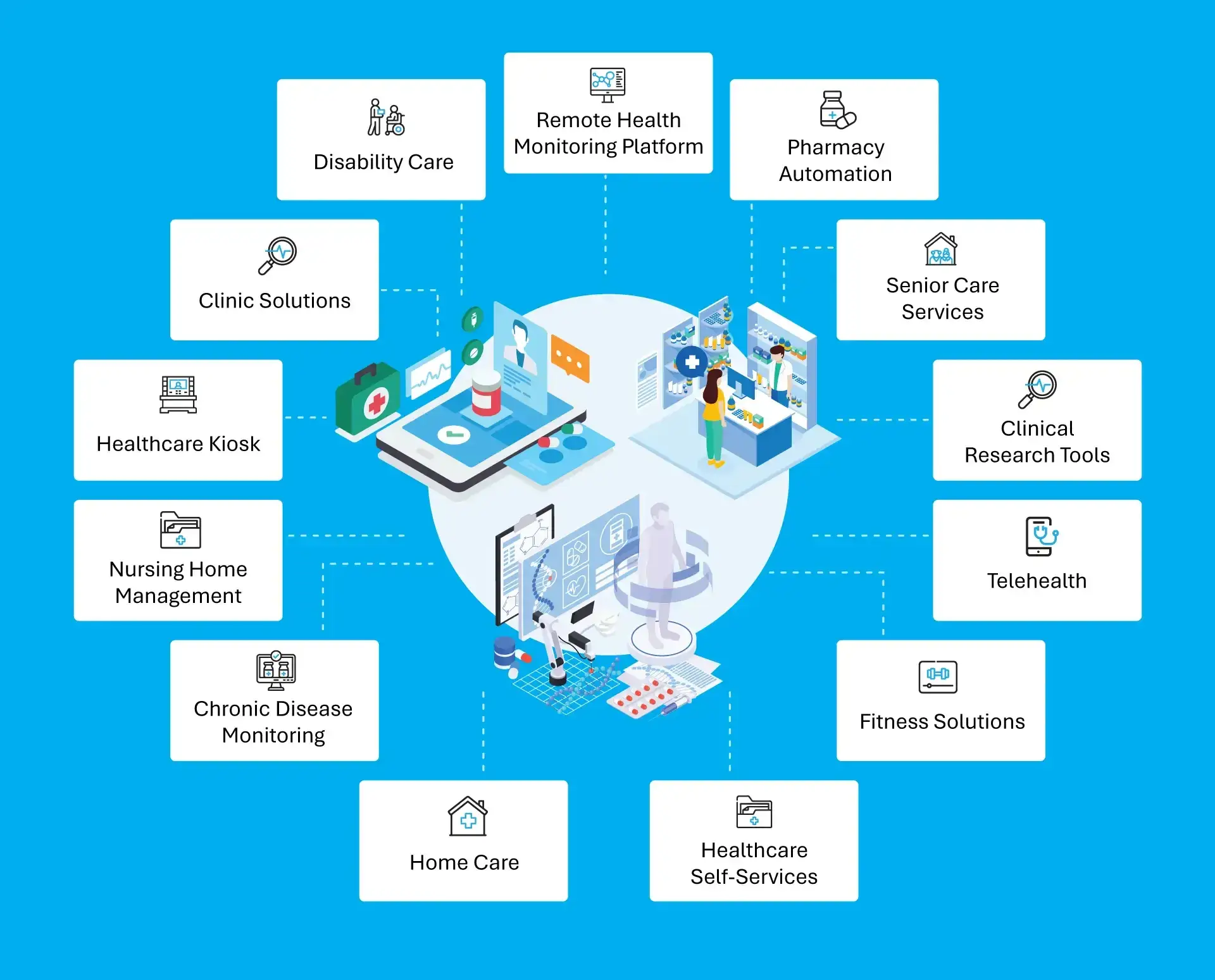
Leveraging AI, IoT, and data-driven technologies, TMA Solutions develops digital healthcare solutions that help improve care accessibility, support personalized treatment, and enhance patient outcomes. Our company offerings cover a broad spectrum of applications, including chronic disease management, remote patient monitoring, telemedicine, and pharmacy automation.
Healthcare Solutions for Homecare Providers
Remote Health Monitoring Platforms
TMA's remote monitoring solutions support continuous tracking of key physiological indicators, including blood pressure, heart rate, blood oxygen levels, ECG signals, sleep quality, and daily activities. By integrating data from wearable devices, medical equipment, prescriptions, test results, nutrition, and exercise, these platforms provide healthcare professionals with a more comprehensive view of patient health and facilitate timely interventions when abnormalities are detected.
Home Care and Chronic Disease Management
TMA also provides digital homecare solutions that enable patients to receive ongoing care without frequent hospital visits. These solutions combine remote monitoring, telehealth services, medication reminders, and personalized care capabilities to help individuals manage chronic conditions more effectively. Alert mechanisms can notify caregivers and healthcare providers during critical situations, supporting faster responses and improving patient safety.
Building Future-Ready Healthcare Platforms
By combining expertise in AI, IoT, cloud computing, mobile technologies, and enterprise software development, TMA Solutions enables healthcare organizations to develop secure and scalable platforms that support proactive chronic disease management and improve patient experiences.
Conclusion
Remote chronic disease monitoring is redefining how homecare providers deliver care. Through continuous monitoring, intelligent analytics, and connected health technologies, organizations can move beyond reactive treatment toward more proactive and personalized healthcare models.
As healthcare systems continue embracing digital transformation, remote monitoring solutions powered by IoMT and AI will play an increasingly important role in improving outcomes, reducing hospital utilization, and supporting healthier aging populations. Homecare providers that invest in scalable and intelligent healthcare technologies today will be better positioned to deliver sustainable, patient-centered care in the years ahead.