Introduction
In a world of increasing market volatility and customer demands for customization, smart manufacturing has emerged as a powerful enabler of business resilience and agility. Beyond its technological sophistication, smart manufacturing represents a strategic opportunity for companies to unlock productivity, reduce risks, and gain sustainable competitive advantages. This article explores how smart manufacturing solutions empower businesses to thrive amid disruption, based on research insights and real-world success stories.
Smart Manufacturing as a Competitive Strategy
Smart manufacturing is not just about automating factory processes; it encompasses the integration of advanced technologies like IoT, AI, big data, cloud computing, and robotics into manufacturing systems to enable real-time visibility, adaptability, and decision-making. According to Deloitte's 2025 Smart Manufacturing Survey, 86% of manufacturers believe smart manufacturing is essential to their success over the next five years. Companies adopting smart manufacturing are reporting improved agility, faster product launches, and greater customer satisfaction.
Strategically, smart manufacturing helps businesses become more responsive to shifting market demands. By creating a connected ecosystem across design, supply chain, production, and quality management, manufacturers can eliminate silos and accelerate innovation cycles. In this way, smart manufacturing shifts from a cost-driven initiative to a value-creation strategy.
Operational Excellence and Measurable Gains
Smart manufacturing solutions deliver tangible improvements across the value chain. For example, a case study published in MDPI highlighted a small manufacturing enterprise that implemented a smart production system and recorded a 47% increase in productivity, 53% reduction in downtime, and 21% decrease in energy consumption. These results are not isolated; studies show that smart factories outperform traditional ones in key metrics such as throughput, asset utilization, and lead time.
Additionally, smart factories leverage predictive maintenance and machine monitoring to reduce unplanned outages, lowering maintenance costs and improving OEE (Overall Equipment Effectiveness). Data-driven insights allow production managers to optimize resource allocation, reduce material waste, and drive continuous improvement.
TMA Solutions offers two core platforms that help businesses achieve these benefits:
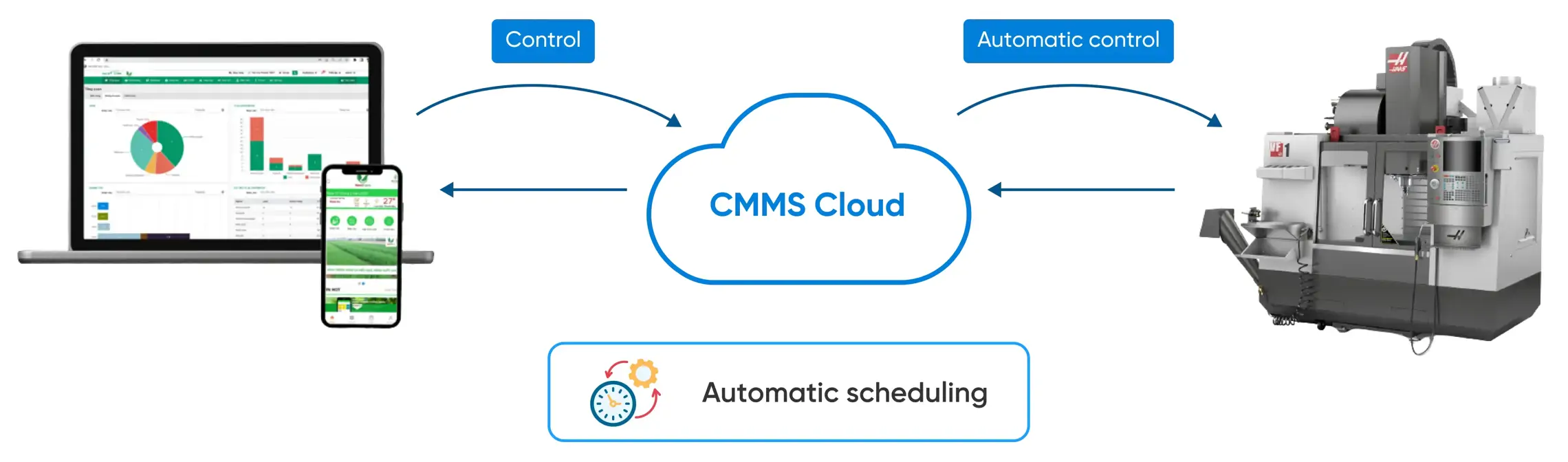
- CMMS (Computerized Maintenance Management System): TMA’s CMMS (Computerized Maintenance Management System) was implemented as part of a digital manufacturing initiative for a leading fast-food chain in Vietnam, aiming to modernize equipment maintenance across all locations. The system enabled real-time monitoring, QR code-based ticketing, and automated scheduling of preventive tasks for assets such as refrigeration units, cooking appliances, and POS terminals.
- MMS (Machine Monitoring System): One of the most effective starting points for SMEs adopting digital manufacturing is deploying a Machine Monitoring System (MMS). This system provides real-time visibility into the status, utilization, and performance of factory equipment — without requiring extensive infrastructure changes. TMA’s MMS is designed to be lightweight and modular, making it ideal for small factories. It collects data from machines using affordable sensors and displays key metrics like uptime, downtime, and productivity on a centralized dashboard. Managers can identify performance bottlenecks, analyze root causes of delays, and make data-driven decisions based on actual equipment usage.
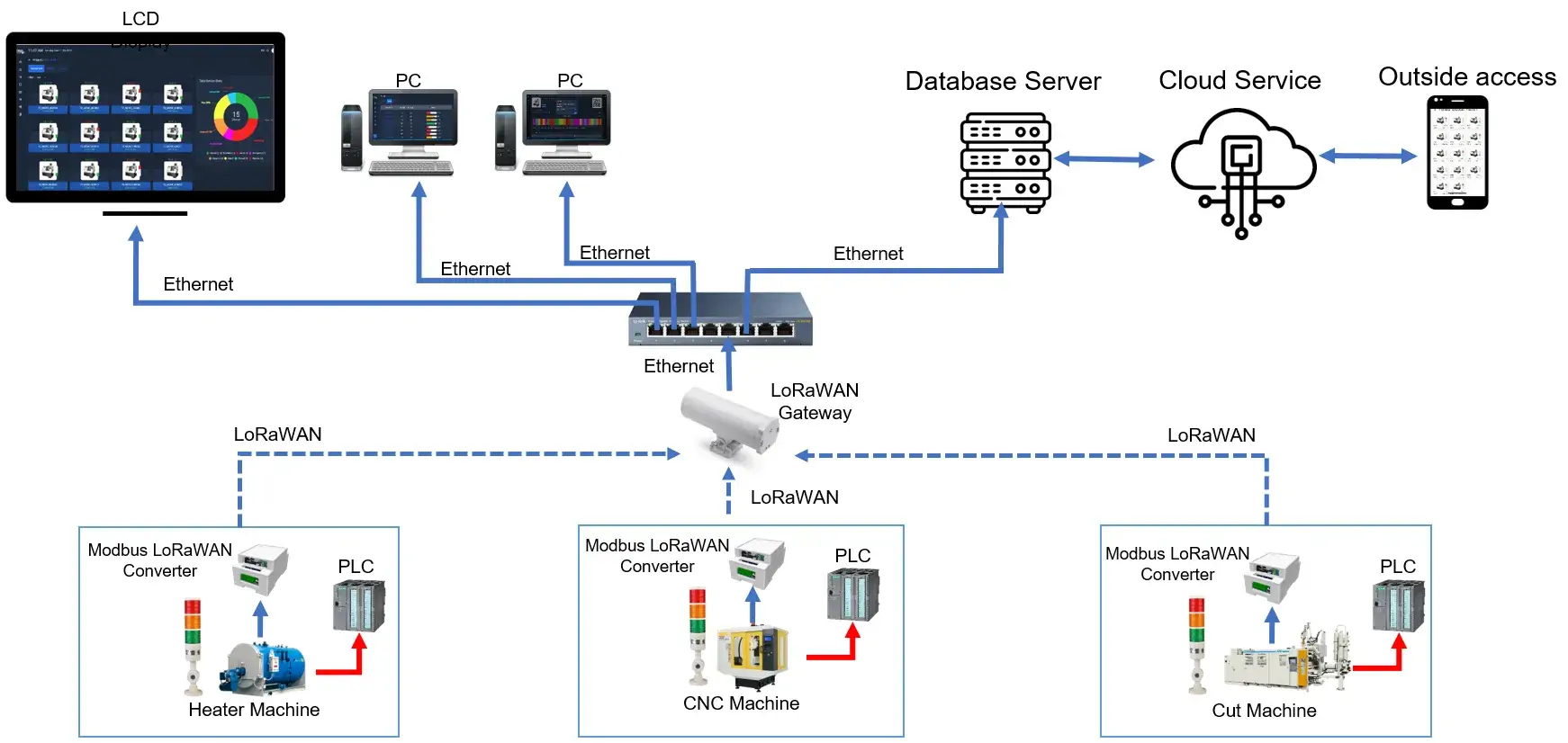
These solutions are already in use across industries, including automotive and F&B, enabling clients to improve efficiency by up to 30% and reduce downtime by 40%, based on internal project results from TMA’s Smart Manufacturing Division.
Adaptability and Risk Mitigation
Modern supply chains face increased exposure to disruptions due to global uncertainties. Smart manufacturing enables end-to-end traceability and real-time monitoring, which improves companies' ability to respond to unexpected events such as supply shortages or quality defects. With predictive analytics and simulation tools, businesses can model different production scenarios and make proactive decisions—mitigating risks before they escalate.
The integration of smart manufacturing with enterprise systems also enhances cybersecurity, compliance, and ESG reporting. As manufacturers face increasing pressure from regulators and customers to meet sustainability goals, smart solutions provide the necessary transparency and control to monitor carbon footprints and energy usage across production processes.
Innovation and Future Readiness
One of the most profound benefits of smart manufacturing is its ability to fuel innovation. By connecting physical assets with digital intelligence, businesses can experiment faster, bring new products to market sooner, and customize at scale. Smart manufacturing supports emerging business models such as mass customization and on-demand production, which are key to staying competitive in fast-evolving markets.
Research also suggests that companies adopting smart manufacturing early tend to lead in digital maturity and business model reinvention. They are better equipped to absorb economic shocks and leverage new opportunities—whether it be AI-powered design, digital twins, or autonomous production cells.
Conclusion
Smart manufacturing is more than an operational upgrade—it is a business imperative for sustainable growth and differentiation. Companies that embrace smart solutions are not only improving internal performance but are also positioning themselves to lead in the digital economy. By integrating data, intelligence, and connectivity across the manufacturing lifecycle, smart manufacturing empowers organizations to stay ahead of competitors, adapt with agility, and drive long-term value creation.


.webp_2026-10-01-18-27-07-971.webp)
.webp_2026-10-01-18-17-11-290.webp)
.webp_2026-10-01-18-08-26-854.webp)
.webp_2026-10-01-17-47-32-240.webp)