To see a doctor, many patients have to call the hotline several times, wait in line for a number and then wait for hours for a visit of only a few minutes. To solve this problem, many hospitals now use a hospital booking solution, which lets patients choose their own appointment time and reduces the workload at the front desk. This article explains what the solution is, its common types, the key features and how to choose the right provider.
1. Definition of a hospital booking solution
A hospital booking solution is software that lets patients book, change or cancel appointments through a website, a mobile app or a virtual assistant. The software connects directly with doctor schedules, clinic rooms and the hospital information system (HIS). As a result, patients can see open time slots in real time instead of calling to ask each time.
For hospitals, this solution is more than a simple sign-up form. It also covers doctor schedule management, automatic reminders, online payment and data sync with EMR/EHR systems. It is an important step in digital transformation in healthcare.

2. Reasons hospitals need an online booking solution
Online booking brings benefits to both patients and hospitals, from the patient experience to daily operations.
2.1. Improve patient access and reduce waiting time
According to a 2022 AMN Healthcare survey, new patients in the US wait an average of 26 days for a doctor appointment. This waiting time has increased by 8% since 2017. Long waits make patients delay care or move to another provider.
An online booking solution helps shorten this wait. Patients can see open time slots for many doctors at once and book 24/7, so they can find an earlier appointment instead of waiting for the hotline to arrange one. When they arrive at the hospital, they check in for a booked slot instead of waiting in line for a number.
2.2. Optimize appointment scheduling and hospital operations
According to a 2024 systematic review in Health Science Reports, 10 of 16 studies (62.5%) found a significant drop in no-show rates with open access scheduling. This suggests that how appointments are scheduled affects how many patients show up.
A booking solution makes this flexible scheduling model easier to apply. The system sends automatic reminders to reduce no-shows, and it opens a slot again as soon as a patient cancels so another patient can book it. This keeps more slots filled and gives managers data to plan staff.
2.3. Automate administrative workflows and reduce staff workload
According to a 2024 Jarrard Inc. survey of 1,034 US adults, half of patients still prefer to book appointments by phone, so hotlines stay busy at peak hours.
A booking solution moves routine bookings online and frees the hotline for patients who prefer or need to call. It also automates repeated tasks such as appointment confirmation, reminders, pre-visit forms and payment. As a result, staff have more time for patients who still need to call or need direct support.
2.4. Create a connected digital healthcare experience
The same Jarrard Inc. survey found that 22% of people who have never booked online said their provider does not offer this option. The demand is there, but many hospitals have not met it yet.
When a hospital offers online booking, it closes this gap. If booking also connects with medical records, telehealth and payment, patients have a smooth journey from booking to follow-up care. Hospitals also gain data to personalize care later on.

3. Types of hospital booking solutions
Based on their service model, hospitals can choose one of the three common types of booking solutions below, or combine all three.
3.1. Online appointment booking system
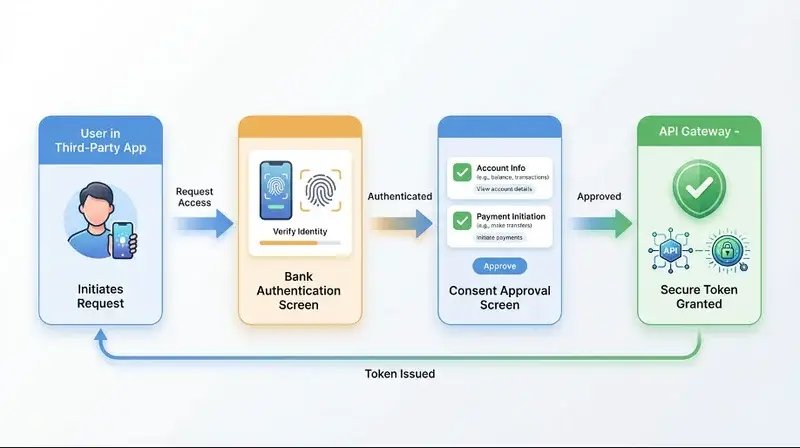
An online appointment booking system is a booking portal on a website or app where patients choose the specialty, doctor and time on their own.
How it works: the patient enters personal details and symptoms, and the system suggests a suitable specialty and shows open time slots. After the patient confirms, the appointment is saved in the HIS and a confirmation message is sent.
TMA has built an AI-powered patient intake assistant. This assistant analyzes symptoms that patients enter as text or images, gives guidance and connects with HIS, EMR and scheduling systems.
3.2. Doctor appointment scheduling system
A doctor appointment scheduling system is an internal tool that helps hospitals manage shifts, clinic rooms and appointments for each doctor.
How it works: the coordination team sets up duty schedules, visit length and the maximum number of visits. The system updates open slots automatically when a doctor takes leave, changes shifts or has an emergency case. Doctors can see their patient list for the day together with pre-visit information.
If your hospital needs a scheduling system that fits its own workflow, TMA's software development team can design it and integrate it with your current HIS.
3.3. Telehealth appointment booking system
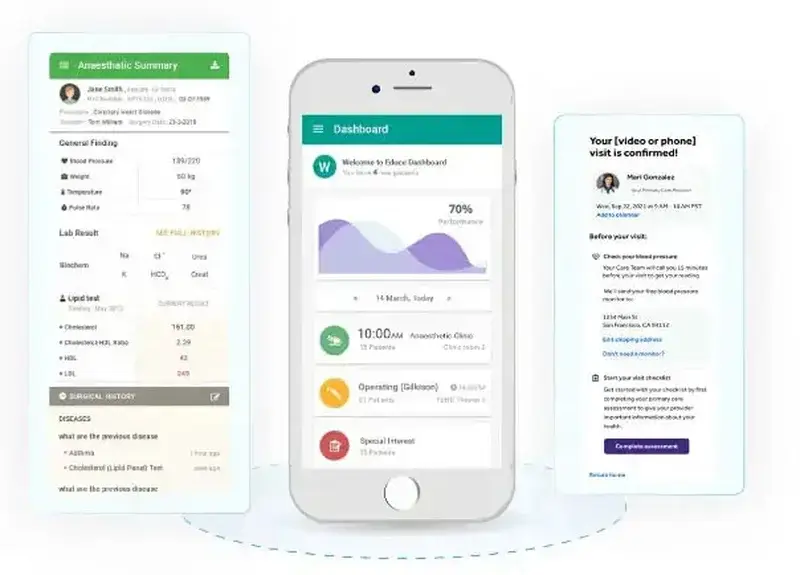
A telehealth booking system is a solution that lets patients book video consultations with doctors without a trip to the hospital.
How it works: the patient chooses a remote visit and books a time. The system sends a link to the virtual clinic room, sends reminders and lets the patient upload test results before the visit. After the visit, prescriptions and notes are saved in the medical record.
TMA has applied this type of solution in a home kit for continuous health monitoring, which combines online booking with video consultations. TMA has also built a virtual care platform for a primary care provider in the US, with flexible booking and EHR integration through FHIR and HL7.

4. Key features of a hospital booking solution
An effective booking solution should meet the needs of patients, doctors and managers. Below are the core features:
Online booking, rescheduling and cancellation: patients see open time slots in real time and manage appointments 24/7 on the web or an app.
Specialty suggestions based on symptoms: the system uses AI to suggest the right specialty and reduce bookings with the wrong doctor.
Doctor and room schedule management: hospitals set shifts, visit length and the maximum number of visits for each doctor.
Automatic reminders: the system sends SMS, email or push notifications before the visit to reduce no-shows.
Waitlist: when someone cancels, the system automatically offers the open slot to a patient on the waitlist.
Online payment: patients pay the visit fee or a deposit when they book.
Contactless check-in: patients check in with a QR code or an app and do not need to wait at the front desk.
HIS and EMR/EHR integration: appointments and pre-visit information are synced to the patient record through HL7 or FHIR.
Reports and analytics: managers track booking rates, no-show rates and peak hours to plan staff.
Data security: patient information is encrypted, access is role-based and the system follows rules such as HIPAA and GDPR.

5. How a hospital booking solution works
A booking solution follows the patient journey, from the search for a doctor to the time after the visit.
Search and choose a service: the patient visits the website, app or chatbot, enters symptoms and chooses a specialty, a doctor or a remote visit.
Check open slots: the system checks doctor schedules and room capacity in the HIS and then shows the open time slots.
Confirm and pay: the patient chooses a time, fills in pre-visit information and pays if needed. The slot is locked to avoid double booking.
Sync data: appointment details are saved in the HIS and EMR/EHR through APIs or HL7 and FHIR standards. Doctors see the new appointment on their screen right away.
Reminders and check-in: the system sends a reminder before the visit. On arrival, the patient checks in with a QR code, or joins the virtual room for a remote visit.
After the visit: results, prescriptions and follow-up dates are sent to the patient. The data also goes into the hospital's operational reports.
Most of these steps run automatically on a cloud platform. In this way, the system can scale up when the number of bookings rises in peak seasons.

6. How to choose the right hospital booking solution provider
The right provider decides whether the system runs smoothly and fits the hospital's workflow. Hospitals should assess providers with the four criteria below.
1 - Experience in healthcare
Hospital workflows have many special cases, such as emergencies, follow-up visits and patient transfers. A provider without healthcare projects can easily miss these cases, so the system may need many rounds of changes.
Questions to ask:
How many projects has the provider delivered for hospitals or clinics?
Do they have booking or telehealth case studies to share?
Does the team understand real patient intake and clinical workflows?
2 - HIS and EMR/EHR integration
If appointments do not sync with the HIS, staff must enter data again and double bookings can happen. Poor integration removes most of the value of online booking.
Questions to ask:
Which HIS or EMR systems has the provider integrated with before?
Do they support HL7 and FHIR standards?
Is data synced in real time or in batches?
3 - Security and compliance
According to IBM's Cost of a Data Breach Report 2025, a healthcare data breach costs an average of $7.42 million. Healthcare has the highest breach cost of all industries in the study. A booking system stores personal details and patient symptoms, so it needs protection from the design stage.
Questions to ask:
Does the provider have experience with HIPAA- and GDPR-compliant systems?
How is data encrypted, and how is access controlled?
Do they run security tests before the system goes live?
4 - Customization and scalability
Each hospital has its own mix of specialties, workflows and patient volume. Rigid software forces the hospital to change its workflow instead of supporting the current one.
Questions to ask:
Can the system be customized for the hospital's own workflow?
Can the system handle a sharp rise in traffic at peak hours?
Does the provider offer maintenance and upgrades after handover?
If you need a practical view when you assess these criteria, talk to the TMA team. TMA Solutions was established in 1997 and has its headquarters in Ho Chi Minh City, with 4,000 engineers and clients in 30 countries. In healthcare, TMA has 15+ years of experience and a team of 700 engineers. When you work with TMA, your hospital gets:
Real healthcare experience: you work with a team that has delivered an AI patient intake assistant, a home health monitoring kit and a virtual care platform with flexible booking.
Smooth integration: your booking system connects with HIS and EMR/EHR through HL7 and FHIR standards.
Security by design: patient data is protected through a secure application development approach and careful software testing.
Customization for your workflow: the solution is designed around your hospital's specialties and operations, and it can scale on a cloud platform.

If your hospital plans to launch online booking, contact TMA for advice on the right solution and roadmap.
7. Frequently asked questions about hospital booking solutions
7.1. How much does it cost to develop a hospital booking solution?
The cost depends on the feature scope, the number of platforms and the level of integration, so there is no fixed price. The main cost factors are:
Feature scope: a basic booking portal is much simpler than a system with AI specialty suggestions, payment and telehealth.
Number of platforms: web, iOS and Android apps and a chatbot all add to the development work.
System integration: connections with HIS, EMR/EHR and payment gateways need extra development and testing time.
Security and infrastructure: compliance needs and the choice between cloud and on-premise deployment.
Hospitals can start with an MVP for a few specialties and then expand step by step. A realistic estimate is only possible after the requirements are clear with the provider.
7.2. Can a hospital booking solution integrate with EHR systems?
Yes, a booking solution can integrate with EHR systems through APIs or health data standards such as HL7 and FHIR. With integration, appointments and pre-visit information go straight into the patient record. Doctors do not need to check several systems.
The level of integration depends on whether the hospital's current EHR offers open APIs. It is best to check this early, at the assessment stage.
A hospital booking solution gives patients faster access to care, reduces staff workload and makes better use of doctor schedules. Based on their needs, hospitals can choose online booking, doctor scheduling, telehealth booking or a mix of all three. The key is to choose a provider that understands healthcare, integrates well with HIS and EMR/EHR and keeps patient data safe.
If you are looking for a partner to build a booking solution for your hospital, contact TMA Solutions to define the right scope and roadmap together.
Contact information:
TMA SOLUTIONS - The leading Hospital booking solution company in Vietnam Email: sales@tmasolutions.com Website: https://www.tmasolutions.com/ Linkedin: TMA Solutions TMA Tower address: Street #10, Quality Tech Solution Complex (QTSC), Trung My Tay Ward, Ho Chi Minh City. |