Automotive software development is revolutionizing the auto industry, driving advancements in vehicle efficiency, safety, and user experience. Modern vehicles increasingly rely on sophisticated software to enable cutting-edge functionalities like autonomous navigation, real-time data analytics, and seamless connectivity.
The industry’s exponential growth highlights its significance. A recent study by Precedence Research reports that the automotive software market, valued at USD 43.32 billion in 2024, is projected to skyrocket from USD 52.49 billion in 2025 to approximately USD 134.94 billion, reflecting a robust CAGR of 11.10%. This rapid expansion underscores the sector’s critical role in shaping next-generation automotive solutions.
This blog explores the key developments shaping automotive software, providing insights into its evolution, impact, and future trajectory in the mobility landscape.
Key reasons why automotive software development matters
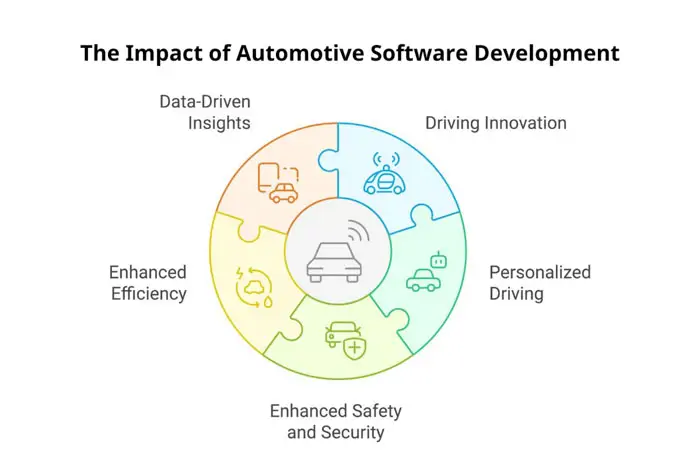
Automotive software development is transforming the way we engage with vehicles, playing a crucial role in enhancing safety, efficiency, and driving intelligence.
Driving innovation
Developing automotive software plays a crucial role in embedding advanced technologies into vehicles, driving continuous innovation. It expands the capabilities of modern automobiles, from enhancing road safety with advanced driver-assistance systems (ADAS) to facilitating self-driving technology.
This transformation not only improves the driving experience but also accelerates industry evolution, making vehicles smarter, more efficient, and seamlessly connected.
Personalized driving
Customization in software enables personalized driving experiences, adapting vehicle features to individual preferences. Through advanced software solutions, businesses can provide users with greater control over their driving environment.
This includes adjustable performance settings, personalized infotainment options, and customizable ambient lighting, ensuring each vehicle is uniquely tailored to its owner. Such innovations enhance user satisfaction, brand loyalty, and the overall driving experience, highlighting the growing role of software in modern automobiles.
Enhanced safety and security
Safety and security are critical aspects of developing car software, ensuring comprehensive protection for both drivers and passengers. Advanced driver-assistance systems (ADAS), such as automatic emergency braking and lane-keeping assist, depend on intelligent software to enhance road safety.
Beyond accident prevention, automotive software also safeguards vehicles from cybersecurity threats, protecting against hacking and data breaches. Regular software updates enable manufacturers to fortify both physical and digital security, ensuring a safer driving experience.
Enhanced efficiency
Advancements in software development significantly boost vehicle efficiency, optimizing engine performance and fuel consumption through intelligent algorithms. These innovations make vehicles more fuel-efficient and environmentally friendly.
Software also plays a vital role in improving electric vehicle (EV) performance and range, reducing energy consumption while lowering operating costs. By enhancing sustainability and cost-effectiveness, automotive software underscores its essential role in modern vehicle design.
Data-driven automotive
Data analytics is revolutionizing vehicle performance and user experience, enabling real-time collection and analysis of driving data. Automotive software development frameworks process this information to support predictive maintenance, optimize performance, and personalize driver interactions.
By leveraging data-driven insights, manufacturers can enhance safety, efficiency, and client satisfaction. These advancements make vehicles smarter, more connected, and future-ready, reinforcing the critical role of automotive software in modern transportation.
Advantages of automotive software development
Automotive software development has revolutionized the automotive industry, offering a range of benefits that enhance safety, efficiency, and user experience.
Automated driving
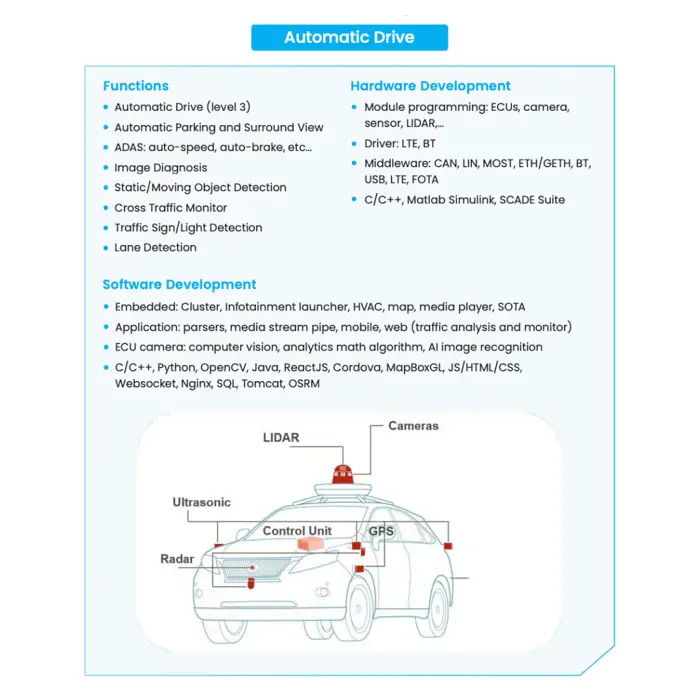
Autonomous driving is a groundbreaking advancement, enabling vehicles to operate safely and efficiently without human intervention. By utilizing algorithms, sensor data, self-driving technology enhances road safety and driving precision.
This innovation is set to reduce accidents, alleviate traffic congestion, and improve mobility for individuals with limited driving capabilities. Autonomous vehicles continuously adapt to dynamic road conditions, ensuring a safer, more efficient, and seamless transportation experience.
The evolution of self-driving technology highlights the pivotal role of automotive software in shaping the future of mobility.
Accident prevention
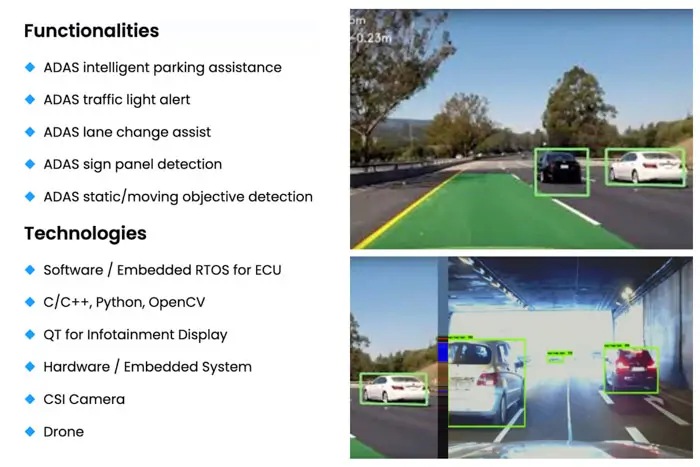
Automotive software development plays a crucial role in minimizing road accidents by enabling advanced driver-assistance systems (ADAS) that detect and respond to potential hazards.
Features such as automatic emergency braking (AEB) and lane-keeping assist are direct results of software-driven innovations, significantly reducing collision risks and enhancing driver safety.
Continuous advancements in automotive software ensure these systems become increasingly sophisticated, further improving road safety and accident prevention for all users.
Personalized client experiences
Digital automotive software solutions have transformed client service by enabling personalized experiences and real-time support. These technologies provide seamless assistance, ensuring drivers receive timely information and troubleshooting.
Features like remote diagnostics and over-the-air (OTA) updates reduce the need for dealership visits, allowing vehicles to receive software enhancements and fixes effortlessly. This improves convenience, efficiency, and overall client satisfaction.
Additionally, digital communication platforms foster direct interaction between manufacturers and clients, streamlining feedback, issue resolution, and service quality. These advancements make vehicle ownership more seamless and user-friendly.
Reduced fuel consumption
Advanced software solutions help vehicles reduce fuel usage, lower emissions, and decrease operating costs for owners.
By analyzing driving patterns and vehicle operations, software can make real-time adjustments to maximize efficiency. Additionally, predictive maintenance systems ensure vehicles perform at peak levels, further improving fuel savings.
The emphasis on fuel optimization highlights both the economic and environmental benefits of automotive software, solidifying its importance in the future of the industry.

Advanced diagnostics
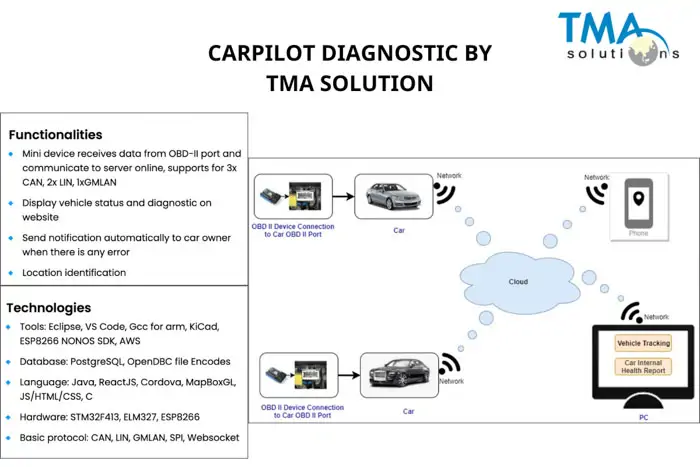
Smart diagnostics transform vehicle maintenance and repair by enabling real-time health monitoring. This technology detects potential issues early, preventing major breakdowns and costly repairs.
With onboard diagnostics (OBD) and telematics, vehicles can alert drivers to malfunctions, suggest immediate actions, and recommend service visits. This proactive approach minimizes downtime, reduces repair costs, and enhances vehicle longevity.
By ensuring optimal system performance, smart diagnostics contribute to safer driving conditions, making roads more secure for everyone.
Connected vehicle data
Vehicle telematics, driven by automotive software development, is revolutionizing fleet management and personal vehicle use by gathering and analyzing real-time data on vehicle location, usage, and driving behavior. This technology enhances safety, efficiency, and overall convenience for drivers and businesses alike.
With features like real-time tracking, geofencing, and predictive maintenance alerts, telematics helps reduce operational costs while improving vehicle security and driver performance. Though software development requires investment, its long-term benefits outweigh the costs.
Telematics showcases how automotive software adds intelligence and connectivity to modern vehicles, emphasizing the industry’s shift toward safer, more efficient, and data-driven mobility solutions.
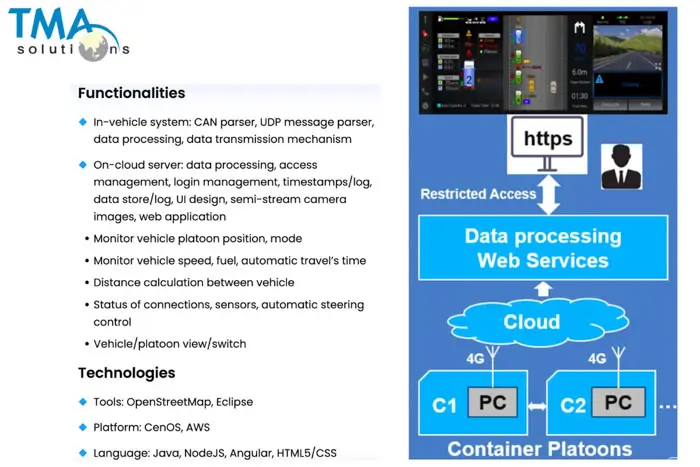
>>For more insights about automotive software, check out this PDF file here:
Source: Christof Ebert and John Favaro, "Automotive Software," IEEE Software, 2017, 34(3), 33–39.
Automotive Software
Different types of software used in automotive
Automotive software development can very well spread its wings under many applications. Let's look at some of the key software systems used in the automotive industry:
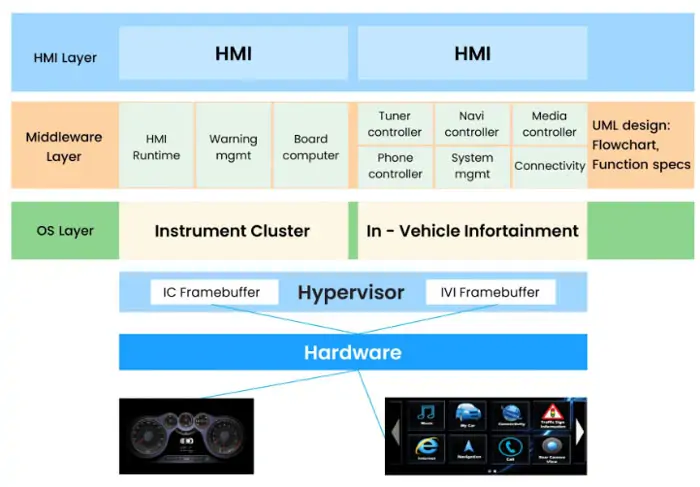
Infotainment systems
Infotainment systems software delivers entertainment and information to drivers and passengers. Key features include:
- Navigation
- Music streaming
- Connectivity to mobile devices
To succeed in this category, software must be user-friendly, responsive, and adaptable to rapidly evolving consumer expectations and technologies.
Driver assistance systems
Advanced driver assistance systems (ADAS) enhance safety and driving ease by supporting the driver with features like:
- Lane departure warnings
- Automatic emergency braking
- Adaptive cruise control
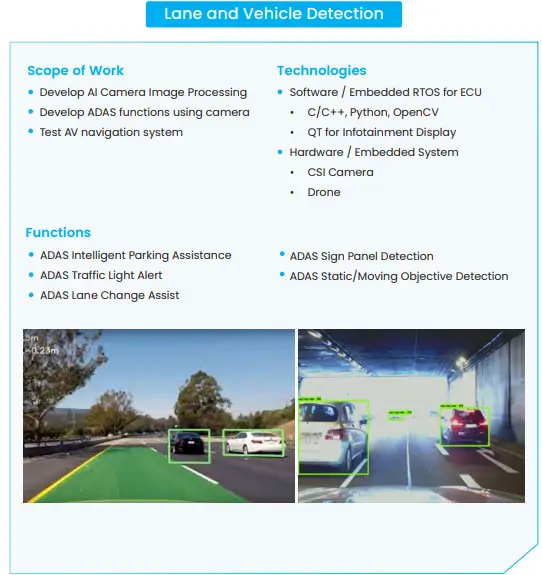
This software must strike a balance between being helpful and non-intrusive, ensuring drivers feel supported rather than overwhelmed.
See more: MCU software development for automotive
Autonomous driving
Autonomous vehicles are at the forefront of automotive software innovation, utilizing advanced algorithms and sensor technology to navigate without human input.
This transformative technology aims to enhance road safety, reduce traffic congestion, and expand mobility options. By pushing the boundaries of automation, autonomous vehicles highlight the immense potential of software-driven advancements in reshaping modern transportation.
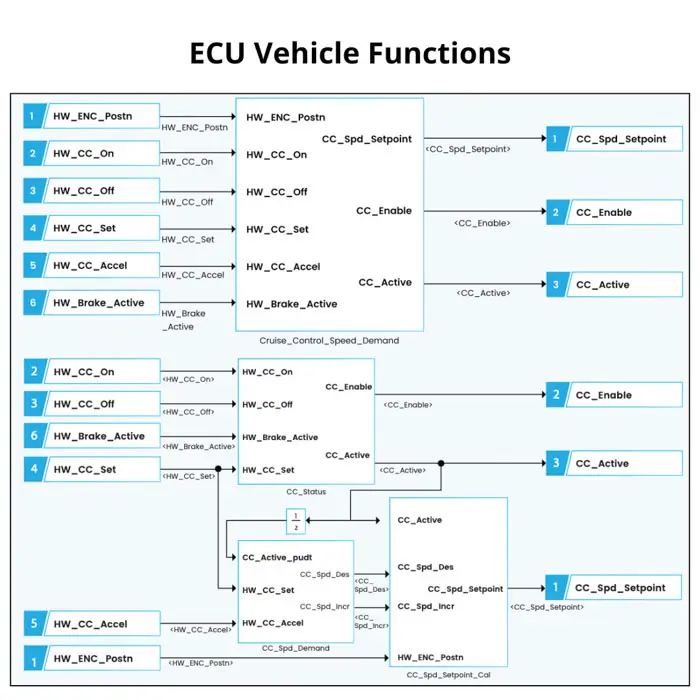
ECU (Electronic Control Unit) software
Electronic Control Unit (ECU) development is a cornerstone of automotive software engineering, acting as the central intelligence behind various vehicle functions, from engine management to safety systems like airbag deployment.
Advancing ECU software enhances vehicle efficiency, safety, and reliability, ensuring compliance with evolving industry standards. Continuous improvements in ECUs optimize performance, lower emissions, and support next-generation automotive innovations.
Cybersecurity
Cybersecurity protects vehicles from cyber threats, hacking attempts, and unauthorized access. A dedicated software development team ensures that automotive systems remain secure, resilient, and privacy-focused, safeguarding sensitive driver data.
By reinforcing trust in connected vehicle technologies, cybersecurity plays a key role in the safe and efficient operation of modern automobiles. As automotive software continues to evolve, robust security measures are essential to making vehicles smarter, safer, and more reliable.
Tools and programming languages used in automotive software development
To develop robust automotive software, developers rely on a range of tools and programming languages
Programming languages
While developers have a wide range of programming languages to choose from, the most commonly used for automotive software development include:
- C/C++: Essential for embedded systems, these languages power critical vehicle functions like engine control, braking systems, and infotainment platforms, ensuring high performance and real-time execution.
- Rust: Gaining popularity in safety-critical applications, Rust enhances memory safety and concurrency, making it well-suited for autonomous vehicle systems.
- Python: A preferred choice for AI development and data analytics, Python is widely used in autonomous driving and ADAS (Advanced Driver-Assistance Systems) where real-time data processing is crucial.
Development platforms
Standardized platforms and frameworks accelerate the delivery of high-quality automotive software. Essential tools include:
- MATLAB & Simulink: Popular for model-based design and simulation, these tools enable engineers to test vehicle components like powertrains and braking systems before deployment.
- QNX: A real-time operating system commonly used in mission-critical systems, including ADAS and infotainment platforms.
- AUTOSAR & Adaptive AUTOSAR: Industry-standard frameworks that enhance software scalability, interoperability, and real-time control, enabling seamless vehicle component communication.
AI development
AI plays a crucial role in automotive innovation, from predictive maintenance to advanced driver assistance systems. Key AI development tools include:
- TensorFlow & PyTorch: Widely used for AI-driven models in autonomous driving and sensor fusion.
- OpenCV: A vital library for computer vision applications, allowing vehicles to process visual data and make informed decisions.
- Open AI Models: Customizable for specific automotive applications, these models accelerate development and optimize costs.
Reverse engineering
Reverse engineering is essential for maintaining legacy software, ensuring compatibility with third-party solutions, and identifying security vulnerabilities. Recommended tools include:
- IDA Pro & Ghidra: Leading tools for analyzing legacy systems and ensuring compatibility with modern automotive software.
- Hex-Rays: An IDA decompiler, useful for modifying and updating compiled code in older vehicle software.
CI/CD and DevOps
Automating the testing and deployment of automotive software across various vehicle systems is critical for efficiency. Useful tools include:
- Jenkins: Automates build and test processes, ensuring smooth software integration.
- Docker & Kubernetes: Used for containerized deployments, these tools ensure consistent software behavior across different platforms.

Technological innovations in automotive software
The automotive industry is driven by advancements in software technology. Here are some key innovations shaping the future of automotive software:
Artificial intelligence (AI) and machine learning (ML)
Artificial Intelligence (AI) and Machine Learning (ML) are transforming automotive software development, enabling vehicles to become smarter, more adaptive, and data-driven. These technologies enhance safety, efficiency, and performance by learning from real-time driving data.
AI powers advanced driver-assistance systems (ADAS), improving accident prevention, while ML algorithms optimize fuel efficiency by analyzing driving behavior. Additionally, predictive maintenance leverages AI to detect potential issues before they occur, reducing downtime and repair costs.
By integrating AI and ML, vehicles evolve beyond transportation, becoming intelligent driving companions that continuously adapt to drivers and road conditions for a safer, more intuitive experience.
Connected vehicles and IoT integration
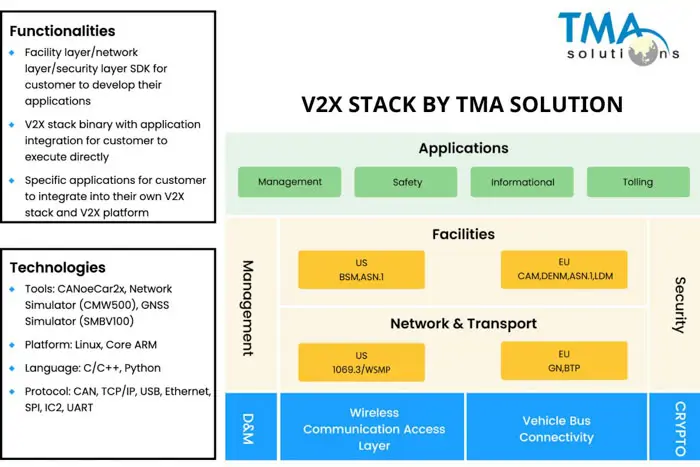
Connected cars and the Internet of Things (IoT) are turning vehicles into intelligent, interactive hubs. These advancements enable vehicle-to-vehicle (V2V) and vehicle-to-infrastructure (V2I) communication, improving road safety, traffic flow, and overall driving efficiency.
With features like remote diagnostics, over-the-air (OTA) updates, and personalized in-car experiences, IoT enhances vehicle functionality. Real-time monitoring systems predict maintenance needs, optimize performance, and improve fuel efficiency.
Through automotive software innovations, vehicles are evolving beyond transportation into smart, connected devices, offering unparalleled convenience, safety, and efficiency.
Self-driving and autonomous vehicle technologies
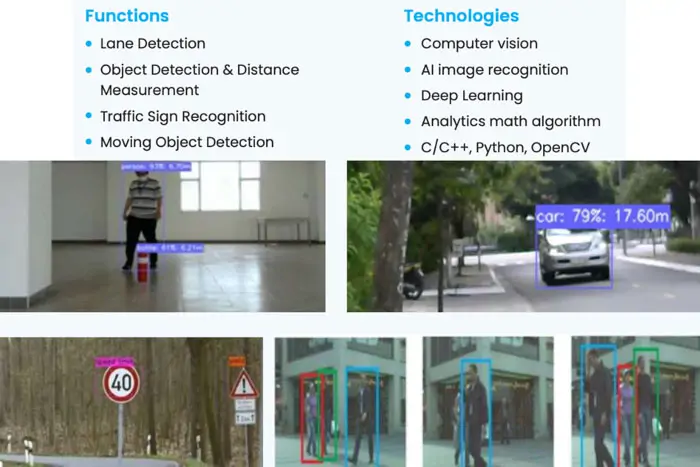
Self-driving cars, powered by autonomous driving systems, utilize AI-driven algorithms, sensors, and cameras to navigate roads safely without human intervention.
Autonomous vehicles can detect obstacles, interpret traffic signals, and make split-second driving decisions, significantly reducing accidents caused by human error. This technology is set to revolutionize transportation safety, efficiency, and accessibility, offering mobility solutions for those unable to drive.
As self-driving technology evolves, it is reshaping the future of smart mobility, making roads safer, travel more convenient, and driving experiences more intelligent.

Emerging trends in automotive software development
The automotive industry is changing radically, technology-optimized as draught by software solutions. Here are some key automotive software trends shaping the future of industry:
Electric vehicles and eco-friendly transport solutions
Sustainable mobility and electric vehicles (EVs) are shaping the future of automotive software development, as the industry shifts toward greener, energy-efficient solutions to reduce carbon emissions.
Software plays a vital role in this transition by optimizing battery management systems, extending EV range, and improving charging efficiency. It also facilitates the integration of renewable energy sources with charging infrastructure, contributing to a more sustainable energy ecosystem.
Innovations in smart grids allow EVs to support energy stability by feeding power back during peak demand, while machine learning-driven predictive maintenance minimizes waste and extends vehicle lifespan.
By advancing sustainability in automotive software, the industry is driving a transformation toward responsible, efficient, and environmentally conscious transportation solutions.
Voice-activated controls and natural language processing (NLP)
Voice recognition and Natural Language Processing (NLP) are enabling seamless interaction between drivers and vehicles. These technologies allow users to control navigation, entertainment, and climate settings through simple voice commands, minimizing distractions and enhancing safety.
The integration of NLP-powered systems enables vehicles to interpret complex voice requests, making human-vehicle communication more intuitive and efficient. As automotive software continues to evolve, future advancements will bring greater accuracy, multilingual support, and improved contextual understanding.
Personalized voice recognition could further enhance the driving experience by identifying individual users and tailoring responses to their preferences. These innovations are set to make vehicle interactions smarter, more responsive, and accessible to a diverse range of users.
Augmented reality (AR) and heads-up display features
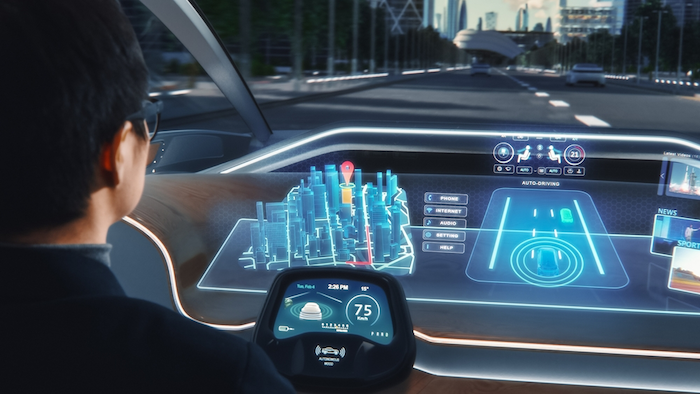
Augmented Reality (AR) and Heads-Up Display (HUD) technologies are revolutionizing driver information systems, emerging as key trends in automotive software development. These innovations project critical data such as navigation, speed, and safety alerts directly onto the windshield, keeping drivers focused on the road.
AR further enhances the experience by overlaying real-time digital information onto the physical environment, improving both navigation and situational awareness. The rapid evolution of automotive software solutions is enabling more interactive and immersive driving experiences.
Future advancements could integrate real-time traffic analysis and obstacle recognition, displaying essential information directly within the driver’s field of vision for safer, more intuitive navigation.
As automotive software continues to advance, AR and HUD technologies are expected to become standard features, seamlessly merging digital intelligence with the driving environment. These innovations underscore the growing role of software in enhancing safety, efficiency, and overall user experience in modern mobility.
Key challenges in automotive software development
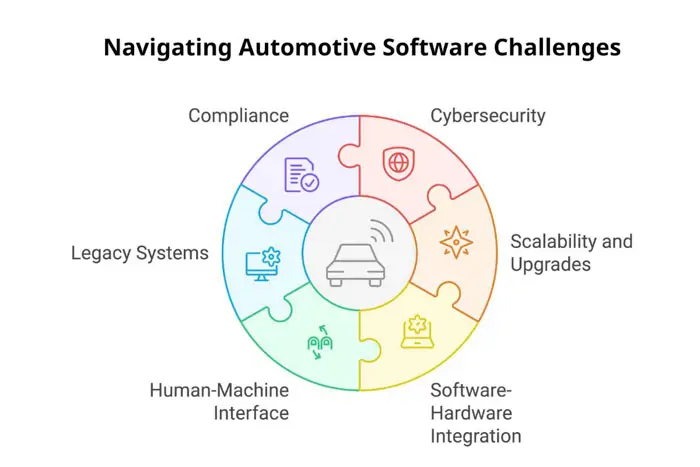
Developing automotive software is a complex and demanding process requiring careful attention to safety, reliability, integration, and functionality. The key challenges in this field can be categorized as follows.
Maintaining robust cybersecurity
As connected and autonomous vehicles become more prevalent, cybersecurity threats pose significant risks to both data privacy and passenger safety. Cybercriminals often exploit software vulnerabilities to gain unauthorized access, manipulate vehicle functions, or compromise in-car payment systems, prompting industry leaders like Visa and Mastercard to implement stronger security measures.
Hackers may target sensor data, autonomous driving algorithms, or connected vehicle networks, potentially leading to data breaches and operational disruptions. To counter these threats, automotive software solutions providers must prioritize cybersecurity at every stage of development.
Strengthening automotive cybersecurity requires encrypting sensitive data and critical transactions, implementing real-time security monitoring and intrusion detection systems, and deploying over-the-air (OTA) updates to patch vulnerabilities swiftly.
Handling scalability and upgrades
As software-driven vehicles become the industry standard, ensuring synchronized software updates across millions of vehicles globally is a critical challenge. An trusted automotive software outsourcing company must enable seamless integration across Electronic Control Units (ECUs), sensors, and communication systems to maintain optimal performance and security.
Over-the-air (OTA) updates allow manufacturers to patch security vulnerabilities, fix software bugs, and introduce new features remotely. However, scaling these updates efficiently comes with challenges, including software fragmentation, performance inconsistencies, and emerging cybersecurity risks.
To overcome these obstacles, implementing a robust update management system is essential. It allows manufacturers to better organize and make it easier to scale these updates.
Merging software and hardware components
Automotive software must flawlessly integrate with an array of sensors, actuators, and embedded systems while adapting to the limitations of the underlying vehicle hardware. Unlike consumer software that operates on general-purpose hardware, automotive software interacts directly with physical vehicle components, requiring high precision and reliability.
This integration is particularly challenging due to real-time constraints in safety-critical functions and the variability of hardware specifications across different vehicle models. Software must ensure consistent performance while accommodating diverse powertrains, advanced driver-assistance systems (ADAS), and battery management systems.
Developing an HMI with a focus on usability
Developing an intuitive and responsive human-machine interface (HMI) is a key challenge in developing automotive software. As in-vehicle technologies like infotainment systems, voice control, and head-up displays become more advanced, ensuring a seamless, non-intrusive user experience is essential.
A well-designed HMI should provide drivers with effortless access to critical functions while minimizing distractions. Striking the right balance between functionality, safety, and ease of use is crucial in delivering an efficient and driver-friendly interface.
Dealing with legacy systems
Many automakers still depend on legacy systems for core vehicle functions, making software upgrades and integrations a complex process. Successfully incorporating modern automotive software into these older systems requires careful reverse engineering to ensure compatibility, security, and seamless performance.
Migrating legacy software to modern platforms presents additional challenges, including outdated documentation, rigid system architectures, and ensuring that new software aligns with existing hardware constraints.
To address these complexities, automotive developers must leverage reverse engineering expertise and adopt strategic modernization approaches.
Maintaining compliance with industry standards and regulations
Automotive software development must adhere to strict industry regulations and standards to ensure safety, cybersecurity, and data protection. Key standards include:
- ISO 26262 – Governs functional safety in road vehicles.
- ISO/SAE 21434 – Establishes cybersecurity requirements for automotive software.
- AUTOSAR – Standardizes software architecture across the industry.
Additionally, depending on the nature of the data processed, compliance with data protection regulations such as GDPR, CCPA (for personal data), and PCI DSS (for payment data) may be required.
Beyond meeting these regulatory requirements, automotive software must remain adaptable to evolving compliance demands. Failure to comply can lead to legal repercussions, product recalls, and potential safety risks, making regulatory adherence a top priority for automotive developers.
How to select the right automotive software development team?
Choosing the right development team is critical for the successful establishment of automotive software. Here are key factors to consider when evaluating an embedded software company for automotive solutions:
- Experience: Select a team with proven expertise in automotive software development and similar projects.
- Portfolio: Review their past work to assess quality and relevance to your needs.
- Specialized knowledge: Ensure they have expertise in areas like embedded systems, ADAS, or infotainment.
- Skilled team: Look for experienced developers, engineers, and testers capable of managing all project aspects.
- Communication: Choose a team with clear and transparent communication, providing regular updates and prompt responses.
- Location: Consider their location and service model (onshore, nearshore, or offshore) for effective collaboration.
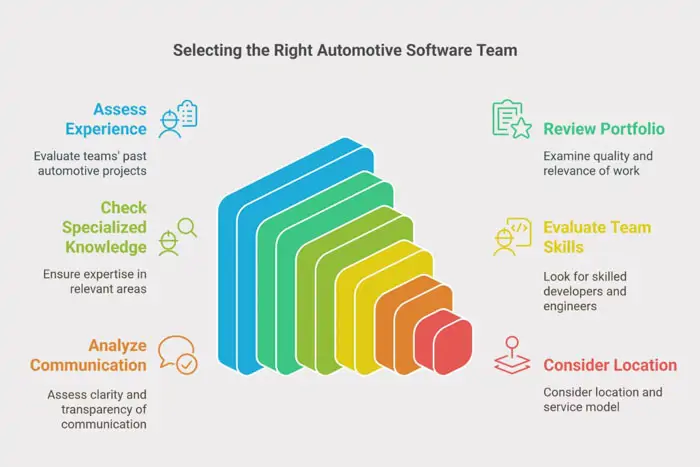
By focusing on these factors, you can select a team that aligns with your goals and ensures project success.
Why choose TMA Solutions for automotive software development?
With a rapidly growing technology sector and a strong talent pool, Vietnam's automotive software development industry has become a key destination for global outsourcing. The country’s competitive costs, highly skilled engineers, and increasing investment in technology infrastructure have made it an attractive choice for global automotive companies.
Among the top software outsourcing companies in Vietnam, TMA Solutions stands out with 27 years of experience and a team of 4,000 skilled engineers. Over the past 8 years, TMA has focused extensively on automotive software development, specializing in safety-critical systems, infotainment platforms, and vehicle control applications.
As a leading automotive software development company, TMA’s partnerships with top global Tier-1 automotive suppliers demonstrate its ability to handle complex, large-scale projects with precision and reliability. As an official AUTOSAR development partner, TMA excels on both Adaptive and Classic platforms, ensuring software that meets industry standards for safety, scalability, and interoperability.
Additionally, TMA’s expertise in embedded system development, ADAS, electric vehicle software, and in-car infotainment systems highlights its commitment to innovation and technical excellence. By choosing TMA Solutions, you gain a trusted partner dedicated to delivering scalable, high-performance automotive software tailored to your needs.

Conclusion
By understanding these key aspects of automotive software development, businesses can effectively navigate the complexities of creating cutting-edge technologies for modern vehicles. Suppose you’re looking to work with an experienced and innovative team.
In that case, TMA Solutions offers advanced software solutions tailored to the automotive industry, providing expertise in everything from infotainment systems to autonomous driving technologies. Contact us today to discuss your project and explore how we can help you drive the future of automotive software.


.webp_2026-10-01-18-27-07-971.webp)
.webp_2026-10-01-18-17-11-290.webp)
.webp_2026-10-01-18-08-26-854.webp)
.webp_2026-10-01-17-47-32-240.webp)