In today's rapidly evolving automotive landscape, artificial intelligence (AI) is driving innovation like never before. From advanced manufacturing robots to self-driving cars, AI in automotive is revolutionizing every aspect of the industry. But this is just the beginning. As artificial intelligence continues to reshape the future of automotive, understanding its vast applications and benefits is more important than ever.
Explore how TMA harnesses AI to transform the automotive industry, enabling smarter, safer, and more efficient vehicles.
AI's impact on the automotive industry
Artificial intelligence is reshaping the automotive sector, enhancing safety, efficiency. AI in automotive is transforming transportation through autonomous vehicles, significantly reducing accidents and easing traffic congestion. It also improves predictive maintenance, allowing early detection of issues to prolong vehicle lifespan. AI optimizes manufacturing workflows, lowering costs while improving product quality.
Furthermore, AI elevates the in-car experience through advanced driver-assistance systems (ADAS), voice-controlled features, and personalized infotainment. By data analytics, AI enhances decision-making in vehicle design and development. Consequently, AI drives the automotive industry toward a smarter, safer, and more sustainable future.
Key advantages of AI for the automotive sector
The integration of Artificial Intelligence (AI) is transforming the automotive industry, enhancing manufacturing processes, vehicle operations, and client experiences. Here are the key benefits of AI in the automotive industry:
Enhanced manufacturing efficiency and quality control
AI-powered automation and robotics are revolutionizing automotive production. These technologies optimize manufacturing processes, minimize human error, and boost overall efficiency. AI systems analyze vast datasets to identify inefficiencies, streamline assembly lines, and ensure meticulous quality control, resulting in higher productivity and reduced costs.
For instance:
- AI-enabled 3D printing accelerates the production of complex automotive components with unmatched precision, reducing time and labor costs.
- Predictive monitoring leverages AI to detect potential defects early, ensuring superior product quality and reducing waste.
Improved connected car experiences
AI is pivotal in enhancing the connected car experience, offering personalized and intuitive solutions for drivers and passengers.
- Smart infotainment systems adapt to user preferences, provide real-time traffic updates, and seamlessly integrate with smartphones and other devices.
- Advanced Driver Assistance Systems (ADAS) improve driving safety by monitoring surroundings, detecting hazards, and issuing warnings or taking corrective action during critical situations.
These advancements not only make driving safer but also enrich the overall user experience.
Optimized supply chain management
AI is transforming the way automakers manage their supply chains by making them more efficient and cost-effective. AI-driven algorithms enable:
- Accurate demand forecasting, inventory optimization, and streamlined production planning.
- Insights from diverse data sources, including social media, weather patterns, and market trends, to guide production and distribution decisions.
By automating processes and leveraging data analysis, AI reduces human error and enhances operational efficiency, creating a seamless and responsive supply chain.
AI-powered client experiences
AI is elevating the client experience for car buyers through tools like chatbots, virtual assistants, and personalized recommendations.
- AI chatbots provide instant answers to client inquiries, improving response times.
- Virtual assistants guide clients through the car-buying process, making it more efficient and stress-free.
AI also enables personalized marketing by analyzing client data to recommend tailored products and services, ensuring a more engaging and customized interaction. Manufacturers and dealerships benefit from deeper client insights, which enhance sales strategies and overall satisfaction.
12 use cases of AI in the automotive industry
In recent years, the automotive industry has embraced four key trends: autonomous driving, car connectivity with data sensors, electrification, and shared mobility – collectively known as ACES. These trends are revolutionizing the sector, with AI in automotive playing a crucial role in driving innovation.
AI plays a crucial role throughout the entire vehicle lifecycle, from design and manufacturing to sales and maintenance. Leading automotive brands adopt AI to stay competitive and deliver innovative solutions.
Let's take a deeper look at how is AI used in cars.
Advanced driver assistance systems (ADAS)
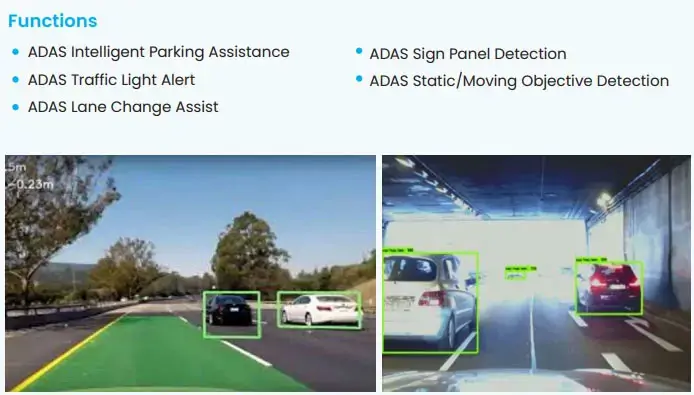
One of the most impactful uses of AI in the automotive sector is driver assistance. AI-enabled systems utilize advanced sensors to help drivers with tasks such as steering assistance, pedestrian detection, and blind spot monitoring. These systems alert the driver when needed, enabling preventive actions that significantly reduce the risk of accidents, thus enhancing overall road safety.
Autonomous vehicles
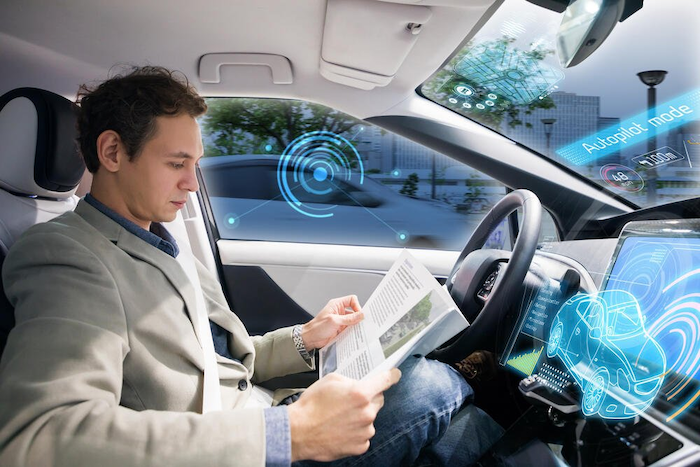
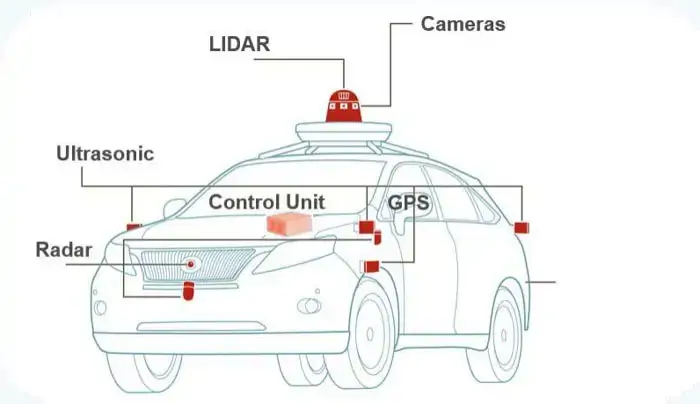
Autonomous vehicles represent another groundbreaking application of AI in the industry. With technologies such as machine learning, deep learning, and big data, they are becoming increasingly capable of driving with minimal human intervention. These AI-powered vehicles can make decisions in real time, adhering to traffic rules and ensuring safe driving practices.
While regulatory and technical challenges still exist, we are moving closer to a future where fully autonomous vehicles will be a common sight on the road.
Intelligent driver monitoring
Artificial intelligence is also being used to personalize the driving experience. AI algorithms identify the driver and adjust the vehicle's settings accordingly. This includes customizing the seat position, mirror alignment, and cabin temperature based on the driver’s preferences. Moreover, AI systems track the driver’s head and eye movements to identify signs of drowsiness. They issue timely warnings, reducing the risk of accidents caused by fatigue.

AI-powered vehicle manufacturing
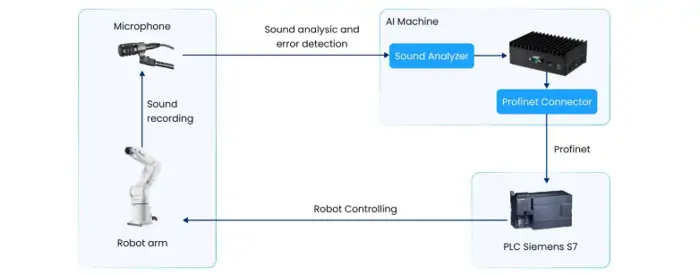
The automotive industry is fundamentally reliant on precision manufacturing, where even minor errors can have significant repercussions. However, AI automobiles have the potential to revolutionize this sector by making the car production process more advanced and efficient. For example, traditional methods often require manual labor to pick parts from conveyor belts, which can be both inefficient and time-consuming.
In contrast, AI-driven robotics can autonomously handle these tasks, reducing the need for human intervention and significantly accelerating the manufacturing timeline. Moreover, AI in automotive is designed to alert personnel in the event of unexpected machinery failures, thereby minimizing risks and ensuring smoother operations.
AI-driven personal assistants
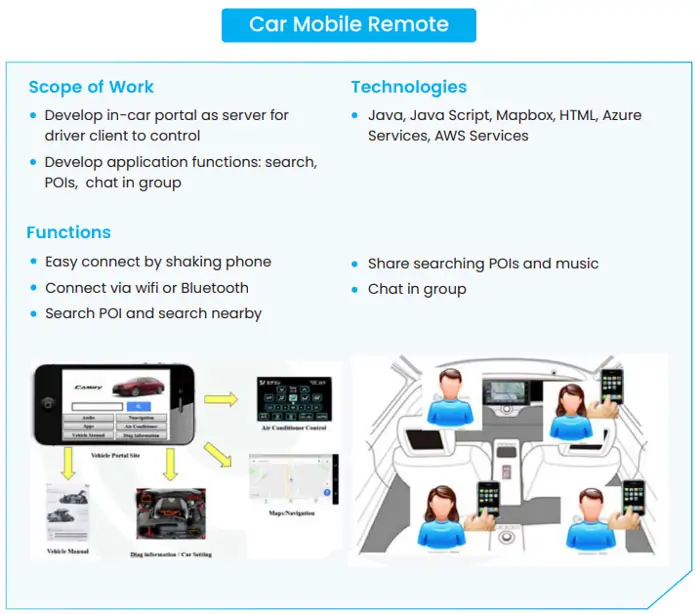
In the realm of in-vehicle technology, automotive companies are increasingly integrating AI-powered personal assistants. While many opt for third-party solutions like Alexa or Siri, some manufacturers are developing proprietary voice-recognition systems tailored to their vehicles. These AI-enabled assistants facilitate a variety of tasks, including making phone calls, adjusting climate controls, changing radio stations, and providing real-time updates on fuel levels.
One of the key advantages of these systems is their ability to learn from user interactions, allowing them to offer personalized. recommendations based on individual preferences and history.
Advanced passenger experience
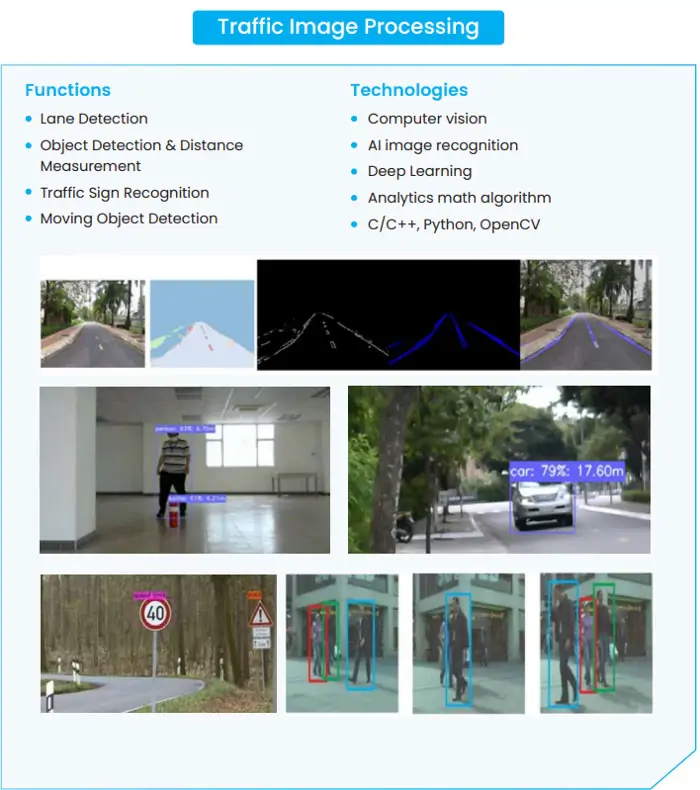
Automotive manufacturers are adopting various AI technologies to enhance passenger experience and safety. Key innovations include the Internet of Things (IoT), image recognition, natural language processing (NLP), and object detection. These technologies enable features that enhance user preferences during travel, such as listening to favorite music, ordering food, or participating in other interactive activities.
By focusing on these advancements, manufacturers not only improve the overall driving experience but also ensure that passengers feel more connected and entertained throughout their journey.
AI in supply chain optimization
AI in automotive is revolutionizing supply chain management, addressing the challenges posed by the complex network of parts required for vehicle manufacturing. A typical vehicle comprises approximately 30,000 individual components sourced from various global locations, making it imperative for automotive managers to monitor the transportation and arrival of these parts.
By integrating AI and machine learning (ML) into supply chain processes, manufacturers can enable autonomous delivery systems that manage logistics efficiently. These systems can automatically adjust transportation volumes and routes based on predicted demand fluctuations for parts.
Enhancing automotive dealership marketing with AI
Artificial Intelligence (AI) is transforming marketing in automotive dealerships by enabling more precise, efficient, and personalized strategies to connect with potential buyers. By leveraging AI algorithms, dealerships can analyze client data, online behavior, and purchase history to craft tailored marketing campaigns that resonate with individual preferences.
- Client segmentation and targeting: AI categorizes clients based on demographics, purchase habits, and engagement patterns, enabling dealerships to deliver promotions to specific groups effectively.
- Predictive analytics for lead scoring: AI-driven predictive analytics assesses leads to identify those most likely to convert, allowing sales teams to prioritize high-potential prospects.
- AI-powered chatbots: Chatbots enhance client engagement by providing instant responses to queries, scheduling test drives, and even initiating sales conversations, improving overall service.
By integrating AI, dealerships can streamline marketing efforts, improve targeting accuracy, and boost conversion rates, ultimately enhancing client satisfaction and driving business growth.
Transforming automotive insurance
AI is also making significant strides in the automotive insurance sector, benefiting both insurers and policyholders. Advanced AI algorithms expedite the claims process following accidents or incidents, facilitating quicker resolutions for drivers. Utilizing capabilities such as image datasets, AI can help drivers gather essential data during incidents, simplifying the claims submission process.
On the insurer's side, AI enhances the analysis of vehicle damage by processing images accurately, reducing discrepancies, and accelerating claims management. This dual benefit not only improves client satisfaction but also enhances operational efficiency for insurance companies.
Enhanced quality control
Ensuring high vehicle quality is a top priority for automotive manufacturers, as it directly impacts client satisfaction and loyalty. Traditional manual inspection methods often lead to overlooked defects and longer issue resolution times.
However, AI-based data annotation systems can identify even the smallest defects in vehicles at the first stage, allowing manufacturers to address them before they escalate. These systems also alert users to necessary part replacements and maintenance requirements, significantly reducing turnaround time and improving overall vehicle performance.
Connected cars
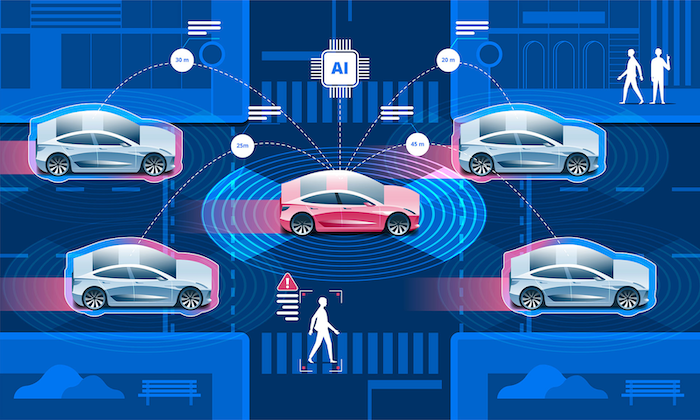
The integration of AI with IoT (Internet of Things) has revolutionized the concept of connected vehicles. Cars, smartphones, smartwatches, and even city infrastructure can now communicate with each other, enhancing safety and driving experience. For example, connected cars communicate in real-time to maintain safe distances from one another. Traffic managers use this technology to optimize traffic flow based on current road conditions.
Designing car model
AI has significantly streamlined the design process in the automotive industry. Traditionally, designing a new car model is a time-intensive task, but AI tools allow for real-time tracking and programmable shading, speeding up the design workflow.
With the help of AI image datasets, manufacturers can generate a wide array of design options, and fostering creativity. This reduces the time required for design approval while improving overall design quality. It is especially critical for seft-driving car, where precision and advancementare essential.
Above are some common use cases of AI in automotive, reforming the industry with outstanding digital transformation in vehicle's design, development, and operation.
Challenges and key factors in implementing AI in automotive
The integration of AI in automotive technology raises critical concerns, particularly regarding cybersecurity and ethics. AI-powered vehicles are vulnerable to hacking and cyberattacks, which could compromise sensitive data and vehicle operations, endangering user safety and privacy. Additionally, ethical dilemmas arise in self-driving cars, especially in determining accountability during accidents.
Questions about whether responsibility lies with manufacturers, operators, or the AI system remain unresolved. Addressing these concerns requires robust security measures, clear ethical guidelines, and comprehensive regulatory frameworks to ensure the safe and reliable deployment of AI in the automotive sector.
Strategies to address concerns include:
- Transparency: Providing transparency about how AI algorithms make decisions helps build trust and allows users to understand the logic behind vehicle actions. Manufacturers should clearly communicate the decision-making processes and limitations of AI systems.
- Data privacy protections: Implementing stringent data protection measures is crucial. Automotive companies must:
- Limit data collection to only what is necessary for safe vehicle operation.
- Provide clear, concise information about data usage and give individuals control over their data.
- Ethical guidelines: The industry should establish comprehensive ethical guidelines that address:
- Responsibilities of manufacturers, operators, and regulators.
- Liability and accountability in the case of accidents.
- Broader societal implications of autonomous driving.
- Rigorous testing and regulation: Before deployment, AI-powered vehicles must undergo extensive testing to ensure reliability and safety. Government agencies should regulate these technologies to enforce compliance with safety and ethical standards.
- Collaboration across stakeholders: Close collaboration among automotive manufacturers, government bodies, and other stakeholders is essential to address ethical and technical challenges. By incorporating diverse perspectives, the industry can implement balanced and effective solutions
The future of AI in automotive industry
AI helps to reshape how vehicles operate and enhance production in the automotive industry. Companies like Tesla have integrated AI through features like Autopilot, which assists with smart parking, steering, acceleration, and braking. This technology offers improved driver convenience and safety.
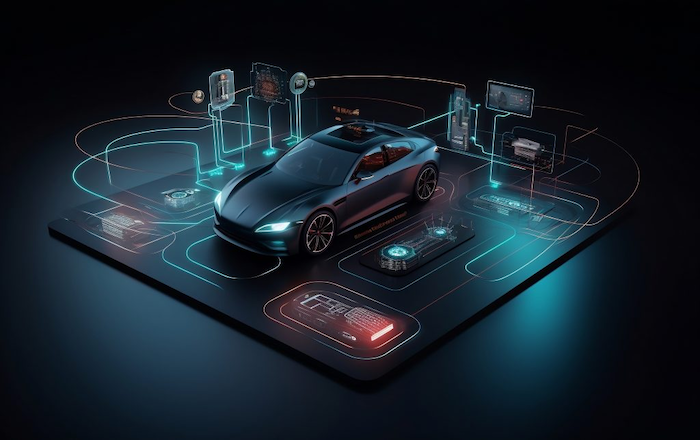
Similarly, BMW has introduced AI-powered voice assistants in its latest models, enhancing comfort and safety by allowing drivers to interact with their cars through voice commands. AI also plays a role in manufacturing quality, for example, Audi uses computer vision to inspect vehicle sheet metal for tiny imperfections during production.
Pushing further into autonomous driving, Mercedes-Benz, in collaboration with Bosch, is working on level 4/5 self-driving car. These cars are designed for full autonomy, representing a significant leap toward the future of self-driving vehicles. Automakers are partnering with IT consulting firms to stay ahead in the rapidly evolving AI landscape. These collaborations help them keep up with emerging AI trends and remain competitive in the market.
Experts anticipate that autonomous vehicles will soon become standard as more companies adopt self-driving technologies. By the end of this decade, about 90% of vehicles are expected to feature AI-powered systems. This transformation extends beyond self-driving cars, impacting the entire vehicle lifecycle from manufacturing to sales and maintenance.
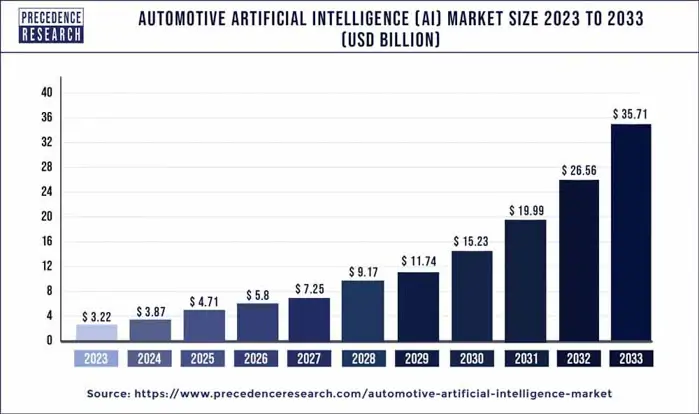
According to Statista, the global automotive intelligence market was valued at $26.49 billion in 2022 and is projected to reach $74.5 billion by 2030. This explosive growth reflects how vital AI technologies will be in shaping the future of transportation (source: Statista).
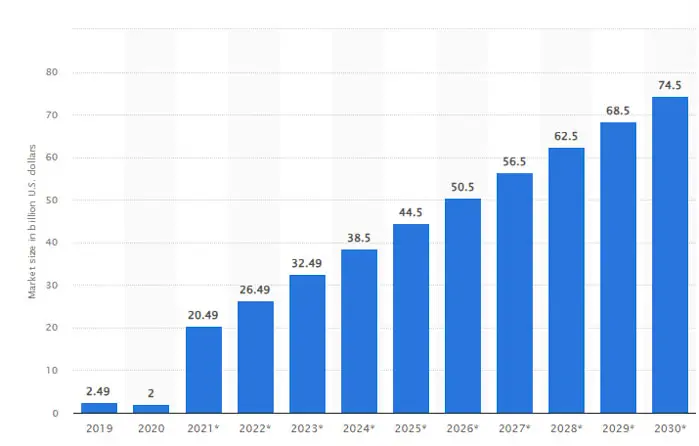
In general, the automotive industry is undergoing a significant transformation, largely driven by advancements in AI. Automakers across the globe are rapidly adopting AI technologies to design and develop smarter, more efficient vehicles, paving the way for the future of transportation. AI in automotive is playing a key role in automating various processes, from autonomous driving to intelligent vehicle features like voice assistants and real-time data analysis.
So, as AI advances, the automotive industry is poised for remarkable growth and increased efficiency. These transformations will redefine mobility, transforming how vehicles are designed, built, and experienced.
Embrace the power of AI in your Automotive Business with TMA
Artificial intelligence in automotive industry is shaping new advancements, having a dependable technology partner is essential to maintaining transformation and competitiveness.
With 27 years in software outsourcing and 10 years focused on automotive software, TMA is well-positioned to assist in implementing AI solutions tailored to your needs. Trusted by leading global Tier-1 automotive suppliers, TMA has a solid track record in delivering reliable software, particularly in embedded system development and AutoSAR.
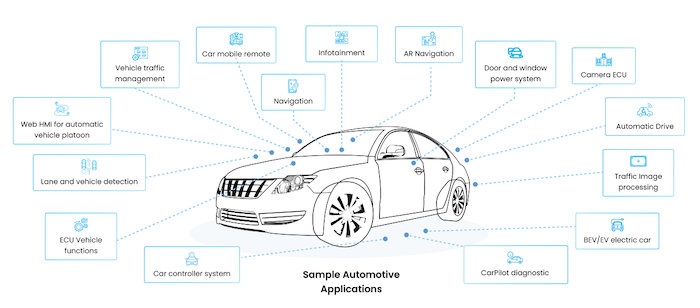
TMA’s team of 4,000 engineers brings deep knowledge in AI-driven solutions such as autonomous driving, driver assistance systems, maintenance, and AI-powered infotainment. By working with TMA, you can apply AI to improve vehicle safety, streamline manufacturing processes, and develop more efficient, intelligent driving systems.
Committed to technical excellence, TMA works closely with your business to integrate AI and support your future growth in the automotive industry.
In conclusion, AI in automotive brings transformative solutions that improve safety, efficiency, and overall vehicle performance. As automotive technology continues to evolve, leveraging AI will be key to staying competitive in this fast-paced market. Whether you’re enhancing production, refining client experiences, or developing smarter vehicles, AI holds the answers for the next generation of automotive development. Partner with TMA to harness the power of AI for your automotive business and drive your success forward. Don’t wait - embrace the future of automotive technology today!


.webp_2026-10-01-18-27-07-971.webp)
.webp_2026-10-01-18-17-11-290.webp)
.webp_2026-10-01-18-08-26-854.webp)
.webp_2026-10-01-17-47-32-240.webp)