In modern medicine, administrative overhead distracts clinicians, driving the urgent need for comprehensive clinical workflow automation. By integrating high-accuracy medical OCR and tailored RPA solutions, healthcare providers can instantly digitize documents directly into EHR systems.
Furthermore, establishing automated communication ecosystems like digital booking and multi-channel reminders is crucial for strengthening long-term patient engagement and care adherence. The next frontier lies in next-gen AI integration, where ambient AI scribes document consultations in real time to significantly reduce physician burnout. Backed by extensive expertise, TMA Solutions delivers these interconnected, proven digital health platforms to optimize clinical operations and elevate the overall quality of care.
Optimizing operational efficiency via clinical workflow automation
In modern medicine, administrative overhead often distracts clinicians from actual patient care. Implementing a comprehensive clinical workflow automation in the healthcare system allows hospitals to minimize manual tasks, speed up data entry, and reduce human error. By integrating advanced technology, providers can transition from slow paper-bound procedures to intelligent digital frameworks.
As part of this transformation, a virtual clinic management platform centralizes appointment scheduling, patient records, clinical workflows, and care coordination, enabling healthcare organizations to streamline both virtual and in-person operations.
A critical element of this digital transformation involves processing physical documents efficiently. Through high-accuracy medical OCR solutions, patient charts, insurance documents, and handwritten intake forms are instantly scanned, digitized, and filed directly into the EHR system. Furthermore, partnering with an experienced healthcare RPA solutions provider in Vietnam like TMA ensures that organizations receive scalable, cost-effective automation strategies tailored to their unique clinical compliance and data infrastructure needs.
Enhancing patient engagement with automated communication ecosystems
Patient care doesn't stop after the consultation ends. Ensuring long-term treatment success requires continuous communication and easy access to services. Implementing an intuitive, digital hospital booking solution allows patients to effortlessly schedule appointments, pick preferred medical staff, and view real-time availability from any device.
To prevent missed appointments and improve treatment adherence, deploying an automated patient reminder system for healthcare sends timely multi-channel notifications via SMS, email, or mobile apps. Additionally, establishing automated medical follow up workflows ensures that post-discharge instructions, vital check reminders, and satisfaction surveys are automatically delivered to patients, significantly lowering readmission rates and fostering a proactive care model.
The next frontier: Next-gen AI integration in consultation documentation
One of the most exciting innovations in modern healthcare technology is the deployment of ambient intelligence. Implementing AI scribes for doctors transforms the traditional consultation room experience. These intelligent models ambiently listen to patient-doctor conversations, distinguish between medical small talk and critical diagnostic symptoms, and automatically generate structured clinical notes in real time.
By leveraging this technology, physicians can maintain eye contact and focus completely on the patient during visits, rather than being buried behind a computer screen typing notes. This substantially reduces clinician burnout and elevates the overall quality of care.
Real-world experience & technical implementations
With a strong tech foundation and extensive healthcare experience, TMA has successfully delivered various real-world projects, enabling healthcare providers to optimize operations and improve care quality as shown in the case studies below.
Enterprise virtual care platform
A scalable platform hub that maintains a comprehensive ecosystem of hybrid care capabilities to deliver the right care to patients and members at the right time and place.
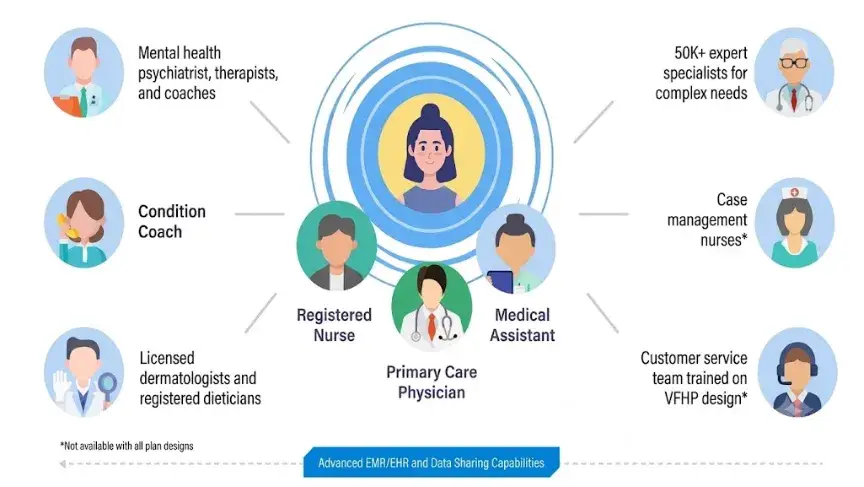
Key Benefits:
- Provide seamless virtual care access through advanced video consultation solutions for doctors.
- Blend virtual and physical services smoothly for comprehensive whole-person care.
- Support customized health plans tailored specifically to each individual member's needs.
- Enhance general clinical data exchange and seamless care coordination across multiple facilities via an integrated digital prescription and referral system.
Technologies:
- Ruby, Java, Spring Boot, Kotlin, Swift, Objective-C, Microservices, Postgres, MySQL
- Kafka, Azure DevOps, Kubernetes, Docker, Istio, Helm
Self-care clinic platform
An interactive clinic healthcare platform that empowers clinicians to provide a seamless, data-driven, and highly personalized experience.
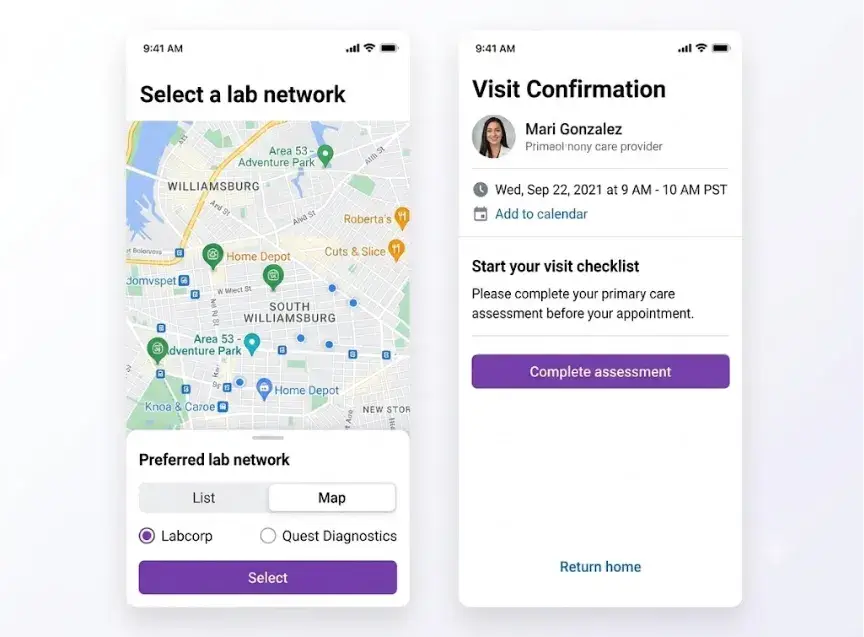
Key benefits:
- Deliver an intuitive virtual clinic management platform for medical staff to optimize charting and complete signing sheets efficiently.
- Utilize self-service development frameworks to facilitate faster deployment and seamless care delivery.
- Empower physicians with intuitive, automated tools to optimize time management and focus on delivering customized care.
- Integrate an easy-to-use hospital booking solution that simplifies direct patient scheduling and workflow organization.
Technologies:
- Ruby On Rails, Java, SpringBoot, Microservices, JSON, Rest, SQL, NoSQL, Kafka,
- Gradle, Azure DevOps, Azure Resource (KeyVault), AKS, Docker, Istio
Data-driven healthcare platform
A unified digital platform designed to recruit and retain research participants while deploying sophisticated data collection, harmonization, and analytics.
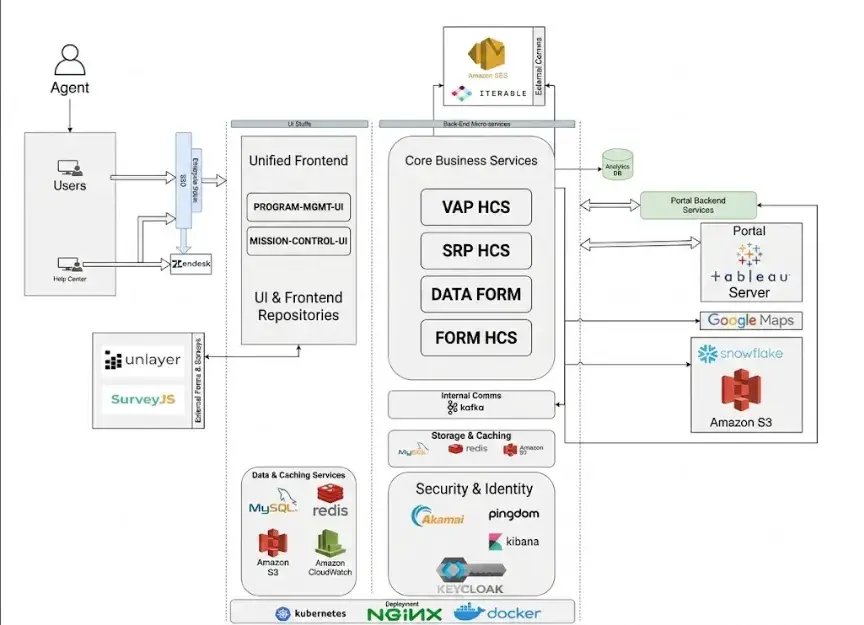
Key benefits:
- Accelerate modern medical research through structured clinical workflow automation in healthcare system structures.
- Provide clinical research teams with deep, data-driven insights to customize whole-person health profiles.
- Implement automated medical OCR solutions to efficiently scan, digitize, and sync physical participant records into data systems.
- Ensure seamless tracking of participant actions via Automated Medical Follow Up Workflows to maximize retention rates.
Technologies:
- Java, Springboot, ReactJS/Redux, Python Microservices, JSON, RestAPI, GraphQL,
- SQL, NoSQL, Kafka, Maven, AWS EKS, Docker, Jenkins, Nexus, AWS Config, New Relic, AWS
- CloudWatch, Google Analytics
Looking Ahead
The future of clinical workflow automation in healthcare system deployment will be increasingly connected, intelligent, and patient-centric. Emerging technologies such as AI, predictive analytics, remote monitoring, and comprehensive digital health ecosystems will enable healthcare organizations to identify patient compliance risks earlier and provide more personalized interventions.
Organizations that strategically combine a robust virtual clinic management platform with advanced patient engagement, modern telehealth platform development, and AI-driven clinical support will be uniquely positioned to deliver significantly improved healthcare outcomes and achieve a much higher standard of efficient care delivery.
Conclusion
While individual digital tools such as an automated medicine dispenser, smart automated pill box with reminder alerts, or standalone medication reminder apps play a foundational role in supporting daily patient adherence, achieving long-term operational success requires a broader digital health strategy.
By seamlessly combining medication tracking, interactive patient engagement, secure communication, and AI-powered healthcare solutions, healthcare organizations can create more connected care experiences. This holistic strategy not only improves direct patient outcomes and supports growing elderly populations, but also strengthens healthcare delivery overall.
Contact TMA today to learn how our technical expertise can support your next customized digital health initiative.


.webp_2026-10-01-18-27-07-971.webp)
.webp_2026-10-01-18-17-11-290.webp)
.webp_2026-10-01-18-08-26-854.webp)
.webp_2026-10-01-17-47-32-240.webp)