Home
Search
Found 797 results for “ “ keyword
icon
Why Corporate Training Software Solutions Need AI Personalization The gap between how enterprises assign training and how employees actually develop is not a content problem. It is a systems problem. When learning module assignments are managed manually without access to performance data, career path information, or real-time skill gap analysis, training resources get distributed based on job title rather than individual need. AI-powered corporate training software solutions close this gap by connecting learning assignments directly to HR and employee performance data, making personalization operationally viable at enterprise scale without adding HR administrative burden. Why Manual Corporate Training Management No Longer Works Large organizations are running training operations that were designed for a different era of workforce management. HR teams manually review role descriptions, match them against available training modules, and assign curricula based on department, seniority, or onboarding stage. The process is time-intensive, based on assumptions rather than data, and produces results that satisfy compliance requirements more reliably than they develop actual workforce capability. The Volume Problem When a single HR team is responsible for managing training assignments across hundreds or thousands of employees, the administrative math does not work. Reviewing each employee's development stage, identifying relevant skill gaps, selecting appropriate training modules, and tracking completion across a workforce of that size is not a manageable human operation. Organizations often respond by standardizing training across broad employee groups instead of individual needs, reducing the effectiveness of workforce development. The Feedback Loop Problem Manual training management has no mechanism for closing the loop between training completion and performance outcomes. An employee completes a communication skills module. Three months later, their performance review notes weak client communication. The connection between the training assigned and the outcome measured is never made, which means the training program never improves. Without performance data feedback, organizations cannot determine whether training is improving workforce capability or simply increasing course completion. The Disconnect Between Learning Programs and Employee Performance The structural cause of most corporate training ineffectiveness is a data gap: learning systems hold training data, HR systems hold performance data, and the two rarely share information in a form that allows one to inform the other. What Gets Lost When Systems Do Not Communicate When an employee's performance review identifies a skill gap, that information typically lives in an HR platform. The L&D team may receive a summary weeks later, after which they manually update training assignments. The delay between gap identification and training response means employees are often working through the consequence of a skill gap while waiting for the training meant to address it. The reverse problem is equally common. Training programs are built around what L&D teams believe the workforce needs rather than what performance data shows it actually lacks. This produces curricula that address assumed needs rather than documented gaps, with predictable results for completion rates and demonstrated learning outcomes. According to Deloitte's research on learning analytics, 95 percent of surveyed learning and development organizations do not excel at using data to align learning with business outcomes, making it difficult to demonstrate the real impact of training investments. The challenge is not simply reporting more metrics. It is connecting learning data with HR, performance, and business systems to generate meaningful insights How AI Improves Corporate Training Software Solutions AI does not replace the judgment required to design effective training. It removes the manual coordination bottlenecks that prevent training programs from being applied with the precision the design intended. Automated Gap Analysis and Assignment AI-driven corporate training software solutions continuously analyze each employee's performance data, assessment results, and role requirements to identify the specific training most likely to close their current gaps. This analysis runs automatically and updates as new performance data becomes available, rather than operating on the quarterly or annual review cycle that limits manual gap analysis. As a result, training assignments reflect each employee's current capability instead of relying solely on job title or onboarding stage. An employee whose performance data shows strong technical skill but weaker stakeholder communication receives different training than a colleague in the same role whose data shows the inverse pattern, even though both carry the same job description. Adaptive Sequencing Based on Demonstrated Comprehension Static training curricula assume that employees need the same amount of time on each topic. Adaptive systems adjust content sequencing based on how each employee actually performs on assessments and practice activities. An employee who demonstrates strong comprehension of foundational material moves through it faster, reaching more advanced content sooner. An employee who needs more time with foundational concepts receives additional reinforcement before the curriculum advances. This keeps experienced employees engaged while ensuring less experienced employees receive the additional support they need before moving forward. Predictive Capability Planning Enterprise-grade corporate training software solutions use AI to surface capability trends at the team and organization level, not just the individual level. When aggregate assessment data shows that a competency is weakening across a department, the system can flag this to L&D leadership before it becomes visible in performance outcomes. This shifts workforce capability management from reactive remediation to proactive development. TMA Solutions develops enterprise learning solutions that combine automated gap analysis, adaptive learning paths, and workforce analytics to support AI-driven employee development. The platform integrates with existing HR and learning systems instead of replacing them. Integrating Enterprise Learning Management Tools With HR Systems The technical prerequisite for AI-driven training personalization is data integration between learning systems and the HR systems that hold performance, role, and career path information. Without this integration, AI has nothing to personalize against. What Integration Enables When an enterprise learning management tool connects to HR systems, organizations can: Automatically assign learning after role or performance changes. Store training records as part of each employee's HR profile. Give managers visibility into learning progress alongside performance data. Measure the relationship between training outcomes and business performance. These capabilities do not require building new HR infrastructure. They require configuring data flows between systems that most organizations already operate, which is an integration architecture problem rather than a new technology procurement decision. Common Integration Points The highest-value integration points include: Role and department data from HRIS Performance review outcomes Career path information Workforce planning or payroll data Each of these data flows makes the training system more accurate without increasing HR administrative workload. The investment is in the integration architecture, not in additional headcount to manage the resulting data. Building Scalable Training Infrastructure for Enterprise Growth The design choices made when deploying corporate training software solutions determine whether the system scales with organizational growth or becomes a constraint on it. Architecture That Grows With Headcount Training infrastructure that requires proportional increases in administrative effort as headcount grows is not enterprise-grade. A system managing training for 500 employees that requires the same per-employee administrative effort at 5,000 employees is a scaling problem built into the design. Scalable enterprise learning management tools handle headcount growth through automation: new employees are onboarded into the training system automatically, role-based assignments are applied without manual configuration for each individual, and reporting scales without manual data aggregation as the employee population grows. Multi-Location and Multi-Function Deployment Enterprise organizations rarely have uniform training needs across all locations and functions. A manufacturing team, a customer service operation, and a corporate function within the same company have different competency requirements, different content libraries, and different compliance training obligations. Scalable training infrastructure supports this heterogeneity within a unified data environment: different content libraries and learning paths for different functions, while shared reporting and analytics give central L&D leadership visibility across the entire training operation from one interface. Designing for Future Capability Requirements Workforce skill requirements change faster than most training programs are updated. Corporate training software solutions built on static content libraries become obsolete as role requirements evolve. Enterprise learning infrastructure should support rapid content updates, allow subject matter experts to contribute learning materials, and connect new content to existing competency frameworks. This allows organizations to respond to changing workforce requirements without redesigning the entire training program. TMA Solutions designs and delivers enterprise learning infrastructure that connects AI personalization, HR system integration, and scalable deployment architecture into a coherent system for workforce capability management. The approach treats training technology as operational infrastructure rather than a standalone HR program. Conclusion Corporate training software solutions that operate independently of HR and performance data often struggle to deliver measurable workforce development outcomes. Assigning training based on job roles, tracking completion rates, and relying on manual administration may support compliance, but they do not provide the visibility or personalization needed to continuously develop employee capabilities. Modern corporate training software solutions combine AI-driven personalization, automated skill gap analysis, adaptive learning paths, and HR integration to deliver more relevant learning experiences while helping organizations improve workforce capability at scale. https://www.tmasolutions.com/ TMA Solutions brings powerful capacities to building enterprise learning solutions that integrate AI, HR systems, and learning analytics to support data-driven workforce development. Explore Smart Corporate Training, AI Coaching and Role-play Simulation System, and other enterprise learning solutions to automate training management, personalize employee learning journeys, and build scalable learning ecosystems for long-term business growth....
icon
Conclusion Vietnam’s rapid development as a technology and AI innovation hub is attracting increasing attention from global enterprises. Strong engineering talent, competitive operational costs, and growing investment in digital infrastructure are positioning the country as a strategic destination for enterprise AI development. Industry developments show that enterprises are no longer searching solely for software vendors. Organizations are seeking long term technology partners capable of supporting scalable AI transformation and sustainable operational modernization. As global AI adoption continues to expand, collaboration with a leading AI company in Vietnam is expected to play an increasingly important role in helping enterprises accelerate innovation, improve operational efficiency, and achieve long term business growth. Introduction Vietnam is rapidly emerging as one of the most attractive destinations for enterprise AI development and digital transformation initiatives. As global organizations accelerate investments in intelligent technologies, many enterprises are seeking strategic technology partners capable of delivering scalable AI solutions while maintaining operational efficiency and competitive development costs. According to Reuters, Qualcomm launched a new AI R&D center in Vietnam in 2025 to advance generative and agentic AI technologies, while the company highlighted Vietnam's national strategies for AI, semiconductors, and digital transformation. Additionally, Nvidia has significantly expanded its footprint in Vietnam to foster artificial intelligence and semiconductor development, committing more than US$250 million to establish local research, development, and cloud infrastructure capabilities. These developments reflect Vietnam's increasing attractiveness as a destination for AI innovation and high-tech investment. As demand for enterprise AI adoption continues to increase, organizations are increasingly partnering with an AI development company from Vietnam to support long term technology strategies and enterprise modernization projects. Vietnam’s Growing Position in Global AI Development Vietnam’s technology sector has developed rapidly over the last decade. The country is now recognized for its strong engineering workforce, expanding digital economy, and growing expertise in advanced technologies such as AI, cloud computing, and intelligent automation. Strong Engineering Talent and Technical Expertise Vietnam's growing position in global AI and technology development is supported by a rapidly expanding IT services sector. Mordor Intelligence projects the country's IT services market to grow from US$2.37 billion in 2025 to US$4.39 billion by 2031, representing a 10.82% CAGR. Driven by cloud adoption, digital transformation, and increasing outsourcing demand, this growth reflects Vietnam's strengthening capabilities in software engineering, AI, cloud computing, and intelligent automation. Vietnam produces thousands of IT graduates every year, creating a large talent pool for enterprise software engineering and AI development. The country currently has more than 73,800 IT companies and approximately 1.26 million IT professionals, while producing tens of thousands of IT and engineering graduates each year. Known for their strong technical skills and adaptability, Vietnamese engineers are increasingly contributing to global software development and AI projects. To further strengthen its digital workforce, Vietnam aims to graduate 100,000 ICT students annually by 2030–2035, reinforcing its position as a leading destination for software engineering and AI development. Many global enterprises are now collaborating with AI developers in Vietnam because of their experience in: Enterprise software engineering: Expertise in developing large-scale, secure, and business-critical software systems. AI integration services: Experience integrating AI technologies into enterprise applications and operational workflows. Intelligent automation: Ability to automate complex business processes to improve productivity and reduce operational costs. Cloud infrastructure development: Strong capabilities in building and managing scalable cloud-based platforms and services. Data analytics and machine learning: Skills in analyzing large datasets and developing AI models that support data-driven decision-making. Competitive Costs Without Sacrificing Quality One of Vietnam’s biggest advantages is its ability to provide high quality engineering services at competitive operational costs compared to other major outsourcing markets. For enterprises pursuing long term digital transformation, this balance between technical capability and cost efficiency is becoming increasingly important. According to industry reports, Vietnam continues ranking among the leading outsourcing destinations in Asia because of its stable business environment and strong technology workforce. Why Global Enterprises Are Investing in Vietnam The demand for AI technologies is increasing across industries, and enterprises now require long term technology partners capable of supporting scalable innovation strategies. Vietnam Supports Long Term Digital Transformation Many organizations no longer look for short term outsourcing vendors. Instead, businesses are searching for strategic technology partners that can support continuous system modernization and operational growth. An experienced AI development company from Vietnam can help enterprises build scalable AI systems aligned with long term business objectives and existing infrastructure. This includes support for: Intelligent workflow automation AI driven analytics Customer experience optimization Enterprise system integration Operational process modernization As enterprise AI adoption grows, Vietnam is becoming a preferred destination for businesses seeking reliable and scalable technology partnerships. Government Investment Is Accelerating Innovation Vietnam’s government is also investing heavily in digital transformation and emerging technologies. National AI development strategies and technology education programs are helping strengthen the country’s long term innovation ecosystem. This creates additional opportunities for enterprises looking to expand AI operations within Southeast Asia. Reuters recently highlighted Vietnam’s increasing focus on AI and semiconductor development, supported by workforce expansion initiatives and growing international collaboration. With a national goal of developing a 50,000-strong semiconductor workforce by 2030 and increasing participation in the global chip value chain, Vietnam is strengthening its capabilities in advanced engineering, AI innovation, and high-tech manufacturing. Enterprise AI Adoption Across Industries AI adoption in Vietnam is expanding rapidly because enterprises across industries are seeking more intelligent and efficient operational models. Manufacturing and Logistics Manufacturing companies are implementing AI technologies for predictive maintenance, operational monitoring, and supply chain optimization. These systems help businesses reduce downtime, improve workflow visibility, and optimize production efficiency. Finance, Healthcare, and Retail Financial institutions are integrating AI into fraud detection, compliance operations, and customer service systems. Healthcare organizations are adopting intelligent technologies for administrative automation and operational management, while retail enterprises are using AI for customer engagement and demand forecasting. This growing demand continues driving the expansion of AI developers in Vietnam across enterprise technology sectors. Long Term Technology Partnerships Successful AI adoption requires more than technical implementation alone. Enterprises also need long term support, infrastructure scalability, and continuous optimization strategies. Scalable Technology Collaboration Long term partnerships allow organizations to scale development capacity more efficiently while adapting to evolving operational requirements. This flexibility is becoming increasingly important as enterprises expand AI adoption across departments and regional markets. Security and Operational Reliability As businesses process larger amounts of operational data through AI systems, governance, infrastructure security, and compliance management are becoming essential priorities. Organizations that invest in sustainable AI strategies are better positioned to achieve long term operational growth and competitive advantages. TMA Solutions as a Leading Company from Vietnam About TMA TMA Solutions accelerates AI transformation through its AI Center and AI Agent Factory. Through its https://www.tmasolutions.com/technologies/ai-ml-and-data-sciences AI Center and AI Agent Factory , TMA Solutions provides scalable AI solutions that help enterprises improve operational efficiency and accelerate digital transformation. The company currently offers more than 100 AI services and solutions, including: Generative AI Edge AI AI Agents / Agentic AI Smart Camera Optical Character Recognition (OCR) Robotic Process Automation TMA Solutions also provides end to end AI/ML services ranging from consulting and proof of concept development to enterprise deployment and long term optimization. With extensive experience across healthcare, finance, manufacturing, logistics, and telecommunications industries, the company helps organizations build scalable AI systems aligned with long term business growth and operational efficiency. Case studies by TMA Solutions Cloud-Based and AI-Driven Solution for Seamless Operations and Enhanced Client Experience Challenge: A fast-growing E-commerce business needed to improve operational efficiency while delivering a more personalized customer experience. Existing systems struggled to handle increasing transaction volumes, fragmented data sources, and evolving customer expectations. The company required a scalable platform that could streamline business operations, improve decision-making, and enhance customer engagement. Solution: TMA Solutions developed a cloud-based and AI-driven platform that integrates intelligent automation, data analytics, and customer engagement capabilities into a unified ecosystem. Cloud-Native Architecture: Provides scalability, reliability, and seamless integration across business systems. AI-Powered Recommendation Engine: Delivers personalized product recommendations based on customer behavior and preferences. Data Analytics Platform: Collects and analyzes operational and customer data to support faster business decisions. Process Automation Module: Automates key operational workflows to improve efficiency and reduce manual effort. Customer Experience Enhancement Layer: Enables more personalized and responsive interactions across digital channels. Business Outcomes: Improved operational efficiency through workflow automation. Enhanced customer engagement with AI-driven personalization. Increased scalability to support business growth and higher transaction volumes. Improved visibility into business performance through real-time analytics. Delivered a seamless and data-driven customer experience. Read more at: https://www.tmasolutions.com/case-studies/cloud-based-and-ai-driven-solution-for-seamless-operations-and-enhanced-client-experience Cloud-Based and AI-Driven Solution for Seamless Operations and Enhanced Client Experience Case Study: Cloud-Based and AI-Driven Solution for Seamless Operations and Enhanced Client Experience Optimizing Data Workflows on AWS with Integration, Processing, and Automation Challenge: A growing enterprise needed to manage increasing volumes of business data from multiple systems while ensuring timely access to accurate information. Manual data processing and fragmented workflows created inefficiencies, limited visibility into operations, and made it difficult to support data-driven decision-making at scale. Solution: TMA Solutions developed an AWS-based data platform that streamlines data integration, processing, and automation across the organization. Data Integration Framework: Consolidates data from multiple sources into a centralized environment. Automated Data Processing Pipeline: Automates data transformation and workflow execution to reduce manual effort. AWS Cloud Infrastructure: Provides scalability, reliability, and high-performance data processing. Analytics-Ready Data Architecture: Delivers clean and accessible data for reporting and business intelligence. Business Outcomes: Improved data accessibility and consistency across systems. Reduced manual processing through workflow automation. Accelerated reporting and business decision-making. Enhanced operational efficiency with scalable cloud-based infrastructure. Established a strong foundation for advanced analytics and AI initiatives. Read more at: https://www.tmasolutions.com/case-studies/optimizing-data-workflows-on-aws-integration-processing-and-automation-strategies Optimizing Data Workflows on AWS: Integration, Processing, and Automation Strategies Case Study: Optimizing Data Workflows on AWS with Integration, Processing, and Automation Why enterprises choose Vietnam for AI development Vietnam’s technology sector has developed rapidly over the last decade. The country is now recognized for its strong engineering workforce, expanding digital economy, and growing expertise in advanced technologies such as AI, cloud computing, and intelligent automation....
icon
Why Enterprises Need a Data Analytics Solution Development Company Traditional BI remains valuable for monitoring business performance, but enterprise analytics now often goes beyond historical dashboards to include data engineering, advanced analytics, real-time processing, forecasting, and AI/ML for specific business problems that reporting alone cannot solve. In this context, a https://www.tmasolutions.com/technologies/big-data-and-analytics data analytics solution development company plays a key role by helping enterprises connect fragmented data, build reliable data pipelines, develop analytics and AI/ML capabilities, and integrate insights into existing systems. For Heads of Analytics, the goal is not to “predict the future” in a general sense, but to establish a robust data and analytics foundation that supports specific forecasting, monitoring, and decision-support use cases. Why Traditional BI Reporting No Longer Supports Enterprise Growth Traditional BI tools are effective for tracking historical performance, but they are limited when enterprises need forward-looking intelligence. The core issue is not visualization, but the underlying data architecture and lack of advanced analytics capability. Dashboards only explain what already happened Most BI dashboards focus on standard business KPIs such as revenue, sales performance, customer acquisition, inventory levels, operational costs, and workforce productivity. These metrics are important for visibility, but they are inherently descriptive. For a Head of Analytics, the real challenge is no longer reporting performance, but answering forward-looking questions: Which products will see increased demand in the next quarter? Which customer segments are at high risk of churn? How can supply chain routes be optimized to reduce operational delay? Addressing these questions requires predictive and prescriptive analytics capabilities, not just descriptive reporting. In short, descriptive analytics explains what happened, predictive analytics estimates what will happen, and prescriptive analytics recommends what should be done. Each layer adds more value but requires more advanced data engineering. Data silos reduce the value of BI systems Even the most advanced BI platform cannot deliver reliable insights if enterprise data remains fragmented. In most organizations, data is distributed across ERP systems, CRM platforms, POS systems, e-commerce platforms, operational databases, IoT devices, and data warehouses. When these systems are not properly integrated, analytics teams spend significant time on data preparation instead of generating insights. This reduces both speed and accuracy of decision-making across the enterprise. This is why data engineering is the foundation of enterprise analytics success. A modern analytics environment must ensure reliable ingestion, transformation, integration, storage, and data quality management before any advanced analytics or AI model can deliver value. TMA Solutions positions Big Data, Data Engineering, and Analytics as a core capability area, covering data warehousing, BI, visualization, predictive analytics, machine learning, and large-scale data processing. The Shift From Historical Reporting to Predictive Analytics Enterprise analytics is evolving from reporting what happened to predicting what will happen and enabling better decisions. This shift is not optional anymore, because business environments are becoming more dynamic and competitive. This does not mean replacing BI dashboards. It means expanding the analytics stack so that enterprises can support higher-value use cases where prediction and action are required. From descriptive to predictive analytics A modern analytics maturity model typically includes multiple layers of intelligence. Each layer builds on the previous one and increases business value. Analytics Type Core Question Enterprise Example Descriptive What happened? Sales performance reporting Diagnostic Why did it happen? Root cause analysis of revenue drop Predictive What will happen? Demand forecasting Prescriptive What should we do? Inventory optimization For example, a retail enterprise may already track inventory levels through BI dashboards. However, the next step is to predict future demand by product, region, and channel to optimize stock planning. TMA Solutions has implemented retail demand forecasting solutions using Azure Machine Learning and time-series analytics. These solutions integrate ERP, POS, and e-commerce data to support inventory planning and supply chain visibility. This highlights a key point: predictive analytics is not just about models, it depends on a strong and well-structured data pipeline. From prediction to operational decision-making Predictive insights only create value when they influence real business actions. Without execution, even the most accurate model has limited business impact. A complete decision intelligence loop involves: Data Collection: Gathering unstructured and structured data across systems. Prediction Generation: Applying AI/ML models to forecast trends and risks. Decision Making: Recommending optimal actions based on business rules. Action Execution: Connecting insights directly into operational workflows (ERP/CRM). Outcome Measurement: Tracking results to refine future model accuracy. For example, demand forecasting influences procurement decisions, predictive maintenance triggers equipment inspection, and customer churn prediction drives retention campaigns. Each use case shows how analytics translates directly into operational value. TMA's predictive analytics and automation approach focuses on connecting AI-driven insights directly to operational workflows, enabling organizations to move from insight generation to action execution in a structured, scalable way. What Enterprises Need From a Data Analytics Solution Development Company Selecting a data analytics solution development company should not be based only on dashboard development capability. Enterprises need partners that can design and operate the full analytics ecosystem - from raw data to decision execution. Strong data engineering foundation Advanced analytics is only as good as the data behind it. If data is incomplete or inconsistent, even the best models will produce unreliable results. A capable partner should be able to design and implement multi-source data ingestion pipelines, batch and real-time processing, data transformation, and standardized data models. They should also support data lake, data warehouse, or lakehouse architectures depending on enterprise needs. https://www.tmainnovation.com/data-solutions/data-solutions-platform/tma-data-platform TMA’s Data Platform supports enterprise data infrastructure across on-premise and multi-cloud environments, with capabilities for data lake, data warehouse, data lakehouse, batch processing, real-time analytics, streaming analytics, BI, AI/ML, and data governance. Advanced analytics and AI capabilities Beyond BI, enterprises need partners with experience in regression, classification, clustering, time-series forecasting, anomaly detection, machine learning pipelines, and optimization models. These capabilities allow organizations to move from reporting to intelligent decision systems. TMA’s capabilities include these techniques as part of its AI and data analytics portfolio. The key principle is that the right model should always be selected based on the business problem, not the other way around. Real-time and operational analytics Many enterprise decisions cannot wait for batch reporting cycles. In fast-moving environments, delayed insights can lead to missed opportunities or operational risks. Real-time analytics supports use cases such as inventory tracking, fraud detection, equipment monitoring, customer behavior analysis, and supply chain visibility. These use cases require continuous data processing and fast response times. Integration with enterprise systems Analytics cannot operate in isolation because business value comes from connected systems. A strong partner must integrate analytics with ERP, CRM, HR systems, POS platforms, e-commerce systems, IoT devices, and cloud services. TMA’s enterprise projects demonstrate integration across ERP, POS, and e-commerce systems to enable unified analytics for retail operations. This ensures that decision-making is based on a complete view of enterprise data rather than isolated datasets. How AI Improves Enterprise Decision Intelligence AI significantly enhances enterprise analytics by enabling systems to detect patterns, generate predictions, and support decision-making at scale. However, AI effectiveness depends heavily on data quality and architecture. AI-driven forecasting and anomaly detection AI and machine learning can be applied to demand forecasting, predictive maintenance, customer churn prediction, fraud detection, quality control, and operational anomaly detection. For example, TMA's predictive maintenance solution combines sensor data with Generative AI to provide contextual maintenance insights for operators - improving both the speed and accuracy of decision-making in industrial environments. The key value of AI is not only prediction, but also contextual intelligence directly tied to business operations. From insights to action Modern analytics systems must go beyond insight generation and support action execution. A complete decision intelligence loop allows systems to continuously learn and improve over time. TMA's AI-powered analytics approach focuses on connecting predictive models with APIs, automation systems, and operational workflows - enabling enterprises to operationalize insights instead of only visualizing them. Choosing Between In-House Analytics Teams and External Data Partners Enterprises often face a strategic decision between building analytics capabilities internally or working with an external partner. The right choice depends on maturity, resources, and business priorities. When in-house teams are sufficient Internal teams are effective when organizations already have strong data engineering talent, data science expertise, cloud architecture capabilities, and established data platforms. In this case, internal teams are best positioned to own long-term analytics strategy. However, internal teams may face limitations when scaling multiple complex initiatives simultaneously, especially when new technologies or large transformation programs are required quickly. When external partners add value External https://www.tmasolutions.com/technologies/big-data-and-analytics data analytics solution development companies are valuable when enterprises need to: Modernize legacy architectures and data silos. Build enterprise-scale data lakes or lakehouses. Implement complex predictive analytics or real-time streaming systems. Accelerate AI adoption and scale engineering capacity rapidly. The value is not just additional manpower, but access to specialized domain experience and proven enterprise delivery capability. TMA Solutions operates a dedicated Data Solution Center, providing deep expertise across data engineering, AI/ML, cloud, and analytics. Hybrid model for enterprise analytics In most cases, a hybrid model is the most effective approach. Internal teams focus on business requirements, governance, analytics strategy, and domain expertise, while external partners handle architecture, engineering, and implementation. This model allows enterprises to maintain control while leveraging external expertise for complex technical execution. It also improves speed and reduces risk in large transformation programs. When evaluating top data solutions companies, enterprises should prioritize real-world experience, integration capability, predictive analytics expertise, and proven enterprise delivery rather than only toolsets or team size. Conclusion Enterprise analytics is shifting from descriptive reporting to predictive and operational intelligence. This shift requires more than BI tools - it requires a complete, end-to-end data and analytics ecosystem. Among top data solutions companies, a dedicated data analytics solution development company plays a critical role in building this foundation by combining data engineering, AI/ML, real-time processing, and cloud architecture into a unified system that supports decision-making at scale. https://www.tmasolutions.com/technologies/big-data-and-analytics TMA Solutions brings together Big Data, AI, cloud, and enterprise engineering capabilities with documented use cases in retail demand forecasting, predictive maintenance, and enterprise data and analytics. For Heads of Analytics, the key question is no longer whether BI is enough. The real question is whether the organization is ready to move from reporting the past to predicting and shaping the future and that is where the right analytics engineering partner becomes a decisive strategic advantage....
icon
Why Vietnam Is Becoming a Leading Destination for Software Outsourcing Conclusion Vietnam is no longer viewed simply as an emerging outsourcing market. It has become a strategic destination for global software development, digital transformation, and AI innovation. With a growing engineering workforce, competitive costs, strong technical expertise, and increasing investment in advanced technologies, Vietnam software outsourcing companies are helping businesses accelerate innovation while optimizing operational efficiency. As demand for AI, cloud platforms, and enterprise modernization continues to rise, Vietnam is expected to strengthen its position as one of the world’s leading software outsourcing destinations in the years ahead. TMA Solutions – A Long Term Software Outsourcing Partner from Vietnam About TMA Solutions - Reliable Software Partner TMA Solutions is a leading Vietnamese software outsourcing company with 4,000 engineers. Among the leading software outsourcing companies in Vietnam, TMA Solutions has established itself as one of the country’s most experienced technology partners for global businesses. Founded in 1997, TMA Solutions has grown into one of Vietnam’s largest software outsourcing companies with more than 4,000 engineers serving clients across 30 countries. Over nearly three decades, the company has built strong expertise across a wide range of industries including: Telecom: Providing software solutions and services for telecom operators and technology vendors. Finance & Insurance Supporting digital transformation initiatives, enterprise systems, and financial technology solutions. E-Commerce & Retail: Developing digital commerce platforms and customer-facing applications. Healthcare: Delivering healthcare software solutions and healthtech applications through dedicated healthcare technology initiatives. Logistics & Transportation: Building software systems that support logistics operations and supply chain management. Automotive: Participating in automotive software and embedded technology projects. Manufacturing: Developing smart manufacturing, factory automation, and Industry 4.0 related solutions. Education: Supporting digital learning and education technology platforms. Agriculture: Applying technology solutions for smart agriculture and operational management. Rather than operating as a traditional outsourcing vendor focused only on software delivery, TMA has invested heavily in research and development through specialized technology centers. These investments allow TMA to support enterprises not only with software development outsourcing, but also with AI transformation initiatives, enterprise modernization, and advanced technology integration. Strong Global Delivery Experience and Engineering Scale One of the reasons international enterprises continue to choose TMA Solutions is the company’s ability to manage large-scale and mission-critical software projects for global markets. TMA maintains international offices in 7 countries, including: Vietnam, the United States, Canada, Germany, Japan, Australia, and Singapore, helping improve communication and collaboration with overseas clients. The company also follows international quality standards including CMMI, ISO 9001, and ISO/IEC 27001 while adopting Agile and DevOps methodologies across development operations. As enterprises increasingly seek reliable long-term technology partners, companies like TMA Solutions demonstrate how Vietnam’s outsourcing industry is evolving from cost-focused development services toward high-value engineering, AI innovation, and enterprise transformation. Vietnam Is Becoming a Strategic AI and Innovation Hub Artificial intelligence is reshaping the global outsourcing industry. Companies are no longer looking for vendors that only provide coding services. Instead, they seek partners capable of delivering innovation, automation, and AI-driven solutions. Vietnam is rapidly adapting to this transformation. Rising Investment in AI and Emerging Technologies Vietnamese technology companies are increasingly investing in: generative AI, computer vision, AI agents, data analytics, and intelligent automation. Technology centers and R&D hubs across Ho Chi Minh City, Hanoi, and Da Nang are contributing to a growing innovation ecosystem. According to reports from Google, Temasek, and Bain & Company on Southeast Asia’s digital economy, Vietnam remains one of the fastest-growing digital markets in the region, creating strong momentum for AI adoption and software innovation. Vietnamese Technology Companies Are Investing Heavily in AI Many software development companies in Vietnam are expanding beyond traditional outsourcing services and investing heavily in: AI research Generative AI applications AI agents Computer vision Intelligent automation advanced analytics platforms This shift is especially important because it enables Vietnam to compete in higher-value technology segments rather than relying solely on labor cost advantages. Technology hubs in Ho Chi Minh City, Hanoi, and Da Nang are also attracting increasing investment in AI innovation and R&D activities. Universities, startups, and enterprise technology centers are contributing to a rapidly expanding AI ecosystem that supports both local and international projects. Vietnam Offers Strong Advantages for Global Collaboration Outsourcing success depends heavily on communication, cultural compatibility, and project management maturity. Vietnam has made significant improvements in all these areas. A common misconception about outsourcing is that lower costs automatically mean lower quality. However, Vietnam’s software industry has evolved far beyond basic coding or maintenance services. Leading software outsourcing companies in Vietnam are now developing complex enterprise systems, AI-powered applications, fintech platforms, healthcare technologies, telecom infrastructure, and cloud-native solutions for global clients. Many companies have adopted international software development standards and modern engineering practices such as Agile methodologies, DevOps, CI/CD automation, ISO certifications, and CMMI processes. Vietnamese engineers are also becoming increasingly experienced with advanced technologies including: Generative AI Machine learning Cloud computing IoT systems enterprise-scale application architecture This evolution is helping Vietnam move higher in the global technology value chain, positioning the country as a destination not only for outsourcing execution, but also for innovation and product engineering. Introduction Global businesses are rethinking how they build software teams. Rising development costs, talent shortages, and the pressure to accelerate digital transformation have pushed companies to search for more sustainable outsourcing destinations. Over the last decade, Vietnam has emerged as one of the strongest choices for software outsourcing, attracting enterprises, startups, and technology companies from the US, Europe, Japan, South Korea, and Australia. From AI-powered applications and enterprise systems to fintech and healthcare platforms, Vietnam software outsourcing companies are increasingly handling large-scale, mission-critical projects for global clients. Competitive Costs Without Sacrificing Quality Competitive pricing is often the first reason businesses consider software outsourcing in Vietnam. However, companies that work with Vietnamese development teams quickly realize the value goes far beyond cost reduction. Today, businesses are choosing Vietnam because it offers a combination of strong engineering capabilities, scalable development resources, operational flexibility, and improving software quality standards. This balance is becoming increasingly important as companies seek outsourcing partners that can support both rapid product development and long-term business growth. Vietnam provides access to highly skilled engineering talent at more competitive rates, allowing businesses to optimize development budgets without sacrificing technical capability. Instead of allocating excessive resources to recruitment and operational overhead, companies can focus more on accelerating product delivery, expanding market reach, and investing in innovation. For startups, this cost advantage can dramatically extend product runway and reduce time-to-market. For enterprises, it enables faster scaling of development teams and more efficient digital transformation programs across multiple business units. Vietnam’s Software Outsourcing Industry Is Growing Rapidly Vietnam’s technology sector has experienced remarkable growth in recent years, supported by government investment, digital transformation initiatives, and a rapidly expanding engineering workforce. According to the Vietnam Software and IT Services Association (VINASA), Vietnam’s ICT industry revenue exceeded USD 150 billion in recent years, with software and IT services continuing to be among the fastest-growing sectors. The country has also become a strategic outsourcing hub for global enterprises seeking high-quality software development services with competitive operational costs. A Young and Expanding Technology Workforce One of Vietnam’s biggest advantages is its rapidly growing pool of software engineers. With a population exceeding 100 million and a strong emphasis on STEM education, Vietnam produces a large number of IT graduates every year. Unlike some mature outsourcing markets facing talent shortages and rising labor costs, Vietnam still offers a scalable workforce for long-term software development projects. This is particularly important for enterprises that need to expand engineering teams quickly without compromising quality. Vietnamese engineers are increasingly experienced in: AI and machine learning Cloud-native development Mobile and web application development IoT and embedded systems Enterprise software platforms The improvement in technical education and hands-on experience has significantly increased the competitiveness of software outsourcing companies in Vietnam. Strong Government Support for the Digital Economy Vietnam’s government has actively promoted digital transformation and the technology sector through long-term national strategies. Programs focused on smart cities, AI development, semiconductor manufacturing, and Industry 4.0 have accelerated the growth of the local IT ecosystem. The National Strategy on Research, Development and Application of Artificial Intelligence to 2030 further demonstrates Vietnam’s ambition to become a regional AI and digital innovation center. This creates a favorable environment not only for local technology companies but also for international businesses looking for long-term outsourcing partners....
icon
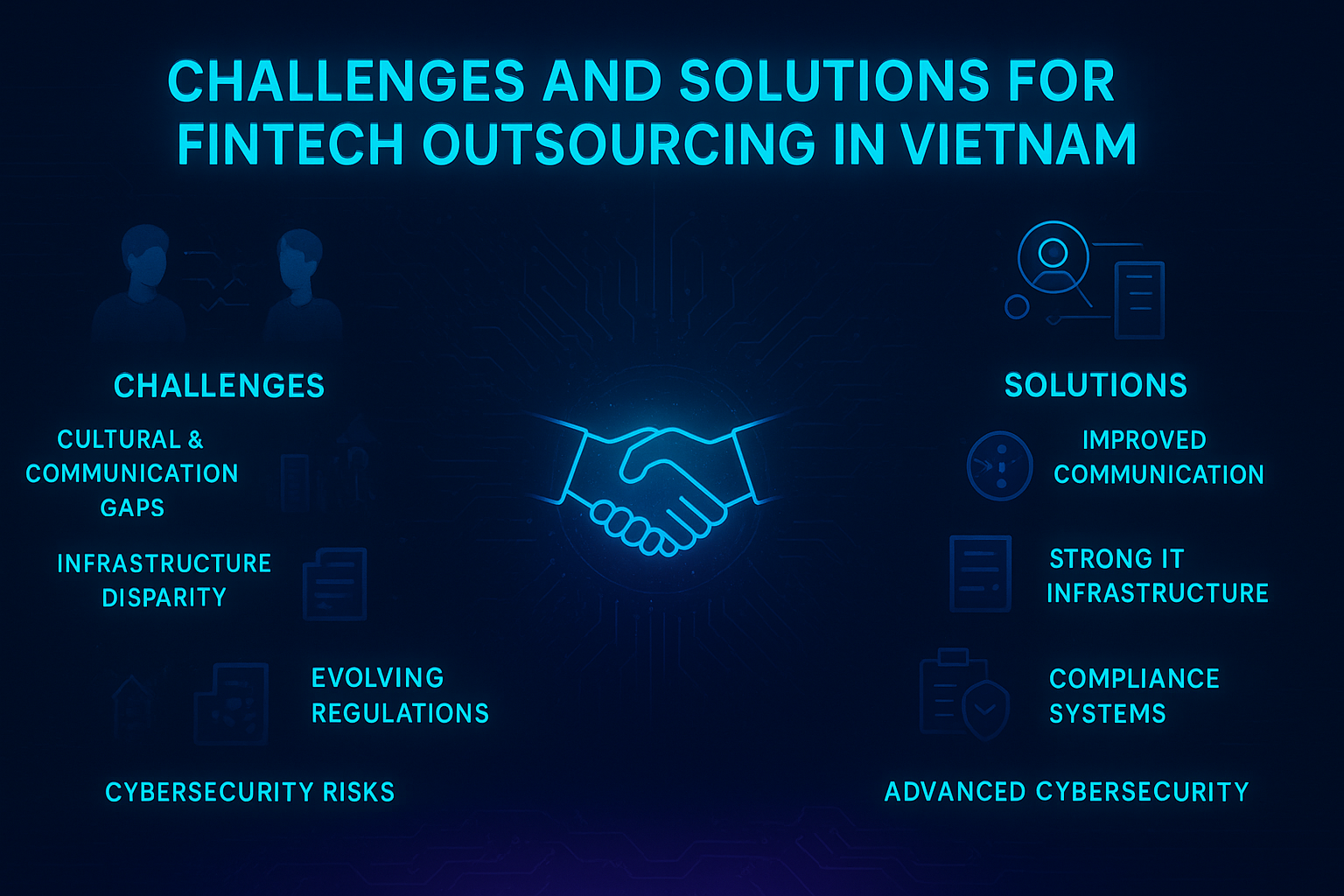
Why Vietnam Is Becoming the Go-To Destination for Fintech Software Development Contact TMA Solutions Website: https://www.tmasolutions.com https://www.tmasolutions.com/ Email: mailto:sales@tmasolutions.com sales@tmasolutions.com Case Studies: https://www.tmasolutions.com/case-studies www.tmasolutions.com/case-studies Challenges and Solutions for Fintech Outsourcing in Vietnam Despite its strengths, Vietnam presents challenges that require strategic navigation: Cultural and Communication Gaps : Business practice differences can arise, but improving English proficiency and experienced providers bridge this gap. Infrastructure Disparities : Urban tech hubs like Ho Chi Minh City outpace rural areas, necessitating careful partner selection. Talent Retention : High demand for skilled professionals can lead to turnover, mitigated by upskilling programs. Evolving Regulations : Rapid fintech law changes, like open banking, demand vigilance, addressed by compliance-focused partners. Cybersecurity Risks : In a growing digital economy, threats are rising; robust security measures and expert partners are essential. Vietnam’s challenges are surmountable, with providers like TMA Solutions offering expertise in training, project management, and regulatory alignment to ensure seamless execution, as demonstrated in their fraud detection and compliance-integrated solutions. Figure 4: Challenges and Solutions in Fintech Outsourcing Why Choose TMA With 28 years of experience and a team of 4,000 engineers serving clients across 30+ countries, TMA Solutions is a trusted partner for building scalable multi-cloud data architectures. Our expertise spans AI Agents development , https://www.tmasolutions.com/ Edge AI , fintech R&D using Blockchain and Web3, and PropTech applications for property developers , delivering tailored solutions that drive innovation and efficiency. We have achieved 20–50% cost reductions in multi-cloud projects across industries, including: https://www.tmasolutions.com/industries/healthcare Healthcare : Deploying https://www.tmasolutions.com/technologies/cloud Cloud-Based Veterinary Clinic Management and AI-driven veterinary medical records to streamline operations, including cloud-based AI software for veterinarians, smart booking & assignment, AI-driven veterinary medical records and practice management platform, paperless vet clinic solutions, veterinary practice management, aged care, and medication chart . https://www.tmasolutions.com/industries/finance Fintech : Implementing Digital Payment Solutions , Mobile Banking , and Blockchain financial solutions for secure, scalable platforms. For example, in enhancing wealth management efficiency, TMA developed a platform to streamline retirement plans and optimize investments, resulting in improved operational efficiency. In another case, partnering with a capital market solutions company, TMA modernized post-trade operations, ensuring compliance and accuracy. Additionally, an AI-driven chatbot for customer service reduced response times and boosted satisfaction for a major provider. Real Estate : Developing Smart building management systems and Mobile apps for apartment management to enhance Vietnam PropTech ecosystems , including building management, building defect management, defect assignment & workflow tracking, and community management . https://www.tmasolutions.com/industries/ecommerce-and-retail E-commerce : Optimizing Omnichannel retail and AI chatbots for ecommerce to boost customer engagement, incorporating ecommerce solutions , online shopping platform, AI In Ecommerce, drop shipping, AI-Powered Digital Signage, marketing content management, and centrialized advertising content management . Our proven track record, combined with deep expertise in SAP ERP , Salesforce , and DataMiner integration, ensures seamless multi-cloud deployments that meet compliance, performance, and innovation goals. Partner with TMA Solutions to unlock the full potential of your multi-cloud strategy. Conclusion Vietnam is solidifying its position as the go-to destination for fintech software development, driven by cost advantages, skilled talent, and a supportive ecosystem. As the global fintech market continues to expand, outsourcing to Vietnam enables organizations to innovate rapidly while managing risks and costs effectively. By embracing strategic partnerships and best practices, companies can leverage Vietnam's strengths to achieve sustainable growth and competitive advantage in a digital-first financial world. With projections indicating the fintech sector reaching over USD 50 billion by 2030, investing in Vietnam today—through proven partners like TMA Solutions with their successful case studies in wealth management, capital markets, and AI chatbots—positions businesses to lead tomorrow's fintech revolution. Introduction Fintech innovations are revolutionizing global financial services. Investments reached approximately $90 billion in 2025, pressuring businesses to deliver secure, scalable solutions. The surge in digital payments, blockchain, mobile banking, and AI-driven tools has transformed industries, demanding agile and cost-effective development hubs. Traditional outsourcing destinations, however, struggle with high costs, talent shortages, and regulatory complexities. Vietnam stands out as the go-to destination for fintech software development, blending a dynamic talent pool, unbeatable cost advantages, and a government-backed innovation ecosystem. This article highlights why Vietnam is capturing global attention, exploring its advantages, challenges, use cases, and a forward-looking roadmap, with TMA Solutions as a leading partner in empowering enterprises to dominate the fintech landscape through fintech development services, financial software outsourcing, and AI-powered automation . Why Vietnam Is Unmatched for Fintech Development The global fintech race demands speed, scalability, and compliance in an era of soaring development costs and stringent regulations like GDPR and PCI DSS. Vietnam is not just an outsourcing hub—it's a strategic powerhouse addressing critical pain points: Unrivaled Talent Pool : A young, tech-savvy workforce of over 500,000 IT professionals, with approximately 55,000-60,000 new graduates annually, excelling in blockchain, AI, and cybersecurity. Cost-Effective Innovation : Development costs 30-50% lower than Western markets and 10-20% lower than other Asian hubs like India, delivering significant savings on complex AI and blockchain projects. Government-Driven Growth : Policies like the National Strategy for a Digital Economy and Society by 2025 fuel fintech with R&D incentives and international partnerships. Thriving Fintech Ecosystem: With a market valued at USD 16.9 billion in 2024 and projected to reach USD 62.7 billion by 2033 at a 14.20% CAGR (Compound Annual Growth Rate), Vietnam is a testing ground for global solutions. Vietnam’s rise is undeniable, offering a unique edge for businesses seeking innovation, affordability, and compliance in a digital-first world. Drivers of Vietnam’s Fintech Dominance Vietnam’s fintech sector thrives on a potent mix of demographic strength, progressive policies, and cutting-edge infrastructure. Over 200 fintech startups and surging foreign investments cement its role as Southeast Asia’s fintech leader. The government’s vision for a digital economy by 2025 drives innovation through streamlined regulations and robust IT frameworks, leveraging tools like Kubernetes for scalability. This ecosystem fosters groundbreaking solutions—digital wallets, P2P lending, and blockchain-based services—positioning Vietnam as a global fintech innovator, not just a service provider. Table 1: Key Advantages of Choosing Vietnam for Fintech Development Fintech Use Cases Powering Vietnam’s Rise Digital Payments and Mobile Banking : Leverage Vietnam’s 84% smartphone penetration for e-wallets and apps, cutting transaction costs by up to 25% through scalable solutions. For instance, TMA Solutions implemented digital payment solutions and mobile banking platforms for secure, scalable operations, enabling a major financial provider to handle high-volume transactions efficiently with enhanced security features, including mobile payment solutions, e-wallets, digital wallet development, and payment gateway integration for fintech apps. Blockchain and Web3 Innovation : Develop NFT marketplace development for fintech and DeFi tools, tapping Vietnam’s booming blockchain ecosystem. TMA Solutions has delivered blockchain financial solutions, such as post-trade processing in capital markets, ensuring accuracy, compliance, and real-time settlement for a leading capital market technology provider, along with fintech R&D using Blockchain and Web3, letter of guarantee using blockchain, and international clearing and settlement systems. Open Banking Leadership : Build API-driven platforms to lead Southeast Asia’s open banking movement. TMA Solutions contributed by creating open API frameworks that facilitate secure data sharing and integration for wealth management software, including API integration for wealth management platforms and core banking integration. AI-Driven Financial Solutions : Deploy AI for fraud detection, credit scoring, and advisory services, transforming lending and insurance. A notable example is TMA Solutions' development of an AI-driven chatbot for fintech customer service, which enhanced operations for a major financial services provider by automating inquiries, reducing response times, and improving customer satisfaction through natural language processing and machine learning integrations. This includes AI-powered financial advisory tools, robo-advisor development, and AI for business management. Figure 3: Generative AI Use Cases in Finance E-Commerce Fintech Integration : Create omnichannel retail payment gateways and AI chatbots to boost retail engagement. TMA Solutions optimized omnichannel retail solutions with AI chatbot for ecommerce, boosting customer engagement and streamlining ecommerce transactions for clients in the sector, incorporating AI In Ecommerce and buy now pay later (BNPL) system. These use cases showcase Vietnam’s ability to deliver cutting-edge fintech solutions, cementing its status as a global hub, with practical implementations from partners like TMA Solutions demonstrating real-world impact in areas like digital lending / cash-flow management, automated trading, international remittance, digital banking services, and asset management solutions. Roadmap for Vietnam’s Fintech Dominance: 2026-2030 Vietnam’s fintech sector is poised for exponential growth, projected to reach USD 62.7 billion by 2033 at a 14.20% CAGR (with estimates around USD 50 billion by 2030 from alternative sources). The following roadmap outlines why Vietnam will lead the global fintech revolution over the next 3-5 years: Scaling Cashless Transactions : With digital payments commanding 60.3% of the market in 2024 and non-cash transactions up 56.8% in volume, Vietnam aims for near-universal urban cashless adoption by 2028. E-wallets, with 34 million active users, will drive real-time payments, cutting costs by 25%. TMA Solutions will enhance this with scalable payment APIs, as seen in their digital payment solutions implementations that reduced processing times for clients, including eWallet development for multi-currency and multilingual use and cash flow management system for fintech . Boosting Financial Inclusion : Targeting USD 45 billion in digital economy value by 2025 and up to USD 200 billion by 2030, Vietnam will expand micro-lending and digital wallets to reach unbanked populations, increasing access by 20-30% through bank-fintech partnerships. Initiatives like TMA's wealth management platforms support this by optimizing investment tools for broader accessibility, such as managed portfolios & investment, SMSF - Self Managed Super Fund / Superannuation, personal financial advice, and digital wealth management . Leveraging 5G and Advanced Tech : Nationwide 5G coverage by 2030, reaching 99% of the population, will enable AI-driven fraud detection, blockchain remittances, and real-time cross-border payments, boosting insurtech and alternative financing. TMA Solutions supports this with AI and blockchain expertise, including fraud detection systems that use real-time intelligence to combat threats like deepfakes and money laundering, along with machine learning solutions and AI agents solutions for enterprise . Strengthening Regional Innovation : Southern Vietnam, with a 48.5% market share, will lead as a fintech hub in Ho Chi Minh City, attracting FDI and fostering startups. Northern and Central regions will grow through incentives, targeting 1.5 million IT professionals by 2030. TMA's partnerships in capital market solutions exemplify this, modernizing post-trade processing in capital markets to attract more investment, including trade reconciliation automation . Driving Sustainable Finance : Green fintech solutions will align with 2030-2045 digital economy goals, adapting to data privacy and AML regulations to maintain global appeal. TMA Solutions contributes through compliant platforms that ensure regulatory adherence in sustainable investment tools, such as web3 fintech platform . This roadmap solidifies Vietnam’s role as a fintech powerhouse, with partners like TMA Solutions driving innovation and implementation through proven case studies. ...

icon
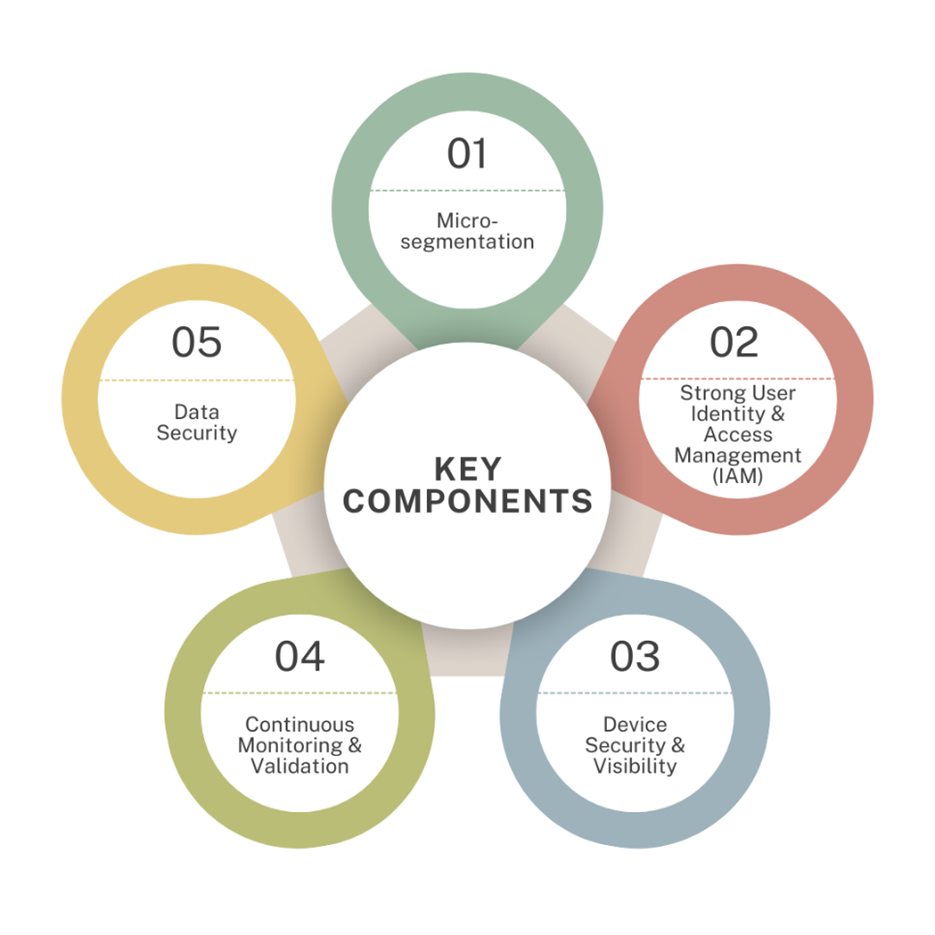
Zero Trust Cybersecurity Outsourcing Services for Application Access Case Study Comprehensive Threat Defense Against Phishing and Malware TMA Solutions, with extensive experience in delivering cybersecurity services to global clients, provided a https://www.tmasolutions.com/services/security-application-development Zero Trust-based security solution for a U.S.-based client seeking to safeguard sensitive data across critical business applications. Drawing on the expertise of its professional and experienced engineering team, TMA implemented a multi-layered approach to secure application access, tailored to both individual users and organizational environments. The solution featured advanced security controls designed to prevent data leakage, enhance compliance, and ensure comprehensive protection. These included restrictions on file downloads and uploads, finely tuned access policies allowing either read-only or read-write permissions, automatic watermarking of documents and applications, redaction of sensitive data, and clipboard control mechanisms to prevent unauthorized copying and pasting. By adopting this approach, TMA Solutions delivered a robust defense against phishing, malware, and data exposure threats, fully aligned with the client’s operational and regulatory needs. Phishing & Malware Defense System Challenges Zero Trust: Evolving with the Modern Enterprise At its core, Zero Trust is built on three foundational principles: Verify every user and device before granting access Enforce least-privileged access to limit exposure Continuously monitor and re-verify to adapt to changing risk As digital transformation accelerated, applications moved to the cloud, hybrid work became the norm, and Zero Trust Network Access (ZTNA) emerged as the new security standard. But today, Zero Trust has evolved — from securing the network to securing access itself. Now known as Zero Trust Access (ZTA), the focus is on granting users access only to the specific applications they need, regardless of where they or the apps are located. However, many so-called Zero Trust solutions overlook the browser — the primary tool most users rely on to access critical apps. Without securing the browser, organizations remain exposed to threats like session hijacking, data leakage, and credential theft. Introduce the Secure Application Access by Embedding Zero Trust Principles The goal is to simplify https://www.tmasolutions.com/services/security-application-development Zero Trust Application Access —minimizing IT complexity while delivering seamless, secure connectivity to both private and SaaS applications. System Using Secure Application Access System Using Secure Application Access Granular, Secure Access — Built on Zero Trust Access is granted only to the specific applications a user needs for their role, never to the entire network. Zero Trust principles are embedded by design in Secure Application Access, enabling fine-grained, conditional policies for even the most distributed workforces and third-party users. Secure Application Access (SAA) SAA provides employees and contractors with secure connectivity to private applications, including web applications and legacy applications Secure Cloud Browser prevents threats from reaching the endpoint The core of SAA - Secure Cloud Browser , which fetches and delivers the content to users, helps shield the applications from parameter tampering, web scraping, API abuse, and a host of other problems not addressed by VDI Secure Application Access, Reinvented: Built on the Secure Cloud Browser, this solution creates a hardened digital twin of the user’s browser in the cloud. Instead of connecting directly, user requests are mirrored in the cloud, keeping endpoints isolated from sensitive apps. Protects servers and data from threats on user devices Shield applications from risks like parameter tampering, web scraping, and API abuse Delivers seamless, secure access without compromising user experiences Key Enabling Components And Technologies To effectively implement https://www.tmasolutions.com/services/security-application-development Zero Trust Cybersecurity services for application access, organizations need a solution that not only strengthens security but also simplifies operations and reduces costs. Traditional technologies often fall short in addressing modern threats—especially those targeting browser-based applications. Key Components of Zero Trust An ideal Zero Trust solution should: Support secure remote access for employees working from anywhere Reduce the risk of cyber threats, including phishing, malware, and lateral movement Increase visibility into user behavior and application interactions Enable BYOD (Bring Your Own Device) and third-party access without compromising security Simplify deployment and management, ensuring scalability and ease of use Readiness for audits and certification Core Principles Of Zero Trust The goal of Zero Trust is to minimize risks from compromised identities and attacked devices. It’s how we protect our most critical assets. Principles of Zero Trust At its core, a Zero Trust strategy assumes that no traffic is trustworthy by default, regardless of whether it originates from inside or outside the network. Every request—whether from a user, device, application, or service—must be continuously authenticated, authorized, and validated before gaining access. This approach treats all digital interactions—websites, applications, SaaS platforms, and even email content—as potentially malicious until proven otherwise. It’s a proactive defense model designed to minimize risk, contain threats, and protect critical assets in an increasingly complex and hostile digital landscape. Brief Overview Of Zero Trust's History Zero Trust is not a new concept, but it has become an essential pillar of modern network security. Let’s look back at its evolution. The History of Zero Trust Today, Zero Trust has become the gold standard in network security, widely adopted by organizations around the world to safeguard their data and systems. ...
News & Events Get The Latest TMA Solutions News & Announcements ...
icon
2023: A Boom in Tech Giants' Investments in Vietnam In 2023, Vietnam has emerged as a focal point for significant investments from global technology giants. This surge in interest is primarily driven by the country’s growing prominence in the semiconductor industry, which is vital for numerous high-tech applications worldwide. This article explores the factors contributing to Vietnam's rise as a key player in the tech sector, the specific investments being made, and the potential challenges faced by foreign direct investment (FDI) in the country. Vietnam's Rising Importance in Semiconductor Production The semiconductor industry is at the heart of modern technology, powering everything from smartphones to advanced computing systems. Vietnam is positioning itself as a major player in this industry, with substantial investments being made by leading technology companies. In 2023, the global interest in Vietnam's semiconductor sector has intensified. The country is poised to become a significant producer of essential semiconductor devices, which are crucial for various high-tech applications. This development aligns with the broader trend of increased FDI in Vietnam, reflecting confidence in the country’s capacity to become a key hub for semiconductor manufacturing. Key Investments by Global Tech Giants Several prominent technology companies are making substantial investments in Vietnam, signaling the country’s growing importance in the global tech landscape. Intel's Investment Intel, a leading semiconductor manufacturer, has committed $1.2 billion to establish a new semiconductor chip production facility in Ho Chi Minh City. This investment marks Intel’s third global manufacturing site, with existing facilities in Scotland and Israel. The Ho Chi Minh City plant is expected to play a crucial role in meeting the projected demand for semiconductor chips, with Intel aiming to supply 20% of the world’s semiconductor chips by 2030. Samsung and LG's Contributions In addition to Intel, other major technology companies are also investing heavily in Vietnam. Samsung has announced a $1.5 billion investment, while LG is contributing an additional $1 billion. These investments highlight the increasing importance of Vietnam as a strategic location for technology manufacturing. Japanese Investment in Manufacturing Furthermore, a Japanese company has received a license from the Industrial Zone Management Board in Hanoi to produce components for Boeing, ship components, and Shinkansen parts. This investment not only underscores the diverse range of manufacturing activities in Vietnam but also indicates the country’s potential to support advanced manufacturing sectors. The Role of FDI in Vietnam’s Tech Industry The influx of FDI into Vietnam is a testament to the country’s growing appeal as a manufacturing hub. Prof. Nguyen Mai, Chairman of Vietnam’s Association of Foreign Investment Enterprises, has highlighted the positive trends in FDI, particularly noting the high-quality investments from leading global technology firms. This optimism is expected to continue into 2023, with Vietnam increasingly being recognized as a key player in the tech industry. Challenges and Considerations Despite the positive developments, there are challenges associated with foreign investments in Vietnam. One significant concern is transfer pricing, a practice where companies manipulate the prices of goods and services between their subsidiaries to shift profits and reduce tax liabilities. Recent data from the Ministry of Finance revealed that 55% of FDI enterprises reported losses in 2021, an increase from the previous year. This rise in reported losses has raised concerns about the potential impact of transfer pricing on the country’s economic stability. Moreover, external factors such as the COVID-19 pandemic and global political conflicts have posed challenges for businesses operating in Vietnam. These factors have contributed to a complex environment for foreign investors, requiring a nuanced analysis to differentiate between businesses facing genuine operational difficulties and those potentially engaging in financial practices like transfer pricing. Conclusion Vietnam’s rise as a hub for semiconductor production and technology manufacturing is a significant development in the global tech industry. The substantial investments by major technology companies, including Intel, Samsung, and LG, underscore the country’s growing importance in the tech sector. However, challenges such as transfer pricing and the impact of global uncertainties must be carefully managed to ensure sustained growth and stability in Vietnam’s investment landscape. As Vietnam continues to attract global investment and develop its tech infrastructure, it is poised to play an increasingly prominent role in the global semiconductor market. For business owners and investors, understanding these dynamics and navigating the associated challenges will be crucial in leveraging the opportunities presented by Vietnam’s burgeoning tech sector....