Brief Overview Of Zero Trust's History
Zero Trust is not a new concept, but it has become an essential pillar of modern network security. Let’s look back at its evolution.
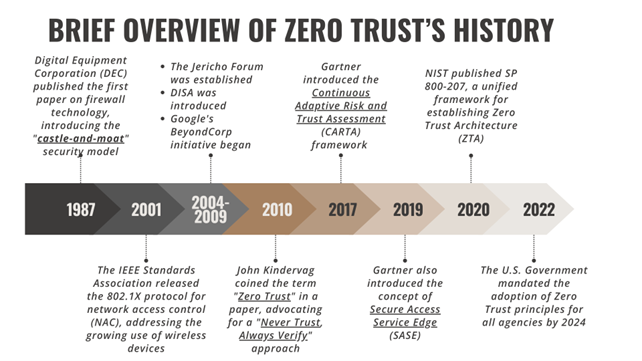
Today, Zero Trust has become the gold standard in network security, widely adopted by organizations around the world to safeguard their data and systems.
Core Principles Of Zero Trust
The goal of Zero Trust is to minimize risks from compromised identities and attacked devices. It’s how we protect our most critical assets.
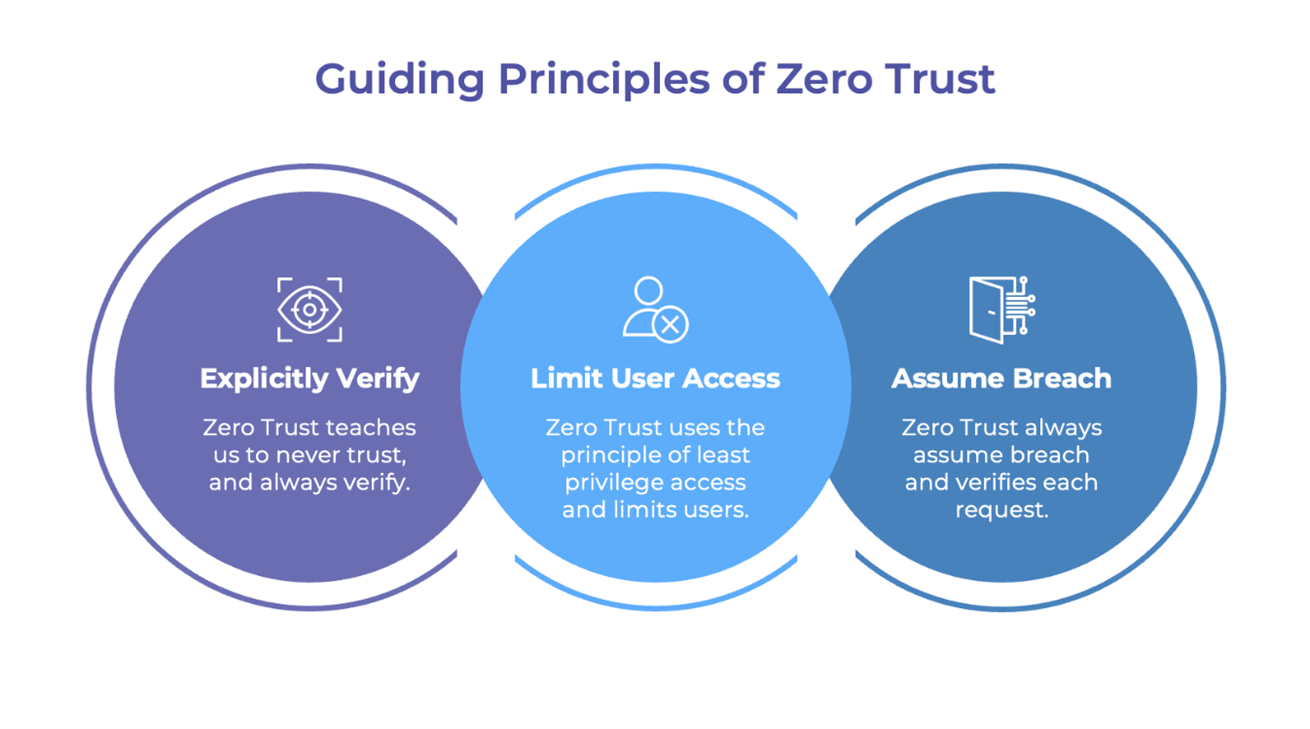
At its core, a Zero Trust strategy assumes that no traffic is trustworthy by default, regardless of whether it originates from inside or outside the network. Every request—whether from a user, device, application, or service—must be continuously authenticated, authorized, and validated before gaining access.
This approach treats all digital interactions—websites, applications, SaaS platforms, and even email content—as potentially malicious until proven otherwise. It’s a proactive defense model designed to minimize risk, contain threats, and protect critical assets in an increasingly complex and hostile digital landscape.
Key Enabling Components And Technologies
To effectively implement Zero Trust Cybersecurity services for application access, organizations need a solution that not only strengthens security but also simplifies operations and reduces costs. Traditional technologies often fall short in addressing modern threats—especially those targeting browser-based applications.
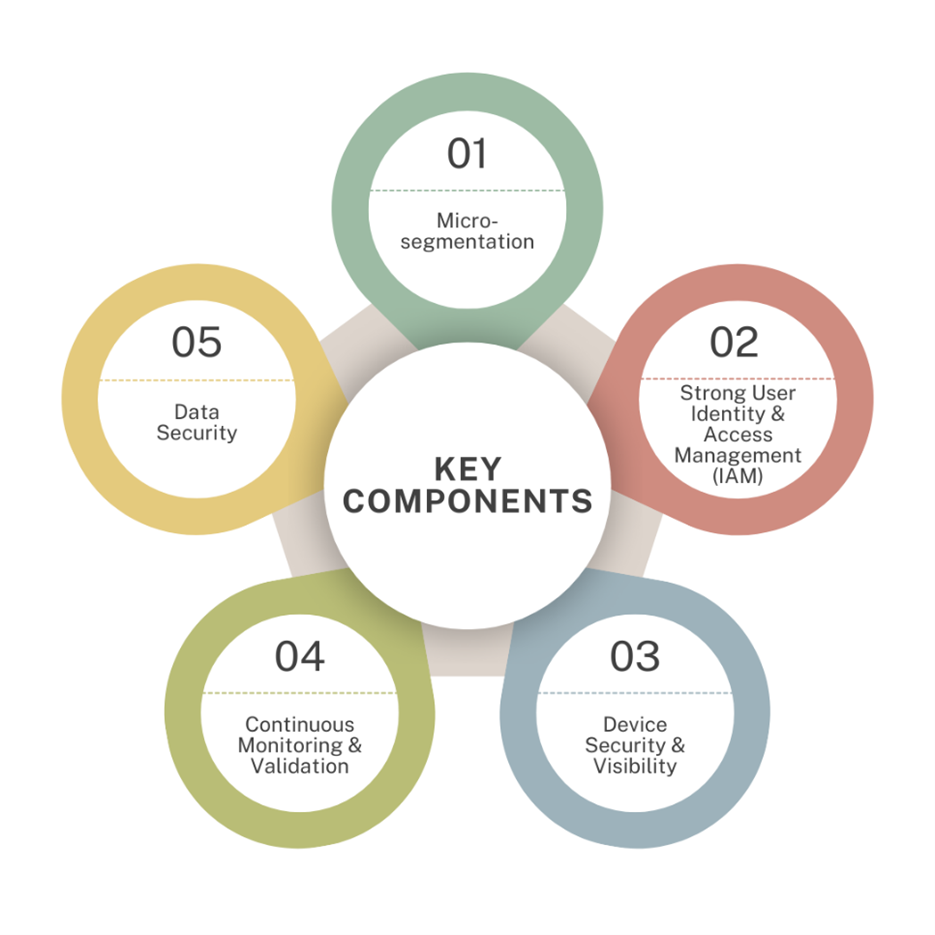
An ideal Zero Trust solution should:
- Support secure remote access for employees working from anywhere
- Reduce the risk of cyber threats, including phishing, malware, and lateral movement
- Increase visibility into user behavior and application interactions
- Enable BYOD (Bring Your Own Device) and third-party access without compromising security
- Simplify deployment and management, ensuring scalability and ease of use
- Readiness for audits and certification
Challenges
Zero Trust: Evolving with the Modern Enterprise
At its core, Zero Trust is built on three foundational principles:
- Verify every user and device before granting access
- Enforce least-privileged access to limit exposure
- Continuously monitor and re-verify to adapt to changing risk
As digital transformation accelerated, applications moved to the cloud, hybrid work became the norm, and Zero Trust Network Access (ZTNA) emerged as the new security standard.
But today, Zero Trust has evolved — from securing the network to securing access itself.
Now known as Zero Trust Access (ZTA), the focus is on granting users access only to the specific applications they need, regardless of where they or the apps are located.
However, many so-called Zero Trust solutions overlook the browser — the primary tool most users rely on to access critical apps.
Without securing the browser, organizations remain exposed to threats like session hijacking, data leakage, and credential theft.
Introduce the Secure Application Access by Embedding Zero Trust Principles
The goal is to simplify Zero Trust Application Access—minimizing IT complexity while delivering seamless, secure connectivity to both private and SaaS applications.
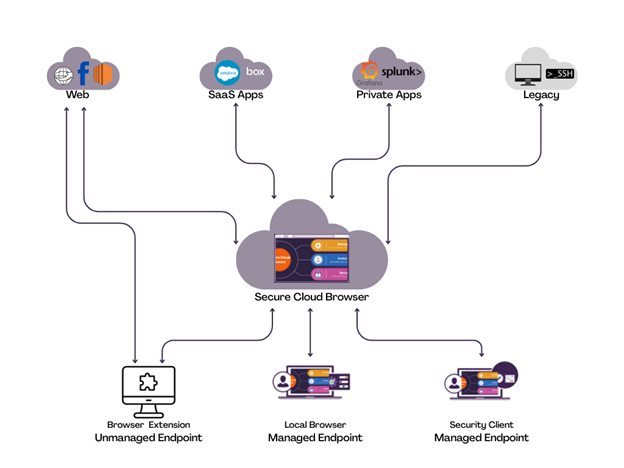
Granular, Secure Access — Built on Zero Trust
Access is granted only to the specific applications a user needs for their role, never to the entire network.
Zero Trust principles are embedded by design in Secure Application Access, enabling fine-grained, conditional policies for even the most distributed workforces and third-party users.
Secure Application Access (SAA)
SAA provides employees and contractors with secure connectivity to private applications, including web applications and legacy applications
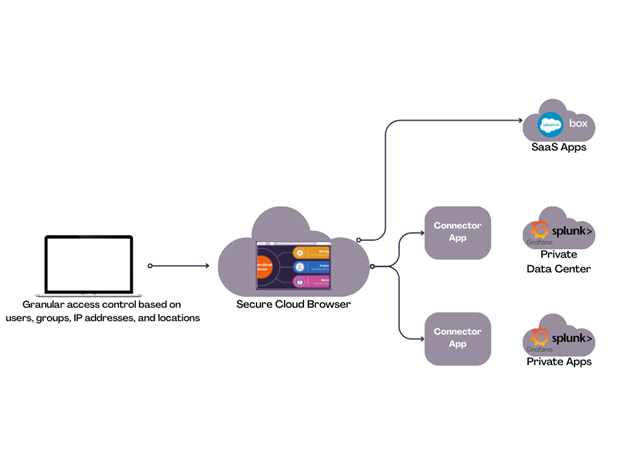
The core of SAA - Secure Cloud Browser, which fetches and delivers the content to users, helps shield the applications from parameter tampering, web scraping, API abuse, and a host of other problems not addressed by VDI
Secure Application Access, Reinvented:
- Built on the Secure Cloud Browser, this solution creates a hardened digital twin of the user’s browser in the cloud.
- Instead of connecting directly, user requests are mirrored in the cloud, keeping endpoints isolated from sensitive apps.
- Protects servers and data from threats on user devices
- Shield applications from risks like parameter tampering, web scraping, and API abuse
- Delivers seamless, secure access without compromising user experiences
Case Study
Comprehensive Threat Defense Against Phishing and Malware
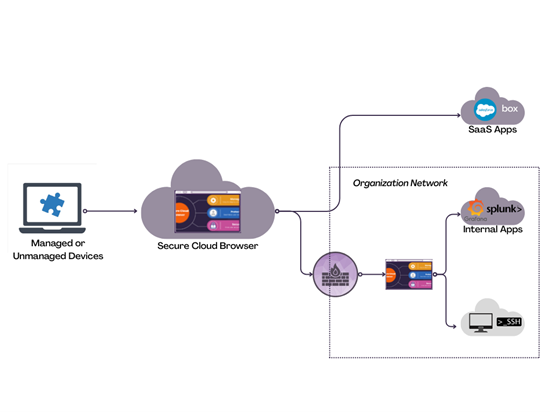
TMA Solutions, with extensive experience in delivering cybersecurity services to global clients, provided a Zero Trust-based security solution for a U.S.-based client seeking to safeguard sensitive data across critical business applications. Drawing on the expertise of its professional and experienced engineering team, TMA implemented a multi-layered approach to secure application access, tailored to both individual users and organizational environments.
The solution featured advanced security controls designed to prevent data leakage, enhance compliance, and ensure comprehensive protection. These included restrictions on file downloads and uploads, finely tuned access policies allowing either read-only or read-write permissions, automatic watermarking of documents and applications, redaction of sensitive data, and clipboard control mechanisms to prevent unauthorized copying and pasting. By adopting this approach, TMA Solutions delivered a robust defense against phishing, malware, and data exposure threats, fully aligned with the client’s operational and regulatory needs.


.webp_2026-10-01-18-27-07-971.webp)
.webp_2026-10-01-18-17-11-290.webp)
.webp_2026-10-01-18-08-26-854.webp)
.webp_2026-10-01-17-47-32-240.webp)