The gap between how enterprises assign training and how employees actually develop is not a content problem. It is a systems problem. When learning module assignments are managed manually without access to performance data, career path information, or real-time skill gap analysis, training resources get distributed based on job title rather than individual need. AI-powered corporate training software solutions close this gap by connecting learning assignments directly to HR and employee performance data, making personalization operationally viable at enterprise scale without adding HR administrative burden.
Why Manual Corporate Training Management No Longer Works
Large organizations are running training operations that were designed for a different era of workforce management. HR teams manually review role descriptions, match them against available training modules, and assign curricula based on department, seniority, or onboarding stage. The process is time-intensive, based on assumptions rather than data, and produces results that satisfy compliance requirements more reliably than they develop actual workforce capability.
The Volume Problem
When a single HR team is responsible for managing training assignments across hundreds or thousands of employees, the administrative math does not work. Reviewing each employee's development stage, identifying relevant skill gaps, selecting appropriate training modules, and tracking completion across a workforce of that size is not a manageable human operation. Organizations often respond by standardizing training across broad employee groups instead of individual needs, reducing the effectiveness of workforce development.
The Feedback Loop Problem
Manual training management has no mechanism for closing the loop between training completion and performance outcomes. An employee completes a communication skills module. Three months later, their performance review notes weak client communication. The connection between the training assigned and the outcome measured is never made, which means the training program never improves. Without performance data feedback, organizations cannot determine whether training is improving workforce capability or simply increasing course completion.
The Disconnect Between Learning Programs and Employee Performance
The structural cause of most corporate training ineffectiveness is a data gap: learning systems hold training data, HR systems hold performance data, and the two rarely share information in a form that allows one to inform the other.
What Gets Lost When Systems Do Not Communicate
When an employee's performance review identifies a skill gap, that information typically lives in an HR platform. The L&D team may receive a summary weeks later, after which they manually update training assignments. The delay between gap identification and training response means employees are often working through the consequence of a skill gap while waiting for the training meant to address it.
The reverse problem is equally common. Training programs are built around what L&D teams believe the workforce needs rather than what performance data shows it actually lacks. This produces curricula that address assumed needs rather than documented gaps, with predictable results for completion rates and demonstrated learning outcomes.
According to Deloitte's research on learning analytics, 95 percent of surveyed learning and development organizations do not excel at using data to align learning with business outcomes, making it difficult to demonstrate the real impact of training investments. The challenge is not simply reporting more metrics. It is connecting learning data with HR, performance, and business systems to generate meaningful insights
How AI Improves Corporate Training Software Solutions
AI does not replace the judgment required to design effective training. It removes the manual coordination bottlenecks that prevent training programs from being applied with the precision the design intended.
Automated Gap Analysis and Assignment
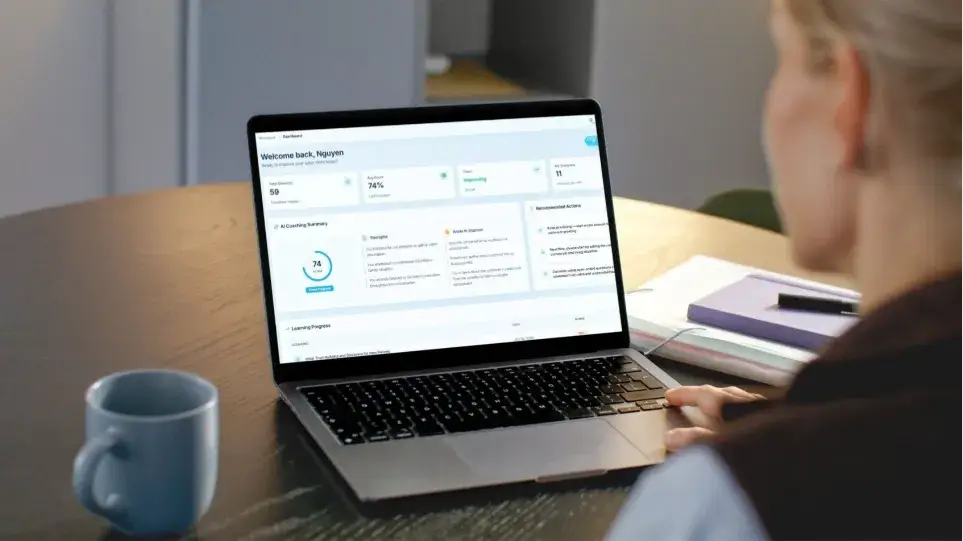
AI-driven corporate training software solutions continuously analyze each employee's performance data, assessment results, and role requirements to identify the specific training most likely to close their current gaps. This analysis runs automatically and updates as new performance data becomes available, rather than operating on the quarterly or annual review cycle that limits manual gap analysis.
As a result, training assignments reflect each employee's current capability instead of relying solely on job title or onboarding stage. An employee whose performance data shows strong technical skill but weaker stakeholder communication receives different training than a colleague in the same role whose data shows the inverse pattern, even though both carry the same job description.
Adaptive Sequencing Based on Demonstrated Comprehension
Static training curricula assume that employees need the same amount of time on each topic. Adaptive systems adjust content sequencing based on how each employee actually performs on assessments and practice activities. An employee who demonstrates strong comprehension of foundational material moves through it faster, reaching more advanced content sooner. An employee who needs more time with foundational concepts receives additional reinforcement before the curriculum advances.
This keeps experienced employees engaged while ensuring less experienced employees receive the additional support they need before moving forward.
Predictive Capability Planning
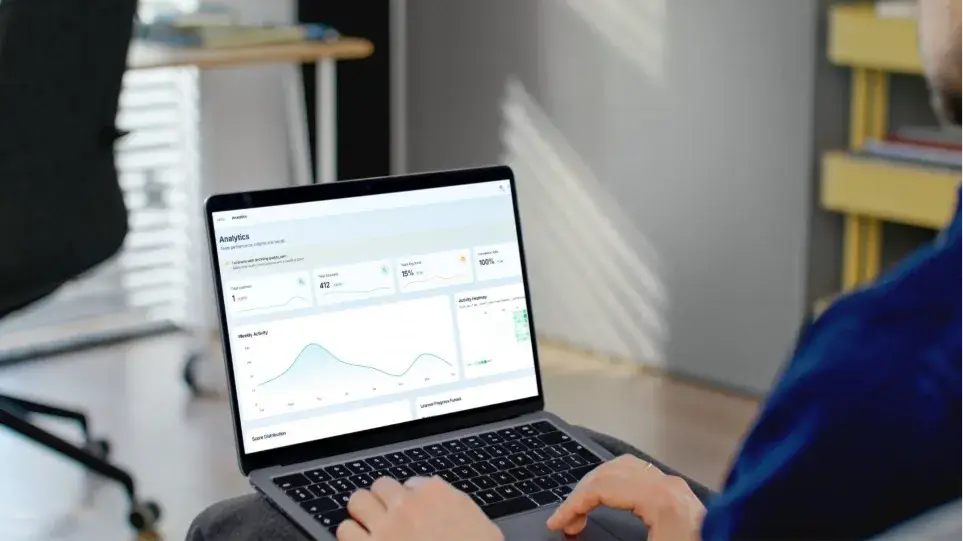
Enterprise-grade corporate training software solutions use AI to surface capability trends at the team and organization level, not just the individual level. When aggregate assessment data shows that a competency is weakening across a department, the system can flag this to L&D leadership before it becomes visible in performance outcomes. This shifts workforce capability management from reactive remediation to proactive development.
TMA Solutions develops enterprise learning solutions that combine automated gap analysis, adaptive learning paths, and workforce analytics to support AI-driven employee development. The platform integrates with existing HR and learning systems instead of replacing them.
Integrating Enterprise Learning Management Tools With HR Systems
The technical prerequisite for AI-driven training personalization is data integration between learning systems and the HR systems that hold performance, role, and career path information. Without this integration, AI has nothing to personalize against.
What Integration Enables
When an enterprise learning management tool connects to HR systems, organizations can:
- Automatically assign learning after role or performance changes.
- Store training records as part of each employee's HR profile.
- Give managers visibility into learning progress alongside performance data.
- Measure the relationship between training outcomes and business performance.
These capabilities do not require building new HR infrastructure. They require configuring data flows between systems that most organizations already operate, which is an integration architecture problem rather than a new technology procurement decision.
Common Integration Points
The highest-value integration points include:
- Role and department data from HRIS
- Performance review outcomes
- Career path information
- Workforce planning or payroll data
Each of these data flows makes the training system more accurate without increasing HR administrative workload. The investment is in the integration architecture, not in additional headcount to manage the resulting data.
Building Scalable Training Infrastructure for Enterprise Growth
The design choices made when deploying corporate training software solutions determine whether the system scales with organizational growth or becomes a constraint on it.
Architecture That Grows With Headcount
Training infrastructure that requires proportional increases in administrative effort as headcount grows is not enterprise-grade. A system managing training for 500 employees that requires the same per-employee administrative effort at 5,000 employees is a scaling problem built into the design.
Scalable enterprise learning management tools handle headcount growth through automation: new employees are onboarded into the training system automatically, role-based assignments are applied without manual configuration for each individual, and reporting scales without manual data aggregation as the employee population grows.
Multi-Location and Multi-Function Deployment
Enterprise organizations rarely have uniform training needs across all locations and functions. A manufacturing team, a customer service operation, and a corporate function within the same company have different competency requirements, different content libraries, and different compliance training obligations.
Scalable training infrastructure supports this heterogeneity within a unified data environment: different content libraries and learning paths for different functions, while shared reporting and analytics give central L&D leadership visibility across the entire training operation from one interface.

Designing for Future Capability Requirements
Workforce skill requirements change faster than most training programs are updated. Corporate training software solutions built on static content libraries become obsolete as role requirements evolve. Enterprise learning infrastructure should support rapid content updates, allow subject matter experts to contribute learning materials, and connect new content to existing competency frameworks. This allows organizations to respond to changing workforce requirements without redesigning the entire training program.
TMA Solutions designs and delivers enterprise learning infrastructure that connects AI personalization, HR system integration, and scalable deployment architecture into a coherent system for workforce capability management. The approach treats training technology as operational infrastructure rather than a standalone HR program.
Conclusion
Corporate training software solutions that operate independently of HR and performance data often struggle to deliver measurable workforce development outcomes. Assigning training based on job roles, tracking completion rates, and relying on manual administration may support compliance, but they do not provide the visibility or personalization needed to continuously develop employee capabilities.
Modern corporate training software solutions combine AI-driven personalization, automated skill gap analysis, adaptive learning paths, and HR integration to deliver more relevant learning experiences while helping organizations improve workforce capability at scale.
TMA Solutions brings powerful capacities to building enterprise learning solutions that integrate AI, HR systems, and learning analytics to support data-driven workforce development. Explore Smart Corporate Training, AI Coaching and Role-play Simulation System, and other enterprise learning solutions to automate training management, personalize employee learning journeys, and build scalable learning ecosystems for long-term business growth.