Home
Search
Found 797 results for “ “ keyword
icon
How Telehealth Solution Help Clinics Deliver Continuous Patient Care...
icon
How to Build a Social Network App: Features, Cost & Tech Stack...
icon
Business Functions That Can Benefit from AI Agents AI agents are no longer limited to automating isolated tasks. Modern AI agents can understand context, interact with enterprise systems, and execute multi-step workflows, making them valuable across a wide range of business functions. By integrating with existing applications such as ERP, CRM, HRM, and knowledge management platforms, AI agents help organizations improve efficiency, reduce manual workloads, and accelerate decision-making. Customer Service and Support AI agents can automate customer interactions by handling routine inquiries, resolving common issues, and routing complex requests to human representatives. This enables organizations to deliver faster response times, improve customer satisfaction, and provide 24/7 support. Sales and Marketing AI agents help sales and marketing teams analyze customer data, qualify leads, generate personalized recommendations, and automate campaign management. These capabilities allow businesses to improve customer engagement while increasing conversion rates and sales productivity. Human Resources HR teams can leverage AI agents to streamline recruitment, employee onboarding, leave management, policy inquiries, and internal support services. By automating repetitive administrative tasks, HR professionals can focus on strategic talent development and employee engagement. Finance and Accounting AI agents assist finance departments by automating invoice processing, expense validation, financial reporting, reconciliation, and compliance checks. This reduces manual effort, improves data accuracy, and accelerates financial operations. Supply Chain and Logistics AI agents support logistics operations by monitoring inventory levels, forecasting demand, optimizing delivery routes, and coordinating warehouse activities. Real-time insights enable organizations to improve supply chain visibility and respond more effectively to operational disruptions. IT Operations and Enterprise Knowledge Management AI agents can assist IT teams by automating service desk requests, troubleshooting common technical issues, monitoring system performance, and managing internal knowledge bases. They also help employees quickly retrieve information from enterprise documents, reducing search time and improving organizational productivity. As AI capabilities continue to evolve, organizations are increasingly deploying AI agents across multiple business functions to build more intelligent, connected, and scalable enterprise operations. Choosing an AI agent development company with cross-functional expertise ensures that AI solutions can be effectively integrated into existing business processes and deliver measurable long-term value. Why Selecting the Right AI Agent Development Partner Matters AI agents operate much closer to business processes than traditional software applications. They often access enterprise data, interact with customers, automate workflows, and support operational decision-making. As a result, implementation quality directly impacts business outcomes. AI Agents Influence Critical Business Operations Organizations are increasingly deploying AI agents across customer service, finance, supply chain management, healthcare, and enterprise operations. According to IBM's AI Projects to Profits study, enterprises expect AI workflows to increase from 3% today to 25% by the end of 2025, while 70% of executives believe agentic AI will play an important role in their organization's future. These findings demonstrate that AI agents are rapidly becoming a core component of enterprise operations and business transformation initiatives. Operational Efficiency and Automation Well-designed AI agents help organizations: Automate repetitive workflows Reduce manual processing effort Improve response times Increase workforce productivity Streamline operational processes The effectiveness of these outcomes depends heavily on the technical capabilities of the development partner. Data Security and Compliance AI agents frequently access sensitive customer information and business data. Without proper governance, organizations may face challenges related to: Data privacy protection Regulatory compliance Access management AI governance Operational security A qualified AI agent development company should understand both AI technologies and enterprise security requirements. Long-Term Success Depends on Scalability Many AI initiatives begin with pilot projects. However, successful organizations eventually expand AI adoption across multiple departments and business functions. Future Growth Requirements Organizations should evaluate whether the vendor can support future scaling requirements including: Multi-agent systems Enterprise-wide deployment Large-scale workflow orchestration Cross platform integration Long-term AI optimization Sustainable AI Adoption AI implementation is not a one-time project. Organizations require continuous monitoring, model updates, and workflow improvements to maintain performance over time. Key Criteria for Evaluating an AI Agent Development Company Selecting an AI agent development company should involve more than reviewing technical capabilities. Enterprises should assess a vendor's ability to align AI solutions with business objectives. Evaluate Technical Expertise in Agentic AI A strong development partner should demonstrate practical experience building enterprise AI systems rather than simply integrating existing AI tools. Experience with Modern AI Technologies The ideal partner should have experience in: AI agents and agentic AI systems Large Language Models (LLMs) Retrieval-Augmented Generation (RAG) Multi-agent architectures Workflow orchestration platforms Enterprise AI integration These technologies form the foundation of modern AI agent ecosystems. End-to-End Development Capabilities A reliable vendor should support every stage of the AI lifecycle, including: AI consulting and strategy development Proof of Concept (PoC) creation Solution design and development Deployment and integration Monitoring and optimization This ensures consistency throughout the project lifecycle. Assess Industry Experience AI implementation challenges vary significantly across industries. Organizations benefit from partners that understand industry-specific workflows, regulations, and operational challenges. For example, healthcare AI agents require different capabilities than AI agents developed for financial services or manufacturing environments. Companies with industry-specific experience can better understand: Business workflows Regulatory requirements Security standards Operational challenges Proven Project Portfolio Case studies and successful implementations provide valuable evidence of a company's ability to deliver measurable business results. Organizations should look beyond technology demonstrations and focus on real-world outcomes such as: Productivity improvements Cost reductions Workflow optimization Customer experience enhancement The Value of Working with a Custom AI Agent Development Company While prebuilt AI solutions can accelerate initial adoption, custom AI agents often provide greater long-term value by aligning more closely with enterprise requirements: Limited Business Alignment : Generic AI solutions may not fully support an organization's unique workflows and operational requirements. Restricted Integration: Prebuilt AI tools often face challenges connecting with existing enterprise systems and data sources. Tailored Workflows: Custom AI agents can be designed around industry-specific processes, governance policies, and compliance requirements. Greater Flexibility: Organizations can adapt and scale AI capabilities as business needs evolve. Competitive Advantage: AI solutions aligned with business objectives typically deliver stronger operational and strategic value. Higher ROI : Custom AI agents help maximize productivity gains and long-term business outcomes. Characteristics of a Top AI Agent Development Company The success of an AI initiative depends not only on the technology itself but also on the expertise of the implementation partner. Beyond developing AI models, organizations need partners that understand business processes, enterprise architecture, and long-term operational requirements. A reliable AI development partner should be able to design scalable solutions, integrate them seamlessly into existing systems, and continuously optimize performance as business needs evolve. When evaluating an AI agent development company, organizations should consider the following capabilities: Strong AI and software engineering capabilities: The partner should have expertise in AI, machine learning, Generative AI, and enterprise software development to build reliable and scalable AI solutions. Experience across multiple industries: Industry-specific knowledge helps ensure AI solutions are tailored to unique business processes, regulatory requirements, and operational challenges. Enterprise integration expertise: AI systems should integrate smoothly with existing enterprise applications such as ERP, CRM, EHR, and other business platforms to maximize operational efficiency. Security and governance knowledge: The partner should implement robust security measures, data governance policies, and responsible AI practices to protect sensitive information and support regulatory compliance. Long-term support and optimization services: AI systems require continuous monitoring, model updates, and performance optimization to maintain accuracy and adapt to changing business environments. Proven AI implementation success: Demonstrated experience through successful AI projects and real-world deployments provides confidence in the partner's ability to deliver measurable business value. Rather than selecting a vendor based solely on technical capabilities, organizations should prioritize partners that combine engineering excellence with business expertise and a proven ability to deliver sustainable, measurable outcomes. TMA Solutions: A Trusted Partner for Enterprise AI Agent Development TMA's AI Center and AI Agent Factory deliver AI solutions that improve efficiency and business agility. TMA Solutions helps organizations accelerate AI agent adoption through its https://www.tmasolutions.com/ai-agent AI Center and AI Agent Factory . Leveraging a no-code AI Agent Framework, TMA supports the development, deployment, and management of enterprise AI agents across diverse business environments. Key capabilities include: Agentic AI Development Roadmap development for AI Agents and Agentic AI Setup of AI Agent development teams Tailored AI solutions for diverse industries Prototype and Proof of Concept (PoC) development With extensive experience in enterprise software engineering and AI solutions, TMA Solutions helps organizations build scalable AI systems that align with business objectives and long-term digital transformation strategies. Conclusion Choosing the right AI agent development company is a strategic decision that can significantly influence the success of an organization's AI transformation journey. As AI agents become increasingly integrated into enterprise operations, businesses need partners that can deliver secure, scalable, and future-ready solutions. By evaluating technical expertise, industry experience, security practices, and long-term support capabilities, organizations can identify a trusted partner capable of turning AI investments into sustainable business value. The right AI partner does more than build AI agents, it helps organizations create intelligent systems that drive efficiency, innovation, and long-term competitive advantage. https://www.tmasolutions.com/ai-agent AI agents are rapidly becoming a strategic investment for enterprises seeking to automate workflows, improve decision making, and enhance customer experiences. Unlike traditional automation tools, AI agents can understand context, interact with multiple systems, and execute complex tasks with minimal human intervention. According to Gartner, by 2028, 33% of enterprise software applications will incorporate agentic AI capabilities, compared to less than 1% in 2024. This rapid adoption is creating growing demand for organizations that can design, develop, and deploy enterprise-grade AI agents securely and effectively. However, selecting the right AI agent development company is often more challenging than choosing a software vendor. AI agents interact directly with business processes, data, and decision-making workflows, making technical expertise, industry knowledge, and long-term support critical success factors. AI Agent Development Company: How to Choose the Right One...

icon
Introduction Vietnam has become one of the world's fastest-growing software outsourcing destinations, attracting businesses from North America, Europe, Japan, South Korea, and Australia. With its skilled engineering workforce, competitive costs, and rapidly expanding technology ecosystem, Vietnam offers significant advantages for organizations looking to accelerate digital transformation and software development initiatives. However, not all outsourcing providers are created equal. Choosing the right software outsourcing company can significantly impact project quality, delivery timelines, scalability, and long-term business success. This article outlines the key factors businesses should consider when selecting a software outsourcing partner in Vietnam. Define Your Business and Technology Requirements First Before evaluating potential outsourcing partners, businesses should clearly define their project goals, technical requirements, and expected outcomes. Important questions to consider include: What business problem are you trying to solve? What technologies are required? Do you need a dedicated development team or project-based engagement? What is your expected timeline and budget? Will the project require ongoing maintenance and support? Having clear requirements helps narrow down potential vendors and ensures more accurate project planning and cost estimation. Evaluate Technical Expertise and Industry Experience Technical capabilities should be one of the primary evaluation criteria when selecting a software outsourcing company. Look for companies with proven experience in technologies relevant to your project, such as: Artificial Intelligence and Machine Learning Cloud Computing Mobile and Web Development IoT and Embedded Systems Data Analytics Enterprise Applications Cybersecurity Solutions Beyond technical skills, industry-specific experience can be equally valuable. A software provider that understands your industry can often deliver solutions faster and provide more relevant recommendations throughout the development process. Ask potential partners to share case studies, project portfolios, and references from clients in similar industries. Assess Team Size and Scalability Your outsourcing partner should be able to support your business not only today but also as your needs evolve. A company with a strong talent pool and scalable delivery model can quickly adjust team size based on project demands. This flexibility becomes especially important when: Expanding product features Accelerating development schedules Launching multiple projects simultaneously Entering new markets Businesses should evaluate whether the provider can efficiently scale resources without compromising quality or project continuity. Review Development Processes and Quality Standards Successful software development depends on structured processes and quality assurance practices. When evaluating vendors, consider whether they follow internationally recognized methodologies such as: Agile Development Scrum Framework DevOps Practices Continuous Integration and Continuous Delivery (CI/CD) Automated Testing Additionally, ask about quality management systems, security practices, code review procedures, and performance testing approaches. A mature development process helps reduce project risks and improves delivery predictability. Consider Communication and Collaboration Capabilities Communication is often one of the most critical factors in outsourcing success. Even highly skilled development teams can face challenges if communication is inconsistent or unclear. Key areas to evaluate include: English proficiency Project management practices Reporting transparency Response times Meeting availability across time zones The best software outsourcing companies establish clear communication channels, provide regular project updates, and maintain close collaboration throughout the development lifecycle. Verify Security and Data Protection Measures As software projects increasingly involve sensitive business and customer data, security should be a top priority. Before selecting a vendor, assess their approach to: Data privacy protection Secure development practices Access control policies Infrastructure security Regulatory compliance Organizations operating in regulated industries such as healthcare, finance, or telecommunications should ensure the outsourcing provider understands applicable compliance requirements and security standards. Examine Client References and Long-Term Partnerships A strong track record often provides valuable insight into a company's reliability and delivery capabilities. When reviewing potential outsourcing partners, look beyond marketing materials and request: Client testimonials Case studies Reference contacts Success stories Long-term customer relationships Companies that maintain multi-year partnerships with global clients often demonstrate consistent quality, customer satisfaction, and the ability to evolve alongside their customers' business needs. Evaluate Innovation and Technology Consulting Capabilities Modern software outsourcing extends far beyond coding. Leading outsourcing companies contribute strategic value by helping clients: Identify technology opportunities Improve product roadmaps Adopt emerging technologies Optimize software architecture Accelerate digital transformation initiatives A technology partner that can provide consulting and innovation support often delivers greater long-term value than a vendor focused solely on development execution. Compare Total Value, Not Just Cost While cost remains an important consideration, selecting an outsourcing company based solely on the lowest price can create significant risks. Businesses should evaluate overall value, including: Technical expertise Quality standards Communication effectiveness Scalability Security practices Industry knowledge Long-term partnership potential The right outsourcing partner helps reduce development risks, improve software quality, and accelerate business growth—often generating far greater returns than the initial cost savings alone. Why Vietnam Continues to Attract Global Outsourcing Clients Vietnam offers a unique combination of advantages that make it an attractive outsourcing destination: Large and growing engineering talent pool Competitive development costs Strong technical education system Government support for digital transformation Expertise across emerging technologies Increasing experience serving global markets These strengths have positioned Vietnam as a strategic destination for businesses seeking reliable software development partners. Conclusion Choosing the right software outsourcing company in Vietnam requires more than comparing hourly rates or team sizes. Businesses should evaluate technical expertise, industry experience, scalability, development processes, communication practices, security standards, and long-term partnership potential. By selecting a partner that aligns with both technical requirements and business objectives, organizations can maximize the benefits of software outsourcing while accelerating innovation, reducing operational complexity, and achieving sustainable growth. As Vietnam's technology ecosystem continues to mature, businesses that establish strong outsourcing partnerships today will be well-positioned to capitalize on future digital opportunities. How to Choose the Right Software Outsourcing Company in Vietnam...
icon
How to Find the Right Software Development Company in Vietnam Vietnam has become one of the world's leading destinations for custom software development. Its growing pool of highly skilled engineers, competitive operating costs, and strong expertise in emerging technologies have attracted organizations ranging from startups to Fortune 500 companies. However, with hundreds of software companies operating across the country, choosing the right development partner can be challenging. The success of your digital transformation initiative depends not only on technical capabilities but also on selecting a company that aligns with your business goals, industry requirements, and long-term vision. Here are the key factors every business should consider when evaluating a software development company in Vietnam. Review Engineering Scale and Resource Availability Today's software projects often evolve over several years. Your technology partner should be able to scale development teams as project requirements grow. Consider questions such as: How many software engineers does the company employ? Can they quickly expand dedicated teams? Are specialists available for AI, cloud, UX/UI, DevOps, and QA? How do they manage knowledge transfer when teams grow? Scalability is particularly important for organizations planning continuous product development rather than one-time projects. Verify Quality Management Processes Consistent software quality depends on mature engineering processes rather than individual developers. Leading software companies typically follow internationally recognized quality standards and development methodologies. Look for evidence of: Agile software development Continuous testing Automated quality assurance Secure software development lifecycle (SSDLC) Code review practices Risk management procedures Companies with structured delivery processes are generally better equipped to maintain quality while meeting deadlines. Consider Communication and Collaboration Successful offshore development depends heavily on communication. Technical expertise alone cannot compensate for poor collaboration. Evaluate how the company manages: Project reporting Sprint planning Daily communication Requirement clarification Issue escalation Documentation Stakeholder meetings An experienced development partner should function as an extension of your internal team, providing transparency throughout the entire project lifecycle. Examine Security and Data Protection Practices As businesses increasingly handle sensitive customer and operational data, security should be a core selection criterion. Ask prospective vendors about: Information security certifications Secure development practices Access control policies Data encryption Compliance with international privacy regulations Employee security training Organizations with mature security governance are better prepared to protect intellectual property and confidential business information. Look Beyond Pricing Cost remains an important consideration, but selecting the lowest-priced vendor often leads to higher long-term expenses. Instead, evaluate the overall value your software partner provides. Consider factors including: Engineering expertise Delivery quality Product reliability Innovation capability Long-term support Team stability Reduced project risk The right development company should help lower the total cost of ownership by delivering maintainable, scalable, and high-quality software. Evaluate Long-Term Partnership Potential Digital transformation is an ongoing journey rather than a single implementation project. Many organizations begin with a pilot project before expanding into long-term collaboration. Choose a partner that can support: Product evolution Feature enhancements Maintenance and support Technology modernization AI adoption Cloud migration Continuous innovation Companies that invest in research and development are often better positioned to help clients adopt emerging technologies as business needs evolve. Questions to Ask Before Making Your Decision Before signing an agreement, consider asking these questions: What similar projects have you successfully delivered? How do you ensure software quality throughout development? What project management methodology do you use? How do you manage communication across different time zones? What security standards do you follow? How do you scale engineering teams when project scope changes? What post-launch support services do you provide? How do you help clients adopt new technologies over time? The answers will provide valuable insight into the company's maturity and long-term capabilities. Final Thoughts Vietnam has earned its reputation as a trusted global destination for software development thanks to its talented engineering workforce, expanding technology ecosystem, and commitment to innovation. However, choosing the right software development company requires more than comparing hourly rates or team sizes. The best technology partners combine technical excellence with business understanding, transparent communication, mature engineering processes, and a long-term commitment to client success. By carefully evaluating experience, technical expertise, quality standards, scalability, security, and collaboration practices, businesses can build partnerships that not only deliver successful software projects but also support sustainable digital growth for years to come. Start with Business Understanding, Not Technology Many companies can write code. Fewer can understand the business problems behind the software. Before discussing programming languages or development frameworks, evaluate whether the vendor takes time to understand your objectives. A reliable software partner should ask questions such as: What business challenge are you trying to solve? Who are your end users? What outcomes define project success? How will the software integrate with your existing systems? What are your long-term product goals? Companies that prioritize business value over technical implementation often deliver solutions that create greater long-term impact. Evaluate Industry Experience Software development is rarely one-size-fits-all. Healthcare applications require regulatory compliance and data privacy. Manufacturing solutions demand IoT integration and real-time monitoring. Financial platforms need robust security and transaction reliability. Choosing a development company with experience in your industry reduces project risk because they already understand common workflows, compliance requirements, and user expectations. When reviewing potential partners, look for: Industry-specific case studies Similar customer references Proven project outcomes Domain expertise across multiple markets Relevant experience often shortens the learning curve and accelerates delivery. Assess Technical Capabilities Beyond Core Development Modern digital products involve much more than traditional software engineering. Depending on your business needs, your development partner should have expertise in areas such as: Artificial Intelligence (AI) Machine Learning Cloud-native architecture IoT platforms Mobile application development Data engineering and analytics DevOps and CI/CD Cybersecurity API integration A company with broad technical capabilities can support future expansion without requiring multiple technology vendors....
icon
How to Implement Real-Time Data Analytics in Your Organization In the fast-paced digital economy, reacting to events as they happen is no longer a luxury; it's a competitive necessity. Businesses are shifting from analyzing what happened yesterday to understanding what is happening right now. To achieve this, organizations must build on a modern foundation designed for real-time speed and scale, moving beyond the limitations of legacy systems. This transformation is critical for industries ranging from supply chain management and logistics to education technology solutions and real estate management software. Why Real-Time Matters The accelerating pace of business is a direct result of digital transformation and client expectations for immediate responses. This new landscape means that data's value diminishes rapidly over time. Real-time data represents a strategic asset, allowing organizations to cultivate proactive client experiences, make instantaneous operational adjustments, and seize fleeting opportunities. For example, AI-powered automation in supply chain management enables dynamic adjustments, while AI in education powers personalized self-learning platforms and digital classroom tools . Benefits of Real-time Data Analytics Enterprises that master real-time analytics consistently outperform their competitors in areas such as fraud detection, dynamic pricing, AI demand forecasting in logistics , and livestock tracking technology , which drives enhanced profitability and market leadership. Therefore, real-time data analytics transcends a mere IT function, becoming a pivotal enabler of business agility and innovation across sectors like fintech development services, PropTech applications for property developers , and IoT in agriculture . Challenges of Real-Time Data Analytics Despite its immense benefits, implementing a true real-time data platform involves several significant challenges: Architectural Rigidity: Legacy messaging systems often tightly couple data processing and storage, making it difficult to scale resources independently and efficiently for applications like warehouse management systems or smart building management systems. Processing Bottlenecks: Handling massive, high-throughput data streams requires a powerful, low-latency processing engine that can perform complex computations on the fly, such as those needed for AI-driven veterinary medical records or pest detection in agriculture. Operational Overhead: Scaling traditional systems often involves complex and slow data rebalancing, while managing different systems for messaging and streaming increases complexity in real estate operation management or core banking integration. Cost Management: The infrastructure for real-time processing, such as edge AI for smart irrigation or AI logistics automation , can become costly without optimized resource allocation. Conclusion Implementing real-time data analytics is essential for any business looking to thrive in the modern digital landscape. By moving beyond legacy systems and adopting a modern, cloud-native stack built on Apache Pulsar and Apache Flink , organizations can overcome the common challenges of scale, cost, and complexity. This powerful combination provides a flexible, unified, and highly performant platform for immediate insights, proactive operations, and superior client experiences across industries like digital real estate asset management, fintech R&D using blockchain and Web3, and e-commerce. Ultimately, it is not just a technical choice; it is a strategic path to unlocking genuine business agility and success through https://www.tmasolutions.com/technologies/ai-ml-and-data-sciences AI agents solutions for enterprise, machine learning solutions, and digital solutions for real estate. Ready to transform your cloud data governance? Contact TMA Solutions at https://www.tmasolutions.com/contact-us TMA Solutions | Contact Us to Connect with Our Team to explore how our expertise can accelerate your digital transformation journey. The Modern Stack: Apache Flink and Apache Pulsar A modern, cloud-native approach provides a robust framework for tackling real-time challenges. The combination of Apache Pulsar as the streaming data platform and Apache Flink as the computation engine offers the scalability, flexibility, and power needed to manage continuous data streams efficiently. This stack is ideal for applications like smart warehouse solutions, digital lending/cash-flow management , and real estate project progress tracking. Architecture Diagram of Pulsar and Flink integration Key Benefits of Pulsar and Flink Architecture Elastic Scalability: Pulsar's unique architecture separates compute from storage, allowing you to scale each layer independently without costly data rebalancing, which is critical for ecommerce solutions and omnichannel retail. Unified Platform: Pulsar natively supports both streaming and message queuing, simplifying your architecture by removing the need for separate systems, making it suitable for enterprise e-learning systems and digital payment solutions. True Real-Time Processing: Flink provides a best-in-class stream processing engine for stateful computation with very low latency, enabling genuine real-time applications like AI-powered financial advisory tools and crop monitoring solutions. High Performance: Benchmarks show Pulsar can achieve significantly higher throughput and lower publish latency compared to other systems, while Flink is designed for high-performance, in-memory computation, supporting use cases like shipment tracking and cattle health monitoring. Key Benefits of Pulsar and Flink Technologies for Managing Real-Time Data To manage real-time data streams effectively, this modern stack relies on two key technologies: Apache Pulsar: This is the unified data platform, serving as the system of record. Its cloud-native design, featuring a layered architecture with Apache BookKeeper for storage, provides features that are critical for large-scale systems. These include built-in multi-tenancy, seamless geo-replication for disaster recovery, and tiered storage to offload older data to cheaper storage like S3 without losing access. Pulsar is ideal for digital transformation in real estate, mobile payment solutions , and IoT in agriculture for applications like traceability in agriculture. Apache Flink: This is the powerful processing engine that builds on Pulsar’s foundation. As a true stream processor, Flink can perform complex, stateful computations over unbounded data streams with exactly-once consistency guarantees. It connects seamlessly to Pulsar, reading data streams, applying business logic (such as for fraud detection, disease risk assessment , or AI chatbot for ecommerce ), and writing results to downstream systems like building management software or wealth management software. Comparing Modern vs. Legacy Stack Real-Time Data in Real-World Scenarios Organizations across industries are successfully leveraging Apache Pulsar and Flink to achieve significant benefits: Tencent (Gaming & Social Media): To handle a massive daily data transmission volume of 1.7 trillion messages, Tencent uses Pulsar as a key component of its big data platform. This supports real-time operational services, index analysis, and personalized recommendations across their vast ecosystem, enhanced by AI-powered automation and marketing content management. Yahoo! Japan (E-commerce & Media): The company adopted Pulsar to support over 100 different services, citing its tremendous performance, scalability, and multi-tenancy capabilities as critical for their business operations, including AI in ecommerce and centralized advertising content management. BIGO (Social & Streaming): When their previous messaging system struggled with massive data volumes, the BIGO team turned to Pulsar. By using Pulsar as a key component in their real-time messaging architecture, they successfully reduced their hardware costs by 50%, enabling scalable human-interactive AI and mobile app for apartment management. Real-world Applications of Pulsar and Flink in Gaming, Ecommerce, and Social Streaming Choosing TMA for Real-time Data Analysis With over 20 years of experience, TMA Solutions is a https://www.tmasolutions.com/ leading Vietnam-based provider of enterprise-grade technology solutions. Our expertise in big https://www.tmasolutions.com/technologies/big-data-and-analytics data, cloud , and industry-specific consulting makes us a trusted partner for digital transformation. Our Big Data and Analytics team has empowered global clients with solutions like the TMA Data Platform , which supports on-premises and multi-cloud environments with robust data analysis. The following case studies are examples of our successful projects in real-time data analysis. Optimizing Inventory in Real-time Through Azure Data Integration and Forecasting: Consolidate sales, inventory, and market data, applying machine learning for demand forecasts. Real-Time Visualization: Enable dynamic, real-time data visualization and scalable system deployment to handle growing data requirements. Data Inventory in Real-time Through Azure...
icon
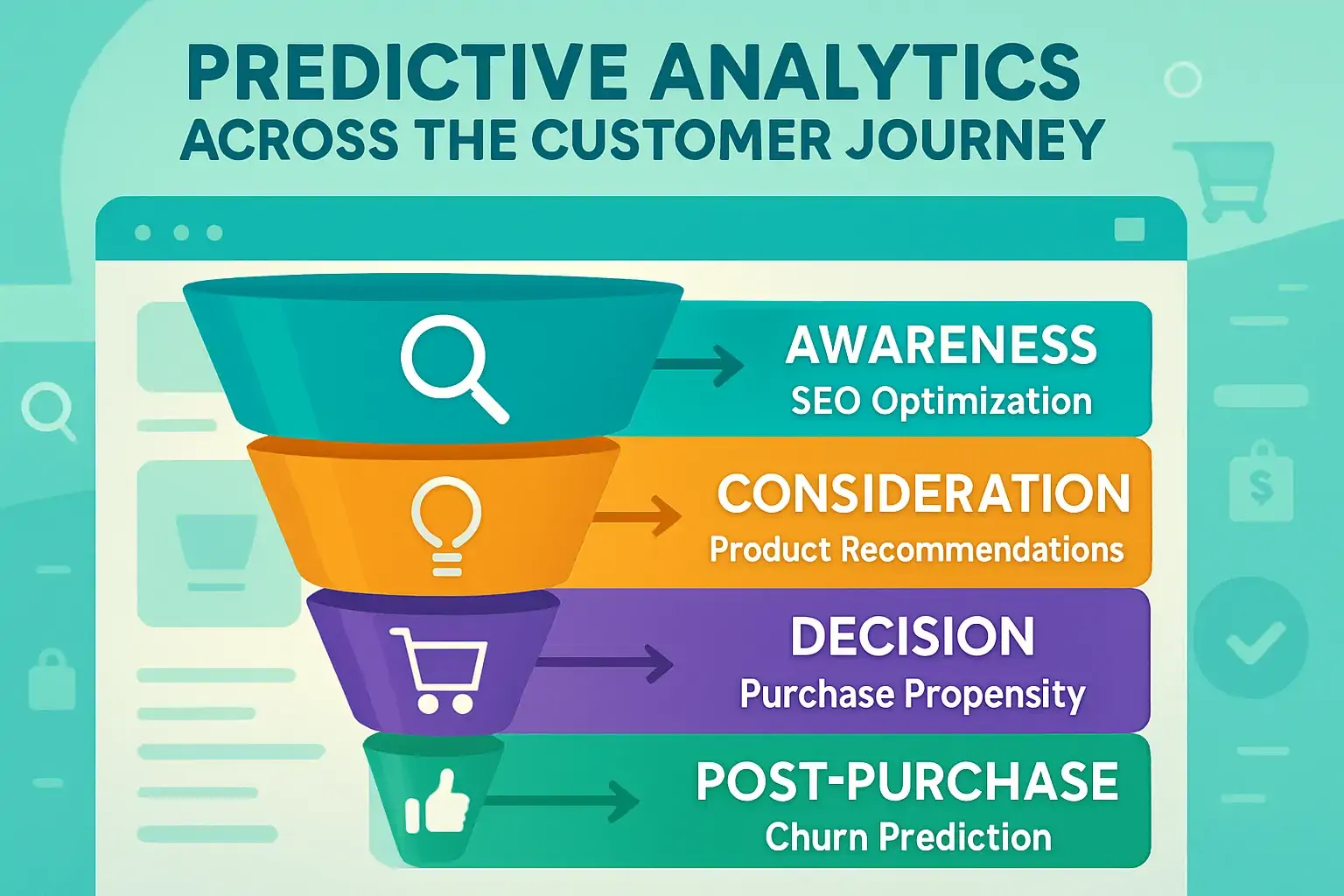
How to Leverage Data for Predictive Analytics in E-commerce Conclusion Predictive analytics, powered by AI in Ecommerce and Machine Learning Solutions , is foundational for e-commerce success. As competition intensifies, Online Shopping Platforms must leverage AI Demand Forecasting in Logistics, Smart Warehouse Solutions , and Omnichannel Retail to forecast demand, personalize experiences, and optimize operations. By investing in Ecommerce Solutions, Digital Payment Solutions, and AI-Powered Automation, businesses can achieve predictive performance and drive growth. Ready to take the next step? Connect with TMA Solutions to explore how AI Agents Solutions for Enterprise and Fintech Development Services can accelerate your Digital Transformation in Real Estate or e-commerce journey. Why TMA Solutions? With over 20 years of experience, TMA Solutions delivers Ecommerce Solutions and AI in Ecommerce through: AI Agents Solutions for Enterprise to design cloud-native data pipelines tailored for Online Shopping Platforms. Machine Learning Solutions for recommendations, pricing, and churn prediction. Real-time decisioning systems with Edge AI and Smart Warehouse Solutions for scalable infrastructure. Fintech Development Services to ensure compliance for Digital Payment Solutions and E-Wallets. Case Study: TMA helped a leading retailer reduce churn by 20% using AI-Powered Automation and Omnichannel Retail strategies, integrating Salesforce for seamless data management. In today’s hyper-competitive digital marketplace, understanding customer behavior is no longer enough—businesses must predict what customers want next. Predictive analytics, powered by AI in Ecommerce and Machine Learning Solutions , transforms historical and real-time data into actionable foresight. This enables Online Shopping Platforms to optimize decisions, deliver Omnichannel Retail experiences, and enhance operational efficiency at scale. By integrating AI Chatbots for Ecommerce and Human-Interactive AI , businesses can personalize customer interactions, while Smart Warehouse Solutions and Supply Chain Management streamline operations. Simply put, predictive analytics helps e-commerce businesses move from reactive to proactive, creating a significant competitive edge through Ecommerce Solutions. Predictive Analytics Across the Customer Journey Predictive analytics supports the full e-commerce funnel - from first impression to repeat purchase: Awareness Stage: Forecast trending search terms to optimize SEO and ad campaigns Deliver personalized content based on location and behavior Consideration Stage: Recommend products based on inferred needs Predict purchase likelihood to refine remarketing tactics Decision Stage: Apply dynamic pricing based on customer behavior and seasonality Identify high-probability promotions to boost conversions Post-Purchase Stage: Forecast reorder timing and next best offer Predict churn risk and trigger retention strategies accordingly Predictive Analytics Across the Customer Journey Why Predictive Analytics Matters Modern consumers expect instant, personalized, and relevant interactions. Predictive analytics empowers businesses to meet these expectations by analyzing historical and real-time data to forecast future trends and behaviors. In e-commerce, this leads to: More effective targeting and segmentation Reduced cart abandonment through preemptive offers Better inventory management and demand forecasting Personalized product recommendations Dynamic pricing based on behavior, seasonality, and competitor analysis Simply put, predictive analytics helps e-commerce businesses move from reactive to proactive - and that creates a significant competitive edge. Predictive Analytics in Action Future Trends in Predictive Analytics The next evolution of predictive analytics is already underway. Emerging trends include: AI-Powered Automation for Emotion and Voice-Based Predictions: Understand customer intent via AI Chatbots for Ecommerce and Human-Interactive AI . For example, a luxury e-commerce brand could use voice analysis to predict customer satisfaction, increasing repeat purchases by 10%. Predictive + Prescriptive Analytics: Enable automated decision-making, such as dynamic A/B testing on Online Shopping Platforms. Case Study: Macy’s uses predictive analytics to target registered users with personalized promotions, boosting conversions by 12%. Integration with Web3 Fintech Platform and Blockchain Financial Solutions: Analyze decentralized commerce behaviors and secure Digital Payment Solutions. Hypothetical Case Study: A fashion e-commerce platform integrated a Web3 Fintech Platform, enabling secure E-Wallet transactions and increasing customer trust by 15%. Edge AI: Enable real-time predictions in physical retail spaces and Smart Warehouse Solutions. For instance, Amazon Go uses Edge AI to monitor stock levels in real time, reducing restocking delays by 30%. Low-code/No-code AI Platforms: Empower marketers with Education Technology Solutions to build predictive workflows without coding. Case Study: A small e-commerce startup used a low-code platform to develop a churn prediction model, reducing development time by 50%. The Predictive Analytics Feedback Loop A successful predictive system isn’t “set and forget”—it relies on a continuous feedback loop powered by AI-Powered Automation and Machine Learning Solutions: Predictive Analytics Feedback Loop Key components of this loop include: Behavioral tracking after every user interaction Scheduled model retraining or online learning pipelines Monitoring systems to detect model drift or underperformance With a strong feedback loop in place, predictive models become smarter and more relevant over time. Continuous Improvement with AI Feedback One of the most straightforward examples of predictive analytics - and one that is highly popular and effective - is regression analysis. Regression analysis , which is divided into linear and nonlinear regression depending on the method used, looks at causal relationships between variables. It charts how an independent variable affects dependent variables over time. If there is a consistent pattern, the regression analysis will identify that pattern. It can then make predictions that the same kind of effect will occur in the future, according to the pattern observed in the past. Predicting Trends with Regression Analysis In short, there are a few key steps to any predictive modeling process: Decide what you’d like to predict: Identify outcomes like customer churn or demand using AI Demand Forecasting in Logistics for Supply Chain Management. For example, IKEA uses predictive modeling to forecast regional demand, ensuring optimal stock levels for specific markets. Collect data: Use DataMiner , Salesforce , or IoT in Agriculture (for agriculture-related e-commerce) to gather robust datasets for Ecommerce Solutions. Case Study: An organic food e-commerce platform leveraged IoT in Agriculture to track supply chain data, improving inventory accuracy by 15%. Train and test: Leverage Machine Learning Solutions and AI Agents Development to refine models, ensuring accuracy for Online Shopping Platforms and Omnichannel Retail. For instance, Carrefour uses SAS Viya to train models for inventory optimization, reducing stock outages by 20%. Recommended Technology Stack A robust, scalable, and cloud-ready analytics stack is essential for success. Leading e-commerce companies are building on a combination of: Data Collection & Ingestion: Segment, Snowplow, Google Analytics Data Storage: BigQuery, Snowflake, Amazon Redshift, Azure Synapse Processing & Modeling: Apache Spark, Databricks, TensorFlow, Scikit-learn Real-time Analytics: Apache Kafka, Flink, or Kinesis for stream processing AutoML Platforms: Google Vertex AI, Azure ML, Amazon SageMaker Visualization & BI Tools: Looker, Tableau, Power BI This stack supports Smart Warehouse Solutions, AI Logistics Automation , and AI in Ecommerce , enabling real-time personalized recommendations and efficient Last Mile Delivery. Challenges of Predictive Analytics in E-commerce Despite the benefits, implementing predictive analytics is not without complexity. E-commerce businesses often face: Data Silos: Unify data with DataMiner or SAP ERP to ensure seamless integration across Ecommerce Solutions. Inconsistent Data Quality: Use AI-Powered Automation for data cleansing to maintain reliable inputs for predictive models. Model Drift: Continuously update models with Machine Learning Solutions to adapt to changing customer behaviors. Regulatory Compliance: Ensure adherence to GDPR and CCPA using DataWarehouse Product Traceability and AI-Powered Financial Advisory Tools for secure data handling. Breaking Down Data Silos with AI Benefits of Predictive Analytics in E-commerce When implemented effectively, predictive analytics delivers measurable business value: Personalized Shopping Experiences: Leverage AI in Ecommerce and AI Chatbots for Ecommerce to deliver tailored product recommendations, boosting engagement on Online Shopping Platforms. For example, Amazon’s recommendation engine, powered by Machine Learning Solutions, drives 35% of its sales by suggesting products based on user behavior and purchase history. Inventory and Supply Chain Optimization: Use AI Demand Forecasting in Logistics and Supply Chain Management to predict stock needs, while Smart Warehouse Solutions and Warehouse Management Systems streamline operations. Case Study: Sephora employs demand forecasting with time-series models to ensure high-demand beauty products are stocked, reducing inventory write-offs by 20%. Marketing ROI Improvement: Enhance campaigns with Marketing Content Management and Centralized Advertising Content Management , using predictive analytics to target high-value customers. For instance, Noon, a Middle Eastern Online Shopping Platform, uses AI in Ecommerce to dynamically re-rank search results, increasing conversion rates by 15%. Customer Retention : Implement AI-Powered Automation to predict churn and engage customers through personalized offers on Omnichannel Retail platforms. Case Study: Showroomprive.com, a French e-commerce site, uses predictive analytics to identify at-risk customers and target them with tailored campaigns, reducing churn by 10%. Fraud Detection : Deploy Machine Learning Solutions to identify fraudulent transactions in real time, protecting Digital Payment Solutions and E-Wallets. Hypothetical Case Study: An e-commerce retailer integrated AI-Powered Automation to analyze transaction patterns, reducing fraudulent chargebacks by 30% by flagging suspicious activities in Digital Payment Solutions. Amazon’s Recommendation Engine...
icon
How to Outsource Cybersecurity Software Development Safely...