Home
Search
Found 797 results for “ “ keyword
icon
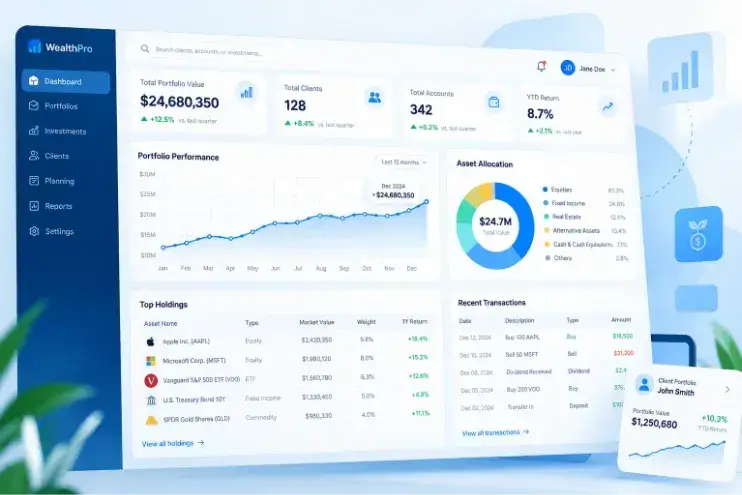
Choosing A Wealth Management Software Development Company...
icon
Choosing the right AI partner for long-term growth Artificial intelligence is now a strategic priority for organizations, but technology alone doesn't guarantee success. As AI scales from pilots to enterprise-wide deployments, choosing the right partner is critical. McKinsey notes that organizations generating the most value from AI are those that integrate it into workflows and redesign processes at scale — making long-term partnership, not isolated implementation, the key to sustainable outcomes. What is the right AI growth partner? The right AI growth partner is more than a technology provider. It is a strategic collaborator that helps organizations align AI initiatives with business objectives, scale solutions effectively, and maximize long-term value. Beyond technical expertise, an ideal partner should combine industry knowledge, governance capabilities, and a commitment to continuous innovation. Characteristics of a Trusted AI Growth Partner Organizations should evaluate AI partners based not only on their technical skills, but also on their ability to translate business challenges into production-ready solutions. Business and Domain Understanding The most effective AI partners focus on understanding business goals before recommending technologies. Rather than simply building models or deploying AI tools, they work closely with stakeholders to identify high-value use cases and design solutions that address real operational challenges. Industry expertise is equally important. Partners with domain knowledge can better understand industry-specific workflows, regulatory requirements, risks, and quality standards, helping organizations avoid generic AI implementations that deliver limited business impact. Data and AI Readiness Assessment Successful AI initiatives rely on more than model selection. A trusted partner should evaluate an organization's data quality, accessibility, governance, and existing workflows to ensure a strong foundation for AI adoption. This approach helps reduce implementation risks and improve long-term scalability. Proven AI Delivery Framework Organizations should look for partners with a structured methodology that guides projects from discovery and technical assessment to pilot development, validation, and production deployment. A clear delivery framework helps ensure that AI initiatives move beyond experimentation and generate measurable business outcomes. Building Long-Term Value Through Partnership AI success requires continuous collaboration and operational excellence rather than one-time implementation. Cross-Functional Collaboration Leading AI partners provide teams that work closely with both technical and business stakeholders throughout the development process. By collaborating across functions, they help bridge the gap between AI capabilities and real-world business needs, accelerating the transition from ideas to production systems. Production-Ready and Scalable Solutions The right AI partner should build with scalability in mind from the beginning. In addition to model development, they should address critical requirements such as evaluation, monitoring, governance, cost optimization, and reliability. This production-first approach enables organizations to deploy AI solutions confidently and scale them sustainably over time. Commitment to Long-Term Success Trusted AI partners continue to support customers after deployment by optimizing performance, introducing new capabilities, and adapting solutions to changing business requirements. By combining technical expertise with strategic alignment, they help organizations transform AI investments into sustainable growth and long-term competitive advantages. Why Choosing the Right AI Partner Matters? As AI systems become more sophisticated, organizations require expertise that extends beyond model development. Long-term success depends on strategy, data foundations, integration capabilities, governance, and continuous optimization. McKinsey's AI Report 2026 found that 67% of AI initiatives fail because of factors like selecting the wrong partners, lacking the necessary expertise, or having misaligned expectations. The challenge becomes even more apparent in MIT's GenAI Divide report, which found that 95% of generative AI pilots across surveyed organizations failed to create measurable bottom-line value. The consequences of failed AI initiatives extend far beyond financial losses. Organizations may face a range of long-term challenges, including: Reputational Damage: Inaccurate, unreliable, or biased AI systems can undermine customer trust and negatively impact brand reputation. Employee Disengagement: Unsuccessful projects can reduce employee morale and make organizations more hesitant to invest in future AI initiatives. Legal and Regulatory Repercussions: AI outputs can inadvertently violate consumer-protection, discrimination, or privacy laws. Opportunity Cost: Competitors continue advancing and capturing market share while internal AI projects struggle to deliver value. AI Projects Require Diverse Expertise Modern AI initiatives often involve multiple disciplines, including: Data engineering Machine learning Generative AI MLOps AI governance Enterprise integration Building these capabilities internally can be time-consuming and expensive. However, trusted AI partners provide access to specialized expertise that enables organizations to accelerate development while reducing implementation risks. AI Success Depends on Long-Term Execution According to IBM, many organizations struggle to move AI projects from experimentation to production because scaling AI requires continuous monitoring, governance, and integration with existing systems. Organizations should therefore evaluate partners based on their ability to support AI initiatives throughout the entire lifecycle rather than focusing solely on initial development. What Enterprises Should Consider When Choosing an AI Development Partner? Selecting an AI development partner requires more than comparing technologies or service offerings. Organizations should evaluate potential partners based on their ability to align AI initiatives with business priorities, deliver scalable solutions, and provide long-term support throughout the AI lifecycle. Define Business Goals Before Technology Successful AI projects begin with a clear understanding of the business challenges they are intended to address. Before engaging with a technology partner, organizations should identify priority use cases, expected outcomes, and key performance indicators. Establishing these objectives early helps ensure that AI investments support broader business strategies and deliver measurable value. Focus on High-Impact Use Cases Rather than pursuing AI for its own sake, enterprises should prioritize initiatives that can improve efficiency, enhance customer experiences, or create new growth opportunities. Clear success metrics also enable organizations to evaluate project performance and return on investment more effectively. Assess Technical Expertise and Delivery Capabilities AI initiatives often require expertise across multiple disciplines. Organizations should look for partners with proven capabilities in core technologies such as machine learning, generative AI, natural language processing, and MLOps. Strong technical foundations are essential for developing reliable and scalable AI systems. Evaluate End-to-End Execution Beyond model development, enterprises should assess whether a partner can support the entire AI lifecycle, including data engineering, deployment, monitoring, and continuous optimization. End-to-end capabilities help organizations move AI projects from experimentation to production more efficiently. Reduce Risks Through Domain Expertise Whether operating in healthcare, manufacturing, financial services, or retail, organizations can benefit from working with partners that have successfully delivered AI solutions in similar environments. Domain expertise helps accelerate implementation while minimizing project risks. Ensure Scalability and Integration Readiness Enterprise AI solutions should not operate in isolation. The right partner must be able to integrate AI capabilities with existing applications, infrastructure, and data ecosystems while designing architectures that can scale alongside business growth. Build for Long-Term Growth As AI adoption expands, organizations need flexible and scalable solutions that can accommodate increasing data volumes, evolving business requirements, and future technological advancements. Choosing a partner with strong integration and scalability capabilities can help maximize the long-term value of AI investments. Avoiding Common Mistakes When Selecting an AI Growth Partner Choosing the right AI partner is just as much about avoiding costly mistakes as it is about evaluating technical capabilities. Many organizations struggle to realize the full value of AI because they focus too heavily on technology while overlooking factors that determine long-term success. Understanding these common pitfalls can help enterprises make more informed decisions and maximize the return on their AI investments. Starting with Technology Instead of Business Goals One of the most common mistakes is focusing on AI capabilities without first defining the business problems to solve. Pursuing AI without clear objectives can result in disconnected initiatives and difficulty measuring success. Organizations should establish clear use cases, expected outcomes, and success metrics before engaging with an AI partner. This helps ensure that AI initiatives support broader business goals and deliver measurable value. Underestimating the Importance of Data Readiness Many organizations assume that selecting the right model is enough to guarantee success. In reality, poor data quality, fragmented systems, and weak governance can significantly hinder AI performance. Enterprises should work with partners that evaluate data readiness, integration requirements, and governance frameworks early in the process to improve reliability and scalability. Overlooking Industry Expertise Selecting partners based solely on technical capabilities can be risky. Without domain knowledge, AI solutions may fail to address industry-specific requirements, regulations, and operational challenges. Partners with proven experience in similar industries are better positioned to deliver solutions that align with business processes and reduce implementation risks. Ignoring Scalability and Integration Requirements Some organizations focus on launching pilot projects without considering how AI solutions will integrate with existing systems or scale as demand grows. This can create bottlenecks and limit long-term adoption. The right AI partner should be capable of designing flexible architectures and supporting enterprise-wide expansion as business requirements evolve. Choosing Short-Term Delivery Over Long-Term Partnership AI initiatives require continuous optimization, monitoring, and innovation. Organizations that prioritize short-term implementation may struggle to sustain value after deployment. A trusted AI growth partner should provide long-term support, helping organizations optimize performance, adapt to new technologies, and maximize the return on AI investments over time. Building Long-Term Growth Through Trusted AI Partnerships As AI becomes increasingly integrated into core business operations, organizations should look beyond short-term projects and prioritize partners that can help them innovate, scale, and adapt over time. The right AI partner is not just a technology provider, it is a strategic collaborator that enables organizations to unlock the full value of AI and drive long-term business growth. When selecting an AI partner, industry leaders typically rely on specific frameworks: Investment & Capability: Assess if the provider commits to long-term R&D and offers roadmaps that align with your growth trajectory. Trust & Reliability: Because AI operates in sensitive data environments, the partner must maintain robust governance and transparent security protocols. End-to-End Services: Look for providers that offer full-stack professional and managed services, from use case discovery to implementation and ongoing optimization. TMA Solutions: Your Trusted Partner for Long-Term AI and Software Development TMA Solutions: Trusted AI partner for long-term growth With nearly three decades of experience in software engineering and digital innovation, TMA Solutions has grown into a trusted technology partner for organizations worldwide. By combining deep domain expertise with a strong focus on emerging technologies, TMA helps businesses accelerate transformation, optimize operations, and drive long-term growth. TMA Solutions offers comprehensive capabilities across a wide range of https://www.tmasolutions.com/technologies technology domains , including: Big Data & Analytics: Customer Data Management, Healthcare and Insurance Analytics, Phishing Awareness and Security Training, Data Warehouse Solutions and Recruitment Platforms,... Cloud: AWS Services, Azure Services, Google Cloud, OpenStack Services, IBM Cloud, Cloud Administrator DevOps: CICD, Monitoring & Logging, Migration, DevOps Consulting IoT: Inventory Monitoring, Dryer Machine Optimization, Remote Container Monitoring System, Air Conditioner,... AI/ML & Data Sciences: Computer Vision, Pattern Recognition, NLP, MLaaS, Supervised Learning, Unsupervised Learning,.. RPA: Account Creation Make Easy, Inventory Alert, COD Automation, Traffic Image Processing, Logistics Data,... 5G: Platform development, 5G Core development, RAN development, UE Simulation development,… Low Code: Modernize the legacy ecosystems, Integrate the ecosystems, Automate processes, Digital,... Conclusion As AI continues to reshape industries and redefine competitive advantages, selecting the right AI partner has become a strategic decision rather than a purely technical one. Long-term success depends not only on advanced technologies, but also on the ability to align AI initiatives with business goals, establish strong data foundations, and scale solutions effectively across the organization. By carefully evaluating technical expertise, industry experience, delivery capabilities, and long-term support, organizations can reduce implementation risks and maximize the value of their AI investments. Ultimately, the right AI partner should act as a trusted collaborator, helping businesses navigate evolving technologies, accelerate innovation, and build a foundation for sustainable growth in an increasingly AI-driven world. For organizations seeking a trusted technology partner, TMA Solutions combines decades of engineering experience with expertise in AI, cloud, data, and enterprise software development to help businesses turn innovation into measurable outcomes. By working closely with customers throughout the entire development lifecycle, TMA enables organizations to accelerate digital transformation, scale AI initiatives, and build resilient technology foundations that support long-term growth and competitive advantage....
icon
Most common CRMS integrations throughout the enterprise A clinical research management system serves a crucial role in the clinical research process. To enhance this functionality, many research sites choose to integrate their CTMS with other enterprise systems. This integration enhances workforce productivity, ensures data precision, and strengthens patient safety. Most common CRMS integrations improve efficiency, data accuracy, and patient safety. Below are some most common CTMS integrations: Protocol and subject information : By implementing the IHE HL7 Retrieve Process for Execution (RPE) protocol, software can transfer critical information to an EMR system. It also enables the transfer of subject data, allowing enrolled research participants to be identified within the EMR system. Demographics : The patient demographics interface automatically transfers essential details, such as contact information and date of birth, from the EMR system. This saves time and minimizes the risk of human error during manual data entry. Protocol billing grid: This vital interface allows research teams to define billing assignments for procedures at the protocol level. The assigned data is synced with the Electronic Medical Record (EMR) system, facilitating accurate charge routing. This integration ensures compliance with billing standards while enhancing communication between clinical and financial teams. General ledger: By linking the CTMS with a site's general ledger system, this interface allows for seamless management of CTMS-generated invoices. Payments for research activities can be reconciled in the software, providing research and financial teams with accurate, up-to-date information on study-related invoices. Other research systems: C omprehensive software typically connects with additional platforms, including eRegulatory, eIRB, and participant payment systems. While native integrations may not always exist, Application Programming Interfaces (APIs) can facilitate connectivity, ensuring streamlined operations across various platforms. How to choose the right clinical research management software? While many modern clinical trial management systems offer similar features and capabilities, selecting the right one requires thoughtful evaluation. It’s essential to choose a system that can adapt to the ever-changing landscape of clinical trials and research. Some criteria businesses need to consider when choosing the top CRMS These criteria cannot be neglected below: Customizability: A strong clinical trials software should provide extensive customization options, especially for report generation and process automation. It must also align with the organization’s standard operating procedures and internal policies. This flexibility is essential to tailor the software to specific clinical trial needs. Usability: While managing clinical trials can be intricate, CTMS itself should not be overly complex. A user-friendly interface is crucial, especially for teams adopting it for the first time, ensuring smooth onboarding and ease of use. Accessibility: With research teams often spread across multiple locations, the ability to access the software remotely is essential. Web-based solutions provide the flexibility needed for efficient collaboration, ensuring that team members stay connected and informed, regardless of their location. Interoperability with other systems: Clinical research management software should integrate seamlessly with existing tools and systems in use by your organization. This ensures that data can flow smoothly between platforms, enabling better process automation and reducing the risk of errors in data migration. Value for money: Price points can vary significantly depending on the software's deployment options and available service packages. It's important to choose a platform that fits within the budget while still addressing the specific needs of the clinical trials and the organization. Challenges in developing clinical research software Legacy CTMS has been in use for nearly two decades, and despite its outdated nature, many organizations continue to rely on this software. It’s unexpected that many organizations lack immediate plans to update their clinical trial management processes, including their software systems. However, this presents a significant challenge. The evolving demands of modern clinical trials require advanced tools that can keep pace with regulatory requirements, data complexity, and operational efficiency. CRMS faces many challenges as clinical trial management processes evolve With most legacy clinical site startup tools still relying on on-premise deployments, they fall short in supporting decentralized clinical trial procedures. Transitioning to cloud-based clinical research management software appears to be the logical step forward, yet this shift entails a significant transformation of established workflows. This requires retraining staff, redefining roles, and creating a new procedural framework. Another critical challenge is the interoperability between various systems. Studies examining clinical operations highlight that the primary obstacle is the integration of clinical applications - an area where legacy CTMS underperforms. Thus, its efficiency should aim to address these challenges effectively. In today’s fast-evolving healthcare environment, finding effective solutions to enhance clinical research is more important than ever. With experience in working with leading healthtech companies and universities, TMA Solutions is dedicated to delivering practical tools for clinical research. Partnering with TMA Solutions for developing clinical research tools means tapping into a wealth of experience, innovation, and cutting-edge technology tailored specifically for the healthcare sector. With 17+ years of experience and a team of over 600 engineers, TMA Solutions delivers dependable and advanced solutions. Their expertise enables them to address the complex demands of clinical research effectively. TMA Solutions' dedication to quality and innovation keeps clinical research tools at the forefront of technological advancements. This leads to more efficient data management, streamlined research workflows, and better decision-making capabilities. TMA’s systems integrate smoothly with Health Information Systems (HIS) and Electronic Medical Records (EMR), enabling efficient data sharing. This ensures clinical studies and research have real-time access to accurate patient information. Additionally, TMA’s expertise in healthcare scheduling systems and patient service platforms fosters greater coordination between research personnel and participants. TMA Solutions streamlines clinical research processes, from managing trial appointments to enabling real-time health monitoring. This enhances participant experiences while delivering better research outcomes. Choosing TMA Solutions means benefiting from their deep expertise in healthcare technology and innovative solutions. Their clinical research tools improve research quality, accuracy, and efficiency, driving better health outcomes and streamlined healthcare delivery. In summary, clinical research management software is an essential tool for simplifying operations, enhancing accuracy, and fostering better collaboration between research and financial teams. Its ability to integrate various systems and automate key processes ensures smoother workflows and improved compliance across clinical studies. For more insights on how this software can elevate your research efficiency, stay tuned for updates and information about TMA Solutions' cutting-edge innovations in the field. Benefits of clinical research management software Implementing clinical research management software provides numerous advantages for organizations involved in clinical trials and research projects. This specialized platform streamlines research operations, improving productivity and coordination across teams, institutions, and study sites. By centralizing data and automating key processes, CTMS enhances the overall management of clinical studies, ensuring smoother and more efficient research workflows. Clinical Trial Management System market growth from 2022 to 2032 Below are key benefits of clinical trial management system: Accurate and accessible data : Clinical research management software keeps essential data accurate, accessible, and up-to-date for ongoing trials. Its data visualization capabilities enable real-time tracking of study metrics, supporting more informed and effective decision-making. Enhanced collaboration: CTMS is a collaboration platform, that allows team members to collaborate smoothly, even across remote or distributed teams, fostering more efficient teamwork. Automation for efficiency: Workflow automation simplifies clinical trials management tasks, including progress tracking, patient record updates, and report generation. This improves productivity while reducing the need for manual effort. Ensuring research integrity : Software ensures the integrity of clinical trials by enforcing transparency and regulatory compliance, promoting adherence to research ethics and proper procedural guidelines. Global Clinical Trials Software Market to grow at 14.2% CAGR by 2031 Clinical research requires precision and streamlined processes, especially when it comes to managing complex tasks like billing, invoicing, and integrating multiple systems. https://www.tmasolutions.com/insights/clinical-research-management-software#clinical_research_management_software Clinical research management software (CRMS) or clinical trials management system software (CTMS) plays a pivotal role in ensuring these tasks are handled efficiently, connecting study and financial teams seamlessly. This software supports compliance and improves overall research management by enhancing communication and automating crucial workflows. Explore how this powerful software can transform your clinical research operations and improve efficiency – read on to discover more! Difference between CRMS, Electronic data capture and Excel Clinical research management software vs Electronic data capture Clinical research relies on robust systems to manage various aspects of research. Two essential tools in this process are the Clinical research management software and the Electronic data capture (EDC). While both serve critical roles, they complement each other, with CTMS focusing on project management and EDC centered on patient data collection. Compare the differences between CRMS and EDC Clinical research management software often integrates these systems to streamline operations. Including these below areas: Tracking anonymized subject records, allowing study teams to monitor high-level screening, screen failures, and enrollment data. The software helps track participant enrollment, enabling the study management team to monitor progress, manage site payments, and create visit reports efficiently. Subject visit progress, tracking visit dates and statuses. Data collection, ensuring data is reviewed, verified, and approved efficiently. Recording the end-of-study disposition, such as whether subjects completed or discontinued the study, along with the corresponding dates. Clinical research management software vs Excel Worksheets and spreadsheets are commonly used for clinical research tracking due to their simplicity and ease of use. However, as clinical teams grow and the complexity of trials increases, worksheets quickly reveal their limitations. CRMS vs Excel is often used for clinical trial tracking because of ease of use. In contrast, CTMS offers several benefits that help organizations manage studies more efficiently and compliantly, including: Collaboration with user roles : CTMS offers a secure environment that enables efficient teamwork among team members. User roles are controlled, ensuring that access to sensitive data is restricted based on the user's permissions and role within the study. Integrated, consistent data : With CTMS, data consistency across different studies and views is ensured. The system centralizes information, allowing data to be applied uniformly across all trials, reducing errors and discrepancies. Secure and reliable : It guarantees secure access, restricting data visibility to authorized users only. The system leverages cloud technology, with built-in backups and redundancy, guaranteeing data availability whenever it is needed. Regulatory compliance : One of the key advantages of software is its automatic enforcement of regulatory requirements, such as 21 CFR Part 11 compliance. This includes features like audit trails, electronic signatures, and data archiving, all seamlessly integrated into daily operations. The Ultimate Guide to Clinical Research Management Software Key components of clinical research management software Advanced clinical research management software combines key tools to simplify and optimize the complex workflows involved in clinical trials. Here are the key components: Study startup tools: These tools expedite trial initiation by automating regulatory document tracking and compliance tracking with approvals, such as IRB and FDA submissions. Document management systems: Functions such as an electronic Trial Master File (eTMF) help organize trial documents, enforce version control, and provide secure, role-based access to confidential information. Electronic data capture (EDC): Integrated EDC systems allow real-time data entry into electronic case report forms (eCRFs), enhancing data accuracy and shortening validation timelines. Financial management tools: Budgeting and payment automation features track expenses, forecast costs, and ensure timely payments to research sites, enhancing financial accuracy and efficiency. Reporting and dashboards: Customizable dashboards offer real-time insights into key performance indicators (KPIs) like patient enrollment and milestone progress, empowering informed decision-making. Key components of clinical research management software These components collectively streamline trial management, ensuring compliance, efficiency, and high data quality for successful clinical research. The role of clinical trial management software in enhancing collaboration Clinical Trial Management Software (CTMS) is pivotal in fostering collaboration among research teams by offering a unified, efficient platform for communication and data management. Here’s how CTMS improves team work: Centralized data access: Clinical trial software offers real-time data access to all team members, promoting collaboration and minimizing information gaps between departments. Streamlined communication: Built-in messaging and notification systems enable quick updates on trial progress and protocol changes, facilitating efficient communication. Task management and tracking: CTMS assigns tasks, sets deadlines, and tracks progress, ensuring transparency and accountability. Document version control: CTMS ensures team members stay informed about the latest protocols and documents by maintaining version control, minimizing errors and avoiding miscommunication. Integration with collaboration tools: Advanced CTMS links with widely used platforms, facilitating streamlined workflows and effective information exchange among cross-functional teams. Integration capabilities: CTMS connects systems for seamless document management and remote monitoring, ensuring smooth data sharing across platforms. Collaborative features: Real-time updates on patient engagement and trial progress enable teams to collaborate effectively and make timely decisions. By enhancing collaboration, CTMS drives efficiency and accelerates decision-making, ultimately improving the success of clinical trials. TMA software streamlined clinical trial collaboration among doctors and nurses....
icon
Telehealth in Senior Care Definition and Applications Senior care within community healthcare focuses on enabling the elderly to live independently at home, with telehealth as a core tool for remote health monitoring. Applications include tracking blood pressure and glucose via wearables, and video consultations for chronic conditions. Telehealth allows seniors to avoid travel, which is particularly beneficial for those in remote areas or with mobility issues. Integrating aged care solutions like medication chart reminders and smart booking & assignment for appointments enhances this. Senior Telehealth Benefits Cost Reduction and Increased Access: Telehealth can decrease hospitalizations by up to 30%, saving healthcare system costs. Continuous Monitoring: Devices send real-time data to doctors, enabling early detection of health issues. Social Support: Reduces isolation by connecting seniors with family and physicians via video. Challenges Technological Skills: Many seniors are unfamiliar with devices, leading to physician concerns about efficacy. Data Privacy Issues: Risks of hacking health data. Physical Limitations: Seniors may struggle with small screens or poor audio. Case Studies The Telehealth Intervention Programs for Seniors (TIPS) combines telehealth to help elders stay healthy, reducing fall risks and chronic diseases. A New York study showed telehealth improving care for rural seniors. From TMA Solutions, home-kit solution for continuous health monitoring is a prime example. Thishttps://www.tmasolutions.com/technologies/cloud cloud-based AI software integrates wearables for vitals tracking in aged care, using machine learning solutions to generate AI - Comprehensive Patient Summaries. In one case, TMA's platform for heart failure patients reduced hospital readmissions by 25% through AI-powered automation and human AI assistant features. TMA's Home-kit Solution for Senior Care Integrating Teledeaf and Senior Care in Community Healthcare Seniors often experience hearing loss, making the integration of Teledeaf into senior care essential. Solutions like telehealth with captions and signs can support this group. In the future, AI Agents solutions for Enterprise and https://www.tmasolutions.com/technologies/5g 5G will elevate quality, but policies are needed to bridge inequalities. https://www.tmasolutions.com TMA Solutions excels in this integration, offering AI in education modules for training caregivers on digital classroom tools adapted for health education, and self-learning platforms for seniors to learn device usage. Conclusion Telehealth in community https://www.tmasolutions.com/industries/healthcare healthcare , especially Teledeaf and senior care, is revolutionizing medicine by boosting access and efficiency. However, addressing challenges is crucial for equity. The future holds promise with emerging technologies, but action from governments and communities is key. Ready to transform your community healthcare with innovative telehealth solutions? Contact TMA Solutions today at https://www.tmasolutions.com/contact-us https://www.tmasolutions.com/contact-us to explore customized https://www.tmasolutions.com/technologies/ai-ml-and-data-sciences AI Agents development, aged care platforms, and machine learning solutions that can elevate your services and improve patient outcomes. Telehealth for the Deaf (Teledeaf) Definition and Historical Development Teledeaf is the term for telehealth applications specifically designed for the deaf community, focusing on communication via sign language, captions, and hearing aids. Unlike standard telehealth, Teledeaf requires high-quality video integration to clearly display sign gestures, along with real-time interpreter services. The history of Teledeaf dates back to the 1990s with the advent of video relay services (VRS), but it truly flourished from 2010 onward thanks to broadband technology. During the pandemic, telehealth for the deaf saw significant growth, with studies showing usage rates comparable to the general population but with more barriers. Benefits of Teledeaf in Community Healthcare Teledeaf offers numerous benefits, particularly in improving healthcare access for the deaf - a group often facing communication barriers leading to misdiagnoses or delayed treatments. Primary advantages include: Increased Convenience: Patients can consult from home without travel, cutting costs and time. Research indicates Teledeaf can reduce in-person appointments by up to 50%. Improved Communication: With ASL integration and subtitles, Teledeaf ensures accurate transmission of medical information, minimizing misunderstandings. Psychological Support: For the deaf, Teledeaf provides mental health counseling via sign language, reducing social isolation. Teledeaf Consultation Challenges and Barriers Despite its benefits, Teledeaf encounters several challenges: Technological Issues: Poor video quality or lack of interpreters can disrupt communication. Surveys reveal deaf users often face usability and accessibility problems. Legal and Privacy Barriers: Under the Americans with Disabilities Act (ADA), telehealth must ensure equal access, but many platforms fall short. Inequalities: Deaf individuals in rural areas may lack stable internet, exacerbating the digital divide. Case Studies A U.S. study explored ASL users' experiences with telehealth during the pandemic, showing improved access but the need for proactive support planning. Another case compared telehealth to in-person consultations for the deaf, concluding telehealth is effective and cost-saving. Incorporating services from TMA Solutions, a leading provider of healthcare software solutions, one notable case is Healthcare Virtual Assistant. TMA developed this human-interactive AI tool for a major healthcare provider, enhancing client experiences by integrating AI-powered automation for sign language interpretation in telehealth sessions. This AI Agents development solution uses edge AI to process real-time sign language, reducing miscommunication and improving patient satisfaction by 40%. Overview of Community Healthcare Community healthcare is a healthcare model that prioritizes prevention, treatment, and disease management at the community level rather than focusing solely on hospitals. According to the World Health Organization (WHO), this model includes services like vaccinations, disease screenings, nutritional counseling, and psychological support, aiming to reduce social inequalities in healthcare access. In recent years, telehealth has become an indispensable part of community healthcare. Telehealth leverages digital technology to provide remote medical services, including video consultations, health monitoring via wearable devices, and information exchange through electronic portals. Key benefits include time savings, reduced infection risks, and expanded reach to rural areas or minority communities. Particularly during the COVID-19 pandemic, telehealth exploded in usage, with video medical calls doubling in many countries. However, this model still faces challenges like the digital divide, where groups such as the elderly or the deaf struggle with technology adoption. This underscores the need for specialized solutions, such as Teledeaf and telehealth for senior care. Community Healthcare Model Introduction In the face of a rapidly aging global population and the lingering challenges from the COVID-19 pandemic, community healthcare has emerged as a vital pillar in ensuring equitable and efficient access to medical services. Community healthcare emphasizes delivering healthcare at the local level, alleviating the burden on major hospitals and supporting vulnerable groups such as the deaf community and seniors. Telehealth, or remote healthcare, serves as a key technological tool in this domain, enabling patients to connect with doctors via video, phone, or apps without the need for physical travel. Here, "Teledeaf" refers to telehealth applications tailored for the deaf, incorporating sign language (such as American Sign Language or equivalents) and communication aids. Meanwhile, senior care highlights the use of telehealth for monitoring and managing the health of the elderly at home. This article synthesizes historical aspects, benefits, challenges, case studies, and future prospects of these areas within community healthcare. Drawing from recent studies and data, telehealth not only enhances accessibility but also reduces costs and improves quality of life. Community Healthcare: Telehealth for the Deaf and Senior Care...
icon
TMA Content AI Agent Introduction of TMA’s Content AI Agent TMA Solutions’ Content AI Agent is an enterprise-grade, end-to-end platform designed to automate content creation, approval, and publishing while enforcing brand control and delivering measurable marketing outcomes. Unlike commodity “AI writers,” our solution is built for integration, governance, and continuous learning — so marketing teams keep creative control while scaling output and personalization. Core promise: enable marketing teams to produce high-quality, brand-consistent content up to 60–70% faster while improving engagement through data-driven personalization. Content AI Agent System Key Capabilities Automated product ingestion & enrichment: The agent ingests product data (title, description, specs, price, images) and enriches it with SEO metadata and suggested keywords. Multi-format content generation: Generates SEO-friendly blog drafts, segmented email copy, ad copy, and social posts tailored per platform. Personalization engine: Produces audience-specific variants using behavior signals, customer segments, and A/B templates. Multi-channel scheduling & publishing: Orchestrates publishing across blogs, LinkedIn, Facebook, email platforms, and third-party schedulers, selecting optimal send/post times. Human-in-the-loop workflows: Editors review, comment, and approve content in a governed workflow; changes feed back into model tuning. Performance analytics & optimization: Tracks open rates, CTRs, social engagement, and conversions; recommends subject lines, formats, and repost timing. Brand style learning: Learns and enforces tone, terminology, and style rules (glossary, forbidden words, mandatory disclaimers). Content inventory & reuse: Indexes generated assets for reuse, localization, and rapid repurposing. Conclusion Content marketing at scale no longer needs to be a bottleneck. With TMA Solutions’ Content AI Agent, your marketing team can shift from manual production to strategic execution — crafting high-quality, personalised content at speed, across channels, while maintaining brand consistency and unlocking measurable growth. In an age where content is a competitive advantage, automation is not optional — it’s essential. Why Businesses Should Invest in This Technology In an era where content is the currency of engagement, businesses that can produce high-quality, personalised content at speed and scale gain a competitive edge. Here’s why investing in a Content AI Agent makes strategic sense: Accelerated go-to-market: New products or services can be supported with relevant content faster, enabling quicker campaign launches and revenue capture. Improved ROI: With automation, fewer manual hours are required, and marketing resources can shift to strategy and high-value tasks — driving better returns. Consistency across channels: Brand fragmentation happens when content teams operate in silos. An AI Agent ensures unified messaging across blogs, email, and social posts. Data-driven optimisation: With analytics built in, the agent turns data into actionable insights. You’re not just producing content — you’re improving it continuously. Scalable global reach: Whether you’re localising for Asia-Pacific or targeting multiple languages, the automation enables scale without proportional headcount increases. Competitive differentiation: As more enterprises adopt similar technologies, the ability to deploy AI-powered content workflows separates leaders from laggards. Future-proofing: With shifts toward answer engines (e.g., AI assistants like ChatGPT or Google Gemini) and conversational search, being early with content-AI positions you for the next wave of search. Challenges When Adopting Content AI Agents Even though the benefits are compelling, the path to successful implementation has pitfalls. Here are some of the common challenges and how to address them: Data & brand-voice alignment If the AI agent is not properly trained on a brand’s tone, terminology, product knowledge, and style guidelines, the results may feel generic or off-brand. Solution: invest in an initial brand-voice briefing, content taxonomy, and style guide integration. Quality oversight & human-in-the-loop Fully autonomous content generation poses risks (tone errors, factual inaccuracies, mis-targeting). It is essential to retain human editors for review, fine-tuning, and final approval. This ensures the content reflects strategic context and brand integrity. Integration with existing workflows Marketing teams often use multiple systems (CMS, email platforms, social schedulers, analytics). If the AI agent cannot plug into that stack (extract product data, schedule posts, monitor performance), the benefits diminish. Proper integration planning is key. Change management & skills gap Introducing an AI agent shifts how teams operate: from manual creation to oversight and optimisation. Training, process redesign, and role clarity are essential to ensure adoption and maximise ROI. Benefits of Applying an AI Agent in Creating Content When marketing teams deploy a sophisticated Content AI Agent, they can achieve: Dramatic time-savings: Many manual processes (ideation, drafting, scheduling) are automated; this accelerates campaign launches. Higher productivity: Marketers shift from manual production to strategy, creative supervision, and optimisation. IJRPR+1 Better personalization at scale: The agent adapts language, tone, format, and channel to audience segments, increasing engagement. StoryChief+1 Improved ROI: With smarter targeting, content optimisation, and faster execution, cost per conversion decreases and campaign effectiveness improves. creatio.com Consistency across channels: The system learns brand voice, adheres to style guidelines, and ensures messages are coherent across blog, email, social, etc. Scalability: As you add products, segments or regions, the agent handles increased content volume without linear head-count growth. Real-time feedback and learning: Performance data is fed back into the system, enabling continuous improvement of content formats, timing, and audience fit. Together, these benefits enable marketing teams to “do more with less” and turn content creation into a strategic enabler rather than a bottleneck. Market Overview: Why Content-AI Agents Matter The growth opportunity The global market for AI-driven content creation tools was estimated at around USD 14.84 billion in 2024 and is projected to reach approximately USD 80.12 billion by 2030, reflecting a compound annual growth rate (CAGR) of about 32.5%. Leading analysts report that workforces using content-AI agents can reduce the creation time by up to 91% and boost marketing ROI by nearly 44% when properly deployed. In recent reviews, it is highlighted that 75 % of marketers are already using or experimenting with AI marketing agents, which makes AI a foundational element of content strategy rather than an optional add-on. Key drivers There are several structural drivers pushing marketing teams to adopt Content AI Agents: Demand for volume and speed: Brands are required to publish across blogs, email, social media, video and more. Manual processes struggle to keep pace. Need for personalization and relevance: Audiences expect tailored messages, not generic mass content. AI systems enable segmentation, tone-adaptation, and channel-specific formats. Efficiency and cost-control: Marketing teams face tighter budgets. Automating repetitive creation tasks frees human resources for higher-value work. Data-driven optimization: AI agents not only generate content; they monitor performance in real time, refine asset formats, timing, and audiences. Brand consistency at scale: As operations go global and multi-channel, maintaining a unified brand voice becomes complex. AI agents help enforce style guidelines and messaging standards. Content AI Agent: Automating Content Creation for Smarter Marketing...
icon
Corporate Training Software Solutions for AI-Driven Workforce Enterprises investing in AI tools are discovering that the technology is the easier part of the transformation. The harder part is building a workforce that understands how to use those tools effectively, adapt as they evolve, and apply them to decisions that require human judgment alongside machine output. Corporate training software solutions designed for this challenge go well beyond content delivery. They build the continuous learning infrastructure that allows an enterprise to keep its workforce capability aligned with its technology strategy as both continue to change. Why Workforce Capability Determines AI Transformation Success When an enterprise deploys a new AI system, whether for demand forecasting, customer service automation, fraud detection, or operational efficiency, the return on that investment depends almost entirely on how well the people working alongside that system understand it. An AI that produces accurate outputs but whose outputs employees do not trust, cannot interpret, or do not know how to act on delivers no operational value. This is the gap that most enterprise AI transformation strategies underestimate. Technology deployment is planned in detail: vendors are evaluated, infrastructure is procured, integration timelines are set. Workforce readiness is often treated as a communication initiative rather than a workforce development program. As a result, AI tools are deployed before employees are prepared to use them effectively, limiting adoption and reducing business value. According to Microsoft's 2024 Work Trend Index, 79 percent of leaders say AI adoption is essential for remaining competitive, yet only 39 percent of people who use AI at work have received AI training from their employer. That gap cannot be closed through internal communication alone. It requires a deliberate and sustained learning environment that supports continuous workforce development. The Compounding Cost of Capability Lag When workforce capability falls behind the technology the enterprise has deployed, the cost is not only the underutilized technology investment. It also includes poorer decision-making, lower confidence in AI-assisted workflows, and missed opportunities to improve business processes. Unlike failed technology deployments, these capability gaps often develop gradually, reducing productivity and slowing AI adoption across the organization without a clear root cause. The Growing Digital Skills Gap Inside Enterprises AI Literacy as a New Foundational Skill The skills required to work effectively alongside AI systems are not the same as the skills required to build them. An enterprise does not need every employee to understand machine learning architecture. It does need employees across functions to understand what AI outputs mean, when to trust them, how to identify when the system is producing unreliable results, and how to formulate questions and inputs that produce better outputs. This is AI literacy: a practical, applied understanding of how AI tools work, what they are good at, and where human judgment must override or supplement them. It is different for every role and function, and it changes as the AI systems an enterprise deploys continue to evolve. Organizations that invest in AI literacy programs are generally better positioned to accelerate AI adoption because employees gain the confidence and practical skills needed to apply AI in their daily work. The difference is not access to the technology. It is preparation to use it effectively. Skills Development Cannot Be Episodic When Technology Changes Continuously The challenge of digital upskilling is that it does not have an endpoint. AI tools update. New capabilities become available. New use cases emerge within the business. An organization that treats digital skills development as a one-time training event produces a workforce that was prepared for the technology as it existed at the time of training, not as it exists six months later. Continuous learning infrastructure is not a program. It is a permanent organizational capability: the systems, content pipelines, and learning habits that allow the workforce to absorb new technical capability as it becomes relevant, rather than requiring a dedicated training initiative every time the technology changes. What AI-Driven Corporate Training Software Solutions Should Deliver Adaptive Content for Diverse Technical Starting Points A workforce preparing for AI transformation is not a uniform group. Some employees are early adopters who already use AI tools personally and need only role-specific application training. Others have no exposure to AI and need foundational conceptual grounding before applied training is useful. Most fall somewhere in the middle. Corporate training software solutions built for this environment diagnose where each employee actually is before assigning content. Assessment data drives content sequencing so that employees with prior exposure accelerate through what they already know, and employees who need foundational support receive it before being advanced to application-level training. Smart Corporate Training supports role-based learning paths that map employees to competency requirements before training begins. This allows organizations to deliver learning based on each employee's current readiness instead of a fixed curriculum. Role-Specific AI Use Case Training Generic AI awareness training teaches employees that AI exists and has broad applications. Role-specific training teaches them what AI can do in their specific job context, which decisions it can assist with, and where it should not be substituted for human judgment. A finance analyst learning to use AI for anomaly detection requires different training from a marketing manager using AI for campaign optimization. Enterprise learning management tools should support role-specific learning rather than delivering identical content across the workforce. Practice Environments for Applied Skill Development Understanding how AI works is not the same as being able to use AI tools confidently under operational conditions. Applied skill development requires practice in realistic scenarios where employees work through actual use cases, encounter the kinds of outputs that require interpretation, and develop the judgment to know when to act on AI recommendations and when to question them. AI Coaching and Role-play Simulation System complements structured learning with AI-powered practice environments where employees apply new skills in realistic scenarios and receive immediate feedback. Assessment results feed back into personalized learning paths, helping organizations strengthen applied competency rather than simply increasing course completion. How Enterprise Learning Management Tools Support Continuous Upskilling Connecting Learning to the Technology Roadmap An enterprise learning management tool built for continuous upskilling connects the organization's learning content calendar to its technology deployment roadmap. When a new AI system or tool is scheduled for deployment, the learning infrastructure can begin building workforce capability before the deployment date rather than running a post-deployment training scramble. This forward-looking connection requires that the enterprise learning management tool integrates with the systems that hold information about the workforce: HR platforms, performance management systems, and role management tools. When a new role capability requirement is defined, the learning system can identify which employees need development in that area and begin routing relevant content to them automatically. Smart Corporate Training integrates HR data, competency frameworks, and learning paths to automate training assignments as workforce requirements and technology roadmaps evolve. Measuring Workforce Capability Enterprise learning management tools that report primarily on completion rates create a misleading picture of workforce readiness. An organization where 90 percent of employees have completed an AI fundamentals course is not necessarily an organization where 90 percent of employees can use AI tools effectively in their roles. The completion rate tells you that employees opened and finished a program. It does not tell you whether their capability changed as a result. Measurement systems designed for continuous upskilling track competency development over time: how employees perform on applied assessments before and after training, how quickly they progress through increasingly complex use cases, and how their assessed capability level correlates with observed performance on tasks that require AI tool proficiency. Scaling Learning Delivery Without Scaling Administrative Cost Manual training administration, including content assignment, completion tracking, reporting compilation, and development plan management, does not scale efficiently as the workforce grows or as the training program expands to cover new technology areas. Each new tool the enterprise deploys creates a new training requirement that multiplies across the entire affected workforce. Enterprise learning management tools reduce this administrative overhead by automating content assignment based on role and competency data, tracking completion and performance automatically across the full workforce, and generating reporting that gives HR and operations leadership the visibility they need without requiring manual data compilation. Smart Corporate Training automates learning administration across distributed teams and business units, enabling organizations to scale AI upskilling programs without increasing administrative effort. Building a Learning Culture That Scales Across the Organization The technical infrastructure of corporate training software is a necessary condition for effective upskilling at scale. It is not sufficient. The organizations that sustain meaningful workforce capability development over time build a learning culture that treats capability development as an ongoing operational priority rather than a periodic HR initiative. Learning Must Connect to Career Development Employees invest in learning when they see a clear connection between that investment and their career trajectory within the organization. Corporate training software solutions that operate in isolation from performance management and career planning systems produce learning that employees treat as compliance rather than development. When competency frameworks support both learning and career progression, employees are more likely to see training as professional development rather than a compliance requirement. Manager Engagement Determines Learning Effectiveness The single most consistent predictor of whether enterprise training programs produce behavioral change is whether managers actively engage with the learning process: discussing what employees are learning, applying those discussions to real work decisions, and reinforcing the application of new skills on the job. Enterprise learning management tools support manager engagement by providing visibility into team learning progress, surfacing insights about where team members are developing well and where they need additional support, and connecting learning activity to the performance conversations managers are already having. When managers have access to specific, actionable data rather than aggregate completion reports, their conversations with employees about learning can be substantive rather than procedural. Continuous Iteration Based on Learning Outcomes Data A learning culture that sustains itself over time uses the data generated by its learning infrastructure to improve the quality of that infrastructure continuously. Content that produces strong assessment performance improvements is identified and expanded. Content where performance data shows limited improvement signals a need for redesign or replacement. Learning paths that produce high completion but low applied performance are flagged for structural review. This feedback loop between learning outcomes data and content strategy is what distinguishes an organization that is genuinely building workforce capability from one that is running training programs and hoping the capability follows. Conclusion Enterprise AI transformation depends not only on technology investment but also on the workforce's ability to adopt, apply, and continuously develop new skills. Corporate training software solutions that combine AI-driven personalization, competency assessment, HR integration, and learning analytics help organizations build the workforce capability needed to support long-term AI adoption. https://www.tmasolutions.com/ TMA Solutions brings powerful capacities to building enterprise learning solutions that combine AI-powered personalization, competency assessment, learning analytics, and HR integration to support scalable workforce development. Explore Smart Corporate Training, AI Coaching and Role-play Simulation System, and other enterprise learning solutions designed to help organizations build continuous learning capabilities for AI-driven business transformation....
icon
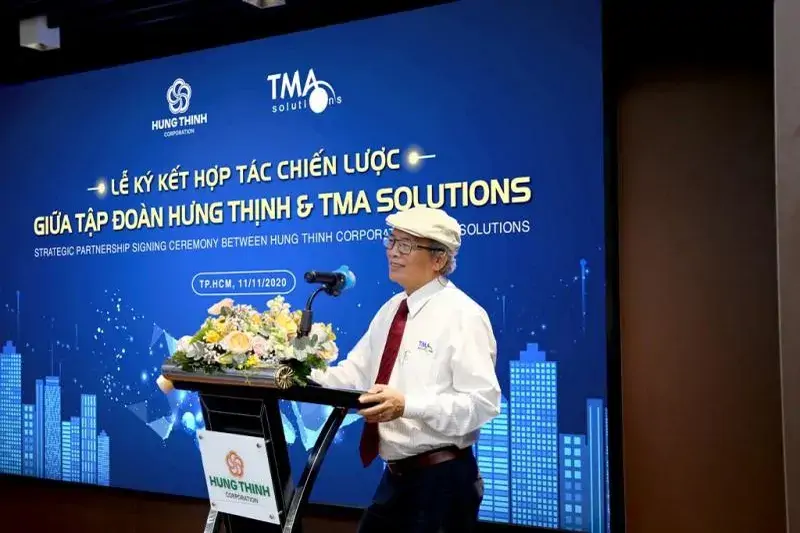
Custom AI Agent development factory – Build smart, scalable solutions with TMA Solutions The demand for custom AI agents is rising as businesses look for smarter ways to improve operations and enhance customer experiences. If a company works with a trusted custom AI agent development partner, it can have AI agents designed for its own processes. These agents can connect smoothly with the current systems. With more than 28 years in Software Provider and 700+ AI/ML experts, TMA Solutions is a reliable partner. They support businesses in their digital transformation journey. 1. Why Choose TMA for Custom AI Agent Development? When choosing a partner to develop custom AI agents, businesses often look for three things: proven experience, a strong expert team, and a reliable development process. These are also the strengths that make TMA Solutions a top choice for global businesses: Strong AI Agent Factory & AI Center : TMA Solutions has built an AI Agent Factory and an AI Center equipped with international-standard systems. This infrastructure enables the rapid development, testing, and deployment of AI agents tailored to business needs. Deep integration with enterprise systems : TMA’s AI agents can connect and share data easily with ERP, CRM, and big data systems. This allows companies to use their existing IT resources without disrupting daily operations. Experienced engineers and modern methods : With more than 4,000 engineers, TMA applies Agile practices to ensure projects are delivered on time, efficiently, and with consistent quality - even for large-scale AI agent ecosystems. Multi-agent orchestration and continuous learning : The TMA framework supports multi-agent collaboration on complex tasks. It also includes continuous learning, allowing AI agents to improve based on real-world data. Multi-platform support and strong security : Whether deployed on cloud, on-premise, mobile, or desktop, TMA’s AI agents comply with international security standards (ISO 27001, CMMI 5), ensuring customer data remains fully protected. Why businesses should choose TMA for custom AI agent development 2. What We Offer – Custom AI Agent Solutions TMA Solutions offers many AI agent solutions for different business needs, such as: Chatbots & Voice Assistants : TMA develops intelligent chatbots and voice assistants that work on many channels, including web, app, and social media. Powered by large language models, these solutions enable natural, context-based conversations and provide 24/7 support for customer service, booking, technical assistance, and product consultation. Deep system integration ensures a smooth and consistent user experience. Multi-agent Orchestration : TMA’s platform can organize and run many AI agents together in complex workflows, automating cross-departmental processes and enabling intelligent decision-making. This orchestration technology has been successfully applied in industries such as process management, software testing, customer guidance, logistics, finance, healthcare, and manufacturing. It combines both rule-based and autonomous AI to create flexible teamwork between agents. AI-powered Predictive Analytics : By analyzing data from diverse sources (EMR, IoT, CRM, ERP), TMA’s predictive AI agents can predict customer behavior, demand, operation risks, or stock levels. Using modern AI/ML, these agents support proactive decisions, improve efficiency, and optimize resources in real time. Enterprise Integration : TMA’s AI agents connect deeply with existing enterprise systems through standard connectors: SQL, NoSQL, API, Data Streaming, and open protocols for automation. This capability makes it easy to sync data, scale operations, and connect with third-party services. AI Agent Framework & Toolkits : TMA provides a comprehensive framework that includes cross-industry agent libraries, no-code/low-code tools, and an Agent SDK for custom use cases. This approach cuts deployment time by 50%, makes updates and scaling easier, and ensures all agents adhere to the latest technology and security standards. Key AI Agent solutions provided by TMA 3. How We Build Your Custom AI Agent TMA Solutions develops AI agents with a clear roadmap. The process follows business goals and optimizes resources. The steps are: Step 1: Requirement survey and analysis The project begins with a thorough review of business objectives, workflows, and integration requirements. TMA’s experts check technical feasibility, estimate ROI, and look for reusable agent templates to save cost and time. Step 2: AI agent architecture design & technology selection TMA uses its multi-industry agent library to design the right architecture and choose the best Foundation Model (LLM/CV/ML) for the specific use case. Depending on project needs, the team can use no-code/low-code or SDK to speed up testing. Connection points (API, data input/output) are defined to make sure the system can scale in the future. Step 3: Prototype (MVP) development & demo The team quickly builds a test version (MVP) based on the agent template and workflow. A demo is shown to stakeholders to collect feedback, allowing product tuning before full investment, and validates the solution with real data and users. Step 4: Testing, performance review & improvements The agent is deployed in a sandbox test environment where real interactions are simulated to check performance, security, and coordination between agents. Issues are analyzed and fixed on time to make sure the agent meets business, integration, and technical needs. Step 5: Deployment & training After passing tests, the agent is packaged in a container. It can be deployed flexibly on cloud or on-premise with auto-scaling and production workflows. TMA provides comprehensive training so client teams can operate, monitor, and manage the agent effectively. Step 6: Maintenance, support & continuous optimization After launch, the agent is continuously monitored using analytics and performance alerts. Feedback is used to update models, refine algorithms, and ensure scalability or rollback if needed. TMA offers long-term maintenance and feature updates to keep each agent performing at its best throughout its lifecycle. AI Agent development steps with TMA 4. Technologies & Expertise With advanced technology and an experienced team, TMA Solutions delivers AI agents that are flexible, scalable, and ready for many business needs: AI Models & Frameworks TMA AI Agent Factory offers many foundation models, including machine learning, computer vision, and top LLMs (Llama, Qwen, Falcon). These models can be used directly or fine-tuned for specific needs, helping companies save time and boost operational efficiency. TMA also applies frameworks like LangChain and LangGraph to build smart agents that can work together and keep learning from real data. Programming Languages & Architecture TMA uses Go, Python, and FastAPI to develop high-performance and reliable systems. With container-based architecture using Docker and Kubernetes, deployment is flexible on both cloud and on-premise environments. This approach ensures scalability, stability, and enhanced security for enterprise applications. System Integration TMA’s AI agents integrate smoothly with ERP, CRM, SQL/NoSQL databases, and streaming data through standard APIs. This keeps information in sync in real time, helping businesses react fast, make accurate decisions, and optimize workflows. For greater flexibility and scalability, TMA also develops custom SDKs tailored to each client’s infrastructure. Team Expertise & Process TMA’s AI engineers hold certifications from leading organizations like Microsoft, Google, AWS, Nvidia, and IBM. This gives clients access to the newest technologies, supported by a flexible Agile process. As a result, projects are delivered quickly, with high quality, and can adapt to market changes. TMA’s technology platform and engineering expertise 5. Industries We Serve TMA Solutions’ AI agents have been applied successfully in many industries, such as: Telecommunications: In the telecom sector, TMA’s AI agents handle calls automatically, support customer service, and optimize telecom networks for large service providers. The experts at TMA help integrate agents with CRM, billing, and network management systems, helping improve customer experience while reducing operation costs. Finance & Banking: TMA’s AI agents analyze transaction data, manage credit risk, automate customer service, and detect financial fraud. These solutions help financial organizations run more efficiently, improve analysis accuracy, and follow strict security standards. Healthcare: TMA develops AI agents for medical imaging, electronic health record management, remote health monitoring, and patient care automation. Smart AI supports doctors in accelerating diagnoses, while improving care quality and patient experience. E-commerce & Logistics: AI agents are built to answer customer questions, manage orders, handle payments, and track deliveries in e-commerce. In logistics, agents predict inventory, optimize warehouses, and manage supply chains in real time. Manufacturing & Industry: TMA’s AI agents support automatic factory monitoring, product quality checks, predictive maintenance, and production workflow control. With IoT and real-time analytics, agents help increase productivity, reduce errors, and ensure safety in industrial operations. Industries where TMA has successfully applied AI agents 6. Engagement Models with TMA Solutions TMA Solutions offers flexible collaboration models to meet each company’s AI agent needs, such as: 1 - Project-based Feature: TMA takes full responsibility for the AI agent project, from requirement analysis, design, and development to testing, delivery, and operation support. This process is strictly managed with clear commitments on timeline and quality. Process : Clients start by sharing their business and technical requirements, after which TMA’s experts propose the most suitable solution, create a prototype, and manage all development and deployment activities. Throughout the project, TMA provides transparent progress reports and takes full responsibility. Benefits : This model helps businesses minimize management workload and can focus on core activities. The project is handled by experts, so risks are lower, security is ensured, and the product is always delivered on time with clear costs. 2 - Staff Augmentation Feature : The client hires AI engineers or tech experts from TMA to join their internal team, either full-time or part-time, depending on project needs. Process : Based on the client’s requirements, suitable engineers are selected. TMA provides training, management, and coordination to ensure quality while the engineers work directly under the client’s supervision. Benefits : The business can quickly strengthen tech capacity without long-term hiring. The team can expand or shrink flexibly, saving recruitment and training costs while keeping project progress and quality. Flexible collaboration models between businesses and TMA 7. Commitments in Custom AI Agent Implementation at TMA Solutions With a customer-first approach, TMA Solutions ensures every AI agent is deployed sustainably and reliably, with the following commitments: Data security : Customer data is fully protected through strong encryption and strict access control. TMA follows international standards such as ISO 27001, GDPR, and HIPAA to keep all information safe during both storage and processing. Seamless operation and integration : AI agents are designed with open architecture, multi-platform support, and seamless integration through APIs, connectors, and standard protocols. Businesses can connect quickly without interrupting ongoing operations. Maintenance and continuous updates : TMA monitors performance and updates AI agents based on real data and user feedback. This keeps systems effective, adaptable, and competitive in the long term. Transparency and quality : Every project is managed with clear progress reports and strict testing. Clients can easily control, review, and adjust the direction when needed. Long-term partnership : Beyond solution delivery, TMA provides ongoing support, including training, expansion consulting, and fast troubleshooting. This sustainable cooperation helps businesses grow AI agents in line with long-term strategies. TMA’s AI Agent commitments 8. Case Study TMA Solution Implemented Here are three typical projects that TMA Solutions has delivered successfully, showing its strong capability in real-world deployment: 8.1. Multi-channel virtual assistant to improve customer service (Telecom & E-commerce) Challenge : A major telecom group struggled with an overloaded call center and inconsistent customer experiences across multiple channels. Solution : TMA built a multi-channel AI virtual assistant with voice and text. It could receive, sort, and answer FAQs automatically, while routing complex inquiries to human agents. Result : Reduced call center workload by more than 60%, improved response time and customer satisfaction, and lowered operation costs. The system worked smoothly on web, mobile, and social media. 8.2. Centralized data repository for advanced analytics (Data Science & AI/ML) Challenge : A large company needed to merge data from many separate systems into one unified platform to support fast decision-making. Solution : TMA built a Central Data Repository on the cloud. It included automated pipelines for data processing and standardization, plus AI/ML tools for forecasting models and management reports. Result : Saved more than 70% of time for data access and analysis, delivered real-time reports, improved decision accuracy, and boosted business performance. 8.3. Real-time demand forecasting and inventory optimization (Logistics) Challenge : A logistics company faced frequent stock imbalances, leading to inefficiencies and customer dissatisfaction. Solution : TMA deployed an AI agent to forecast demand using historical data, market changes, and external factors. The agent gave automatic suggestions for import-export strategies and warehouse coordination. Result : Reduced inventory by 20–30%, shortened order processing time, improved customer satisfaction, and cut operational costs through smarter resource utilization. Highlighted AI projects by TMA 9. What Our Clients Say Companies that work with TMA Solutions highlight several key strengths: High technical quality : TMA engineers are praised for strong expertise, responsibility in development, maintenance, and effective handling of complex requests. Speed and flexibility : Many clients are satisfied with TMA’s quick response and adaptability when project requirements change Professional and transparent process : Clear communication, structured project management, and detailed progress reports make collaboration efficient and trustworthy. Long-term and dedicated support : TMA is known for its post-delivery commitment to long-term partnership for maintenance and upgrades. Competitive pricing : Clients find TMA’s pricing fair and cost-effective, offering strong value relative to the quality, expertise, and scope of service delivered. Hung Thinh Group and TMA Solutions sign strategic partnership in HCMC Real feedback and reviews from TMA’s Clients Clients in Australia value TMA Solutions for fast, effective staffing that matches project needs. 10. Frequently Asked Questions about Custom AI Agent Development Here are some common questions when businesses consider custom AI agent development: 1 - How long does it take to develop a custom AI agent? Typically, it takes 4–12 weeks to build an MVP. Developing full-featured AI agents may take longer depending on project complexity and integration needs. 2 - What types of AI are most requested today? The most requested types include chatbots, voice assistants, process automation agents, predictive AI, big data analytics, and multi-agent systems. 3 - How is security and compliance ensured when deploying AI? Data is protected with strong encryption, access control, and regular security testing, and compliance with ISO 27001, GDPR, HIPAA, and industry rules. 4 - How are AI agents supported and maintained after deployment? TMA provides continuous maintenance, regularly updates AI models based on real data and user feedback, and offers technical support, troubleshooting, and new feature to keep systems running at peak performance. FAQs about AI agent development The article has shown TMA Solutions’ technology strengths and flexible collaboration models. TMA is committed to delivering AI agents that are sustainable, secure, and optimized for ROI. With global experience, a team of 4,000+ engineers, and strong technical capacity, TMA Solutions will design solutions that fit your business strategy. Contact TMA today for consultation. Contact information: TMA SOLUTIONS - The leading custom ai agent development company in Vietnam Email: sales@tmasolutions.com Website : https://www.tmasolutions.com/ https://www.tmasolutions.com/ Linkedin: https://www.linkedin.com/company/tma-solutions/ TMA Solutions TMA Tower address: Street #10, Quality Tech Solution Complex (QTSC), Trung My Tay Ward, Ho Chi Minh City....

icon
Custom AI development company TMA Solutions: Your innovative AI development company Many businesses realize that pre-packaged AI solutions often cannot effectively handle complex and specific business problems. To create real value, businesses need AI systems that are "tailor-made" for their needs. With experience as a custom AI development company, TMA Solutions helps you get the most value from your internal data and turn it into a long-term competitive advantage. 1. Custom AI Development Capabilities of TMA Solutions TMA Solutions has comprehensive capabilities that cover the entire development lifecycle of an AI solution. This allows TMA to fully meet all requirements, from in-depth data analysis to process automation, helping businesses effectively solve their specific business problems. 1.1. Math & Statistics ML Applications: Market demand forecasting, customer segmentation, credit risk scoring, and operational process optimization. Capabilities: TMA implements traditional statistics and ML models (like regression, time-series) and integrates them into the data pipeline. This helps businesses make decisions based on near-real-time data directly on their operational dashboard. 1.2. Deep Learning Applications: Image recognition in video, anomaly detection on production lines, and analysis and recognition of voice or sound. Capabilities: TMA develops and optimizes Deep Learning models (CNN, RNN) for both edge devices (Edge AI) and the cloud. Notably, TMA has practical experience deploying Edge AI for security monitoring and industrial systems. 1.3. Smart Camera Applications: Public safety monitoring, road infrastructure quality inspection, or building security solutions for factories and smart buildings. Capabilities: TMA designs AI camera systems that process in real-time, with the ability to provide on-site alerts (edge inference). Additionally, TMA has experience with deep hardware/IoT integration (like Jetson, Intel NCS) and video management platforms (VMS). TMA designs real-time processing AI camera systems 1.4. MLaaS/Mlops Applications: Providing model training, deployment, and monitoring as a service (MLaaS); building automatic CI/CD pipelines for AI models; tracking quality and performance decay (drift). Capabilities: TMA offers MLaaS on major cloud platforms (Azure, AWS, GCP). TMA also designs the complete MLOps lifecycle, from data versioning to model monitoring. 1.5. Predictive Analytics Applications: Forecasting consumer demand and inventory levels, predicting equipment failure (predictive maintenance), or scoring for credit risk and fraud. Capabilities: TMA builds forecasting models by combining multiple data sources (transactions, operations, sensors). We also integrate these predictions directly into the workflow as alerts or automated tasks. TMA builds forecasting models 1.6. NLP | OCR Applications: Building chatbots/voicebots, automatically extracting data from contracts, invoices, and prescriptions; classifying and summarizing large blocks of text. Capabilities: TMA has multi-language OCR technology (Vietnamese, English, Japanese, Korean). We also build complete NLP pipelines to extract, standardize data, and automate processes (RPA+AI), especially in the healthcare and logistics fields. TMA builds chatbots 1.7. Generative AI | LLM Applications: Developing internal virtual assistants, building AI agents to automate processes, summarizing documents, and creating Q&A systems based on a company's own knowledge base (RAG). Capabilities: TMA provides a no-code AI Agent/Agentic framework to build workflows quickly. We have special experience deploying chatbots for finance and e-commerce, ensuring personalization and system integration. TMA AI Agent Factory 2. TMA Solutions’s Collaborative Development Process TMA Solutions' collaborative process is built to turn complex AI ideas into practical, operational solutions. Each stage focuses on precisely identifying the business's core problem. This allows us to develop an AI system that delivers clear and measurable value. 2.1. Step 1: AI Strategy Consulting & Problem Definition Activities: In this step, TMA Solutions works with your business to set a clear direction for your AI strategy. Specifically, TMA will: Understand your business goals and the problems you want AI to solve. Analyze your existing data to see if AI can be applied. Suggest suitable use cases and prioritize the solutions that offer the highest value. Outcome: The client receives a strategic roadmap (including use cases, KPIs, proposed architecture) and a clear project scope (POC/Pilot). 2.2. Step 2: Data Assessment & Preparation Activities: The TMA team surveys data sources and assesses their quality and availability. Then, TMA designs the data lake/warehouse architecture. We build pipelines to collect, clean, and transform (ETL/ELT) data on a modern platform. Outcome: After this step, the business will have a complete data platform . The system is standardized, clean, and organized , making the data easy to use for training AI models, creating BI reports, or for real-time analysis. 2.3. Step 3: Model Development & Training Activities: In this stage, TMA's AI engineers develop Machine Learning (ML) and Deep Learning (DL) models suited for specific problems. These can include forecasting, risk classification, Computer Vision, or Natural Language Processing (NLP). This process includes training, iterative tuning, feature engineering, and in-depth model evaluation. Outcome: The client receives a quality-approved AI model (validated with real data), along with a report comparing its performance to baseline models and recommendations for deployment. TMA's engineers develop ML/DL models for specific problems 2.4. Step 4: Integration & Pilot Testing Activities: TMA integrates the trained model into the business's application or workflow (via APIs, event-driven methods, or AI Agent workflows). The solution is then pilot-tested in a near-real environment to gather user feedback. Outcome: After this step, the business will have a stable pilot version of the AI solution running in a near-real environment. 2.5. Step 5: Full-Scale Deployment & Optimization Activities: In this stage, TMA Solutions deploys the AI solution at full scale. We put the system into official operation on TMA's or the client's platform (on-premise or cloud). TMA's engineering team will: Optimize performance and operational costs, ensuring the system runs stably and saves resources. Set up an MLOps process to monitor, update, and retrain the model when new data is available. Continuously monitor operations, detecting and handling technical issues or data drift promptly. Outcome: The business receives a complete AI system that operates stably in real-time. It can also scale flexibly as data volume or business scale increases. 3. Why choose TMA Solutions as Your Technology Partner With over 28 years of experience in the IT industry, TMA Solutions is a trusted partner for over 30 countries worldwide. TMA provides complete technology solutions, from consulting, design, and software development to operations management. We help businesses speed up their digital transformation and achieve sustainable innovation. 28 years of IT experience , with 4,000 software engineers in 7 countries (Vietnam, USA, Canada, Australia, Japan, Singapore, and Europe). A specialized team in AI, Data, Cloud, IoT, Fintech, and Healthtech. We can handle the entire end-to-end process, from research and consulting to development and operation. Multi-disciplinary R&D Centers: Data Solution Center, AI/RPA Center, HealthTech Center, IoT Center, Automotive Center, Robotics Center, and more. Compliance with international standards like CMMI Level 5, ISO 9001, ISO/IEC 27001, Agile, and RUP. This ensures a professional development process and data security. Over 600+ projects for clients in 30+ countries, including the USA, Australia, Japan, Korea, and Singapore. Skilled in modern technologies: Azure, AWS, GCP, Databricks, Power BI, Hadoop, Spark, Kafka, TensorFlow, Pytorch, and OpenAI. TMA Solutions' Commitment: Top Quality: Every product is tested according to international standards. Total Security: Client data and information are fully protected. Sustainable Partnership: We don't just provide solutions; we grow with our clients long-term to optimize their business efficiency. Continuous Innovation: We always update to the newest technologies to create outstanding value. 4. Featured Custom AI Projects TMA's capabilities are best shown through our real-world projects, where we turn AI technology into measurable business value. Here are some outstanding custom solutions that TMA has deployed: 4.1. Boost productivity with AI-powered Smart Call Center Assistant Introduction: This project deployed a Smart AI Assistant for a contact center. The goal was to increase agent productivity and standardize the customer experience for a service agency in Canada that serves the E-commerce, Retail, and Logistics industries. Problem: The client faced a growing volume of calls, inconsistent answers from agents, and pressure to optimize operational costs. They needed a tech solution to handle the overload and standardize support quality. Solution: TMA built an AI assistant that uses real-time Speech-to-Text technology. The solution includes a knowledge base powered by AI (GPT and LlamaIndex). This helps analyze customer questions and suggest accurate answers for the agents. Results: The solution helped increase call center agent productivity, reducing the average call handling time by 20%. The client also optimized their staff by 20%, leading to significant cost savings and ensuring consistent interaction quality. >> Read more: https://www.tmasolutions.com/case-studies/boost-productivity-with-smart-call-center-assistant-powered-by-generative-ai Case Study: AI Smart Call Assistant Increases Productivity Case Study: AI Smart Call Assistant Increases Productivity 4.2. Cloud-based and AI-driven solution for seamless operations and enhanced client experience Introduction: This project focused on building a pet care e-commerce marketplace for a startup in Australia. The core goals were scalability, seamless operation, and a personalized experience. Problem: The client's existing system lacked scalability and could not handle traffic spikes during peak hours. Integrations with third parties (payment, logistics, CRM) were fragmented. Customer support was slow, which affected the user experience. Solution: TMA deployed a cloud infrastructure with auto-scaling and load balancing. The engineering team seamlessly integrated payment gateways and shipping carriers. They also built a 24/7 support portal with AI assistance and personalized product recommendation features. Results: The new solution automated and optimized operational processes. The system can scale flexibly to handle high traffic. It also provides a personalized shopping experience, which significantly improved customer satisfaction. >> Read more: https://www.tmasolutions.com/case-studies/cloud-based-and-ai-driven-solution-for-seamless-operations-and-enhanced-client-experience Case Study: Cloud-based and AI-driven solution for seamless operations and enhanced client experience Case Study: Cloud-based and AI-driven solution for seamless operations and enhanced client experience 4.3. AI sound-based fault detection system in manufacturing Introduction: This project applied AI sound analysis to detect product defects (water valves) in real-time on the production line for a building materials manufacturer in Vietnam. Problem: The traditional manual quality control (QC) process could not keep up with the production scale. This led to inconsistency, missed defects, and a heavy reliance on staff, which affected the brand's reputation. Solution: TMA designed a sound-based fault detection system. A sound sensor captures signals as the valve is tightened. An AI model then classifies the sound as "normal" or "faulty." When a defect is found, the system automatically signals a robot arm to remove the faulty product. Results: The system fully automated the QC process, greatly improving quality and reliability. The faultless product rate reached an impressive 99%. It also increased the production line's efficiency and scalability. >> Read more: https://www.tmasolutions.com/case-studies/ai-sound-based-fault-detection-system-in-manufacturing Case Study: AI Sound-Based Fault Detection for Manufacturing Case Study: AI Sound-Based Fault Detection for Manufacturing 4.4. Machine Learning & AI techniques for credit risk analysis Introduction: This project focused on using AI and Machine Learning to improve the accuracy of a credit scoring model for a finance industry client in Australia. Problem: The client struggled to assess credit risk accurately. Their data was scattered across different systems (internal and third-party), making analysis difficult. They needed a better way to measure risk in a volatile market. Solution: TMA built a data integration platform to automatically merge the data sources. On that platform, engineers applied AI/ML techniques to fine-tune the credit scoring algorithm. This helped the model make better predictions based on historical data patterns. Results: The new solution significantly improved accuracy in risk assessment. This helped the financial organization make smarter, more strategic lending decisions and allowed them to manage credit risk proactively. >> Read more: https://www.tmasolutions.com/case-studies/machine-learning-ai-techniques-for-credit-risk-analysis Case Study: Machine Learning & AI techniques for credit risk analysis Case Study: Machine Learning & AI techniques for credit risk analysis 4.5. A recruitment solution for employers with Automatic CV Input Introduction: This project provided an end-to-end recruitment solution that fully automates the CV processing workflow for an HR client in Australia. Problem: The client had to manually process over 1,000 CVs every week. This created a serious bottleneck, slowed down hiring, and increased the risk of errors when entering data into the Applicant Tracking System (ATS). Solution: TMA developed a scalable solution combining RPA, AI/OCR, and Web Automation. The system automatically downloads CVs. It uses AI/OCR to accurately read and extract data (even handwritten text) from complex layouts, then inputs it directly into the recruitment system. Results: The solution almost completely eliminated manual data entry, saving the HR team over 8,000 work-hours per year. The hiring process was shortened, bottlenecks were reduced, and the new-hire onboarding experience became smoother. Case Study: A recruitment solution for employers with Automatic CV Input >> Read more: https://www.tmasolutions.com/case-studies/a-recruitment-solution-for-employers-with-automatic-cv-input A recruitment solution for employers with Automatic CV Input 5. Frequently Asked Questions (FAQs) About Custom AI Development Company Q1: What kind of data do we need to start a custom AI project? The quality and scope of your data are key factors for the project's success. Basically, you will need: Relevant Data: The data must be directly related to the business problem. Examples include transaction logs, customer records, or unstructured data (text, images, sound). For supervised learning models, this data needs to be labeled. Quality Data: The data must be complete. We will perform a Data Assessment step to check its quality, legal status, and potential risks (like bias) before we start training. Q2: How long does it take to develop a custom AI solution? The time to develop a custom AI solution can range from a few weeks to several months. It directly depends on the problem's complexity and how ready your data is. To give you an idea, we usually classify project sizes as follows: Small-scale (2-4 weeks): Usually focuses on a simple use case, such as a chatbot that answers common questions. Medium-scale (1-3 months): For solutions that need complex logic and basic integration, like a system that extracts data from invoices. Large-scale (3-6+ months): For core AI systems that are deeply integrated into many business processes (e.g., a custom risk prediction system). Q3: How do you ensure the confidentiality and security of our data? Data privacy and security are TMA's top priorities. We apply an Information Security Management System (ISMS) that strictly follows the ISO/IEC 27001 standard. Technically: We use multi-layered security measures. This includes data encryption (in transit and at rest), access control (RBAC/least privilege), and techniques like data anonymization. Procedurally: We use risk management frameworks (like NIST AI RMF) to control AI-specific risks. When using third-party APIs, we promise to configure the highest security settings (e.g., zero data retention) to ensure your data is not used for training. Q4: What is the difference between custom AI and using an API from OpenAI/Google? These are two different strategies, depending on your needs: Using an API (OpenAI/Google): This allows for fast deployment and reduces operational work. It is suitable for common tasks, as long as your partner (like TMA) ensures data privacy settings are configured (like zero data retention). Building Custom AI: This gives you complete control. You can fine-tune models or build RAG systems based on your internal knowledge. This helps optimize costs, reduce latency, and ensure compliance with industry-specific security rules (e.g., deploying on-premise). Data privacy and security are TMA's top priorities Choosing an AI partner isn't just about technology; it's also about execution capability and professional processes. With 28 years of experience, diverse skills from Deep Learning to Generative AI, and a proven development process, TMA Solutions has the capability to turn the most complex AI ideas into practical, operational solutions. >> If you are ready to build high-performance AI solutions, contact experts of TMA Solutions for a consultation! Contact information: TMA SOLUTIONS - The leading ai agent development services in Vietnam Email: sales@tmasolutions.com Website: https://www.tmasolutions.com/ https://www.tmasolutions.com/ Linkedin: https://www.linkedin.com/company/tma-solutions/ TMA Solutions TMA Tower address: Street #10, Quality Tech Solution Complex (QTSC), Trung My Tay Ward, Ho Chi Minh City....