Artificial intelligence is now a strategic priority for organizations, but technology alone doesn't guarantee success. As AI scales from pilots to enterprise-wide deployments, choosing the right partner is critical. McKinsey notes that organizations generating the most value from AI are those that integrate it into workflows and redesign processes at scale — making long-term partnership, not isolated implementation, the key to sustainable outcomes.
What is the right AI growth partner?
The right AI growth partner is more than a technology provider. It is a strategic collaborator that helps organizations align AI initiatives with business objectives, scale solutions effectively, and maximize long-term value. Beyond technical expertise, an ideal partner should combine industry knowledge, governance capabilities, and a commitment to continuous innovation.
Characteristics of a Trusted AI Growth Partner
Organizations should evaluate AI partners based not only on their technical skills, but also on their ability to translate business challenges into production-ready solutions.
Business and Domain Understanding
The most effective AI partners focus on understanding business goals before recommending technologies. Rather than simply building models or deploying AI tools, they work closely with stakeholders to identify high-value use cases and design solutions that address real operational challenges.
Industry expertise is equally important. Partners with domain knowledge can better understand industry-specific workflows, regulatory requirements, risks, and quality standards, helping organizations avoid generic AI implementations that deliver limited business impact.
Data and AI Readiness Assessment
Successful AI initiatives rely on more than model selection. A trusted partner should evaluate an organization's data quality, accessibility, governance, and existing workflows to ensure a strong foundation for AI adoption. This approach helps reduce implementation risks and improve long-term scalability.
Proven AI Delivery Framework
Organizations should look for partners with a structured methodology that guides projects from discovery and technical assessment to pilot development, validation, and production deployment. A clear delivery framework helps ensure that AI initiatives move beyond experimentation and generate measurable business outcomes.
Building Long-Term Value Through Partnership
AI success requires continuous collaboration and operational excellence rather than one-time implementation.
Cross-Functional Collaboration
Leading AI partners provide teams that work closely with both technical and business stakeholders throughout the development process. By collaborating across functions, they help bridge the gap between AI capabilities and real-world business needs, accelerating the transition from ideas to production systems.
Production-Ready and Scalable Solutions
The right AI partner should build with scalability in mind from the beginning. In addition to model development, they should address critical requirements such as evaluation, monitoring, governance, cost optimization, and reliability. This production-first approach enables organizations to deploy AI solutions confidently and scale them sustainably over time.
Commitment to Long-Term Success
Trusted AI partners continue to support customers after deployment by optimizing performance, introducing new capabilities, and adapting solutions to changing business requirements. By combining technical expertise with strategic alignment, they help organizations transform AI investments into sustainable growth and long-term competitive advantages.
Why Choosing the Right AI Partner Matters?
As AI systems become more sophisticated, organizations require expertise that extends beyond model development. Long-term success depends on strategy, data foundations, integration capabilities, governance, and continuous optimization.
McKinsey's AI Report 2026 found that 67% of AI initiatives fail because of factors like selecting the wrong partners, lacking the necessary expertise, or having misaligned expectations. The challenge becomes even more apparent in MIT's GenAI Divide report, which found that 95% of generative AI pilots across surveyed organizations failed to create measurable bottom-line value.
The consequences of failed AI initiatives extend far beyond financial losses. Organizations may face a range of long-term challenges, including:
- Reputational Damage: Inaccurate, unreliable, or biased AI systems can undermine customer trust and negatively impact brand reputation.
- Employee Disengagement: Unsuccessful projects can reduce employee morale and make organizations more hesitant to invest in future AI initiatives.
- Legal and Regulatory Repercussions: AI outputs can inadvertently violate consumer-protection, discrimination, or privacy laws.
- Opportunity Cost: Competitors continue advancing and capturing market share while internal AI projects struggle to deliver value.
AI Projects Require Diverse Expertise
Modern AI initiatives often involve multiple disciplines, including:
- Data engineering
- Machine learning
- Generative AI
- MLOps
- AI governance
- Enterprise integration
Building these capabilities internally can be time-consuming and expensive. However, trusted AI partners provide access to specialized expertise that enables organizations to accelerate development while reducing implementation risks.
AI Success Depends on Long-Term Execution
According to IBM, many organizations struggle to move AI projects from experimentation to production because scaling AI requires continuous monitoring, governance, and integration with existing systems. Organizations should therefore evaluate partners based on their ability to support AI initiatives throughout the entire lifecycle rather than focusing solely on initial development.
What Enterprises Should Consider When Choosing an AI Development Partner?
Selecting an AI development partner requires more than comparing technologies or service offerings. Organizations should evaluate potential partners based on their ability to align AI initiatives with business priorities, deliver scalable solutions, and provide long-term support throughout the AI lifecycle.
Define Business Goals Before Technology
Successful AI projects begin with a clear understanding of the business challenges they are intended to address. Before engaging with a technology partner, organizations should identify priority use cases, expected outcomes, and key performance indicators. Establishing these objectives early helps ensure that AI investments support broader business strategies and deliver measurable value.
Focus on High-Impact Use Cases
Rather than pursuing AI for its own sake, enterprises should prioritize initiatives that can improve efficiency, enhance customer experiences, or create new growth opportunities. Clear success metrics also enable organizations to evaluate project performance and return on investment more effectively.
Assess Technical Expertise and Delivery Capabilities
AI initiatives often require expertise across multiple disciplines. Organizations should look for partners with proven capabilities in core technologies such as machine learning, generative AI, natural language processing, and MLOps. Strong technical foundations are essential for developing reliable and scalable AI systems.
Evaluate End-to-End Execution
Beyond model development, enterprises should assess whether a partner can support the entire AI lifecycle, including data engineering, deployment, monitoring, and continuous optimization. End-to-end capabilities help organizations move AI projects from experimentation to production more efficiently.
Reduce Risks Through Domain Expertise
Whether operating in healthcare, manufacturing, financial services, or retail, organizations can benefit from working with partners that have successfully delivered AI solutions in similar environments. Domain expertise helps accelerate implementation while minimizing project risks.
Ensure Scalability and Integration Readiness
Enterprise AI solutions should not operate in isolation. The right partner must be able to integrate AI capabilities with existing applications, infrastructure, and data ecosystems while designing architectures that can scale alongside business growth.
Build for Long-Term Growth
As AI adoption expands, organizations need flexible and scalable solutions that can accommodate increasing data volumes, evolving business requirements, and future technological advancements. Choosing a partner with strong integration and scalability capabilities can help maximize the long-term value of AI investments.
Avoiding Common Mistakes When Selecting an AI Growth Partner
Choosing the right AI partner is just as much about avoiding costly mistakes as it is about evaluating technical capabilities. Many organizations struggle to realize the full value of AI because they focus too heavily on technology while overlooking factors that determine long-term success. Understanding these common pitfalls can help enterprises make more informed decisions and maximize the return on their AI investments.
Starting with Technology Instead of Business Goals
One of the most common mistakes is focusing on AI capabilities without first defining the business problems to solve. Pursuing AI without clear objectives can result in disconnected initiatives and difficulty measuring success. Organizations should establish clear use cases, expected outcomes, and success metrics before engaging with an AI partner. This helps ensure that AI initiatives support broader business goals and deliver measurable value.
Underestimating the Importance of Data Readiness
Many organizations assume that selecting the right model is enough to guarantee success. In reality, poor data quality, fragmented systems, and weak governance can significantly hinder AI performance. Enterprises should work with partners that evaluate data readiness, integration requirements, and governance frameworks early in the process to improve reliability and scalability.
Overlooking Industry Expertise
Selecting partners based solely on technical capabilities can be risky. Without domain knowledge, AI solutions may fail to address industry-specific requirements, regulations, and operational challenges. Partners with proven experience in similar industries are better positioned to deliver solutions that align with business processes and reduce implementation risks.
Ignoring Scalability and Integration Requirements
Some organizations focus on launching pilot projects without considering how AI solutions will integrate with existing systems or scale as demand grows. This can create bottlenecks and limit long-term adoption. The right AI partner should be capable of designing flexible architectures and supporting enterprise-wide expansion as business requirements evolve.
Choosing Short-Term Delivery Over Long-Term Partnership
AI initiatives require continuous optimization, monitoring, and innovation. Organizations that prioritize short-term implementation may struggle to sustain value after deployment. A trusted AI growth partner should provide long-term support, helping organizations optimize performance, adapt to new technologies, and maximize the return on AI investments over time.
Building Long-Term Growth Through Trusted AI Partnerships
As AI becomes increasingly integrated into core business operations, organizations should look beyond short-term projects and prioritize partners that can help them innovate, scale, and adapt over time. The right AI partner is not just a technology provider, it is a strategic collaborator that enables organizations to unlock the full value of AI and drive long-term business growth.
When selecting an AI partner, industry leaders typically rely on specific frameworks:
- Investment & Capability: Assess if the provider commits to long-term R&D and offers roadmaps that align with your growth trajectory.
- Trust & Reliability: Because AI operates in sensitive data environments, the partner must maintain robust governance and transparent security protocols.
- End-to-End Services: Look for providers that offer full-stack professional and managed services, from use case discovery to implementation and ongoing optimization.
TMA Solutions: Your Trusted Partner for Long-Term AI and Software Development
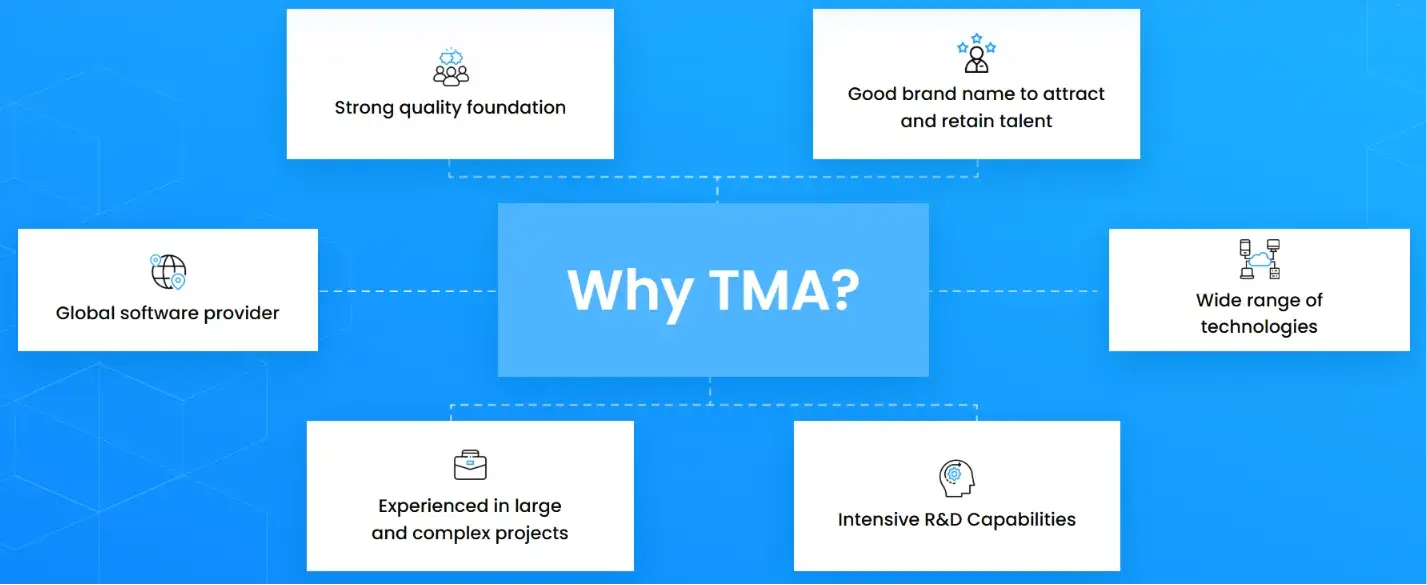
With nearly three decades of experience in software engineering and digital innovation, TMA Solutions has grown into a trusted technology partner for organizations worldwide. By combining deep domain expertise with a strong focus on emerging technologies, TMA helps businesses accelerate transformation, optimize operations, and drive long-term growth.
TMA Solutions offers comprehensive capabilities across a wide range of technology domains, including:
- Big Data & Analytics: Customer Data Management, Healthcare and Insurance Analytics, Phishing Awareness and Security Training, Data Warehouse Solutions and Recruitment Platforms,...
- Cloud: AWS Services, Azure Services, Google Cloud, OpenStack Services, IBM Cloud, Cloud Administrator
- DevOps: CICD, Monitoring & Logging, Migration, DevOps Consulting
- IoT: Inventory Monitoring, Dryer Machine Optimization, Remote Container Monitoring System, Air Conditioner,...
- AI/ML & Data Sciences: Computer Vision, Pattern Recognition, NLP, MLaaS, Supervised Learning, Unsupervised Learning,..
- RPA: Account Creation Make Easy, Inventory Alert, COD Automation, Traffic Image Processing, Logistics Data,...
- 5G: Platform development, 5G Core development, RAN development, UE Simulation development,…
- Low Code: Modernize the legacy ecosystems, Integrate the ecosystems, Automate processes, Digital,...
Conclusion
As AI continues to reshape industries and redefine competitive advantages, selecting the right AI partner has become a strategic decision rather than a purely technical one. Long-term success depends not only on advanced technologies, but also on the ability to align AI initiatives with business goals, establish strong data foundations, and scale solutions effectively across the organization.
By carefully evaluating technical expertise, industry experience, delivery capabilities, and long-term support, organizations can reduce implementation risks and maximize the value of their AI investments. Ultimately, the right AI partner should act as a trusted collaborator, helping businesses navigate evolving technologies, accelerate innovation, and build a foundation for sustainable growth in an increasingly AI-driven world.
For organizations seeking a trusted technology partner, TMA Solutions combines decades of engineering experience with expertise in AI, cloud, data, and enterprise software development to help businesses turn innovation into measurable outcomes. By working closely with customers throughout the entire development lifecycle, TMA enables organizations to accelerate digital transformation, scale AI initiatives, and build resilient technology foundations that support long-term growth and competitive advantage.