Vietnam fintech software development outsourcing is becoming a strategic priority for financial organizations worldwide. As the pressure to digitize faster intensifies from mobile banking and wealth advisory to AI-powered compliance companies are looking beyond their borders for engineering talent that combines technical depth with financial domain expertise. Vietnam has emerged as one of the most competitive destinations to meet that demand.
What Is Vietnam Fintech Software Development Outsourcing?
Vietnam fintech software development outsourcing is the process in which a financial services company or fintech firm engages an external technology provider based in Vietnam to design, build, and operate software that supports financial services. The external partner takes full responsibility for technical delivery from architecture and development to testing and maintenance while the client organization retains oversight of business objectives and product direction.
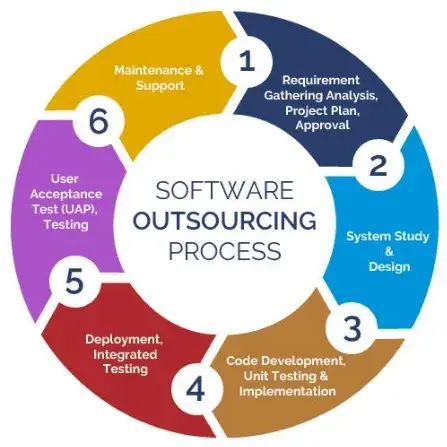
In practice, a fintech outsourcing engagement typically includes:
- Requirements and domain analysis: mapping financial workflows, regulatory obligations (MAS, FCA, SEC, ASIC), and data handling requirements before a single line of code is written.
- System architecture and API design: defining how the platform will scale, integrate with third-party systems such as payment rails or market data feeds, and enforce security controls.
- Software development: building core fintech capabilities such as wealth advisory engines, payment processing modules, KYC/AML pipelines, or open banking APIs.
- Quality assurance and compliance testing: validating that the system handles financial data accurately, performs under load, and meets regulatory audit requirements.
- Deployment, operation, and continuous improvement: keeping the platform live, secure, and updated as regulations and business needs evolve.
Why Vietnam Is a Top Destination for Fintech Software Development
Financial organizations across Singapore, Australia, the United States, and Europe are increasingly turning to Vietnam for software development. The drivers go well beyond cost savings.
Cost efficiency without sacrificing quality
Building an in-house fintech engineering team in Singapore, London, or Sydney requires sustained investment in salaries, infrastructure, recruitment, and retention. Vietnam-based outsourcing converts those fixed overheads into flexible, project-aligned spending. Organizations typically reduce total software development budgets by 40 to 60% while maintaining engineering quality that meets international financial industry standards.
Access to deep fintech and AI expertise
Vietnam's technology sector has rapidly matured. With over 400,000 IT graduates annually and a strong pipeline of engineers trained in machine learning, cloud-native architecture, and financial data systems, Vietnam now offers specialist skills that were previously concentrated only in India or Eastern Europe. For fintech use cases requiring AI fraud detection, credit scoring, robo-advisory, or automated compliance monitoring .
Faster time to market
Recruiting, onboarding, and ramping up an in-house development team can take six to nine months before meaningful delivery begins. A Vietnam-based outsourcing partner with established fintech delivery processes can deploy a specialized team in four to six weeks, reducing time to market by 30 to 40%. For financial organizations launching new digital products or responding to regulatory deadlines, this speed advantage is significant.
Regulatory alignment from day one
Reputable Vietnam fintech development partners build compliance into the engineering process rather than retrofitting it. This means architects and developers who understand MAS Technology Risk Management guidelines, GDPR requirements, and PCI-DSS standards are active on the project from the start helping reducing costly rework and audit exposure.
Timezone compatibility for APAC clients
Vietnam operates in GMT+7, which aligns with Singapore, Hong Kong, Japan, South Korea, and Australia-the key financial centers of the Asia-Pacific region. Real-time collaboration during core business hours reduces communication friction and speeds decision-making on complex technical issues.
What Makes Fintech Software Outsourcing Successful
Outsourcing fintech software development is different from outsourcing generic enterprise software. The financial domain imposes specific requirements that must be reflected in how the partnership is structured and managed.
Financial data security and compliance
Financial data from transaction records and portfolio holdings to customer identity information is highly regulated and high-value. Any outsourcing engagement must ensure the vendor operates under frameworks such as ISO 27001, SOC 2 Type II, and PCI-DSS, with strong encryption, role-based access control, and regular penetration testing.
Domain expertise, not just technical capability
A development team that understands TCP/IP is not the same as one that understands settlement cycles, margin calculations, or wealth advisory compliance workflows. The distinction matters enormously in fintech. Vendors should be evaluated on their ability to engage meaningfully with business requirements not simply translate specifications into code.
Scalability for growing platforms
Fintech platforms often grow rapidly as user bases expand, transaction volumes increase, or new product lines are added. The outsourcing model must support elastic team scaling, infrastructure flexibility, and modular architecture that can accommodate new regulatory requirements without wholesale redesign.
Integration with existing financial systems
Most fintech projects involve integration with established financial infrastructure core banking systems, custodian platforms, market data providers, or payment networks. Outsourcing partners must have experience with standard financial messaging formats (ISO 20022, FIX, SWIFT), API gateway design, and the resilience requirements of financial-grade integrations. Explore TMA's digital transformation services for financial institutions.
Structured delivery and transparency
In highly regulated industries, delivery governance matters. Financial organizations should require vendors to operate structured Agile or Scrum processes with defined sprint reviews, clear change management protocols, and documented testing outcomes that can be presented during regulatory audits.
Choosing the Right Vietnam Fintech Software Development Partner
Selecting the right vietnam fintech software development company has a direct impact on platform quality, regulatory standing, and long-term scalability. Financial organizations should evaluate vendors across eight dimensions before committing to a partnership.
Evaluate financial domain expertise
A vendor with genuine fintech experience understands the operational logic of the products they are building not just the technology stack. Look for teams that have delivered wealth management platforms, core banking systems, payment gateways, or insurance technology solutions. Ask for case studies that demonstrate domain depth, not just technical output.
Assess AI and modern technology capability
The fintech industry is increasingly AI-driven. Credit scoring models, advisory automation, fraud detection, and compliance monitoring all rely on machine learning capabilities that not every outsourcing vendor possesses. Evaluate the vendor's track record in delivering AI-integrated fintech systems and their ability to embed AI tooling across the full software development lifecycle.
Verify compliance and security certifications
Request documentation of relevant certifications ISO 27001, SOC 2, CMMI, PCI-DSS and review their processes for data handling, access control, encryption, and incident response. For clients in Singapore, Australia, or the UK, also check whether the vendor has worked within the regulatory frameworks of those jurisdictions.
Review past fintech case studies
Request detailed case studies that describe the problem, the solution architecture, the technologies used, and the measurable outcomes delivered. Engage references where possible to understand how the vendor performed under real project conditions.
Assess communication and project management practices
Evaluate the vendor's sprint cadence, reporting structure, escalation paths, and tools. A vendor using well-structured Agile methodology with clearly defined checkpoints and documented decisions reduces misalignment risk on complex financial systems.
Understand engagement models and contract structure
Different fintech projects suit different engagement models. Evaluate whether the vendor can accommodate your preferred model and whether the contract clearly defines scope, change management, IP ownership, and SLAs for production support.
Consider cultural fit and long-term potential
Fintech platform development is rarely a short-term project. Evaluate the vendor's track record of long-term client relationships and their approach to knowledge transfer, documentation, and handoff management.
Why Financial Organizations Work with TMA Solutions
TMA Solutions is a trusted vietnam fintech software development company with over 20 years of software engineering experience and a dedicated practice serving financial services clients across APAC, North America, and Europe.
Deep fintech domain expertise
TMA's fintech engineers and solution architects hold domain knowledge across wealth management, banking, payments, and insurance. TMA has delivered wealth advisory platforms, KYC/AML automation pipelines, core banking integrations, and regulatory reporting systems for clients in Singapore, Australia, the US, and beyond.
AI-enabled software development lifecycle
TMA has invested significantly in embedding AI tooling across the full SDLC. Requirements are synthesized into structured business requirement documents using AI. User stories are automatically translated into technical specifications. Source code, unit tests, automation test suites, and CI/CD deployment scripts are generated with AI assistance reducing delivery timelines while improving documentation quality.
International quality and security standards
TMA operates under ISO 9001, ISO 27001, and CMMI Level 5 among the highest quality and security certifications in the Vietnam software industry. All development processes are designed to meet the data handling requirements of financial services environments.
Scale and flexibility
With over 4,000 engineers across multiple technology centers in Vietnam, TMA can deploy and scale dedicated fintech teams rapidly. Whether a client needs a five-person product squad or a 50-person program delivery team, TMA structures engagements to match project scale and timeline requirements.
Long-term partnership track record
TMA's average client relationship exceeds seven years. For financial organizations building platforms that will run for a decade or more, this commitment to continuity in team composition, product knowledge, and delivery partnership.
Case study TMA Solutions implemented
Context: The client is a global industry leader in wealth management, based in Australia. The organization focuses on developing digital solutions to optimize operations, enhance user experiences, and drive sustainable growth. With an emphasis on scalability, efficiency, and personalization, the client needed flexible solutions to address diverse retirement planning requirements and improve investment plan management.
Solution
TMA Solutions developed a wealth management platform to support the management of wealth management products, retirement plans, and investment portfolios. The solution helps streamline operations from distribution channels through to back-office administration while providing flexible capabilities for different financial goals and administrative processes.
The solution includes 3 main components:
- Wealth management platform: Supports the entire lifecycle of wealth management products, helping streamline operations from the distribution channel through to back-office administration.
- Retirement plan solutions: Provides flexible solutions tailored to diverse retirement planning needs, with a platform that supports different administrative procedures and personalized planning requirements.
- Model portfolio management: Provides advanced tools for creating and maintaining investment plans through an online interface. The solution supports both individual and bulk management while accommodating a wide range of financial goals and investment processes.
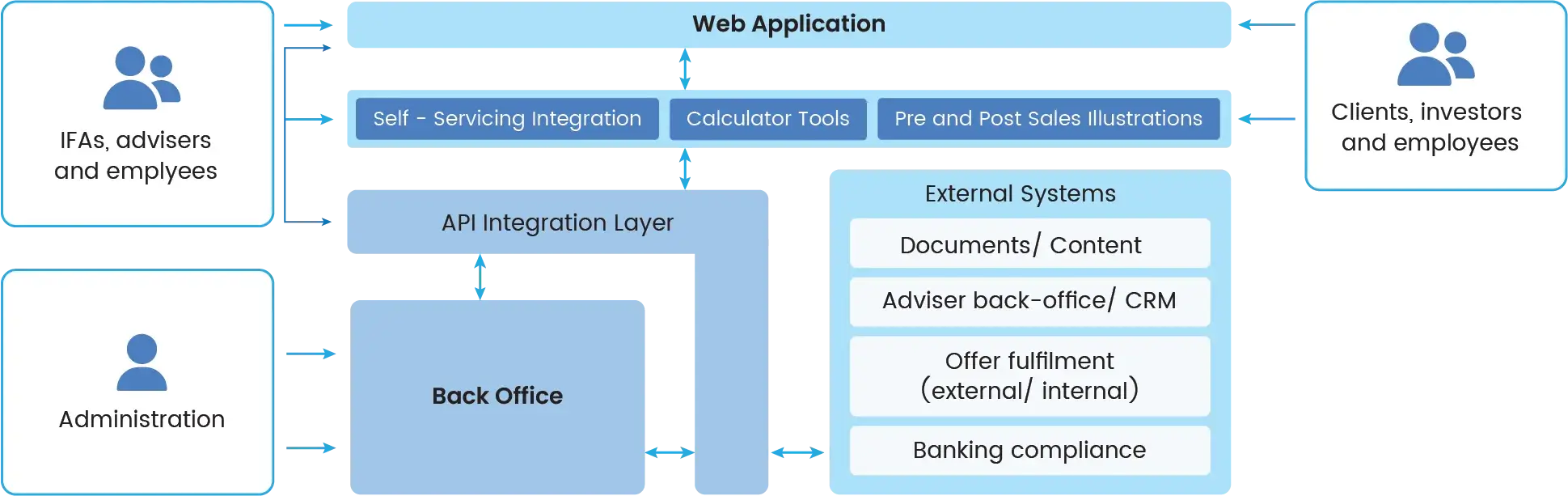
The platform is designed to provide the flexibility and scalability required to manage diverse retirement plans and investment processes. By streamlining administrative procedures and supporting both individual and bulk transactions, the solution helps improve operational efficiency while enabling more effective wealth management services.
Results
- Increased operational efficiency: The flexible platform streamlines the management of diverse retirement plans, reducing administrative burdens and improving operational efficiency.
- Improved service quality: Advanced model portfolio management tools support the creation and maintenance of well-managed investment plans, helping clients better address their customers' financial goals.
- Scalability and flexibility: The platform supports both individual and bulk processes and can adapt to evolving business requirements, helping the client meet growing needs and support long-term growth and sustainability.
This case study demonstrates TMA Solutions' experience in fintech software development and outsourcing, particularly in building scalable platforms for wealth management, retirement planning, and investment management. The project highlights TMA's ability to develop flexible financial technology solutions that address complex business requirements while improving operational efficiency and service quality.
Conclusion
Vietnam fintech software development outsourcing offers financial organizations a proven path to faster digital transformation, access to specialized AI and fintech engineering talent, and significant cost efficiency without compromising on platform quality or regulatory standards. Vietnam's combination of technical talent depth, cost competitiveness, and APAC time zone alignment makes it an increasingly strategic choice for financial services companies building the next generation of digital platforms.


.webp_2026-10-01-18-27-07-971.webp)
.webp_2026-10-01-18-17-11-290.webp)
.webp_2026-10-01-18-08-26-854.webp)
.webp_2026-10-01-17-47-32-240.webp)