Introduction
In today's data-driven economy, businesses increasingly rely on both structured and unstructured data to uncover insights, optimize operations, and drive strategic decisions. Structured data is highly organized and easily searchable, while unstructured data lacks a predefined format but contains valuable hidden insights. Understanding how to manage both effectively is essential for unlocking their potential. This article examines the core differences, challenges, and best practices for handling structured and unstructured data in modern enterprises.
What Are Structured and Unstructured Data?
Structured Data
Structured data is organized in a clear, predefined format, often stored in relational databases. It includes quantitative data (e.g., prices, revenue) and qualitative data (e.g., names, dates). For example, a financial report with company names and expense values in rows and columns is structured data.
Because of its consistent structure, this type of data allows for fast querying, reporting, and integration across systems. According to IT Pro, structured data is easily managed using tools like SQL in relational database management systems (RDBMS).
Unstructured Data
Unstructured data lacks a pre-defined schema and includes formats such as text, images, audio, and video. Common examples include social media posts, client reviews, or medical images. According to IBM, 80-90% of enterprise data is unstructured and is growing three times faster than structured data. While rich in insights, it is complex to manage and analyze without advanced tools.
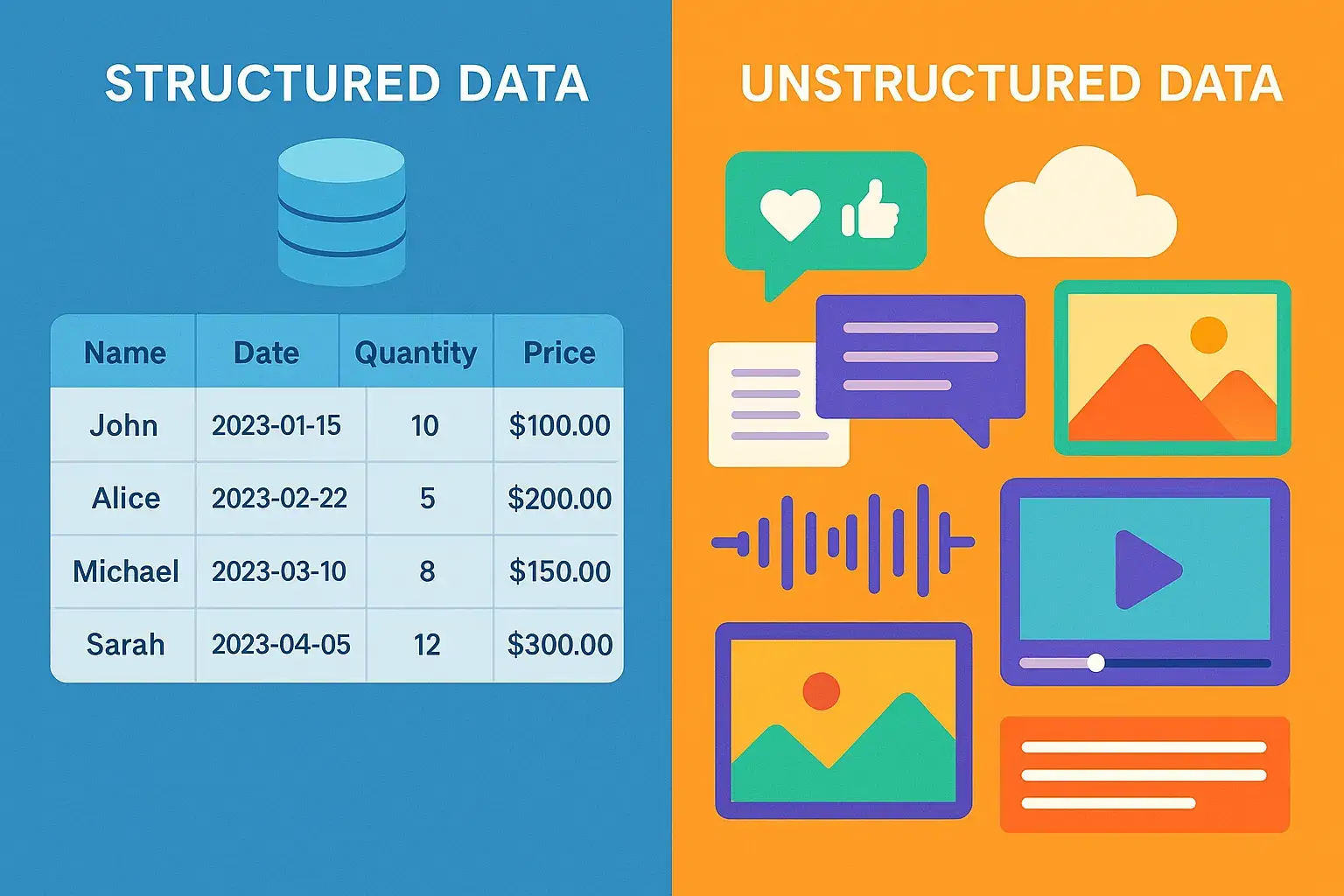
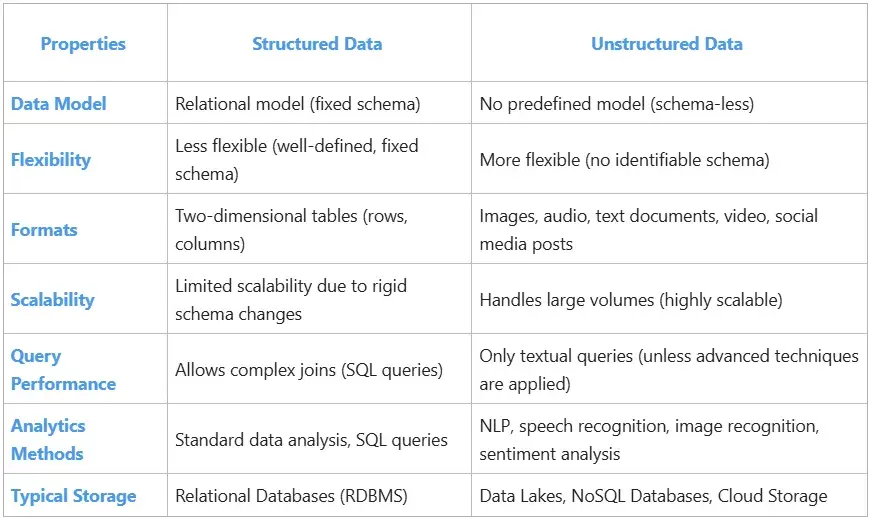
To better understand how these data types compare in practice, the table below outlines their core properties and processing characteristics.
Challenges in Managing Structured and Unstructured Data
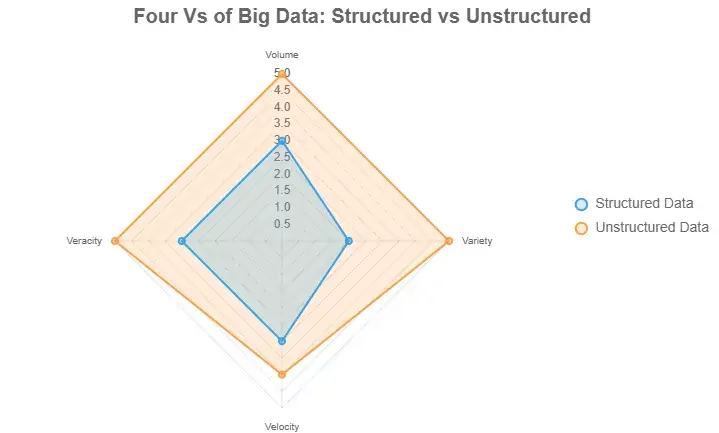
Managing both structured and unstructured data types introduces unique challenges, often referred to as the "Four Vs" of big data:
- Volume: The sheer amount of data, especially unstructured, is massive and often overwhelming.
- Variety: Unstructured data exists in many formats, making it harder to store, classify, and analyze effectively.
- Velocity: Data, particularly from IoT devices and social media, is generated at high speeds, requiring real-time processing.
- Veracity: Ensuring data accuracy, especially unstructured data, is difficult due to its complexity.
Best Practices for Structured Data Management
Data Storage and Architecture
Structured data requires robust storage solutions that can ensure data integrity and support complex queries. Organizations should adopt scalable database architectures that can accommodate future growth while maintaining performance.
Key storage approaches include:
- Relational Database Management Systems (RDBMS): Use proven platforms such as SQL Server, Oracle, or PostgreSQL for transactional data.
- Data Warehousing: Implement centralized repositories for analytical workloads and business reporting.
- Cloud-Native Solutions: Leverage platforms like Amazon RDS, Azure SQL Database, or Google Cloud SQL for scalability and reliability.
Choosing the right combination of these storage strategies enables organizations to handle structured data efficiently, both now and as data volumes grow.
Data Quality and Governance
To ensure high-quality structured data, organizations must implement systematic validation, cleansing, and monitoring processes.
Key practices include:
- Standardizing formats and definitions
- Using automated validation rules
- Conducting regular audits
- Profiling data for anomalies
A robust governance framework should define clear data ownership, enforce role-based access controls, ensure compliance with regulations, and maintain detailed metadata documentation to support accountability and data integrity.
Processing and Integration
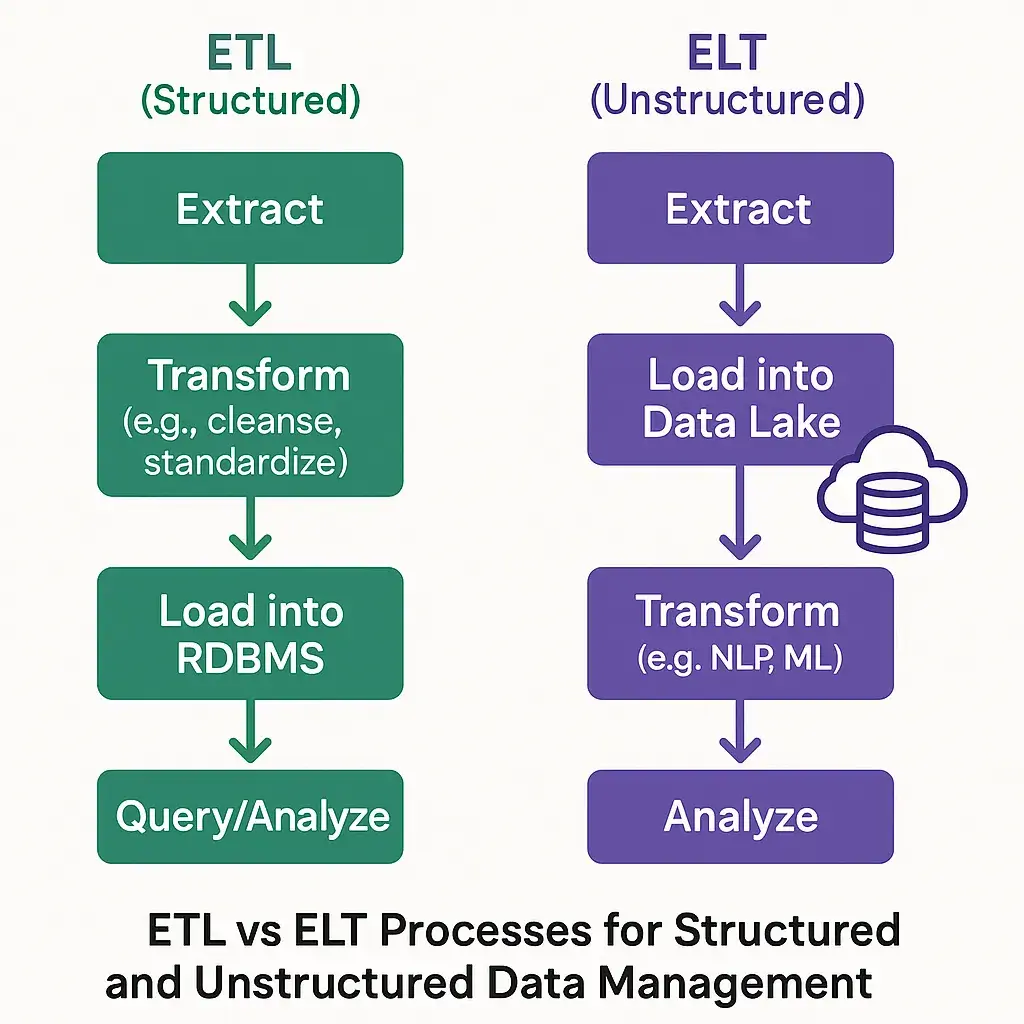
Structured data processing should follow established ETL (Extract, Transform, Load) patterns for optimal results.
Best practices include:
- Schema-on-Write: Define data structures before loading to ensure consistency.
- Batch Processing: Use scheduled ETL jobs for large-volume data integration.
- Data Transformation: Apply business rules and cleansing operations before storage.
- Performance Optimization: Implement indexing, partitioning, and query optimization strategies.
Best Practices for Unstructured Data Management
Storage Solutions and Architecture
Unstructured data requires flexible storage systems that can handle diverse formats and scale efficiently.
Recommended approaches include:
- Object Storage: Utilize cloud platforms like AWS S3, Azure Blob Storage, or Google Cloud Storage for scalable, cost-effective storage.
- Data Lakes: Implement centralized repositories that can store data in its native format.
- NoSQL Databases: Utilize platforms like MongoDB or Cassandra for schema-flexible data management and fast access to unstructured content.
- Distributed Storage: Deploy multi-location and multi-cloud strategies to enhance resilience, availability, and compliance.
Data Discovery and Governance
Effective unstructured data management relies on robust discovery and governance. Use automated tools to scan and catalog data, creating searchable metadata with AI-driven classifications by type, sensitivity, and value. Regularly update inventories to track evolving data.
Implement metadata-driven governance using flexible policies, content-based access controls, automated compliance via DLP (Data Loss Prevention) systems, and retention policies with auto-archiving to streamline lifecycle management.
Processing and Analytics
Unstructured data processing requires advanced techniques and tools to extract meaningful insights.
Best practices include:
- ELT Approach: Load data first, then transform as needed using the target system's processing power.
- Machine Learning Integration: Use AI and ML algorithms for pattern recognition and insight extraction.
- Natural Language Processing: Apply NLP techniques for text analysis and sentiment detection.
- Real-Time Processing: Implement streaming analytics for time-sensitive unstructured data.
How TMA Solutions Can Help with Structured vs Unstructured Data Management
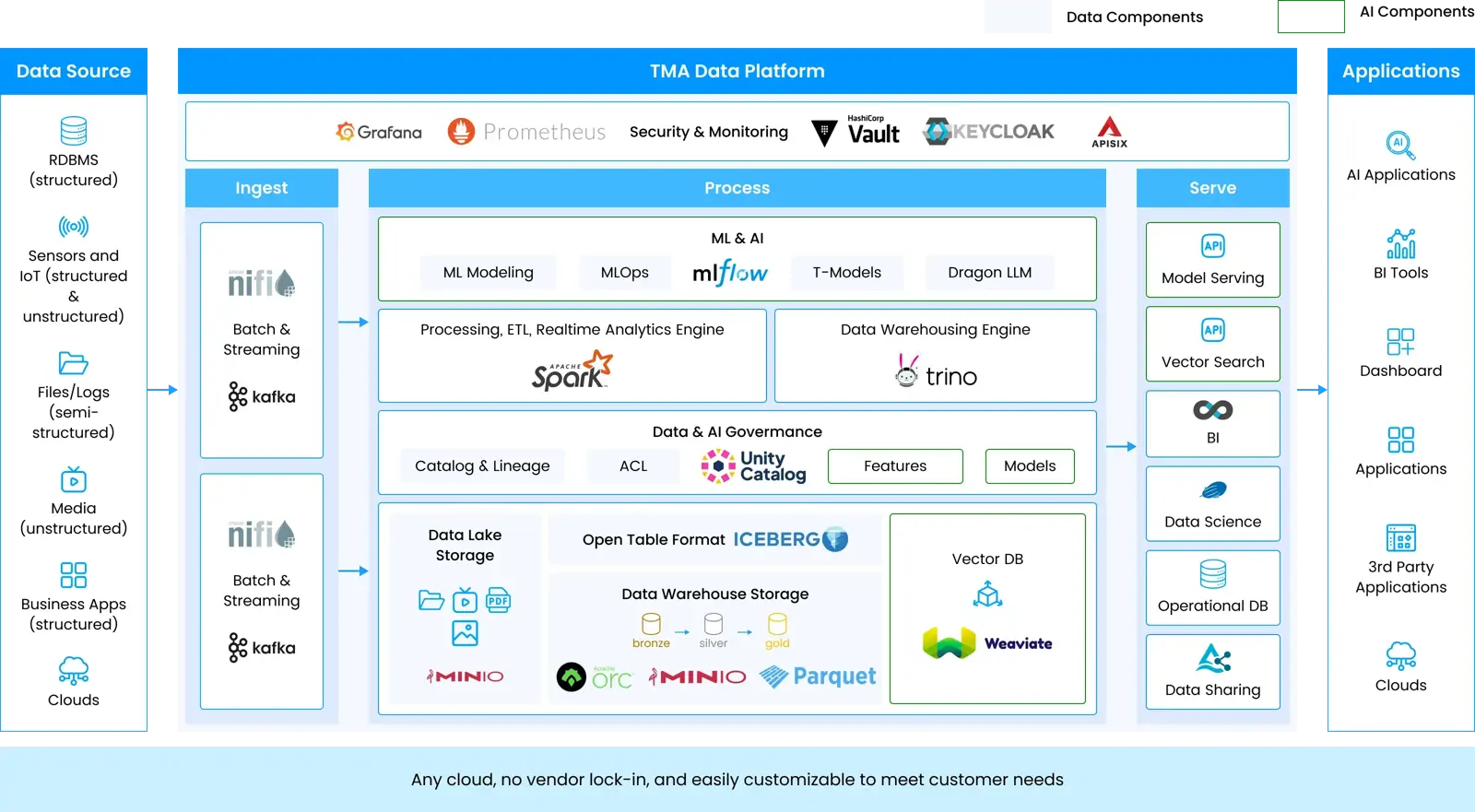
TMA Solutions is one of the TOP Vietnam software distributors has 20+ years of experience delivering enterprise-grade technology solutions. TMA positions itself as a strategic technology partner that helps organizations overcome complex structured and unstructured data challenges. Through the extensive portfolio of technologies, services, and industry expertise, TMA provides end-to-end solutions that align perfectly with the data management best practices outlined in our previous analysis.
Comprehensive Data Management Capabilities
TMA Solutions offers a robust suite of big data and analytics services specifically designed to handle both structured and unstructured data at scale. The comprehensive approach includes data migration, data visualization, standard and custom reports, data analytics and forecasting, and analyzing high-volume structured and unstructured data. TMA also specializes in designing and implementing data warehousing and data mining systems, enabling real-time data collection and analysis across enterprise environments.
Artificial Intelligence and Machine Learning Integration
TMA Solutions has established a dedicated AI Center with over 10 years of experience, 100+ AI certificates, 200+ AI engineers, and 100+ completed AI projects. Our AI capabilities directly address the challenge of extracting insights from unstructured data through computer vision, natural language processing, and machine learning services.
Healthcare Data Analytics
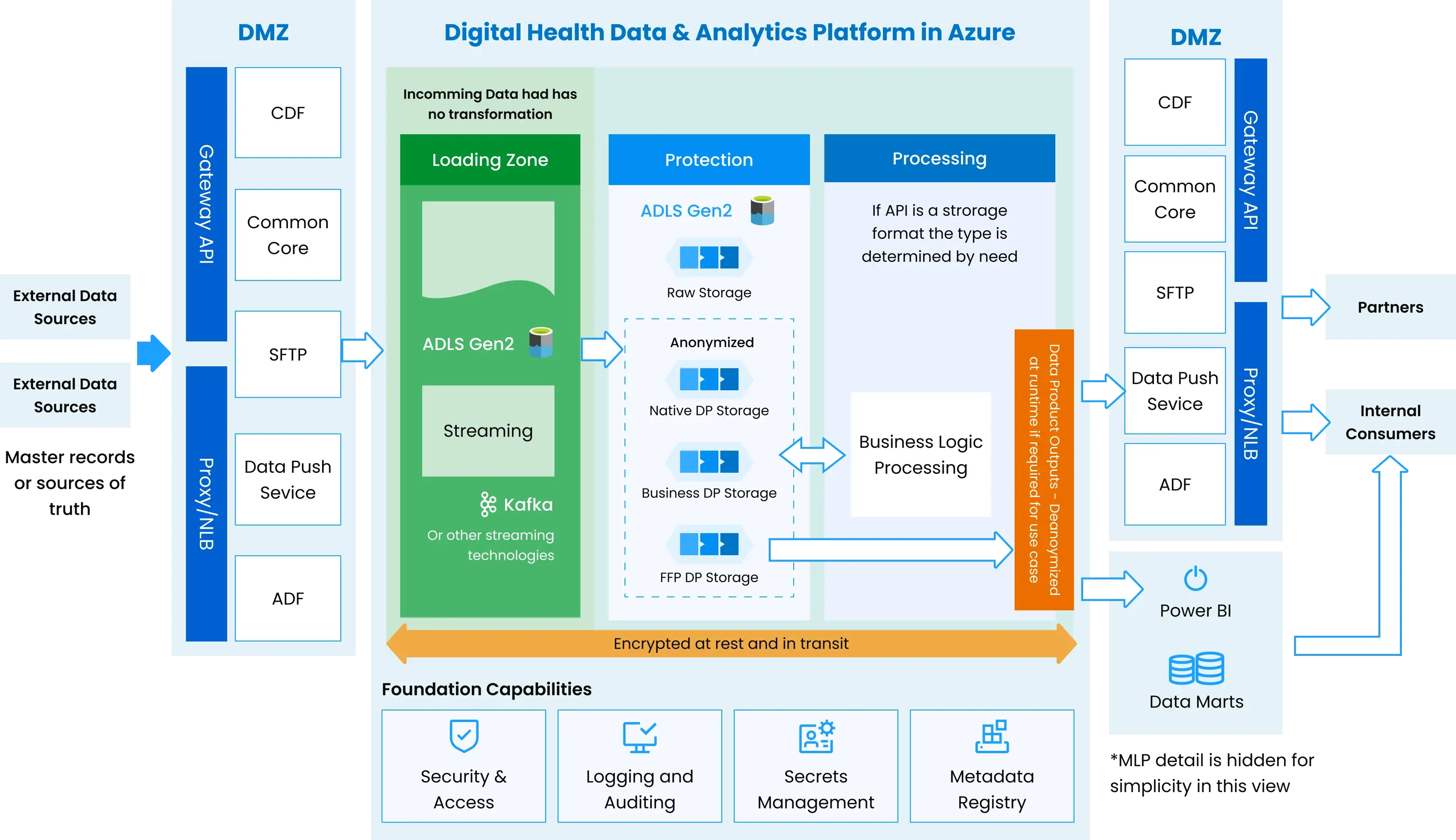
TMA Solutions has recently launched specialized HealthTech solutions focusing on senior care, home care, and remote health monitoring. Our remote health monitoring platform continuously tracks vital signs and integrates data from wearables, medical devices, prescriptions, and lifestyle factors to provide comprehensive health insights. This demonstrates our capability to handle complex, multi-source healthcare data that combines structured measurements with unstructured lifestyle information.
Unlock Your Data's Full Potential with TMA Solutions
Struggling to turn raw data into real business value? We help organizations harness structured and unstructured data using AI, Machine Learning, and Big Data technologies. From seamless data migration and visualization to advanced predictive analytics and real-time IoT solutions, our solutions are built to scale with your business and deliver measurable results.
Let’s turn your data into action.
Talk to our experts today to see how we can help you unlock your data’s full potential.


.webp_2026-10-01-18-27-07-971.webp)
.webp_2026-10-01-18-17-11-290.webp)
.webp_2026-10-01-18-08-26-854.webp)
.webp_2026-10-01-17-47-32-240.webp)