Introduction
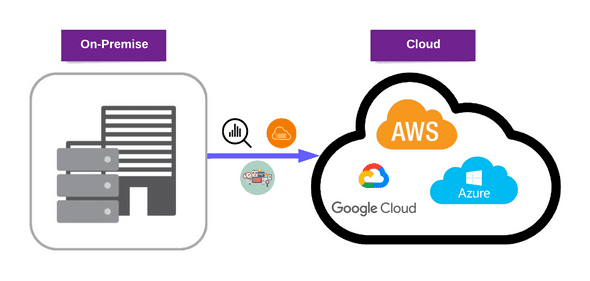
Migrating your business’s IT systems from on-premise servers to the cloud can transform operations by improving flexibility and reducing costs. This process involves transferring applications, data, and infrastructure to cloud platforms such as Amazon Web Services (AWS), Microsoft Azure, or Google Cloud.
Why Migrate?
Cloud migration offers significant benefits:
- Scalability: Dynamically adjust resources to meet demand.
- Cost Efficiency: Pay only for what you use, shifting from capital to operational expenditure.
- Agility: Quickly deploy new applications and services.
- Security: Leverage advanced cloud-native security features.
- Disaster Recovery: Improve resilience with robust backups.
The Migration Process
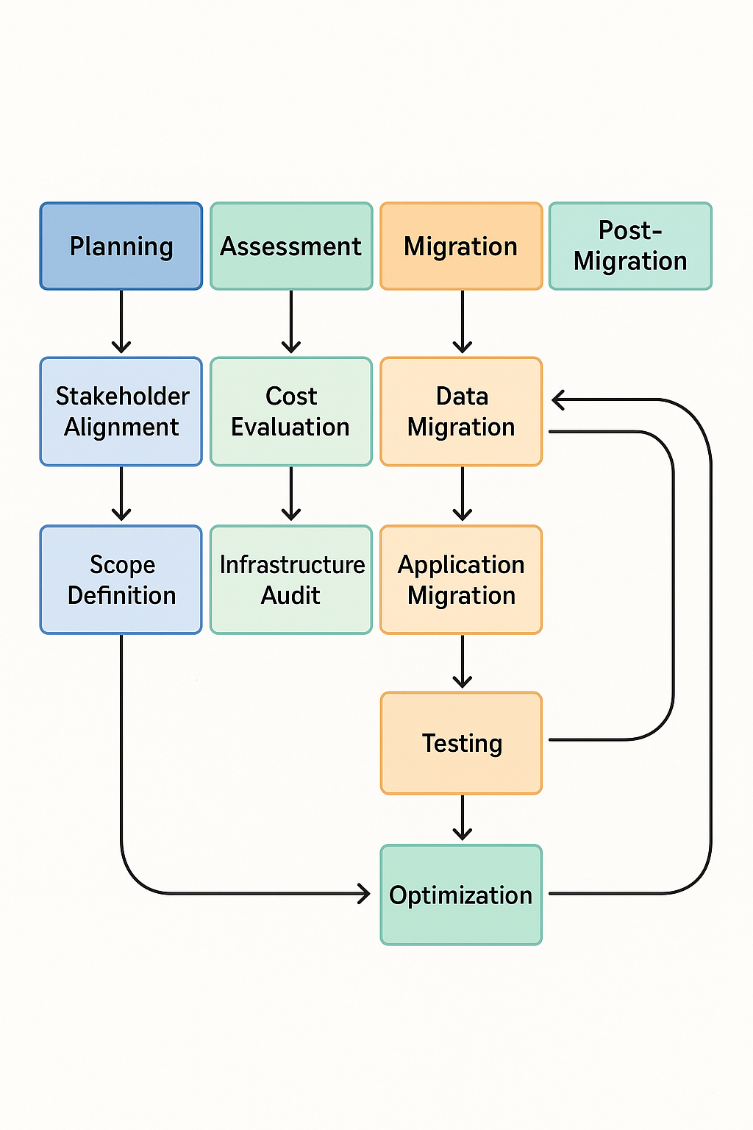
The migration process is divided into four stages: Planning, Assessment, Migration, and Post-Migration. Each stage is critical and iterative, ensuring a smooth transition.
Stage 1: Planning
The planning phase lays the groundwork for success.
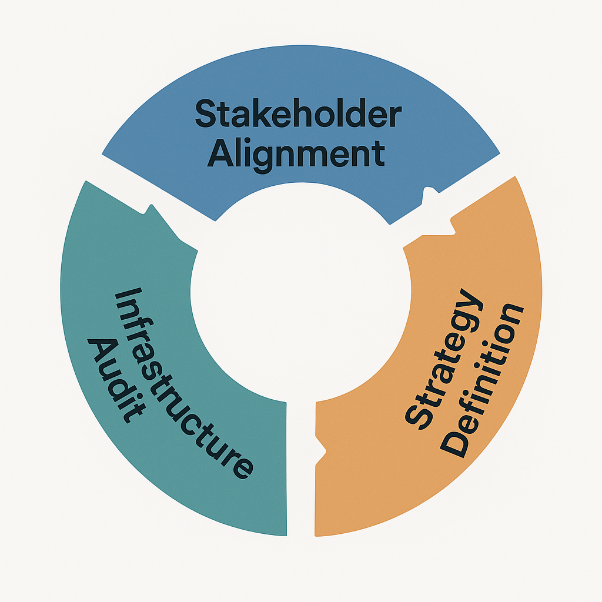
- Organizational Alignment: Engage IT, business units, and leadership for shared goals.
- Define Migration Owners: Assign a migration architect or team for oversight.
- Skill Assessment: Evaluate and address team cloud expertise gaps.
- Strategy and Planning: Outline objectives, target architecture, and timeline.
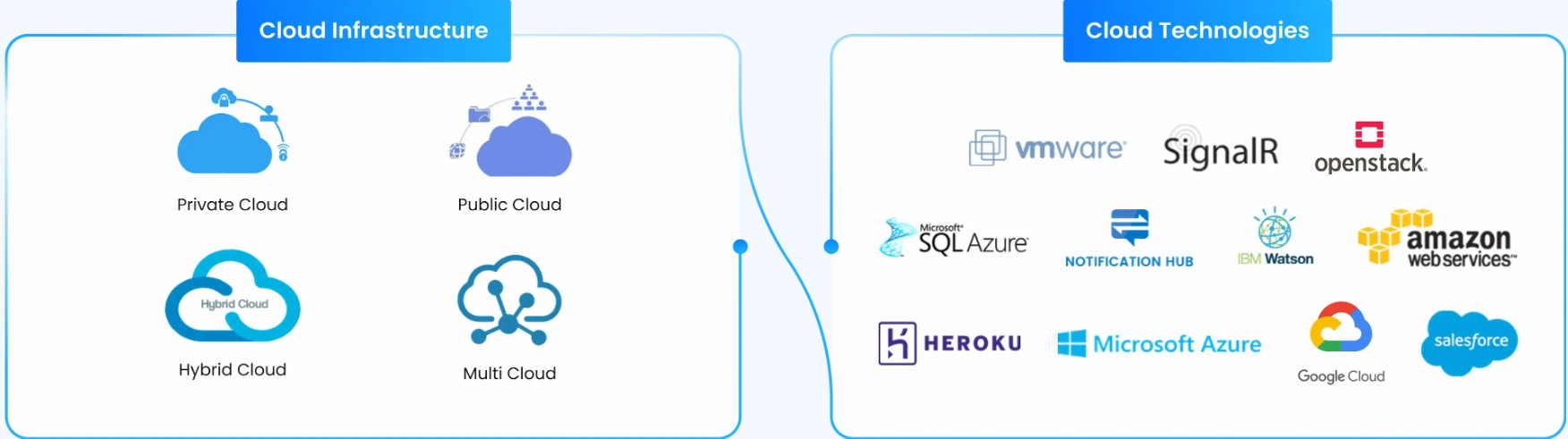
- Conduct an initial IT infrastructure audit: Inventory hardware, software, and applications. Choose a cloud model (public, private, or hybrid) and a provider (e.g., AWS, Azure, Google Cloud).
Stage 2: Assessment
The assessment phase evaluates your environment to create a migration plan.
- Cost Evaluation: Use tools like the Azure TCO Calculator to compare costs.
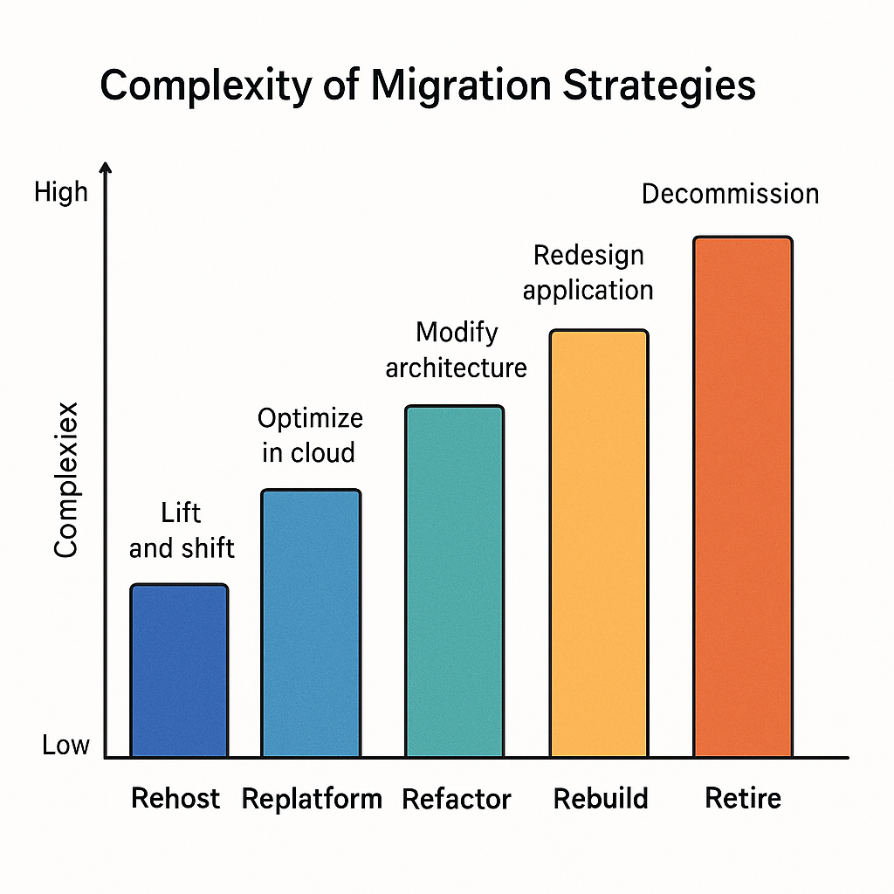
- Modernization Options: Choose a strategy per application:
- Rehost: Move as-is for speed.
- Replatform: Optimize slightly for cloud.
- Refactor: Redesign for cloud-native features.
- Rebuild: Rewrite using cloud tech.
- Retire: Decommission obsolete apps.
- Deployment Tooling: Select tools (e.g., AWS Migration Hub, Azure Migrate).
- Assumption Validation: Test dependencies and performance.
- Dependency Mapping: Document system interactions.
Prioritize workloads by complexity and criticality.
Stage 3: Migration
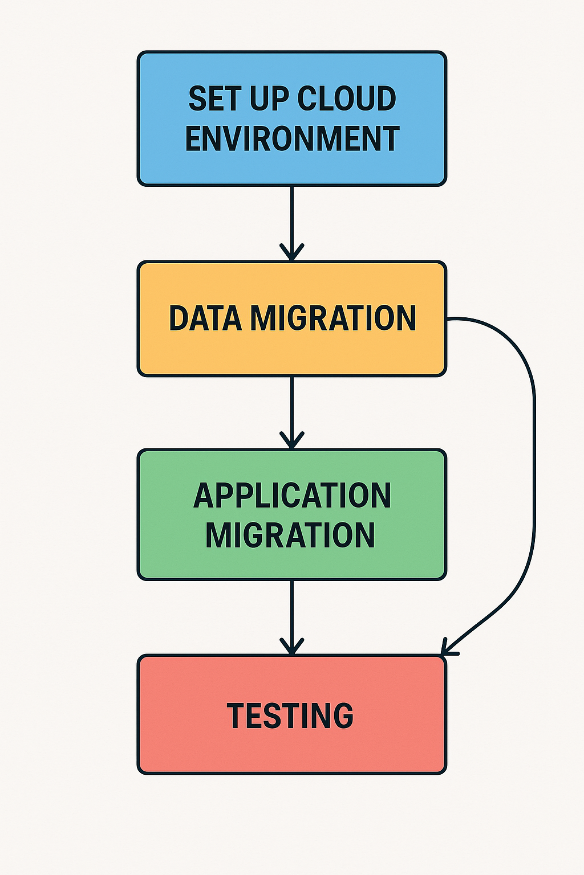
The migration phase executes the transition.
- Set Up Cloud Environment: Configure VMs, storage, networking, and security.
- Data Migration: Transfer data securely (e.g., via VPN or direct connect).
- Application Migration: Apply chosen strategies per workload.
- Testing: Validate functionality and connectivity.
Minimize downtime using tools like AWS Migration Services or Azure Migration Tools.
Stage 4: Post-Migration
The post-migration phase ensures long-term success.
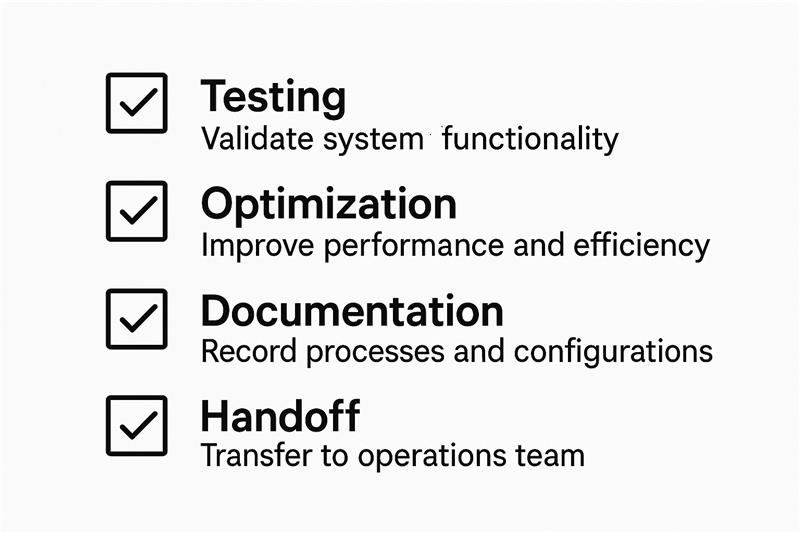
- Testing: Verify performance, functionality, and security.
- Optimization: Fine-tune resources for cost and efficiency.
- Documentation: Update records for the new architecture.
- Handoff: Train the operations team for ongoing management.
Continuous monitoring is vital for sustained benefits.
Comprehensive Flowchart
Cloud migration requires not only detailed planning but also practical expertise to optimize outcomes. At TMA Solutions, we go beyond theoretical guidance by partnering with businesses through concrete solutions validated by numerous successful projects. The following cases show how TMA has collaborated with clients across various industries to apply this structured method, resulting in measurable improvements in reliability, cost efficiency, and adaptability.
Cloud Services
TMA offers a variety of cloud services (AWS, GCP, Azure, and more) to our customers, enabling them to optimize and take advantage of cloud technology.
Services:
- Cloud Application Development
- Cloud Consulting
- Cloud Infrastructure Management
- Cloud Migration
- Cloud Deployment
- Cloud Integration
- Cloud Support & Maintenance
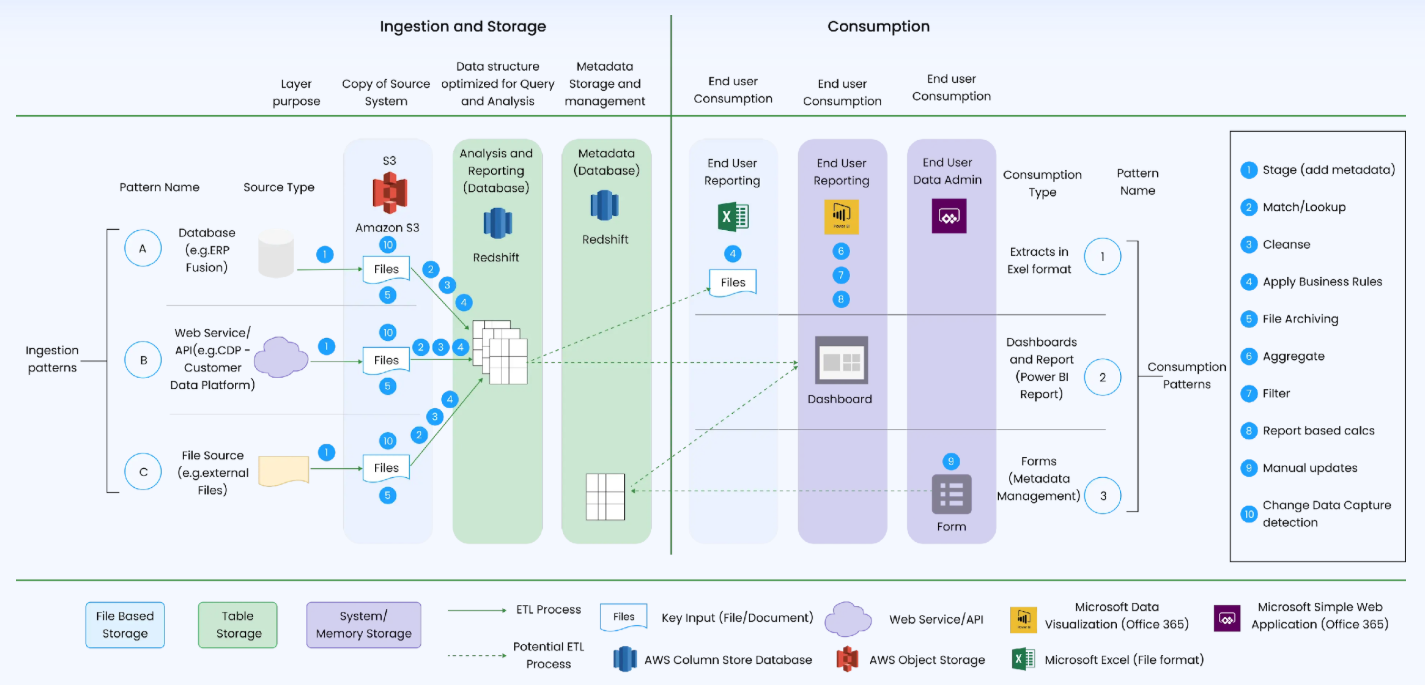
Optimizing Data Workflows on AWS
Project Highlights
Data Integration: Combine data from multiple sources into a unified environment for seamless access and efficient analysis.
Data Processing: Implement an AWS data pipeline to aggregate, transform, and store data in a centralized system.
Data Process Automation: Use advanced technology to automate manual tasks, enhancing workflow efficiency and reducing delays.
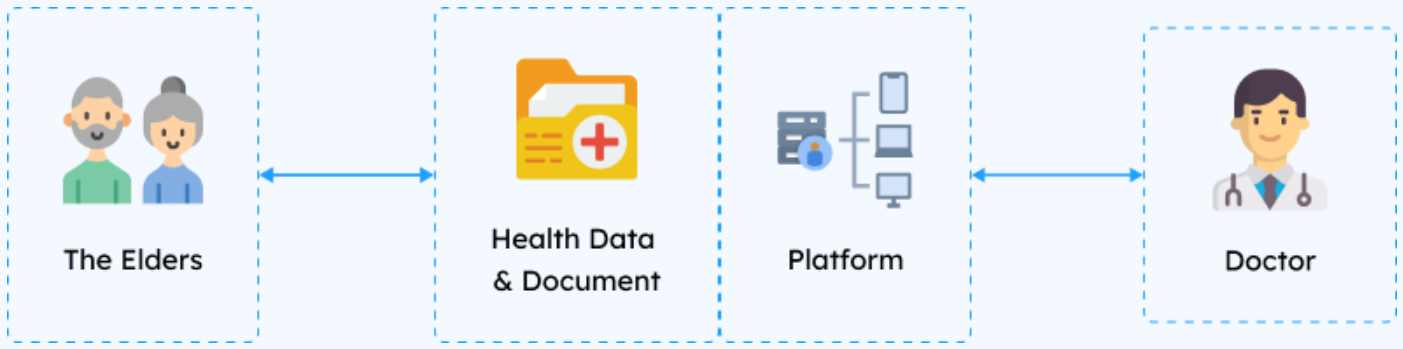
Healthcare Operations with DevOps & Cloud Solutions
Project Highlights
- Modernize legacy systems by migrating them to the cloud service (AWS), enhancing reliability and scalability.
- Increase operational productivity through the integration of CI/CD deployment, streamlining development and deployment processes.
- Scale the platform by optimizing performance, ensuring efficient and reliable operation for all users.
Conclusion
Cloud migration transforms businesses by enhancing scalability, reducing costs, and boosting agility. With TMA Solutions' proven expertise in cloud migration, we’ve helped businesses reduce costs by 30% and improve operational efficiency by 25%. The four-stage guide—Planning, Assessment, Migration, and Post-Migration—provides a structured approach for organizations to navigate the transition effectively. Start with careful planning and a trusted cloud provider to ensure a successful transition.