As AI moves from experimentation to enterprise-wide adoption, scaling capabilities efficiently has become a critical challenge. Success requires more than technology — it demands specialized talent, robust infrastructure, governance, and continuous optimization. With enterprise AI investment accelerating globally, many organizations are turning to trusted technology partners to bridge capability gaps and drive long-term success.
Introduction
As artificial intelligence (AI) moves from experimentation to enterprise-wide adoption, organizations face a new challenge: scaling AI capabilities efficiently. While many companies successfully launch pilot projects, far fewer can build, manage, and expand AI initiatives across multiple business functions.
The challenge is not simply about technology. Scaling AI requires access to specialized talent, robust infrastructure, governance frameworks, data engineering expertise, and continuous model optimization. According to the Stanford AI Index, enterprise AI investment and deployment continue to accelerate globally as organizations increasingly integrate AI into products, services, and business operations.
As AI initiatives expand, many organizations are turning to trusted technology partners to help bridge capability gaps and accelerate execution. For enterprises seeking long-term success, selecting the right AI development partner is becoming a critical component of AI strategy.
Why Scaling AI Teams Is More Difficult Than Starting AI Projects
Launching an AI proof of concept is often easier than operationalizing AI at scale. Many organizations discover that successful AI deployment requires capabilities beyond their existing technology teams. According to IBM, scaling AI requires the infrastructure, data, and operational capabilities necessary to extend AI across day-to-day business processes. As AI initiatives grow, many organizations seek external expertise to overcome resource constraints and accelerate enterprise-wide adoption.
The Growing Demand for AI Talent
As organizations expand AI initiatives across business functions, the demand for specialized AI talent continues to rise. However, building and scaling AI teams remains one of the biggest challenges facing enterprises today.
AI Projects Require Multidisciplinary Expertise
Successful AI implementation involves far more than developing machine learning models. Organizations often need expertise across multiple disciplines, including:
- Machine learning engineering
- Data engineering
- MLOps and AI operations
- Generative AI development
- AI governance and risk management
- Cloud and platform architecture
Building these capabilities internally can require significant investments in recruitment, training, and infrastructure.
AI Talent Shortages Continue to Slow Enterprise Adoption
The shortage of qualified AI professionals has become a major barrier to scaling AI initiatives. According to the World Economic Forum, 94% of business leaders report shortages in AI critical skills, with one-third experiencing talent gaps of 40% or more in key roles.
This challenge is further reflected in labor market research. The UK Government's AI Labour Market Survey found that 35% of organizations struggle to fill AI positions, with insufficient technical skills and a lack of experienced candidates identified as the primary obstacles.
As AI adoption accelerates, enterprises increasingly face competition for experienced AI engineers, data scientists, and AI architects. For many organizations, partnering with trusted AI technology providers has become a practical strategy to access specialized expertise, accelerate delivery, and scale AI capabilities more efficiently.
Enterprise AI Requires More Than Models
Implementing AI at scale requires more than powerful algorithms. Organizations must establish the right foundation across data, infrastructure, governance, and operational processes to ensure AI solutions can be deployed, managed, and scaled effectively across the enterprise.
Data and Infrastructure Challenges
Many enterprises operate with fragmented data environments, legacy systems, and disconnected applications that complicate AI implementation.
High-Quality Data Is Essential for AI Success
AI systems are only as effective as the data they rely on. Inaccurate, incomplete, or poorly governed data can lead to unreliable outputs, reduced model performance, and flawed business decisions. Establishing a strong data foundation is critical for ensuring AI delivers consistent and measurable value across the organization.
Operationalizing AI at Scale
Organizations must manage model deployment, monitoring, governance, security, and continuous improvement across multiple business units.
The Role of Trusted AI Technology Partners
As AI becomes more deeply embedded in business operations, organizations need more than technical expertise to scale successfully. According to PwC, enterprises that establish strong foundations for trusted AI are better positioned to scale AI initiatives while managing risks related to governance, transparency, security, and compliance.
Trusted technology partners can help organizations build these foundations and accelerate AI adoption with greater confidence.
Accelerating AI Adoption with Proven Expertise
Building AI capabilities internally often requires significant investments in talent, infrastructure, and operational processes. By partnering with experienced AI providers, organizations gain access to specialized expertise, established delivery frameworks, and industry best practices that help reduce implementation complexity and improve project outcomes.
Enabling Responsible and Scalable AI Deployment
Successful AI initiatives require more than model development. Organizations must establish governance frameworks, monitor AI performance, manage risks, and ensure compliance with evolving regulations.
Reducing Time-to-Value
With access to experienced AI teams and proven implementation methodologies, organizations can move more quickly from experimentation to production. This allows businesses to realize value from AI investments faster while maintaining operational quality and governance standards.
What Enterprises Should Look for in an AI Technology Partner
As AI adoption moves beyond experimentation and into enterprise-wide deployment, selecting the right AI technology partner has become a strategic business decision rather than a purely technical one. McKinsey's research shows that only a small percentage of companies have successfully integrated AI into workflows in ways that generate substantial business outcomes. Enterprises that achieve the greatest impact are those that align AI initiatives with strategic business objectives, redesign core processes, and establish the governance structures needed to scale AI effectively.
As a result, organizations should evaluate AI partners based on their ability to deliver measurable business outcomes and enterprise transformation, rather than focusing solely on technical capabilities.
Technical Capabilities Across the Entire AI Lifecycle
Many AI vendors specialize in a specific area such as chatbot development, machine learning models, or data analytics. However, enterprise AI initiatives often require expertise across multiple disciplines to move successfully from proof-of-concept to production.
Key capabilities may include:
- AI strategy and consulting: Defining AI roadmaps aligned with business objectives.
- Generative AI development: Building applications powered by large language models and generative AI technologies.
- AI Agent and Agentic AI solutions: Building autonomous AI assistants and agents.
- Machine learning and predictive analytics: Using data to generate insights, forecasts, and recommendations.
- Data engineering and MLOps: Managing data pipelines and AI model deployment at scale.
- Enterprise AI integration: Embedding AI into enterprise applications and workflows.
Organizations should look beyond individual technologies and assess the partner's ability to deliver end-to-end AI solutions. This includes everything from strategy and development to deployment, governance, and long-term optimization.
Industry Experience
Technical expertise alone is often insufficient for enterprise AI projects. Industry knowledge enables AI partners to better understand business processes, regulatory requirements, and operational challenges specific to each sector.
Industries commonly adopting AI include:
- Healthcare: Improving patient care, diagnostics, and operational efficiency.
- Manufacturing: Optimizing production, quality control, and predictive maintenance.
- Financial Services: Supporting fraud detection, risk assessment, and customer service.
- Telecommunications: Enhancing network management and customer experience.
- Logistics: Improving route planning, supply chain visibility, and demand forecasting.
- Retail and E-commerce: Personalizing customer experiences and optimizing inventory management.
Organizations should prioritize partners with proven experience delivering AI solutions across their industry, as domain expertise can accelerate implementation and reduce project risks.
Scalability and Long-Term Support
Successful AI implementation does not end at deployment. AI systems require ongoing monitoring, optimization, and governance to continue delivering value over time.
Organizations should evaluate whether a technology partner can support:
- Solution scaling: Expanding AI solutions across teams, departments, or regions.
- Model monitoring: Tracking model performance and detecting potential issues.
- Performance optimization: Continuously improving accuracy, efficiency, and business outcomes.
- Governance and compliance: Maintaining security, transparency, and regulatory compliance.
- Continuous innovation: Adopting new AI capabilities as technologies evolve.
Organizations should look for partners that can provide long-term support and continuous improvement, helping AI initiatives remain effective as business needs and technologies change.
Common AI Team Scaling Models
As AI initiatives expand, organizations often adopt different team scaling models based on their internal capabilities, resource requirements, and long-term AI strategy.
AI Centers of Excellence (CoE)
Many enterprises establish AI Centers of Excellence (CoEs) to centralize AI leadership and coordinate AI initiatives across the organization.
Key benefits include:
- Centralized AI strategy, governance, and best practices.
- Improved collaboration across business units.
- Consistent standards for AI development and deployment.
- Better oversight of AI investments and innovation initiatives.
Technology partners can support CoEs by providing specialized expertise, implementation support, and additional resources to accelerate AI adoption.
AI Team Augmentation
AI team augmentation allows organizations to expand existing teams with external AI specialists while maintaining internal project ownership.
Key benefits include:
- Faster access to specialized AI skills.
- Increased development capacity without lengthy recruitment processes.
- Flexibility to scale resources based on project needs.
- Reduced hiring and training costs.
This model is often suitable for organizations that already have AI leadership but require additional expertise in areas such as generative AI, machine learning, or MLOps.
Dedicated AI Development Teams
Dedicated AI development teams provide a complete team of AI professionals focused on delivering AI solutions for a specific organization or project.
Key benefits include:
- Access to AI engineers, data scientists, architects, and project managers.
- End-to-end support from development to deployment.
- Faster execution of AI initiatives.
- Reduced burden on internal hiring and resource management.
This model is ideal for organizations looking to scale AI programs quickly while gaining access to experienced AI talent and proven delivery processes.
Scaling Enterprise AI Teams with TMA Solutions
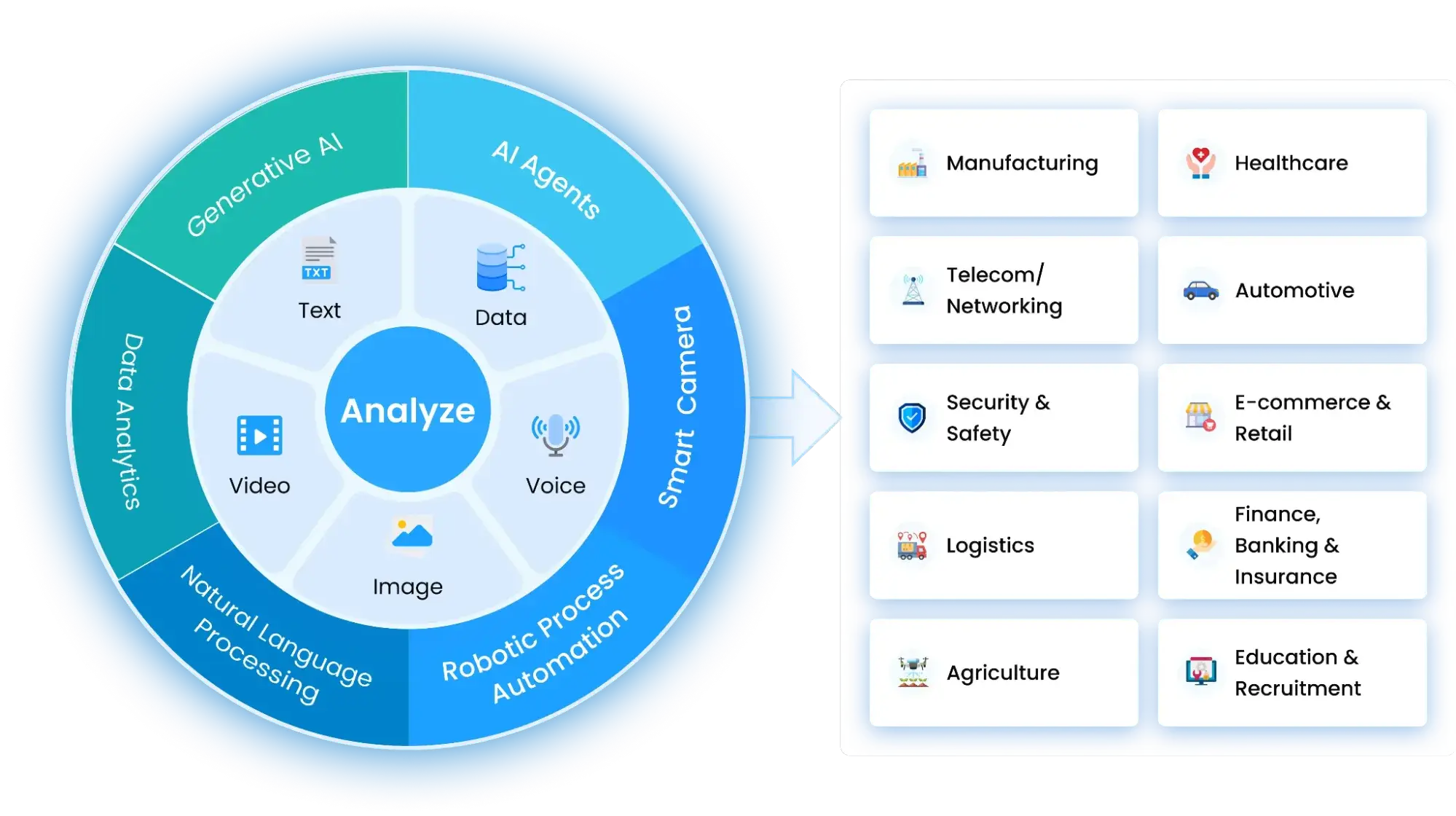
Scaling AI successfully requires a combination of technical expertise, engineering resources, and industry experience. Through our AI Center and AI Agent Factory, TMA Solutions helps organizations accelerate AI adoption and expand AI capabilities across business functions.
With more than a decade of AI research and development experience, TMA Solutions supports enterprises through:
- Develop AI Features / Products
- Setup AI Development Center
- Provide AI Solutions
- AI as a Service (AIaaS)
TMA's AI expertise has been applied across industries including healthcare, manufacturing, telecommunications, logistics, finance, retail, education, automotive, and agriculture. By combining deep technical expertise with scalable delivery models, TMA Solutions helps organizations expand AI teams, accelerate implementation, and create long-term business value from AI investments.
Conclusion
As AI adoption continues to accelerate, enterprises face increasing pressure to scale AI capabilities efficiently while maintaining quality, governance, and operational performance. Building internal expertise remains important, but trusted technology partners can significantly reduce implementation risks and accelerate business outcomes.
Organizations that combine internal knowledge with experienced AI partners are often better positioned to scale AI initiatives, expand innovation capabilities, and create sustainable competitive advantages in an increasingly AI-driven business environment.


.webp_2026-10-01-18-27-07-971.webp)
.webp_2026-10-01-18-17-11-290.webp)
.webp_2026-10-01-18-08-26-854.webp)
.webp_2026-10-01-17-47-32-240.webp)