According to The Joint Commission, the number of alarm signals per patient per day can reach several hundred, depending on the hospital unit. When data from monitors, infusion pumps and ventilators stays on each device, nurses must record it by hand, and doctors find it hard to follow a patient's condition in time. This is why many hospitals invest in medical device integration.
This article explains what medical device integration (MDI) is, how MDI works, the core standards, common use cases and how to build an integration solution for hospitals.
1. What is medical device integration (MDI)?
Medical device integration (MDI) is the process of connecting medical devices such as patient monitors, infusion pumps, ventilators and blood pressure monitors with hospital information systems, so that data goes automatically into electronic medical records (EMR/EHR). Nurses no longer need to read values on a screen and write them down. Instead, MDI sends data to the right patient record, at the right time and in the right format.
The scope of MDI goes beyond the hospital. In addition to bedside devices in the intensive care unit (ICU) or the operating room, MDI also connects wearables and home devices. As a result, doctors have a continuous view of patient health, both during the hospital stay and after discharge.
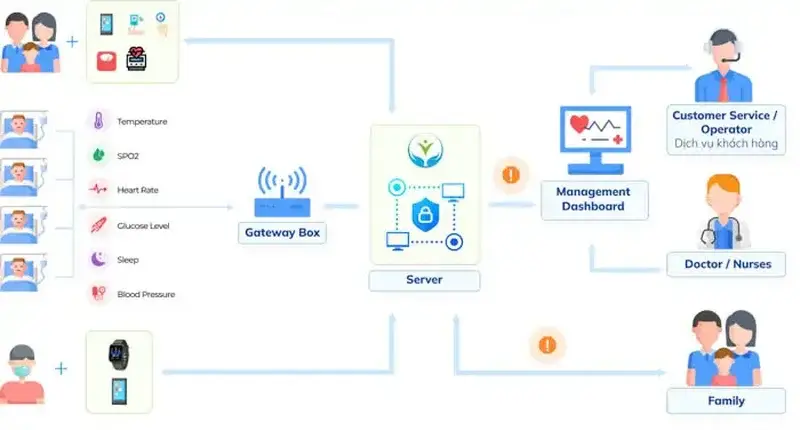
An MDI system usually has three parts: medical devices that create data, a connection layer (a gateway or middleware) that collects and converts data, and the systems that receive data, such as EMR/EHR, the hospital information system (HIS) or the clinical decision support system (CDSS).

2. Why medical device integration is important in modern healthcare
Hospitals today use more and more devices, but the data from these devices is still not fully connected.
Data from the Office of the National Coordinator for Health Information Technology (ONC) show that 70% of hospitals took part in all four domains of interoperable data exchange in 2023. This also means that about 30% of hospitals have not reached this level, even in a market with advanced digital health infrastructure like the US.
A 2018 study in BMC Emergency Medicine found that manual recording of vital signs took an average of 7.7 minutes from measurement to documentation, compared with 0.6 minutes with automatic recording. This delay means that doctors may make decisions based on old data, especially for critically ill patients.
The Joint Commission’s sentinel event database recorded 98 alarm-related events from January 2009 to June 2012, and 80 of these events led to death. When alarms only appear on the device and there are too many unnecessary alarms, staff can easily miss the alarms that really matter.
Benefits of medical device integration
Less time on documentation: data goes into EMR/EHR automatically, so nurses have more time for patient care.
More complete and accurate data: the system removes manual copying, so there are fewer wrong entries, missing values or mix-ups between patient records.
Timely clinical decisions: doctors can see vital sign trends in real time and spot early signs of decline.
Better alarm management: alarms are filtered and sent to the right person, which helps reduce alarm fatigue.
Care beyond the hospital: data from home devices helps hospitals monitor chronic patients and patients after discharge.
A foundation for analytics and AI: standardized device data is the input for prediction models and clinical decision support systems.
3. How medical device integration works
MDI works as a chain of four steps, from the moment a device takes a reading to the moment a doctor receives the information. The example below describes a patient after surgery who is under monitoring in the ICU.
3.1. Medical devices collect patient health data
In the first step, medical devices measure and record patient health data. Bedside monitors measure heart rate, blood pressure and SpO2, syringe pumps record the infusion rate, and ventilators record breathing parameters. Before data is sent, each device must be linked to the right patient, usually by scanning the barcode on the patient's wristband and on the device.
3.2. Data is transmitted from devices to healthcare platforms
After measurement, data is sent from the device to the healthcare platform. Bedside devices usually connect through a serial port or a LAN to a gateway, while wearables and home devices use Bluetooth or Wi-Fi to send data through a phone to the cloud. During transfer, data is encrypted to protect patient health information.
3.3. Healthcare systems process and standardize device data
Each device brand may use its own data format and units, so the system needs to process and standardize the data before use. Middleware converts data into common standards such as HL7 v2 or FHIR, maps measurement names to standard codes and removes noise, for example when a sensor falls off the patient. As a result, EMR/EHR and other applications can read data from every device in the same way.
3.4. Healthcare providers access real-time insights and alerts
In the last step, the standardized data goes into EMR/EHR for nurses to confirm, and it also appears on the central dashboard of the unit. When a value goes above or below the limit, the system sends an alert to the phone of the nurse in charge. In the example of the patient after surgery, if SpO2 falls slowly over several hours, the doctor can see this trend and act before the condition gets worse.
4. Core standards for medical device integration
The FDA guidance on interoperable medical devices, issued in September 2017, helps identify the requirements for electronic devices to share and use data in a safe and effective way. One foundation of this interoperability is common standards, which help devices from different brands "speak the same language" as hospital systems. Below are the standards that often appear in an MDI project.
| Standard | Role in MDI | Example of use |
| HL7 v2 | A common message format to send readings from a gateway to EMR/EHR and HIS | Send vital signs from a monitor to the patient record |
| HL7 FHIR | An API-based data exchange standard, suitable for mobile and cloud apps | Send wearable data to the EHR through Observation and Device resources |
| ISO/IEEE 11073 | A set of standards for communication and codes for medical devices, including point-of-care devices and personal health devices | Use the same codes for values such as heart rate and SpO2 across brands |
| IHE PCD | Integration profiles for patient care devices, based on HL7 and IEEE 11073 | The DEC profile sends device data to the EMR, and the ACM profile manages alarms |
| DICOM | A standard to store and send medical images | Connect CT, MRI and ultrasound machines with the PACS |
| Bluetooth Low Energy, Wi-Fi | Wireless connection protocols for wearables and home devices | A blood pressure monitor sends results to a phone app |
According to IHE, the Device Enterprise Communication (DEC) profile sends device data to hospital-level applications such as CDSS, clinical data repositories and EMR. In practice, many projects combine these standards: devices use IEEE 11073, the gateway converts data to HL7 v2 based on IHE profiles, and new applications read data through FHIR.
5. Common use cases of medical device integration
MDI can be applied in many places, from ICU beds to patients' homes. Below are four common use cases.
5.1. ICU and bedside monitoring
ICU and bedside monitoring is the connection of monitors, ventilators and infusion pumps for critically ill patients with hospital systems, so that data is recorded continuously.
How it works: devices send data every minute to a gateway, and the data then goes to the ICU electronic flowsheet and the EMR. Alarms are filtered and sent to the right nurse.
Example: a nurse who is with another patient still receives an alert on the phone when the ventilator of a patient in their care raises an alarm.
Benefits: less time on documentation, fewer unnecessary alarms and a faster response from the care team in critical situations.
5.2. Remote patient monitoring
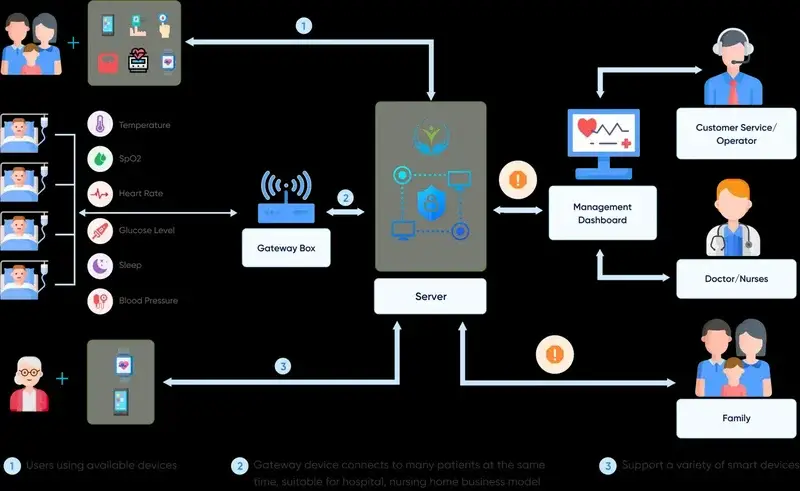
Remote patient monitoring (RPM) is the use of wearables and home devices to collect patient health data outside the hospital and send it to the care team.
How it works: blood pressure monitors, pulse oximeters or smart scales send results through Bluetooth to a phone app, and the data then goes to a cloud platform. Nurses follow the data on a dashboard and contact patients when a value is abnormal.
Example: a patient after heart surgery leaves the hospital earlier but still checks blood pressure and heart rate at home every day.
Benefits: fewer unnecessary follow-up visits, earlier detection of complications after discharge and better use of hospital beds.
5.3. Chronic disease management
Chronic disease management with MDI is the use of device data to monitor patients with heart failure, hypertension, diabetes or COPD over the long term and adjust their treatment.
According to the TIM-HF2 trial published in The Lancet in 2018, heart failure patients under remote management had a death rate of 8% per year, compared with 11% in the usual care group. This result means a 30% reduction in all-cause mortality in a program that combined daily device data with a telemedical center.
How it works: patients measure values such as weight, blood pressure, ECG or blood glucose every day. The system compares the data with each patient's own limits and informs the doctor when there is an important change.
Example: a heart failure patient gains 2 kg in a few days, and the system warns of fluid build-up so the doctor can adjust the medication before the patient needs to go to the hospital.
Benefits: fewer hospital admissions, better self-management for patients and long-term data for treatment decisions.
5.4. EHR/EMR integration
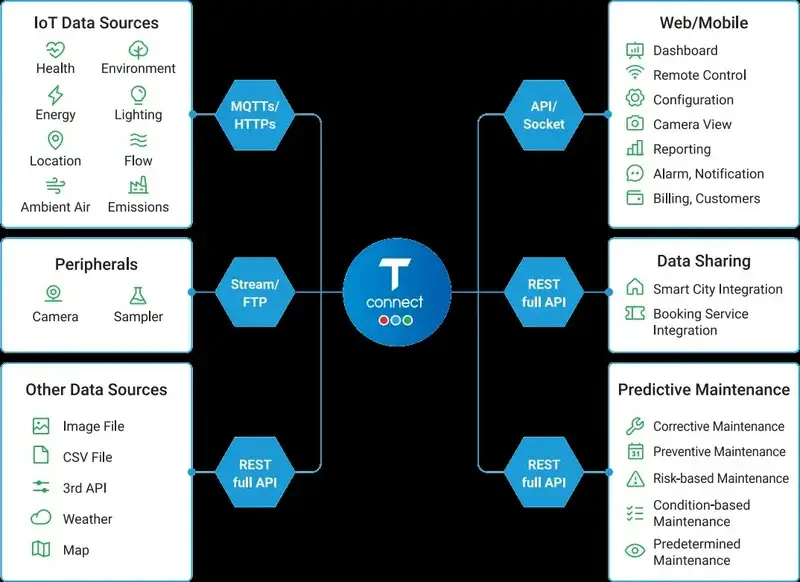
EHR/EMR integration is the transfer of device data directly into the electronic medical record, so that all patient information is in one place.
How it works: device data is sent to EMR/EHR through HL7 or FHIR. Nurses only need to review and confirm the results instead of entering them again.
Example: blood pressure, temperature and SpO2 readings from the morning ward round appear automatically in the vital signs table of the EMR.
Benefits: patient records are more complete and up to date, which supports early warning systems and quality reports.
6. How to build a healthcare integration solution for hospitals
To build a medical device integration solution, hospitals usually follow these four steps:
6.1. Define integration goals and healthcare workflows
First, the hospital needs to set clear integration goals, for example less documentation time in the ICU or home monitoring for heart failure patients. Next, the project team studies the real workflows of doctors and nurses, lists the devices to connect and decides which data should go into which system. This step helps the solution fit the way healthcare staff work, instead of forcing them to change for the software.
6.2. Choose the right integration standards and technologies
With a list of devices and target systems, the hospital needs to choose suitable standards and technologies. For example, the current EMR may only accept HL7 v2, while a new RPM app should use FHIR. The hospital also needs to decide whether to use ready-made middleware or build its own integration layer, based on the number of devices, the budget and expansion plans.
6.3. Design a secure and scalable integration architecture
Next, the project team designs an integration architecture that is both secure and easy to scale. Health data needs encryption in transit and at rest, with access control and audit logs in line with rules such as HIPAA or GDPR. At the same time, the architecture should allow new devices, new units or new sites without a rebuild from the start.
6.4. Partner with an experienced healthcare technology provider
A healthcare integration solution needs both strong technical skills and a deep understanding of clinical workflows. For this reason, hospitals should choose a partner with experience in healthcare software to save time and cost. When they choose a partner, hospitals can consider these criteria:
Real device integration experience: which types of devices the partner has connected and whether they have similar projects for reference.
Knowledge of healthcare standards: the team has experience with HL7, FHIR, IEEE 11073 and common EMR/EHR systems.
Security and compliance: the development process meets information security standards and health data regulations.
Testing capability: the partner can run integration tests with real devices and cases of lost connection.
Long-term support: the partner has enough resources to maintain the system and add new devices as the hospital grows.
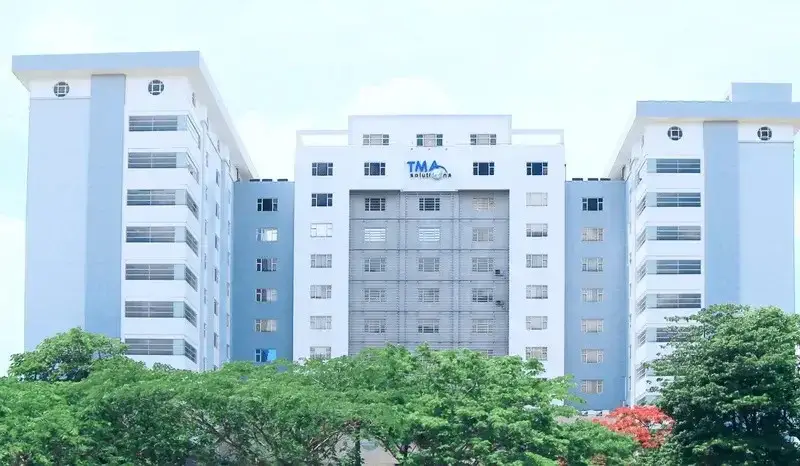
TMA Solutions is a software development company from Vietnam, founded in 1997 in Ho Chi Minh City, with about 4,000 engineers. TMA's Healthtech center has more than 700 engineers and more than 16 years of experience in healthcare, with clients in Australia, the US, Ireland, Sweden, New Zealand and Vietnam.
When you work with TMA, your hospital can benefit from:
Experience with many types of devices: TMA has brought more than 50 types of wearable and non-wearable devices into one platform, including blood pressure monitors, ECG devices, glucose meters, SpO2 devices, spirometers and smart scales.
Connection based on healthcare standards: TMA's remote health monitoring platform offers APIs and SDKs based on HL7 FHIR and supports Bluetooth, Wi-Fi, NFC and ANT+ connections.
Real projects with medical device companies: TMA has delivered device integration for a rehabilitation health technology company in Australia and an elderly care device maker in Canada.
Certified quality and security: TMA holds CMMI Level 5 and ISO/IEC 27001 certificates, and its solutions are designed to be ready for HIPAA and GDPR.
End-to-end development and testing: TMA offers software development services to build the integration layer and software testing services to test the system with real devices before go-live.
If your hospital plans to connect medical devices with EMR/EHR or start a remote monitoring program, TMA's Healthtech team can work with you to define the right scope and architecture.
7. Frequently asked questions about medical device integration
7.1. How much does it cost to develop a medical device integration solution?
There is no fixed cost for an MDI solution, because it depends on the project scope. The main cost factors are the number and types of devices to connect, the number of target systems such as EMR/EHR or HIS, the choice between ready-made middleware and custom development, security and compliance needs, and maintenance after launch. A common approach is to start with one unit or one group of devices, measure the results and then expand.
7.2. What challenges do hospitals face when implementing medical device integration?
Hospitals usually face five main challenges when they implement MDI:
Many types of devices: devices come from many brands and generations, and some older devices have no standard connection port.
Correct patient matching: if the process to link devices with patients is not strict, data may go into the wrong record.
Security: each networked device is a possible point of attack.
Too many alarms: without good filtering, the system can increase alarm fatigue.
Changes to workflows: nurses and doctors need training to trust and use automatic data.
7.3. How long does it take to implement a medical device integration solution?
The time depends on the project size and how ready the current systems are. A pilot project for one unit with a few types of devices is usually much faster than a hospital-wide rollout. The steps that often take the most time are workflow analysis, work with the EMR/EHR vendor, tests with real devices and staff training.
7.4. What is the difference between interoperability and integration?
Integration is the technical connection between two specific systems so that data can move from one to the other, for example a link between a monitor and the EMR. Interoperability is wider: it is the ability of different systems to exchange data and understand its meaning correctly through common standards. In other words, integration is the method, and interoperability is the goal.
7.5. What are the big 3 medical device companies?
According to the 2026 Medtech Big 100 ranking by Medical Design & Outsourcing, the three medical device companies with the highest revenue are Medtronic (about USD 36.4 billion), Johnson & Johnson MedTech (about USD 33.8 billion) and Medline Industries (about USD 28.4 billion). Other rankings may show different results based on how they count revenue, but Medtronic and Johnson & Johnson MedTech are usually among the leaders.
Medical device integration helps hospitals turn scattered data on each device into continuous, accurate and timely information in the patient record. For a successful rollout, hospitals need clear goals and workflows, the right standards such as HL7, FHIR and IEEE 11073, a secure architecture and a partner with experience in healthcare.
If you want to connect medical devices with hospital systems or build a remote monitoring platform, the TMA Solutions team can support you from analysis and development to tests with real devices. Contact TMA to discuss your hospital's needs.
Contact information:
TMA SOLUTIONS - The leading Hospital booking solution company in Vietnam Email: sales@tmasolutions.com Website: https://www.tmasolutions.com/ Linkedin: TMA Solutions TMA Tower address: Street #10, Quality Tech Solution Complex (QTSC), Trung My Tay Ward, Ho Chi Minh City. |