Digital transformation is now an important trend, but success depends on choosing a reliable manufacturing solution provider in Vietnam. With many providers in the market, it can be difficult to find a partner that truly understands your manufacturing needs. This article reviews several leading providers and compares their strengths, so businesses can make a more suitable choice.
1. How to evaluate manufacturing solution providers in Vietnam
To identify providers with real implementation capability in Vietnam, businesses can use the criteria below:
Criteria | What should you evaluate? |
Manufacturing experience | Experience with predictive maintenance, defect detection, production analytics, energy management, and other industrial use cases. |
End-to-end capability | Check whether the provider can handle consulting, development, integration, testing, deployment, and system maintenance. |
Technology expertise | Skills in AI/ML, IoT, Data Analytics, Edge Computing, and hardware integration. |
Proven case studies | Real projects with clear and measurable results. |
Integration & scalability | The ability to connect with existing systems and scale across more machines, factories, or users. |
Security | QA and security processes, together with standards such as ISO 9001, ISO/IEC 27001, and CMMI. |
_2026-09-29-11-05-02-328.webp)
How to evaluate the right manufacturing solution provider
2. 5+ best manufacturing solution providers in Vietnam
Businesses should evaluate providers based on their ability to work in real factory environments, rather than only looking at demos or feature lists. The table below compares their main services, target industries, and suitable use cases.
Company | Core services | Key industries | Ideal for |
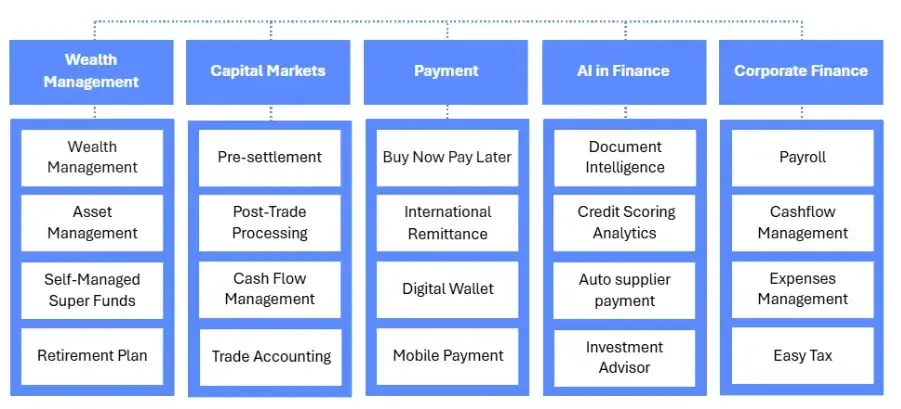
TMA Solutions | Predictive Maintenance; CMMS; Fire Alarm Monitoring; Video Management System; Water Treatment Management; Reefer Container Monitoring; Sound-based Fault Detection; Dryer Operation Optimization; Energy Management; FPCB Defect Detection; Electricity Management System | Industrial manufacturing; Energy & utilities; Logistics & cold chain | Legacy machine retrofitting, build flexible AIoT systems, and work with a strong R&D team. |
FPT Software | Supply Chain Analytics & Forecasting; Manufacturing Operation Management (MOM); OEE/IoT Data Platform; Production & WIP Management; Demand & Supply Planning; S&OP; Quality Control & Defect Analysis; ESG & Carbon Emission Tracking | Industrial manufacturing; Automotive & components; FMCG | Large digital transformation projects that need a Best-shore delivery model and a broad Vietnam-based solution ecosystem. |
VTI Solutions | MES-X; MESCore; WMS-X; QMS-X; MMS-X; TMS-X; ERP; IIoT; Automation & Robotics | Supporting industries; Electronics & components; Logistics | FDI factories that need customized solutions, legacy system integration, and standard information security processes. |
Autotech Vietnam | Customized Automation Machines; Production Line Upgrade & Retrofit; Automatic Production Lines; Robot/PLC/Vision Programming; Simulation; Virtual Commissioning; Inspection & Sorting; Assembly; Conveyor & Packing Systems | Electronics; Automotive & motorcycles; F&B & consumer goods | Factories that need custom-built machinery and a combination of mechanical engineering and control programming. |
CMC Global | MES/Smart Factory; Predictive Maintenance; AI Quality Control; Production Scheduling; Demand Forecasting; Supply Chain Analytics; OCR; Centralized Data Platform; Automation | Automotive; Heavy industry; Logistics & industrial parks | Large companies that need to combine factory data, modernize operations, and improve OT network security. |
IDEA Group | Custom Machine Manufacturing; Palletizing; End-of-Line Automation; Material Handling; AGV/AMR; MES; Automated Inspection | Automotive; Electrical & electronics; F&B; Healthcare; Logistics | Companies that need CAD services based on JIS standards or factories that want customizable locally developed AGV solutions. |
2.1. TMA Solutions
Year Founded | 1997 |
Company Size | 4,000 engineers, clients in 30 countries |
Key focus | Software outsourcing, AI/ML, IoT, Data Analytics, Cloud, digital transformation & Smart Manufacturing |
Core solutions |
|
Strategic partners | hubQuest; QTSC; technology collaboration with III Taiwan |
Founded in 1997, TMA Solutions has more than 29 years of experience in the IT industry and 10 years of strong experience in smart manufacturing solutions. To support large-scale global projects, the company has built a professional team of more than 4,000 technology engineers.
TMA’s technology capabilities are supported by 10 R&D centers, including centers for IoT, AI, and Robotics. This strong R&D foundation allows TMA to develop solutions across the full technology stack, from hardware devices to cloud platforms. The company also follows international standards such as CMMI Level 5 and ISO 27001, which support its projects in major markets such as the United States, Japan, and Europe.
Core industrial solutions:
Predictive Maintenance: The solution uses AI, Machine Learning, and IoT to predict equipment failures. It supports proactive maintenance and helps reduce unplanned downtime.
Computerized Maintenance Management System (CMMS): The system provides centralized management for factory maintenance activities. It supports real-time equipment monitoring, automatic maintenance scheduling, and resource management.
Fire Alarm Monitoring: The solution uses IoT technology to monitor fire risks and send alerts in real time. It supports 4G, Wi-Fi, and LoRa connections, together with automatic incident notifications.
Video Management System: Smart cameras and AI Analytics work together to EHS (Environmental Health & Safety) compliance monitoring and monitor factory areas. The system also supports security control and improves visibility across industrial sites.
Water Treatment Management System: The system uses IoT technology to monitor and control water treatment equipment automatically. It also tracks water quality to support stable operations.
Reefer Container Monitoring Solution: The solution monitors temperature and humidity inside reefer containers in real time. It can detect incidents early and support remote adjustment of operating parameters.
Sound-based Fault Detection System: AI analyzes sound data to identify defective products on the production line. According to TMA’s materials, the solution can help achieve a First Pass Yield (FPY) of up to 99%.
Dryer Operation Optimization: The solution combines IoT, Reinforcement Learning, and Fuzzy Logic to predict moisture levels, reduce drying time, and support automatic machine control.
Energy Management Platform: The platform monitors energy use in real time and provides detailed consumption analysis. It also tracks carbon emissions automatically to support cost optimization and ESG reporting.
Defect Detection on Electronic Board (FPCB): The solution uses Computer Vision, AI, and 8K high-resolution cameras to identify more than 50 types of defects on Flexible Printed Circuit Boards.
Electricity Management System: The system collects electricity data automatically through IoT devices and provides real-time monitoring. It also offers overcurrent protection and uses Machine Learning to forecast power consumption
Competitive advantages
End-to-end project support: TMA can support a project from solution consulting and feasibility assessment to R&D and PoC development. The team can then continue with software development, testing, system integration, deployment, operation, and maintenance.
Strong cross-technology capabilities: TMA combines expertise in AI/ML, IoT, Data Analytics, Edge Computing, and Hardware Integration. This technology mix helps the company solve manufacturing problems that require device connectivity, data collection, real-time analysis, and automation.
Strong data capabilities: TMA Data Solution Center has more than 12 years of experience, around 600 engineers, clients in 20 countries, and more than 100 completed projects. Its capabilities cover real-time data collection, integration and analytics, as well as data warehouse development, predictive analytics, and cloud migration.
Practical AIoT implementation experience: TMA has developed solutions for predictive maintenance, sound- and image-based defect detection, container monitoring, dryer optimization, and energy management. These projects show its ability to connect sensors and edge devices with cloud platforms, data analytics, and automated operations.
Case study:
Environment Monitoring Solutions with IoT Technology: TMA developed an IoT sensor system to replace manual monitoring methods. The system tracks temperature and humidity 24/7 and allows users to manage conditions and receive alerts remotely through an application. According to the project results, the solution improved the breeding environment and reduced physical inspections by up to 70%.
AI sound-based fault detection system in manufacturing: The factory faced heavy pressure from manual quality inspections and a higher risk of errors as production expanded. TMA developed an AI system that analyzes valve-tightening sounds in real time. The system detects unusual sounds and sends commands to a robot arm to remove defective products. As a result, the QA process became fully automated and the faultless product rate reached 99%
Fire Alarm: TMA developed an IoT communication device together with a centralized 3D map management platform to address delayed fire alerts in large real estate projects. In a real incident, the system detected the fire and sent an immediate alert. This helped emergency teams respond faster, locate the fire quickly, and reduce property damage.
_2026-09-29-11-05-02-491.webp)
TMA Solutions and its smart manufacturing ecosystem
TMA Solutions has delivered 200+ industrial projects across IoT, MES, and Predictive Maintenance. See why leading manufacturers choose TMA Solution
2.2. FPT Software
Year Founded | 1999 |
Company Size | 33.0000 engineers; clients in 30 countries |
Key focus | AI-first transformation, digital transformation and global IT services. |
Core solutions | Supply Chain Analytics & Forecasting, Manufacturing Operation Management (MOM), OEE/IoT Data Platform, Production & WIP Management, Demand & Supply Planning, S&OP, Quality Control & Defect Analysis, ESG & Carbon Emission Tracking |
Strategic partners | Microsoft, NVIDIA, SAP, Anthropic, AWS, Google Cloud |
Founded in 1999, FPT Software has more than 25 years of experience in digital transformation. The company has tens of thousands of engineers worldwide, while its international revenue has passed the billion-dollar mark.
One of FPT Software’s key strengths is its R&D capability in core technologies such as AI, Cloud, and RPA. With a flexible Best-shore Delivery model, the company can provide 24/7 support and help multinational businesses reduce operating costs.
Core industrial solutions:
Supply Chain Solutions: Network Simulation, Supply Chain Analytics & Forecasting, Supply Chain Collaboration.
Shopfloor Solutions: Manufacturing Operation Management (MOM), Unified Data Platform (UDP) for OEE monitoring, Production/WIP Warehouse.
Topfloor Solutions: Demand & Supply Planning, Sales & Operations Planning (S&OP).
Quality Control Solutions: Non-conformity Management, Part Qualification, Root Cause Analysis, Defect Analysis, Supplier Deviation Request, Supplier Recovery, Supplier Audit.
ESG Conformity Solutions: Waste Management, Carbon Footprint & Emissions Tracking, Product Track & Trace.
Competitive advantages:
Global scale: FPT Software has more than 33,000 employees in over 30 countries. This global workforce allows the company to deliver and scale digital transformation projects for multinational manufacturing companies.
Strong AI and emerging technology ecosystem: FPT has strong capabilities in AI, Cloud, Data, Digital Twin, and Industrial AI. The company also invests in AI Factory infrastructure to support AI development and large-scale deployment.
Extensive global partner network: FPT works with major technology companies such as NVIDIA, Microsoft, SAP, AWS, and Google Cloud. These partnerships strengthen its ability to deliver AI, Cloud, and Data solutions for enterprises.
Strong smart manufacturing partnerships: FPT works with Intel on AI, high-speed simulation, and digital twin solutions for factories. The company also cooperates with SAMICK THK in smart factory development, robotics, and AI.
_2026-09-29-11-05-02-571.webp)
FPT Software’s Role in Industrial Digital Transformation
2.3. VTI Solutions
Year Founded | 2020 |
Company Size | Part of VTI Group – 1,800+ professionals; 100+ VTI Solutions customers |
Key focus | Smart Manufacturing, MES/ERP, Industrial IoT, Automation & Robotics |
Core solutions | MES-X, MEScore, WMS-X, MMS-X, QMS-X, TMS-X, ERP, IIoT & Robotics |
Strategic partners | Epicor; Odoo |
VTI Solutions is a member of VTI Group. The company was founded in 2020 and focuses on digital transformation solutions for the manufacturing industry. It provides a Smart Manufacturing ecosystem that includes MES, WMS, QMS, maintenance management, track and trace, ERP, IIoT, and automation. These solutions help factories digitalize their processes and improve operational efficiency.
Core industrial solutions:
Manufacturing Execution System (MES-X): Manages and monitors the entire production process in real time.
MESCore: Supports production execution, planning, and shopfloor operations.
Smart Warehouse Management System (WMS-X): Manages raw materials, work-in-progress products, finished products, and inventory with QR Code and RFID technology. The system updates data in real time.
Quality Management System (QMS-X): Manages quality control for incoming materials, production processes, and finished products. It also supports root cause analysis and QC result tracking.
Maintenance Management System (MMS-X): Manages equipment, maintenance plans, machine status, and fault alerts.
Track & Trace Solution (TMS-X): Provides real-time product traceability and product history through QR Codes.
Competitive advantages
Specialized focus on smart manufacturing: VTI Solutions has a strong focus on digital transformation for manufacturing instead of providing a very broad range of IT services. Its solution portfolio covers many factory operations.
High customization and scalability: VTI Solutions can customize its systems for the specific processes of each factory. The systems can also scale with business growth. MES-X modules can be deployed separately when needed.
Strong integration capability: MES-X can exchange data with systems such as ERP, SCADA, PDM, and QMS. This capability helps connect shopfloor data with existing management systems.
Product-based approach with proven recognition: MES-X was listed in the Top 10 Sao Khue Awards 2024, won the Bronze Award at Make in Vietnam 2024, and received the Silver Award at ASEAN Digital Awards 2025, according to VTI Solutions.
Growing implementation experience: VTI Solutions has more than 100 customers. The company has also delivered manufacturing system projects for businesses such as FUJIX and DKT.
_2026-09-29-11-05-02-698.webp)
VTI Solutions with a tailored smart manufacturing ecosystem
2.4. Autotech Vietnam
Year Founded | 2013 |
Company Size | More than 300 engineers |
Key focus | Industrial Automation, Smart Manufacturing, Machinery Engineering |
Core solutions | Custom Automation Machines, Production Line Upgrade, Robot/PLC/Vision Programming, Simulation, Virtual Commissioning, Inspection & Sorting, Assembly, Conveyor & Packing Systems |
Strategic partners | No formal strategic-partner list disclosed; key customers/partners include Samsung, VinFast, Nidec, Vinamilk and P&G |
Autotech Vietnam was founded in 2013 and has more than 13 years of experience in industrial automation. The company has more than 300 engineers and three modern factories across northern and southern Vietnam. One of its main strengths is its end-to-end service model, which covers R&D and physical machine manufacturing. Autotech has also exported its machinery solutions to several international markets and supports the digitalization of factory operations.
Core industrial solutions:
Customized Automation Machines: Designs and manufactures custom automation machines for the specific needs of each factory.
Production Line Upgrade & Retrofit: Improves and upgrades existing machines and production lines to increase productivity and automation levels.
Automatic Production Lines: Designs and integrates automated production lines for industries such as electronics, automotive, and food & beverage.
Inspection & Sorting Systems: Provides automated systems for product inspection and sorting on production lines.
Assembly Systems: Provides automated machines and assembly systems for industrial production processes.
Conveyor Systems: Provides conveyor systems to transport products between different production stages.
Competitive advantages:
End-to-end automation capability: Autotech can manage the full process from design and precision machining to machine manufacturing, control programming, system integration, and operation. This capability is suitable for factory-floor automation projects.
Strong in-house engineering team: The company has more than 300 engineers and specialists. This team supports automation projects with complex technical and customization requirements.
Advanced engineering & virtual commissioning: Autotech provides Production Simulation and Virtual Commissioning to identify problems before actual deployment. This approach can shorten commissioning time and reduce the risks of downtime and rework.
Strong Robot/PLC/Vision capabilities: The company has experience in industrial robot, PLC, and Vision system programming. These technologies support assembly, material handling, quality inspection, and automated product sorting.
Industry-specific manufacturing experience: Autotech has project experience in Electronics, Automotive, and Food & Beverage. This experience helps the company develop solutions that match the real production processes of each industry.
International project experience: Autotech states that it has delivered projects in Vietnam, the United States, Canada, Japan, South Korea, India, and Thailand. This experience shows its ability to work in different manufacturing environments.
_2026-09-29-11-05-02-720.webp)
Autotech Vietnam with end-to-end automation capabilities
2.5. CMC Global
Year Founded | 2017 |
Company Size | 3,000+ certified engineers, phục vụ 300+ global clients tại 30+ countries và có 35+ business partners |
Key focus | IT Outsourcing, Digital Transformation, AI, Data, Cloud & Smart Manufacturing |
Core solutions | MES/Smart Factory, Predictive Maintenance, AI Quality Control, Production Scheduling, Demand Forecasting, Supply Chain Analytics, OCR, Data Platform & Automation |
Strategic partners | AWS, Microsoft, Google Cloud, Salesforce; Samsung SDS at CMC Corporation level |
CMC Global was officially established in 2017 with the mission of “Go Global” and builds on more than 30 years of experience from CMC Technology Group. The company operates a network of 10 offices worldwide and has more than 3,000 technology engineers. Its key strengths include advanced data analytics capabilities, the CMC SOC 24/7 cybersecurity system, and an international network of technology experts.
Core industrial solutions:
Predictive Maintenance: Uses AI and Machine Learning to predict equipment failures, reduce downtime, and support proactive maintenance.
AI-powered Quality Control: Uses Computer Vision and AI to detect product defects automatically and support quality inspection on production lines.
Production Planning & Scheduling Optimization: Analyzes production data to adjust production schedules and improve operational efficiency.
Demand Forecasting & Supply Chain Optimization: Uses AI to forecast demand, manage inventory, and optimize supply chain operations.
OCR & Intelligent Data Processing: Uses OCR to process large volumes of unstructured data and support the digitalization of factory processes.
Centralized Manufacturing Data Platform: Builds a centralized data platform that connects manufacturing data and provides a foundation for automation, analytics, and AI.
Industrial Process Automation & RPA: Automates operational processes and manual tasks in manufacturing environments. CMC Global also provides RPA and industrial solutions for manufacturing digitalization.
Hybrid Cloud & AI Infrastructure: Builds hybrid cloud infrastructure to support the deployment and expansion of AI applications in factories.
Competitive advantages:
Large engineering workforce: CMC Global has more than 3,000 IT professionals. This workforce supports large projects that require different technical skills.
End-to-end digital transformation capabilities: Its service portfolio includes Custom Software Development, Cloud, Data & Analytics, AI, RPA, Testing, and Legacy Migration. Businesses can therefore handle several digital transformation needs within the same technology ecosystem.
AI capabilities for manufacturing: CMC Global develops AI solutions for production scheduling, predictive maintenance, quality control, and manufacturing data analytics.
Customization and system integration capabilities: Its solutions can be adjusted to specific business requirements and integrated with existing IT infrastructure or legacy systems.
Broad technology partner ecosystem: CMC Global works with major technology platforms such as AWS, Microsoft, Google Cloud, Salesforce, SAP, NVIDIA, and Databricks. This ecosystem supports enterprise-scale Cloud, Data, and AI projects.
_2026-09-29-11-05-02-829.webp)
CMC Global brings cybersecurity capabilities to smart factories.
2.6. IDEA Group
Year Founded | 2010 |
Company Size | 300 employees; ~500 including joint ventures |
Key focus | Machine Engineering, Precision Machining, Factory Automation, Robotics, AGV & MES |
Core solutions | Palletizing, End-of-Line Automation, Custom Machines, Material Handling, AGV, MES |
Strategic partners | K’MAC; technology partners include Yaskawa, ABB, FANUC, HIWIN & Delta |
Founded in 2010, IDEA Group is a 100% Vietnamese-owned company and one of the early Vietnamese providers to export high-tech engineering services. The company has more than 300 employees and offices in Japan and the United States. IDEA has strong capabilities in mechanical design and local manufacturing. Its 2,700 m² machining factory also helps the company meet strict international JIS standards.
Core industrial solutions:
Custom Machine Manufacturing: Designs and manufactures automated machines based on the specific requirements of each production line.
Palletizing Solutions: Provides automated robotic palletizing systems that combine conveyors, robots, and control software.
End-of-Line & Packaging Solutions: Automates final production stages such as packaging, inspection, sorting, and palletizing.
Material Handling Solutions: Automates the movement and handling of materials inside factories and warehouses.
AGV/AMR Solutions: Provides autonomous vehicles for material and pallet transport. These solutions also support warehouse and production line automation.
Manufacturing Execution System (MES): Monitors, manages, and improves production activities in real time.
Automated Inspection Solutions: Provides automated inspection systems for weight checks, defect detection, barcode scanning, and product label inspection.
Competitive advantages:
Strong manufacturing & hardware expertise: Unlike providers that mainly focus on software, IDEA has direct capabilities in precision machining, OEM/ODM manufacturing, robotics, AGV, and custom machinery. This makes the company suitable for factory automation projects that require both hardware and software integration.
Own industrial products and solutions: IDEA develops its own products, such as the IROBOT industrial robot and IDONKEY AGV. The company also provides MES, material handling, and customized automation systems.
Experience with international manufacturers: According to IDEA, more than 230 international companies in manufacturing and automation have selected its services. Its markets include Japan, the United States, Canada, Brazil, India, and Europe.
Strong system integration capability: The team has expertise in mechanical design, automation control, and system integration. IDEA can also combine IoT, MES, robots, and production equipment to build smart factory systems.
_2026-09-29-11-05-02-967.webp)
IDEA Group and its Japanese-standard automation capabilities
3. How to choose a manufacturing solution provider in Vietnam
Businesses should evaluate providers based on their ability to deploy solutions in real factory environments.
1- Hardware-software convergence
When data from machines, sensors, MES, ERP, and warehouse systems is not connected, companies often need to combine the data manually. This makes it difficult to track production output, defect rates, and equipment status accurately. Delayed or incorrect reports can also reduce the ability to make timely operational decisions.
Therefore, businesses should ask the provider to demonstrate a real data flow. They should also clarify the integration approach, access control, and security measures before making a decision.
2- Legacy machine integration capability
Many factories in Vietnam use equipment from different brands and generations. Some machines also have limited or no data connectivity.
If a provider only recommends replacing all existing machines, investment costs can increase significantly. The factory may also face a higher risk of production disruption. Therefore, businesses should choose a provider that can conduct an on-site assessment and recommend a suitable connection method. A pilot test should also be completed to confirm data accuracy before the solution is deployed on a larger scale.
3- Local support & SLA (Service Level Agreement)
Connection errors, data differences, or changes in production processes can still happen after the system goes live. If these problems are not solved quickly, factory teams may find it difficult to monitor progress, identify root causes, and coordinate operations.
For this reason, businesses should choose a provider with technical support engineers in Vietnam. Both sides should also agree on a clear SLA that covers response time, issue resolution, maintenance, data backup, and on-site support.
_2026-09-29-11-05-02-994.webp)
Ability to deliver solutions in real factory environments
4. The shift toward smart manufacturing and AI in Vietnam
Vietnam’s move toward smart manufacturing and AI is becoming clearer through four key trends:
1- Vietnam no longer competes only on low-cost labor
Decree 260/2026/ND-CP allows certain state-funded or state-ordered high-tech R&D projects to receive support for up to 100% of their costs. R&D workforce training can also receive support for up to 100% of the cost. Eligible companies may receive support for 70% of loan interest, with a maximum interest rate of 8% per year for up to five years. These policies show that Vietnam is investing more in technology capabilities instead of relying mainly on low production costs.
Low labor costs still remain an advantage. However, Vietnam is moving from assembly work toward module production, component manufacturing, and activities with higher technology value. A representative from Foxconn Industrial Internet stated that Vietnam’s labor advantage is suitable for assembly. To move into module production, the country needs more automation, skilled technology workers, and local technology providers. Component manufacturing also requires stronger investment in innovation and R&D.
2- Smart manufacturing is becoming more established
Smart manufacturing in Vietnam is moving from separate projects toward a clearer development roadmap with policies, standards, and a supporting ecosystem. The government encourages companies to move from basic digital tools to automation, and then to systems that combine AI, Big Data, and IoT. It also connects SMEs with universities, research institutes, and experts to support technology transfer.
The Ministry of Science and Technology has proposed a list of 11 strategic technologies and 35 detailed technology groups, including AI and IoT. It also identified six core technologies for 2025. Vietnam also has a Lighthouse Factory operated by Foxconn Industrial Internet. The World Economic Forum recognized this factory for its use of Industry 4.0 technologies.
3- AI is becoming new infrastructure for manufacturing
Under Resolution 57-NQ/TW and the 2025 AI legal framework, AI is becoming an important part of manufacturing infrastructure. On factory floors, AI can now handle complex tasks that previously required human workers. These tasks include automatic defect detection on electronic boards, sound analysis for machine diagnosis, and edge-based security monitoring.
Experts also point out that data infrastructure is necessary for large-scale AI deployment. This shows that AI in manufacturing is becoming closely connected with data platforms and operational systems. It is no longer limited to separate pilot applications.
4- The transition is still uneven
Despite the fast pace of innovation, technology adoption is still uneven across Vietnam. At the 2025 Autumn Economic Forum, experts noted that most SMEs were still at an early stage of digitalization.
The transition also faces several risks. Companies may depend too much on protected technologies, while large investments in expensive semiconductor facilities may lead to waste if they are made too early. At the same time, the shortage of highly skilled workers and leading scientists remains a major challenge.
_2026-09-29-11-05-03-156.webp)
Vietnam in the smart manufacturing wave
5. Frequently asked questions about manufacturing solution providers in Vietnam
1- How much does implementing a manufacturing ERP or MES system cost in Vietnam?
The implementation cost usually ranges from around USD 6,000 to more than USD 5 million. The final cost depends on the factory size, number of users, level of customization, and machine integration requirements.
2- How long does a typical ERP or MES implementation take?
The implementation time depends on the project scope and complexity. A system with limited customization may take around 3–6 months. An ERP or MES project with many system integrations or multiple factory locations may take 6–18 months or longer.
The capabilities of a manufacturing solution provider in Vietnam can directly affect the success of a factory modernization project. Therefore, businesses should carefully evaluate each provider based on flexibility, budget, and long-term support.
If your company needs a system that can easily connect with existing equipment, make better use of legacy machines, and reduce technology dependence, contact TMA Solutions for detailed consultation.
Ready to modernize your factory operations? Let's discuss your smart manufacturing project
Contact information:
TMA SOLUTIONS - The leading manufacturing solution provider in Vietnam Email: sales@tmasolutions.com Website: https://www.tmasolutions.com/ Linkedin: TMA Solutions TMA Tower address: Street #10, Quality Tech Solution Complex (QTSC), Trung My Tay Ward, Ho Chi Minh City. |