As organizations grow, employee training becomes harder to coordinate across departments, locations and learning programs. Course materials may sit in separate platforms, attendance records in spreadsheets, and assessment results in different systems, leaving HR and learning and development (L&D) teams without a complete view of training progress. An enterprise learning management tool helps bring these activities into one connected environment, centralizing course administration and learner records so organizations can manage training more consistently and measure progress more effectively.
Why Training Data Is Scattered
Training often starts with simple processes that become difficult to manage as an organization expands. Teams may use spreadsheets to register participants, email to distribute materials and separate tools to run assessments. Different departments may also adopt their own learning platforms, creating disconnected records and inconsistent reporting.
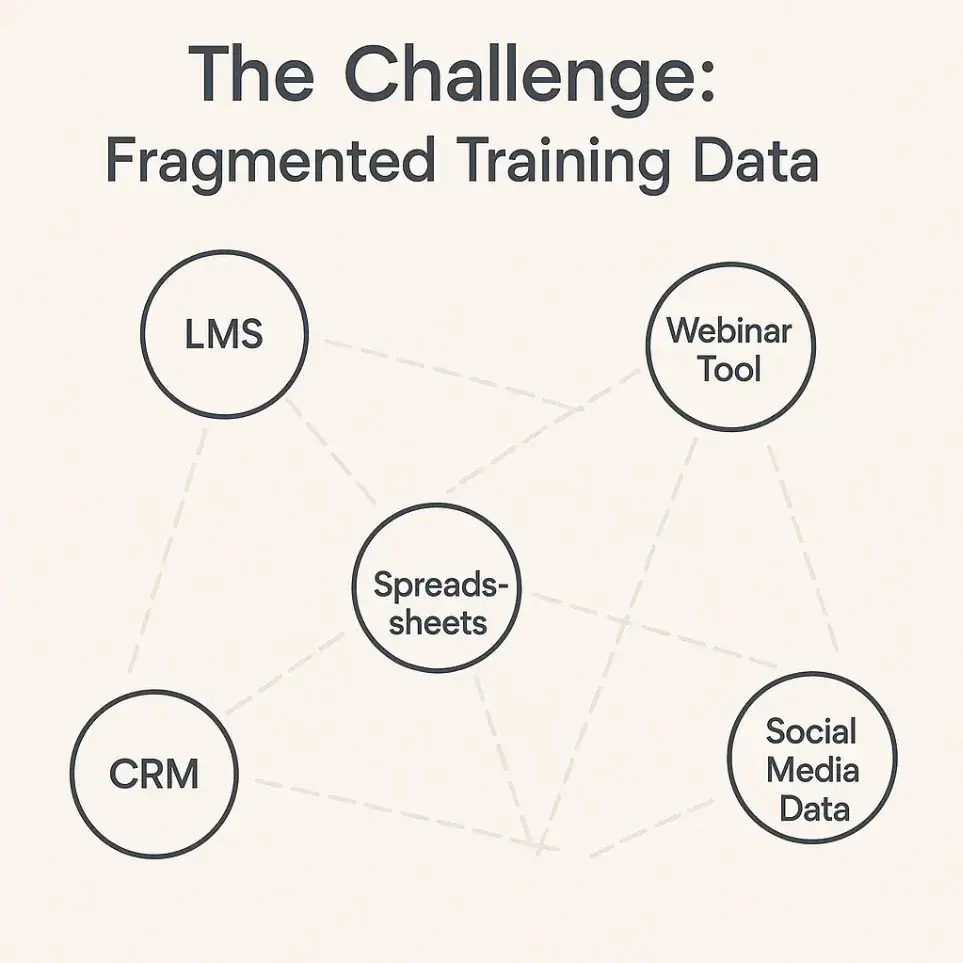
This fragmentation creates several challenges:
- Limited visibility: L&D teams struggle to see who has enrolled, completed a course or needs additional support.
- Repetitive administration: Coordinators manually update attendance, send reminders and compile reports across multiple tools.
- Inconsistent learning experiences: Employees may receive different materials or training requirements for similar roles.
- Difficult compliance checks: Managers may struggle to identify overdue courses or retrieve complete training records.
- Unclear training impact: Completion reports show participation but do not necessarily demonstrate improved knowledge or job performance.
As organizations work to close skill gaps, an enterprise learning management tool provides a structured way to organize training activities, maintain learning records and monitor employee development. LinkedIn's 2025 Workplace Learning Report found that 49% of surveyed learning and talent development professionals said their executives were concerned that employees lacked the skills needed to execute business strategy.
How a Centralized Learning Platform Simplifies Training
A centralized learning management system (LMS) creates a shared environment for organizing learning content, managing learners and tracking training activities. This is where training administration software becomes valuable: it connects the administrative work behind training with the learning experience, helping organizations manage programs more consistently as participation grows.
A centralized platform can help organizations:
- Standardize course administration: Organize learning materials, enrollments, schedules and assessments in one environment.
- Improve access to learning: Give employees a consistent place to find assigned courses and relevant resources.
- Automate routine tasks: Reduce manual work associated with enrollment, reminders, progress updates and report preparation.
- Support different learner groups: Organize learning by role, department, program or competency requirements.
- Improve reporting: Give L&D teams and managers a clearer view of participation, progress and outstanding training needs.

Employee Learning Tracking: From Completion to Progress
Effective employee learning tracking goes beyond recording whether someone has opened or completed a course. L&D teams also need to understand learning progress, assessment performance and where employees may require additional support. These records help managers prioritize follow-up training and evaluate whether learning programs address the skills employees need on the job.
A centralized LMS can bring several useful indicators together:
- Enrollment and completion: Identify who has started, completed or missed assigned training.
- Learning progress: Track course progression and identify employees who may be falling behind.
- Assessment results: Review quiz scores and assessment outcomes to identify knowledge gaps.
- Skill development: Compare assessment results with defined competencies to identify areas for further learning.
- Program participation: Review engagement across departments, courses and learner groups.
When learning records are combined with relevant performance or competency data, organizations can better understand development needs and make more informed decisions about future training.
Compliance and Training ROI: Measuring What Matters
Compliance training requires organizations to manage assigned courses, monitor completion and maintain reliable records. A centralized learning platform can help teams identify overdue training, review assessment results and retrieve records more efficiently, supporting internal reviews and audit preparation. However, course completion alone does not prove that employees understand or can apply the material. OCEG's 2025 Survey on the State of Compliance and Ethics Training highlights a common measurement gap: organizations often measure training activity rather than its impact.

To measure training ROI, organizations should establish a baseline before implementation and compare training costs with measurable benefits, using indicators such as:
- Administrative efficiency: Time spent organizing courses, following up with learners and preparing reports.
- Training cost: Cost per learner, program delivery costs and spending on external providers or materials.
- Learning outcomes: Assessment performance, skills acquired and progress against learning objectives.
- Business impact: Changes in relevant productivity measures, error rates, service quality or compliance-related risks.
These measures help organizations assess training effectiveness and distinguish improvements associated with training from changes caused by other business factors.
Centralizing Learning Management with Smart Corporate Training
Organizations looking for an enterprise learning management tool can consider how learning management fits within their wider education operations. TMA's Smart Corporate Training brings learning management into a broader education management environment, with LMS-related capabilities that support course administration, learner management and content delivery.
By connecting learning activities with related administrative processes, Smart Corporate Training provides a foundation for organizing learner information and reducing disconnected workflows. For education and training providers, a centralized environment can make learning data easier to manage and give teams a clearer view of participation and progress.
Organizations can begin by identifying where training information is fragmented, which activities require better tracking and which outcomes matter most. They can then prioritize relevant workflows and establish reporting that connects course participation with defined learning objectives.
Build a More Connected Learning Environment
Scattered training records make it harder to manage learning consistently, monitor compliance and demonstrate the value of training investment. An enterprise learning management tool helps centralize course administration, improve employee learning tracking and provide better visibility into training progress and outcomes. With Smart Corporate Training, organizations can explore a more connected approach to learning management and education operations. Contact TMA to discuss how Smart Corporate Training can support your learning management and training administration needs.


.webp_2026-10-01-18-27-07-971.webp)