Introduction
Artificial Intelligence (AI) is no longer viewed as an experimental technology reserved for innovation teams. Today, businesses across industries are integrating AI into core operations to improve efficiency, accelerate decision making, and strengthen competitive advantages. This shift is creating a growing gap between AI-first enterprises and traditional businesses that still rely heavily on manual workflows and fragmented operational systems.

According to McKinsey, organizations adopting AI technologies at scale are already reporting measurable gains in productivity, operational efficiency, and revenue growth. The report also estimates that generative AI could contribute up to $4.4 trillion annually to the global economy through workflow optimization and automation. As digital transformation accelerates, AI first software development is becoming a major strategic priority for enterprises seeking long term business growth and operational scalability.
What Defines an AI-first Enterprise
An AI-first enterprise is a company that integrates AI technologies into business operations, decision making processes, customer engagement strategies, and product development from the beginning instead of treating AI as a secondary add on feature.
AI Is Embedded Across Operations
Traditional businesses often use disconnected software systems that require significant manual coordination between departments. In contrast, AI-first companies use intelligent systems to automate workflows, analyze operational data, and improve business visibility in real time.
These organizations commonly apply AI technologies across:
- Customer support operations
- Business analytics
- Workflow automation
- Product recommendations
- Supply chain optimization
- Operational forecasting
This allows businesses to operate more efficiently while improving scalability and customer experience.
Faster Adaptation to Market Changes
AI-first enterprises can respond to changing customer behavior and market conditions much faster than traditional organizations. AI systems continuously analyze business data, helping companies identify trends, operational inefficiencies, and customer demands more quickly. This operational agility has become one of the biggest advantages for businesses competing in rapidly evolving digital markets.
The Competitive Edge of AI-first Organizations
Improved Operational Efficiency
AI-first companies reduce repetitive workloads through intelligent automation and workflow optimization. Tasks that previously required large operational teams can now be supported through AI systems capable of processing data, generating insights, and coordinating workflows automatically. Microsoft's Work Trend Index found that 70% of employees using AI reported increased productivity, while 68% said AI helped improve the quality of their work. By automating repetitive tasks and streamlining workflows, organizations can shorten execution timelines and allow employees to focus on higher value activities.
Better Customer Experience
AI technologies help businesses deliver faster support responses, personalized recommendations, and more efficient digital interactions. Instead of relying entirely on manual customer service processes, AI-first enterprises can scale customer engagement more effectively while maintaining service quality.
Data Driven Decision Making
Traditional organizations often struggle with fragmented information and delayed reporting processes. AI-first enterprises use real time analytics and intelligent systems to support faster and more informed decision making across departments. This helps organizations improve operational planning, optimize resources, and respond to market opportunities more efficiently.
The Role of AI First Software Development
AI adoption is no longer limited to adding automation features into existing systems. Businesses are now redesigning software architectures around intelligent operational models.
Building Scalable Intelligent Systems
AI first software development focuses on creating applications where AI technologies are integrated into the foundation of the platform instead of functioning as isolated tools.
This allows organizations to build systems capable of:
- Continuous learning and optimization
- Real time analytics
- Intelligent automation
- Predictive operational support
- Adaptive customer engagement
As a result, businesses can improve scalability and operational flexibility more effectively.
Long Term Competitive Advantages
Organizations investing in AI first transformation today are building stronger long term competitive positions. AI-first enterprises can launch services faster, optimize costs more efficiently, and improve innovation cycles compared to businesses still dependent on traditional operational models. This is why many enterprises are partnering with an AI first development company to accelerate enterprise modernization strategies.
TMA Solutions and AI-first Enterprise Transformation
About TMA
TMA Solutions is recognized as one of Vietnam’s leading technology companies with strong expertise in AI, enterprise software engineering, and intelligent automation. Through its AI Center and AI Agent Factory, TMA Solutions supports enterprises in accelerating AI first software development and modernizing operational systems across industries.
The company currently provides more than 100 AI solutions and services, including:
- Generative AI and AI Agents
- Intelligent automation platforms
- Predictive analytics solutions
- OCR and Computer Vision
- Enterprise AI integration services
For businesses searching for an AI first development company, TMA Solutions provides strong engineering expertise and scalable technology partnership capabilities supporting enterprise AI adoption.
Case studies implemented by TMA Solutions
1. A recruitment solution for employers with Automatic CV Input
Challenge:
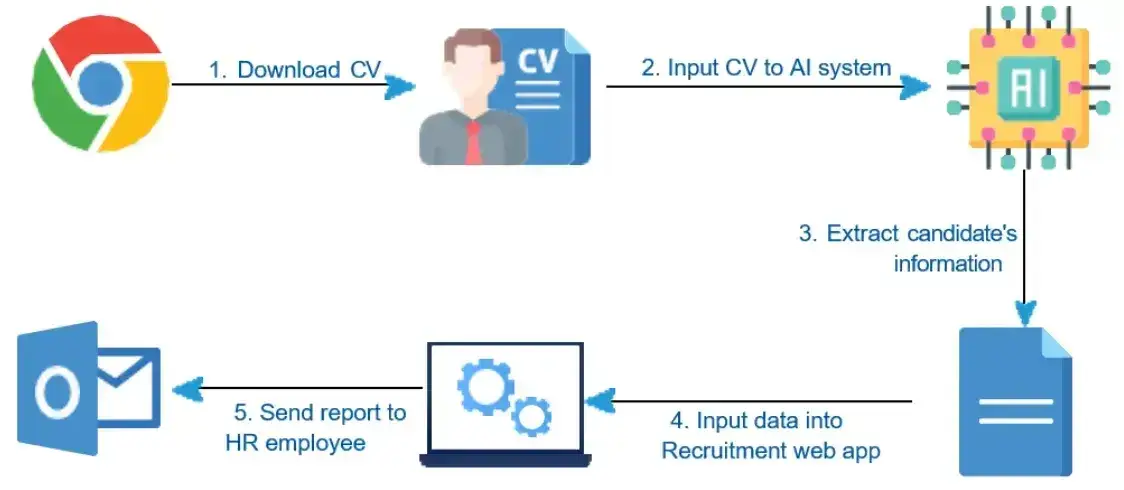
A recruitment organization was handling a large volume of candidate applications every week. HR teams spent significant time manually reviewing resumes, extracting candidate information, and entering data into recruitment systems. The process was labor-intensive and limited the team's ability to focus on talent acquisition activities.
Solution:
TMA Solutions developed an intelligent recruitment platform that combines Optical Character Recognition (OCR), robotic process automation, and workflow automation technologies.
- Resume Extraction Engine: Automatically captures candidate information from resumes in different formats.
- Data Processing Module: Standardizes and organizes applicant data for easier review and management.
- Workflow Automation Layer: Transfers processed information directly into the recruitment platform without manual input.
Business Outcomes:
- Processed more than 1,000 resumes weekly.
- Saved over 8,000 working hours annually.
- Reduced manual data entry efforts and operational bottlenecks.
- Improved recruitment efficiency and candidate management.
>> Read more at: A recruitment solution for employers with Automatic CV Input
2. Increasing efficiency with Finance Report Automation
Challenge:
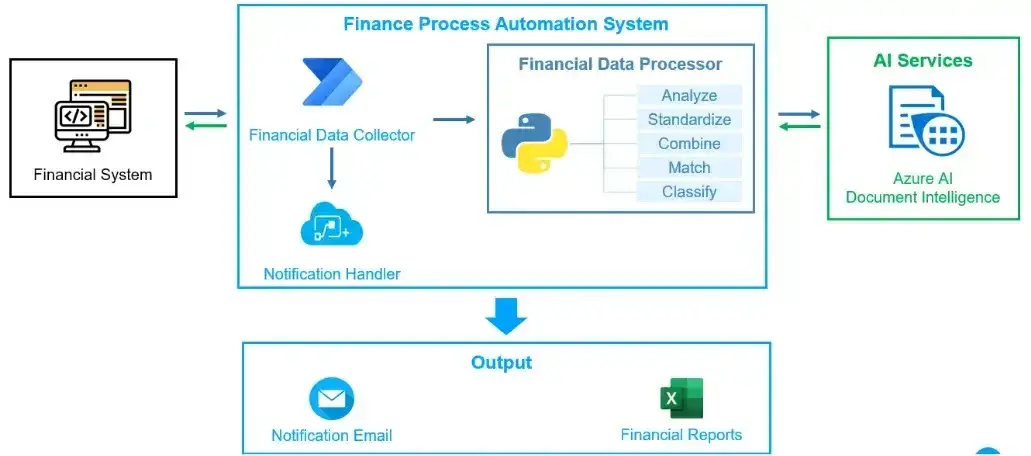
Finance teams were spending considerable time collecting data from multiple systems, preparing reports, and manually updating spreadsheets. These repetitive activities delayed reporting cycles and increased the risk of human errors.
Solution:
TMA Solutions implemented an automated financial reporting solution that streamlined data collection, processing, and report generation.
- Automated Data Extraction: Retrieves information directly from enterprise systems.
- Report Generation Engine: Creates standardized reports without manual intervention.
- Workflow Integration: Connects reporting processes with existing business applications to improve efficiency.
Business Outcomes:
- Reduced report preparation time by up to 80%.
- Improved reporting accuracy and consistency.
- Accelerated access to financial insights.
- Allowed finance teams to focus on analysis and strategic planning rather than manual reporting tasks.
>> Read more at: Increasing Efficiency with Finance Report Automation
Conclusion
AI-first companies are outperforming traditional businesses by improving operational efficiency, accelerating decision making, and creating more scalable digital ecosystems. As AI technologies continue reshaping enterprise operations, organizations that prioritize AI first software development will gain stronger competitive advantages in increasingly digital markets. Businesses investing in intelligent systems today will be better positioned to improve productivity, optimize customer experiences, and support long term operational growth in the future.