Fintech software development is revolutionizing the financial industry. Businesses can leverage technologies like cloud computing, blockchain, artificial intelligence, and big data. This allows them to deliver innovative solutions that meet the growing demand for online banking, secure payments, and personalized financial services.
To stay competitive, it's crucial to understand how to build robust and secure Fintech applications. This guide will provide insights into the key strategies and technologies needed to succeed in this fast-paced industry.
Read on to discover how to bring your Fintech vision to life!
Market overview and trends in the fintech software industry
Fintech has rapidly emerged as a leading trend in software development, driven by technology’s potential to deliver user-friendly services and foster complete transparency. Partnerships between national regulators and financial institutions further fuel the growth of financial technology by enabling secure and value-added services accessible to clients anywhere and anytime.

The global Fintech market is projected to reach a market size of approximately USD 698.48 billion by 2030.
According to Allied Market Research, the primary Fintech functions anticipated to dominate from 2021 to 2030 include:
Payment and fund transfers
Loans
Insurance and individual finance
Wealth management
Below are some of the critical Fintech trends that will continue to shape the industry:
Embedded finance
Embedded finance integrates financial applications such as insurance, bill payments, and loans within non-financial platforms. This trend is particularly advantageous for e-commerce businesses, as embedded finance can streamline transactions and improve client experience.
Neobanks
Neobanks are fully digital banks that operate without physical branches. These banks handle all communication and client service tasks online. Unlike traditional banks, neobanks typically operate under the license of an established financial institution.
Open banking
Open banking enables the sharing of client data among financial institutions using APIs, which allow digital finance applications to access bank databases securely. This data exchange leads to improved and diversified services for clients.
Blockchain
Blockchain technology plays a vital role in FinTech due to its reliability and security. It supports organizations in signing contracts, registering transactions, verifying processes, tracking documents, analyzing data, and more.
Big data
Financial organizations increasingly utilize large-scale data analytics to analyze both structured and unstructured data to predict client behavior and develop effective business strategies.
RegTech
RegTech, or regulatory technology, is essential for FinTech developers as it automates the management of legal requirements in financial operations. Functions include risk analysis, data protection and processing, and client identification, all contributing to regulatory compliance.
Different types of fintech software solutions
The Fintech industry offers a variety of innovative solutions for startups and established businesses alike, streamlining financial applications and enhancing user satisfaction. Below are the primary types of Fintech software development that companies can leverage to cater to diverse financial needs:
Online banking software
Online banking software, including tailored software for efficient fund management, empowers users to access comprehensive banking services remotely. Through these applications, clients can manage their bank accounts, secure loans, transfer funds, make payments, and more – without ever needing to visit a physical branch. This software encompasses all functions available at a traditional bank, providing a seamless online banking experience.

Insurance technology software
InsurTech software enables insurance companies to adopt more accurate risk assessment techniques, offering tailored deals and streamlined client usability. This software supports various types of insurance such as life, auto, home, and pet insurance. The insurance support allows users to apply for policies, manage claims, and monitor their coverage in one place.
Personal finance management software
Personalized finance management software allows individuals to track their income, expenses, and spending habits effortlessly. These applications centralize financial data, making it simple for users to analyze their finances and establish better money-management practices. PFM software prioritizes intuitive user interactions, helping people achieve their financial goals with ease.
Payment software
Digital payment software is essential for managing transactions in real-time. Acting as an intermediary, it connects payment service providers with clients, allowing businesses of all sizes to facilitate secure web and mobile payments. This software handles the intricacies of online payments, offering convenience and efficiency for both businesses and consumers.

Investment software
Investment software, including wealth management software tailored for businesses, democratizes investing, making it accessible to a broader audience beyond high-net-worth individuals. These applications simplify trading by reducing commissions, eliminating intermediaries, and providing users with tools to buy, sell, and monitor assets easily. Investment software has become a transformative platform for individuals looking to build wealth.
Tax management software
Tax management software is invaluable for businesses and individuals managing complex tax requirements. This software automates the processes of preparing, filing, and tracking taxes, significantly reducing the need for specialized expertise. With streamlined documentation and automatic calculations, users can handle their tax obligations with ease.
Key features that fintech software systems must possess
To develop successful digital finance software, including developing asset management software, it’s essential to integrate a range of features that are innovative, efficient, and user-centric. By offering enhanced functionality that surpasses competitors in ease of use and affordability, digital finance software can improve user retention and satisfaction. Here are the must-have features to consider:
User-friendly and intuitive
Fintech software handles complex financial activities such as stock trading, forex exchange, and digital payments. To enhance usability, prioritize a clean and intuitive interface that simplifies navigation. A well-structured design improves accessibility, ensuring users can efficiently manage financial transactions without confusion.
Financial data visualization
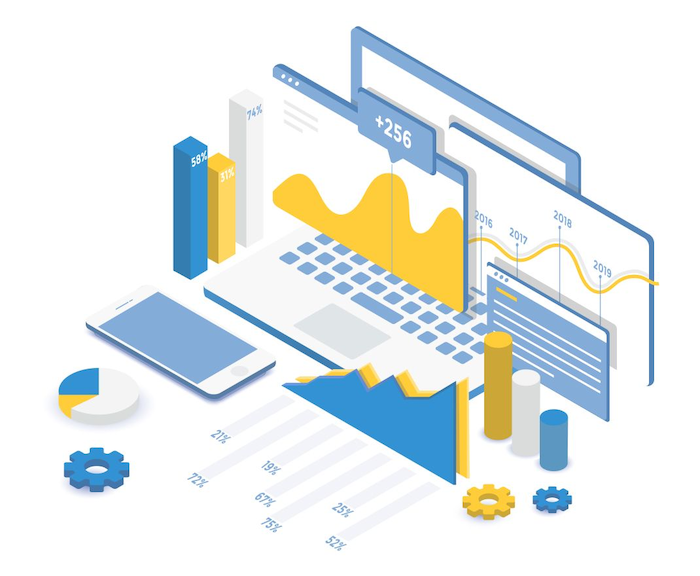
Traditionally, users struggled to track income, expenses, and transactions over time. With software development for Fintech, this is no longer a limitation. Advanced data visualization tools now provide clear, real-time insights through interactive charts and reports, enabling users to analyze financial information effortlessly for any selected period.
Cross-platform compatibility
Fintech software should function smoothly across various devices and operating systems. With the rise of multi-device usage, ensuring cross-platform support is essential. Partnering with a specialized fintech software development company can help integrate compatibility, delivering a consistent and efficient user experience on any platform.
Gamification features
Integrating gamification into fintech solutions enhances user engagement through personalized rewards, cashback offers, and exclusive discounts. This strategy not only makes financial interactions more enjoyable but also serves as a powerful tool for both acquiring new users and fostering long-term client loyalty.
Smart alerts and notifications
Timely notifications are essential for maintaining client engagement and delivering personalized financial updates. Fintech applications should allow users to customize alert preferences, ensuring they receive important updates—such as transaction alerts, payment reminders, or promotional offers—at their convenience without feeling overwhelmed.

Digital payments
A fintech app must support multiple digital payment options, including mobile wallets, UPI, and bank transfers, to ensure smooth and uninterrupted transactions. By enabling quick account management, bill payments, and automated recurring transactions, users can enjoy a hassle-free financial experience.
Fintech software development: Advantages and disadvantages
Before committing to developing a fintech software, it is crucial to understand both its advantages and challenges. Like any technical product, financial software systems come with significant benefits but also have potential drawbacks.
Advantages of fintech software development
Adaptability: Tech-fin software enables financial institutions to respond flexibly to dynamic and shifting market conditions in real-time.
Accessibility: Fintech software solutions make banking and financial services accessible to anyone with an internet connection. Clients no longer need to wait for days to access services.
Cost efficiency: Tech-fin reduces operational costs by streamlining processes and minimizing the need for physical branches and resources, making it a cost-effective alternative to legacy systems.
Time-saving: Digital financial solutions deliver faster, more efficient service, allowing users to manage finances on their own schedules.
Diverse service offerings: Tech-fin companies offer diverse services meeting the specific needs of both clients and providers.

Disadvantages of fintech software development
Cybersecurity risks: Hackers may target sensitive financial data, making data protection a constant challenge.
Regulatory uncertainty: Fintech development companies must continuously adapt to regulatory changes, a task that requires time, expertise, and resources.
Operational risks: Due to resource constraints, some Fintech companies may struggle to stay current with operational protocols, which can lead to unexpected issues.
FinTech regulations businesses must follow
When developing and implementing financial software, Fintech companies face the critical challenge of regulatory compliance. Given the nature of financial services, these companies must follow a range of regulations that vary by region to ensure secure, compliant operations and avoid potential legal repercussions.
Here’s an overview of key regulations fintech companies must adhere to in the U.S., UK, and EU.
U.S. fintech regulatory policies
In the United States, Fintech companies must comply with a comprehensive regulatory framework aimed at preventing financial crimes, ensuring data security, and protecting consumer rights:
- Bank Secrecy Act (BSA)
- USA PATRIOT Act
- Anti Money Laundering Act (AMLA)
- Electronic Fund Transfer Act (EFTA)
- Red Flag Rule (for identifying and addressing identity theft)
- Electronic Signatures in Global and National Commerce Act (ESIGN)
- Fair Credit Reporting Act (FCRA)
UK fintech regulatory policies
The UK requires Fintech companies to follow regulations that focus on financial stability, anti-money laundering, and consumer protection:
- Financial Services and Markets Act 2000 (FSMA)
- Proceeds of Crime Act 2002 (POCA)
- Final Guidance on Crypto Assets
- Money Laundering, Terrorist Financing and Transfer of Funds Regulations 2017 (MLR 2017)
EU fintech regulatory policies
In the EU, Fintech companies are governed by regulations that emphasize data protection, anti-money laundering, and secure payment services:
- EU Anti Money Laundering Directives (AMLDs)
- General Data Protection Regulation (GDPR)
- Revised Payment Services Directive (PSD2)
5 steps in fintech software development
Creating a fintech software product involves careful planning, time, and resources. Here’s a streamlined five-step process to help simplify and guide the custom fintech software development journey:
Step 1. Defining project requirements

Step 2. Designing an intuitive interface
A well-structured fintech software system should prioritize simplicity and ease of navigation. A seamless user experience and intuitive interface are essential for engagement. Gather design references, define your preferences, and collaborate with a UI/UX team to develop a user-friendly and visually appealing layout.
Step 3. Developing the fintech software
Define the core features and functionalities that address user needs and industry demands. Many fintech developers start with a Minimum Viable Product (MVP) – a streamlined version with essential features – to test the concept, gather user feedback, and refine the product before full-scale development.
Step 4. Thorough testing
Conduct comprehensive testing to ensure the fintech application operates flawlessly. Rigorous test runs help evaluate functionality, security, and performance, allowing you to detect and resolve any issues before deployment.
Step 5. Launch and gather feedback
Deploy your fintech software and actively collect user feedback to refine the product. Real user insights will help identify potential issues and suggest improvements, such as adding, modifying, or removing features for better usability.
If you lack technical expertise but want to develop a fintech software, collaborating with experienced fintech developers can streamline the process. Partnering with a skilled development company ensures a well-executed product that meets industry standards and user expectations.
Technology stack for developing fintech software
Technology is the driving force behind the Fintech software market, enabling seamless access to financial solutions. Developing successful Fintech software requires a robust technology stack capable of handling complex requirements. This stack includes programming languages, frameworks, databases, and other essential technical components.
Here are some widely used technologies employed by leading fintech application development services.
Programming languages
Fintech solutions rely on powerful programming languages that provide flexibility, scalability, and security. Commonly used languages include:
Java: Known for its stability and scalability, Java is widely used in financial software development.
Python: With its simplicity and versatility, Python is popular for data analysis, machine learning, and rapid development.
Ruby: Ruby is valued for its readability and is often used in applications that require rapid prototyping and development.

Frameworks
Frameworks provide the foundation for building and managing applications. In Fintech, these frameworks ensure that applications are secure, reliable, and efficient. Key frameworks include:
Spring (Java): A robust, enterprise-grade framework, Spring is popular for building scalable applications in Fintech.
Django (Python): Django offers a secure and scalable environment for data-intensive applications, making it ideal for tech-fin.
Ruby on Rails: Known for its speed and flexibility, Ruby on Rails is commonly used for developing Fintech applications focused on fast iteration and user engagement.
Databases
Databases serve as the backbone of financial systems, securely storing and managing large volumes of critical financial data. Popular choices include:
MongoDB: A NoSQL database known for handling large volumes of unstructured data, useful for applications requiring high performance.
MySQL: A reliable, open-source database often chosen for its compatibility and widespread use in web applications.
PostgreSQL: Known for its advanced features and compliance with ACID (Atomicity, Consistency, Isolation, Durability), PostgreSQL is ideal for secure, transactional applications.
Technologies driving fintech innovation
Fintech solutions are built on advanced technologies that enable secure, efficient, and innovative financial applications. These technologies provide robust capabilities essential for the modern financial landscape. Here’s a closer look at one of the foundational technologies in Fintech:
Blockchain
Blockchain acts as a secure digital ledger, enabling transparent and immutable financial transactions across a decentralized network. Blockchain technology ensures data integrity and protects against unauthorized changes, minimizing errors and enabling fraud detection. This reduces the need for traditional intermediaries, lowering costs for tech-fin companies and their users.
Applications like Bitcoin and decentralized finance (DeFi) platforms leverage blockchain to offer secure, peer-to-peer money management services, enhancing security and accessibility in the financial sector.

AI and ML
Artificial intelligence and ML are transforming tech-fin by enabling data-driven insights, personalized financial advice, and predictive analytics. artificial intelligence tools, such as ChatGPT and Google's Gemini, analyze large datasets to identify user patterns. Through defying patterns assisting tech-fin applications to deliver tailored recommendations and forecast financial trends, like interest rate changes.
Additionally, AI-powered chatbots and virtual assistants handle client support tasks autonomously. They answer FAQs, check balances, and provide resources, freeing human staff for complex inquiries. Through these capabilities, AI and ML enhance efficiency, personalization, and client service in tech-fin, driving automation and streamlining operations.
Big data analytics
Advanced data analytics empowers Fintech by processing massive datasets to reveal patterns, trends, and insights that drive better decision-making. This technology helps companies understand client behavior and market dynamics, providing a foundation for more personalized services.

In risk management, large-scale data analysis identifies potential threats by analyzing historical and real-time data, allowing organizations to create effective mitigation strategies. Additionally, data-driven insights enhance operational efficiency by pinpointing bottlenecks and recommending improvements, especially when paired with artificial intelligence, helping tech-fin companies streamline processes and boost productivity.
APIs
APIs enable seamless data exchange and communication between financial systems, allowing digital financial apps to integrate with existing platforms for enhanced functionality. A leading Web3 development company can leverage APIs to streamline operations by providing real-time access to account information, enabling fraud detection, and supporting secure authentication, such as biometric logins.
APIs also power client support tools like chatbots, allowing Fintech companies to improve client engagement and efficiency. Through these integrations, APIs have become a cornerstone of Fintech, enhancing connectivity and service quality across platforms.
How much does it cost to develop a fintech software?
The cost of fintech software development varies based on several key factors. Understanding these cost drivers can help businesses budget effectively and optimize their investment.
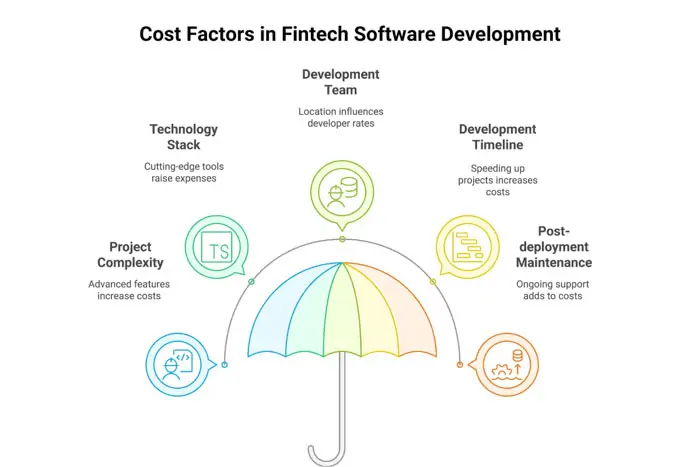
- Project complexity: The more advanced the fintech software, the higher the development costs. Features like blockchain integration, artificial intelligence (AI), and advanced security protocols require specialized expertise, increasing overall expenses.
- Technology stack: The choice of programming languages, frameworks, and tools affects costs. If the project demands cutting-edge technologies requiring niche expertise, development expenses may rise.
- Development team: Hiring fintech developers comes at different rates depending on location. Developers in North America and Western Europe generally charge more than those in Eastern Europe or Asia, impacting overall costs.
- Development timeline: Faster project completion often requires additional resources and increased investment. A longer, more flexible timeline may help manage costs more efficiently.
- Post-deployment maintenance: Ongoing updates, security patches, and technical support are essential for software stability. While these services add to the cost, they ensure long-term reliability and security.
To avoid overpaying and ensure high-quality results, partner with a top fintech software development company that aligns with your business needs.
How to choose the right fintech software development company?
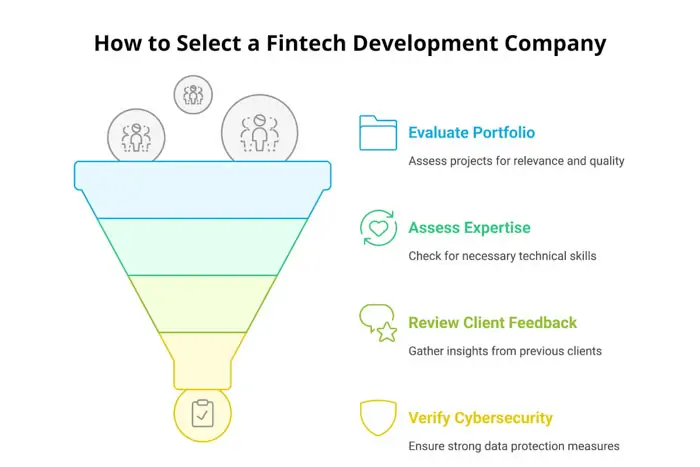
Selecting the right fintech development company is crucial for building a Fintech software system that meets your goals. Here are the key steps to finding a team capable of delivering quality financial services and products:
- Portfolio
Look for a development firm with a strong portfolio of completed financial projects. Relevant experience is essential, as it demonstrates the firm’s ability to handle the complexities of Fintech software. Reviewing their past work gives you a sense of their expertise and the types of solutions they have successfully delivered.
- Expertise
Define the specific skills needed for your project. Building a Fintech application often requires a broader skill set compared to standard software projects, including knowledge of finance, cybersecurity, and data management. Ensure the team’s expertise aligns with the technical requirements of your project.
- Client reviews
After evaluating the company’s portfolio and expertise, check client reviews to understand their reputation. Platforms like Clutch, GoodFirms, and TopTal feature verified testimonials and can help you find developers with proven value in Fintech. Positive feedback from previous clients is a strong indicator of the team’s reliability and skill.
- Cybersecurity
Given the sensitivity of financial data, cybersecurity should be a top priority. Ensure the team you hire has the expertise to build a secure solution and maintain its protection post-launch. Emphasize data security when assessing potential developers, as this is critical for building trust with your users and safeguarding financial transactions.
Examples of fintech software
TMA Solutions is a trusted partner with 18 years of experience in tech-fin software development. Our team of 600 engineers provides custom fintech software development services tailored to the banking, financial services, and insurance (BFSI) sectors. We leverage advanced technologies to deliver secure, adaptable, and innovative solutions that help businesses thrive in the dynamic tech-fin landscape.
TMA Solutions has a global reach, partnering with clients across Europe, Canada, Australia, Singapore, Hong Kong, Korea, and Vietnam. The company combines practical expertise and a deep understanding of regional and global market needs. This allows them to create solutions that empower financial institutions to navigate the complexities of today’s industry.
TMA Solutions has successfully developed a variety of fintech solutions that address critical needs in today’s financial landscape. Here are some key examples:
Cash flow management application
TMA Solution’s Cash Flow Management Application is revolutionizing how businesses manage credit and payments, supporting over 7,000 Australian companies. This tech-fin tool synchronizes data across accounting systems, providing a unified view of finances. It automation payment reminders, helping companies track outstanding debts and maintain cash flow.
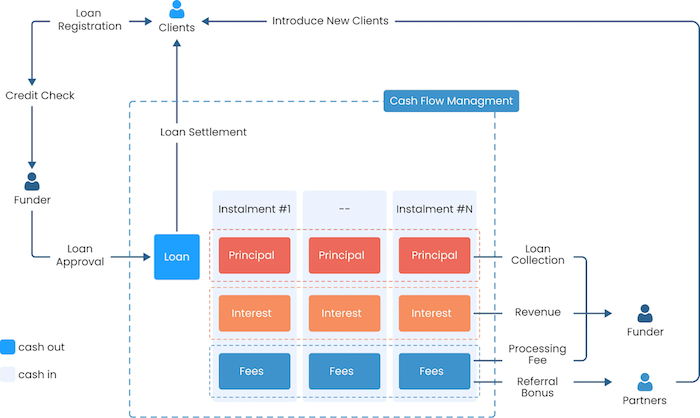
The application also monitors client and supplier credit risk, alerting businesses to any changes to avoid bad debts. Additionally, it offers real-time data analysis, enabling businesses to view current cash flow status and forecast trends, which aids in strategic financial planning. TMA’s solution empowers companies to streamline cash flow management and make proactive, data-driven decisions.
Branded card issuing solution
TMA Solutions’ Branded Card Issuing Solution enables businesses to offer branded prepaid cards, including plastic and virtual options. TMA developed a card management portal for easy oversight, along with mobile applications that let clients activate cards, view balances, and track transactions.
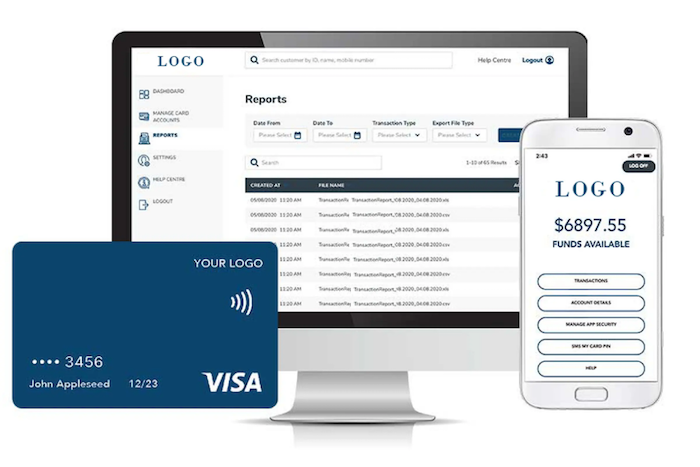
An API was also created to enable seamless integration with other platforms, enhancing connectivity with external services. This solution provides businesses with a versatile, user-friendly card service that integrates smoothly into financial operations.
Capital markets – Post-trade solutions
TMA Solutions offers advanced post-trade solutions for the global financial solution industry, supporting capital markets, securities processing, and wealth administration. With expertise in capital markets solutions, this offering enhances operational efficiency and reliability across various post-trade processes.
Key features include Pre-Settlement capabilities that handle multiple asset classes and markets, ensuring smooth operations. Clearing and Settlement functionalities allow for international transactions, corporate actions, and support for all major ETC protocols and settlement types.
Additionally, the Trade Accounting feature integrates with corporate general ledger systems, covering commission attribution, sharing arrangements, and transaction tax management.
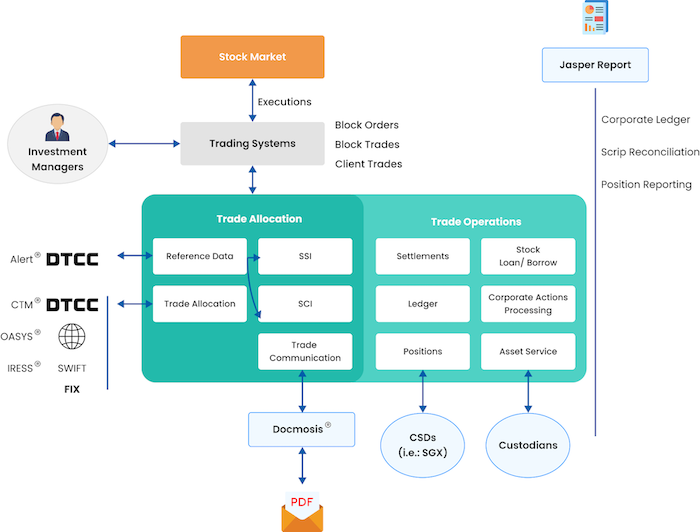
TMA Solutions’ post-trade solution empowers financial institutions to manage complex operations effectively, ensuring accuracy and compliance across capital markets activities.
Digital product trading platform
TMA Solution’s Digital Product Trading Platform leverages smart contracts to facilitate secure and transparent trading. Key features include support for cryptocurrency payments, allowing seamless digital transactions, and the ability to convert products into NFTs, providing unique digital ownership.
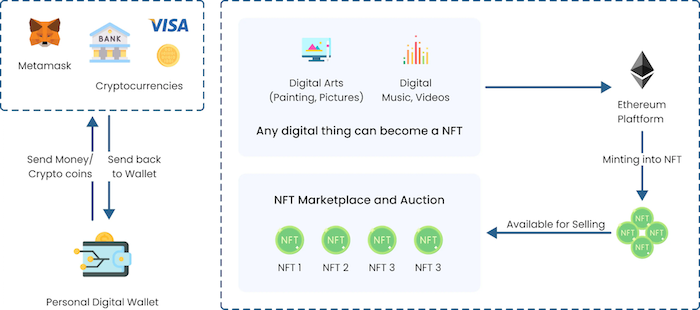
The platform also supports integration with digital wallets, enabling users to store and manage their digital assets easily. This innovative platform by TMA enhances digital trading, offering secure, flexible, and blockchain-driven solutions.
Fintech software development is key to reshaping financial applications for a digital-first world. By leveraging the right technologies, focusing on data security, and partnering with an experienced development team, businesses can create impactful, user-focused solutions. With a clear strategy and adaptability, your Fintech solution can thrive in this fast-evolving industry. Ready to bring your tech-fin vision to life? Careful planning and the right expertise can turn your ideas into innovative financial products that stand out.


