Introduction and Overview
In today’s data-driven world, real-time processing demands instant insights, driven by the Internet of Things (IoT) and 5G technologies. Edge computing processes data near its source, minimizing latency for applications like autonomous vehicles, smart building management, and digital real estate asset management. This approach is critical for industries where split-second decisions are paramount, such as supply chain management and digital banking services.
Edge computing is revolutionizing how data is handled by shifting computation from centralized data centers to the network’s periphery. It addresses the limitations of traditional cloud computing, such as high latency and bandwidth bottlenecks, making it ideal for real-time applications like crop monitoring solutions and livestock tracking technology. With the explosion of IoT devices generating massive data volumes, edge computing ensures faster processing, better resource utilization, and enhanced security. Its integration with Edge AI, machine learning solutions, and AI-powered automation is paving the way for innovations in smart irrigation, PropTech applications for property developers, and fintech development services.
Fundamentals of Edge Computing
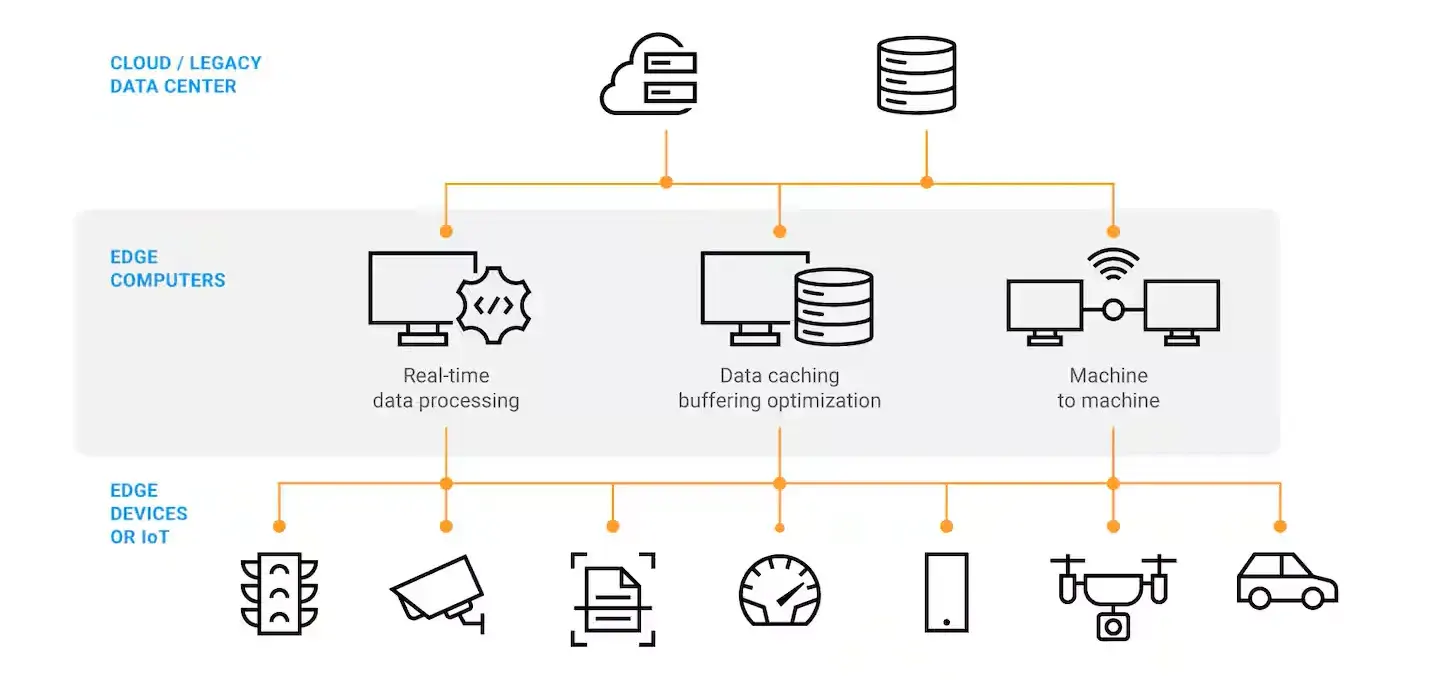
Edge computing represents a distributed computing paradigm that brings data processing and storage closer to the location where data is generated, reducing dependency on centralized cloud infrastructure. At its core, edge computing involves processing data at or near the “edge” of the network on devices such as sensors, IoT in agriculture gadgets, gateways, or local servers rather than transmitting all data to a distant cloud data center. This approach is designed to handle the exponential growth of data from connected devices in applications like smart warehouse solutions and digital classroom tools.
The core components of edge computing include:
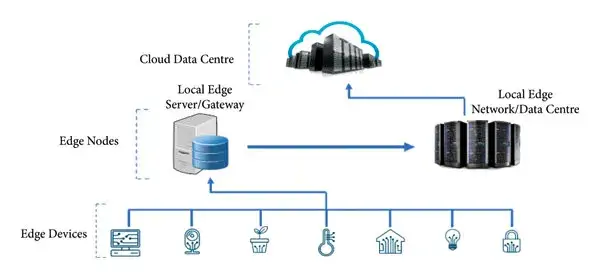
- Edge Devices: These are endpoints where data is generated, such as sensors, cameras, smartphones, or IoT in agriculture gadgets. They perform initial data collection and basic processing to filter irrelevant information before transmission.
- Edge Gateways: Acting as intermediaries, gateways aggregate data from multiple edge devices, provide protocol translation, and handle preliminary analytics or filtering to reduce the load on higher-level systems, as seen in farm automation.
- Edge Nodes/Servers: These are localized computing units (e.g., micro data centers or servers) that execute more complex processing, storage, and decision-making tasks near the data source, often incorporating rule engines, local databases, and Edge AI for real-time operations in smart building management systems.
These components work together to enable distributed intelligence, ensuring scalability and efficiency in data-heavy environments like ecommerce solutions and real estate project management.
Comparison with Traditional Computing Models
Edge vs. Cloud Computing: Differences in Architecture, Latency, and Data Handling
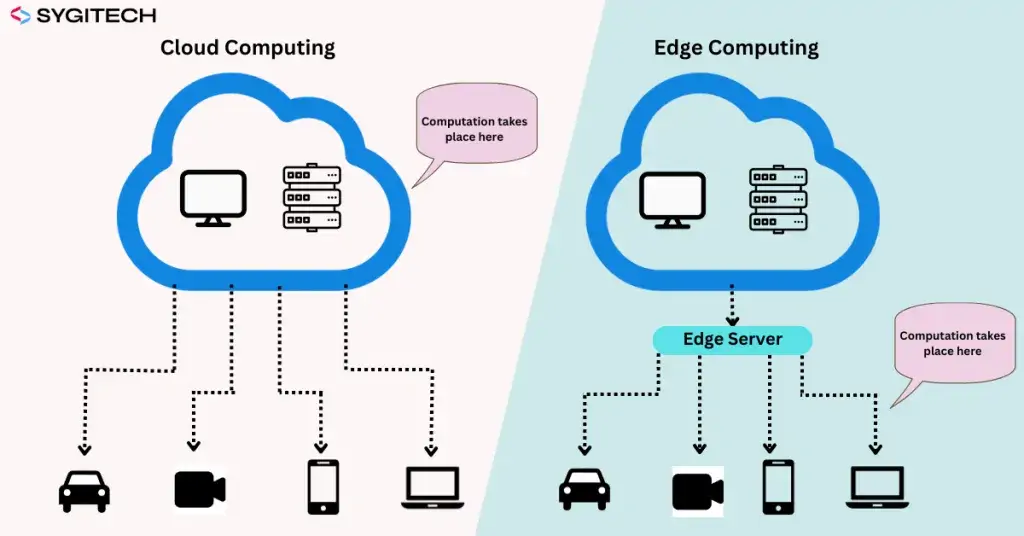
Edge computing features a distributed architecture where processing occurs near the data source, contrasting with cloud computing’s centralized model that relies on remote data centers. In terms of latency, edge offers near-instantaneous response times (often under milliseconds) by minimizing data travel distance, while cloud can introduce delays due to round-trip transmissions. Data handling in edge focuses on local filtering and real-time analysis with machine learning solutions, reducing the volume sent to the cloud, whereas cloud excels in massive-scale storage and complex computations but requires all data to be uploaded, potentially causing bottlenecks in supply chain management or warehouse management systems.
| Aspect | Edge Computing | Cloud Computing |
| Architecture | Distributed, near-source | Centralized, remote |
| Latency | Sub-millisecond | Higher due to data travel |
| Data Handling | Local filtering, real-time | Full upload, massive storage |
Advantages of Edge over Centralized Models for Data-Intensive Tasks
Edge computing provides superior low-latency processing for time-sensitive applications, optimizes bandwidth by processing data locally (reducing costs and congestion), enhances reliability through offline capabilities, and improves data privacy by keeping sensitive information at the source rather than transmitting it centrally. For data-intensive tasks like pest detection, cattle health monitoring, or AI in ecommerce, it enables real-time insights without overwhelming networks, making it more efficient and scalable than centralized models. For example, in AI-powered digital signage, edge can reduce bandwidth usage by up to 90% through local processing.
Impact on Real-Time Data Processing
Benefits
Reduction in Latency and Response Times: By processing data at the network’s edge, edge computing drastically reduces latency to sub-millisecond levels—enabling applications like last mile delivery tracking or real-time patient monitoring to respond without delays from cloud round-trips.
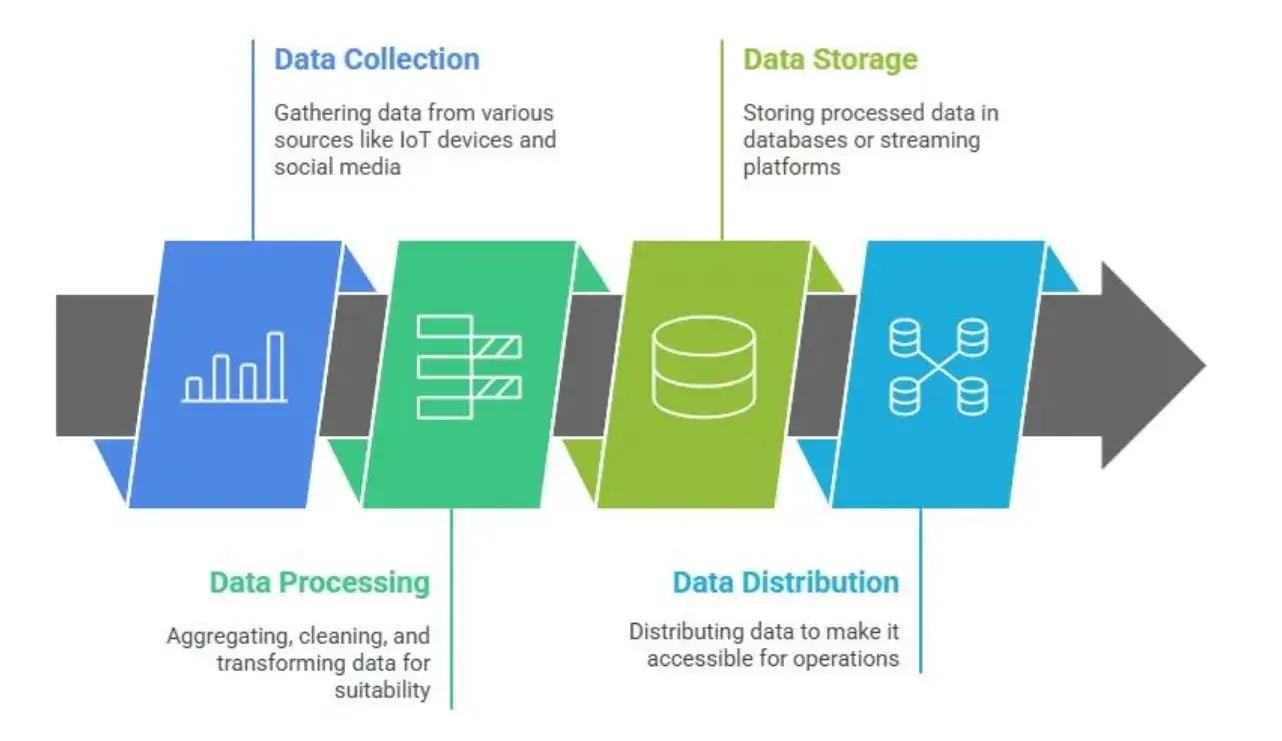
Bandwidth Optimization and Cost Efficiency: Edge computing filters and processes data locally, sending only relevant insights to the cloud, which reduces bandwidth usage, lowers transmission costs, and prevents network congestion in high-data environments like IoT in agriculture or omnichannel retail.
Enhanced Reliability and Data Privacy in Real-Time Scenarios: Local processing ensures operations continue during network outages, boosting reliability for smart irrigation systems. It also enhances privacy by minimizing data exposure during transit, keeping sensitive information on-site and complying with regulations like GDPR and global standards such as CCPA in digital banking services.
Challenges
Technical Hurdles
- Edge devices often face limited computing power, storage, and energy resources, making it challenging to handle complex tasks like AI for business management.
- Scalability issues arise from managing distributed nodes across diverse environments, requiring robust orchestration tools like Kubernetes for edge in smart warehouse solutions.
Security and Privacy Concerns
- Distributed setups increase attack surfaces, with risks like physical tampering or unauthorized access in real estate management platforms.
- Privacy challenges stem from handling sensitive data locally without centralized controls, necessitating advanced encryption and access protocols for digital wallet development.
Implementation barriers and future trends
- Barriers include high initial setup costs, integration with legacy systems like core banking integration, and skill gaps in managing edge infrastructure.
- Future trends point to AI Agents development, 5G integration for ultra-low latency, and sustainable designs focusing on energy efficiency in hydroponics systems and smart building management.
Tips for Implementing Edge Computing
- Start by assessing your business needs and aligning edge initiatives with strategic goals, such as AI demand forecasting in logistics.
- Secure stakeholder buy-in and form cross-functional teams for planning PropTech applications.
- Begin with pilot projects in high-value areas like real-time analytics for ecommerce solutions.
- Ensure robust security measures, such as encryption and AI-powered automation for threat detection.
- Invest in scalable infrastructure and provide employee training for fintech development services.
- Monitor performance continuously and integrate with existing cloud systems like SAP ERP for a hybrid approach.
Which One Is Right For Your Business?
Choosing between edge and cloud computing (AWS, Azure, GCP) depends on your requirements. Opt for edge if your business needs low-latency real-time processing (e.g., IoT in agriculture operations) or operates in remote areas with unreliable connectivity, such as remote building monitoring. Cloud is better for scalable storage and complex analytics without time constraints, like wealth management software. A hybrid model often works best, using edge for immediate tasks (e.g., shipment tracking) and cloud for long-term insights (e.g., asset management solutions). For example, in manufacturing, use edge for on-site monitoring and cloud for predictive maintenance via AI for business management. Evaluate factors like data volume, security needs, and costs to decide.
Pros and Cons
Pros:
- Reduced latency for real-time applications like digital payment solutions
- Bandwidth and cost savings in smart irrigation
- Enhanced data privacy and security for digital wallet development
- Improved reliability in offline scenarios for real estate operation management
- Scalability for distributed environments like smart warehouse solutions
Cons:
- Higher initial setup costs for PropTech applications
- Resource limitations on devices in farm automation
- Complex management of distributed systems in supply chain management
- Potential security vulnerabilities at the edges in mobile payment solutions
- Integration challenges with legacy tech like core banking integration
Use Cases
IoT-Enabled Environment Monitoring
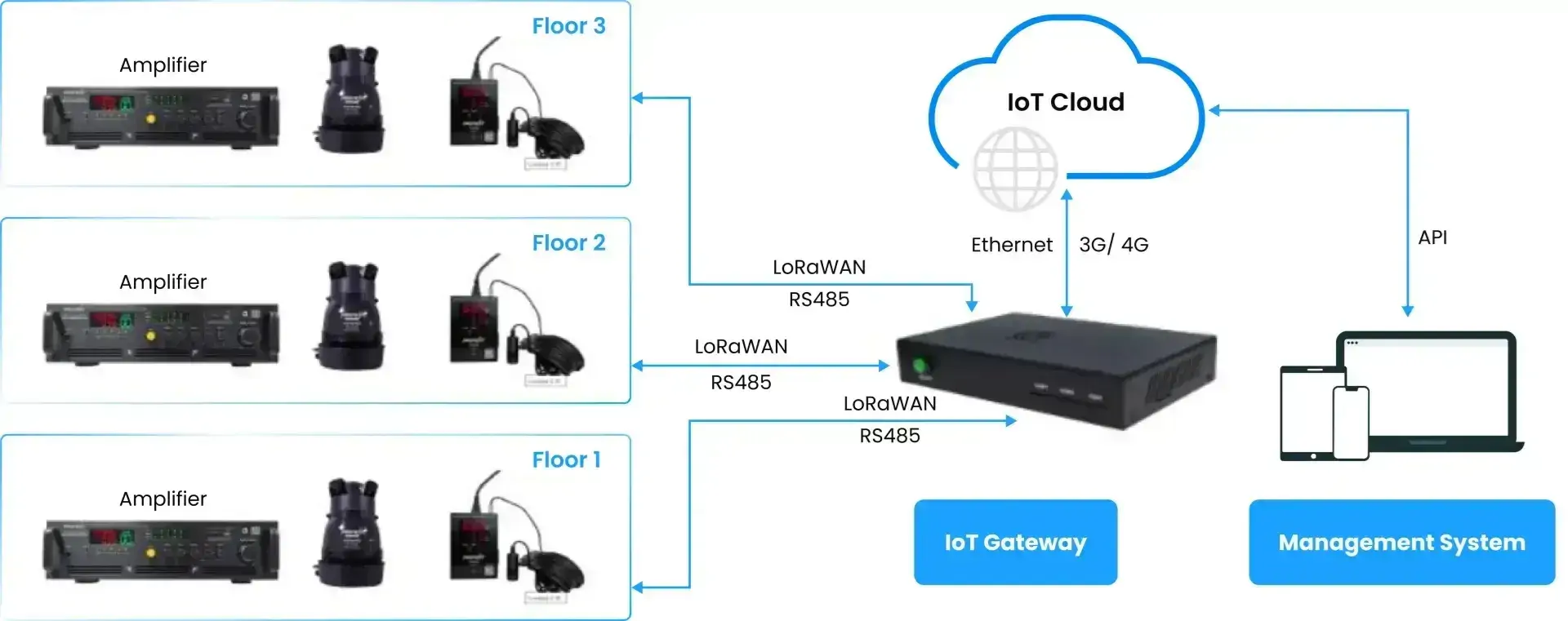
The swiftlet house management system leverages edge computing and IoT in agriculture to optimize swiftlet farming. Amplifiers and sensors on each floor (Floor 1, 2, and 3) are connected via LoRaWAN to an IoT Gateway, which communicates with the IoT Cloud through Ethernet, 3G/4G, or API integration for wealth management platforms adapted for agricultural data.
This setup enables real-time monitoring of environmental factors such as temperature and humidity, crucial for swiftlet nest development, similar to crop monitoring solutions. The system allows remote control of devices like humidifiers, sound sensors, and cameras via a mobile app for apartment management repurposed for farm use, providing farmers with flexibility. It continuously tracks nest status, including real-time location, temperature, and humidity, ensuring optimal conditions. Automated anomaly detection, powered by Edge AI, triggers alerts to users, minimizing losses by enabling swift responses to issues like temperature drops, akin to pest detection.
The system also displays the status of each swiftlet house and extracts detailed data for analysis via DataWarehouse Product traceability. Integrating AI-driven veterinary medical records principles could forecast environmental trends, while QR Code-enabled solar-powered sensors could improve sustainability. This IoT setup exemplifies edge computing in agriculture but applies to broader environments like smart warehouse solutions or smart building management systems, where real-time processing is key.
Cattle Health Monitoring
Edge processes sensor data for real-time detection of anomalies in livestock health, reducing latency in disease risk assessment and enabling immediate alerts without cloud dependency.
Ecommerce Solutions
Edge enables AI in ecommerce for real-time personalization in online shopping platforms, such as dynamic pricing or inventory updates, integrated with AI chatbot for ecommerce.
Real Estate Management Platform
Edge supports remote building monitoring and building operation automation for high-rise buildings, using AI-powered automation to manage space management solutions and digitization of apartment data.
C
Summary of Key Points
Edge computing decentralizes processing for low-latency operations, offering advantages in bandwidth, reliability, and privacy for applications like digital lending/cash-flow management and smart building management. While challenges such as security and scalability exist, its benefits in use cases from IoT in agriculture to fintech development services make it indispensable.
Future Outlook for Edge Computing in Real-Time Processing
The future of edge computing lies in deeper integration with 5G, Edge AI, and AI Agents solutions for Enterprise, enabling ultra-responsive systems for emerging tech like Web3 fintech platforms and digital transformation in real estate. Expect growth in sustainable, secure edge solutions, with hybrid models becoming standard for scalable real-time processing across industries. Businesses should evaluate edge solutions through pilots to harness their potential in a 5G/AI-driven future, leveraging platforms like DataMiner and Agentic API AI.


.webp_2026-10-01-18-27-07-971.webp)
.webp_2026-10-01-18-17-11-290.webp)
.webp_2026-10-01-18-08-26-854.webp)
.webp_2026-10-01-17-47-32-240.webp)