Development workflows are a set of steps that guide software teams from initial idea to deployment. This article will help you understand the main stages of a project and the key workflow models commonly used today.
1. Key stages in a typical AI product development workflow
The AI product development process consists of several stages that guide the journey from the initial concept to the final product. Specifically:
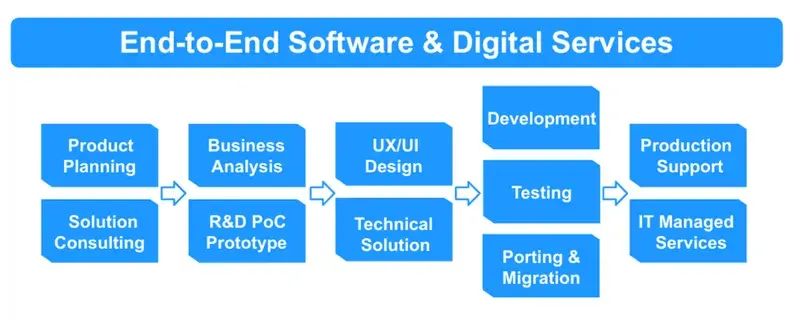
1.1. Step 1: Product Planning
This is the initial stage where the project team and the client work together to define the product’s goals, target users, and project scope. In this step, the team also agrees on the KPIs (key performance indicators) and creates a roadmap to make sure the product stays on track and meets market needs.
Main roles in this stage:
- Product Owner (PO): Represents the client and stakeholders, shapes the product vision, and provides requirements.
- Project Manager (PM): Manages the whole process, makes sure the project follows the plan, timeline, and allocated resources.
- Business Analyst (BA): Analyzes market needs, collects business requirements, and turns them into clear technical requirements for the development team.

1.2. Step 2: Solution Consulting
After the initial idea, the team moves to solution consulting. The goal is to choose the right technology and check if the plan is possible. Within well-structured development workflows, this stage covers drafting a simple system design, estimating costs, reviewing lessons from past projects, and considering new trends such as cloud computing, AI, or automation.
Main roles in this stage:
- Project Manager (PM): Manage schedule, resources, and budget, and ensure overall feasibility.
- Business Analyst (BA): Analyze detailed requirements and clarify use cases to keep the solution on track.
- QA/Tester (early involvement): Participate early to predict technical risks, give a testing view, and ensure quality from the start.
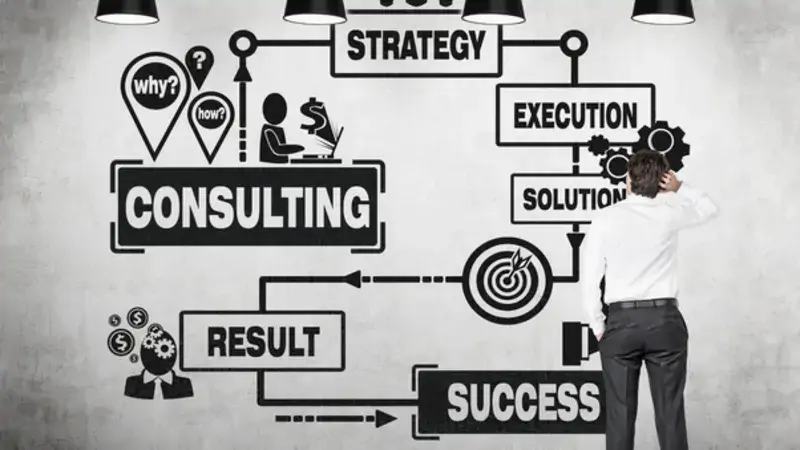
1.3. Step 3: Business Analysis
After solution consulting, the team moves to gather and analyze detailed requirements from the client and stakeholders. The tasks include writing requirement documents (BRD/PRD), drawing business process diagrams, listing stakeholders, and holding meetings so the client can follow and adjust in time.
Main roles in this stage:
- Business Analyst (BA): Key role. Collects requirements, analyzes business needs, clarifies use cases, and turns them into documents or technical requirements.
- Project Manager (PM): Coordinates tasks, tracks the progress of analysis, and ensures requirement documents match the project scope.
- Tech Lead: Reviews the technical feasibility of requirements and makes sure they can be implemented.
- QA/Tester: Helps define acceptance criteria and testing conditions from the start.
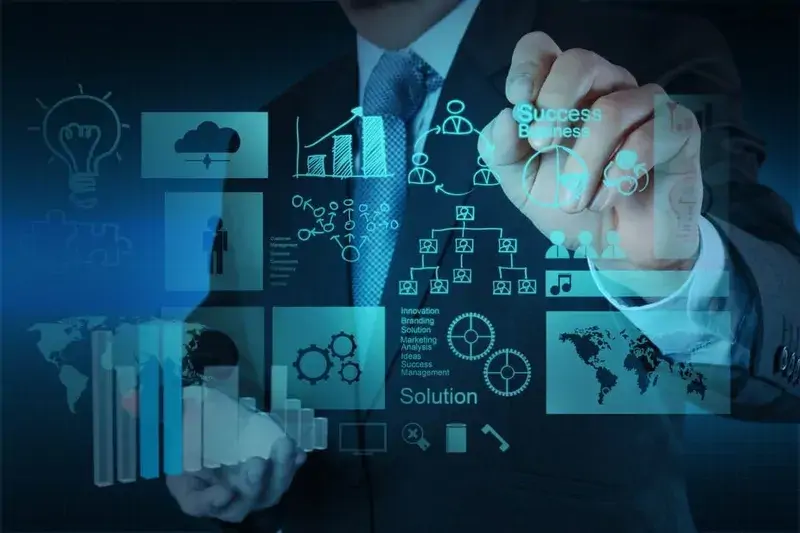
1.4. Step 4: R&D PoC Prototype
At this step, the team creates small tests or prototypes to check technical feasibility and evaluate the performance of algorithms. By placing this phase within broader development workflows, clients gain a clearer view of the idea and can better decide which areas require further development before full deployment.
Main roles in this stage:
- R&D Engineer / Developer: Build PoC code and prototypes to test the idea.
- Tech Lead: Guide architecture, choose technology, and ensure the prototype can scale later.
- QA/Tester: Join early to test features, stability, and find technical risks in the prototype.
- Project Manager (PM): Track progress, manage resources, and make sure the PoC/Prototype meets its goal of proving feasibility.

1.5. Step 5: UX/UI Design
At this step, the first idea is turned into a visual design so everyone can thoroughly comprehend. The design team creates wireframes and interactive prototypes. Then, a group of sample users test the prototype and give feedback. The goal is to make sure the final product is user-friendly, and gives an excellent user experience.
Main roles in this stage:
- UX Designer: Study user behavior, build flows, wireframes, and overall experience.
- UI Designer: Design the visual interface, colors, typography, and product style.
- Front-end Developer: Join to make sure the design can be implemented technically.
- Project Manager (PM): Manage progress, set priorities, and ensure the design matches the product goals.
- QA/Tester: Focus on testability, usability, and consistency
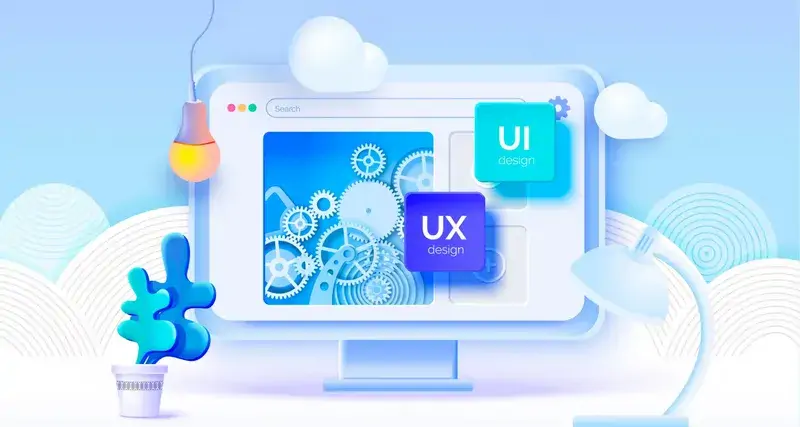
1.6. Step 6: Technical Solution
When the interface design is ready, the technical team builds the detailed system architecture. This includes database design, infrastructure setup, and automated deployment using CI/CD pipelines. Within modern development workflows, this stage is essential to ensure security checks, backup and recovery standards, and scalability of every system component.
Main roles in this stage:
- Tech Lead: Build the system architecture, define technologies, and set technical standards.
- System Engineer / DevOps: Design infrastructure, deployment environment (cloud or on-premise), and CI/CD pipelines.
- Project Manager (PM): Coordinate schedule and resources, ensure the solution fits the project scope.
- Developers: Review and suggest technical details for each module.
- QA/Tester: Define quality criteria and technical risks early in the design stage.

1.7. Step 7: Development
This is the stage where the product comes to life. The development team writes code, builds APIs, integrates systems, and develops both the frontend (user interface) and backend (business logic and data). Work is divided into sprints (short development cycles). After each sprint, a test build is shared with QA to check quality and keep progress transparent.
Main roles in this stage:
- Front-end Developer: Build the user interface based on the UX/UI design.
- Back-end Developer: Develop business logic, APIs, and database.
- Mobile Developer: Build applications for iOS/Android.
- DevOps Engineer: Set up environments, CI/CD, and automate build and deploy.
- Tech Lead: Provide technical guidance, review code, and ensure compliance with the planned architecture.
- QA/Tester: Test in parallel (unit test, integration test) to ensure quality.
- Project Manager (PM): Track development progress, manage scope, and control resources.

1.8. Step 8: Testing
This stage is designed to detect bugs early and ensure a smooth user experience before release. Testing also reinforces the reliability of the overall development workflows, making sure that both functionality and performance align with expectations. The team applies different methods such as functional, performance, security, and user acceptance testing.
Main roles in this stage:
- QA Engineer / Tester: Run planned tests (unit, integration, system, UAT), find and report bugs.
- Automation Tester: Create scripts and tools for automated tests to improve efficiency and accuracy.
- Developers (Front-end / Back-end / Mobile): Fix bugs and work with QA to ensure code quality.
- Tech Lead: Oversee the testing process and confirm quality before release.
- Project Manager (PM): Track testing progress, handle bug priorities, and make sure the product meets standards before delivery.
1.9. Step 9: Porting & Migration
Once the system is ready, the Porting & Migration process facilitates the transfer of data and applications from the old platform to the new one. The team controls data integrity, prepares a fallback plan in case of issues, and updates all documents after migration.
Main roles in this stage:
- System Engineer / DevOps: Handle infrastructure and deployment environment, ensure safe porting/migration.
- Database Administrator (DBA): Manage data transfer, optimize performance, and ensure data integrity and security.
- Developers (Back-end / Mobile / Front-end): Adjust code for compatibility with the new platform or system.
- Tech Lead: Guide technical direction, supervise the migration process, and solve any arising problems.
- QA/Tester: Test after migration to ensure data, features, and performance are not affected.
- Project Manager (PM): Coordinate schedule, manage risks, and make sure the migration meets project needs.
1.10. Step 10: Production Support
In this stage, the goal is to keep the system stable and support users after release. The team monitors performance, fixes issues, and applies patches to ensure smooth operations while maintaining alignment with established development workflows.
Main roles in this stage:
- Support Engineer / Helpdesk: Receive and resolve user issues, support daily system operations.
- System Engineer / DevOps: Monitor infrastructure, optimize performance, and ensure system availability.
- Developers (L2/L3 Support): Fix software bugs, apply security patches, or make small improvements.
- QA/Tester: Re-test hotfixes and patches before official release.
- Project Manager / Service Manager: Manage SLAs, classify incidents, and coordinate resources for timely resolution.
1.11. Step 11: IT Managed Services
In the operation stage, the AI team focuses on managing IT infrastructure, applying security updates, controlling cloud costs, and optimizing resources. The team also performs regular security audits, makes long-term upgrade plans, and provides KPI and SLA reports so clients can track easily.
Main roles in this stage:
- IT Support / Helpdesk: Handle daily support requests from users.
- System Engineer / Network Engineer / DevOps: Manage infrastructure, servers, networks, and cloud to ensure system availability and safety.
- Security Specialist (SOC/Infosec): Monitor cybersecurity, detect threats, and handle incidents.
- Database Administrator (DBA): Manage databases, optimize performance, and perform backup and restore when needed.
- Service Manager / Project Manager: Track SLAs, report service quality, and coordinate resources.
2. Common AI product development workflow models
In practice, the AI product development process often follows two common models: Waterfall and Agile. Below is a comparison table of Waterfall and Agile, applied to the AI product development workflow:
Criteria | Waterfall | Agile |
How it works | Sequential process, each stage is clearly defined, with no return to previous steps. | Iterative development, split into small sprints, flexible and adaptable to changes. |
Advantages | Clear plan, comprehensive documents, easy to manage, good quality control. | Flexible, fast response, frequent testing, suitable for AI products that need experiments. |
Limitations | Less flexible, hard to change, costly and time-consuming to adjust. | Can lose control if poorly managed, requires strong teamwork and constant involvement. |
When to use | AI projects with clear needs, proven data/algorithms (e.g., legacy systems, fixed analytics) | AI projects with data that changes often, need constant testing (e.g., chatbots, recommendation, new ML models) |
2.1. Waterfall workflow
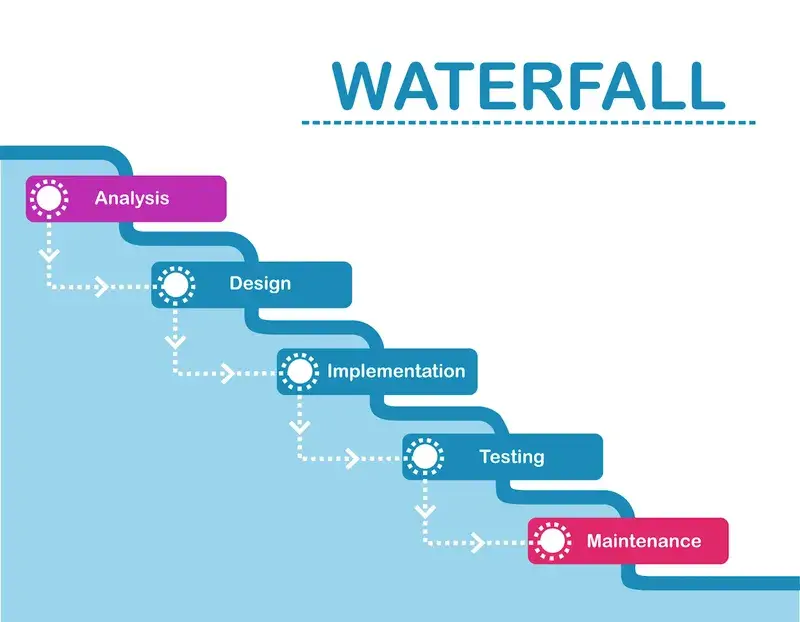
How it works: The Waterfall model follows a linear sequence where each stage must be finished before moving to the next: Initiation → Analysis → Design → Implementation → Testing → Operation/Maintenance. Every stage has clear goals and documents, which serve as the basis for the next step.
Advantages:
- Fixed plan: Steps are defined from the start, providing a clear roadmap for the team.
- Detailed documents: Each stage has standard documents, easy to manage and hand over.
- Quality control: Quality is checked at every step before moving forward.
- Easy to manage: Suitable for less experienced teams, as the process is strict and predictable.
- Best fit for clear projects: Ideal for projects with well-defined requirements, data, and outputs from the start.
Limitations: The biggest weakness is the lack of flexibility. Adapting to new requirements or risks can be difficult, and changes in later stages can significantly increase time and costs.
When to use: Waterfall is suitable for AI projects with clear inputs and outputs, where data and algorithms are already proven.
Examples: Integrating AI into a legacy system, building fixed analytics and reporting solutions, or projects that require strict compliance and tight control.
2.2. Agile workflow
How it works: Agile uses an iterative process. The product is divided into small versions or features, delivered in short cycles (sprints). After each sprint, the team gets feedback from clients, end users, or the market, then quickly improves and adjusts. This makes Agile one of the most adaptive development workflows for dynamic projects.
Advantages:
- Flexible: Easy to change or adapt when risks appear.
- Fast response: Plans can be updated when new insights from data are found.
- Fit for AI products: Supports many experiments and continuous improvement.
- Frequent quality checks: Helps find bugs early and keep the product stable.
- Optimized by reality: Algorithms and features improve step by step, based on feedback and real use.
Limitations: Agile can lead to lack of control if management is weak or if documents are not updated often. This method also requires close teamwork and the ability to react quickly.
When to use: Agile is suitable for AI projects where data changes often or continuous experimentation is needed.
Examples: Building chatbots, recommendation systems, business process automation, or developing new machine learning models.
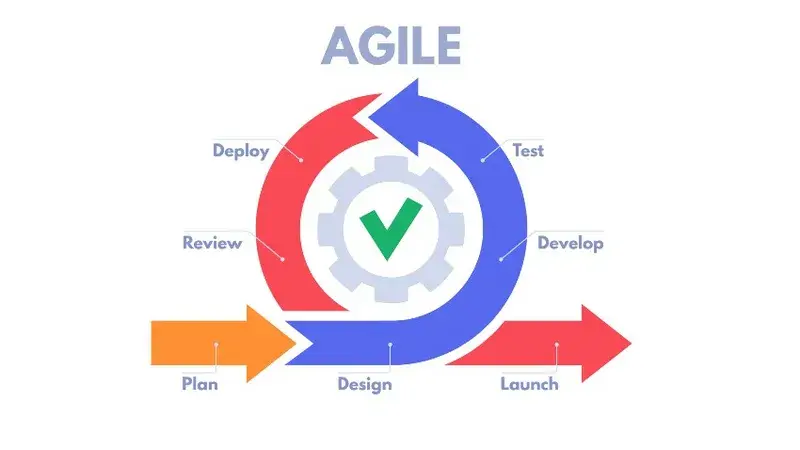
In real projects, TMA Solutions prefers to use the Agile model for AI product development. Agile helps TMA teams stay flexible, adapt easily when data or requirements change, and keep clients involved throughout the process. This approach allows the product to improve in short cycles and quickly reflect market needs as well as user feedback.
Development workflows ensure that technology projects run effectively, from planning to deployment and continuous improvement. Each model, such as Waterfall or Agile, has its own strengths and limits, depending on the product type and business goals.
If you need an experienced partner to apply Agile in AI product development, contact TMA Solutions for expert consulting and long-term support.
Contact information:
TMA SOLUTIONS - The leading software outsourcing company in Vietnam Email: sales@tmasolutions.com Website: https://www.tmasolutions.com/ Linkedin: TMA Solutions TMA Tower address: Street #10, Quality Tech Solution Complex (QTSC), Trung My Tay Ward, Ho Chi Minh City. |


.webp_2026-10-01-18-27-07-971.webp)
.webp_2026-10-01-18-17-11-290.webp)
.webp_2026-10-01-18-08-26-854.webp)
.webp_2026-10-01-17-47-32-240.webp)