Introduction
In an era where data volumes are exploding at 40% annually, organizations face unprecedented pressure to manage, process, and secure information efficiently. The rise of AI-powered automation, machine learning solutions, and IoT in agriculture has transformed industries, from healthcare to fintech, demanding robust and flexible infrastructure. However, reliance on a single cloud provider often leads to risks like vendor lock-in, limited innovation, and compliance challenges. Multi-cloud data architectures offer a strategic solution, enabling organizations to distribute workloads across multiple platforms for resilience, cost-efficiency, and access to cutting-edge technologies like Edge AI and Fintech R&D using Blockchain and Web3. This whitepaper explores the benefits, challenges, use cases, and implementation strategies for multi-cloud environments, showcasing how TMA Solutions empowers enterprises to navigate this transformative landscape.
Why It Matters
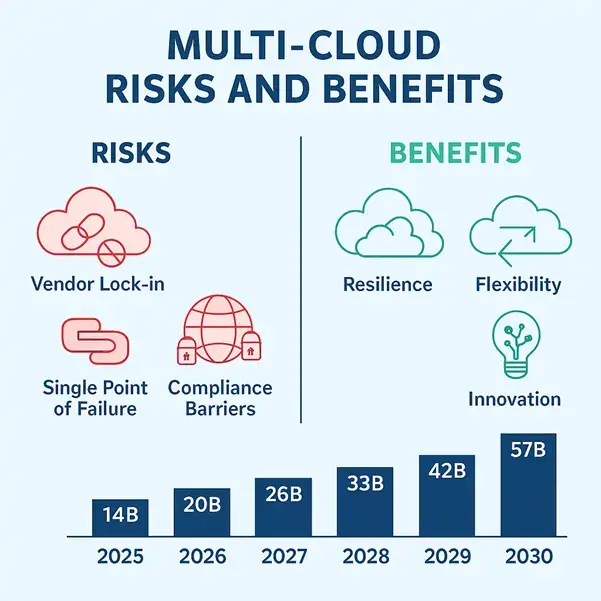
Modern organizations face mounting challenges in storing, processing, and securing data. Rapid data growth, increasingly complex compliance requirements, and the demand for 24/7 availability mean that relying on a single cloud provider can introduce serious risks:
Vendor lock-in that limits flexibility and bargaining power.
Single points of failure that can disrupt mission-critical services.
Geographic and regulatory barriers that make it hard to meet data sovereignty rules.
Performance issues for globally distributed workloads and users.
Innovation limitations when the most advanced services, such as AI Agents solutions for Enterprise and AI for business management, exist in different cloud ecosystems.
A multi-cloud data architecture addresses these problems by distributing workloads and data across multiple providers, enabling resilience, flexibility, and access to best-in-class technologies. The global multi-cloud management market is forecast to grow from 14B USD in 2025 to nearly 57B USD by 2030, at a CAGR of over 30% [1]. These numbers highlight that multi-cloud is a mainstream strategic choice for organizations balancing cost, performance, compliance, and innovation.
What Is a Multi-Cloud Data Architecture?
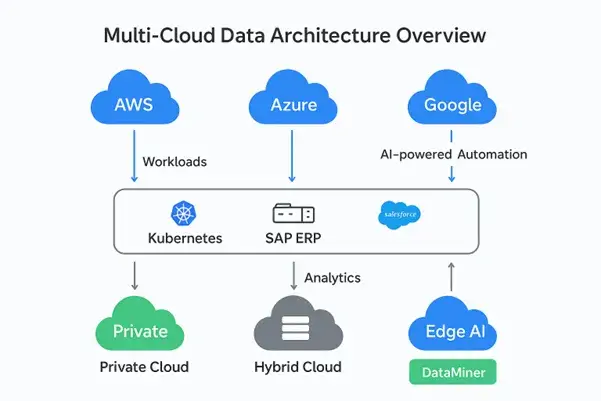
A multi-cloud architecture is a computing environment where an organization uses two or more cloud services simultaneously to meet different workload needs within a unified architecture, often managed via tools like Kubernetes, SAP ERP, Salesforce, or DataMiner. This can mean combining public clouds (AWS, Azure, Google Cloud, etc.) or blending public and private clouds (hybrid cloud) to maximize each platform’s strengths.
Workloads and data are distributed across different cloud environments, tied together by integration layers to operate as a cohesive system. A well-designed multi-cloud data architecture enables seamless data movement, synchronization, and access, allowing organizations to leverage “best-of-breed” features while minimizing operational complexity.
Key Benefits of Multi-Cloud Data Architectures
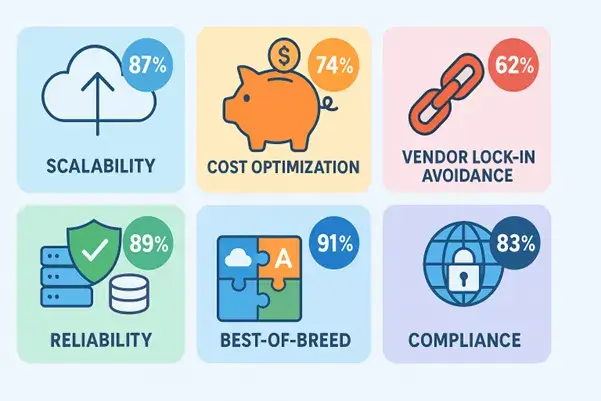
High Scalability & Flexibility: Scale infrastructure dynamically across clouds to meet sudden demand spikes. Multi-cloud enables “cloud bursting”—offloading workloads to other providers during peak loads without service interruption.
Cost Optimization: Distribute workloads to whichever provider offers the most cost-effective service. The average savings possible by using multiple providers for a simple application (compute, storage, bandwidth) is 45%. For a more complex deployment (adding databases and serverless), the global average savings is 29%. [2]
Avoiding Vendor Lock-In: By running critical workloads on multiple platforms, organizations retain leverage in pricing negotiations and mitigate the risks of over-dependence on a single provider.
Reliability & Resilience: Multi-cloud acts as a business continuity safety net. Mission-critical workloads can run concurrently on multiple clouds, ensuring uptime even if one provider suffers an outage.
Best-of-Breed Technology Access: 56% of businesses choose multi/hybrid cloud to tap into unique services from different providers [3] —e.g., Google Cloud for ML, Azure for Microsoft integrations, AWS for its vast ecosystem.
Regulatory Compliance & Data Localization: Store sensitive data in local or private clouds to meet regulations (e.g., GDPR, HIPAA), while leveraging public clouds for analytics or AI processing.
Key Multi-Cloud Benefits
Challenges of Multi-Cloud Data Architectures
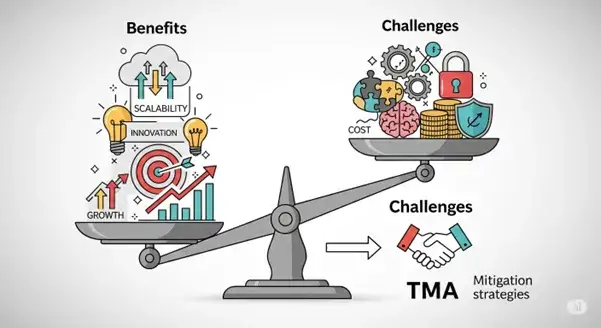
While multi-cloud architectures offer significant advantages, they also present challenges that organizations must address to ensure successful implementation:
Integration Complexity: Managing data and workloads across multiple clouds requires robust integration tools like SAP ERP or Salesforce, as well as expertise in orchestrating platforms like Kubernetes to avoid silos and ensure interoperability.
Skill Gaps: Implementing and maintaining multi-cloud environments demands specialized skills in AI-powered automation, Edge AI, and cloud-native technologies, which may require upskilling or external expertise.
Higher Initial Costs: Setting up multi-cloud systems, including Smart building management systems or Fintech R&D using Blockchain and Web3, can involve higher upfront costs due to infrastructure and integration needs.
Security and Compliance Risks: Coordinating security protocols across clouds, especially for Vietnam PropTech or Cloud-Based Veterinary Clinic Management, requires careful alignment with regulations like GDPR or HIPAA.
These challenges can be mitigated by partnering with experienced providers like TMA Solutions, who offer tailored PropTech applications and AI Agents development to streamline multi-cloud deployments.
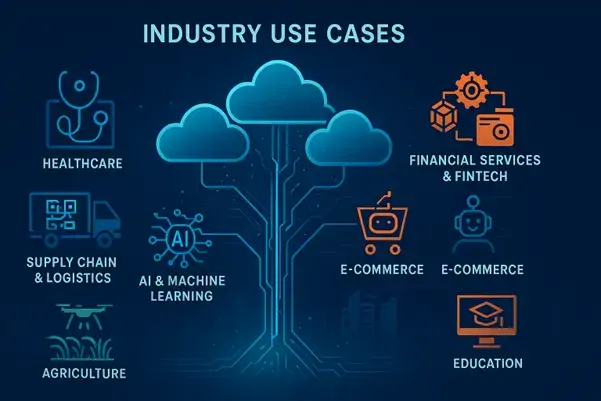
Industry Use Cases
Healthcare: Combine private clouds for sensitive patient data with public cloud services for diagnostics, leveraging AI - Comprehensive Patient Summaries, CloudBased AI Software for Veterinarians, Veterinary Practice Management, and Paperless Vet Clinic Solutions. For example, AI-driven veterinary medical records can reduce diagnostic times by up to 30%.
Financial Services & Fintech: Run compliant transaction processing on one cloud while using another for AI-powered financial advisory tools, Digital Payment Solutions, Mobile Banking, E-Wallets, and Blockchain financial solutions like Letter of guarantee using blockchain or NFT marketplace development for fintech.
Supply Chain & Logistics: Deploy infrastructure close to operational hubs to reduce latency for IoT in agriculture and Shipment tracking, enhanced by AI Demand forecasting in logistics, Warehouse Management System, and DataWarehouse Product traceability using QR Code.
AI & Machine Learning: Train models using diverse compute options, store datasets cost-effectively, and deploy inference close to users with AI in education, AI for business management, and Agentic API AI.
E-commerce: Ensure low-latency shopping with Ecommerce solutions, AI chatbot for ecommerce, Omnichannel retail, and AI-Powered Digital Signage.
Agriculture: Leverage Farm automation, Crop monitoring solutions, Smart Irrigation, and Livestock tracking technology for diseases like Lumpy Skin Disease or Mastitis/High Fever/Lameness Disease.
Real Estate: Implement Smart building management, Vietnam PropTech, Real estate management software, and Mobile app for apartment management for efficient Strata Management and Community Management.
Education: Deploy Learning management system, Enterprise E-learning system, Self-learning platforms, and Digital classroom tools to enhance learning experiences.
Why Choose TMA
With 27 years of experience and a team of 4,000 engineers serving clients across 30+ countries, TMA Solutions is a trusted partner for building scalable multi-cloud data architectures. Our expertise spans AI Agents development, Edge AI, Fintech R&D using Blockchain and Web3, and PropTech applications for property developers, delivering tailored solutions that drive innovation and efficiency. We have achieved 20–50% cost reductions in multi-cloud projects across industries, including:
Healthcare: Deploying Cloud-Based Veterinary Clinic Management and AI-driven veterinary medical records to streamline operations.
Fintech: Implementing Digital Payment Solutions, Mobile Banking, and Blockchain financial solutions for secure, scalable platforms.
Real Estate: Developing Smart building management systems and Mobile apps for apartment management to enhance Vietnam PropTech ecosystems.
E-commerce: Optimizing Omnichanncael retail and AI chatbots for ecommerce to boost client engagement.
Our proven track record, combined with deep expertise in SAP ERP, Salesforce, and DataMiner integration, ensures seamless multi-cloud deployments that meet compliance, performance, and innovation goals. Partner with TMA Solutions to unlock the full potential of your multi-cloud strategy.
Contact TMA Solutions
🌐 Website: www.tmasolutions.com/contact
📧 Email: contact@tmasolutions.com
📋 Case Studies: www.tmasolutions.com/case-studies
Conclusion
Multi-cloud data architectures are essential for organizations seeking agility, cost-efficiency, and innovation. Leveraging multiple cloud platforms unlocks technological advantages and ensures resilience against risks. As businesses increasingly adopt hybrid and multi-cloud strategies, the ability to seamlessly integrate diverse ecosystems becomes a competitive edge, enabling rapid adaptation to market changes and emerging technologies. This approach not only mitigates the limitations of single-provider dependency but also fosters a culture of continuous improvement and innovation. With the global market projected to expand significantly by 2030, investing in multi-cloud infrastructure today positions organizations to lead in a data-driven future. By embracing best practices and strategic partnerships, companies can maximize the potential of multi-cloud environments to drive sustainable growth and operational excellence across all sectors.


.webp_2026-10-01-18-27-07-971.webp)
.webp_2026-10-01-18-17-11-290.webp)
.webp_2026-10-01-18-08-26-854.webp)
.webp_2026-10-01-17-47-32-240.webp)