In today's demanding environment, manual processes and outdated systems simply can't keep pace. Automation offers a powerful solution, streamlining workflows, minimizing errors, and freeing up valuable time for healthcare professionals to focus on what matters most: patient well-being. This article explores how automation is revolutionizing healthcare operations and the tangible benefits it brings. Read on to discover the transformative power of automation in healthcare.
Automation in healthcare market overview
The growing adoption of automation in healthcare is supported by compelling market data and physician feedback. A Precedence Research report valued the global healthcare automation market at $35.2 billion in 2022, projecting a significant increase to $90.88 billion by 2032, representing a growth of over 150% and a robust 10% Compound Annual Growth Rate (CAGR). This substantial growth reflects the increasing value and effectiveness of automation solutions in healthcare.

Further underscoring the need for automation, a Google Cloud report highlighted the challenges faced by physicians due to inefficient data systems. While 92% of doctors believe technology can improve patient experiences, they currently spend an average of four hours daily on manual data entry and navigation, hindering critical tasks such as communication, identifying high-risk patients, and making timely diagnosis. This data strongly suggests that automation, particularly through improved data interoperability, is crucial for both physician satisfaction and enhanced patient care.
Benefits of automation in healthcare industry
Automation in healthcare delivers numerous benefits, significantly enhancing the efficiency and quality of healthcare delivery:
- Improved operational efficiency
Automation streamlines time-consuming manual tasks, significantly improving productivity and efficiency for healthcare professionals. By automating routine processes, valuable time is freed up for more critical activities.
- Enhanced patient care
Automation frees up valuable time and resources with routine, enabling healthcare professionals to dedicate more attention to providing higher-quality, personalized patient care. This focus on patient interaction and individualized treatment leads to better patient outcomes.
- Error reduction
Automating manual data entry, result interpretation, and other error-prone tasks minimizes the risk of human error, leading to more accurate and reliable results. This contributes directly to improved patient safety and diagnostic accuracy.

- Streamlined information access
Centralized data management through automation provides fast, secure, and easy access to critical patient information. This ensures that healthcare professionals have the necessary data to make informed decisions quickly.
- Enhanced security and compliance
Automated systems strengthen data security and ensure compliance with stringent regulations and established security standards, protecting patient confidentiality and privacy. This is crucial in today's data-driven healthcare environment.
- Facilitated coordination and communication
Automation facilitates seamless communication and coordination among various stakeholders within the healthcare ecosystem, including doctors, specialists, laboratories, and pharmacies. This improved communication leads to better collaboration and more coordinated patient care.
Different types of automation in healthcare
Administrative automation
Healthcare organizations handle numerous repetitive administrative tasks, making them prime candidates for automation. This includes:
- Appointment scheduling and reminders: Automated systems streamline appointment booking, send confirmations and reminders, and facilitate rescheduling or teleconsultations.
- Billing and insurance processing: Automation manages insurance claims, generates invoices, and handles patient billing cycles, reducing errors and improving efficiency.
- Data entry and reporting: Automated data entry from medical records and automated report generation minimize manual effort and ensure data accuracy for informed decision-making.

Patient care automation
Automation plays an increasingly important role in direct patient care:
- Medication dispensing: Robotic pharmacy systems automate medication dispensing, ensuring accuracy and minimizing errors.
- Patient monitoring: Wearable devices and telehealth platforms enable continuous monitoring of vital signs and health metrics, facilitating early detection of potential health issues.
- Patient support: Chatbots provide 24/7 support by answering basic patient questions, scheduling appointments, and delivering medication reminders, freeing up staff for more complex tasks.
Diagnostics and treatment automation
The application of AI and machine learning is revolutionizing diagnostics and treatment.
- Medical image analysis: AI algorithms analyze medical images (X-rays, MRIs, etc.) to detect abnormalities and assist in early disease diagnosis.
- Automated lab testing: Automated laboratory systems perform a wider range of tests more quickly and efficiently, accelerating diagnosis and treatment decisions.
Applications of automation in healthcare
Several tools and systems facilitate effective medical management automation in healthcare:
Electronic clinical history (EHR/EMR)
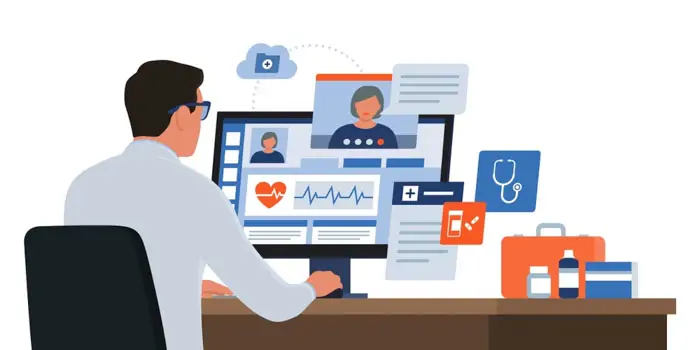
Implementing an electronic clinical history system digitizes patient medical records, including demographic data, medical history, exam results, and previous treatments. This eliminates the need for paper records, providing faster access to information, streamlined updates, and improved clinical decision-making.
Automated scheduling
Smart scheduling systems automate the appointment booking process, empowering patients to schedule appointments based on provider availability easily. This automation minimizes errors associated with manual scheduling, optimizes provider time, and enhances the patient experience.
Automated waiting room management
Automating waiting rooms with turn management and patient calling systems improves patient flow and reduces wait times. These systems notify patients when it is their turn and provide updates on any schedule changes, often utilizing digital displays to communicate information efficiently.
Enterprise resource planning (ERP)
In healthcare, ERP systems centralize financial and management data, optimize billing and payment processes, manage inventory, and streamline resource planning. This leads to improved resource allocation, increased efficiency, and reduced operational costs.
Client relationship management (CRM)
CRM systems in healthcare store and manage patient information, including demographics, medical records, appointments, and communication history. This facilitates streamlined appointment scheduling, automated reminders, and personalized patient care.
Business process management systems (BPMS)
BPMS solutions automate clinical and administrative workflows, such as request approvals, complaint management, exam result follow-ups, and multidisciplinary team coordination. This automation improves efficiency and reduces manual effort across various healthcare processes.

Future trends of ai automation in healthcare
The future of healthcare will be significantly shaped by continued technological evolution, particularly in AI and the ongoing expansion of automation in healthcare. Key future trends include:
- Advanced ai-driven diagnostics and treatment
AI will play an increasingly prominent role in supporting healthcare providers. We can anticipate sophisticated AI systems capable of analyzing complex medical data, generating personalized treatment recommendations, and executing robotic-assisted surgeries with exceptional precision.
- Predictive and preventative healthcare
Advanced algorithms will analyze patient data to identify individuals at risk of developing specific diseases. This predictive capability enables proactive preventative measures and personalized interventions, potentially leading to significantly improved health outcomes.
- Enhanced virtual patient support
AI-powered virtual assistants and chatbots will become integral to patient care, providing 24/7 support. These virtual assistants will handle appointments, answer basic health inquiries, and provide timely medication reminders, enhancing patient engagement and freeing up staff resources.

- Integrated telehealth and remote monitoring
Automation will further enhance telehealth capabilities. Wearable devices and remote sensors will enable continuous patient monitoring, triggering alerts and prompting timely interventions when necessary. This proactive approach will be particularly beneficial for managing chronic conditions and providing remote care.
- Accelerated drug discovery and development
AI will significantly streamline the drug discovery and development process, accelerating the identification of promising new treatment options and potentially leading to faster breakthroughs in personalized medicine and targeted therapies.
Conclusion
Automation in healthcare has transitioned from a desirable addition to an absolute necessity. By strategically embracing automation technologies, healthcare organizations can unlock significant benefits, including enhanced patient care through streamlined workflows and reduced human error, substantial cost savings by optimizing resource allocation and minimizing administrative overhead, and marked improvements in operational efficiency, leading to smoother processes and faster turnaround times. To learn more about specific automation solutions and how they can benefit your organization, explore our resources and contact us today.


.webp_2026-10-01-18-27-07-971.webp)
.webp_2026-10-01-18-17-11-290.webp)
.webp_2026-10-01-18-08-26-854.webp)
.webp_2026-10-01-17-47-32-240.webp)