Artificial intelligence is transforming how businesses develop products and operate. Among the leading implementers, TMA Solutions stands out as an AI product development company in Vietnam, working with global enterprises to turn their AI ideas into reality.
1. What an AI product development company really does
An AI product development company specialises in designing, developing, and deploying software products powered by artificial intelligence. The company not only focuses on building AI models but also manages the entire process of turning a technological concept into a fully functional product that operates in business environments.
To achieve this, they often apply the AI Agent Development Factory model, which is a structured production process where specialised teams work closely together. The Data Science team collects and cleans data, the Machine Learning team trains and improves the models, and the Software Engineering team integrates these models into the final product.
With this working structure, the company can create AI agents that can learn, analyse data and assist humans in different tasks. In other words, the AI Agent Development Factory is the foundation that helps an AI product development company turn artificial intelligence technology into real business value.

Understanding the role of an AI product development company
2. Why leading enterprises choose TMA as their AI product development partner
Leading corporations choose TMA Solutions as their AI product development partner thanks to its strong technology foundation, international project experience and deep research capability. With more than 28 years in the technology industry and a team of over 4,000 engineers, TMA has the capacity to develop and manage large-scale AI projects that meet strict requirements for timeline, quality and scalability.
AI R&D and Data Science are among TMA’s core strengths. The company’s AI & Robotics Center focuses on key technologies such as machine learning, computer vision, natural language processing and AI agent development. From this foundation, TMA has built over 100 AI solutions and earned more than 150 recognised AI certifications. Its projects span multiple industries, including Healthtech, Fintech, Telecom, Manufacturing, Logistics, Automotive, etc.. helping businesses unlock real value from data and artificial intelligence.
TMA provides end-to-end AI product development services, covering the entire process from Proof of Concept (PoC) and productisation to maintenance and scalability. The development process follows international standards to ensure each AI product runs reliably, integrates easily and adapts well to enterprise environments.
All projects are executed under strict international security and quality standards such as ISO 27001 and CMMI Level 5, ensuring data protection and system reliability. This commitment has made TMA a trusted partner for global corporations on strategic and high-security projects.
To date, TMA has completed more than 100 AI projects for clients across over 20 countries, supporting businesses of different sizes and industries. The company also maintains long-term partnerships with leading technology firms, including being a Microsoft Gold Partner since 2007. These achievements reflect TMA’s solid position as a trusted global partner in researching, building, and developing practical AI products for enterprises.
A deeper look into TMA’s AI platforms, agent-based architectures and applied AI research can be found at www.tmasolutions.ai

Why leading enterprises choose TMA as their partner in AI product development
3. TMA’s AI product development process
As a leading AI Product Development Company, TMA has designed its AI product development process to cover the entire product lifecycle — from ideation to deployment and continuous improvement. The goal is to help businesses adopt AI quickly, securely, and with measurable results.
Requirement analysis and solution consulting
The process begins with a deep understanding of the client’s specific needs. TMA’s experts analyse the business goals, data, and application context to determine whether the problem is suitable for AI. Based on this analysis, engineers propose an approach, develop a Proof of Concept (PoC) and assess potential ROI. This stage helps clients clearly see the value AI can bring before moving into full-scale development.
Solution and AI architecture design
Once the requirements are aligned, TMA’s technical team designs the AI system based on the AI Agent Development Factory framework. This process uses existing agent libraries combined with foundational models to create a flexible architecture that is easy to scale and integrate into enterprise systems.
System development and integration
At this stage, AI, data, and software engineers work closely to build and train models while integrating them with the client’s real-world data. TMA uses visual development tools, APIs, and prebuilt data connectors to ensure system compatibility, security and scalability.
Testing and validation
After development, the AI product is thoroughly tested in a secure sandbox environment. The system is simulated under real-world conditions to verify its accuracy, responsiveness and stability. The technical team also conducts security assessments to ensure compliance with international standards before deployment.
Deployment and real-world operation
Once validated, TMA deploys the product into production environments, either on cloud or on-premises, depending on the client’s infrastructure. The system is configured with auto-scaling, load balancing, and real-time monitoring to ensure stable performance. Every deployment follows a rollback plan to minimise risk.
Continuous monitoring and improvement
After launch, the AI system is continuously monitored and evaluated using real data. Performance metrics, user behaviour, and feedback are used to fine-tune models, allowing the AI to keep learning and improving over time. This approach ensures that TMA’s AI products remain adaptive and consistently deliver reliable results.
Collaboration and scalability models
TMA manages AI projects through flexible engagement models such as Project-based, Offshore Delivery Center (ODC), or hybrid options to fit different business sizes and budgets. In addition, supporting services such as UX/UI design, migration, and IT managed services help clients maintain smooth operations and easily upgrade or expand their systems in the future.

Each step in TMA’s AI product development process
4. Industries we empower with AI solutions
TMA Solutions leverages artificial intelligence across multiple sectors, helping organizations transform data into actionable insights and intelligent operations. Through its role as an AI Product Development Company, TMA’s R&D team collaborates with enterprises worldwide to create tailored solutions that drive digital transformation.
1 - Healthcare & Healthtech
In the healthcare field, TMA applies AI and machine learning to support medical image analysis, electronic health record management and workflow automation. Through the TMA Health Tech Center, AI-driven solutions are developed to help doctors and hospitals make faster and more informed decisions.
2 - Fintech & Banking
In finance and banking, TMA builds AI systems that can detect unusual transaction patterns, identify fraud, and personalise services based on customer profiles. Data is continuously analysed to help financial institutions improve reliability and strengthen risk control.
3 - Telecom & Networking
For telecom operators, AI is used to optimise network operations, predict system failures and enhance user experience. Real-time analytics models developed by TMA help minimise downtime and ensure stable service quality.
4 - Manufacturing & IoT
In manufacturing and IoT, TMA focuses on predictive maintenance and quality inspection through computer vision. These solutions help enterprises reduce incidents, maintain production stability, and improve accuracy in product quality assessment.
5 - Retail & E-commerce
In the retail and e-commerce sector, TMA uses AI to power product recommendation engines, demand forecasting and dynamic pricing. Real-time supply chain analytics help businesses increase revenue and deliver a smoother, more personalised shopping experience.
6 - Education, Automotive, Smart building
TMA is also expanding its AI applications into education, automotive, and smart city initiatives, where big data and automation form the basis for new development models. These solutions are designed with a focus on safety, sustainability and long-term value for communities.

Industries where TMA applies AI to enhance business capability
5. Case studies: How TMA builds successful AI products
The following case studies illustrate how TMA applies AI to help businesses solve real-world problems and enhance customer experience.
5.1. Case 1 – AI for Healthcare
The project “AI Solution for Optimised Pet Health Center” was implemented by TMA for a leading veterinary hospital network in the ASEAN region. The client provides various pet-related services, including pet insurance, ultrasound diagnostics, care, training and surgery. However, they faced challenges such as fragmented health data, a complex software interface, and slow customer response.
TMA’s solution
As an experienced AI product development company, TMA developed an AI-powered pet health management platform using artificial intelligence (AI) and machine learning (ML) to unify data, improve user interaction, and automate customer support.
- AI-based health analysis: The system collects and analyzes medical data to detect abnormalities early and recommend care routines, nutrition plans, or treatment options.
- Redesigned user-friendly platform: The interface was improved for easier navigation, allowing pet owners to enter information, track health status, and receive AI-driven suggestions.
- AI chatbot support: An integrated AI chatbot provides quick guidance, helps troubleshoot software issues, and offers personalised care instructions.
Results and benefits
The AI solution developed by TMA significantly improved operational efficiency and user experience.
- Comprehensive health tracking: The platform centralises all medical data, including treatment history, vaccination records, and diagnostics, making monitoring accurate and convenient. Centralised digital health records have been shown to improve data accuracy by up to 30% and reduce administrative time for veterinary staff by 25%.
- Personalised recommendations: AI analyses each pet’s data to suggest tailored nutrition, exercise, and preventive care plans.
- Seamless integration with veterinary records: The system connects with hospital databases, allowing both veterinarians and pet owners to access synchronised information and reduce diagnostic errors. Studies show that integrated data platforms can lower misdiagnosis rates by 15 - 20%.
- Enhanced user engagement: Automated reminders for medication, appointments, and vaccinations help pet owners stay proactive while increasing satisfaction and trust in the platform.
5.2. Case 2 – Predictive Maintenance for Manufacturing
The project “Predictive Maintenance with Generative AI” was developed by TMA for a U.S.-based manufacturing company undergoing digital transformation. The goal was to help the client monitor machine conditions in real time, detect early warning signs, and minimize unplanned downtime, ensuring more stable operational performance.
TMA’s solution
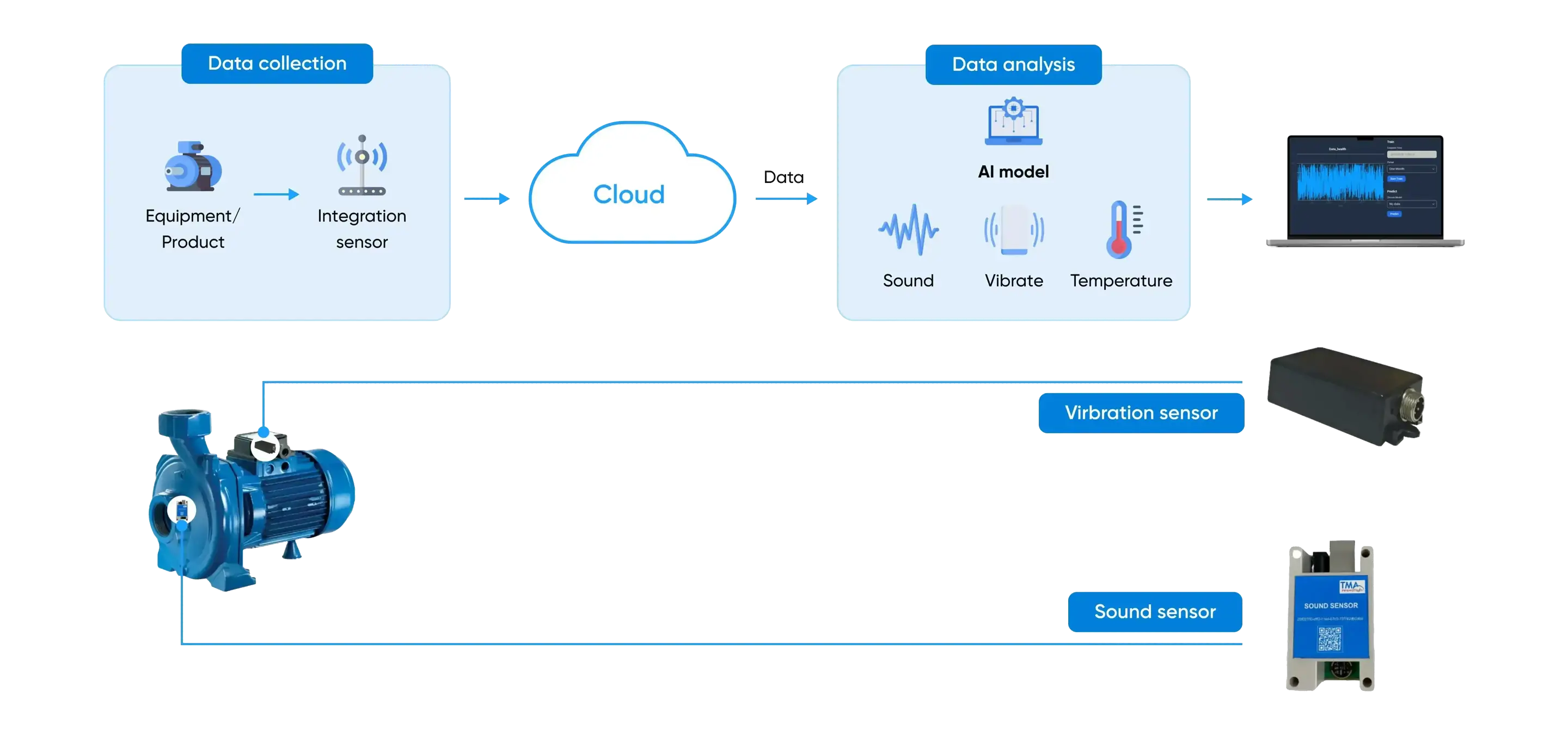
TMA combined Generative AI (ChatGPT 4.0) with sensor data analytics to build a comprehensive predictive maintenance system that operates through a collect-process-predict model:
- Automated sensor data analysis: The system gathers sound, vibration and temperature data from equipment via IoT sensors, stores it in the cloud, and processes it using AI models to identify anomalies.
- Natural language reporting and maintenance insights: Generative AI translates complex technical results into easy-to-understand reports, enabling technicians to quickly assess equipment status and take appropriate actions.
- Smart maintenance planning: The system schedules proactive maintenance based on real operational data, usage history and AI forecasts, preventing reactive repairs after breakdowns.
Results and benefits
TMA’s solution brought clear improvements to factory operations and demonstrated the practical potential of AI in industrial manufacturing:
- Increased equipment reliability: Early fault detection prevents unexpected failures and extends machine lifespan. Companies applying predictive maintenance can extend equipment lifespan by around 20%.
- User-friendly and scalable: The intuitive reports make data accessible to non-technical staff, and the system can be deployed across multiple plants and equipment types.
- Improved operational performance: Digitalised maintenance data enables more flexible and stable production planning.
- Reduced maintenance costs: The system minimises downtime and repair expenses while supporting continuous production. Predictive maintenance can reduce maintenance costs by 8 - 12% compared with preventive maintenance.
5.3. Case 3 – AI Chatbot & Automation for Customer Service
The project “Building AI-Driven Chatbots for Fintech Customer Service” was developed by TMA for a fintech company facing challenges in scaling its customer service operations. As the number of customers and transactions grew rapidly, the support team had to handle thousands of repetitive inquiries each day, resulting in slow response times and rising operational costs. The company needed an automated communication solution that could ensure both speed and accuracy while maintaining strict data security.
TMA’s solution
TMA developed an AI-driven chatbot system powered by natural language processing (NLP) and machine learning, seamlessly integrated into the client’s service platform, demonstrating its expertise as a leading AI product development company in Vietnam.
- Automated understanding and response: The chatbot identifies user intent and context to deliver accurate answers for common inquiries such as account information, transactions, and fees.
- Internal data integration: The chatbot connects with the financial backend system to retrieve real-time information securely.
- Omnichannel support: It operates seamlessly across websites, mobile apps, and popular chat platforms, providing a consistent experience for all users.
- Continuous learning: Each interaction is used to refine the model’s accuracy, making the chatbot increasingly intelligent and natural over time.
Results and benefits
TMA’s solution enabled the fintech company to transform its customer experience and optimise operational costs.
- Faster response time: The chatbot automatically handles most customer requests, offering instant 24/7 support. Chatbots can reduce average response time by up to 90% compared with manual handling, ensuring users receive immediate answers without waiting in queues.
- Reduced staffing costs: The number of cases requiring human intervention dropped significantly, saving both time and resources.
- Enhanced user experience: Personalised and clear responses improved customer satisfaction and trust. In fintech use cases, AI chatbots have been shown to increase customer satisfaction rates by 20 - 25%, thanks to consistent and context-aware replies.
- Secure and scalable system: The solution complies with financial data protection standards and can easily expand to support new products or markets.
Case studies on how TMA builds successful AI products
6. How to collaborate with TMA for your AI product development
TMA Solutions offers various flexible collaboration models that help businesses implement AI projects according to their scale, timeline and business goals. Depending on specific needs, clients can choose between a project-based model or a dedicated team model, each providing its own approach and advantages.
Project-based collaboration
The project-based model is a collaboration approach in which TMA takes full responsibility for the entire process, from requirement analysis and solution design to development and final delivery.
This model is suitable for businesses that:
- Have clear requirements, a well-defined project scope, and a fixed timeline.
- Need a partner to handle the entire process from concept to a complete, ready-to-use product.
TMA works closely with clients during the initial phase to define goals and then executes the project through a transparent roadmap, ensuring on-time delivery and committed outcomes.
Dedicated team
The dedicated team model is a long-term collaboration approach in which TMA provides a team of AI engineers, data scientists and software experts who work as an extension of the client’s in-house technical department.
This model is suitable for businesses that:
- Need to strengthen their internal capability without hiring or training new staff.
- Aim to maintain and continuously enhance AI products with ongoing development and feature expansion.
Clients manage priorities and project activities directly, while TMA as a reliable AI Product Development Company ensures a stable, highly skilled team with deep technical expertise and a strong understanding of the client’s systems.
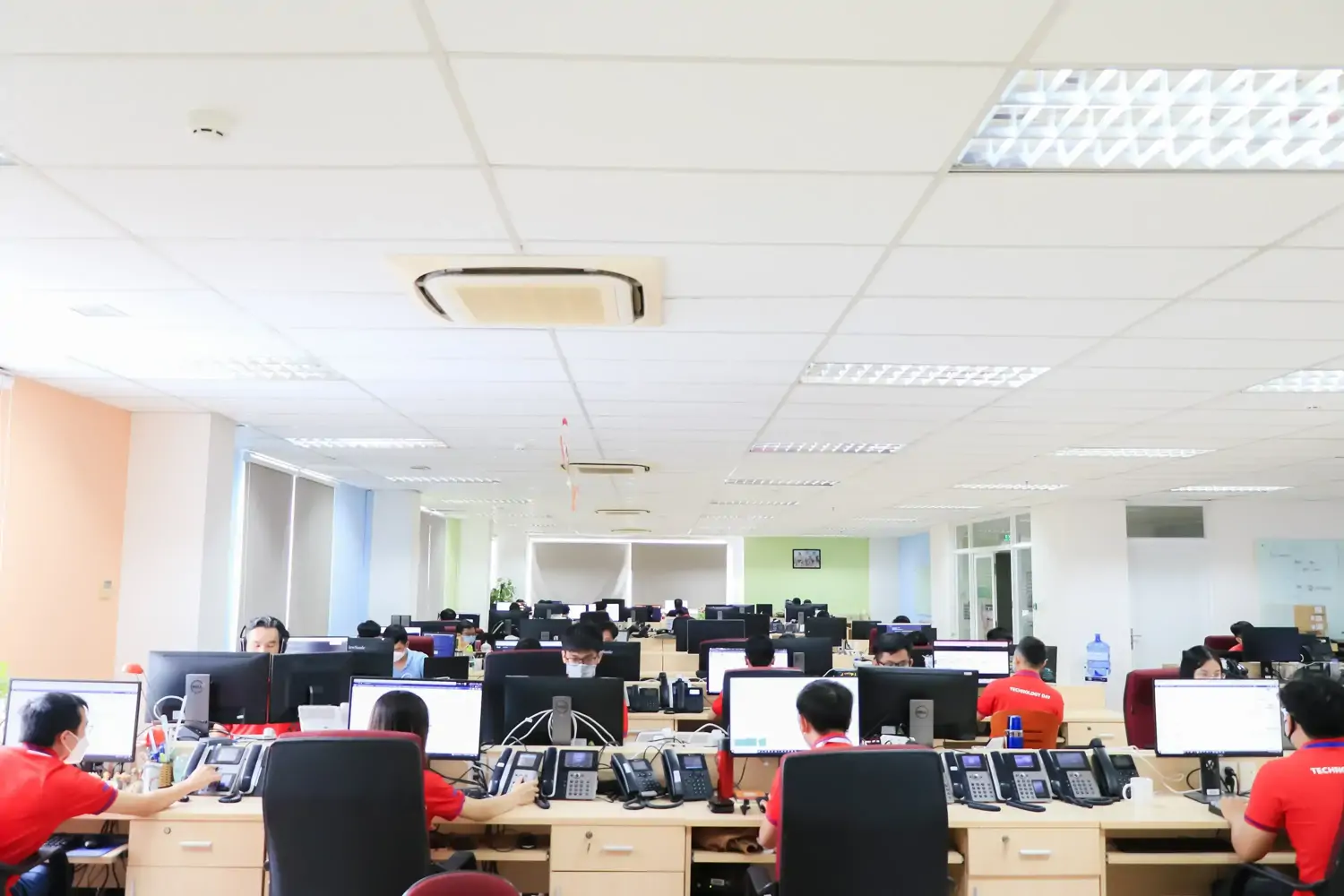
How TMA partners with businesses in AI product development
7. FAQs about AI Product Development Company
1- How much do AI software development services cost?
The cost typically ranges from $40,000 to over $500,000, depending on the project’s complexity, data volume, AI technologies used and level of customisation.
2- How long does it take to build an AI-based product?
Development usually takes 3 to 12 months, but it can be longer if the project involves complex model training or multiple system integrations.
3- When should a business invest in custom AI development services?
A business should invest when it has sufficient data, aims to automate processes, improve decision-making, or gain a competitive advantage through tailored AI solutions.
As a trusted AI product development company, TMA Solutions is committed to helping businesses apply AI practically and sustainably. Every solution is developed based on real customer needs and measurable value. Contact TMA Solutions today to build the next generation of intelligent products for your business.
Contact information:


.webp_2026-10-01-18-27-07-971.webp)
.webp_2026-10-01-18-17-11-290.webp)
.webp_2026-10-01-18-08-26-854.webp)
.webp_2026-10-01-17-47-32-240.webp)