AI-powered health monitoring is redefining the way healthcare is delivered at home, especially for the elderly. Instead of depending on scheduled medical visits, this model enables continuous health tracking through data collected from wearable devices and medical sensors. In this article, we will explore how the technology works, the advantages it brings, and the role of TMA Solutions in driving its adoption.
1. What is AI-powered health monitoring in home care and aged care?
AI-powered health monitoring in home care and aged care is a remote health monitoring model powered by artificial intelligence. The system collects and analyses health data from connected devices, then applies AI to track a person’s condition continuously and detect early signs of abnormalities.
Unlike traditional care models that rely on scheduled medical visits, AI-powered health monitoring allows real-time health tracking directly at the patient’s home. It reduces the need for hospital visits and supports proactive, personalised care.
In short, this AI-based solution is designed to:
- Monitor health continuously without requiring hospitalisation.
- Support long-term care for elderly individuals or patients with chronic conditions.
- Enable a data-driven care model instead of manual checkups or appointment-based assessments.
AI-powered health monitoring in home and aged care services
2. How does AI-powered health monitoring work?
AI-powered health monitoring operates through a process of collecting real-time health data, processing it, and analyzing it with algorithms to detect abnormalities and predict potential risks before they occur.
Data collection
Wearable devices, medical sensors, and mobile applications capture physiological data such as heart rate, blood pressure, blood oxygen level, respiration rate and activity level. This information is transmitted to the server via IoT platforms using secure communication protocols such as HTTPS or MQTT. The data is stored as time-series records to allow continuous analysis and real-time health trend monitoring.
Data preprocessing
Collected data may contain errors or noise caused by devices or environmental factors. Therefore, it must go through preprocessing steps, including time synchronisation, noise filtering, outlier removal, and unit normalisation. Signal processing algorithms such as moving average or band-pass filter are applied to preserve essential physiological signals. Missing data is interpolated or flagged to prevent analysis distortion.
Feature extraction
From the standardised data, the system extracts medically meaningful features. For example, heart rate variability (HRV) from ECG signals is used to assess stress or cardiac disorders; oxygen saturation and respiration rate help detect respiratory issues; and sleep patterns are analysed to identify sleep disorders. AI applies statistical methods and deep learning techniques to uncover abnormal patterns that may not be visible to the human eye.
Machine learning algorithms
Machine learning models such as Random Forest, XGBoost, or LSTM are trained on historical datasets to recognize trends and predict potential risks.
- Classification models: identify whether a patient belongs to a high-risk or low-risk group.
- Prediction models: forecast recurrence, complications or hospitalisation probabilities.
- Anomaly detection: trigger alerts when health indicators deviate from safe thresholds.
When the system detects a potential risk, alerts are immediately sent to healthcare providers or patient applications to enable timely intervention.
How an AI-powered health monitoring system works
3. Key benefits of AI-powered health monitoring for home care and aged care
Below are the key benefits that AI-powered health monitoring brings to home care and elderly care models.
Real-time monitoring
Real-time tracking allows health issues to be detected as soon as they occur instead of waiting for scheduled checkups or for symptoms to worsen. This is especially important for elderly individuals or chronic patients who require continuous monitoring at home. According to Medical Economics, remote health monitoring programmes can reduce hospital admissions by up to 59% in high-risk patients.
Personalised health insights
AI analyses each person’s health data to deliver more accurate assessments rather than applying a general treatment plan. By learning from medical history, current medications, and daily behaviour, the system can recommend a more suitable monitoring and care regimen. A study conducted across 118 nursing homes in the UK reported a 25% reduction in unplanned emergency hospitalisations after adopting remote monitoring.
Predictive analytics
AI not only record current data but also predicts future health risks, allowing doctors and families to take preventive action instead of reacting late. This shifts the care model from passive to proactive. An AI IoMT model published in Scientific Reports reached 95.74% accuracy when predicting health events using home sensor data.
Enhanced accuracy
AI removes errors caused by manual observation, analyses large volumes of data quickly, and issues alerts based on statistical models, which reduces misinterpretation and false alarms. This enables carers to make decisions based on data instead of assumptions. One AI model used for home-based heart monitoring achieved 94% accuracy in detecting cardiac disorders, significantly higher than periodic manual checks.
Improved patient outcomes
With continuous monitoring, early warnings, and personalised care, patients face lower risks of complications and can maintain long-term stability. AI helps reduce hospital visits, lower treatment costs, and support independent living for elderly individuals. A multicentre study in France on elderly patients with multiple conditions showed a 63% reduction in total hospitalisation time compared to the previous year after remote monitoring was implemented.

Key benefits of applying AI-powered health monitoring in home and aged care services
4. Why choose TMA Solutions for AI-powered home & aged care solutions?
AI-powered home and aged care requires a reliable technology foundation and a deep understanding of the healthcare sector, and TMA Solutions meets both of these requirements.
Years of experience in digital healthcare
TMA Solutions has a team of around 700 engineers and more than 15 years of experience in building digital healthcare systems. The company provides services such as remote health monitoring, medical device integration, data analytics, and elderly care solutions. Its strong understanding of healthcare standards and regulations ensures that the solutions align with home care and aged care environments.
Full-stack technical capability and end-to-end deployment
TMA Solutions delivers a complete solution from IoT system design, sensor and medical device integration, AI and health data analytics to system operation and scaling. This technical foundation enables continuous performance, scalability, and compliance with the needs of home-based and elderly care services.
Practical solutions designed for Home Care and Aged Care
TMA Solutions develops specialised modules such as continuous vital sign tracking, activity and sleep analysis, and early warning alerts for elderly individuals or home-based patients. These solutions help increase self-care ability while enabling carers and medical staff to intervene in time.
Quality commitment and global collaboration readiness
TMA Solutions has worked with clients in more than 30 countries and has received strong feedback for technical capability, delivery speed, and service quality. The company follows international standards such as ISO IEC 27001:2022 and CMMI Level 5. This ensures that its home and elderly care solutions meet global expectations for security, system stability and scalability.
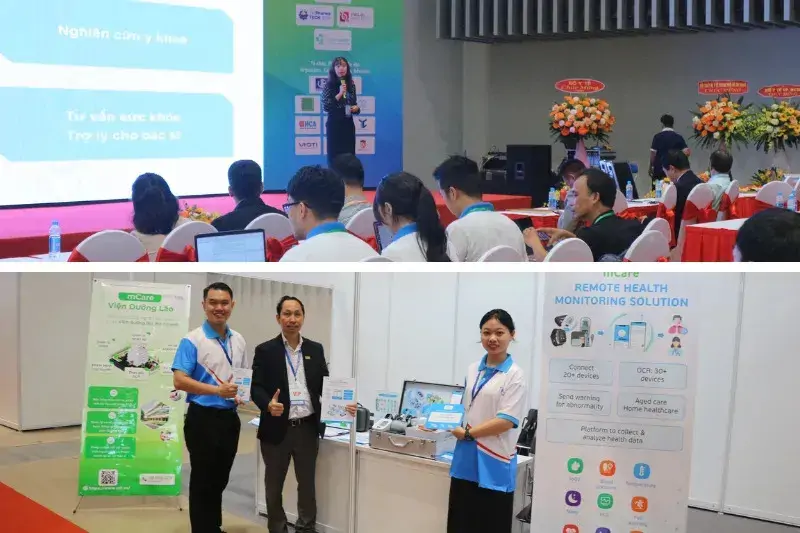
TMA Solutions is a trusted partner for healthcare technology projects
5. Case study: TMA Solutions Care platform for remote home & aged care
Below are 2 case studies that demonstrate how TMA Solutions applies big data and artificial intelligence to enhance remote health monitoring for home-based patients and elderly individuals.
Case study 1: Big Data for Healthcare Analytics
The client is a healthcare and insurance company in the United States that processes millions of medical records every day. They needed a powerful data platform to manage, validate, and analyse large-scale patient data while ensuring full compliance with healthcare data security requirements during storage and transmission.
Solution:
- Data collection: The system collects medical records from external partners, internal sources, and member platforms. Data is ingested through APIs, SFTP and event-based data push services.
- Data processing and analytics: Incoming data is stored in the loading zone, then classified and encrypted to ensure privacy. Real-time streaming pipelines process the data continuously.
- Data access and utilisation: After transformation, data is decrypted and made available to partners or internal users. The platform integrates a search engine that can handle a 5TB dataset and return results within 3 seconds.
Results:
- Built a platform that supports real-time ETL and data transmission for electronic health records (EHR).
- Successfully transformed and processed 15 million medical records collected over more than 30 years.
- Optimised a search engine capable of querying 5TB of sample data in 3 seconds.
- Protected sensitive data with advanced encryption and security control mechanisms.
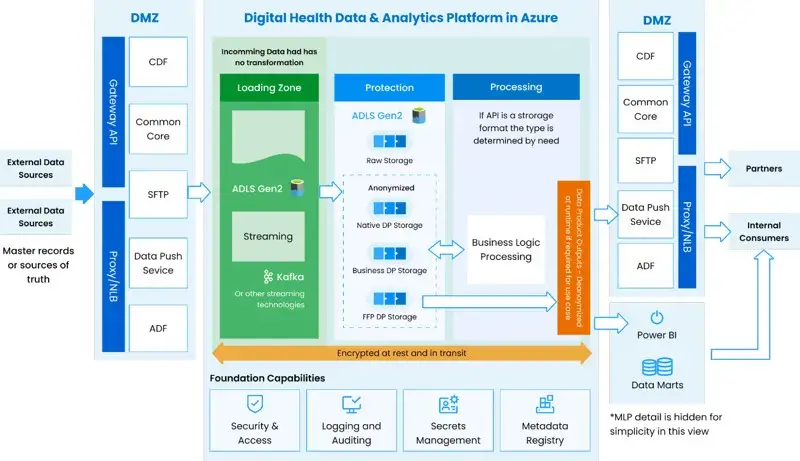
Big Data for Healthcare Analytics
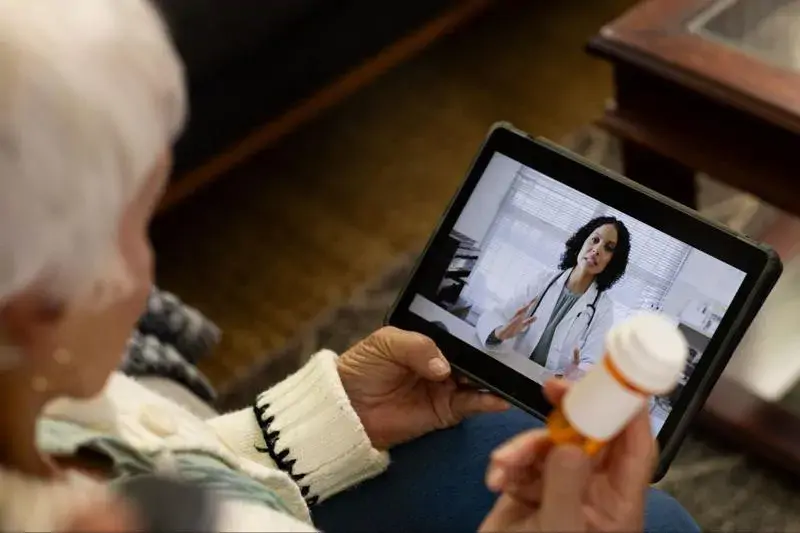
Case study 2: AI-Driven Remote Patient Monitoring (mCare)
The healthcare sector is facing a massive volume of health data coming from various devices and systems. The data is fragmented, not standardised, and difficult to use for continuous health monitoring. Chronic patients and elderly individuals require frequent supervision, yet healthcare providers lack remote monitoring tools, making it difficult to detect risks early while still having to comply with strict healthcare data privacy regulations.
Solution:
- Connected to and collected data from more than 40 healthcare devices, including wearable devices and specialised medical equipment.
- Applied AI to analyse real-time health data, detect abnormalities and predict potential health risks.
- Built an early warning system that sends alerts to doctors, carers, and family members when abnormal or emergency signals appear.
- Provided a data access platform that allows patients, relatives and doctors to track vital signs and reports remotely.
Results:
- Patients can be monitored continuously at home without depending on frequent hospital visits.
- Abnormalities are detected early, and medical intervention is triggered in time through automated alerts.
- Improved communication between patients, carers and doctors through real-time data monitoring.
- Centralised data collection and management support doctors in making informed treatment decisions.
AI-Driven Remote Patient Monitoring (mCare)
6. FAQs about AI-powered health monitoring in home & aged care
1- What AI-powered health monitoring systems does TMA Solutions offer for hospitals and clinics?
TMA Solutions provides a remote health monitoring platform that combines big data processing and AI and Health Data Analytics. The system supports vital sign collection, health trend analysis, and early alerts for doctors or medical facilities.
2- Does TMA Solutions provide AI-powered health monitoring apps or wearable device integration?
Yes. TMA Solutions integrates medical devices and wearable devices into its remote healthcare platform. The company also supports mobile applications for patients and caregivers to access health data, enabling telehealth services and self-management at home.
3- How does TMA Solutions use AI to enhance chronic disease management through remote monitoring?
TMA Solutions uses AI to analyse data collected from chronic patients, such as vital signs, sleep patterns and daily activities. The system predicts complication risks and triggers alerts for doctors or carers when abnormal signals appear. This helps reduce hospital readmissions and improves long-term chronic care outcomes.
4- Can TMA Solutions support AI-powered mental health monitoring using wearable and mobile devices?
Yes. The system can combine sleep data, heart rate, activity level and app interaction patterns to detect signs of stress, anxiety or sleep disorders and send alerts to doctors or mental health specialists when needed.
AI-powered health monitoring is transforming home healthcare by enabling continuous tracking, early detection, and reduced dependence on in-person medical visits. This is not only a technology trend but also a practical step forward in caring for patients and elderly individuals. With a strong technical foundation and proven global experience, TMA Solutions is the right partner for organisations looking to adopt AI in remote health monitoring.
>>Contact TMA Solutions today to start implementing an AI-powered health monitoring solution for your organisation.
Contact information:


.webp_2026-10-01-18-27-07-971.webp)
.webp_2026-10-01-18-17-11-290.webp)
.webp_2026-10-01-18-08-26-854.webp)
.webp_2026-10-01-17-47-32-240.webp)