Home
Search
Found 797 results for “ “ keyword
icon
TMA x ADLINK: Using Edge AI for Smart Building Surveillance In the ever-evolving landscape of smart building technology, the integration of Edge AI Surveillance systems represents a significant advancement. TMA Solutions, in collaboration with ADLINK, has introduced a cutting-edge solution aimed at revolutionizing security and operational efficiency in smart buildings. This article delves into the capabilities of the T-Cam Edge AI Surveillance solution and the underlying technology that supports it. The T-Cam Edge AI surveillance solution What is T-Cam? T-Cam is an advanced surveillance device that merges the functionalities of conventional digital cameras with the computational power of AI-based processors. The term "Edge" refers to the device's ability to process and analyze data locally, at the edge of the network, rather than transmitting it to a central server or cloud for processing. This local processing capability allows for real-time image analysis and decision-making, enhancing both efficiency and operational continuity. Key Features of T-Cam Flexible deployment : The T-Cam system is versatile and can be integrated into various surveillance frameworks. It is designed to upgrade existing systems without requiring new infrastructure, making it a cost-effective solution for enhancing current surveillance setups. Low latency : By processing data on-device, T-Cam significantly reduces latency. The Edge AI cameras analyze video streams locally using the EOS-JNX system, thereby minimizing the need for video transmission to a cloud-based AI inference server. This approach decreases network load and accelerates response times. Enhanced privacy : The T-Cam system ensures that data is handled locally, which reduces the risk of data breaches and unauthorized access. This feature helps maintain the privacy of video footage and personal information. Applications of T-Cam Edge AI surveillance The T-Cam Edge AI Surveillance solution offers a range of applications aimed at improving security and facility management in smart buildings: Security : The system can detect and alert authorities when individuals enter restricted areas. It also identifies and notifies the presence of blacklisted individuals, enhancing overall security measures. Safety : T-Cam is equipped to recognize and warn when unaccompanied children enter potentially hazardous areas, such as swimming pools. Additionally, it can identify pets in restricted or dangerous zones, contributing to a safer environment. Facility management : The system monitors and manages parking space availability, as well as detects and reports illegal dumping activities, helping maintain the cleanliness and efficiency of the facility. The EOS-JNX-I Edge AI vision inference system Overview of EOS-JNX-I ADLINK's EOS-JNX-I is a powerful Edge AI vision inference system designed to enhance industrial AI machine vision applications. It features NVIDIA Jetson Xavier NX, which accelerates AI inference processes. This system is integral to the T-Cam solution, providing robust performance in demanding environments. Specifications and features AI inference acceleration : Equipped with NVIDIA® Jetson Xavier™ NX, the EOS-JNX-I delivers high-speed AI inference. Compact design : The system has a fanless design with dimensions of 187.5(W) x 149.5(D) x 55.25(H) mm, making it suitable for installation in space-constrained environments. Wide temperature range : It operates effectively in temperatures ranging from -20°C to 70°C, ensuring reliability in various environmental conditions. Expanded storage : The system supports microSD and M.2 PCIe SSDs, allowing for expanded storage and larger application installations. Power supply : It supports 12V to 24V DC input and features four PoE ports, delivering a total power of 60W. Smart PoE features : The Smart PoE software API enables power output control and power loss detection, adding to the system's reliability. ADLINK technology ADLINK Technology stands out as a leading provider in the edge computing sector. Known for its innovative solutions, ADLINK addresses critical business and technology challenges by delivering high-performance Edge AI products. Its expertise in creating and deploying edge computing solutions plays a crucial role in enhancing connectivity and operational efficiency in various industries. Conclusion The partnership between TMA Solutions and ADLINK has culminated in the development of the T-Cam Edge AI Surveillance solution—a state-of-the-art system designed to elevate security and operational efficiency in smart buildings. By leveraging local data processing and advanced AI capabilities, T-Cam offers a robust, flexible, and privacy-conscious solution for modern surveillance needs. As businesses seek to enhance their security infrastructure, T-Cam represents a significant step forward in integrating cutting-edge technology into everyday operations....
icon
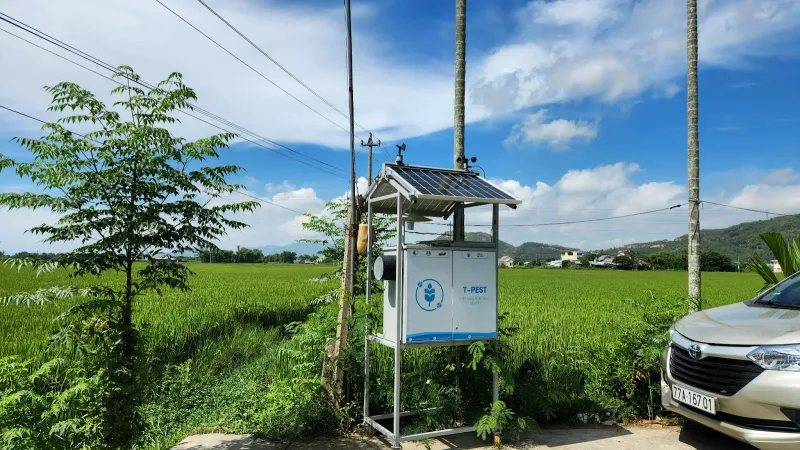
T-Pest: Smart Agriculture with AI, IoT, and GIS for Rice Pest Control T-Pest: AI-Powered solution for early pest detection TMA Solutions has developed the T-Pest system, integrating AI, IoT, and GIS technologies to identify 7 types of rice diseases and monitor 8 harmful insects in Bình Định Province. This innovation stems from the research project titled “Application of Artificial Intelligence in Identifying and Monitoring Pests and Diseases in Rice Cultivation.” Combining the strengths of artificial intelligence, IoT, and cutting-edge information technology, T-Pest aims to optimize pest management, improve crop yield, and modernize agricultural practices in Vietnam. TMA's research project: Application of Artificial Intelligence in Identifying and Monitoring Pests and Diseases in Rice Cultivation A Comprehensive solution for smart agriculture T-Pest is equipped with an automatic data collection device featuring a high-resolution camera, UV light, and environmental sensors. Images collected are analyzed using the enhanced YOLOv5-Ghost AI model, ensuring fast and accurate identification of pests and diseases. This data is seamlessly integrated into a web-based platform, offering real-time monitoring and visually mapping pest infestations. The system empowers users with actionable insights to combat agricultural challenges. Key Features of T-Pest: Accurate detection: T-Pest can currently identify 7 rice diseases, including bacterial blight, rice blast, brown spot, physiological yellowing, sheath blight, sterile grain, and bacterial leaf streak, as well as 8 harmful insects, such as white-backed planthopper, brown planthopper, stem borer, small leaf roller, rice gall midge, green leafhopper, black bug, and green stink bug. Real-time Monitoring: Operates 24/7 in real-time, automatically collecting data and issuing timely pest alerts. User-friendly platform: Farmers can access a web-based dashboard to review pest and disease information, receive alerts, and implement suggested solutions promptly. TMA's T-Pest is located in Binh Dinh AI-powered precision According to Mr. Trần Hoàn Anh Nguyên, Director of TMA’s Data Science Center, the development of T-Pest began with building a comprehensive database of common rice pests and diseases in local fields. Data was gathered using specialized equipment and smartphones, followed by detailed labeling and validation to ensure the accuracy of AI training datasets. Mr. Nguyễn Quốc Dương, a core researcher, highlighted that optimizing the YOLOv5 AI model significantly enhanced T-Pest’s performance. By reducing the model's size and resource requirements while maintaining high accuracy, the system is well-suited for practical deployment in real-world farming environments. During field trials conducted in Phù Cát and Tuy Phước districts, T-Pest analyzed over 1,000 images of pests and diseases with an accuracy rate exceeding 80%. The accompanying mobile application further simplifies the process, enabling farmers to quickly assess field conditions, receive alerts, and take timely preventive measures. A farmer from Phước Sơn Commune, Mr. Nguyễn Văn Chín, shared: "The T-Pest system makes it easier for us to monitor our fields and detect pests without frequent visits. It’s a reliable tool for managing crops and securing better harvests." Authorities test the performance of the T-Pest machine when deployed in the field Paving the way for agricultural modernization T-Pest has not only earned recognition from farmers but also from agricultural management authorities. It marks a significant milestone for smart farming initiatives in Bình Định Province and opens new opportunities for high-tech applications in agriculture across Vietnam. As shared by Mr. Nguyên, TMA Solutions plans to expand T-Pest’s reach beyond Bình Định after the pilot phase. The goal is to enhance pest control measures, boost yields, and safeguard crops, contributing to Vietnam’s vision of sustainable agricultural development. By integrating AI and IoT technologies, T-Pest demonstrates the transformative power of artificial intelligence in addressing modern agricultural challenges, offering a scalable and effective solution for pest management....

icon
Transforming Real Estate: The Power of AI in Property Valuation Around the world, AI is reshaping property valuation, enhancing accuracy, efficiency, and reducing errors. In the U.S., companies like Zillow and Redfin are pioneering AI-based automated valuation, while countries like the UK and Japan are also heavily investing in AI application development to support property value predictions and land management. Hoang Cao Long, CEO of Hoang Son Company, highlights that AI dramatically shortens the valuation process by rapidly processing data and integrating diverse information sources, offering a comprehensive perspective on land value. Furthermore, real-time data updates help investors stay on top of market changes. However, for AI to reach its full potential, businesses must overcome data quality challenges and ensure transparent processes. Combining advanced tech with clear management systems will be the key to making AI a sustainable tool in real estate. Source: reatimes.vn...
icon
Vietnam and the Race to Attract Tech Investment Vietnam is quickly becoming a “convergence point” for global tech giants, attracting hundreds of millions of dollars in investment projects. In recent years, foreign direct investment (FDI) has increasingly shifted toward green and high-tech sectors in Vietnam. Over the past decade, tech startup investment has surged in Vietnam; however, the pace has slowed in the past two years amid global economic uncertainty. In the first nine months of 2023 alone, total investment in deals dropped 13%, reaching $427 million, with the number of transactions at its lowest since 2018. Ms. Vy Le from Do Ventures noted that fundraising is becoming more challenging as investors exercise greater caution. Experts emphasize that focusing on core products will be key for startups to attract high-quality investment. Despite the positive investment momentum, Vietnam faces challenges in meeting investor demand for a skilled workforce. To retain these major tech players, Vietnam will need to improve technical infrastructure, ensure macroeconomic stability, and create favorable incentive policies. Source: VnEconomy.vn...
icon
Vietnam and the United States Promote Comprehensive Strategic Partnership: Enhancing Semiconductor and Artificial Intelligence Development The seminar brought together leaders and top experts from major U.S. tech companies like AMD, Google, and Marvell, as well as representatives from semiconductor industry associations. Minister of Planning and Investment Nguyen Chi Dung highlighted that the Vietnam-U.S. relationship is deepening, especially in terms of economic and high-tech cooperation. During the seminar, participants shared international experiences and noted that Vietnam has great potential for collaboration in these areas. They expressed confidence that, with the current strategy, Vietnam will become an attractive destination for investors and achieve significant success in the future. General Secretary and President To Lam speaks at the seminar on Strengthening Vietnam-U.S. Cooperation in the Development of the Semiconductor and Artificial Intelligence Industries. Photo: Lam Khanh/TTXVN During the seminar, General Secretary and President To Lam highlighted three strategic priorities for socio-economic development by 2030: institutional reform, infrastructure, and human resources. The growth of the semiconductor and AI industries is seen as a key focus as Vietnam moves toward a digital and green economy. Vietnam has many strengths for developing these industries, including hundreds of thousands of programmers and millions of IT professionals trained over the past 20 years, which provides a strong foundation for the AI and semiconductor sectors. Additionally, Vietnam welcomes U.S. companies and organizations to collaborate in developing innovative and sustainable solutions together. Source: baotintuc.vn...
icon
Vietnam-Australia tech innovation, Smart City collaboration The recent Australia-Vietnam Tech Forum, held in Ho Chi Minh City, marked a significant milestone in the collaboration between Vietnam and Australia in the field of technology. The forum, which attracted over 70 executives from 42 technology companies, showcased Australian expertise in fintech, digital transformation, and smart cities. This event highlighted Vietnam’s commitment to leveraging Industry 4.0 technologies to enhance productivity and drive economic growth. Vietnam's strategic focus on AI development Vietnam has emerged as a promising market with a large population, a government dedicated to ambitious goals, and one of the fastest-growing digital economies in the region. According to the World Bank, Vietnam’s digital sector is projected to surpass USD 200 billion by 2045, a substantial figure compared to its GDP of USD 352 billion in 2021. This growth is driven by an increase in fintech payment values, which have nearly tripled from 2017 to 2021, largely due to the boom in e-commerce. The Vietnamese government has placed a strategic focus on artificial intelligence (AI) development, aiming to position the country among the top four in ASEAN and within the top 50 globally in AI research, development, and application by 2030. This ambitious goal is supported by a national AI strategy that seeks to foster a robust environment for AI growth. Vietnamese tech firms: Growth potential and opportunities Vietnamese technology firms are well-positioned to benefit from this supportive environment. The country's digital economy is expanding rapidly, and there is significant potential for growth in various sectors, particularly fintech. The integration of Industry 4.0 technologies is expected to boost productivity and spur further economic development. The forum also highlighted the role of Australian expertise in supporting Vietnam’s digital transformation. Australia's experience in fintech and smart city development provides valuable insights and strategies that can help Vietnamese companies and the government achieve their technological goals. Australian support for ASEAN smart cities Australia has shown a strong commitment to supporting ASEAN countries, including Vietnam, in the development of sustainable smart cities. Rebecca Ball, the Senior Trade and Investment Commissioner at Austrade, emphasized that the Australian government is actively involved in creating smart and sustainable urban environments in the region. This includes the InnovationXchange program, which has allocated AUD 5 million (approximately USD 3.3 million) for a pilot project aimed at scaling high-growth potential enterprises focused on smart urbanization solutions. This initiative is part of a broader effort to support smart city development across ASEAN, enhancing urban living through advanced technologies and sustainable practices. The pilot project will provide crucial support to enterprises working on innovative solutions for smart cities in ODA-eligible cities across the region. The AI cooperation network In 2021, Vietnam and Australia established an AI cooperation network to foster collaboration between Vietnamese and Australian entities. This network brings together individuals, businesses, and organizations involved in AI from both countries to work together on various projects. The network aims to facilitate knowledge exchange and collaboration, enabling Vietnam to learn from Australian expertise and international best practices. The AI cooperation network is a significant step toward achieving Vietnam's national AI strategy goals. By creating a conducive environment for AI development, the network supports Vietnam’s aspiration to excel in AI research and application. This collaboration is expected to drive innovation and contribute to the country’s position as a leader in AI within the ASEAN region and globally. Conclusion The Australia-Vietnam Tech Forum represents a pivotal moment in the collaboration between the two countries, highlighting their joint efforts in advancing technology and smart city development. With a focus on AI and digital transformation, Vietnam is poised to leverage these opportunities to enhance its economic growth and technological capabilities. The continued support from Australia and the establishment of strategic initiatives like the AI cooperation network will play a crucial role in realizing Vietnam’s ambitious goals in the tech sector. Source: OpenGov Asia...
icon
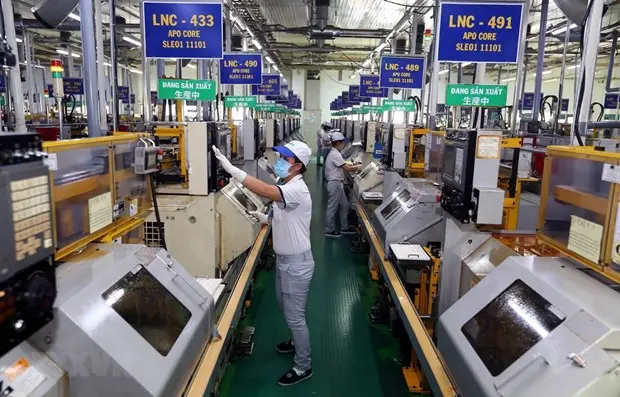
Vietnam's rise as global production hub due to investment Despite impacts caused by the COVID-19 pandemic, foreign direct investment (FDI) is still being poured into Vietnam, contributing importantly to turning the country into a new production hub of the world. http://www.tmasolutions.com/news/electronic-firms-continue-to-shift-investment-to-vietnam Electronics Firms Shifting Investment to Vietnam http://www.tmasolutions.com/news/samsung-to-increase-vietnam-investment-to-20b Samsung to Increase Vietnam Investment to $20B Statistics from the Ministry of Planning and Investment (MPI) show that from January 2018 to April 20, 2023, the registered FDI in Vietnam totaled 180 billion USD, equaling 40.3% of the accumulated investment capital over the last 35 years. Vietnam is becoming a new production center. According to Minister of Planning and Investment Nguyen Chi Dung, more and more multinationals and big investors have continuously invested in Vietnam. Dozens of research and development (R&D) centres, innovation hubs, and technology incubators have been established, making it easier for domestic firms, especially small- and medium-sized enterprises, to connect with foreign businesses, they noted. Source: VietnamPlus...
icon
Vietnam climbs the chip value chain The CEO of Samsung Electronics met with Vietnamese Prime Minister Pham Minh Chinh and announced a US$850 million investment to manufacture semiconductor components in Thai Nguyen province on 5 August 2022. The investment will make Vietnam one of only four countries — alongside South Korea, China, and the United States — that produce semiconductors for the world’s largest memory chipmaker. Vietnam’s selection over more developed locations speaks volumes about the country’s rising importance in the semiconductor value chain . Vietnam’s industrial and technology policies have always granted the highest incentives for high-tech projects, including corporate income tax reduction and sales tax and land rent exemption. In 2020, as tech firms continued to exit China, Vietnam established a special working group to court high-tech investments by offering customized incentives beyond those specified by existing laws. Different Vietnamese prime ministers have met with executives of global tech giants to encourage investment in /technologies/hardware-integration semiconductors . http://www.tmasolutions.com/news/semi-conductor-production-industry-vietnam-a-best-place-for-investment Vietnam Semiconductor Industry: Key Investment Hub 2021 - 2025 Intel recently channeled an additional US$475 million into its assembly and test plant in Vietnam that produces core processors. Local tech corporations have similarly launched their own lines of low-end semiconductors for a wide range of applications. Such projects are laying the foundation for even more investments to come. The next step for Vietnam is to go beyond attracting foreign direct investment to integrating multinationals into its economy. Weaknesses in the country’s investment climate — including backward infrastructure, weak intellectual property rights enforcement, cumbersome procedures, underdeveloped supplier networks, and a shortage of local skills — must be urgently addressed. Source: East Asia Forum...