Home
Search
Found 797 results for “ “ keyword
icon
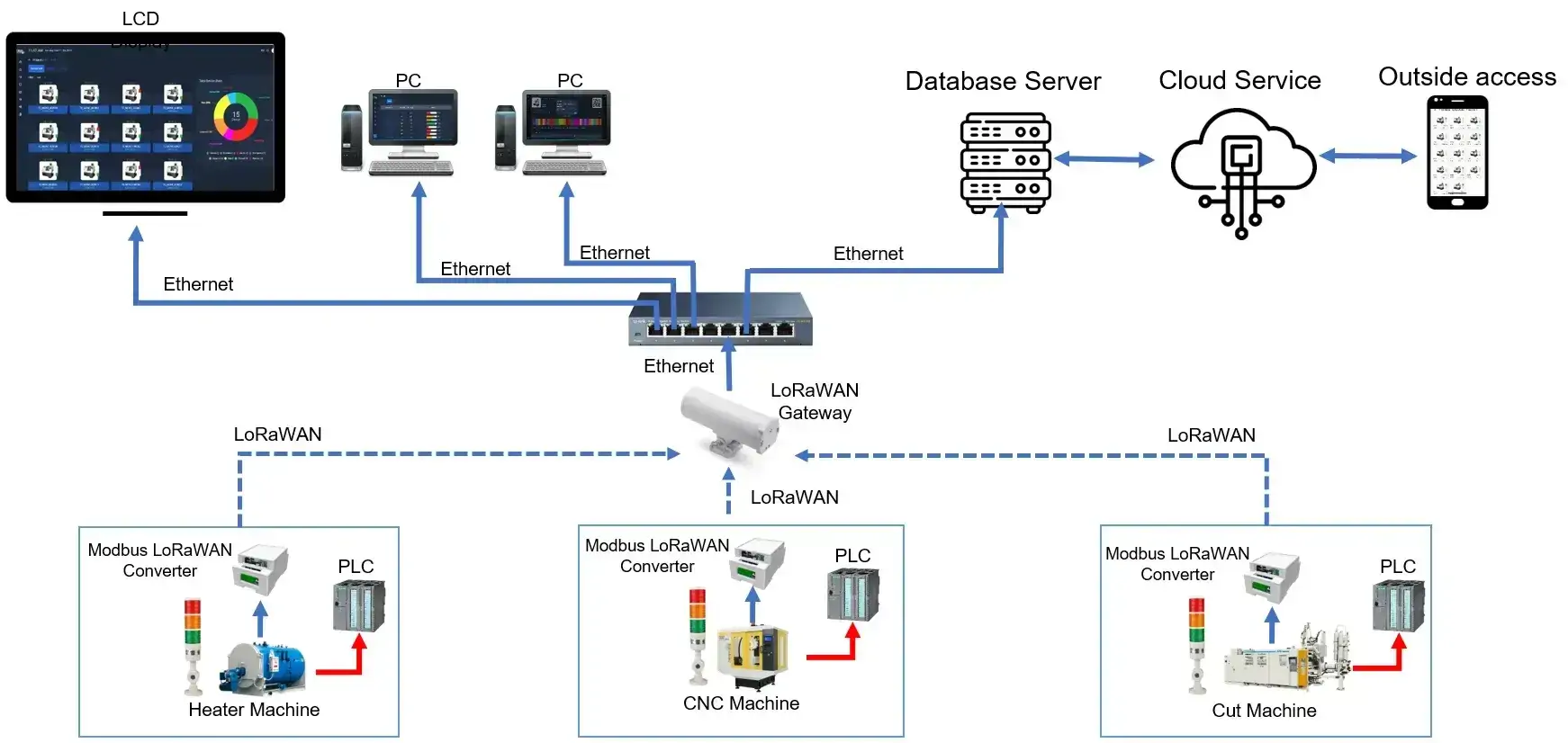
The Power of Convergence: How AI and IoT Work Together IoT acts as the nervous system of the smart factory, constantly collecting vast amounts of data. It consists of a network of sensors, machines, and devices that monitor everything from temperature and vibration to energy consumption and material flow. This raw data, however, is just the beginning. AI is the brain that turns this data into actionable intelligence. By applying machine learning algorithms to the data streams from IoT devices, manufacturers can: Identify patterns and anomalies that signal potential issues. Predict future outcomes , such as equipment failure or a shift in market demand. Automate decision-making and control processes in real time. This synergy allows manufacturers to move beyond simple automation to create truly intelligent, self-optimizing systems. For example, an IoT sensor on a machine might detect a slight increase in motor temperature. An AI model, trained on historical data, can immediately identify this as an early sign of a failing bearing and automatically generate a maintenance request, averting a costly breakdown. Introduction: A New Era of Intelligence in Manufacturing In the relentless pursuit of efficiency and competitiveness, the manufacturing industry is undergoing a profound transformation. While traditional automation has long been a staple, the new era of smart manufacturing is powered by a more dynamic and intelligent duo: Artificial Intelligence (AI) and the Internet of Things (IoT). According to Gartner, smart manufacturing solutions are essential for modernizing supply chains and factories. The integration of these two technologies creates a seamless, data-driven ecosystem where machines, systems, and people are connected, and real-time insights enable a new level of operational excellence. This article will explore how AI and IoT are fundamentally reshaping the factory floor, from enhancing quality control to enabling a truly predictive and autonomous production environment. Conclusion: The Future of the Factory is Intelligent The convergence of AI and IoT is more than a technological trend; it is the foundation of the modern factory. By enabling real-time data insights, predictive automation, and a new level of operational efficiency, these technologies are empowering manufacturers to stay agile, competitive, and sustainable. According to a Deloitte survey, 86% of manufacturers believe smart manufacturing is essential to their success over the next five years. As global markets become more volatile, the ability to turn raw data into a strategic advantage is no longer a luxury but a necessity. With proven expertise and integrated solutions, TMA is committed to helping businesses navigate this journey and unlock the full potential of an intelligent, connected future. Key Applications of AI and IoT in Smart Manufacturing The combined power of AI and IoT is driving innovation across every part of the production lifecycle. Predictive Maintenance : Moving from a reactive to a proactive approach, AI analyzes sensor data to predict when machinery will fail, allowing maintenance to be scheduled precisely when needed. This reduces unplanned downtime by up to 50% and cuts maintenance costs by 18-25%, according to industry reports. Forbes notes that unplanned downtime is the "silent killer" of manufacturing productivity, making AI-powered predictive maintenance a critical defense. Quality Control : AI-powered computer vision systems can inspect products in real time on the assembly line, identifying defects far more accurately and consistently than the human eye. This ensures high-quality output and minimizes material waste. TMA Solutions has applied an AI-based defect detection model in flexible printed circuit board (FPCB) production to identify surface scratches and misalignments in real time. Energy Management : IoT sensors monitor energy usage at the equipment level, while AI algorithms analyze patterns and optimize consumption. This can lead to significant energy savings and help manufacturers meet their ESG (Environmental, Social, and Governance) goals. Supply Chain Optimization : By connecting factory floor data with supply chain systems, AI can provide accurate demand forecasts, optimize inventory levels, and ensure that production schedules are aligned with real-world needs. How TMA Solutions Harnesses AI and IoT TMA Solutions is at the forefront of this digital transformation, integrating AI and IoT into a cohesive suite of smart manufacturing solutions. Machine Monitoring System (MMS) : Our MMS leverages Industrial IoT to provide real-time visibility into machine status and performance. It collects data from machines using affordable sensors and displays key metrics like uptime, downtime, and productivity on a centralized dashboard. Figure 1: Machine Monitoring System (MMS) Computerized Maintenance Management System (CMMS) : This system uses AI-powered risk detection to analyze sensor data from IoT devices and predict equipment failures. It automates the creation of work orders based on these predictions, ensuring maintenance is timely and efficient. Figure 2: Computerized Maintenance Management System (CMMS) The Impact of AI and IoT on Smart Manufacturing...
icon
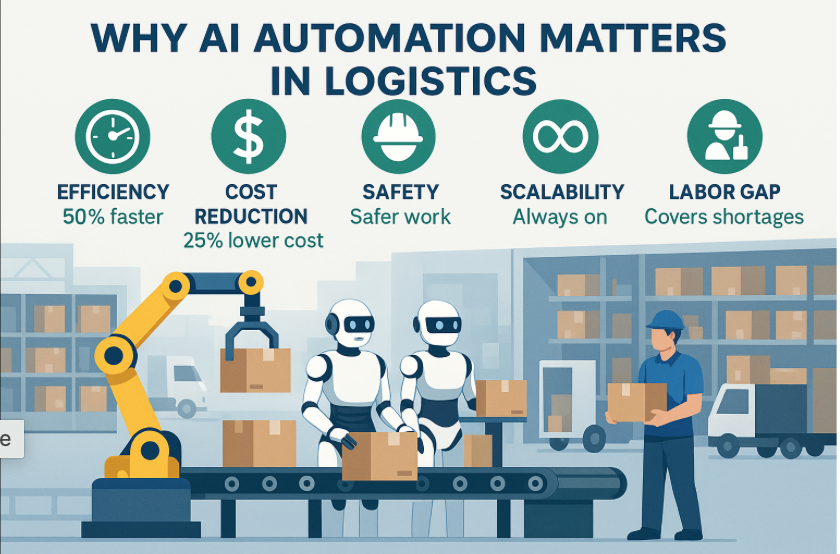
The Impact of AI on the Logistics Workforce: Automation vs Employment Introduction Artificial Intelligence (AI) is transforming logistics at an unprecedented pace, surpassing other innovations in recent decades. From warehouses and delivery fleets to planning and customer service, AI automation brings efficiency, scalability, and cost savings. Yet, it also raises critical questions: Will AI replace logistics jobs? Or will it create new opportunities for the workforce? This article explores the impact of AI on the logistics workforce, examining both benefits and challenges, and highlights how companies can balance automation with employment growth. Drawing on recent data and case studies, this article provides insights for logistics leaders navigating this shift. Why AI Automation Matters in Logistics The logistics sector employs millions globally, but it faces two major pressures: booming e-commerce demand and persistent labor shortages. AI-driven automation offers a solution. Key benefits include: Higher efficiency: AI-powered robots cut warehouse processing time by up to 50%. Cost reduction: Amazon’s robotics have reduced fulfillment costs by ~25% (per Amazon's 2024 sustainability report). Improved safety: Automation reduces heavy lifting and repetitive strain injuries. Scalability: Systems can operate 24/7, handling seasonal peaks without proportional staffing increases. Labor gap coverage: AI helps offset shortages in truck drivers and warehouse workers, where the U.S. alone faces a projected deficit of 160,000 drivers by 2030 (American Trucking Associations, 2024). Figure 1 Key Benefits of AI Automation in Logistics ShapeHow AI is Changing Logistics Roles Warehousing Autonomous robots now perform picking, packing, and transport tasks. Highly automated warehouses can operate with 25% fewer workers than manual ones (DHL Trend Research, 2023—verified for 2025 updates). At the same time, new jobs emerge in robot operation, maintenance, and systems monitoring. For instance, Amazon's deployment of its 1 millionth robot in 2025 has approached parity with human workers, yet it has also created roles in AI oversight and robotics engineering. Transportation AI is reshaping freight transport. Self-driving trucks could displace up to 400,000–500,000 U.S. long-haul jobs in advanced automation scenarios, but adoption remains gradual due to regulatory and technical hurdles. In the near term, humans remain critical for city driving, oversight, and exception handling. AI route optimization already helps companies cut travel time and fuel costs. Planning & Administration AI streamlines forecasting, documentation, and customer service. Research shows up to 90% of routine logistics manager tasks are automatable (e.g., via tools like predictive analytics), while mechanics and technicians face low automation risk. The shift reduces clerical roles but boosts demand for data analysts, AI supervisors, and decision-makers. Automation vs Employment: A Balanced View Risks Workforce reductions : Amazon’s automation has reduced warehouse staff needs by 20–25%. Job displacement: Recent studies predict that automation could affect 50–70% of trucking jobs in advanced scenarios by 2030 (e.g., Oxford Economics, 2024 update). Inequality risks: Routine, low-skill roles are most vulnerable. Economic Impacts: Slower global growth is expected to displace 1.6 million jobs globally. Opportunities New jobs: The World Economic Forum projects net job growth, with 170 million new roles emerging by 2030 (displacing 92 million). Role transformation: Amazon claims AI has created 700+ new job categories in robotics, AI supervision, and process engineering. Industry growth: For logistics specifically, roles in AI ethics, sustainability integration, and human-AI interface design are on the rise. Economic Impacts: 40% of employers expect to reduce workforce where AI automates tasks, but this often leads to upskilling and new opportunities. The Core Challenge: Skills About 50% of all employees will need reskilling by 2025. The mismatch between displaced roles (e.g., warehouse pickers) and new roles (robotics technicians) is the biggest barrier. By 2025, with AI integration maturing, logistics firms that prioritize ethical AI deployment will gain a competitive edge. How Companies Can Adapt The impact of AI on logistics is inevitable, but its consequences for workers are not predetermined. Companies that act proactively can turn potential disruption into an opportunity to empower their workforce while reaping efficiency gains. To succeed, leaders need a clear roadmap that combines technology adoption with human development. Below are six practical approaches: Upskill & Reskill: Invest in training programs to move workers into new tech-enabled roles. Amazon has reskilled 700,000+ employees globally through programs like Upskilling 2025. Redesign Jobs for Human–AI Collaboration: Reframe roles so humans focus on exceptions, creativity, and decision-making while AI handles repetitive tasks. Leverage Human Strengths: Prioritize skills that are hard to automate: leadership, negotiation, creative problem-solving, and adaptability. Adopt Phased Automation: Start with pilots, measure impact, involve employees, then scale. This reduces disruption and builds buy-in. Communicate Transparently: Explain why automation is adopted, how it impacts roles, and create a culture where innovation is seen as opportunity. Monitor and Measure Impact: Regularly assess automation's effects on productivity, employee satisfaction, and retention using metrics like turnover rates and skill gap analyses. Figure 3: Steps for Companies to Adapt to AI Transformation TMA Solutions: Case Studies in AI-Driven Logistics Real-world examples from https://www.tmasolutions.com/ TMA Solutions demonstrate how https://www.tmasolutions.com/technologies/ai-ml-and-data-sciences AI can enhance efficiency while supporting workforce transitions. As a leading software outsourcing company in Vietnam with over 4,000 engineers, TMA Solutions offers comprehensive services including software development, software testing, innovation as a service, digital transformation, and hardware integration. These services help logistics organizations worldwide integrate AI-powered automation, machine learning solutions, Edge AI, AI Agents development, and AI Agents solutions for Enterprise with IoT and https://www.tmasolutions.com/technologies/cloud cloud-based systems to boost efficiency and enable employees to transition into higher-value roles. TMA's expertise spans AI Demand forecasting in logistics, AI logistics automation, generative ai logistics, shipment tracking, supply chain management, last mile delivery, warehouse management system, load calculator, and smart warehouse solutions, ensuring seamless human-AI collaboration. Here are several real-world examples: Warehouse Management System (WMS) with AI Agent: An AI-powered automation WMS enhanced warehouse operations by automating routine workflows and providing intelligent recommendations for staff, improving both efficiency (by 30%) and workforce engagement. This service leveraged TMA's digital transformation expertise to reduce errors and upskill operators in AI monitoring. https://www.tmasolutions.com/case-studies/warehouse-management-system-wms-ai-agent Read Case Study Optimizing Inventory in Real Time with Azure Demand Forecasting: Azure-based AI Demand forecasting in logistics consolidated sales and market data, enabling accurate demand prediction and reducing planner workload by 25%. Through TMA's innovation as a service, this solution integrated machine learning solutions to free up employees for strategic planning. https://www.tmasolutions.com/case-studies/optimizing-inventory-in-real-time-through-azure-demand-forecasting-solution Read Case Study Optimizing Warehouse Management with Centralized Inventory and Real-Time Monitoring: Centralized warehouse system with live monitoring reduced errors and improved operational efficiency by 40%. TMA's software development services ensured hardware integration for seamless IoT data flow, creating new roles in system maintenance and incorporating smart warehouse solutions. https://www.tmasolutions.com/case-studies/optimizing-warehouse-management-with-centralized-inventory-and-real-time-monitoring Read Case Study Transforming Freight Management with Enhanced Delivery & Inventory Solution: Freight management platform with real-time shipment tracking and mobile integration streamlined delivery and visibility, cutting costs by 20%. TMA's AI logistics automation services automated freight matching, allowing drivers to focus on complex routes and enhancing last mile delivery. https://www.tmasolutions.com/case-studies/transforming-freight-management-with-enhanced-delivery-inventory-solution Read Case Study Optimizing Service-Point Operations: Enhancing Efficiency and Client Experience in Logistics: TMA built a real-time inventory tracking and transaction monitoring system to optimize service-point operations, enhancing efficiency and client experience by 35%. This drew on TMA's software testing services to ensure reliability in supply chain management. 🔗https://www.tmasolutions.com/case-studies/optimizing-service-point-operations-enhancing-efficiency-and-client-experience-in-logistics Read Case Study Final Thoughts AI is not a question of robots or humans, but robots with humans. In logistics, the winners will be companies that: Harness AI for efficiency and scalability. Invest in reskilling to retain and empower their workforce. Redesign jobs for human–AI collaboration. The path forward requires balancing automation benefits with workforce well-being. Companies that achieve this balance will lead the industry in performance and set an example for sustainable innovation. ShapeAI is already redefining logistics. The question is: how ready is your workforce? Contact TMA Solutions at https://www.tmasolutions.com/contact-us https://www.tmasolutions.com/contact-us to explore how we can help you integrate AI, boost efficiency, and ensure your people thrive in the automation age. ...
icon
Case Study: AI Self-Healing UI Test – Reduce Maintenance Time When UI Changes The Real-World Problem In automation testing, one of the most common issues is: Element not found errors due to UI changes (e.g., class names, IDs, or DOM structure modifications). QA must manually inspect and update locators in test scripts – a time-consuming and error-prone task. The Solution: AI-Based UI Self-Healing When a test execution encounters an element-not-found error, the AI system will: Use machine learning algorithms to suggest new locators based on context and related attributes. Automatically replace the broken locator so the test continues running without manual intervention. Post-execution Reporting The report clearly displays which locators were auto-fixed by AI. QA can review and approve the fixes after execution, maintaining full control. This significantly reduces maintenance time while keeping the human QA in the loop. Applying AI in Automation Testing: Opportunities & Trends Typical https://www.tmasolutions.com/technologies/ai-ml-and-data-sciences AI Applications in Test Automation Key Trend: Shift-left AI Testing AI is no longer just for execution; it is moving into the test design phase. This helps QA teams to: Reduce the time to create new test cases Optimize test suites before execution Speed up continuous testing cycles Challenges of Using AI in Automation Conclusion: AI is a Teammate, Not a Magic Wand The AI Co-Pilot in QA AI is not a one-click solution that fixes everything, but it can help QA teams: Eliminate repetitive tasks Optimize time and resources Focus on higher-level activities like user behavior analysis and product improvement The AI-powered Test Automation Framework is a real-world example of how AI can be applied effectively – helping QA move beyond just “running tests” to optimizing the entire testing process. Introducing the AI-powered Test Automation Framework To tackle these challenges, we developed the AI-powered Test Automation Framework – a solution that enables QA teams to: Test faster Test smarter Reduce maintenance costs 3 Key AI Features: Meta information: Meta title: The Reality of AI in Automation Testing | TMA Insights Meta description: Discover the real value of AI in automation testing. Learn how AI can help QA teams reduce maintenance time and optimize testing processes. Meta keywords: AI in Testing, Automation Testing, QA Automation, AI-powered Framework, Self-healing Test Automation testing is entering a new era with the support of AI. But the real question remains: What is the true value, and what is just marketing hype? Automation Vs. AI Testing Evolution The Current State of Automation Testing Test automation has increased productivity in some areas but also introduced hidden costs : Maintaining scripts and locators: UI changes cause hundreds of test cases to break, forcing QA to manually update scripts. Creating new test cases is still manual: When new features are released, QA teams still have to read requirements and write test cases from scratch. Analyzing test failures: Identifying whether a test failure is due to a product bug, an environment issue, or an automation script error takes a lot of manual effort. The Real Challenges in Automation Testing In recent years, businesses have heavily invested in test automation, hoping to “reduce costs and accelerate releases.” However, many QA teams face unexpected problems: Regression test suites are growing larger , taking hours to run while detecting very few new issues. When UI changes , test cases fail due to broken locators, requiring time-consuming manual fixes. Test failures are accumulating , but classifying their root causes (product bugs, environment issues, or script errors) remains a manual, tedious process. So where is the solution? Can AI truly help solve these problems, or is it just another overhyped trend? The Reality of AI in Automation Testing: What Is the True Value?...
icon
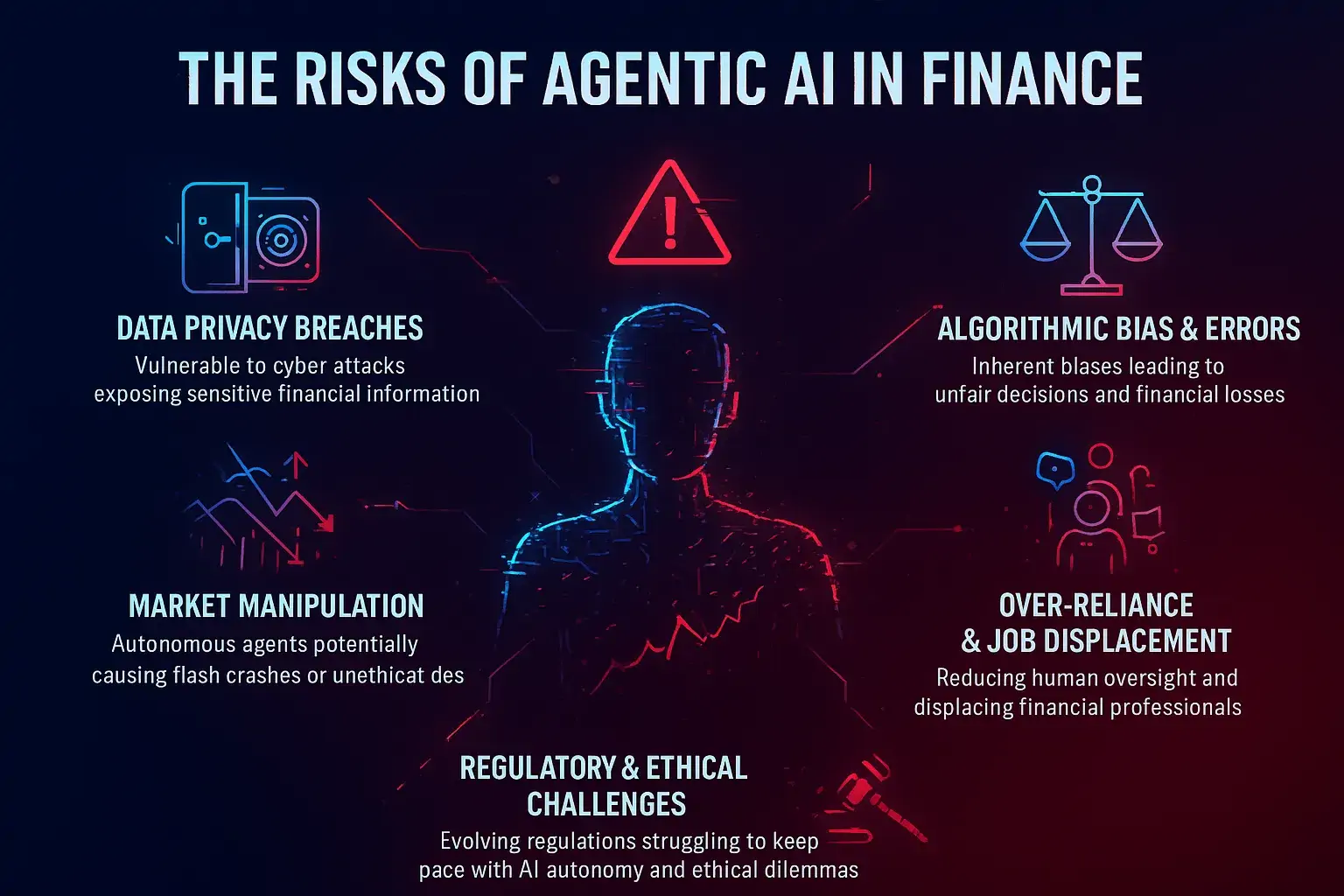
The Rise of Agentic AI in WealthTech Applications The Future: Horizons of Agentic AI in WealthTech Looking ahead, Agentic AI's role in WealthTech will expand dramatically. By 2030, experts predict 80% of wealth management processes will be agent-driven, with multi-agent swarms handling end-to-end client journeys—from acquisition to legacy planning. Trends for 2025 include deeper Open Finance integration, where agents access unified data ecosystems for holistic advice, and embeddable AI in apps for seamless experiences. Advancements in multimodal AI—combining text, voice, and visuals—will enable more intuitive interactions, such as VR-based portfolio reviews. Regulatory evolution, like AI-specific sandboxes, will accelerate adoption. In emerging markets, agentic AI could bridge gaps, offering affordable advice to underserved populations. Challenges notwithstanding, the future is optimistic. As Dr. Sindhu Joseph notes, agentic AI will act as an "intelligence layer," empowering firms to serve exponentially more clients efficiently. The fintech revolution, halfway through 2025, is just beginning. Conclusion The rise of Agentic AI in WealthTech applications heralds a new era of intelligent, autonomous finance. From optimizing portfolios to fostering personalized relationships, these agents are unlocking unprecedented value while demanding vigilant oversight of risks. As the sector matures, stakeholders must balance innovation with ethics to ensure equitable growth. Ultimately, Agentic AI is not replacing advisors but elevating them, paving the way for a more inclusive and efficient wealth ecosystem. The journey is underway—firms that embrace it will lead the charge into tomorrow's financial frontier. Ready to harness the power of Agentic AI for your WealthTech needs? Contact TMA Solutions today to explore customized solutions, schedule a demo of our Robo-Adviser or AI Agent Factory, and transform your financial operations with cutting-edge autonomy. Visit https://www.tmasolutions.com/ https://www.tmasolutions.com/ or contact us at https://www.tmasolutions.com/contact-us https://www.tmasolutions.com/contact-us to get started now! WealthTech Landscape: Setting the Stage for Agentic Integration WealthTech refers to the application of technology to enhance wealth creation, preservation, and transfer. It includes platforms for automated investing (robo-advisors), digital wealth platforms, and analytics tools for high-net-worth individuals (HNWIs). The sector has grown exponentially, with global investments reaching $1.5 billion in Q2 2024, though stabilizing at $698 million in Q2 2025 amid economic uncertainties. Key players like Betterment, Wealthfront, and Vanguard have pioneered robo-advisory, but traditional firms such as UBS and Morgan Stanley are now embedding AI to stay competitive. The pre-Agentic era in WealthTech relied on rule-based automation and basic machine learning for tasks like asset allocation. However, limitations—such as inability to handle unstructured data or adapt to black-swan events—highlighted the need for more sophisticated systems. Enter Agentic AI, which addresses these gaps by introducing agency: the ability to act independently within ethical and regulatory bounds. In 2025, WealthTech trends emphasize AI-driven personalization and efficiency. For instance, the integration of GenAI meeting assistants and agentic workflows is projected to improve advisor productivity by 30%, allowing focus on high-value client interactions. Agentic AI fits seamlessly, acting as a bridge between data silos in CRMs, planning tools, and portfolio systems. This convergence is evident in Europe's WealthTech scene, where agentic tools are reshaping advisor-client dynamics and value delivery. The Rise: Key Applications and Case Studies in WealthTech Agentic AI's ascent in WealthTech is manifested through diverse applications that enhance core functions. One primary area is portfolio management and optimization. Traditional models use static algorithms, but agentic systems dynamically rebalance portfolios based on real-time market signals, client risk tolerances, and macroeconomic forecasts. For example, AI agents can simulate thousands of scenarios to recommend allocations that maximize returns while minimizing volatility, often outperforming human advisors by 15-20% in backtested studies. Traditional Portfolio vs. AI-Optimized Portfolio Another critical application is personalized client advisory. Agentic AI creates 360-degree client profiles by analyzing transaction histories, social media sentiments, and life events, delivering tailored advice. In fraud detection, agents autonomously monitor transactions, flagging anomalies and even initiating responses like temporary holds, reducing false positives by up to 50%. Compliance automation is equally vital; agents handle KYC (Know Your Customer) checks, regulatory reporting, and audit trails, ensuring adherence to evolving standards like GDPR and SEC rules. Client onboarding and engagement have also been revolutionized. Agentic AI streamlines paperwork, verifies identities via biometric integration, and conducts initial financial assessments, cutting onboarding time from days to minutes. For engagement, virtual agents provide 24/7 support, answering queries in natural language and escalating complex issues to human advisors. Real-world case studies illustrate this rise. JPMorgan Chase, a leader in AI adoption, deploys agentic systems across 10 key areas, including LOXM (an AI trading tool that optimizes execution) and COIN (Contract Intelligence for legal document analysis). In wealth management, their agents analyze client data to predict needs, such as retirement planning adjustments, resulting in a 20% increase in client satisfaction scores. Another example is Focal's platform, which uses agentic AI to automate administrative tasks for advisors, freeing up to 10 hours per week per advisor for strategic work. In a pilot with a mid-sized RIA (Registered Investment Advisor), Focal's agents handled portfolio rebalancing and compliance checks, boosting AUM (Assets Under Management) growth by 25%. TMA Solutions: Pioneering Agentic AI Innovations in WealthTech https://www.tmasolutions.com/ TMA Solutions , a Vietnam-based global software provider specializing in https://www.tmasolutions.com/technologies/ai-ml-and-data-sciences AI and https://www.tmasolutions.com/industries/finance fintech , is a leader in integrating Agentic AI into WealthTech. With over 4,000 employees since 1997, TMA delivers customized solutions worldwide, focusing on automation, predictive analytics, and client personalization. Key offerings include the Robo-Adviser Solution , which uses agentic AI for dynamic portfolio creation, rebalancing, and scenario simulation based on client goals and market data, enabling scalable hyper-personalized advice for HNWIs and retail investors. A notable case study involves an Australian client where TMA's agentic AI enhanced credit risk analysis, processing large datasets autonomously to improve precision by 30%, cut processing time by 50%, and reduce defaults, allowing focus on strategic tasks. TMA's AI Agent Factory , a no-code platform, builds agent workflows for fraud detection, real-time monitoring, and AI-powered chatbots, ensuring compliance and 24/7 client engagement under standards like GDPR. Through its AI Center of Excellence, TMA provides end-to-end machine learning solutions and integrations, with multi-agent systems handling wealth management from onboarding to optimization. Extending beyond WealthTech, TMA applies Agentic AI, edge AI, AI agents development, and AI agents solutions for enterprise for AI-powered automation. In education: learning management system, enterprise e-learning system, self-learning platforms, education technology solutions, e-learning software, digital classroom tools, AI in education. For business: AI for business management, human AI assistant, human-interactive AI. TMA Solutions’ Ecosystem In summary, TMA exemplifies agentic AI's implementation in WealthTech, delivering ROI through cost reductions and client retention, while advancing ethical AI adoption across industries. Challenges and Risks: Navigating the Double-Edged Sword Despite its promise, the rise of Agentic AI introduces significant challenges. Foremost is regulatory compliance and governance . Financial services operate under stringent rules, and autonomous agents risk non-compliance if their decisions veer into uncharted territory. For example, biased training data could lead to discriminatory lending practices, exacerbating inequalities. The EU's AI Act and U.S. SEC guidelines demand explainability, yet agentic systems' "black box" nature complicates audits. Data privacy and security pose another hurdle. Agents process sensitive financial data, raising risks of breaches or misuse. Incidents like deepfake fraud, where agents are tricked into unauthorized actions, underscore vulnerabilities. Ethical concerns, including algorithmic bias and accountability for errors, further complicate adoption. A Forrester study notes that while agentic AI transforms services, it could disrupt jobs, with up to 30% of advisory roles automated by 2030. The Risks of Agentic AI in Finance Implementation challenges include integration with legacy systems, high upfront costs (often $1-5 million for enterprise setups), and talent shortages for overseeing agents. Scalability issues arise from handling "newfound risks," such as unintended actions in volatile markets, as highlighted by McKinsey. Moreover, over-reliance on agents could amplify market volatility if multiple systems react similarly to the same signals. Mitigation strategies involve hybrid models—agents augmented by human oversight—and robust testing frameworks. Firms like IBM emphasize ethical adoption through bias audits and transparent governance. Despite these risks, the consensus is that proactive management will enable safe scaling. Introduction In the rapidly evolving landscape of financial technology, few innovations promise to reshape the industry as profoundly as Agentic AI. As we navigate through 2025, the integration of autonomous AI agents into WealthTech— the sector focused on leveraging technology for wealth management, investment advisory, and financial planning—marks a pivotal shift. Agentic AI refers to advanced artificial intelligence systems capable of independent decision-making, pursuing long-term goals, and iteratively solving complex problems without constant human oversight. Unlike traditional AI, which often reacts to predefined inputs, agentic systems act proactively, adapting to dynamic environments much like a human advisor but at scale and speed unattainable by humans alone. Evolution of Fintech: From Automation to Agentic Intelligence WealthTech, encompassing robo-advisors, portfolio management tools, and client engagement platforms, has long been at the forefront of fintech innovation. However, the advent of Agentic AI elevates this sector by enabling hyper-personalized services, enhanced compliance, and operational efficiencies that could unlock trillions in value. According to industry insights, Agentic AI is transforming wealth management by delivering stronger returns, reducing costs, and expanding access to sophisticated financial advice for a broader clientele. Understanding Agentic AI: From Concept to Capability To grasp the rise of Agentic AI in WealthTech, it is essential to first define the technology. Agentic AI builds on generative AI (GenAI) foundations but extends into autonomy. These systems are designed as "agents" that can perceive their environment, reason through multi-step processes, and execute actions toward predefined objectives. For instance, an agent might analyze market data, simulate investment scenarios, and execute trades—all while learning from outcomes to refine future decisions. The evolution of Agentic AI traces back to early AI research in the 1950s, but its practical surge occurred post-2020 with advancements in large language models (LLMs) like GPT-4 and beyond. By 2023, frameworks such as LangChain and Auto-GPT enabled the creation of AI agents that could chain tasks autonomously. In finance, this autonomy is particularly valuable due to the sector's data-intensive and time-sensitive nature. Agentic AI in financial services can autonomously assess risks, such as evaluating micro-loans for smallholder farmers using localized data, thereby promoting financial inclusion without human intervention. Key components of Agentic AI include: Perception Modules : Gathering and interpreting data from diverse sources like market feeds, client profiles, and regulatory updates. Reasoning Engines : Employing advanced algorithms to evaluate options, often using reinforcement learning to optimize outcomes. Action Interfaces : Interacting with external systems, such as executing trades via APIs or generating compliance reports. Memory and Learning : Retaining context across sessions to build long-term strategies, adapting to user feedback or market shifts. The Four Key Components of Agentic AI In the financial domain, these capabilities translate to transformative applications. Agentic AI can monitor markets in real-time, detect subtle correlations, and optimize portfolios dynamically. For WealthTech specifically, agents serve as "intelligent copilots," handling everything from client onboarding to personalized investment recommendations. ...

icon
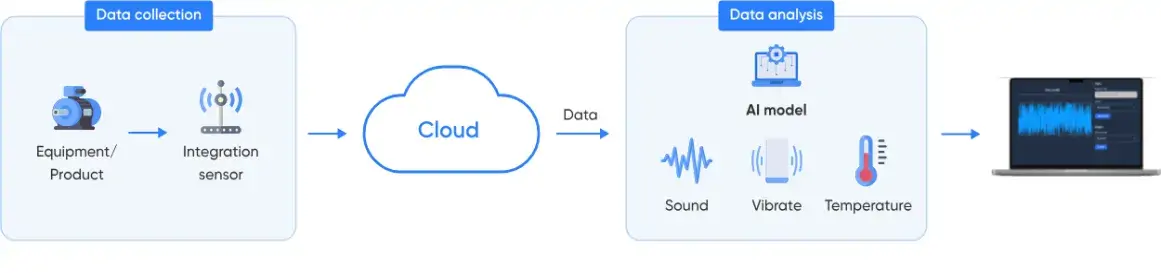
Boosting Load Efficiency with Automatic Container Loading One of the largest cost drivers in logistics is inefficient container utilization. Traditional manual loading plans often leave significant unused space, resulting in higher shipping costs and wasted capacity. AI-driven automatic container loading systems, like those developed by TMA Solutions, use advanced algorithms to optimize the placement of items within containers, balancing weight, volume, and dimensional constraints. This maximizes load efficiency, allowing more goods per shipment without additional cost. ROI Impact: Shipping cost reductions by minimizing the number of containers or trips required Lower labor expenses as load planning is automated and sped up Reduced damage claims thanks to optimal placement Companies typically see a rapid payback as optimized container space reduces freight costs by up to 15–30%, depending on prior inefficiencies. TMA - Automatic Container Loading Solution In today’s fiercely competitive logistics industry, investing in AI logistics automation is no longer optional, it’s essential for companies seeking to improve efficiency, reduce costs, and enhance client satisfaction. Many logistics leaders ask: What is the actual return on investment (ROI) when adopting AI-powered automation? As a leadinghttps://www.tmasolutions.com/ Vietnam software distributor , TMA Solutions offers advanced https://www.tmasolutions.com/industries/logistics-and-transportation AI logistics automation technologies that deliver measurable savings and operational improvements. This article breaks down the tangible and intangible ROI benefits of AI automation in logistics, illustrating how TMA Solutions helps businesses justify their digital transformation investments. Preventing Costly Downtime with Predictive Maintenance TMA Solutions’ predictive maintenance leverages https://www.tmasolutions.com/technologies/ai-ml-and-data-sciences Agentic AI solutions for logistics , analyzing sound, vibration, and temperature sensor data to identify early signs of mechanical issues before they cause failures. ROI Impact: Reduced emergency repair costs and unplanned downtime Extended machinery lifespan and optimized maintenance schedules Lower maintenance labor costs Predictive maintenance programs have shown ROI improvements by cutting downtime by 30–50%, resulting in millions saved annually for large logistics centers. TMA - AI-Driven Predictive Maintenance solution Cutting Packaging Waste and Costs with AR Packaging Dimensioning Overpacking and incorrect carton sizing inflate costs not only through excess material but also via increased dimensional weight fees charged by carriers. AI-powered AR packaging dimensioning helps packers measure products accurately and select the right carton size in real time. TMA Solutions’ https://www.tmasolutions.com/technologies/ai-ml-and-data-sciences Agentic AI solutions for logistics incorporate augmented reality to overlay virtual boxes on items, ensuring optimal packaging every time. ROI Impact: Packaging material cost savings through right-sizing Reduced shipping fees due to smaller parcel dimensions and weight Time savings in packing processes Companies can cut packaging costs by 10–20% while speeding up packing lines, generating significant savings over time. TMA - AR Packaging tool Improving Asset Utilization and Security with Parking Lot Monitoring Logistics hubs face challenges managing busy parking lots and yards efficiently. TMA Solutions’ parking lot monitoring uses real-time camera AI to track space availability, monitor vehicle access, and alert for security or compliance issues. ROI Impact: Improved driver productivity by minimizing time spent searching for parking Reduced theft and damage losses through enhanced security Lower labor costs by automating monitoring and access control Optimized yard management can boost throughput and reduce idle times, increasing operational efficiency significantly. TMA - Parking Lot Monitoring solution Summary of ROI Benefits from AI Logistics Automation Conclusion As a https://www.tmasolutions.com/technologies/ai-ml-and-data-sciences top Vietnam AI company , TMA Solutions combines deep logistics domain expertise with custom AI development to deliver scalable automation solutions that generate strong, measurable ROI. Investing in AI logistics automation yields significant cost reductions, improved resource utilization, and enhanced client satisfaction. For logistics companies and tech buyers partnering with a reputable https://www.tmasolutions.com/ Vietnam software distributor like TMA Solutions, the ROI from AI automation is compelling and quantifiable. The key to success lies in selecting the right automation areas and leveraging AI technologies to their fullest potential. AI-driven automation is no longer just a technology upgrade—it is a strategic investment unlocking efficiency, agility, and profitability in today’s complex logistics environment. Ready to transform your logistics operations? Contact TMA Solutions today to explore how our AI-driven automation solutions can drive efficiency and boost your business performance. The ROI of AI and Automation in Logistics: Key Savings and Benefits...
icon
Logistics and the Sources of Carbon Emissions Transportation accounts for nearly one-quarter of global CO₂ emissions, with freight logistics being a significant portion. Inefficient routes, underutilized vehicles, excessive inventory, and outdated warehouse practices contribute to unnecessary fuel consumption and emissions. Reducing the logistics carbon footprint requires smarter, data-driven strategies. Introduction The logistics industry plays a central role in the global economy but is also one of the largest contributors to greenhouse gas emissions. From transportation to warehouse operations, every stage of the supply chain generates a carbon footprint. Artificial Intelligence (AI) is rapidly transforming how logistics companies operate, offering innovative ways to reduce CO₂ emissions and move toward a more sustainable future. Conclusion The logistics sector faces growing pressure to cut emissions and move toward net-zero operations. AI technologies are proving to be a game-changer, enabling businesses to optimize transportation, streamline warehouses, and forecast demand more accurately. By leveraging TMA Solutions’ expertise in AI and software outsourcing in Vietnam, companies can accelerate their journey toward sustainable logistics. Contact https://www.tmasolutions.com/ TMA Solutions today to discover how our AI-powered https://www.tmasolutions.com/industries/logistics-and-transportation logistics solutions can help your business reduce its carbon footprint while staying competitive in a rapidly evolving market. TMA’s AI Logistics Solutions for a Greener Future As a https://www.tmasolutions.com/ top Vietnam AI company and trusted https://www.tmasolutions.com/technologies/ai-ml-and-data-sciences custom AI development company, TMA Solutions delivers innovative technologies to help businesses reduce their logistics carbon footprint. Our portfolio includes: - AI Demand Forecasting: Aligns production and inventory with real demand, reducing surplus shipments. AI-driven inventory demand forecasting dashboard visualizing predicted demand trends - Load Calculator: Maximizes truck and container capacity utilization, reducing the number of trips. TMA - AR Packaging tool TMA - Automatic Container Loading Solution - Smart Warehouse Solutions: Optimize energy use with intelligent automation for cooling, lighting, and equipment. AI in Warehousing and Demand Forecasting Warehouses are energy-intensive, often consuming large amounts of electricity for lighting, cooling, and equipment. AI-based smart warehouse solutions optimize energy use by automating lighting and climate control systems. At the same time, AI demand forecasting helps businesses maintain the right inventory levels, avoiding overstocking and reducing the need for unnecessary shipments. By aligning supply with actual demand, companies minimize waste, lower energy costs, and reduce overall emissions. AI in Transportation: Optimizing Routes and Loads AI-powered route optimization enables logistics companies to calculate the most fuel-efficient delivery paths, reducing wasted miles and minimizing emissions. Machine learning algorithms analyze traffic, weather, and delivery schedules to recommend optimal transport routes in real-time. AI-driven load calculators also improve container and truck utilization, reducing the number of trips needed and lowering the carbon footprint. These innovations in AIhttps://www.tmasolutions.com/industries/logistics-and-transportation logistics automation play a critical role in green supply chain management. The Role of AI in Reducing Logistics Carbon Footprint...
icon
Conclusion Chatbots, powered by AI in education , are no longer a futuristic trend - they are a vital tool in modern educational ecosystems. By improving communication, reducing workload, and offering personalized experiences, AI chatbots empower both students and educators. Institutions that adopt these solutions early will lead the shift toward smarter, more engaging, and more efficient learning environments. TMA Solutions builds custom AI chatbots, learning management system integrations, generative AI tutors, virtual advisors, grading assistants, and complete education technology solutions tailored to universities, colleges, and corporate training programs. https://www.tmasolutions.com/contact-us Contact TMA today and future-proof your institution with proven AI-powered automation and cutting-edge digital classroom tools . Let us help you create a truly connected, always-available, and student-centered learning experience. TMA Case Studies TMA Solutions has extensive experience delivering AI-powered, user-centric technology solutions for global clients across education, enterprise, healthcare, and more. While client data is kept confidential, our education sector portfolio demonstrates our ability to enhance communication and learning management. Smart Course Finder with Generative AI TMA Solutions developed an AI-powered solution to enhance the student learning experience. The project focused on: Personalized course discovery: A generative AI chatbot helps learners navigate and find courses tailored to their interests and learning goals using AI for education techniques. Streamlined learning management: The platform automatically populates learning materials into the LMS, ensuring a smooth and efficient educational experience. Enhanced user experience: By leveraging AI, students receive instant guidance and support, improving engagement and reducing time spent searching for courses. Corporate Upskilling & LXP Chatbot For several multinational corporations, TMA created generative-AI coaching bots inside Learning Experience Platforms (Degreed, EdCast). Recommends personalized learning paths based on job role, performance data, and career goals Answers policy, compliance, and tool-related questions instantly Reduced average time-to-competency for new hires by 35% Benefits for Educational Institutions Adopting chatbot technology is not just about helping individual teachers; it offers strategic advantages for the entire educational institution. Operational Efficiency and Cost Reduction Universities and training centers spend significant resources on student support services. By automating Tier-1 support (FAQs, admissions inquiries, IT helpdesk), institutions can reduce operational costs while simultaneously extending support hours to 24/7. Scalability Human support is linear; adding more students requires hiring more staff. Chatbot support is exponential. A single AI solution can handle 1,000 inquiries simultaneously just as easily as it handles 10. This allows institutions to scale their enrollment without degrading the student experience. Scalability: Human Support vs. AI Chatbots Data-driven Decision Making Chatbots collect valuable insights: common pain points, frequently asked questions, engagement patterns, peak inquiry times, and more. These analytics help institutions refine teaching strategies, optimize processes, and improve services. Improved Student Retention Engagement correlates with retention. By providing instant support and reducing friction in the learning process, institutions foster a sense of belonging and support. Students who feel "heard"-even by an automated system that solves their problem-are less likely to disengage. Modernized Digital Learning Ecosystem Chatbots position institutions ahead in digital transformation, making them more attractive to prospective students and parents seeking up-to-date learning environments. How Chatbots Enhance Student-Teacher Communication Real-time, 24/7 Responses Real-time, 24/7 virtual assistant Chatbots act as a tireless virtual assistant, ensuring students always receive instant answers even outside school hours. Whether asking about homework instructions, deadlines, or course materials, students get help within seconds. This reduces frustration and encourages continuous learning. Breaking the "silence barrier" Chatbots provide a judgment-free zone. For students intimidated by direct interaction with authority figures, a bot offers a safe space to ask rudimentary questions without fear of embarrassment. This anonymity encourages curiosity and ensures that students clarify doubts early, rather than falling behind. Personalized Learning Assistance Powered by generative AI in education , modern chatbots analyze past questions and performance to provide tailored explanations, simplify complex topics, and recommend targeted resources. Personalized Learning with Generative AI (GenAI) Seamless LMS Integration Through deep LMS integration (Learning Management System), chatbots consolidate communication into one unified interface. Students don't need to switch apps; they can ask the bot about their grades, upcoming schedules, or library resources directly within the school portal, minimizing lost messages. Streamlining Assessment and Feedback While bots cannot replace the nuanced grading of an essay, they are incredibly effective for formative assessments through EdTech automation. Chatbots can run quick quizzes to check understanding, grade multiple-choice questions instantly, and provide immediate explanations for wrong answers, creating a tight feedback loop. The Role of Chatbots in Enhancing Student-Teacher Communication Challenges in Traditional Student-Teacher Communication To understand the value of chatbots, we must first analyze the friction points inherent in traditional academic communication. Delayed Feedback Loops Teachers manage large classes and administrative tasks, making it difficult to answer every question promptly. Students often submit work and wait hours or days for clarification on assignments or scheduling issues. Traditional vs AI-powered Communication Communication Overload Multiple platforms like email, Learning Management System (LMS), and messaging apps make it harder for educators to track student questions efficiently. Important messages may be overlooked. Many inquiries are repetitive logistics questions: "When is the assignment due?" or "Where do I submit the paper? " which drain time and mental energy from teaching. The "office hours" Bottleneck Traditional communication relies on specific availability windows. If a student is stuck on a concept at 9:00 PM on a Tuesday, they often have to wait until the next class or office hour to get unblocked. This delay can arrest the learning momentum and lead to frustration or disengagement. The Fear of Participation Psychological barriers play a massive role in student-teacher communication. Many students, particularly those who are shy, struggle with language barriers or have anxiety, are hesitant to raise their hands in class or approach a teacher personally for fear of asking a "stupid" question. This silence often leads to knowledge gaps going unnoticed until exam time. Breaking the Silence Barrier / Knowledge Gap Limited Personalization In large classes, it is challenging for teachers to offer tailored recommendations, monitor individual progress closely, or adjust communication for different learning needs. Introduction Education is rapidly transforming under the influence of AI technologies. As learning environments become more digital, accelerated by remote and hybrid learning models, the need for fast, efficient, and personalized communication grows stronger. Students now expect instant access to information at any time, studying across time zones, late at night, and on weekends. In this landscape, static syllabi and fixed office hours are no longer sufficient. AI in education and education technology solutions are at the heart of this shift. AI-powered chatbots act as virtual teaching assistants, offering 24/7 support for routine queries while freeing educators to focus on deeper pedagogical work. According to recent EdTech research, the global market for e-learning software and learning management systems is growing exponentially, driven by the demand for AI-powered automation and personalized experiences at scale. This article explores how intelligent chatbots strengthen educational communication and how TMA Solutions delivers world-class education technology solutions. Chatbot: The 24/7 Virtual Teaching Assistant ...
icon
Conclusion Threat modeling is an essential part of a technical cybersecurity review . It helps remove the chances of overlooking vulnerabilities and risks. The OCTAVE method introduces step-by-step instructions to be deployed on a full scale, as well as incorporates organizational needs into security analysis. The OCTAVE Criteria provides expected results and works as a success confirmation. Not using the OCTAVE method could lead to lackluster or unsuccessful threat modeling, and without threat modeling in general, it is likely impossible to know if the object of analysis is secure. Case Study Willow Creek University was looking to deploy a web application called MediaWiki on their intranet to help regulate information about their various newly built and existing facilities, as well as past events they have hosted at those locations. During their security analysis process, they opted to use the OCTAVE method for threat modeling to understand critical assets and how they could be vulnerable. Deriving from the Level 1 DFD (Figure 1), a more detailed DFD Level can be drawn to specify types of data flows that may occur during the web application’s usage. One type of request that both a normal user and the administrator can make is query-type requests. Through MediaWiki’s documentation, the development team can figure out which application features send these types of requests and draw an appropriate DFD Level 2 (Figure 5). Figure 5 – DFD detailing query-type requests inside MediaWiki Using that DFD Level 2 as a base, the security team is able to pinpoint threats that may happen due to that specific request. After listing all the threats that they are aware of, they can rank the threats by their risk severity and repeatability. A general description of the threat is also given to help Willow Creek University’s non-technical teams to further involved in the threat modeling process. Figure 6 provides the first three table entries of the threats found based on DFD Level 2 – Query-type Requests (Figure 5). Figure 6 – Some of the table entries containing threats of each request type Once the risks are listed, the security team can use their knowledge along with open-source information to come up with a mitigation strategy appropriate to the threat listed. The ID numbers are used to help connect the threat table and the mitigation strategy table. This can be seen using Figure 7, where the threat name column is used to further connect with the threat table in Figure 6. Figure 7 – Some of the table entries containing each threat’s appropriate mitigation strategy The OCTAVE report produced as a result of the process allowed Willow Creek University’s development team to have a detailed understanding of the organization's priorities, existing threats, and appropriate countermeasures. It led to a successful and secure deployment of MediaWiki while being operational to the specific needs of the university. What is Threat Modeling? Threat modeling is a process of creating a model around the object of analysis, specifying its operating components, to identify and understand possible attack vectors while categorizing the risk found by their impact, likelihood, recreation, and mitigation difficulty. After understanding all the risks found, the technical team can move on to create countermeasures, starting with the most potent and repeatable vulnerability exploits. One of the most important factors of threat modeling is knowing the general structure of the target through data flow diagrams (DFD) to understand how each operating component connects with each other and the data flows through them. Using a DFD of a web application in Figure 1 as an example, it is possible to see which component acts as a bridge between the user and the database server, along with the types of data being transmitted. Figure 1 – DFD of a web application. Currently, there are many different methods and standards used for threat modeling. Noteworthy and popular names include STRIDE, DREAD, and OCTAVE. STRIDE is the most well-known standard used to help categorize the threats found within a system. Accompanying STRIDE is DREAD, which is used to score those threats by their damage, repeatability, severity, and more. STRIDE has been known to be less used as a threat modeling method and is created with a pure security view, which might hinder business operations and desired functions. While DREAD is considered to be outdated, as well as inconsistent with their scoring. These flaws led to the creation of OCTAVE. During a https://www.tmasolutions.com/services/security-application-development technical cybersecurity review , it is not unlikely that someone missed something; a vulnerability that is overlooked in their object of analysis. Without a proper process with purposeful methods, it would be very difficult to minimize the number of mistakes made. This is where threat modeling and the OCTAVE method can come into play during a technical security review. What is the OCTAVE method? OCTAVE is an acronym for Operationally Critical Threat, Asset, and Vulnerability Evaluation . Its development was primed due to the need for organizational priorities to be included along with technological requirements during technical assessments. At the time, the developers considered other threat modeling approaches uncomprehensive and lacking organizational involvement. OCTAVE was also developed with strategic issues in mind rather than tactical, meaning it attempts to have an overview of a significantly longer time frame. Other methods were also created to be used solely by outside experts. This method allows for self-direction for the organization to make its evaluations to be later used in security decisions. OCTAVE categorizes its three main elements of concern into the following: Threat: they are potential actions that could exploit vulnerabilities and harm assets. Internal threat: threats coming from inside the organization, be it intentional or not. External threat: threats coming from outside the organization. Assets: resources that hold value to the organization and require protection. Informational: includes objects like sensitive data and confidential documentation. Infrastructure: physical devices and equipment that form the organization’s IT operations. Human: employees within the company who may protect or damage the system. Critical: most important assets among the previously identified assets. Vulnerabilities: generally, technological weaknesses within the operational systems. Organizational: vulnerability that exists outside of technologies and inside the organizational structure itself. Technological: vulnerability in either the hardware property or software configuration of a device or system. The threat modeling phases of OCTAVE are as follows: Phase 1: Build Asset-Based Threat Profiles. Using staff knowledge from multiple organizational levels along with a standard information catalog of threats and practices, the analysis team can categorize and discover assets, threats, and security requirements of the organization. Phase 2: Identify Infrastructure Vulnerabilities. Rechanneling the information created after the first phase into this phase to be combined with infrastructure components to result in the understanding of which are high-priority components, existing misconfigurations, malpractices, and vulnerabilities. Phase 3: Develop Security Strategy and Plans. This is where the organization uses the previously organized information to decide its next course of action. Addressing risks with mitigation plans and coming up with protection strategies are all part of this phase. Figure 2 – The OCTAVE Process Diagram What is the OCTAVE Criteria? The OCTAVE Criteria is a set of outputs and principles followed by their attributes. It was created as a standard to guide the evaluation process and for the organization to understand the results. It contains requirements needed to make OCTAVE, or other methods that follow this criteria, a self-directed method of threat modeling. The three main categories of the OCTAVE Criteria are as follows: Principle: It is the fundamental basis and purpose of an evaluation. Attribute: it is a distinctive characteristic that works as a requirement and an evaluation’s success indicator. Output: it works as an objective or result requirement of each evaluation phase to help the team understand what their analysis must achieve during them. Figure 3 – One of the Principles & its Set of Attributes from the OCTAVE Criteria Figure 4 – OCTAVE Outputs Requirement of Each OCTAVE Phase Threat Modeling: General Overview and Guideline of the OCTAVE Method in Cybersecurity...