Home
Search
Found 797 results for “ “ keyword
icon
AI Agent for Talent Acquisition: Transforming Candidate Screening and Recruitment Workflows Through Intelligent Automation Hiring the right talent has become increasingly challenging in today's competitive labor market. Organizations often receive hundreds or even thousands of applications for a single position, creating significant pressure on HR teams to identify qualified candidates quickly and accurately. According to LinkedIn's Global Talent Trends report, organizations that use skills data to identify and evaluate candidates are 22% more likely to receive InMail acceptances and 60% more likely to make successful hires than those relying on traditional recruitment methods. Traditional hiring often depends on manual CV screening and subjective evaluations, making the process slower and less consistent. As a result, recruiters may overlook qualified candidates, extend time to hire, and miss opportunities to attract top talent. As organizations continue investing in digital transformation initiatives, AI-powered recruitment platforms and recruitment automation software are becoming essential technologies that help HR departments improve efficiency, standardize candidate evaluation, and make faster, more informed hiring decisions. With extensive experience building AI agents and intelligent automation systems across multiple industries, TMA delivers https://www.tmainnovation.com/ai-for-enterprise/hr/t-recruitment-job-agent AI solutions for recruitment that help organizations accelerate digital transformation and modernize their hiring processes. Drawing on its AI agent development capabilities, TMA has developed Job Agent, an AI-powered recruitment platform that enables HR teams to streamline candidate evaluation and make more consistent, data-driven hiring decisions. Why AI-Powered Recruitment Solutions Matter? For many organizations, recruitment remains one of the most resource-intensive business processes. However, several challenges continue to impact hiring efficiency: Large volumes of applications requiring manual review Inconsistent candidate evaluation criteria across recruiters Difficulty matching candidate capabilities with complex job requirements Delays in candidate referrals and decision-making Limited visibility into recruitment performance and talent pipelines These challenges become even more significant for enterprises managing multiple hiring initiatives simultaneously or recruitment agencies serving numerous clients. To address these issues, organizations are increasingly adopting AI technologies that automate administrative tasks while supporting more objective and data-driven hiring decisions. The Growing Role of AI in Recruitment and Talent Acquisition Modern recruitment platforms leverage artificial intelligence to analyse candidate information and job requirements at scale. By extracting structured information from resumes and job descriptions, AI significantly reduces manual efforts and enables recruiters to focus on high-value activities such as candidate engagement and strategic workforce planning. AI-powered recruitment solutions increasingly support: Automated CV and job description parsing Intelligent candidate matching Recruitment analytics and reporting Workflow automation and collaboration Candidate ranking and prioritization In recruitment environments where hundreds of applications may be received for a single position, these capabilities can significantly reduce administrative workloads while enabling more consistent and scalable hiring processes. This product automates recruitment end-to-end: document parsing, candidate matching, and referral workflows. Drawing on TMA's expertise in AI-powered enterprise solutions, https://www.tmasolutions.ai/solutions/ai-for-education-recruitment/job-agent Job Agent combines document intelligence, configurable matching algorithms, workflow automation, and analytics within a unified recruitment platform. By applying these AI capabilities to real-world recruitment challenges, TMA helps organizations streamline candidate evaluation, improve hiring consistency, and support more efficient talent acquisition processes. Conclusion AI-powered recruitment is no longer just about automating resume screening. The greatest value comes from connecting candidate evaluation, intelligent matching, workflow automation, and recruitment insights into a single platform that helps HR teams make faster and more consistent hiring decisions. Built on TMA's expertise in AI and intelligent automation, Job Agent enables organizations to streamline recruitment, reduce manual effort, and improve hiring accuracy. By transforming recruitment into a more efficient and data-driven process, businesses can attract the right talent while allowing HR teams to focus on strategic priorities. Ready to transform your hiring process? Contact https://www.tmasolutions.ai/solutions/ai-for-education-recruitment/job-agent TMA today to discover how Job Agent can help your organization streamline recruitment, improve candidate evaluation and build a more efficient, data-driven hiring process. How Can TMA's AI Agent Expertise Transform Recruitment? Modern recruitment solutions are evolving beyond simple resume screening tools. Organizations increasingly require connected recruitment ecosystems where candidate information, job requirements, evaluation criteria, and analytics work together seamlessly. AI-Powered Document Intelligence TMA's AI agents automatically extract and structure information from CVs and job descriptions, including: Educational background Professional experience Technical competencies Language proficiencies Position requirements Qualifications and certifications Job Agent automatically parses resumes and extracts candidate data into a structured form This significantly reduces manual data entry while creating standardized candidate profiles that enable recruiters to evaluate candidates more consistently and process applications at scale. Intelligent Candidate Matching Organizations can define customized matching criteria based on hiring priorities such as: Skills Experience Education Language proficiency Location preferences Specific job requirements Candidate matching score breakdown by skills, experience, education, and other criteria in Job Agent TMA's matching agents generate configurable scores based on organizational priorities enabling recruiters to identify high-potential candidates more quickly and make more objective hiring decisions. Recruitment Analytics and Insights Centralized recruitment analytics provide visibility into: Candidate pipelines Matching score distributions Offer rates Position performance Sourcing effectiveness Recruitment bottlenecks Recruitment analytics dashboard showing candidate distribution, offer rates by skill, and hiring source performance. These insights help organizations identify recruitment bottlenecks, evaluate sourcing effectiveness, and continuously optimize hiring strategies and recruitment performance. Together, these capabilities allow recruiters to process large candidate volumes more efficiently, reduce subjective evaluations, and focus on higher-value activities such as talent engagement and workforce planning. How Recruitment Automation Platforms Enable Scalable Hiring? As organizations expand, HR teams must manage multiple job openings, increasing application volumes, and evolving skill requirements at the same time. Traditional recruitment processes often rely on manual resume screening and subjective evaluations, making it difficult to identify qualified candidates quickly and consistently. https://www.tmainnovation.com/ai-for-enterprise/hr/t-recruitment-job-agent AI solutions for recruitment help organizations automate repetitive hiring tasks while improving the accuracy and consistency of candidate evaluation. With AI-powered automation, businesses can: Accelerate candidate screening processes Standardize evaluation criteria Improve candidate-to-job matching quality Support high-volume recruitment initiatives Reduce administrative workload Generate actionable recruitment intelligence Rather than functioning solely as applicant repositories, modern AI recruitment platforms actively analyse candidate information, recommend suitable matches, and support data-driven recruitment decisions throughout the hiring lifecycle. By automating routine tasks, HR teams can spend more time on strategic priorities such as talent engagement, employer branding, and long-term workforce planning. Bringing Recruitment Automation into Practice While many recruitment technologies focus on individual capabilities such as resume parsing or candidate matching, organizations increasingly require these capabilities to work together as part of an end-to-end hiring process. Solutions such as Job Agent demonstrate how AI technologies can be integrated to support the entire recruitment lifecycle-from document processing and candidate evaluation to intelligent matching, workflow automation, and recruitment analytics. This system is a unified AI platform for document parsing, candidate matching, and recruitment workflow automation. By combining these capabilities in a single environment, organizations can eliminate fragmented recruitment processes, maintain consistent evaluation standards, and gain better visibility across candidate pipelines and hiring performance. Looking Ahead As recruitment continues to evolve, organizations are looking for AI that goes beyond automating routine tasks. The next generation of hiring platforms will help HR teams understand candidate data more deeply, adapt to changing hiring needs, and support faster, more confident decision-making. TMA is investing in this future by combining generative AI, intelligent automation, and advanced analytics to deliver smarter recruitment solutions. These capabilities help organizations identify qualified candidates earlier, improve evaluation consistency, and create a more personalized hiring experience. Looking ahead, successful recruitment platforms will bring resume analysis, candidate evaluation, workflow automation, and recruitment insights together in one connected solution. This integrated approach enables HR teams to work more efficiently, make data-driven hiring decisions, and adapt to changing workforce demands. TMA remains committed to developing AI-driven recruitment technology that helps organizations hire smarter, faster, and with greater confidence....
icon
Top AI agents development company for Your Business The rapid growth of artificial intelligence has created a rising demand for trusted partners in AI agent development. Businesses need reliable tech partners to automate processes, make better use of data and improve customer experience. In this article, we will explore some of the leading companies in this field. Company Headquarters Founded Number of Employees Specialty (AI Agent Focus) TMA Solutions Ho Chi Minh City 1997 > 4.000 AI Agent Factory (no-code), Smart AI Agents, Autonomous AI Agents, Workflow Agents FPT Software Hanoi, Vietnam 1999 > 30.000 Industrial AI (I2), IvyChat (Virtual Assistant), CodeVista (AI for Programming Support) Rikkeisoft Hanoi, Vietnam 2012 > 2.000 Speech Agents, eKYC & Face Recognition, Data Analytics Agents, Enterprise Workflow Agents Orient Software Ho Chi Minh City 2005 > 350 AI Consulting, Machine Learning & MLOps, Data & AI Solutions BHSoft Hanoi, Vietnam 2014 100 - 500 AI & Machine Learning, GIS & Mapping, Cloud & DevOps TECHVIFY Software Hanoi, Vietnam 2018 > 500 AI Agent & Chatbot, Agentic AI, AI Avatar Vegavid Technology India 2018 200 - 300 Conversational & Task Automation Agents, Predictive & Recommendation Agents, Monitoring & Adaptive Agents NKKTech Global Hanoi, Vietnam 2018 > 50 Enterprise Automation Agents, Conversational & NLP Agents, Predictive & BI Agents, Computer Vision Agents 1. TMA solutions Extensive experience Founded in 1997, TMA Solutions is one of the longest-standing technology companies in Vietnam, with headquarters in Ho Chi Minh City. After more than 27 years of operation, the company has expanded to multiple cities in Vietnam and established branches in Canada, the US, Germany, Japan, and Singapore. Workforce scale TMA now has over 4,000 technology engineers working in different specialized centers. This strong team allows the company to handle multiple projects simultaneously in various fields, including AI agents development and applications. Expertise in AI agents TMA has developed the AI Agent Factory platform, a no-code solution for creating and deploying workflow agents quickly on multiple channels such as websites, social media, and enterprise apps. The company also invests in research and applies advanced technologies to strengthen AI agent capabilities. Model Context Protocol (MCP): Connects agents with external data sources in real time, making it valuable for internal information query agents. Smart AI Agents: Provide 24/7 customer service, integrated with CRM and knowledge bases to enhance support, from automated replies to forwarding complex requests to staff when needed. Autonomous AI Agents: Operate independently with contextual understanding and self-coordination to complete multiple tasks in sequence. They are applied in enterprise workflows such as order processing, automated checking, and multi-agent collaboration across linked tasks. AI agent project implementation process Step 1: Requirement gathering and analysis TMA begins with in-depth discussions to capture the business’s needs, then analyzes ROI, evaluates technical feasibility, and defines key success criteria. Step 2: Architecture design and prototyping The project team designs the agent architecture using available libraries, selects the core models, and identifies key integration points. At the same time, a no-code/low-code interface is used to build quick prototypes, giving businesses a clear view of the solution. Step 3: Development and system integration Using an intuitive drag-and-drop tool, agents are developed and connected directly to enterprise data sources (SQL, NoSQL, API). The system can be extended with SDKs and supports modern protocols such as MCP, ensuring flexible integration and scalability. Step 4: Testing and production deployment Before launch, agents are tested in a sandbox environment with simulated data to to verify performance, behavior, and security. Once stable, they are deployed to production with container support, auto-scaling, and seamless integration into existing workflows. Step 5: Continuous monitoring and optimization After deployment, TMA maintains ongoing monitoring, applying data analytics, feedback loops, and rollback mechanisms to fine-tune performance, ensuring sustainable operation. Practical experience from projects TMA has applied AI agents across multiple industries: WMS AI Agent: Designed for warehouse operations, this agent helps track inventory, monitor storage locations, check order status, and generate instant reports. It combines ORC, Speech-to-Text, Google Gemini, Python/FastAPI and ReactJS. Multi-taskers Agent: Built as a smart platform connecting homeowners with freelancers, this agent supports job posting, bidding, and progress tracking. It integrates Lovable, n8n, Cursor AI, LLMs such as Google Gemini, Ollama, OpenAI Whisper, along with ReactJS/NodeJS and PostgreSQL. Client Order Assistant: A versatile multi-channel chatbot that helps customers search for products, place and track orders, and easily integrate with existing systems. It uses a multi-agent framework (ADK, A2A, MCP), AI/LLM models from OpenAI and Google, and a Python/FastAPI backend. Certifications and awards TMA’s expertise and contributions have been recognized through several awards: Top 10 Software Outsourcing, Fintech, AIoT Enterprises by VINASA. Top 10 Digital Technology Companies 2024, highlighting its scale and technology development capacity in Vietnam. 2 awards at the Vietnam Smart City Awards 2022 for smart city technology initiatives. TMA is a Vietnamese software company specializing in developing solutions and AI agents for businesses 2. FPT Software Extensive experience Founded in 1999, FPT Software is a member of FPT Corporation, with nearly 80 offices across 30 countries. After more than two decades of growth, the company has become a trusted technology partner of many global enterprises, following the AI-First Company strategy to accelerate digital transformation and improve product quality. Workforce scale FPT Software currently has over 30,000 employees. The company also focuses on specialized training in fields such as AI, Data, Cloud, IoT and Security, partnering with international platforms to strengthen team expertise. Expertise in AI agents I2 (Industrial AI): Applies computer vision, sensors, and audio to automatically detect product defects and predict equipment failures. IvyChat: A virtual assistant for businesses, integrated into workflows to provide automated responses, data lookup, and insights for operations teams. CodeVista: An AI assistant for developers, capable of generating code, explaining, refactoring and detecting errors. It helps shorten development time by up to 60% and speed up sprints by 80%. FPT Software is an AI-First technology company specializing in developing AI agents and digital solutions 3. Rikkeisoft Extensive experience Founded in 2012, Rikkeisoft is a Vietnamese information technology company. That has grown steadily for more than a decade. Today, it has expanded its presence to Japan, the US, and other countries. To strengthen its focus on digital transformation, the company established Rikkei AI, dedicated to researching and implementing artificial intelligence solutions. Workforce scale Rikkeisoft now has over 2,000 employees across Vietnam, Japan and the US. The team is trained and specialized in areas such as software development, AI, Data, Cloud, and enterprise solutions, serving diverse needs of international clients. Expertise in AI agents Speech Agents: Support Vietnamese multi-dialect speech recognition, natural text-to-speech, wake-word detection, and voice activity detection. eKYC & Face Recognition Agents: Provide facial recognition, liveness detection, and digital identity verification to secure user interactions in finance, banking, and e-commerce systems. Data Analytics Agents: Deliver data analysis and forecasting models that help businesses generate insights and optimize processes. Enterprise Workflow Agents & Internal AI strategy: From June 1, 2025, Rikkeisoft is committed to embedding AI in all operations, developing agents for workflows such as management, operations, and customer support. Rikkeisoft delivers AI agents from voice and face recognition to data analytics for the global market 4. Orient Software Extensive experience Founded in 2005, Orient Software is a Vietnam-based software development company that has completed hundreds of projects for global clients. With nearly 20 years in the industry, Orient has become a reliable technology partner for both local and international businesses. Workforce scale The company has more than 350 software engineers and 8 offices in Vietnam, Japan, Norway, Germany, and Singapore, giving it the capacity to manage cross-border projects. The team is well-trained in AI, Machine Learning, Data Analytics, Cloud and IoT, meeting strict requirements on quality and timely delivery. Expertise in AI agents AI Consulting: Provides end-to-end consulting, from data assessment and goal setting to building an AI roadmap, helping businesses plan the right strategy. Machine Learning & MLOps: Develops and deploys machine learning models for natural language processing (NLP), computer vision, and predictive analytics. Provides MLOps support to ensure stable lifecycle management. Data & AI Solutions: Builds custom AI solutions for enterprises, from intelligent automation to AI systems integrated with existing software, helping improve operations and make better use of data. Orient Software is a Vietnamese software company specializing in AI and machine learning solutions for businesses 5. BHSoft Extensive experience Founded in 2014, BHSoft (Bac Ha Software) is a technology company based in Hanoi. Over the past decade, it has worked with more than 60 international clients and delivered over 300 projects. Today, BHSoft focuses on technology innovation, especially in AI, data, and GIS mapping systems, to bring practical solutions for global businesses. Workforce scale BHSoft has a team of 100–500 employees. The company invests in training and developing expertise in key areas such as custom software development, web and mobile applications, AI/machine learning, Cloud, and DevOps. It also partners with international platforms to strengthen its specialized team. Expertise in AI and technology AI & Machine Learning: Applied in data analysis, process automation, and building smart solutions for enterprises. GIS & Mapping: Experienced in Cesium, GeoServer, OpenLayers, WebGL, and 3D visualization to develop mapping and location systems. Software Development: Services range from web and mobile applications to legacy system modernization, using modern frameworks such as ReactJS, Angular, Vue.js, Node.js, .NET, and PHP/Laravel. Cloud & DevOps: Deployment on AWS, Azure, and GCP with Docker, CI/CD, and automated testing to shorten development time and maintain product quality. BHSoft is a Vietnamese technology company specializing in software, AI, and GIS for global clients 6. TECHVIFY Software Extensive experience Founded in 2018, TECHVIFY Software is a Vietnam-based technology company positioning itself as an End-to-End AI-Powered Digital Transformation Partner. Within just a few years, the company has worked with many international clients and earned trust from leading corporations. Workforce scale TECHVIFY has more than 500 software and AI engineers, working in both domestic and overseas centers. Its young and skilled team, combined with international presence, gives the company flexibility to deliver projects across different industries. Expertise in AI agents AI Agent & Chatbot: Enhances business communication, automates customer service, and provides seamless interaction experiences. Agentic AI: Builds smart digital assistants capable of handling complex requests, supporting analytics, and improving operations. AI Avatar: Creates new ways for businesses to connect with customers through virtual characters, enhancing both experience and brand value. TECHVIFY Software is a Vietnamese technology company specializing in AI solutions and digital assistants for businesses 7. Vegavid Technology Extensive experience Founded in 2018, Vegavid Technology is an India-based technology company focusing on digital solutions in Blockchain, Metaverse, AI and enterprise software. After more than 5 years of growth, Vegavid has expanded to the global market, serving clients in the US, Europe, the Middle East and Asia. Workforce scale Vegavid has between 200 and 300 employees, most of whom are software engineers and technology specialists. The team is specialized in Blockchain, AI/ML, natural language processing (NLP), computer vision, Big Data, Cloud, and enterprise system development. Expertise in AI agents AI Agent Consulting & Development: Builds custom agents for automation, analytics and business optimization, covering data preparation, architecture design, and system integration. Conversational & Task Automation Agents: Develops multilingual chatbots, virtual assistants, and workflow automation agents for logistics, scheduling, and data processing. Predictive & Recommendation Agents: Designs agents for demand forecasting, risk assessment, and personalized product or content recommendations to accelerate decision-making. Monitoring & Adaptive Agents: Provides agents for system monitoring, anomaly detection, and adaptive learning from new data . Vegavid Technology is an India-based company specializing in digital solutions, Blockchain, and AI agents for the global market 8. NKKTech Global Extensive experience Founded in 2018 in Hanoi under the name Nokasoft, NKKTech Global is a globally oriented technology company, focusing on enterprise software and digital solutions in AI, IoT and Blockchain. After more than 7 years of growth, the company has expanded its presence to Singapore. Workforce scale NKKTech Global has over 50 employees in Vietnam, along with technology engineers in Singapore and a branch office in Thanh Hoa. The team is specialized in AI/ML, NLP, Computer Vision, Blockchain, IoT, Web & Mobile, and enterprise systems integrated with artificial intelligence. Expertise in AI agents Enterprise Automation & AI Development: Builds custom AI solutions for enterprise automation, integrating machine learning and deep learning into operations to strengthen analytics and decision-making. Conversational & NLP Agents: Develops chatbots and intelligent dialogue systems powered by NLP, supporting multilingual communication and enhancing customer experience. Predictive & Business Intelligence Agents: Designs big data analytics and forecasting models to generate insights that support business strategy planning. Computer Vision & Recognition Agents: Delivers image recognition, OCR, and smart monitoring systems for use cases in manufacturing, logistics and security. NKKTech Global is a Vietnamese technology company focusing on digital solutions and AI 9. How to choose the right AI agent development partner To ensure AI agents run stably and bring real value, companies need to select the right partner. Here are the essential factors to consider: 1. Relevant industry experience A partner who understands your industry’s processes, standards, and challenges can design solutions that fit actual needs, save deployment time, and deliver measurable results. 2. Strong technical expertise: AI/ML, LLMs, agent orchestration, system integration, tools/frameworks AI/ML, LLMs, agent orchestration, and system integration are all core. A partner with expertise in AI/ML, LLMs, orchestration, and system integration can build solutions that are both smart and stable. Without solid technical skills, the system may face errors, scaling issues and business disruptions. 3. Ask for proven case studies with measurable outcomes Case studies are practical evidence to assess a partner’s capability. A company that only talks about what it can do but has no project records is not reliable. Reliable partners should present successful projects with measurable outcomes, proving they can turn concepts into practical business value. 4. Be sure they have strong practices for security, data privacy, ethical AI, and compliance AI agents often handle large volumes of sensitive data related to customers, finance or healthcare. Any security gap can lead to data leaks or cyberattacks. In addition, each market has strict regulations such as GDPR in Europe or HIPAA in the US healthcare sector. Violations may result in heavy fines and damage to brand reputation. A partner that follows security standards and legal compliance will help keep AI systems safe, stable, and protect your brand and avoid regulatory risks. 5. Post-launch support: maintenance, updates, retraining, scaling Deployment is just the starting point; the true value of AI agents lies in continuous maintenance and improvement. AI agents need updates, retraining with new data, and scaling as business needs grow. Without post-launch support, the system risks becoming outdated and unable to meet long-term requirements. 6. Transparency in cost, clear timelines, and realistic expectations AI projects often require significant resources and budget. Therefore, a reliable partner should be open about costs, timelines and scope of work, while making realistic commitments instead of vague promises. This helps businesses forecast budgets accurately, track progress at each stage, and manage resources more proactively. How to find the right AI agent development partner for your business This article has introduced the top AI agents development companies for your business, each with its own strengths to help enterprises apply AI in the right way. The key is to choose a partner that matches your goals and long-term vision. If you are looking for a trusted partner, contact TMA Solutions to bring your AI agent ideas to life. With more than 27 years of growth and its AI Agent Factory platform, TMA Solutions has supported many global partners in large-scale projects. Contact information: TMA SOLUTIONS - The leading AI agents development company in Vietnam Email: sales@tmasolutions.com Website : https://www.tmasolutions.com/ https://www.tmasolutions.com/ Linkedin: https://www.linkedin.com/company/tma-solutions/ TMA Solutions TMA Tower address: Street #10, Quality Tech Solution Complex (QTSC), Trung My Tay Ward, Ho Chi Minh City....

icon
AI Agents for Healthcare Operations and EHR Automation: Transforming Modern Healthcare Workflows Key Applications of AI Agents in Healthcare Operations Clinical Workflow Automation Healthcare operations involve hundreds of repetitive administrative tasks every day. AI agents for clinical operation automation solutions help streamline workflows such as appointment scheduling, referral management, insurance verification, patient follow-up coordination, and care pathway management. Instead of relying entirely on manual coordination, healthcare organizations can use AI-powered systems to automate operational processes and reduce delays. This improves efficiency while helping healthcare staff focus more on patient care activities. Healthcare workflow automation also reduces operational bottlenecks and minimizes the risk of human error in high-volume healthcare environments. AI-Powered Clinical Documentation Clinical documentation remains one of the largest administrative burdens for healthcare professionals. AI documentation systems can automatically transcribe physician conversations, generate clinical summaries, and organize patient records inside EHR systems. Natural Language Processing (NLP) technologies allow AI systems to understand medical terminology and convert spoken conversations into structured healthcare documentation. This significantly reduces documentation time while improving consistency and accuracy. For healthcare providers, AI-powered documentation tools help improve productivity and reduce clinician burnout. Intelligent Patient Communication Healthcare organizations are increasingly using AI-powered systems to improve patient engagement and communication. AI agents can automate: Appointment reminders Medication reminders Follow-up communication Patient intake processes Virtual healthcare assistance Automated communication systems help reduce missed appointments while improving patient experiences and operational scalability. For large healthcare organizations managing high patient volumes, AI-powered communication tools can significantly reduce administrative workloads. Healthcare Analytics and Operational Insights AI agents are also transforming healthcare analytics. Healthcare organizations can use AI-powered analytics systems to analyze operational performance, monitor patient trends, and identify workflow inefficiencies in real time. AI systems may help healthcare providers: Predict patient no-show risks Identify operational bottlenecks Improve staff scheduling Detect high-risk patients Optimize resource allocation As healthcare organizations continue generating massive volumes of operational and clinical data, AI-driven analytics will become increasingly valuable for strategic decision-making. Frequently Asked Questions (FAQs) What is an AI agent for healthcare? An AI agent for healthcare is an AI-powered software system designed to automate healthcare workflows, improve operational efficiency, support EHR management, and assist healthcare professionals with administrative tasks. How does AI help with EHR automation? AI helps automate EHR workflows through clinical documentation support, voice transcription, intelligent data extraction, AI-generated summaries, and workflow coordination. What are the benefits of AI agent for clinical operation automation? AI-powered clinical operation automation helps reduce administrative workloads, improve workflow efficiency, accelerate documentation processes, and support better care coordination. Why are healthcare organizations investing in AI-powered healthcare operations? Healthcare providers are adopting AI solutions to reduce clinician burnout, improve operational efficiency, optimize workflows, and enhance patient experiences. Why are global companies working with healthcare software developers from Vietnam? Healthcare software developers from Vietnam offer strong engineering expertise, growing healthcare domain knowledge, competitive development costs, and experience in AI-powered healthcare technologies. The Future of AI Agents in Healthcare AI agents are expected to become increasingly integrated into daily healthcare operations over the next decade. Future healthcare systems will likely rely more heavily on AI-powered technologies for: Predictive patient management Intelligent workflow coordination Personalized healthcare experiences Automated operational analytics Real-time clinical support As healthcare organizations continue modernizing digital infrastructure, AI healthcare automation will become a core foundation of scalable and data driven healthcare delivery. For healthcare providers navigating rising operational complexity, AI agents are no longer experimental technologies, they are rapidly becoming essential tools for improving efficiency, reducing administrative burden, and supporting better patient care. How TMA Supports AI-Powered Healthcare Transformation TMA Solutions’ Healthcare Expertise TMA Solutions is a trusted healthcare technology partner with expertise in software development. https://www.tmasolutions.com/ TMA Solutions is one of Vietnam’s leading software outsourcing companies with extensive experience in healthcare technology software development and digital transformation. With more than 700 engineers and over 15 years of experience in healthcare software development , TMA provides end-to-end software services for healthcare organizations worldwide. TMA supports a wide range of healthcare solutions, including: Remote Health Monitoring: Enables healthcare providers to monitor patient health conditions remotely through connected devices and real-time health data tracking. Medical Device Integration: Connects healthcare applications with medical devices and IoT systems to improve data synchronization and clinical visibility. Healthcare Data Analytics: Transforms healthcare data into actionable insights that support operational efficiency, patient management, and clinical decision-making. Pharmacy Automation: Automates prescription processing, medication tracking, and pharmacy workflows to improve accuracy and reduce operational workloads. Senior Care Services: Supports elderly care providers with digital solutions for patient monitoring, medication reminders, and care coordination. Telehealth Platforms: Delivers virtual consultation systems, remote healthcare services, and digital patient communication solutions. Home Care Solutions: Helps homecare providers manage remote patient care, caregiver coordination, and mobile healthcare services more efficiently. Electronic Health Records (EHR): Develops secure EHR systems that streamline patient record management, documentation, and healthcare interoperability. Medication Management: Improves medication adherence through digital prescription management, reminders, and tracking solutions. Nursing Home Management: Supports nursing home operations with digital tools for patient management, scheduling, and care coordination. Healthcare Self-Services: Enhances patient experiences through self-service healthcare portals, appointment scheduling, and digital registration systems. Clinical Research Tools: Provides digital platforms that support healthcare research, clinical trials, and healthcare data collection processes. Healthcare Kiosk Solutions: Enables automated patient check-in, self-registration, and healthcare information access through smart kiosk systems. Fitness Solutions: Develops digital wellness and fitness applications that support health tracking, activity monitoring, and preventive care programs. Disability Care Systems: Supports disability care organizations with customized healthcare platforms that improve patient support and care management. TMA combines expertise in AI, data, cloud computing, IoT, and healthcare interoperability to help healthcare providers modernize operations and improve patient care experiences. AI and Healthcare Innovation at TMA Through https://www.tmainnovation.com/ TMA Innovation , TMA also focuses on emerging technologies such as https://www.tmasolutions.com/technologies/ai-ml-and-data-sciences Artificial Intelligence , automation, Big Data analytics, IoT, and smart healthcare systems. TMA’s AI-powered healthcare capabilities include: AI & Health Data Analytics AI-powered workflow automation Healthcare operational automation Remote patient monitoring systems Medical device integration Telehealth and virtual care solutions Intelligent healthcare analytics platforms By combining strong engineering capabilities with healthcare domain expertise, TMA helps healthcare organizations accelerate digital transformation while improving operational efficiency and patient outcomes. Why Healthcare Organizations Are Working with Healthcare Software Developers from Vietnam Vietnam’s Growing Healthcare Technology Expertise Vietnam has become one of the fastest-growing technology outsourcing destinations in Asia, particularly in healthcare technology software development. Healthcare software developers from Vietnam are increasingly supporting healthcare providers, hospitals, clinics, and healthtech startups worldwide in building: AI-powered healthcare systems EHR automation platforms Clinical workflow automation tools Remote patient monitoring systems Telehealth applications Vietnamese engineering teams are gaining recognition for combining strong technical capabilities with competitive development costs and growing healthcare expertise. Strong Capabilities in AI and Digital Transformation Vietnam’s software industry has rapidly expanded its capabilities in Artificial Intelligence, cloud computing, healthcare interoperability, and data analytics. For global healthcare organizations seeking scalable AI-powered healthcare solutions, Vietnam is becoming an increasingly strategic technology partner. Healthcare providers are particularly interested in Vietnam’s ability to deliver custom healthcare software development with flexible engagement models and long-term engineering support. Benefits of AI Agents for Healthcare Providers Reducing Administrative Burdens Administrative overload remains one of the biggest operational challenges in healthcare. By automating repetitive workflows, AI agents for healthcare solutions help reduce manual workloads for physicians, nurses, and healthcare administrators. This allows healthcare professionals to focus more on patient care rather than documentation and coordination tasks. Improving Operational Efficiency AI-powered healthcare automation helps organizations streamline workflows, reduce delays, and improve coordination between departments. Organizations implementing AI-driven healthcare workflows may improve: Documentation speed Appointment management Care coordination Workflow efficiency Resource utilization Operational improvements also contribute to better patient experiences and cost optimization. Supporting Better Patient Outcomes AI-powered healthcare systems also help improve patient outcomes by enabling faster access to information and more proactive healthcare delivery. Real-time operational insights, automated follow-up systems, and AI-powered clinical recommendations help healthcare organizations respond more efficiently to patient needs. As healthcare systems continue evolving toward preventive and data-driven care models, AI-powered automation will play an increasingly important role. The Growing Role of AI in EHR Automation Why EHR Systems Create Operational Challenges Electronic Health Records are essential for modern healthcare delivery, but they also create significant operational complexity. Healthcare professionals often spend large portions of their workdays navigating EHR systems, entering patient information, updating records, and managing documentation requirements. According to the American Medical Association (AMA), EHR-related administrative tasks are one of the leading contributors to physician burnout. Common EHR-related challenges include: Manual data entry Fragmented patient records Time-consuming documentation Workflow duplication Poor interoperability between systems Information overload As healthcare data volumes continue increasing, organizations are looking for smarter ways to streamline EHR operations. How AI Improves EHR Workflows AI-powered EHR automation helps healthcare providers reduce manual work while improving documentation accuracy and accessibility. Modern AI-powered healthcare systems can support EHR workflows through: Automated clinical documentation Voice-to-text transcription Medical OCR solutions AI-generated patient summaries Intelligent record organization Automated coding assistance Real-time clinical recommendations For physicians and healthcare staff, these capabilities reduce time spent on administrative tasks and improve access to relevant patient information. AI scribes for doctor workflows are also becoming increasingly popular. These AI systems can listen to physician-patient conversations and automatically generate structured clinical notes for EHR systems. According to a report from McKinsey & Company, generative AI technologies could automate a significant portion of healthcare administrative tasks, potentially saving the U.S. healthcare system billions of dollars annually. Understanding AI Agents in Healthcare Operations What Is an AI Agent for Healthcare? An AI agent for healthcare is an intelligent software system designed to automate healthcare workflows, analyze operational data, and assist healthcare professionals in managing repetitive or data-intensive tasks. Unlike traditional rule-based automation systems, AI agents can process real-time information, adapt to changing conditions, and continuously improve performance through machine learning technologies. Healthcare organizations are increasingly using AI agents for tasks such as: Clinical workflow automation: Streamlines patient triage, referral management, care coordination, and internal workflows to reduce administrative bottlenecks and improve operational efficiency. Appointment scheduling: Automates appointment booking, schedule optimization, reminders, and no-show reduction to improve patient flow and resource utilization. Patient communication: Supports follow-up messages, medication reminders, and virtual assistance to improve patient engagement and communication consistency. EHR documentation support: Assists healthcare professionals by automatically generating clinical notes, organizing patient records, and reducing manual data entry tasks within Electronic Health Record (EHR) systems. Medical data extraction: Extracts and structures information from medical forms, physician notes, lab reports, and scanned healthcare documents more efficiently. Follow-up coordination: Automates post-treatment and post-discharge follow-up workflows to improve continuity of care and patient engagement. Healthcare analytics: Analyzes operational and clinical data in real time to identify inefficiencies and support data-driven decision-making. Care management automation: Helps healthcare teams monitor patient conditions, prioritize high-risk cases, and coordinate long-term care plans more effectively. As healthcare systems continue digitizing operations, AI-powered automation is becoming a critical component of healthcare transformation strategies. Why AI Agents Are Different from Traditional Automation Traditional healthcare automation tools typically rely on predefined workflows and static instructions. While these systems can automate repetitive tasks, they often struggle with unstructured data, changing clinical contexts, and dynamic healthcare environments. AI agent for clinical operation automation solutions are more advanced because they can interpret healthcare data, identify patterns, and make context-aware decisions. For example, an AI-powered workflow system may automatically prioritize urgent patient requests, identify missing EHR documentation, or recommend follow-up actions based on patient history and operational data. This ability to process and analyze information intelligently makes AI agents significantly more effective for complex healthcare operations. Why Healthcare Organizations Are Investing in AI Automation Healthcare organizations today face a difficult balancing act: improving patient experiences while controlling operational costs and reducing staff burnout. Administrative inefficiencies remain one of the biggest challenges across healthcare systems worldwide. According to a study published in the Annals of Internal Medicine , physicians spend nearly twice as much time on EHR and desk work as they spend with patients during clinic hours. This growing administrative burden contributes directly to clinician fatigue and operational inefficiency. At the same time, healthcare providers are also dealing with: Increasing patient volumes Aging populations Workforce shortages Rising healthcare costs More complex care coordination requirements As a result, healthcare organizations are increasingly adopting AI agent for healthcare solutions to automate repetitive processes, improve operational visibility, and reduce administrative workloads. Rather than replacing healthcare professionals, healthcare systems applied AI technology are designed to support medical teams by handling time-consuming operational tasks more efficiently. Introduction The healthcare industry is under increasing pressure to improve operational efficiency while delivering better patient outcomes. Hospitals, clinics, and healthcare providers worldwide are facing growing administrative workloads, fragmented healthcare systems, clinician burnout, and rising patient expectations. According to the World Health Organization (WHO), there will be a global shortage of approximately 10 million healthcare workers by 2030, particularly in low- and middle-income countries. At the same time, healthcare organizations are generating more patient data than ever before through Electronic Health Records (EHRs), connected medical devices, telehealth systems, and remote patient monitoring platforms. As healthcare systems become more complex, Artificial Intelligence (AI) is emerging as one of the most impactful technologies for operational transformation. AI agents for healthcare and AI agents for clinical operation automation solutions are helping healthcare organizations automate repetitive workflows, improve EHR efficiency, reduce administrative burdens, and support better clinical decision-making. From AI-powered clinical documentation to intelligent workflow automation and EHR data management, AI technologies are rapidly reshaping modern healthcare operations. In this article, we explore how AI agents are transforming healthcare operations and EHR automation, the real-world applications driving adoption, the measurable benefits for healthcare providers, and why healthcare software developers from Vietnam are becoming trusted partners in healthcare AI development....
icon
AI Agents for WMS: From Manual Tasks to Autonomous Warehouse Operations Transitioning from Manual to Autonomous Operations The journey to Smart Warehouse solutions follows a phased approach: Assessment of current Warehouse Management System Integration of AI Agents development modules Pilot testing (e.g., AI-driven inventory counting via drones) Full-scale deployment of AI logistics automation AI agents elevate picking, packing, and shipping processes by using predictive algorithms to batch orders intelligently and direct autonomous mobile robots (AMRs) in real time. Understanding AI Agents in Warehouse Contexts AI Agents are autonomous programs that interact with their environment to achieve goals. In WMS, they can be classified into reactive, deliberative, learning, and multi-agent systems (MAS). These AI Agents solutions for Enterprise integrate seamlessly with leading platforms such as SAP ERP , Oracle, Manhattan Associates, and Salesforce , enhancing core functions: receiving, putaway, storage, picking, packing, shipping, and returns. Key AI technologies include: Machine learning solutions – for predictive analytics and AI Demand forecasting in logistics Computer Vision – for accurate item recognition Reinforcement Learning – for dynamic path optimization Edge AI – enabling ultra-low latency decisions on robots and IoT devices AI-powered automation – orchestrating entire workflows Core AI Technologies Driving Modern Warehouse Management Systems The Evolution of Warehouse Management Systems Warehouse management has a rich history. In the early 20th century, warehouses operated manually with paper-based records. The 1970s introduced barcoding and basic computerized systems, marking the birth of Warehouse Management System software. By the 1990s, WMS became more sophisticated, incorporating radio-frequency identification (RFID), voice-directed picking, and integration with SAP ERP and other enterprise systems. The 2010s broughthttps://www.tmasolutions.com/technologies/internet-of-things IoT sensors, https://www.tmasolutions.com/technologies/cloud cloud computing, and https://www.tmasolutions.com/technologies/big-data-and-analytics big data analytics into WMS, enabling real-time visibility. Today, AI Demand forecasting in logistics, AI logistics automation , and Edge AI are the next frontier. According to a 2023 McKinsey report, AI could boost warehouse productivity by 20-30% and cut operational costs by 15%. Evolution of Warehouse Management Systems: From Manual to Fully Autonomous Introduction In the era of digital transformation, warehouses have evolved from mere storage spaces into sophisticated hubs of logistics and supply chain management. Warehouse Management System (WMS) serves as the backbone of these operations, integrating software, hardware, and processes to optimize inventory, order fulfillment, and distribution. Traditionally, WMS relied heavily on human intervention for tasks like picking, packing, and inventory tracking, which were prone to errors, inefficiencies, and scalability issues. Enter Artificial Intelligence (AI) Agents – intelligent software entities capable of perceiving their environment, making decisions, and acting autonomously. These AI Agents , powered by machine learning (ML), natural language processing (NLP), and robotics, are revolutionizing Warehouse Management System by shifting from manual, rule-based operations to fully autonomous systems. This transition promises to reduce costs, enhance accuracy, and enable real-time adaptability in dynamic supply chains. This article explores the journey from manual warehouse tasks to AI-driven autonomy in WMS. We will delve into the evolution of WMS, the role of AI Agents , key technologies, real-world applications, benefits, challenges, and future trends. ...
icon
AI Agents in Healthcare: Scribes, Nurse Assistants & EHR Automation...
icon
AI Agents: The New Digital Workforce in Smart Factories What Makes an AI Agent Different? Unlike traditional AI models that might predict a failure or identify a defect, an AI agent takes the next step: it acts. The future of AI is centered on "agency"—the ability for the technology to operate autonomously to achieve a set goal. Gartner defines AI agents as autonomous or semi-autonomous software entities that use AI to perceive, make decisions, and take action in their environment. They can be goal-based, learning-based, or even collaborative, working with other agents to solve complex problems. This allows organizations to move beyond simple automation and fundamentally re-engineer end-to-end processes, boosting productivity and accelerating innovation. The evolution of smart manufacturing has moved beyond simple automation and data analysis. Today, the industry is on the cusp of a new transformation led by agentic AI, or "AI Agents." These are not just passive tools that generate insights; they are an active digital workforce capable of perceiving their environment, making autonomous decisions, and executing complex tasks. While many organizations are still in the early stages of scaling AI, the adoption of agents is rapidly moving from pilot projects to real-world impact. This article explores what AI agents are, how they function as a new digital workforce, and how they are already beginning to manage logistics, operations, and quality control in the factory of the future. AI Agents Managing the Factory Floor In a smart factory environment, AI agents can function as autonomous managers for critical operations, often with minimal human intervention. Autonomous Maintenance and Operations One of the most significant impacts of AI agents is in maintenance and operations. Modern platforms like a Smart Computerized Maintenance Management System (sCMMS) already provide a centralized hub for equipment data. An AI agent can live on top of this platform, acting as an autonomous operations manager. Deloitte notes that "agentic AI" can be used to lessen downtime, identify spare parts, and improve decision-making. Instead of just sending an alert, an agent could: Perceive: Detect an anomaly from an IoT sensor. Decide: Cross-reference the fault with the sCMMS Knowledge Center to diagnose the issue. Act: Automatically check inventory for the required spare part, create a work order, and schedule the maintenance task for a technician—all before a human operator is even aware of the problem. Smart Computerized Maintenance Management System (sCMMS) Dynamic Logistics and Quality Assurance AI agents are perfectly suited for managing the complex, dynamic environment of factory logistics. They have the power to manage autonomous routing and scheduling, leading to significant cost reductions. For example, an AI-powered Video Management System (VMS) might detect a safety violation or a quality defect on a production line. A simple AI model would just log this event. An AI agent, however, could: Instantly halt the affected conveyor belt. Notify the specific shift supervisor. Re-route materials to a different production line. Update the factory's MES (Manufacturing Execution System) with the change in real-time. In this role, the agent empowers the human workforce by filtering out the noise and prioritizing critical actions that require their attention. Video Management System (VMS From AI Assistant to Autonomous Agent Many companies are already deploying foundational AI agents in the form of AI-powered assistants. A solution like TMA's factory assistant, found within its sCMMS, demonstrates this evolution. It already allows users to perform tasks using natural language, such as "check equipment status" or “generate a maintenance report.” This is a powerful semi-autonomous agent. The next logical step, and the one leading manufacturers are now taking, is to remove the human prompt. The agent will proactively monitor data from the sCMMS and VMS platforms and independently execute these tasks. It will not wait to be asked; it will act based on its goals—maximizing uptime, ensuring safety, and boosting productivity. The Future is Autonomous AI agents represent a fundamental shift from AI as a passive tool to AI as an active collaborator. They are the new digital workforce, capable of managing complex systems with a level of speed and efficiency that humans alone cannot match. While full-scale adoption is still emerging, the organizations that successfully integrate autonomous AI agents into their core platforms will not only optimize their operations but will lead the next wave of industrial innovation....
icon
AI and Automotive Security: A Deep Dive into Real‑Time Driver Safety Systems Introduction As automotive technology strides toward a future of autonomous vehicles and connected ecosystems, the importance of in‑cabin safety systems has never been greater. While modern ADAS protects against external hazards, driver monitoring systems (DMS) focus inward—tracking driver behavior, mental state, and even emotional wellness to prevent accidents before they happen. Powered by edge AI, these systems are rapidly becoming mandatory. This article explores how AI is being leveraged to tackle rising safety concerns inside vehicles, the technological approaches behind these innovations, and how TMA Solutions' T-DMS (TMA Driver Monitoring System) is driving this transformation. AI and Automotive Security Conclusion: Towards a Safer Road Ahead The convergence of edge AI, computer vision, and human-centric design is transforming vehicle interiors into intelligent guardians. By proactively monitoring for fatigue, distraction, and emergencies, systems like T‑DMS fill a critical gap left untouched by traditional ADAS. Through cost-effective deployment, real-time responsiveness, and privacy-aware design, TMA Solutions positions itself as a leader in real-time driver safety. As regulations catch up and public trust grows, we believe AI‑driven driver monitoring will become as fundamental as airbags , redefining safety for the next generation of mobility. TMA’s T‑DMS Approach: Innovative and Accessible Overview TMA Solutions’ T-DMS (Driver Monitoring System) is an advanced in-vehicle AI platform engineered to enhance driver safety through real-time surveillance and rapid response. Deployed on edge devices like Jetson Orin Nano Super, Raspberry Pi 4B, and Zero 2W, T-DMS integrates sophisticated AI models and algorithms to deliver a modular, cost-effective alternative to high-end automotive cameras. Targeting individual drivers and corporate fleets, the system offers comprehensive features, including drowsiness detection, distraction monitoring, and SOS signal recognition, supported by a robust alert system and emergency server connectivity. TMA Driver Monitoring System Solution Technical Implementation T-DMS leverages cutting-edge AI techniques and optimized algorithms to ensure high performance on resource-constrained devices: Drowsiness Detection: Face Detection: Utilizes Lightweight AI model to locate the driver’s face in video frames, processing regions of interest (ROI) for further analysis. Pupil Detection: Employs lightweight neural networks to monitor eye openness, determining alertness states (awake, drowsy, or asleep). Sleepy Algorithm: Combines facial and eye data to trigger audible alerts via speakers when drowsiness is detected, implemented in C++ for low-latency execution. Drowsiness Detection Workflow Distraction Monitoring: AI model: Uses AI models to identify distracting objects, Eye Direction, and Hand Landmark within the vehicle cabin. Distraction Algorithm: Combine output of AI model and design Algorithm to detect distraction in real context. Alert System: Multi-threaded C++ implementation issues real-time warnings through speakers, optimized for TensorFlow Lite to minimize computational overhead. Distraction Monitoring Workflow SOS Signal Detection: Hand Pose Detection: Employs Hand landmark detection to recognize SOS gestures, processed via a Hand SOS Signal. Dangerous Situation Detection: AI Model identifies threats like threats and controlled with weapons escalating alerts. Emergency Communication: Captures images, GPS coordinates, and timestamps, transmitting data to a web server via APIs, supported by multi-threading for real-time performance. SOS Signal Detection Workflow Optimization Techniques: Lightweight Models: XML-based Haar cascades and TensorFlow Lite models reduce computational requirements, enabling deployment on edge devices. Embedded Programming: Written in Embedded C/C++, ensuring efficient execution and cross-platform compatibility (ARM, x86_64, aarch64). Multi-Threading: Enhances processing speed and multitasking Benefits of T‑DMS T-DMS delivers significant value to its target markets: Individual Clients - Product: Affordable safety solution for standard vehicles, priced competitively against alternative products on the market High accuracy in complex environments, enhancing driver confidence. Corporate Clients - Solution: Scalable software package for automotive manufacturers and fleet operators, with APIs for seamless integration. Cross-platform support reduces deployment costs across diverse hardware. Market Fit: Addresses the gap for affordable in-vehicle AI cameras, with the market projected to grow tenfold by 2033. Modular design and LTE/Wi-Fi connectivity appeal to cost-conscious buyers in Asia, Europe, and North America. AI Technologies in Driver Safety Overview of AI Capabilities Artificial intelligence is transforming automotive safety by enabling real-time monitoring and rapid response to potential risks. AI systems analyze driver behavior, vehicle environments, and external threats, delivering actionable insights to enhance safety. These technologies are designed to operate efficiently on compact, cost-effective devices, ensuring accessibility across various vehicle types. Key capabilities include: Driver Monitoring: AI continuously observes the driver’s state, identifying signs of fatigue or distraction to prevent accidents. Behavior Analysis: Systems detect objects or activities within the vehicle cabin that may divert attention, ensuring focus on the road. Emergency Detection: AI recognizes distress signals or dangerous situations, facilitating swift communication with response systems. Efficient Processing: Advanced algorithms run seamlessly on low-power hardware, supporting real-time performance in diverse conditions. Scalable Integration: Solutions are compatible with multiple platforms, enabling easy adoption in existing automotive systems. Core Solutions for Driver Safety Drowsiness Detection Systems Drowsiness detection systems are critical for preventing fatigue-related accidents. These solutions monitor the driver’s state in real time, issuing alerts when signs of tiredness are detected. Key features include: Continuous Monitoring: Analyzes driver behavior to identify fatigue indicators. Immediate Alerts: Triggers audible warnings to prompt the driver to stay alert. Reliable Performance: Operates effectively in real-world driving conditions, with processing times suitable for practical use. Distraction Monitoring Distraction monitoring systems ensure drivers remain focused by identifying behaviors that divert attention. These solutions include: Behavioral Detection: Recognizes activities like phone usage or eating that compromise safety. Real-Time Warnings: Issues instant alerts to refocus the driver. Environmental Robustness: Maintains accuracy in complex vehicle interiors, even with multiple objects present. SOS and Emergency Response Emergency detection systems enhance safety by addressing critical situations, such as threats or medical emergencies. Core functionalities include: Distress Signal Recognition: Identifies specific gestures or actions indicating a need for help. Emergency Communication: Sends critical data, such as location and images, to response systems for rapid intervention. Threat Detection: Flags potential dangers, escalating alerts to ensure timely action. Scalable Architecture Driver safety solutions are designed for flexibility and integration: Compact Deployment: Operates on affordable, low-power devices, reducing costs for manufacturers and consumers. Platform Compatibility: Supports various operating systems and hardware types for broad applicability. System Integration: Offers interfaces for seamless incorporation into existing automotive ecosystems, enhancing functionality. The Current Situation & Growing Threat Current Situation The global road safety landscape remains alarming. In 2023, the World Health Organization reported 1.19 million traffic-related deaths and 20–50 million non-fatal injuries. Data from 2024 indicates little improvement. In Vietnam, the situation is especially concerning: from December 15, 2023, to August 14, 2024, there were over 16,000 accidents, causing 7,077 deaths and 12,248 injuries. If this trend continues, Vietnam may reach 24,000 accidents, 10,600 deaths, and 18,400 injuries by year-end—an increase in accidents and injuries compared to 2023. These figures, from the National Traffic Safety Committee, highlight an urgent need for smarter, AI-powered in-vehicle safety systems. Key causes include: Human Factors: Drowsiness, distraction, and impaired driving account for a significant portion of accidents. External Threats: Robbery, physical intimidation, and sudden medical emergencies exacerbate risks. Economic Impact: The financial burden of accidents, including healthcare costs and property damage, runs into billions annually. Accidents Mandates & Market Adoption Vietnam has also issued circulars on installing driver monitoring cameras for cars and transport business vehicles from 2025. New EU regulations mandate in‑cab driver monitoring cameras in all new vehicle models starting 2024, with full compliance by mid‑2026. Australian and Indian public transport authorities are also deploying AI‑powered monitoring for fatigue and distraction. Market and Potential The global AI in automotive market size was valued at approximately $3.3 billion in 2020 and is projected to reach $20.0 billion by 2027, growing at a CAGR of around 37.4%. 75% of new vehicles are expected to incorporate some form of AI technology by 2030. AI-powered driver-assist systems reduce accidents by up to 30%. Over 60% of automotive OEMs are investing in AI to enhance vehicle safety and driver experience. 65% of consumers are willing to pay more for vehicles equipped with AI-based safety features. Global AI in Automative Market...
icon
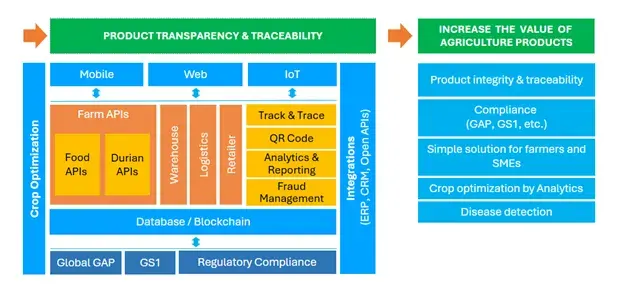
AI and Blockchain Integration for Secure and Transparent Logistics Redefining Efficiency, Trust, and Visibility in Supply Chain Management In the dynamic landscape of global logistics, businesses face mounting pressure to optimize operations, prevent fraud, ensure transparency, and maintain agility in the face of disruption. TMA Solutions is leading the digital transformation of logistics by harnessing the combined power of Artificial Intelligence (AI) and Blockchain technology creating secure, transparent, and intelligent supply chain ecosystems. Ready to Transform Your Supply Chain? TMA Solutions is here to partner with you on your digital logistics journey. Let’s redefine transparency, trust, and intelligence in your supply chain with AI and blockchain integration. 👉https://www.tmasolutions.com/ Contact us today to explore how our technology can drive your logistics efficiency and resilience. Why Choose TMA Solutions? With over 26 years of experience delivering cutting-edge software solutions, TMA Solutions brings deep domain expertise in logistics, AI, and enterprise blockchain development. We provide: Custom-built logistics platforms AI model training and deployment Blockchain integration and consulting Scalable cloud and edge architecture End-to-end project execution and support TMA's Integrated Logistics Innovation AI-Powered Load Optimization AI algorithms intelligently plan and optimize space in containers based on volume, weight, and stacking rules reducing shipping costs and improving container utilization. Smart container loading solutions – 1/2 Smart container loading solutions – 2/2 https://www.tmasolutions.com/industries/logistics-and-transportation Warehouse Management Systems (WMS) Our WMS AI agents automate task assignments, monitor stock levels, and support decision-making through intelligent alerts and performance dashboards. Warehouse Management Systems Blockchain-Based Traceability TMA’s WMS integrates blockchain to securely record each step in the logistics and fulfillment process, from inbound shipments to https://www.tmasolutions.com/industries/logistics-and-transportation last-mile delivery . This ensures tamper-proof traceability, supports regulatory compliance (GS1, GAP), and enhances trust across the supply chain with QR code tracking, real-time analytics, and fraud prevention. Blockchain-Based Traceability Platform The Case for AI and Blockchain in Logistics Traditional logistics systems often suffer from siloed data, manual processes, and poor visibility across the supply chain. These challenges can result in: Delayed shipments Inventory mismanagement Unverified transactions Limited traceability AI provides automation, real-time insights, and intelligent forecasting, while Blockchain ensures data immutability, traceability, and trust among all parties. Together, they unlock a new era of smart logistics....