Are you actively taking steps to prevent health problems before they arise? Wearable technology offers a powerful new approach to wearable technology preventive care, providing continuous monitoring, personalized insights, and actionable recommendations. This article explores the many ways wearable devices are contributing to a healthier future, empowering individuals to take control of their well-being and prevent potential health issues. Ready to learn how wearables can improve your health? Keep reading!
Impact of wearable technology preventive care
Wearable technology has evolved from simple trackers into powerful healthcare tools, empowering patients to actively manage their health through comprehensive monitoring and proactive prevention. A key benefit is continuous health metric tracking, which is especially valuable for managing chronic conditions and enabling timely interventions.
Unlike traditional check-ups that rely on potentially inaccurate patient-reported information, wearables provide objective, data-driven insights for more accurate medical decisions. In preventive healthcare, particularly within the domain of wearable technology preventive care, wearables offer an unprecedented advantage by leveraging historical data and user behavior to anticipate potential health issues and facilitate timely interventions, improving patient outcomes.
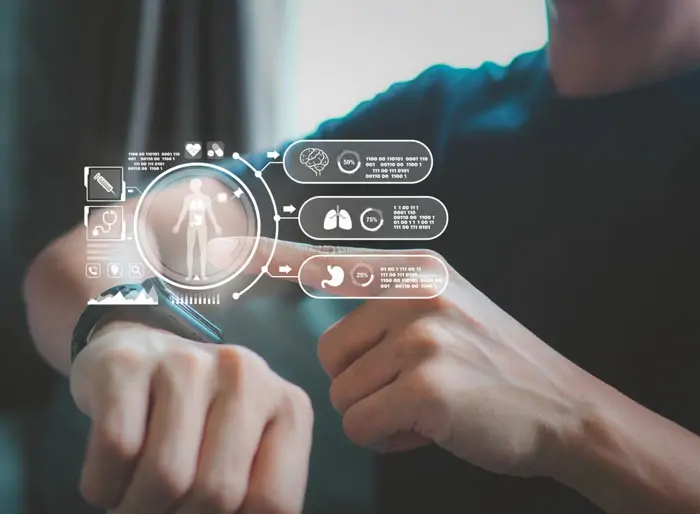
Wearable technology preventive care with IoMT solution integration
Wearable technology plays a crucial role in modern healthcare, especially for wearable technology preventive care, by gathering real-time health data and transmitting it through the Internet of Medical Things (IoMT). This seamless data exchange empowers healthcare professionals with valuable statistics for analysis and research, ultimately facilitating proactive health monitoring, early detection of potential health issues, and the development of personalized healthcare plans, leading to improved patient care and outcomes.
Defining IoMT
The Internet of Medical Things (IoMT) represents the convergence of medical devices and digital health systems, and wearable technology is a critical component of this ecosystem. IoMT solutions enable seamless data transfer from wearable devices to healthcare systems, facilitating a real-time flow of information for analysis and action.
Methods for integrating wearables and IoMT
Integrating wearable technology with IoMT solutions requires a focus on three key areas: First, cybersecurity is paramount. Implementing robust security measures is crucial to protecting sensitive health information transmitted and stored within the IoMT ecosystem, building patient trust, and ensuring data integrity.
Second, data analysis is essential. Using advanced analytics and AI algorithms to process wearable data allows for the extraction of actionable insights, enabling healthcare professionals to perform remote monitoring, make timely treatment adjustments, and deliver personalized care.
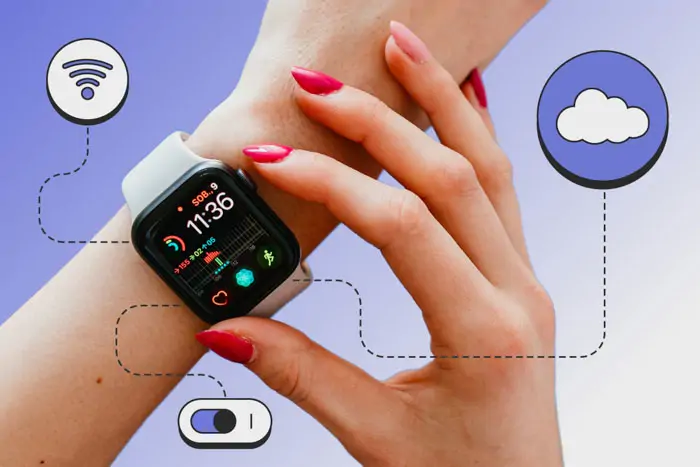
Finally, patient access is a critical component. Providing secure and user-friendly interfaces empowers patients to actively participate in their healthcare journey alongside their providers, fostering a collaborative and more effective approach to health management.
Benefits of wearable technology preventive care
Wearable technology preventive care is transforming healthcare, leading to more efficient medical care and proactive health management. Key benefits include:
Enhanced real-time monitoring
Wearable devices continuously track patients’ vital signs, providing real-time data that can identify irregularities such as abnormal heart rates or oxygen levels.
This real-time monitoring ensures rapid responses to critical situations, such as heart attacks or severe allergic reactions, potentially saving lives by enabling immediate interventions.
Increased data accessibility
Wearables streamline the collection of health metrics, eliminating the need for manual surveys or extensive physical check-ups.
This automated process creates a vast pool of health data, which healthcare providers can analyze to identify trends, monitor patient progress, and develop more effective treatment strategies.
Early detection of health issues
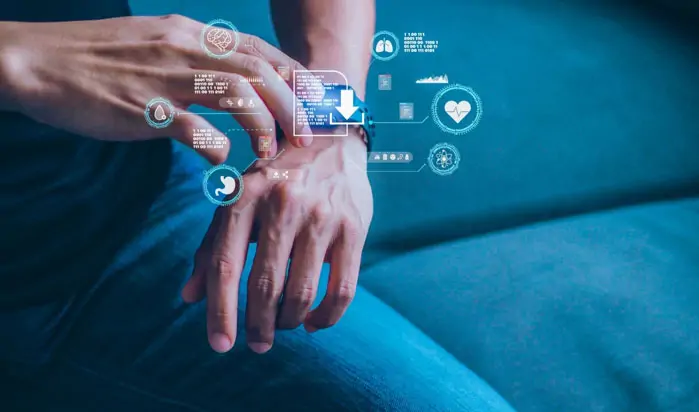
By tracking subtle changes in health indicators, wearable devices empower providers to identify potential health concerns before they escalate.
Early detection can prevent complications, reduce the need for intensive treatments, and improve patient outcomes by addressing issues promptly.
Improved chronic disease management
Wearable devices are especially beneficial for managing chronic conditions. They provide continuous updates on patients' health metrics, allowing healthcare teams to monitor the effectiveness of treatment plans remotely.
This capability reduces the frequency of in-person check-ups and enhances personalized care for conditions such as diabetes, hypertension, and respiratory diseases.
Personalized healthcare
Wearables facilitate personalized health coaching and remote patient monitoring through telehealth services.
The continuous flow of data allows healthcare providers to tailor treatments and preventive measures, making immediate adjustments based on changes in vital signs.
Reduced healthcare costs
Wearable technology significantly lowers healthcare expenses by reducing the need for hospital visits and in-person consultations. Patients can receive care remotely, eliminating travel costs and geographical barriers.
Additionally, early detection and personalized care prevent costly medical interventions, optimizing resource allocation for healthcare providers.

Challenges of wearable technology preventive care
While wearable technology is revolutionizing healthcare, key challenges like data privacy, accuracy, cost, and integration hinder its full potential, especially in wearable technology preventive care:
Concerns about data privacy
The sensitive nature of healthcare data poses significant privacy challenges. Questions surrounding data ownership, usage, and security remain critical.
Wearables collect vast amounts of health data, making them vulnerable to breaches, ransomware, and unauthorized access. Protecting this data requires robust cybersecurity measures, including encryption, access control, and regular audits.
Without these safeguards, patient confidentiality may be compromised. Collaborating with reliable technology providers ensures consistent maintenance and protection against sophisticated cyber threats.
Accuracy and reliability challenges
Wearable devices often rely on generalized algorithms, which can limit their effectiveness in specific patient scenarios.
Data inaccuracies stemming from hardware or software limitations undermine the reliability of wearables. Misleading or incomplete data can negatively impact patient outcomes, raising concerns among healthcare professionals.
To address this, continuous innovation in sensor technology and rigorous data validation processes are essential to enhance accuracy and build trust in wearable solutions.
Financial implication problems
The high price of wearable technology remains a barrier to widespread adoption. Advanced sensors, real-time monitoring capabilities, and wireless connectivity significantly increase manufacturing costs, making devices inaccessible to many consumers.
The industry can reduce costs by investing in more efficient production techniques and cost-effective materials.
Lowering price points is crucial for making wearable healthcare devices accessible to a broader audience and encouraging adoption in health management.
Difficulties with integration
The seamless integration of wearable devices with existing healthcare systems is a complex task.
Ensuring interoperability across diverse platforms and devices from multiple manufacturers is challenging. Effective integration requires healthcare providers to adapt their workflows, train staff, and manage the influx of real-time data from wearables.
By prioritizing interoperability and offering tailored training programs, healthcare organizations can incorporate wearable data into clinical decision-making, improving patient outcomes.
Future trends and innovations for wearable technology preventive care
The future of wearable technology in preventive care is driven by several key trends:
Advanced personalized prevention through AI
Future wearables will feature more sophisticated sensors monitoring a wider range of metrics relevant to preventive care, such as continuous glucose levels, advanced sleep analysis, and stress markers.
AI will analyze this data to provide personalized preventive recommendations, including tailored fitness and nutrition plans, and early warnings for potential health risks like cardiovascular issues or metabolic disorders.
Seamless integration for proactive care
Wearables will integrate more deeply with healthcare ecosystems, including EHRs, telehealth platforms, and remote patient monitoring systems. This seamless data sharing between patients and providers will enable proactive preventive interventions and more coordinated care.
Emerging technologies like AR (for guided exercise), ML (for predictive risk assessments), and blockchain (for secure data sharing) will further enhance preventive capabilities.
Enhanced user experience for wider adoption
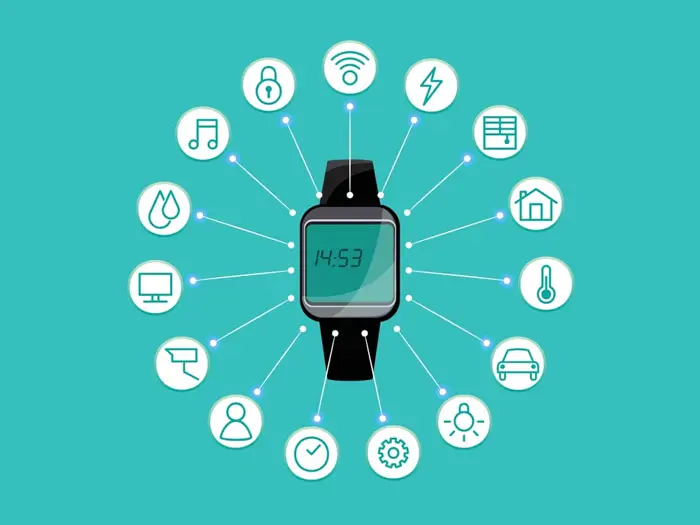
Future developments will prioritize user experience and accessibility, making wearables easier to use and more appealing to a wider range of individuals, including older adults and those with disabilities.
Improvements in usability, battery life, comfort, and compatibility with assistive technologies will encourage broader adoption of wearables for preventive care. While established companies continue to innovate, the dynamic wearable market ensures ongoing advancements in preventive healthcare technology.
Conclusion
Wearable technology is transforming the landscape of preventive healthcare by providing real-time data, improving patient outcomes, and fostering personalized treatment plans. However, addressing challenges such as data privacy, integration, and affordability is critical to unlocking the full potential of wearable technology preventive care. As innovations like AI-powered wearables and advanced biosensors continue to emerge, the role of wearable technology in healthcare will only grow, paving the way for a healthier and more connected future.


