Introduction
As manufacturers accelerate their digital transformation journey, deploying scalable and integrated smart manufacturing solutions has become a strategic imperative. Industry 4.0 demands systems that are flexible, interconnected, and future-proof. TMA Solutions addresses this need with a comprehensive, modular architecture that integrates key technologies like IoT, AI, CMMS, EMS, MMS, and real-time KPI dashboards.
Smart manufacturing is not just about adopting new technologies—it’s about creating a cohesive ecosystem where data flows seamlessly from the factory floor to executive dashboards. By doing so, manufacturers gain real-time insights, drive automation, and foster continuous improvement across the entire production lifecycle.
A Holistic Architecture for Smart Manufacturing
TMA’s smart manufacturing architecture is designed to support scalable deployment across industries and factory sizes. It consists of layered modules:
- Data Acquisition Layer: Uses IoT sensors and edge devices to collect real-time data from machines, environments, and operators.
- Connectivity Layer: Supports multiple protocols (e.g., MQTT, Modbus, OPC-UA) and connects to cloud platforms such as AWS.
- Data Processing Layer: Applies AI models and analytics for predictive maintenance, energy forecasting, and quality control.
- Application Layer: Offers CMMS, EMS, MMS, and KPI dashboards to optimize operations, resource usage, and performance visibility.
This layered architecture allows manufacturers to start small and scale gradually, while maintaining system integrity and cost-efficiency.
TMA’s modular approach also reduces vendor lock-in and allows clients to select the components that align with their current digital maturity, enabling a smooth evolution toward fully connected smart factories.
Seamless Integration of TMA Solutions
TMA’s strength lies in its ability to integrate various in-house solutions into a cohesive system:
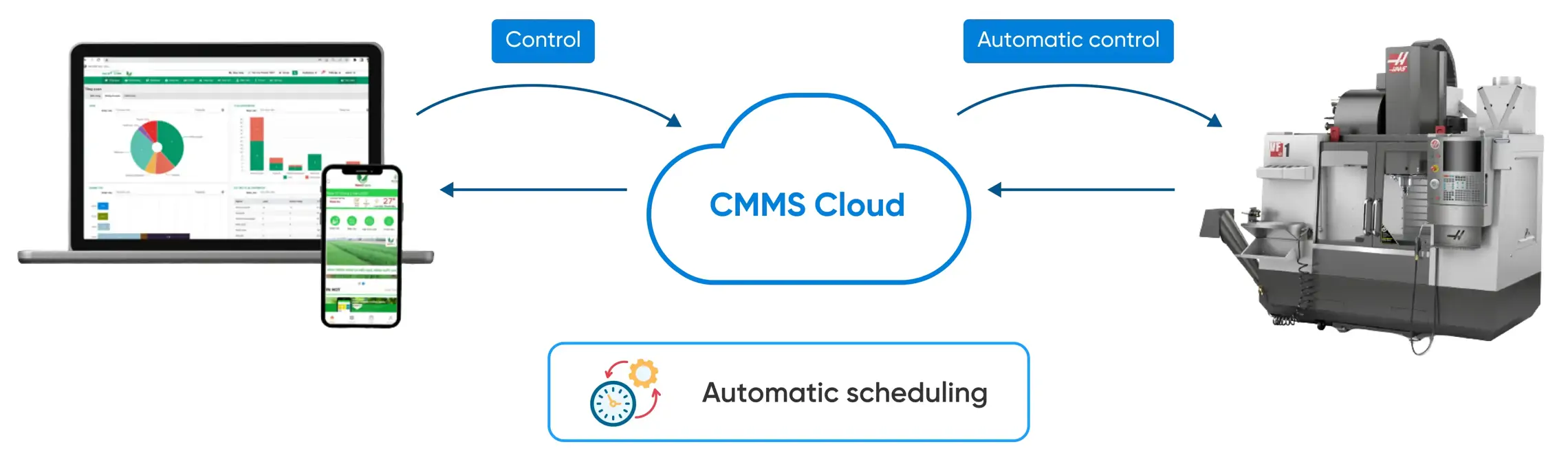
- CMMS (Computerized Maintenance Management System): Automates repair and maintenance tasks using sensor-based monitoring and AI-based risk detection. TMA’s CMMS has enabled clients to reduce unplanned downtime by 20–30%, while improving maintenance response time by approximately 15% within the first six months. Maintenance costs were also cut by an average of 18%, consistent with global benchmarks for predictive maintenance systems.
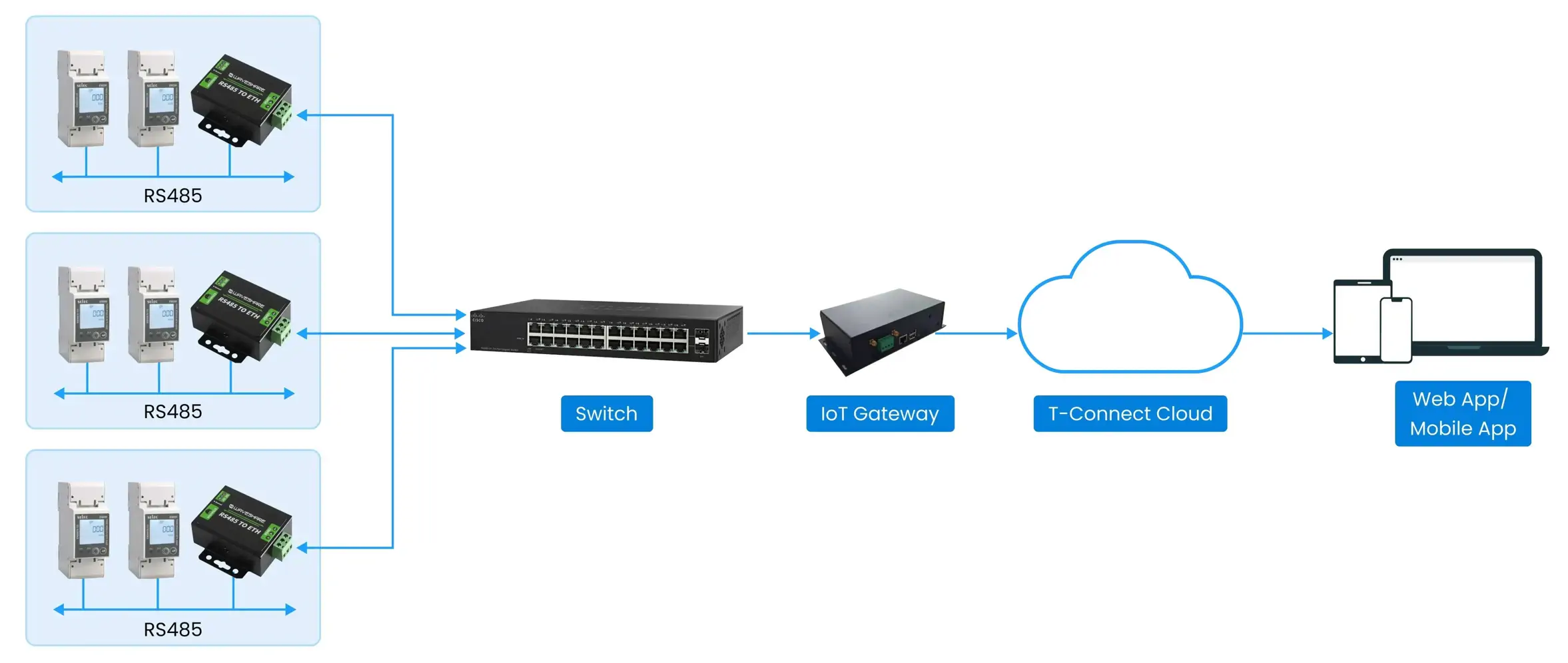
- EMS (Electricity Management System): Tracks and optimizes energy usage using smart meters and ML-based forecasting. With TMA’s EMS, manufacturers have reported a 10% reduction in wasted energy through anomaly detection and equipment-level energy profiling. Additionally, off-hours electricity consumption was reduced by up to 12% thanks to automated alerts and real-time monitoring.
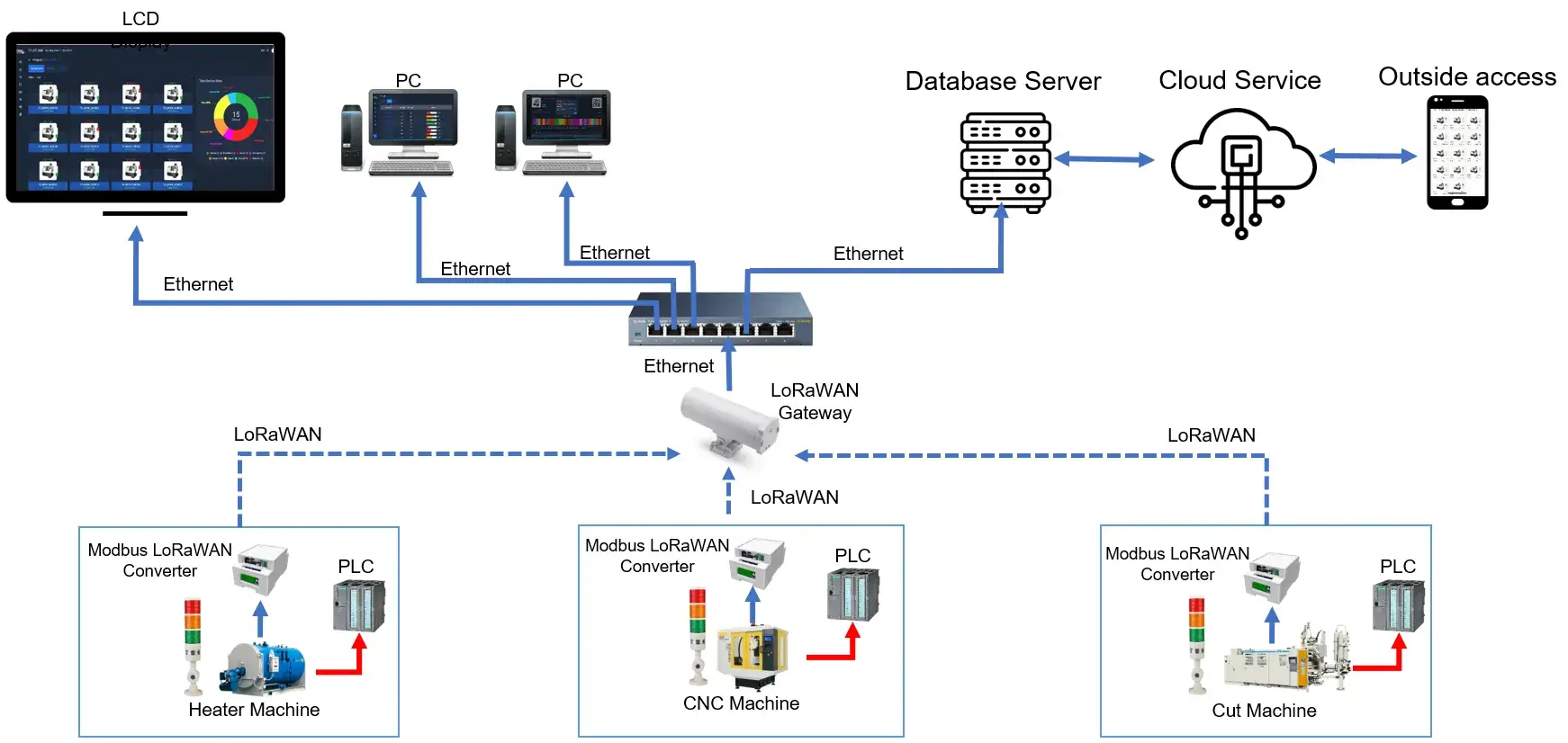
- MMS (Machine Monitoring System): Provides real-time visibility into machine status, performance, and utilization trends. By implementing TMA’s MMS, one client improved their Overall Equipment Effectiveness (OEE) by 17% and achieved a 10% productivity gain across shift operations, driven by real-time insights and downtime alerts.
All modules are designed to communicate via standard APIs and centralized cloud platforms, ensuring quick deployment and minimal disruption.
In addition, these solutions integrate seamlessly with existing enterprise systems, including ERP and PLM platforms, facilitating end-to-end visibility from supply chain to production to maintenance.
Scalable Deployment in Action
TMA’s architecture supports:
- Multi-factory rollouts: Consistent deployment across multiple sites
- Cloud-native operations: Real-time monitoring and control via web/mobile apps
- Plug-and-play modules: Easily integrate with legacy systems or third-party tools
According to McKinsey, successful Industry 4.0 implementations can reduce machine downtime by up to 50%, boost labor productivity by 15–30%, and improve forecast accuracy by up to 85%.
The global predictive maintenance market is projected to grow at a CAGR of 29.5%, reaching $60.13 billion by 2030.
Implementing predictive maintenance can reduce overall maintenance costs by 18–25% and cut unplanned downtime by up to 50%.
Driving Industry 4.0 with Confidence
By integrating advanced technologies into a unified solution, TMA empowers manufacturers to:
- Reduce operational costs
- Increase production agility
- Ensure compliance with ESG goals
- Enable predictive operations and digital twins
Additionally, a Deloitte survey found that 78% of manufacturing leaders are allocating more than 20% of their overall improvement budget toward smart manufacturing initiatives.
With TMA’s domain expertise, clients can build AI-driven use cases such as predictive quality control, intelligent scheduling, and remote diagnostics. These capabilities help shift decision-making from reactive to proactive, setting the foundation for true digital transformation.
Conclusion
Smart manufacturing is more than a collection of digital tools—it’s a cohesive strategy. TMA Solutions provides the blueprint for scalable, integrated, and future-ready smart factories. Whether you are modernizing a single plant or deploying across global sites, TMA’s architecture adapts to your scale and ambition.
As global competition intensifies and sustainability targets become more critical, manufacturers need partners who can guide them through transformation, not just with technology, but with vision. TMA stands ready to lead that journey.


.webp_2026-10-01-18-27-07-971.webp)
.webp_2026-10-01-18-17-11-290.webp)