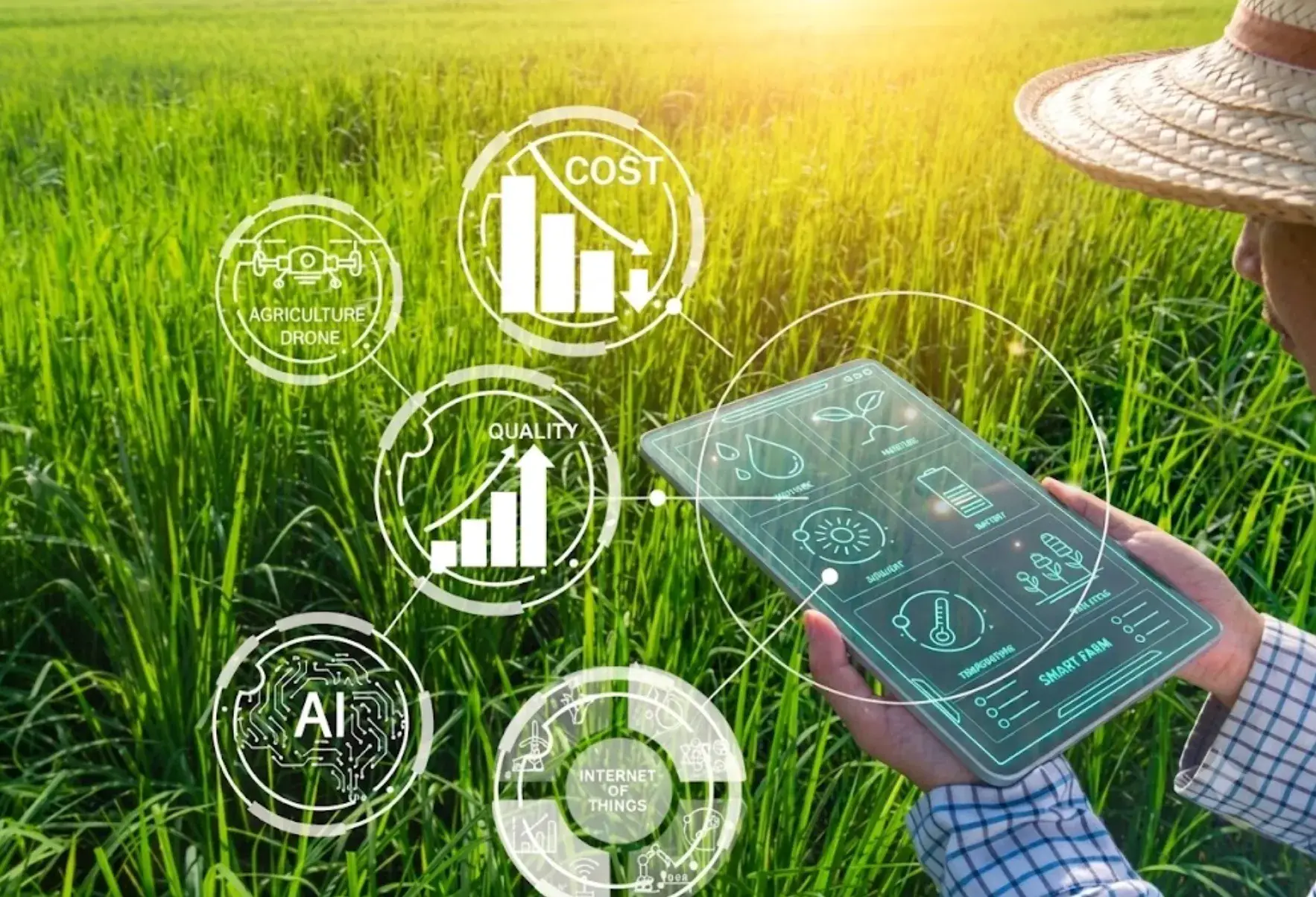
Agriculture is facing a set of pressures it hasn't seen before at this scale: climate volatility, labor shortages, and rising input costs are exposing real weaknesses in traditional farm management. In response, the sector is undergoing a genuine shift toward smart farming, where connected sensors and AI turn scattered field data into real-time operational decisions. According to IBM's market analysis, this shift is moving agriculture from a reactive model, where problems are addressed after they appear, to a predictive one, where they're caught and acted on before they spread.
The Strategic Shift Toward Data-Driven Predictive Agriculture
Before adopting new technology, it helps to understand what's actually changing, both in how farms are managed day to day, and in the market forces making that change necessary right now.
The Paradigm Shift: Moving from Reactive to Predictive Agriculture
Reactive farming depends on visible symptoms. Crop protection and fertilizer are typically applied broadly across a field, and only once a problem, such as yellowing leaves, root rot, a disease patch, becomes obvious to the eye. By that point, the plant tissue is already damaged. The response ends up costing more in chemicals than a targeted one would, and yield at harvest takes a hit that can't be recovered.
Predictive agriculture works on an entirely different logic: a continuous feedback loop, driven by real-time field data rather than visual inspection. Machine learning models track the relationship between microclimate conditions, soil moisture, and microbial activity closely enough to flag disease risk 5 to 7 days before an outbreak actually occurs. From there, irrigation, nutrient application, and crop protection can be automated at the level of individual field zones, instead of one blanket decision applied to an entire farm.
Why Modern Farming Operations Need AI & IoT Today
Farms generate a large volume of data every day, such as soil readings, microclimate fluctuations, aerial imagery, logistics metrics, but as IBM and other technology leaders have noted, most of it stays siloed in legacy systems or manual logs, invisible to the people who could act on it. That gap has a real cost: over-irrigation that weakens root structure, crop shortages that hit right before an export deadline, and broad chemical spraying that raises costs while degrading soil health over time. Three pressures make closing this gap urgent:
- Outbreaks spread faster than manual scouting can catch them. Microclimate shifts can trigger fungal outbreaks like Phytophthora or Powdery Mildew within 48 hours. Industrial IoT benchmarks from Digi International and IoT Beat indicate that manual field scouting typically catches an outbreak only after 15-20% of the crop is already affected, by which point, damage is largely already locked in. Interconnected sensor networks close that gap by cross-referencing soil telemetry with vapor pressure data, enabling automated, localized treatment days before any visible symptom appears.
- Export markets now require proof, not paperwork. Analysis from Agristuff notes that major markets, like the US, EU, Japan, increasingly enforce technical requirements around agricultural inputs that legacy record-keeping simply can't satisfy. Buyers want immutable, farm-to-fork verification of origin and chemical use, not a spreadsheet.
- Consumers are paying more for verified quality. Urban consumers, particularly in fast-growing hubs like Ho Chi Minh City, are increasingly willing to pay a premium for products that are verifiably organic or sustainably grown. Digital infrastructure is what makes that verification possible, and it opens higher-margin domestic and export markets while also helping offset labor shortages through automation.
Core Technological and Operational Applications of Agritech
Smart farming is not a single isolated tool; it integrates open-field cultivation, controlled environments like greenhouses, and advanced livestock operations.
Open-Field Optimization: IoT Sensors, Precision Irrigation, and Computer Vision
IoT sensor networks function as the digital nervous system of a modern farm. As documented in global agricultural transformation frameworks by the Food and Agriculture Organization (FAO), multi-point sensor meshes utilize underground probes to continuously track nitrogen, phosphorus, potassium (NPK), electrical conductivity (EC), pH, and multi-depth soil moisture. This data feeds directly into AI-driven irrigation platforms that cross-reference real-time soil metrics with hyperlocal weather forecasting. The system automatically regulates flow rates and valve pressure, cutting water consumption by 30% to 40% compared to legacy fixed-schedule or manual irrigation methods.
Drones extend this precision into the air. Routine autonomous flights across large cultivated fields capture near-infrared (NIR) imagery to calculate the Normalized Difference Vegetation Index (NDVI) - a standard metric for plant vitality. This allows operators to detect sub-visual biological stress long before it becomes visible on the ground. Once cloud-based AI processes these high-resolution spatial maps, it pinpoints the exact coordinates of pest infestations or weed invasions. This spatial intelligence drives Variable-Rate Application (VRA) frameworks: autonomous sprayers or field robots apply treatments exclusively to the affected zones, reducing overall chemical overhead by up to 80% while maximizing treatment efficacy.
Specialized Environments: Smart Greenhouses and Precision Livestock Management
Controlled environments traditionally demand constant manual adjustments to maintain ideal crop biological profiles. Smart greenhouses eliminate this friction entirely: networked IoT sensors continuously track ambient temperature, relative humidity, carbon dioxide (CO2) concentration, and light intensity. When metrics drift outside optimal thresholds, connected actuators respond automatically by adjusting roof vents, triggering micro-misting systems, altering fan speeds, or deploying motorized shading screens. The result is a highly stable microclimate for high-value crops that eliminates energy waste from manual over-correction.
Livestock operations leverage a parallel data-driven architecture. According to industrial data published by IoT Beat, wearable tracking devices, such as smart collars and ear tags, continuously capture animal body temperature, heart rate, and real-time movement biometrics. Centralized AI models process these telemetry streams to flag sub-visual behavioral anomalies, alerting farm managers to early signs of illness, reproductive cycles, or lameness days before physical symptoms manifest. Furthermore, integrated geolocation tracking secures herds by triggering automated perimeter alerts if an animal strays outside designated grazing zones, preventing both stray loss and theft.
Why Choosing TMA Solutions for Enterprise Agritech Transformation?
For agricultural organizations, exporters, and precision technology vendors looking for a software engineering partner, TMA Solutions offers a path to turn raw field data into usable agronomic intelligence - without requiring a costly rip-and-replace of existing systems. TMA's integration architecture is built to connect with legacy infrastructure directly, so transformation can begin without a full operational overhaul.
Tailored Core Frameworks by TMA Innovation
Through its dedicated R&D centers, TMA Innovation deploys core technological platforms engineered to optimize production and ensure sustainable farming operations:
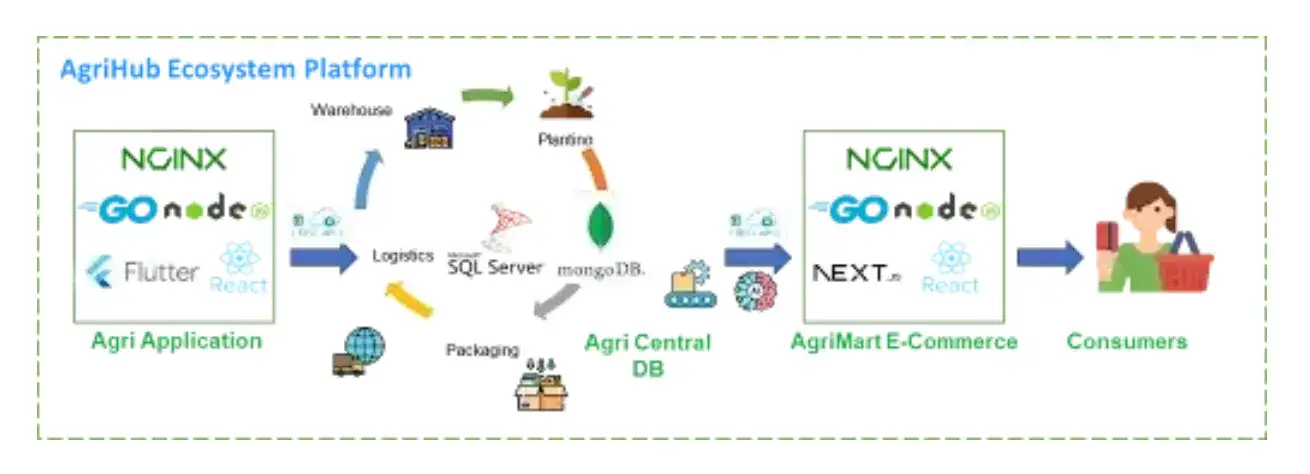
- Advanced AI for Precise Agricultural Resolution: TMA leverages AI and machine learning to empower producers with tools for swift identification of real-time farm crises. These specialized AI models automate field diagnostics, including targeted pest detection, tree disease identification, and automated pig abnormal activity tracking within livestock operations.
- Robust Supply Chain & High-Transparency Traceability: To drive absolute efficiency and trust across the agritech value chain, TMA deploys integrated software tools for agricultural product traceability. This network utilizes the TrustME Supply Chain infrastructure and the AgriHub Ecosystem Platform, built alongside the Agri-SCM open data framework, enabling agribusinesses to seamlessly store field logs for GlobalGAP, VietGAP, and GS1 compliance reporting.
Proven Local Expertise of TMA
TMA bridges the gap between complex software architecture and rugged, real-time farming conditions by driving tangible productivity gains across regional ecosystems:
- The T-Pest AI, IoT & GIS Ecosystem for Rice Pest Control: TMA delivers immediate operational impact through T-Pest, its comprehensive smart agriculture solution designed to manage and predict crop infestations. In a major real-world deployment across the Central Highlands and Central Coast regions (specifically Gia Lai and Binh Dinh provinces), TMA successfully integrated automated smart light traps, IoT environmental sensor arrays, and GIS (Geographic Information System) mapping. This platform utilizes advanced AI models to monitor brown planthopper densities and microclimate patterns, generating real-time, localized early-warning maps that allow provincial authorities and farmers to protect large-scale rice paddies before outbreaks spread.
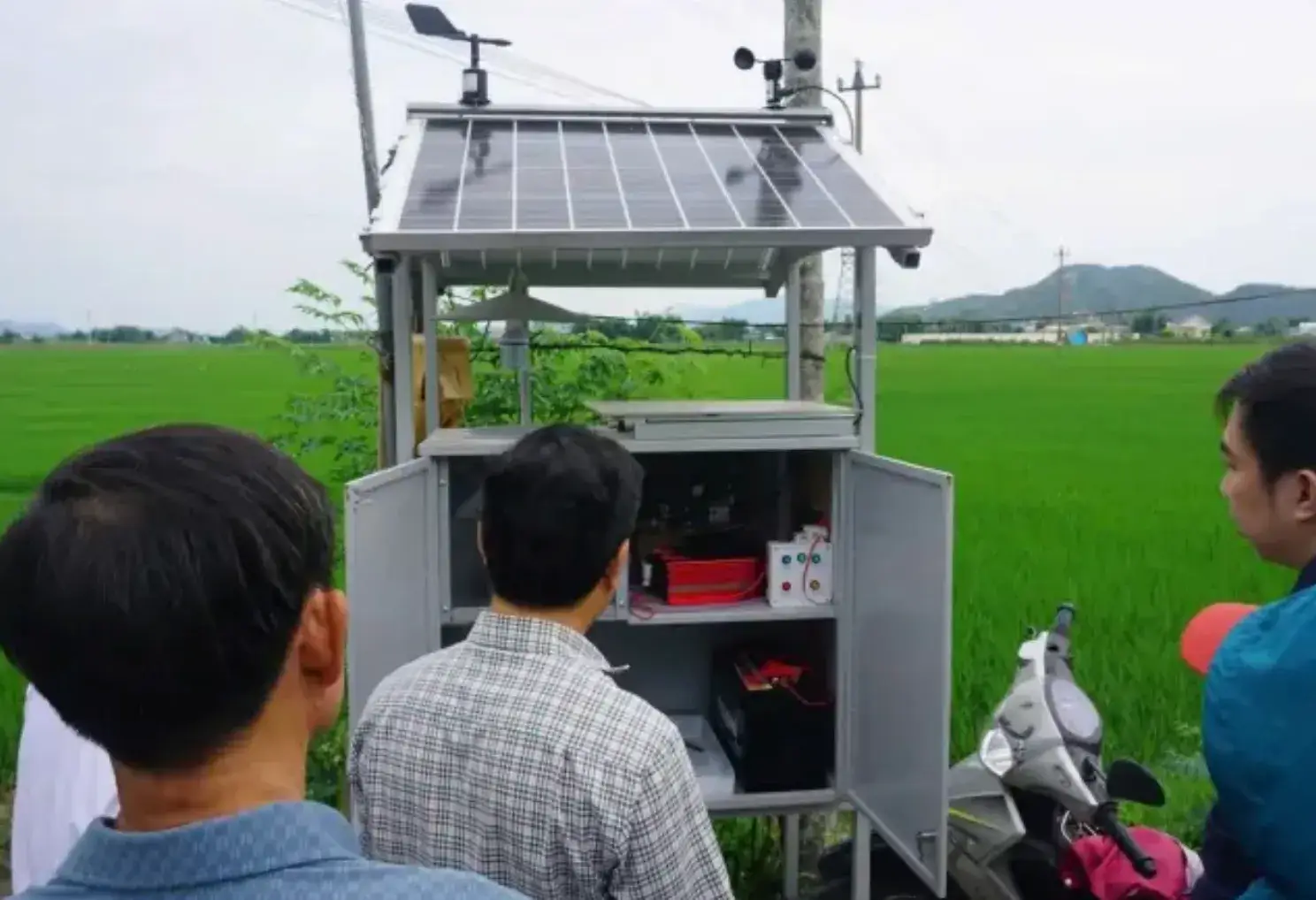
Find out more about how this system transforms regional crop protection at T-Pest Smart Agriculture for Rice Pest Control.
- Streamlining Automated Aerial Data Pipelines: On the broadacre monitoring side, TMA’s cloud-native pipelines ingest and process massive volumes of raw drone telemetry. The integrated computer vision system automatically flags localized nitrogen deficiencies or weed patches within hours of a flight, converting raw field imagery into precise variable-rate prescription maps that sync seamlessly with autonomous tractor fleets to close the loop between detection and action.
Strategic Implementation Journey for Agricultural Enterprises
Transitioning from a reactive operation to a predictive, data-driven system delivers the highest return on investment when executed through a structured, phased roadmap. This approach manages implementation risks while ensuring clear operational utility at every milestone.
Phase 1: Establishing Foundation Telemetry and Structured Data Ingestion
The initial stage focuses on building a reliable field-level data infrastructure to capture the farm's unique microclimate variables. Operations begin by deploying modular micro-weather stations alongside multi-depth soil probes to monitor localized metrics like barometric pressure, soil moisture, and ambient temperature. Concurrently, establishing a Low-Power Wide-Area Network (such as LoRaWAN) ensures stable, continuous data transmission from the field to a centralized system. Securing this clean, gap-free historical dataset over the initial cultivation cycles creates the baseline required for training high-accuracy predictive models later on.
Phase 2: Activating Core AI Diagnostics and Collaborative Decision Frameworks
With a structured database established, enterprises introduce the advanced analytics layer through localized Farm Management Software. At this maturity level, machine learning algorithms process the historical and real-time telemetry to run yield simulations, identify sub-visual crop stress, and optimize harvesting windows. This stage operates best under a collaborative framework, where the AI system functions as an intelligent optimization assistant, generating early warnings and data-driven recommendations, while agronomists and managers retain final operational control based on real-time market shifts.
Phase 3: Scaling Automation and Cross-Ecosystem Integration
The final phase expands the digital ecosystem by connecting predictive insights directly with automated field machinery and corporate supply chains. Predictive alerts from the AI diagnostics trigger automated variable-rate applications via smart tractor fleets or automated irrigation valves without manual friction. Furthermore, integrating this operational data with platforms like the AgriHub Ecosystem Platform streamlines compliance logs for GlobalGAP or VietGAP standards, establishing end-to-end efficiency from the open field straight to international export distribution networks.
Conclusion
The shift from reactive to predictive agriculture isn't really a technology question anymore - the sensors, computer vision, and AI models needed already exist and are proven at scale. The real challenge is sequencing: building a clean, reliable data foundation before layering AI on top of it, and keeping agronomists in control of final decisions rather than automating them away entirely.
For agricultural enterprises, the payoff for getting this right is twofold. Operationally, it means less waste - in water, chemicals, and labor - and earlier intervention before losses become irreversible. Commercially, it means the traceability and verification that export markets and premium consumers increasingly demand, turning compliance from a cost center into a competitive advantage. Organizations that treat this as a phased infrastructure investment, rather than a single software purchase, will be the ones positioned to capture both benefits.