In today's fast-paced healthcare environment, efficient patient management is crucial for delivering quality clinical care and optimizing operational workflows. Patient management software offers a comprehensive solution to streamline administrative tasks, enhance patient experience, and improve overall practice efficiency.
Ready to simplify operations in your healthcare practice? Explore the ways this management software could advance your operation and patient care.
Common challenges faced by healthcare professional
Healthcare professionals face numerous operational challenges that can affect the quality of patient care and overall efficiency. Key issues include:
Inefficiencies of manual appointment management
Manual administrative tasks, such as appointment and record management, pose sign
Inconsistent scheduling practices often result in long patient wait times, disorganized calendars, and decreased efficiency, ultimately impacting the quality of care perceived by patients. These inefficiencies disrupt care delivery, particularly for time-sensitive treatments, and highlight the need for streamlined solutions to optimize appointment management and enhance the overall patient experience.

Overwhelming patient information management
Managing vast amounts of patient data securely and efficiently presents a significant challenge for medical service providers. Manual record-keeping systems often struggle to handle the volume and complexity of information, leading to incomplete records, delayed care, and potential diagnostic errors.
The lack of digital solutions hinders real-time data retrieval and impedes accurate, timely decision-making. This emphasizes the need for robust electronic health record (EHR) systems to ensure secure storage, efficient retrieval, and seamless access to patient information.
Lack of reliable patient history access
Inconsistent access to patient histories complicates treatment plans. Physicians may lack critical data such as prior diagnoses, medications, or allergy information, resulting in redundant tests and compromised patient safety. In emergencies, this delay can become life-threatening.
Limited information sharing across departments
Healthcare organizations often function in isolated silos, where communication between departments is minimal or nonexistent. The inability to transfer patient data seamlessly across departments or facilities causes repeated tests, increased operational costs, and fragmented care.
Complex payment and insurance processes
Manual billing processes in healthcare are riddled with inefficiencies and vulnerabilities, leading to significant financial strain for providers. The complex web of insurance verifications, claims submissions, and payment collections is prone to errors. As a result, healthcare organizations experience delayed payments, revenue loss, and cash flow disruptions.
Denied claims, delayed reimbursements, and patient non-payment further exacerbate these challenges, while manual management adds an unnecessary administrative burden.

Delayed communication about treatment changes
Treatment modifications frequently go uncommunicated due to outdated communication channels or administrative bottlenecks. This delay affects medication administration, treatment adjustments, and post-care follow-ups, ultimately impacting patient recovery and care quality.
Declining patient experience and satisfaction
Patients expect personalized, efficient, and transparent care. Long wait times, mismanaged records, and poor communication lead to more patient complaints and lower retention. In today’s digital age, patients often check online reviews before choosing healthcare professionals, making patient experience a key competitive factor.
Rising expectations from healthcare consumers
Patients expect cutting-edge technology, instant communication, and proactive care management. Meeting these expectations is challenging without robust digital infrastructure. Providers without a strong online presence or technological capabilities risk losing patient retention rates to more tech-savvy competitors.
Exploring patient management software key features
Patient management software addresses healthcare challenges by automating core processes. Here are essential features that every healthcare provider should consider:
Schedule appointments
Patient management systems (PMS) revolutionize the scheduling of patient appointments by automating the entire process, from booking to reminders, which minimizes no-shows. Patients enjoy the convenience of self-service portals for scheduling, rescheduling, or canceling appointments, while automated reminders ensure timely attendance.
Real-time calendar synchronization with provider schedules eliminates scheduling conflicts and optimizes clinic efficiency, leading to a smoother and more streamlined patient experience.
Record patient information
PPatient relationship management software provides secure patient data management. This system also centralizes patient records in a HIPAA-compliant cloud storage environment to ensure data integration, accessibility, and protection.
Real-time access to consolidated patient information, including demographics, medical history, lab results, and imaging records, is essential. This access facilitates accurate diagnoses, informed treatment decisions, and improved patient care.
Track all patient interactions and touchpoints
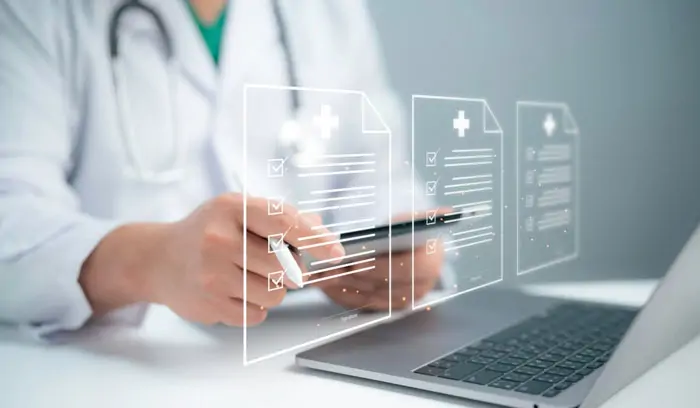
Patient manager software tracks the patient journey by logging interactions from initial consultation to post-care follow-up. This software also integrates communication logs across various channels, including calls, emails, and texts. PMS enhances the smoothness and connectivity of the patient experience.
Furthermore, PMS provides patient engagement tools, such as reminders, alerts, and follow-ups, which foster stronger relationships and enhance care continuity. The collected data provides valuable insights for performance analysis and continuous improvement of patient care.
Medical transactions and billing software
Patient management systems (PMS) streamline financial operations by automating billing and invoicing processes. This minimizes errors and accelerates revenue cycles. Automated billing cycles efficiently manage insurance claims, co-pays, and patient payments, while payment reminders ensure timely collections.
Seamless integration with third-party financial platforms facilitates secure and convenient payments. PMS also provides real-time insights into payment histories, claim status, and financial summaries, empowering providers to make informed financial decisions and optimize cash flow.
Predictive reports and improved patient relationship management
Patient management systems (PMS) create actionable insights through real-time analytics and data-driven reports. This system analyzes patient trends and identifies patterns and opportunities for improvement in healthcare strategies. This data-driven approach enables personalized patient communication, targeted outreach, and proactive care management.
PMS also generates reports that predict patient health outcomes, analyze treatment effectiveness, and identify at-risk individuals, allowing for timely interventions and improved patient care. Ultimately, PMS fosters a more proactive and personalized approach to healthcare, enhancing patient engagement and satisfaction.

Revenue cycle management
Patient management systems (PMS) create financial management in healthcare by revenue cycles from patient registration to final payment. PMS automates key processes, ensuring timely claim submissions, efficient insurance processing, and streamlined patient billing, minimizing financial leakages and maximizing revenue capture.
Real-time tracking of claims statuses reduces denials and payment delays, while robust financial reporting tools empower providers with insights into cash flow, revenue trends, and financial performance, enabling data-driven decision-making and improved financial health.
Benefits of patient management software
Implementing patient management software provides healthcare facilities with transformative benefits. Some advanced PMS solutions also incorporate healthcare CRM functionalities, further enhancing patient engagement and practice growth.
Enhanced workflow
PMS centralizes data storage, significantly reducing paperwork and administrative burdens, while automating appointment scheduling, rescheduling, and reminders to streamline patient management.
Real-time tracking of patient visits, diagnoses, and treatments enhances operational efficiency and decision-making. Additionally, seamless integration with third-party EHR/EMR systems ensures cohesive and efficient healthcare operations across departments.
Better patient care
PMS enhances patient care by maintaining up-to-date medical records, ensuring accurate diagnoses and treatments, and sending automated reminders for appointments and due payments.
It facilitates seamless communication between patients and providers through secure messaging systems while offering health monitoring tools and personalized care plans to support proactive and tailored healthcare delivery.

Revenue growth
PMS streamlines financial operations by automating billing and insurance claim processing, verifying insurance eligibility during patient check-in, and tracking payments with automated reminders to ensure timely collections. Additionally, it generates detailed financial reports to provide insights into revenue performance, enabling better financial management and decision-making.
Essential checklist for choosing patient management software
Selecting the best patient management software requires considering essential factors:
Comprehensive features
Choosing the right PMS is crucial for optimizing workflows and enhancing patient care. Look for comprehensive solutions that offer robust scheduling, robust medical records management, and integrated billing features.
Advanced PMS solutions may integrate with medical devices like remote patient monitors and diagnostic equipment. They also often include healthcare CRM features such as patient communication and marketing automation. Consider reporting tools for data-driven insights and explore customization options to meet your specific practice needs. A well-implemented PMS can significantly improve efficiency, reduce administrative burdens, and enhance patient satisfaction.
User-friendly interface
An easy-to-use interface is crucial for the efficient adoption and utilization of patient management systems. The software should have an intuitive design, a minimal learning curve, and a consistent user experience across different medical devices. This will minimize training requirements and maximize productivity.
Prioritize features that streamline workflows and reduce administrative burdens, ultimately improving overall productivity and patient care.
Customization and scalability
When choosing the right patient management software for healthcare professionals, it’s crucial to select a scalable solution that evolves with your practice.
Consider software that offers customizable templates, supports multilocation and multi-provider settings, and adapts to evolving workflow needs. This ensures your PMS can grow with your practice and remain relevant in a dynamic healthcare environment.
Integration capabilities
Disconnected systems often result in data silos, inefficient workflows, and potential errors. Practice Management System (PMS) can address these issues by streamlining workflows and enhancing data accuracy.
When selecting software, prioritize solutions that seamlessly integrate with EHR/EMR systems, billing platforms, and laboratory systems. This integration should ensure API access and real-time data synchronization for efficient data exchange and informed decision-making. Integration with a dedicated healthcare CRM can further enhance patient relationship management.
Data security and compliance
The integrity and confidentiality of data are paramount in healthcare since data breaches can lead to severe legal and financial consequences.
Choose a PMS with robust security features, including end-to-end encryption, role-based access controls, and compliance with industry standards like HIPAA and GDPR. This ensures the protection of sensitive patient information and safeguards your practice from potential breaches.
Training and support
To maximize the benefits of management software for patients, it's crucial to choose a solution with robust training and support. Comprehensive onboarding, role-based training, and accessible client support channels (email, phone, live chat) are essential for effective software utilization.
Additionally, knowledge bases and user communities provide valuable resources for ongoing learning and troubleshooting. By investing in effective training and support, medical practitioners can ensure a smooth implementation and maximize the return on their investment.

Cost-effectiveness
When selecting the right management software for healthcare, budget constraints are a significant consideration. It's essential to choose a solution with transparent pricing models, including licensing, maintenance, and upgrade costs.
Additionally, assessing the potential return on investment (ROI) through increased efficiency and revenue is crucial. By carefully evaluating these factors, healthcare providers can select a cost-effective solution that aligns with their budget and delivers long-term value.
TMA Solutions: Patient Management Software Development Partner
In today’s technology-driven healthcare landscape, TMA Solutions stands out as a reliable partner for developing the best patient management software. TMA Solutions has 17 years of experience in healthcare software development and a team of 600 skilled engineers. This expertise allows TMA Solutions to deliver innovative solutions tailored to the evolving needs of healthcare providers.
TMA Solutions uses AI, data analysis, and automation in its software development. This approach enhances patient care and simplifies operational processes. Its expertise covers a wide range of healthcare applications, ensuring that healthcare organizations can efficiently manage patient records, appointments, billing, and overall service delivery.
TMA Solutions is committed to quality, reliability, and industry compliance. This commitment enables healthcare organizations to meet the complex demands of modern healthcare while focusing on what matters most – providing exceptional patient care. With a proven track record and deep industry knowledge, TMA Solutions is a trusted partner for building scalable, high-performance patient management software solutions.
Conclusion
Patient management software has revolutionized how healthcare professionals manage daily operations, patient care, and financial workflows. Understanding software features, benefits, and selection criteria is key for healthcare professionals. This knowledge enables them to choose the right software to optimize efficiency, enhance patient engagement, and drive practice success. Contact us today to explore how TMA Solutions can help you implement a cutting-edge patient management system.


.webp_2026-10-01-18-27-07-971.webp)
.webp_2026-10-01-18-17-11-290.webp)